
THE PHOTOGRAPHIC LEXICON
The Photographic Lexicon
A Visual Language for Neighborhood Photography
Inspired by the City of New York, this Photographic Lexicon is my way of putting into words the way I see and photograph not just the five boroughs of NYC - but all of the neighborhoods I have the joy of visiting, experiencing and documenting.
Over years of walking New York City with a camera, I noticed certain visual “events” returning again and again—light that ricochets off glass and lands like a spotlight on the sidewalk, blocks that turn into rhythmic grids, corridors that pull the eye forward until the street feels endless, surfaces that hold the city’s weather and history in their skin. I began to realize that these patterns emerged from slowing down and paying noticing incredible visual diversity of New York City. But even more importantly, I’ve discovered is that this way of seeing extends not just throughout all five boroughs of NYC - but also to places as diverse and far-flung (to me) as Vanalinn, Estonia, South Beach, Florida and Paris, France.
This Lexicon is a catalogue of those recurring ways of seeing—names for patterns I kept encountering, and prompts I still use to stay curious. This isn’t a rulebook or a claim to expertise - or even a definitive or exhaustive way of seeing and photographing the world around us. It’s closer to a field guide written from experience — a way of sharing what I’ve learned to look for, and how a familiar place can become even richer with experience the more time you spend there.
If you’re building your own photographic catalogue—whether you’re documenting your neighborhood, traveling, or making an ongoing project—my hope is that these entries feel like an invitation: browse, borrow, adapt, remix. Let a term lead your next walk, or use one as a nudge when you feel stuck. And then take it somewhere personal—your own streets, your own light, your own seasons, your own stories … your own neighborhoods. In this way, I hope this Lexicon helps you build your own photographic library, shaped by not just by my own experiences, but your perspective and the places you know best.
After all, you never know what will be waiting for you beyond that next intersection. But if you build your own Lexicon, you’ll be ready for whatever you discover.
So here’s to that next adventure!
-Sam
Luminous Anatomy
(Light & Contrast)
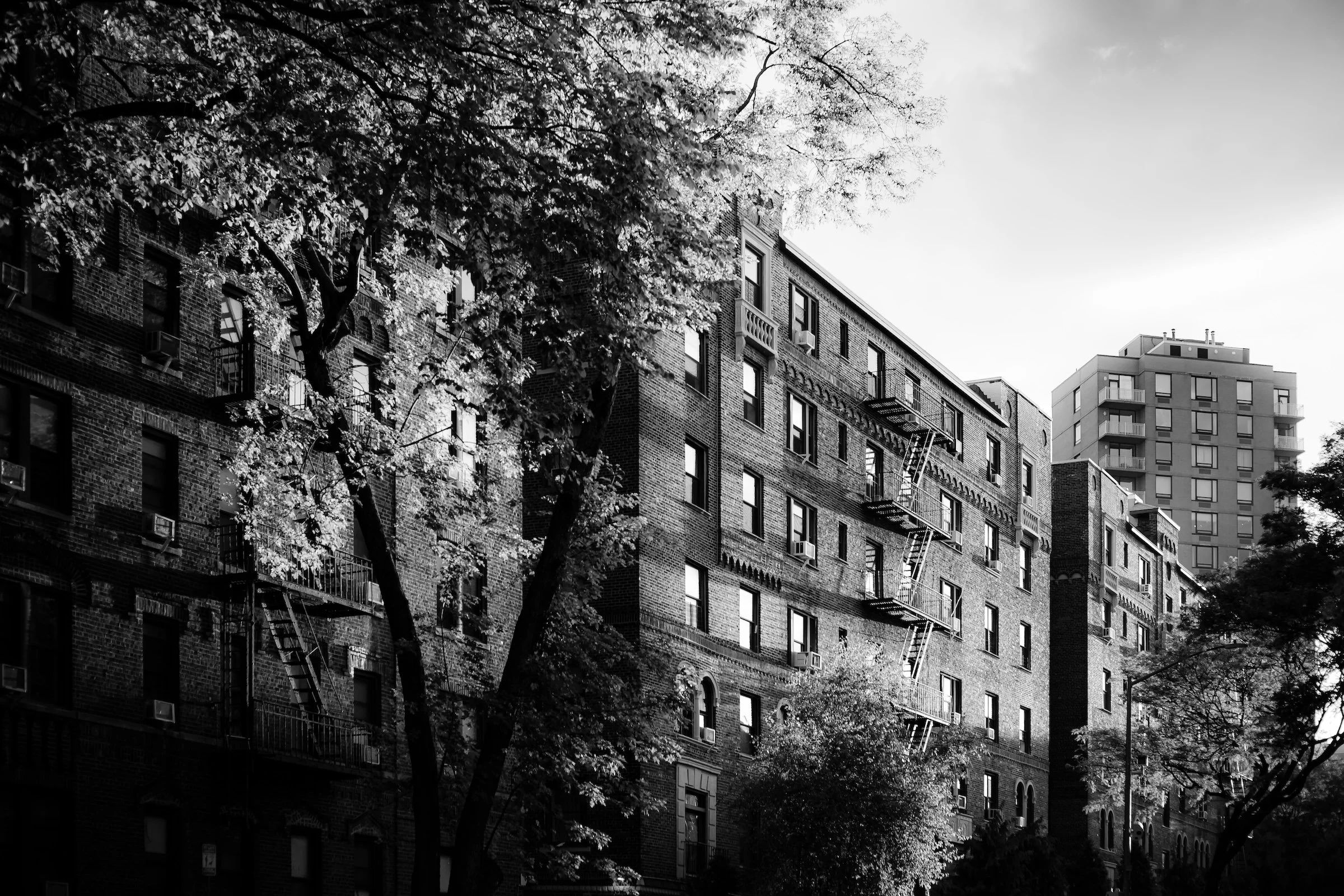
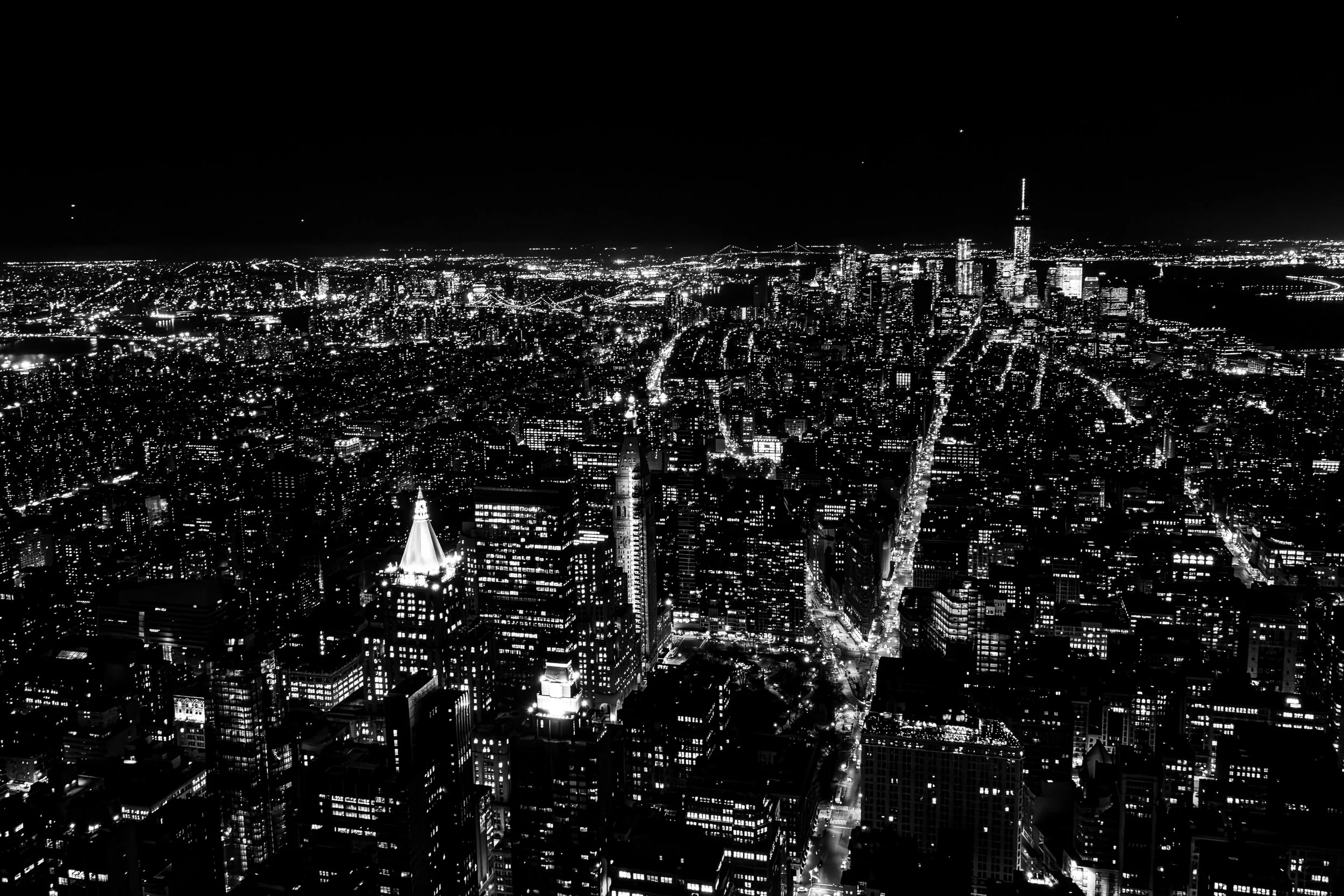
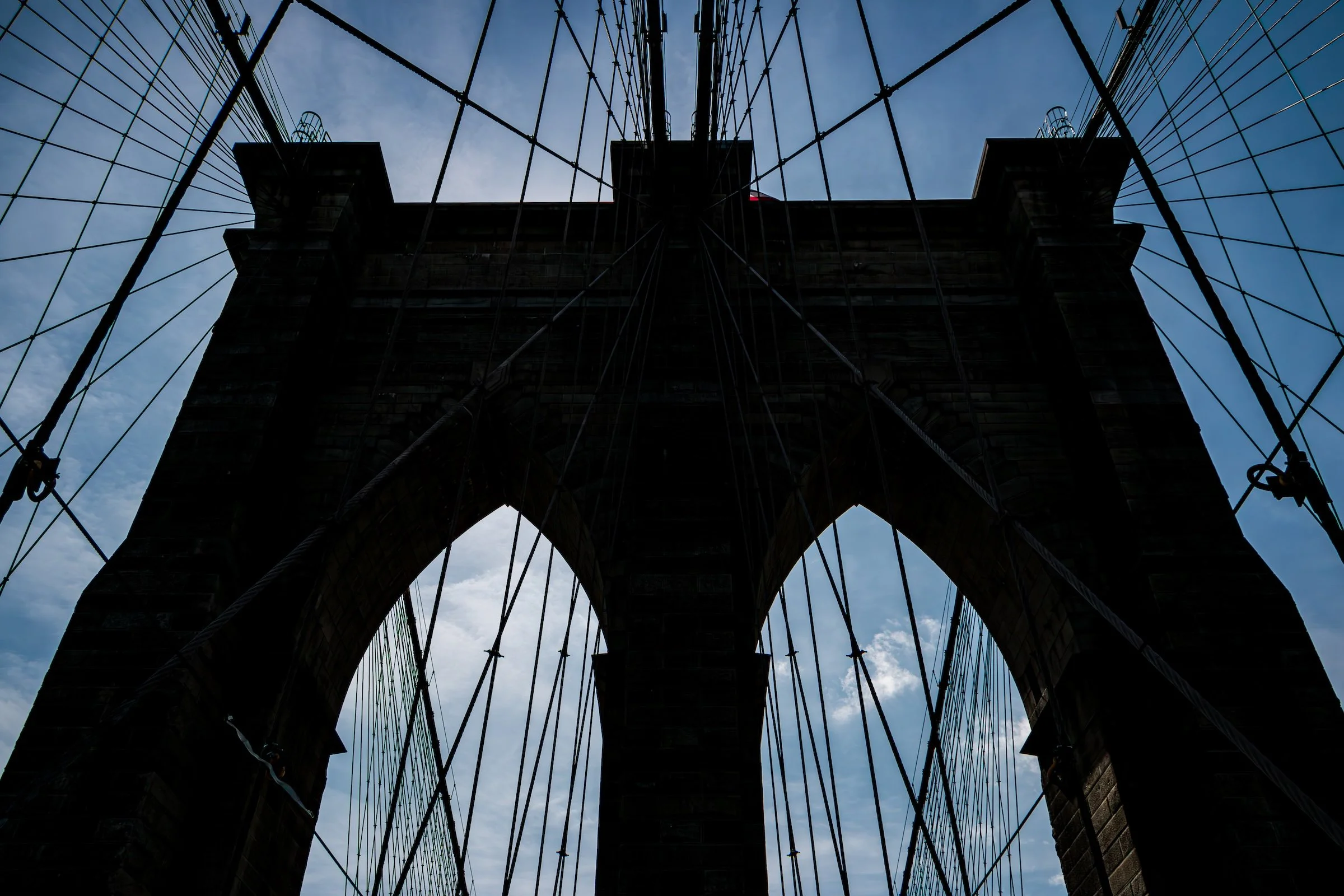
Chiaroscuro is the deliberate shaping of a photograph through bold contrast between light and dark—not just “a shadow,” but a structure made from illumination. In this lexicon, Chiaroscuro (B&W Drama) refers to black-and-white images processed for dramatic tonal separation (often with restrained sharpening or a touch of softness) so that the scene reads like a carved relief: light becomes form, shadow becomes architecture.
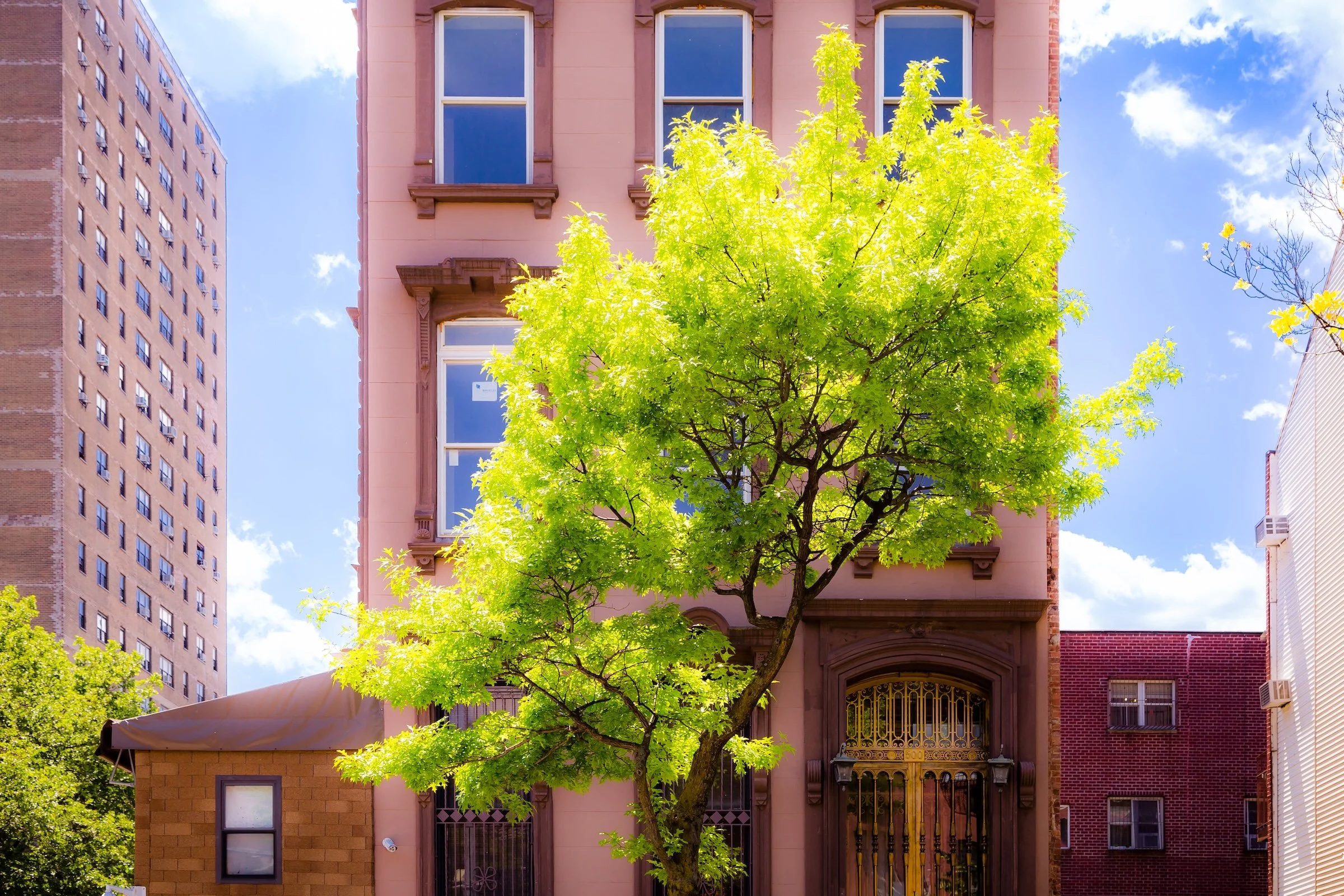
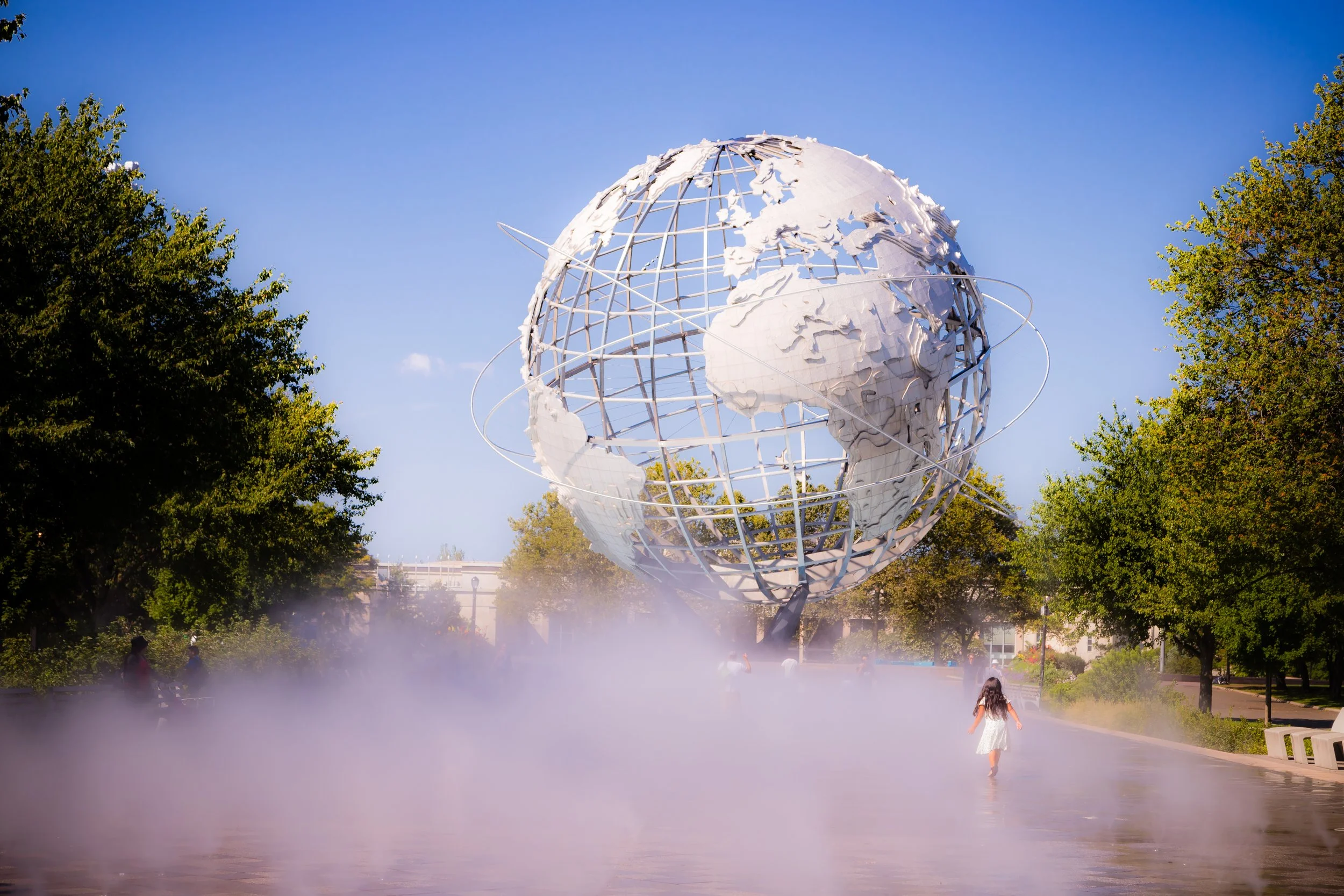
Painting With Light describes moments when sunlight behaves like pigment: glazing walls, pooling across lawns, gilding leaves, and turning ordinary streets into something that feels half-real, half-illustrated. It isn’t about heavy editing or surreal color for its own sake—it’s about recognizing when natural light is already doing the painting.
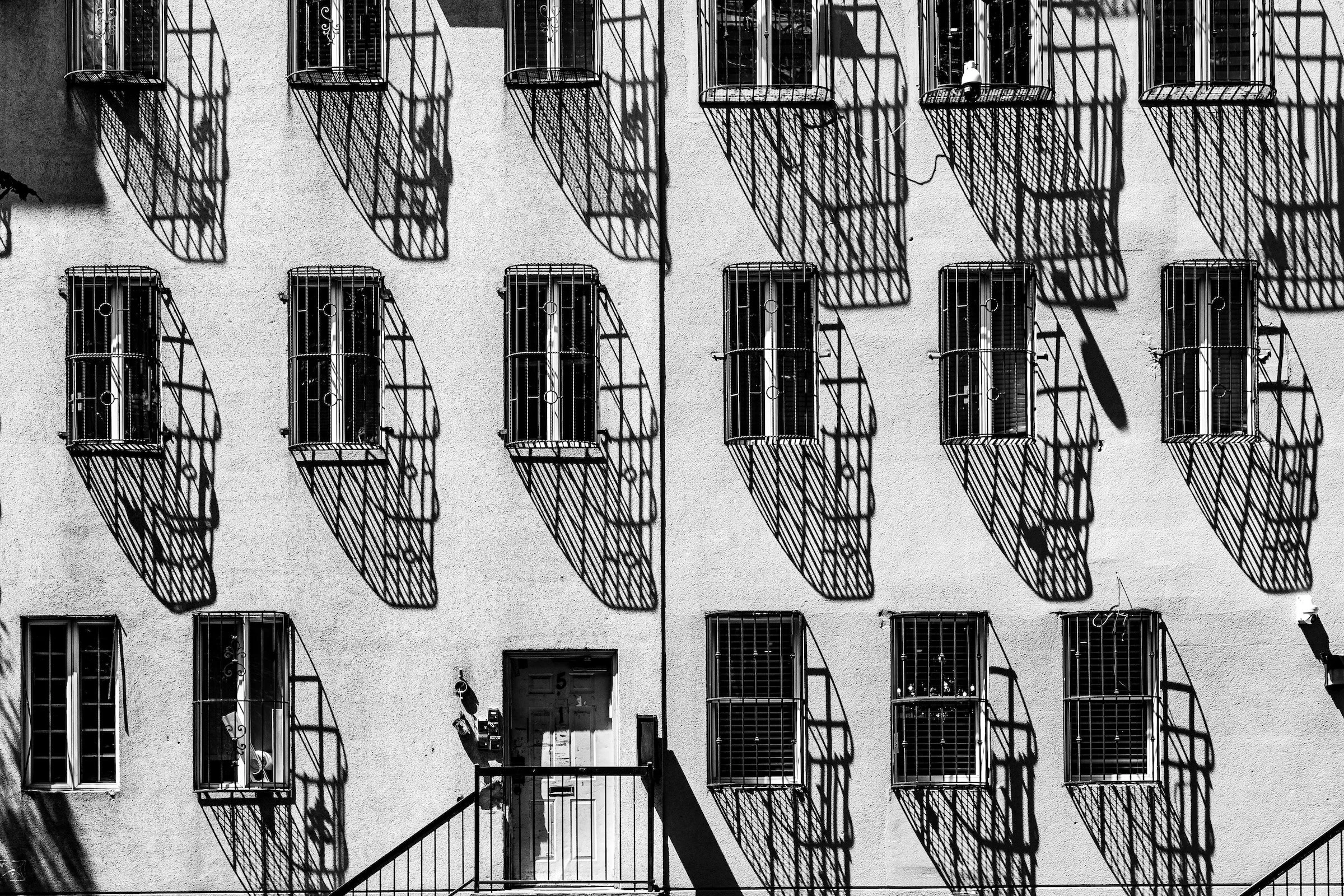
Shadow Projections are crisp, geometric shadow-shapes cast by manmade structures—fences, railings, fire escapes, awnings, lamps—thrown onto walls and pavement as grids, stripes, ladders, and hard-edged diagonals.
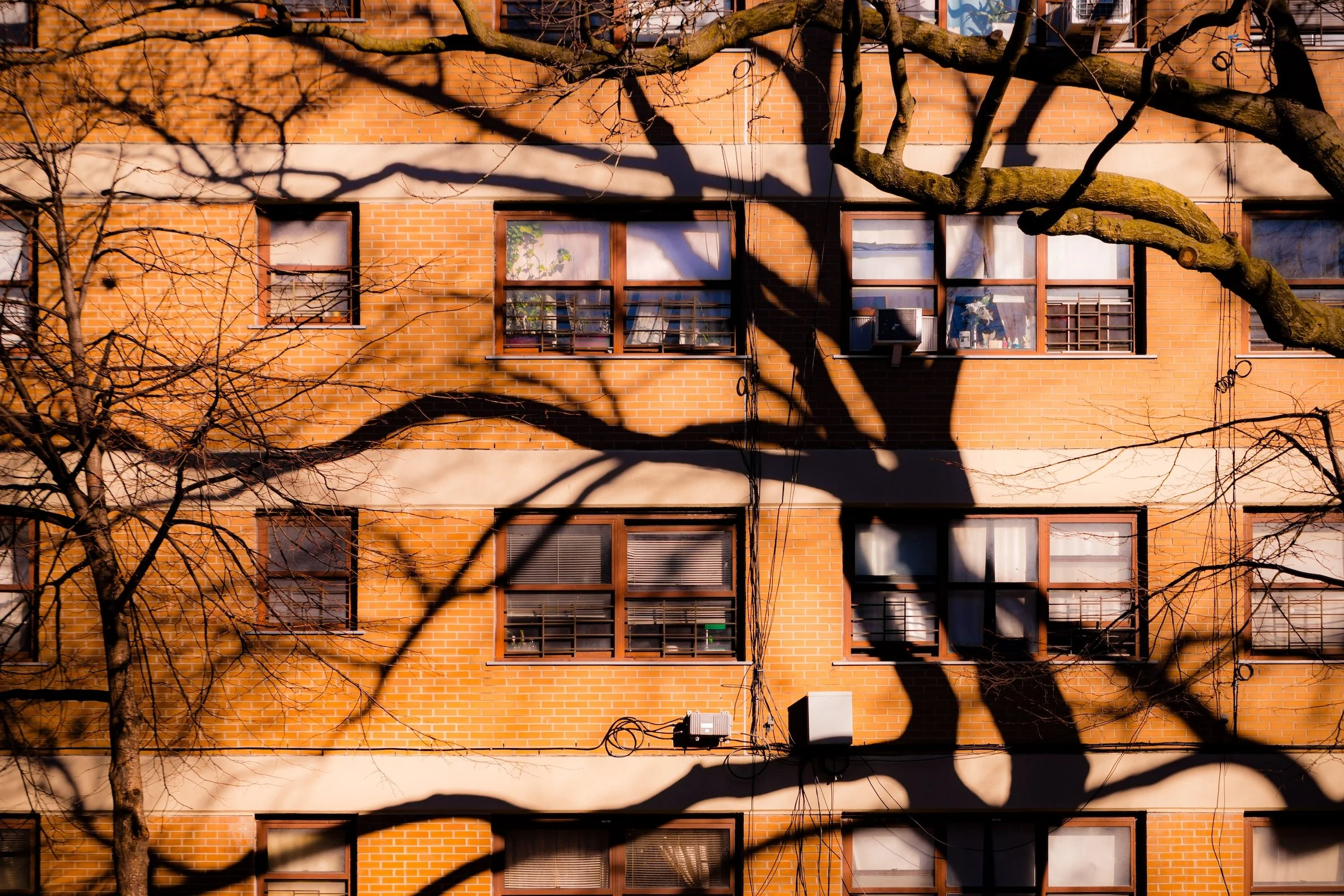
Shadowroots are organic, branching shadows—most often from leafless trees—where the shadow reads like a second body: roots, veins, nervous system. The strongest examples fuse the tree and its shadow into one connected composition.

Sky Dramatic is the deliberate use of the sky as an active subject—storm weight, sculpted cloud texture, sunbursts, clean blue voids, and rare events (like rainbows)—so the atmosphere doesn’t just “sit behind” the city, but drives the mood, contrast, and structure of the photograph.
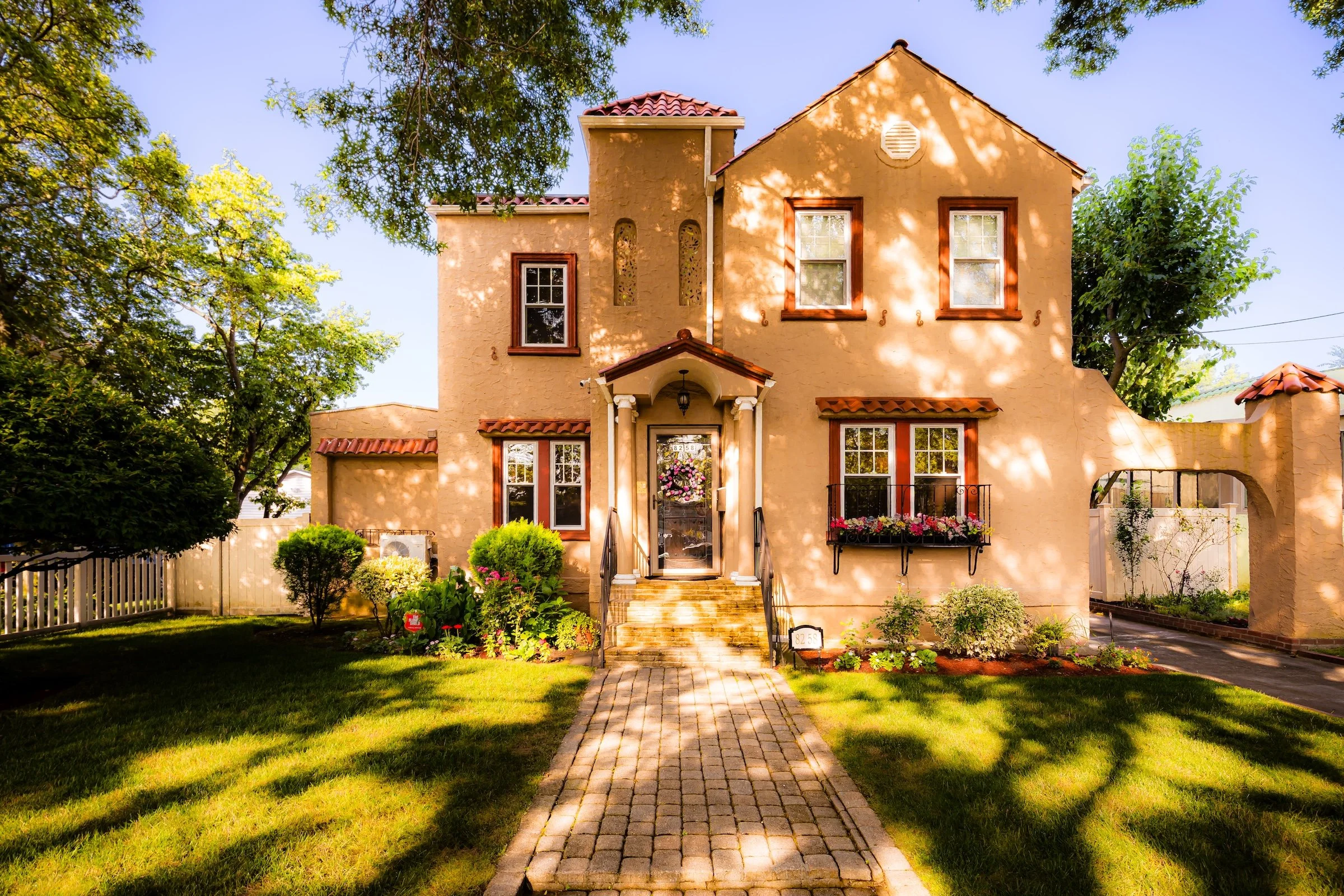
Sun Dapples are broken, patterned patches of sunlight—most often filtered through leaves—that land on grass, pavement, façades, or interiors like a moving stencil. Unlike Sunflections (light bounced back into a scene), Sun Dapples are light sifted through a canopy: a shifting mosaic of highlights and soft-edged shadow.
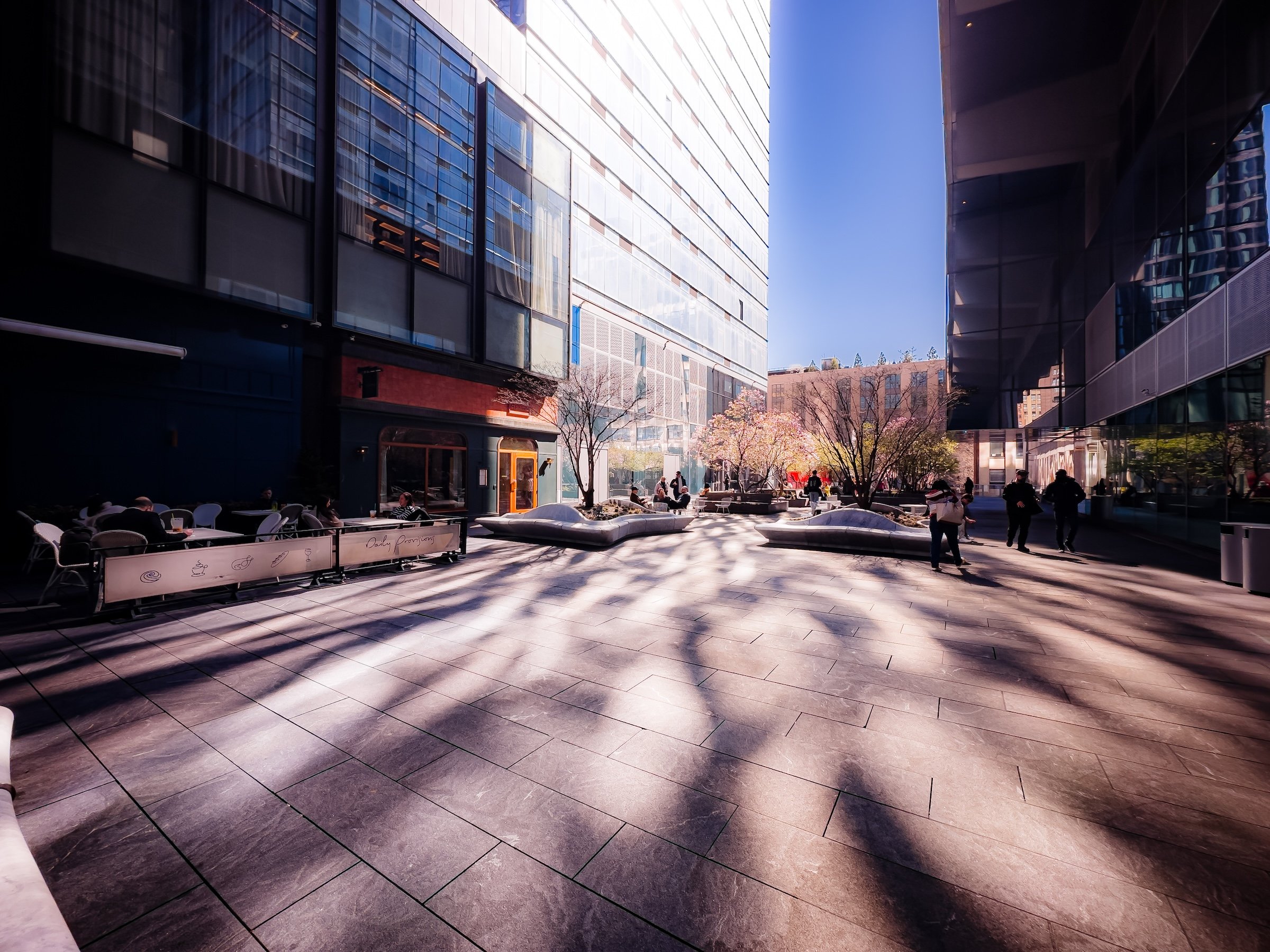
Reflected sunlight that lands on pavement, sidewalks, façades, or other surfaces as luminous shapes—bands, ripples, patches, or drifting “spotlights.” Unlike lens flare (which happens inside the camera), Sunflections are light that the city redirects back into the scene: bounced from glass, metal, water, polished stone, or wet ground
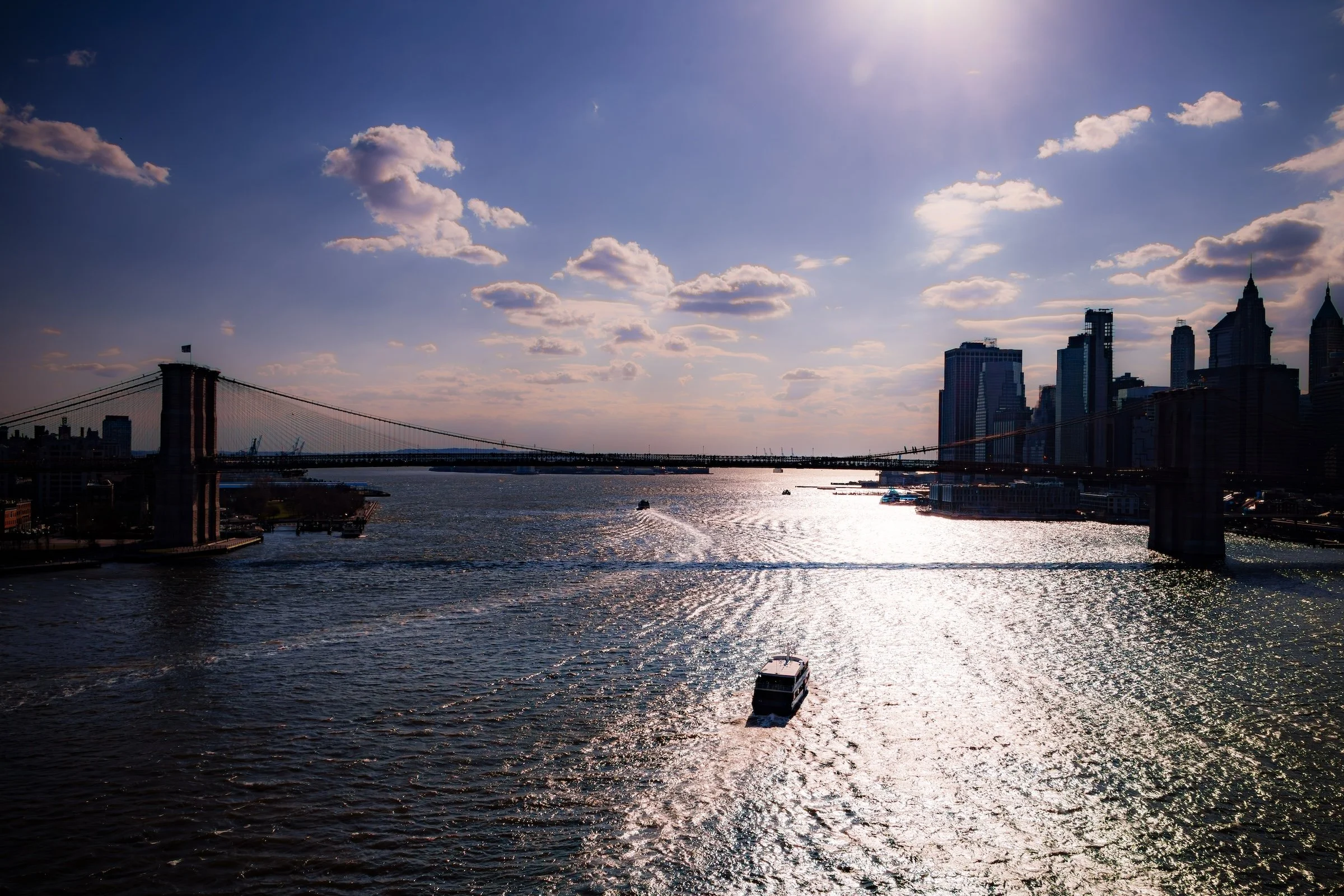
Sungleams are moments when the photograph includes the sun itself (or a near-direct line of sight to it), and the light becomes a structural element—rays, starbursts, flare arcs, halos, and glarepaths that reshape the frame. Unlike Sunflections (which are redirected light landing on surfaces), Sungleams are direct light events: the sun is in the scene, and you compose around what it does to everything else.
The City’s Memoir
(Narrative & Surface)

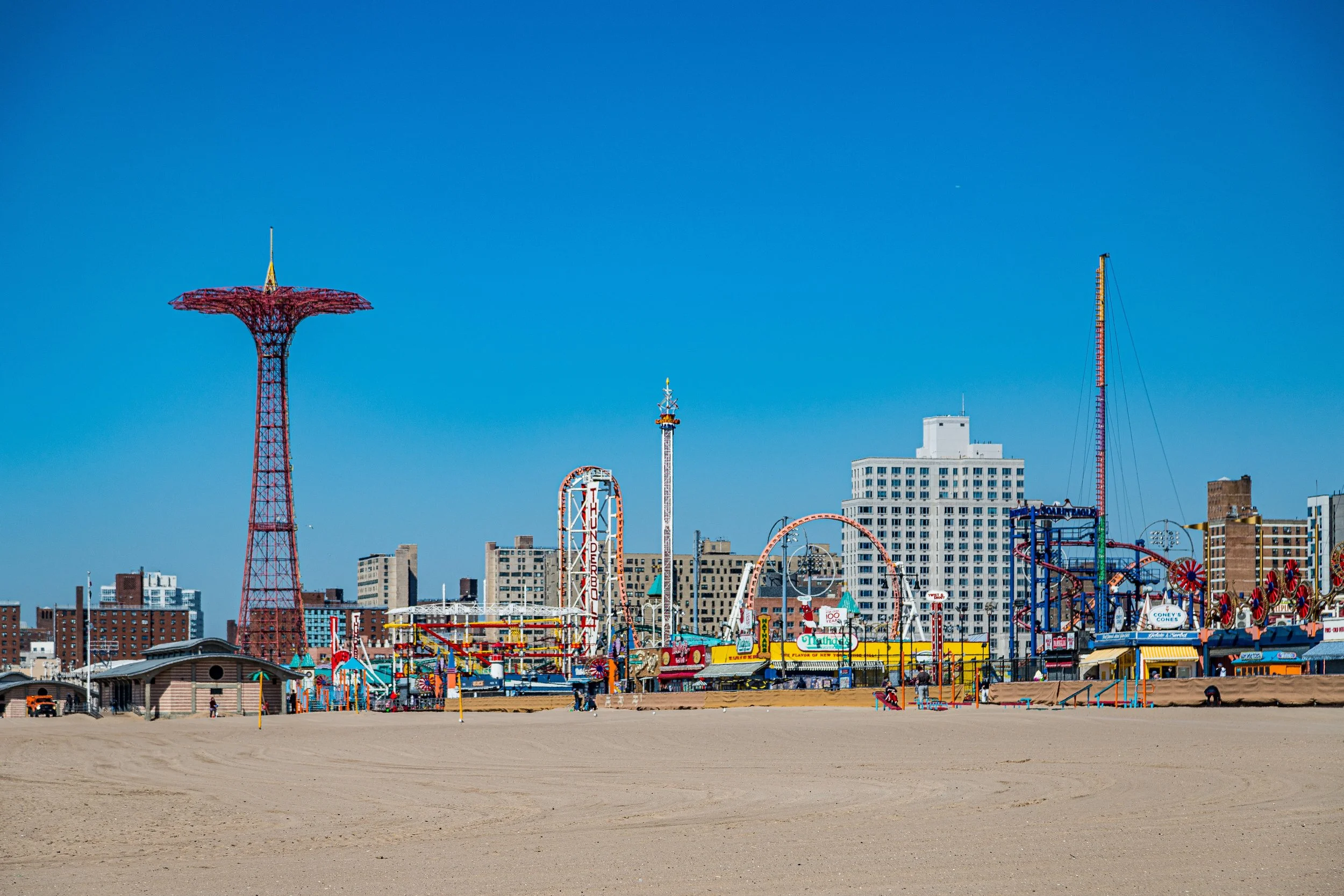
Chromatic City is the practice of treating color itself as a structural element—not decoration. It’s the moment when pigment (natural or manmade) becomes the thing that organizes a frame: saturated feathers, a neon sign, a painted façade, a taxi door in the rain, a sky that behaves like a backdrop. The subject can be anything. The engine is color.
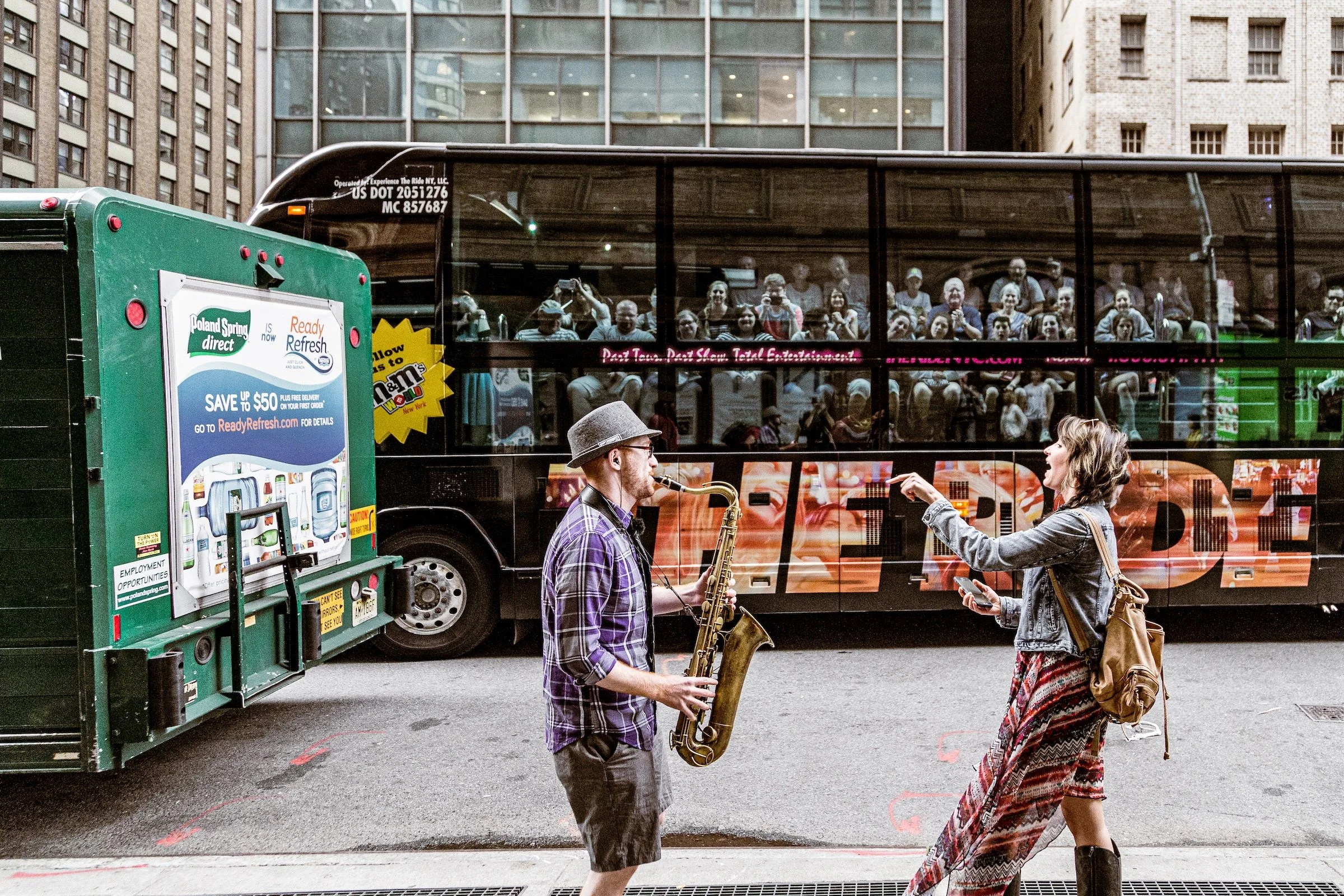
City As Stage is the practice of composing an image so the environment behaves like a theatrical set and the subject(s) read as performers—whether they’re aware of it or not. The key is that the setting does narrative work: it cues mood, power, tension, humor, intimacy, or awe—before the subject even moves.
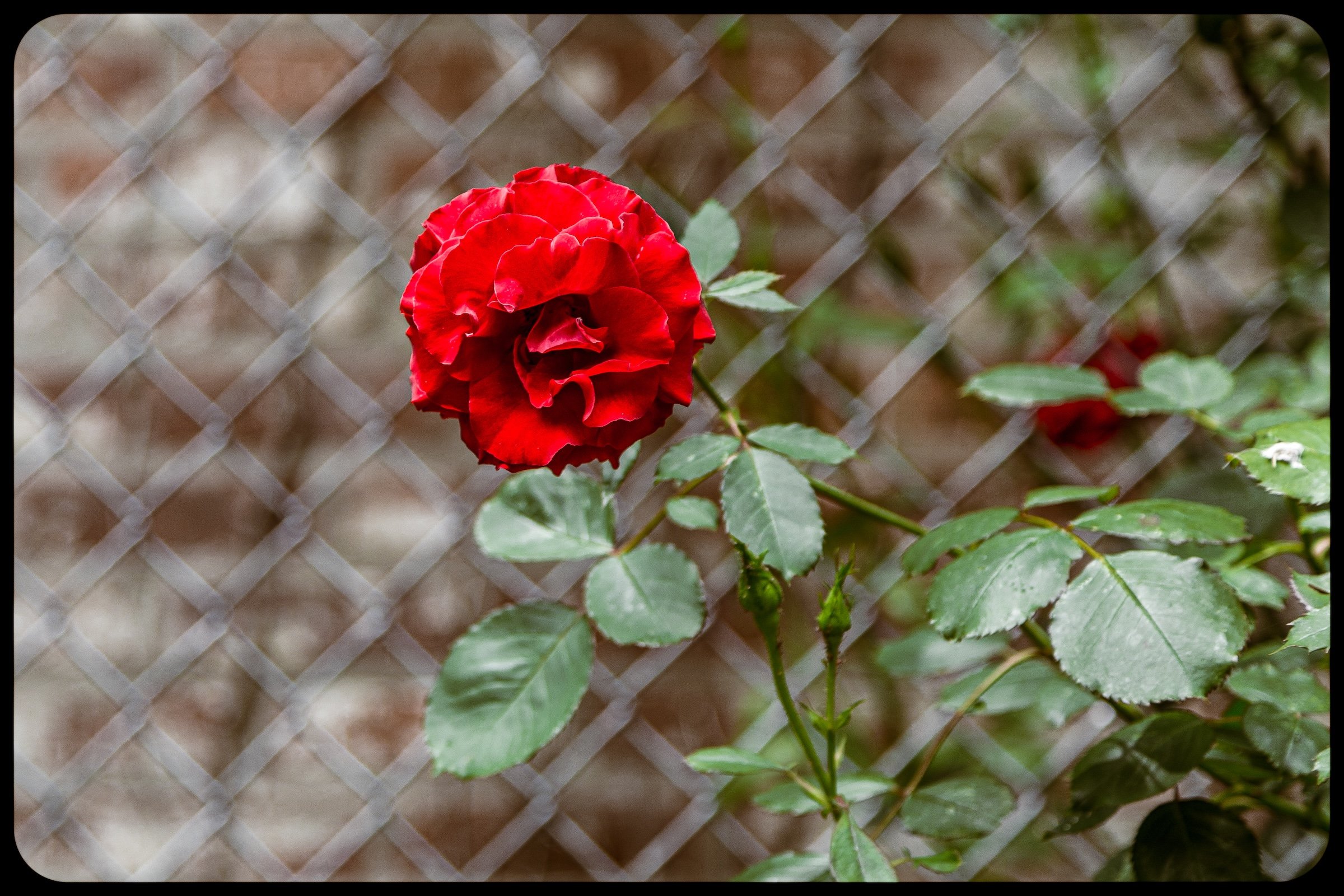
Companions & Juxtapositions are frames built around two (or more) elements that “talk” to each other—through contrast, echo, irony, tenderness, or tension. The power isn’t in either subject alone; it’s in the relationship you trap inside the rectangle.
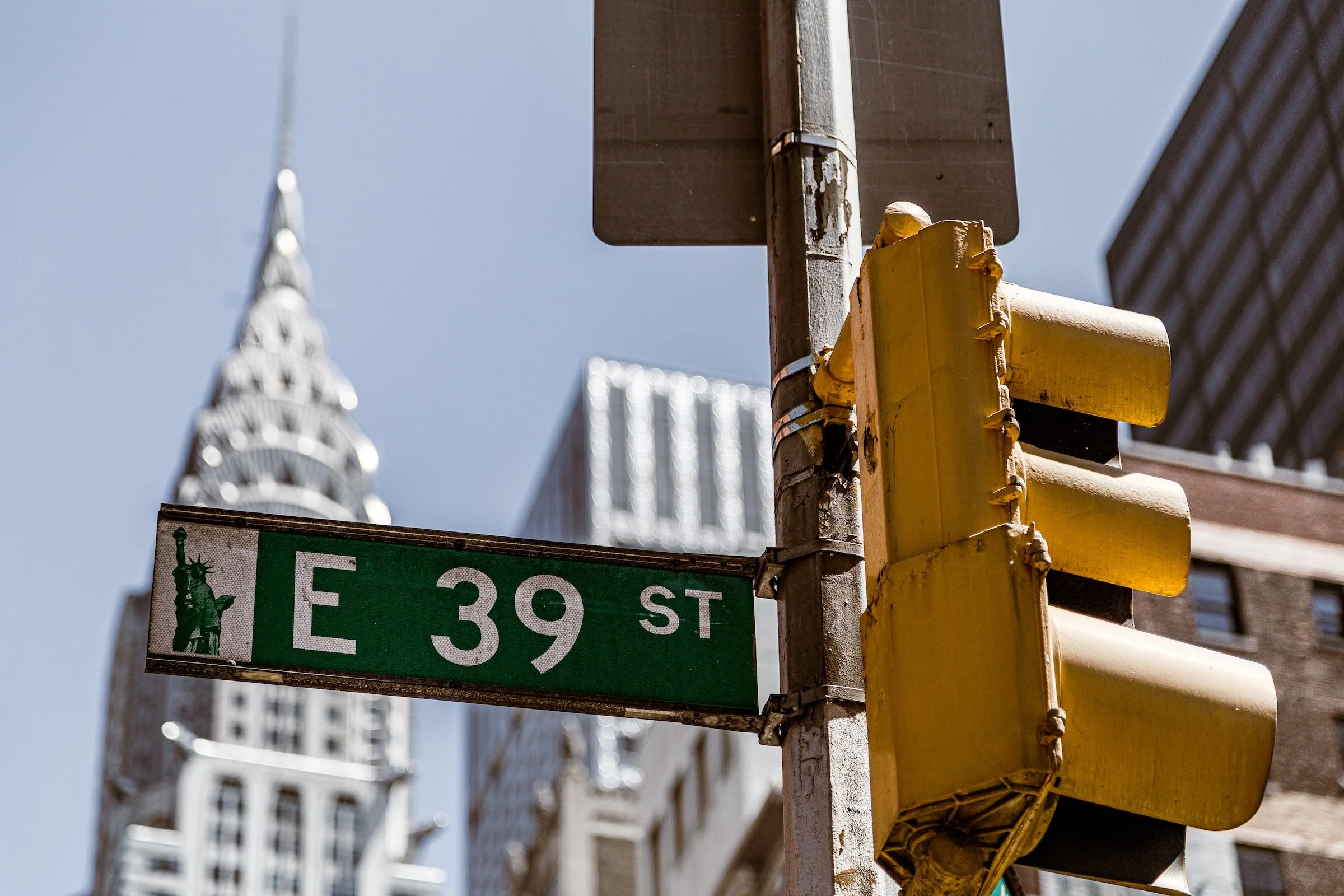
Photographs built around signage—street names, storefronts, municipal lettering, warnings, neon, hand-painted declarations—where the text isn’t just “in” the scene, but drives the scene. In Follow The Signs, words become structure: an anchor for composition, a shorthand for place, and a narrative cue that tells the viewer how to read what comes next.
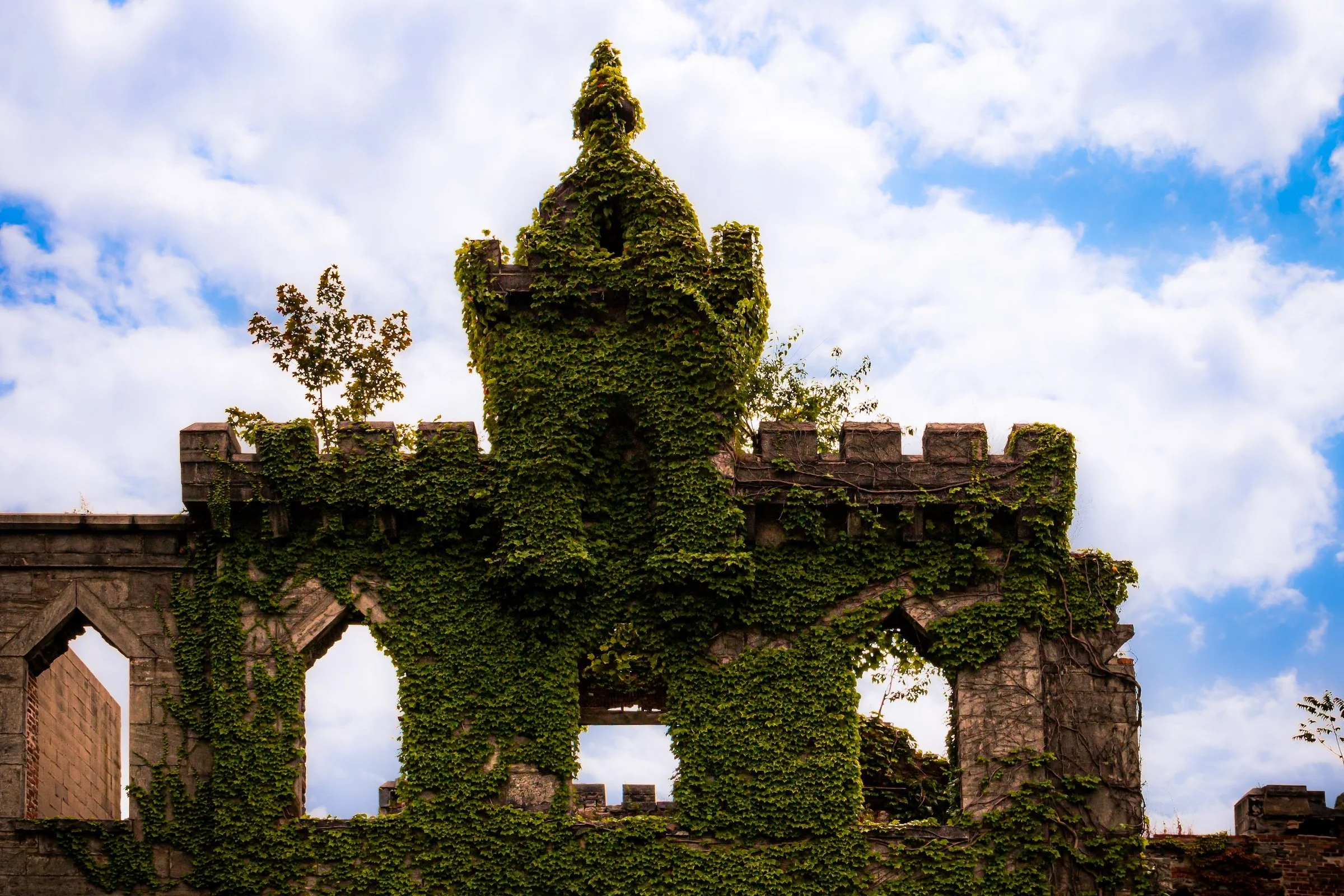
A photographic devotion to age, wear, and survival: weathered facades, peeling paint, rusted hardware, old infrastructure, ghost signage, and objects that look slightly out of time. For The Love Of Old Things isn’t nostalgia for its own sake—it’s attention to the city’s material memory.
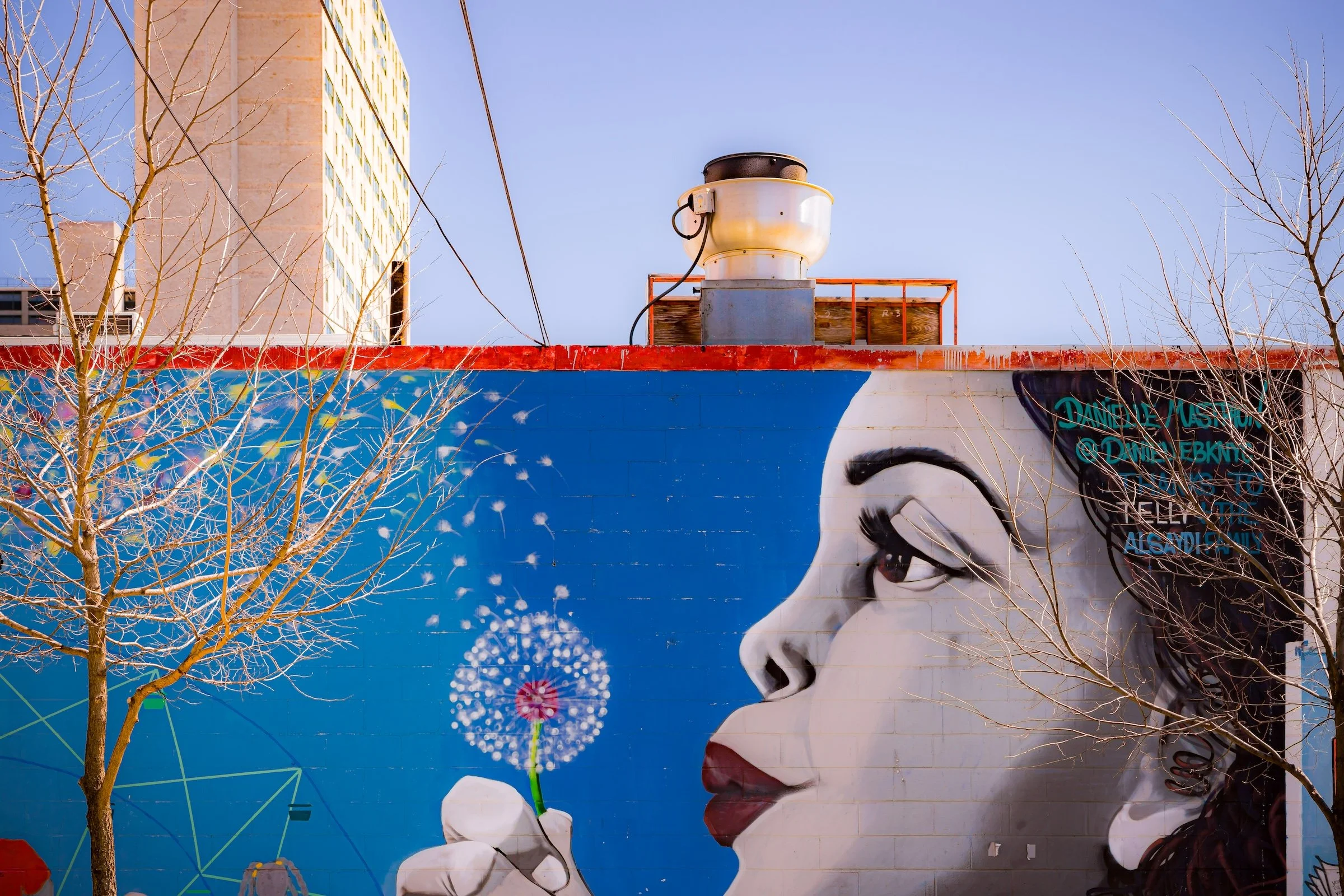
Graffiti Context is the practice of using graffiti not as the main subject, but as environmental language—a layer that explains where you are, what the street feels like, and what mood the scene should carry.
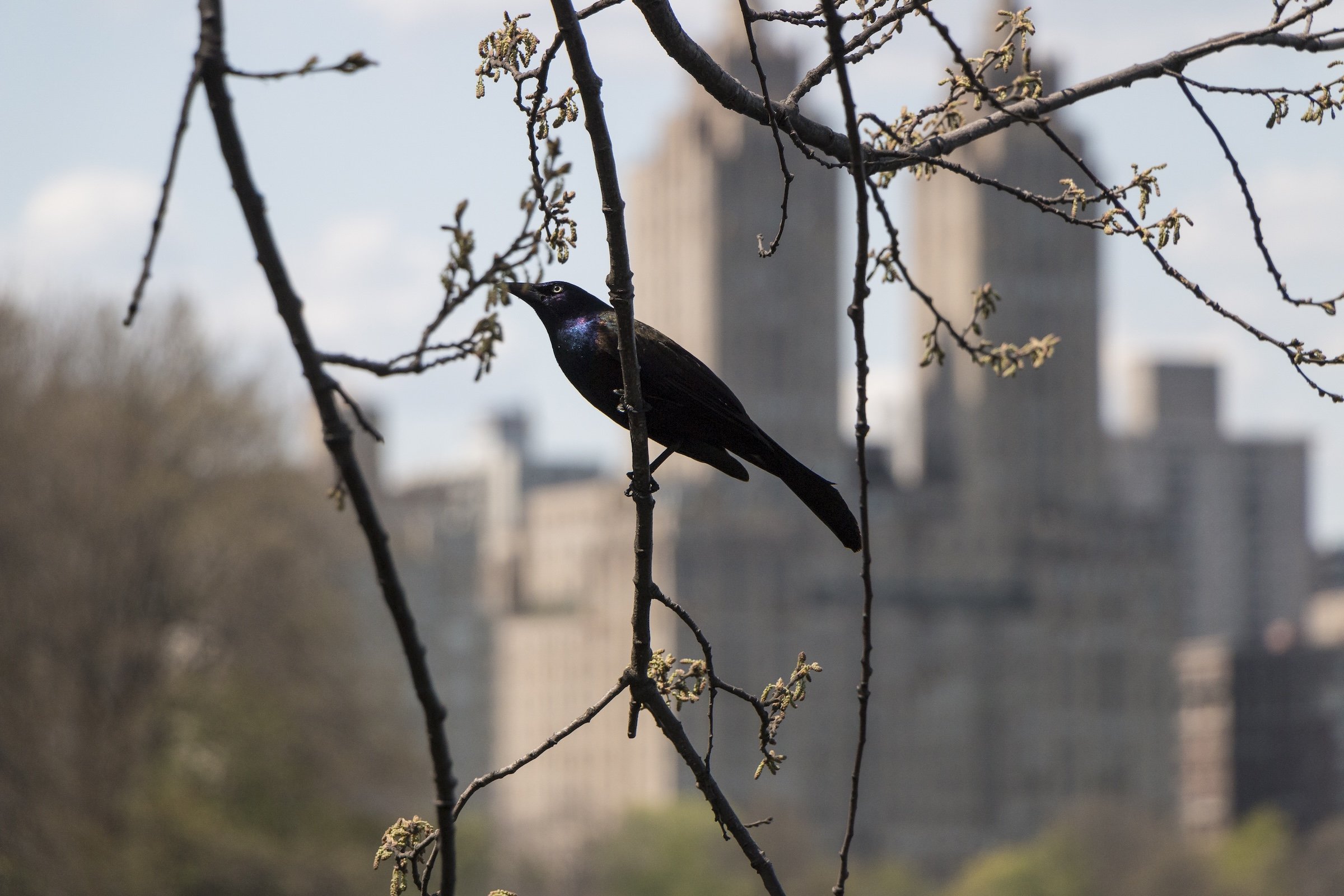
A storytelling approach where nature (trees, water, sky, dunes, branches, wildlife) becomes the theatrical set—and the subject appears as a performer within it. The frame reads like a stage: foreground “curtains,” mid-ground “floor,” background “backdrop.”
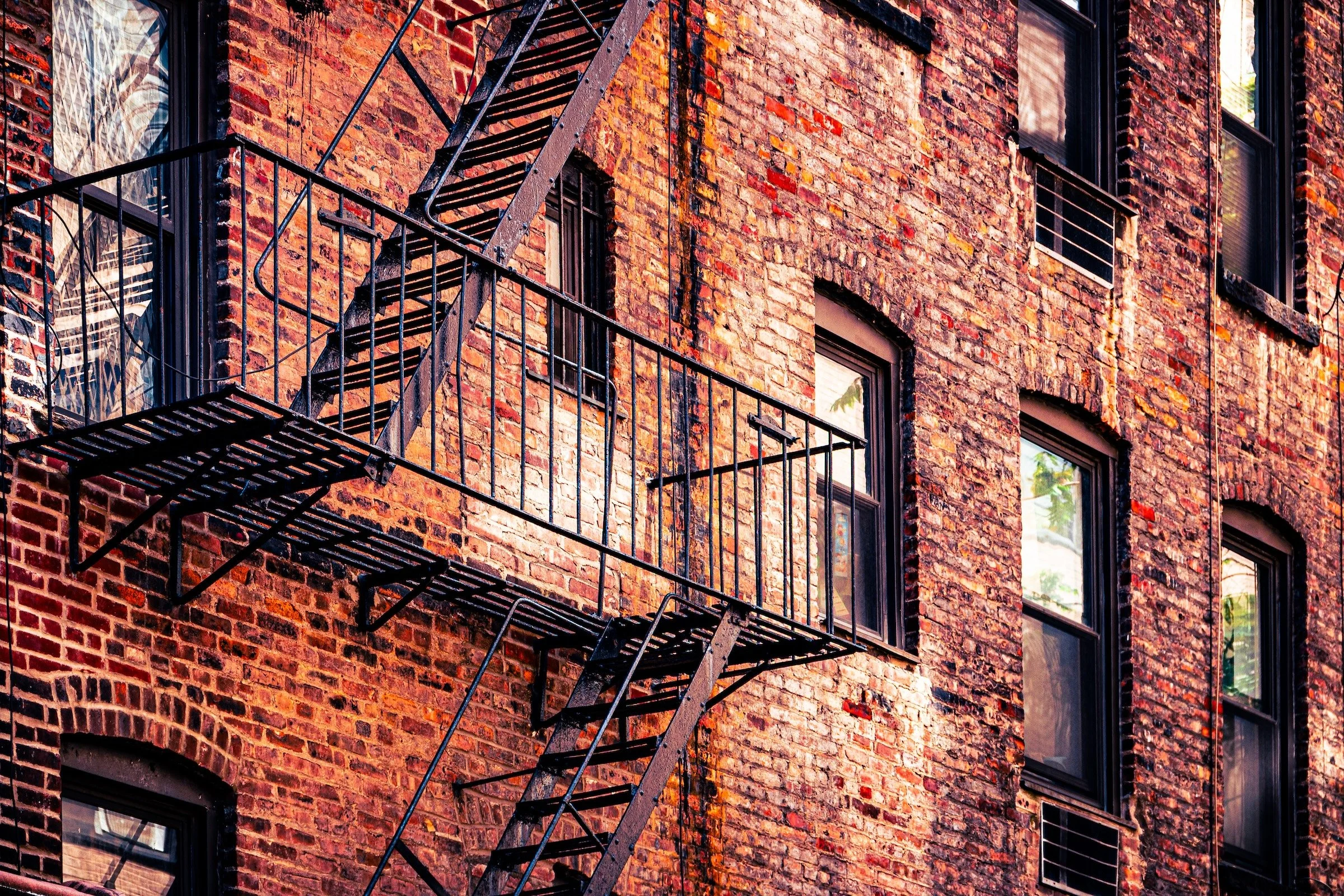
Textures makes surfaces the subject—rendering material detail (brick, rust, stone, peeling paint, concrete, wood) with tactile presence and compositional intent.
The Weight of Space
(Dimension & Scale)
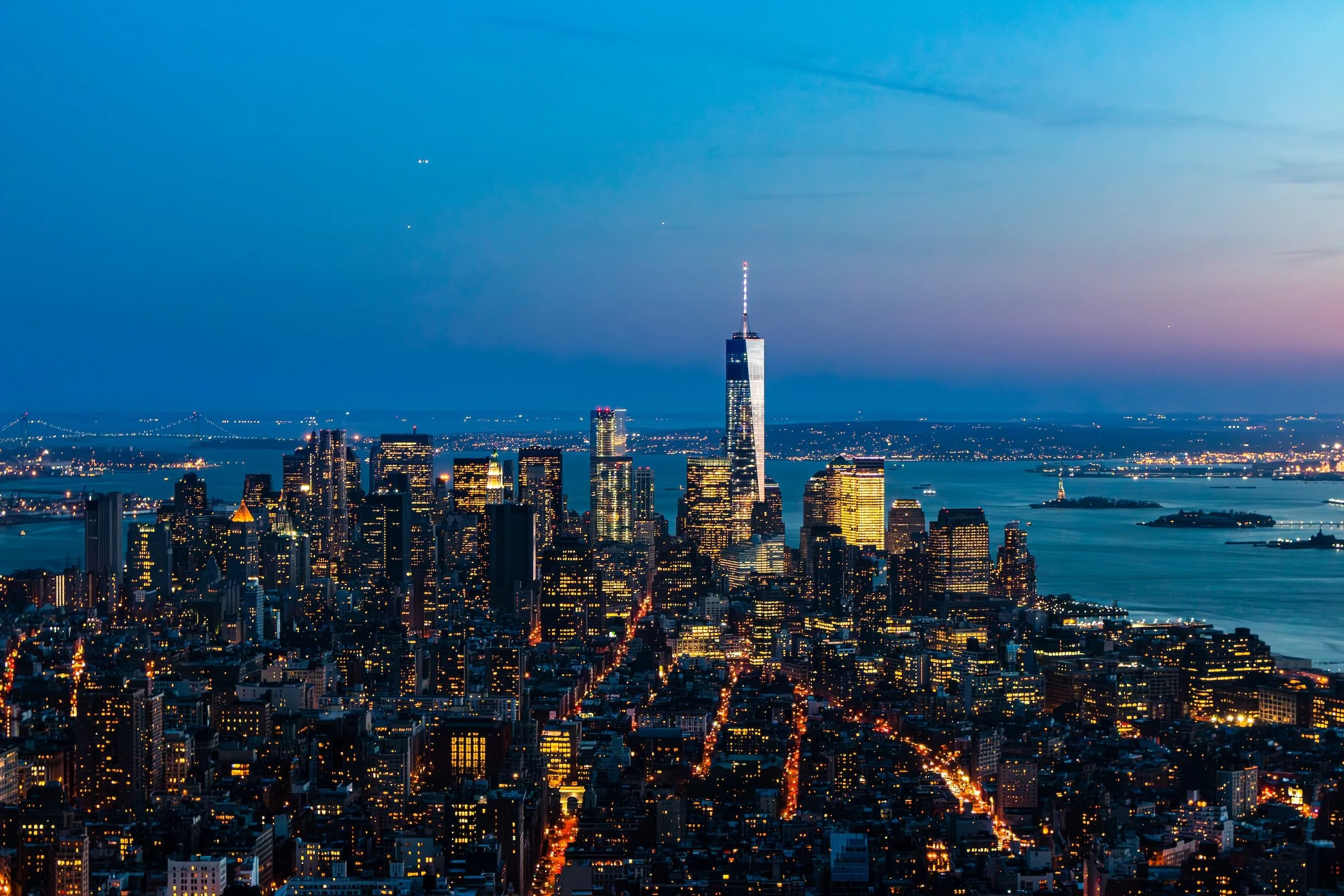
A deliberate shift in vantage—low, high, tilted, compressed, or wide—that changes how the city “behaves” inside the frame. Altered Perspectives isn’t about the subject (a tower, a street, a skyline) so much as the position you choose to describe it: street-level immersion, upward vertigo, balcony-scale overview, or foreground-anchored compression.
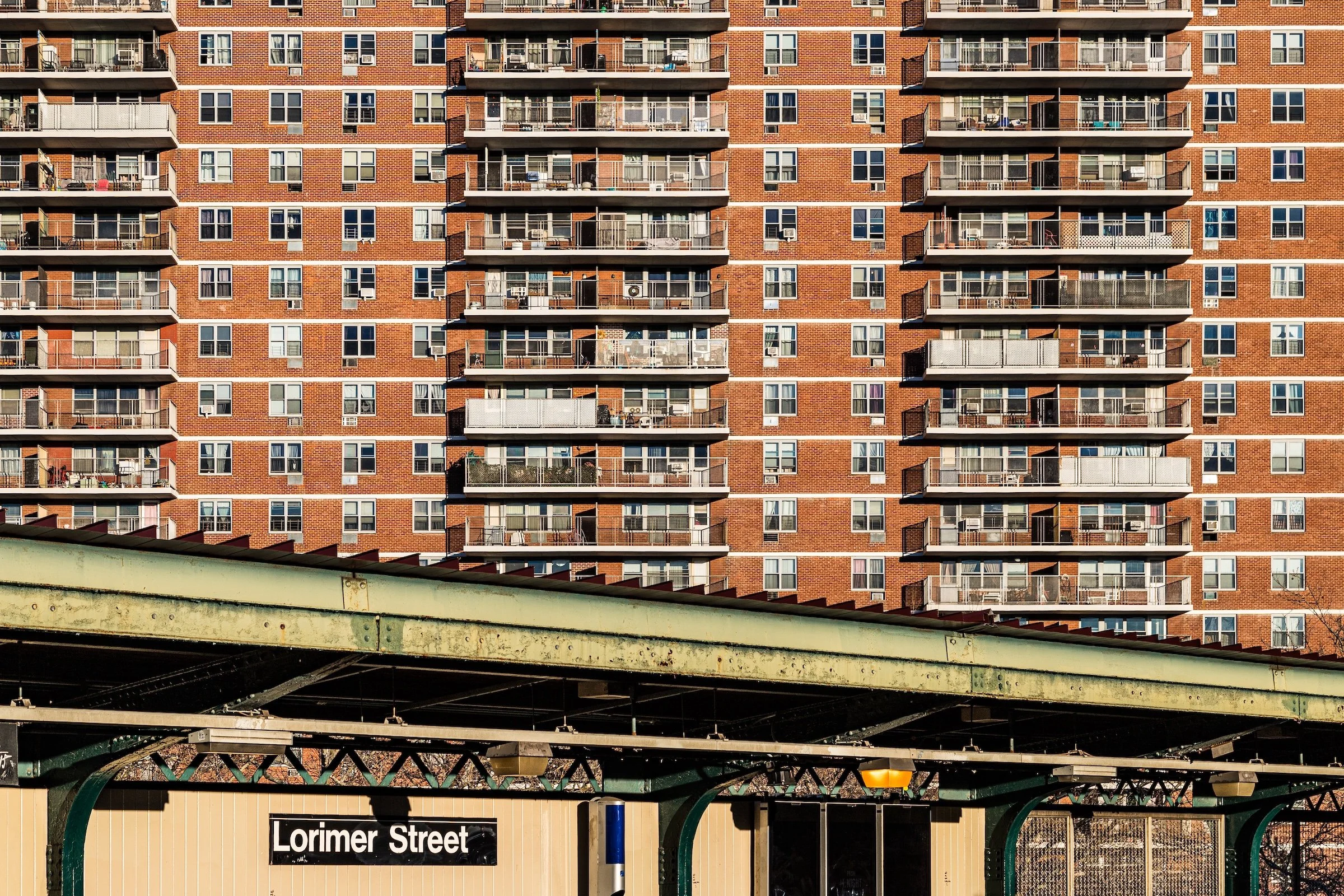
Bigger Than The Frame is a composition strategy where the subject’s scale is communicated by refusing to contain it. The building (or structure) extends beyond the edges of the photograph—top, sides, or both—so the viewer feels the continuation. The frame becomes a window onto something larger, not a box that neatly holds it.

A compositional approach for showing how big something feels—not just how big it is—by placing a subject in relationship to recognizable reference points: people, streets, windows, trees, bridges, skylines, and negative space. Capturing Scale is about designing a frame where the viewer can measure the world intuitively.
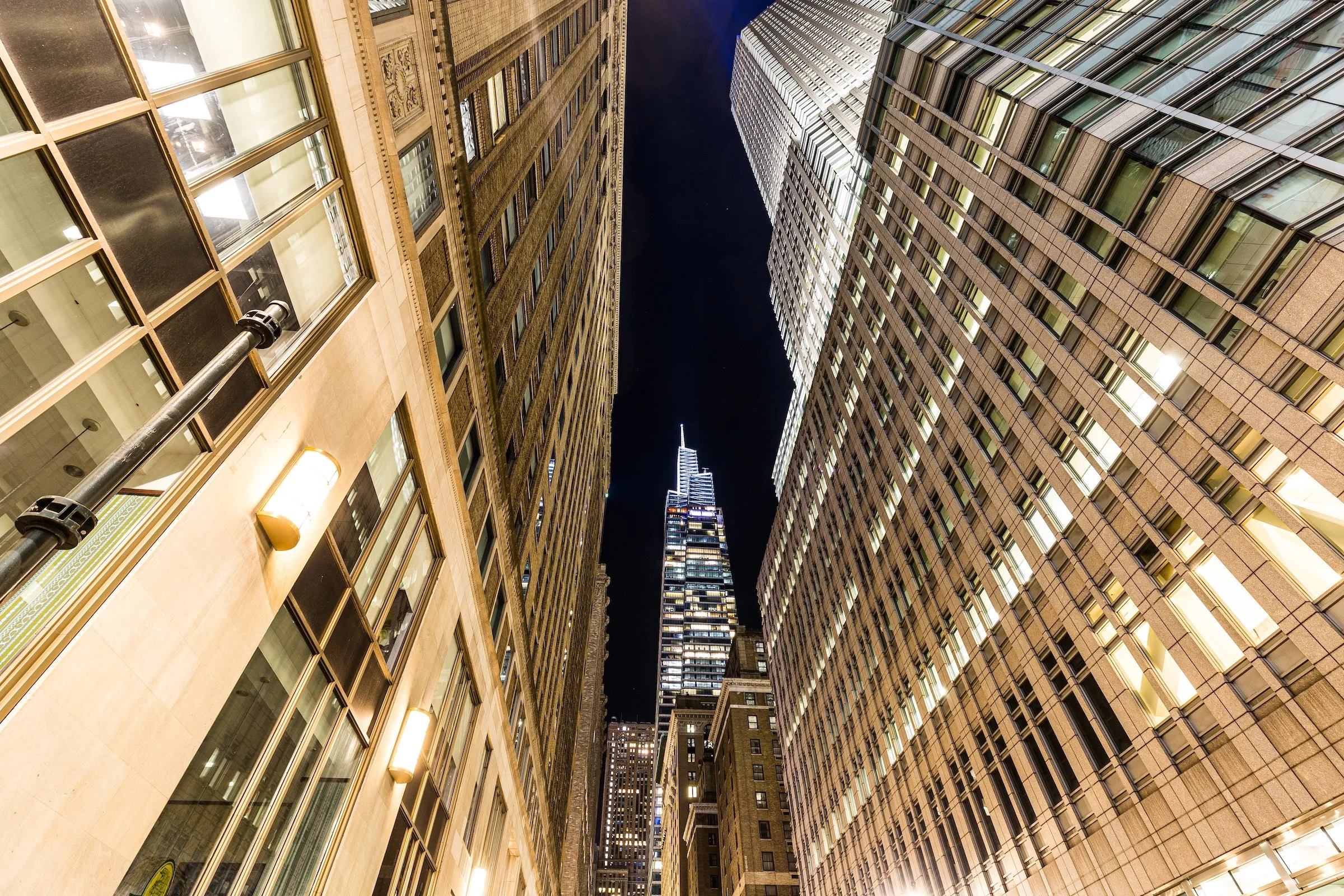
Urban Canyons is the practice of photographing city streets and corridors as “vertical landscapes”—spaces where tall buildings compress the sky, exaggerate depth, and make scale itself the subject. It’s the feeling of moving through a carved channel of stone, glass, and light.
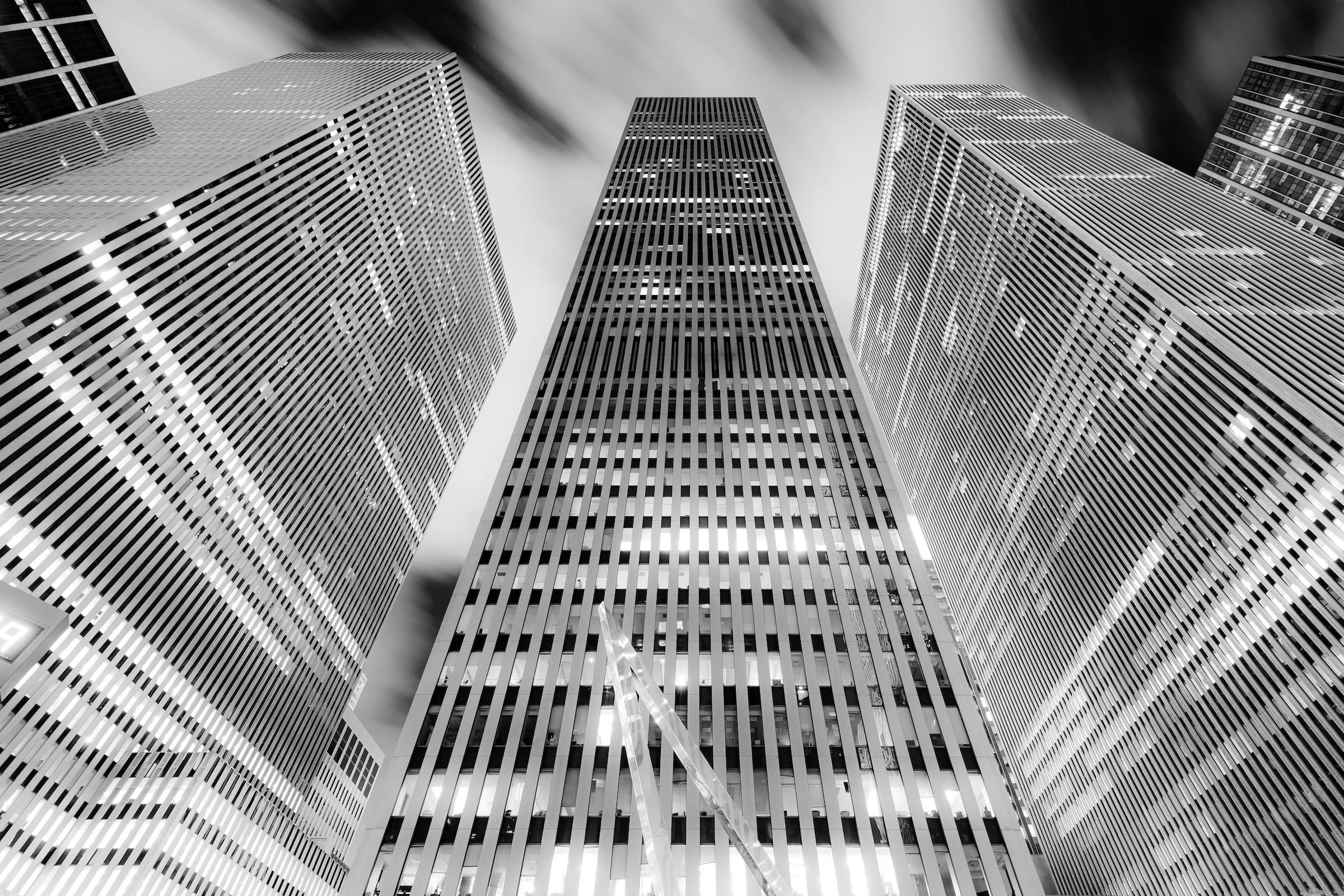
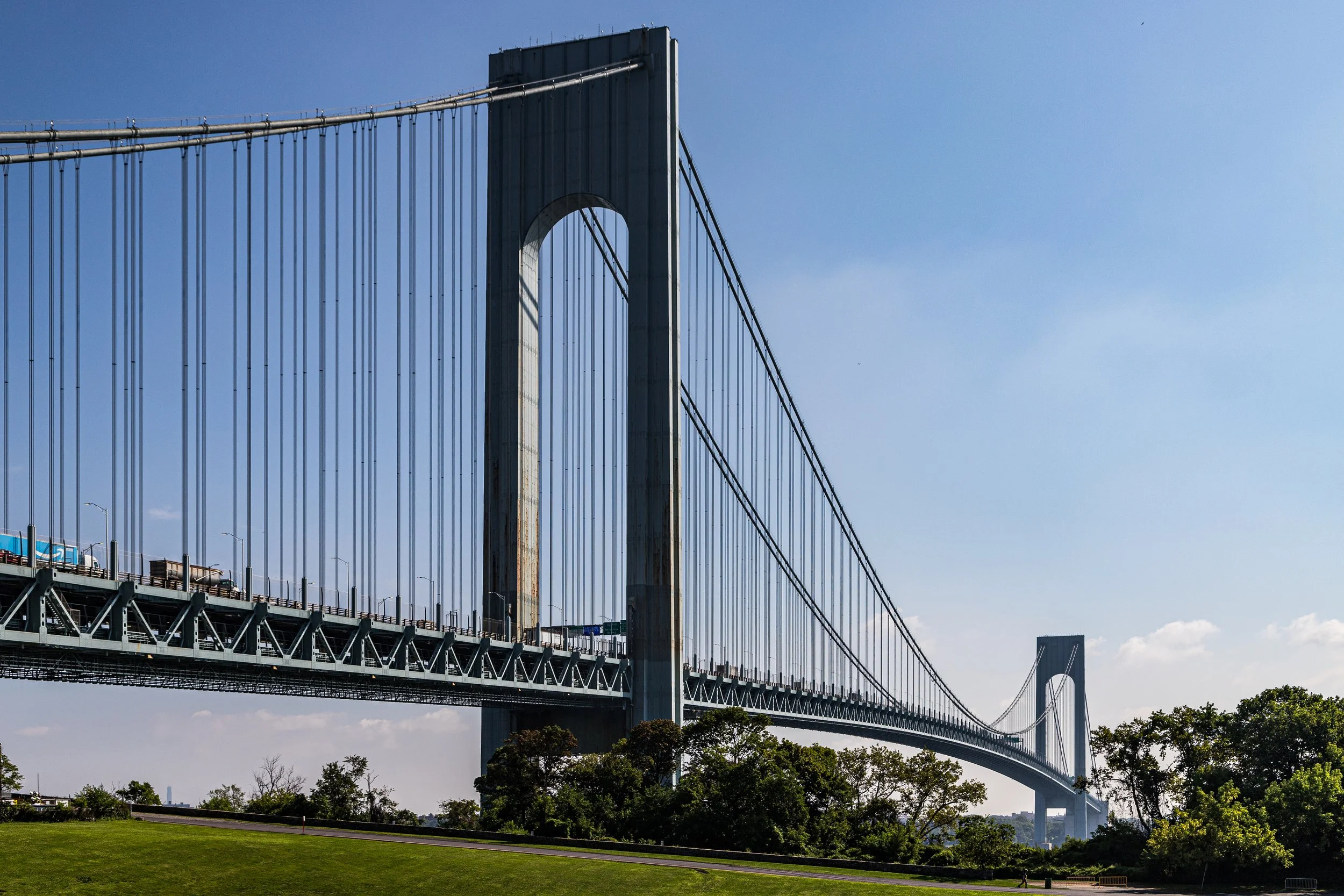
Urban Monoliths is the practice of photographing the city as single, dominant forms—structures so massive they read less like “buildings” and more like objects: towers, bridges, slabs, and silhouettes that hold the frame through sheer presence.

The Wraparound is the wide-angle technique of placing the viewer at a bend, corner, or seam so the scene appears to curve around them. It’s the feeling of being inside the geometry—where streets, walls, rails, or facades sweep outward to the left and right, and depth becomes a physical sensation.
Structural Rhythms
(Geometry & Logic)

Abstractions turns the city into pure visual language—shape, color, texture, rhythm—so the image can stand on its own even if the viewer never identifies the literal subject.
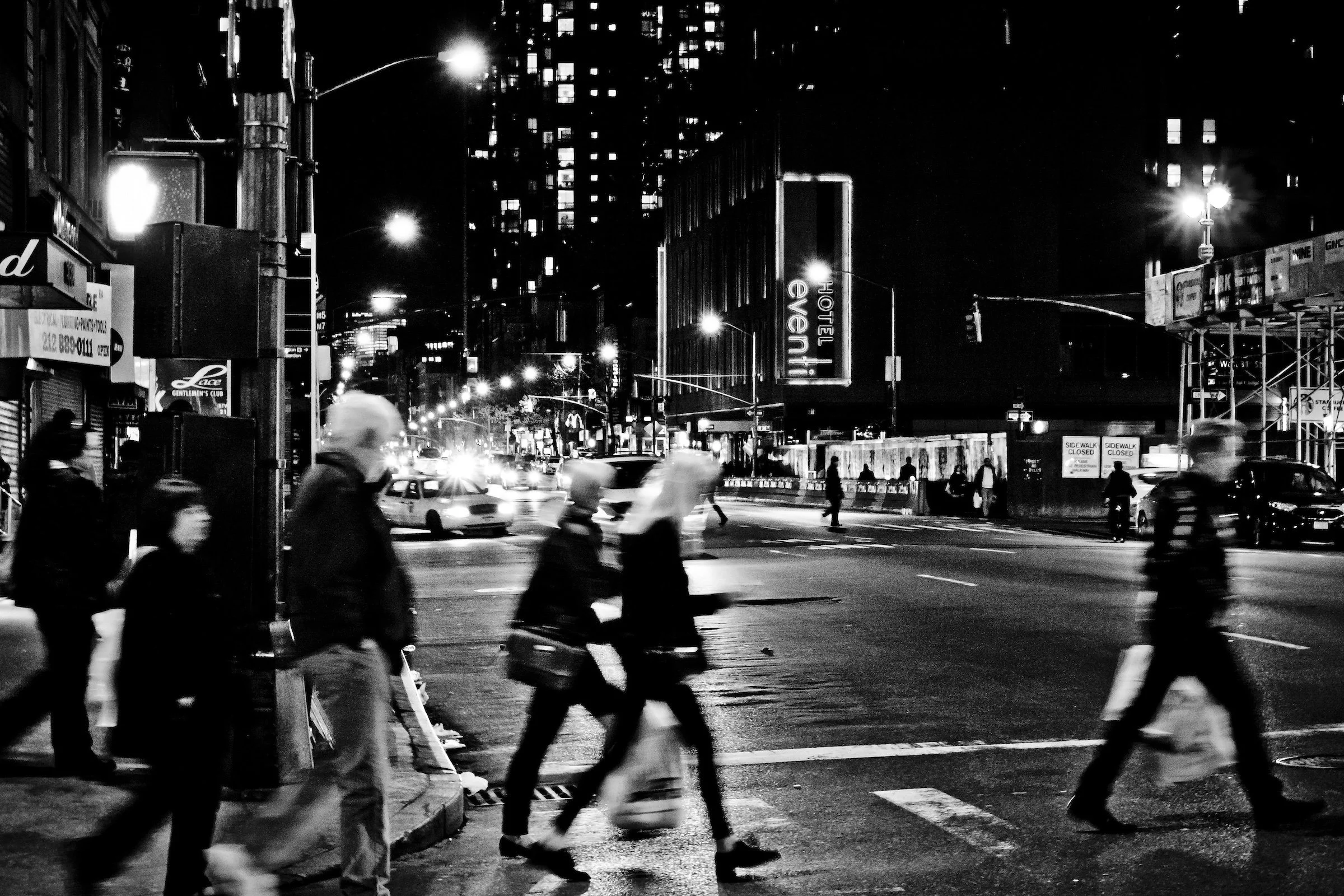
Crosswalk Cadence is the use of crosswalks, lane markings, and street striping as rhythmic structure—visual beats that organize motion, guide the eye, and turn intersections into choreography. The subject may be a cyclist, a crowd, a building, or pure pattern, but the cadence comes from the street’s graphic language.

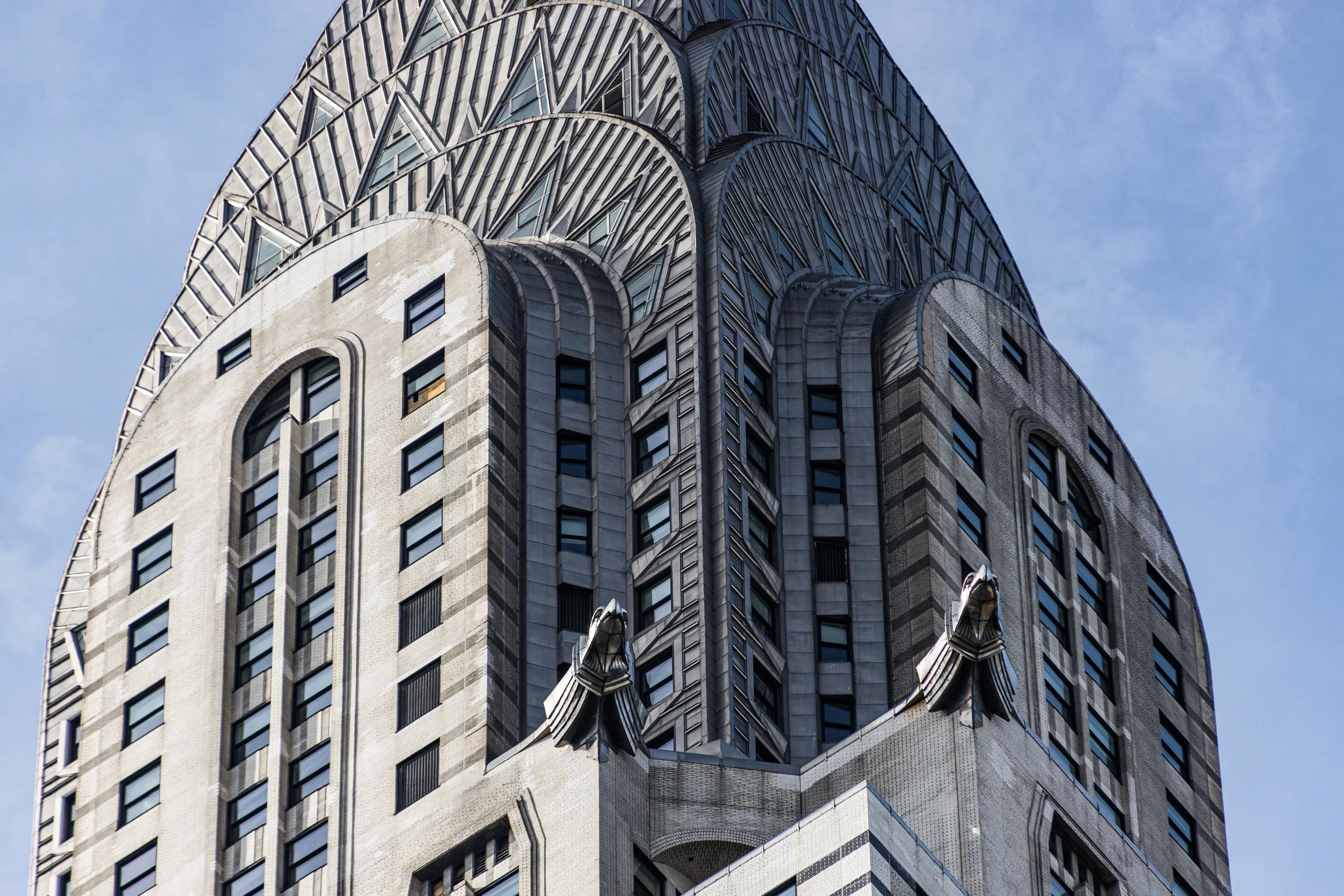
Geometric City is the practice of photographing the built environment as shape-first design—where buildings become grids, diagonals, tessellations, curves, and repeating modules. The city stops being “a place” and starts behaving like a living diagram: planes of glass, stacked windows, rigid columns, spirals of steel, and improbable angles that turn perspective into pattern.

The Power of Lines is the practice of using lines—literal or implied—to organize a photograph. Lines pull the viewer’s eye, define depth, create rhythm, and turn everyday streetscapes into compositions with intention.
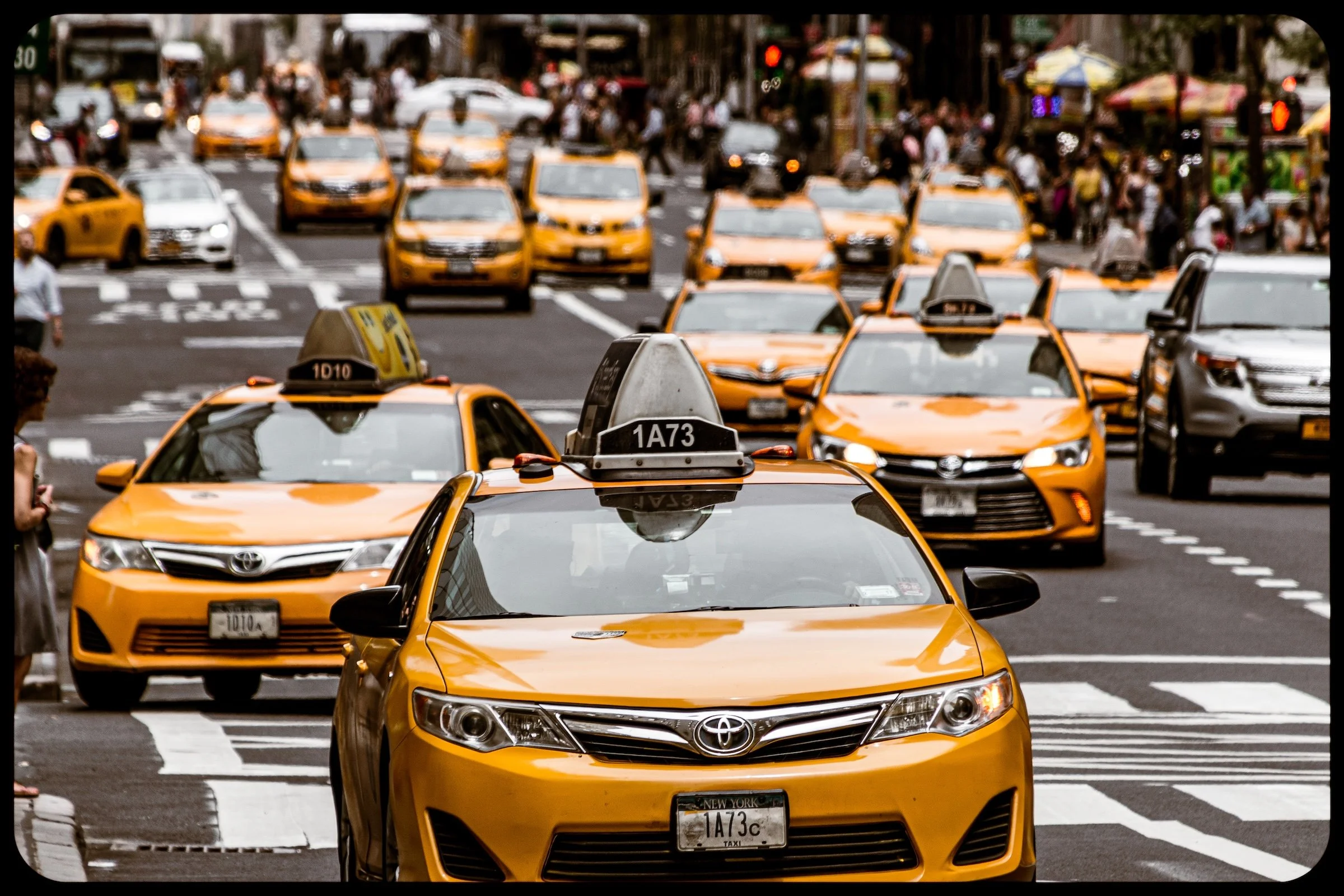
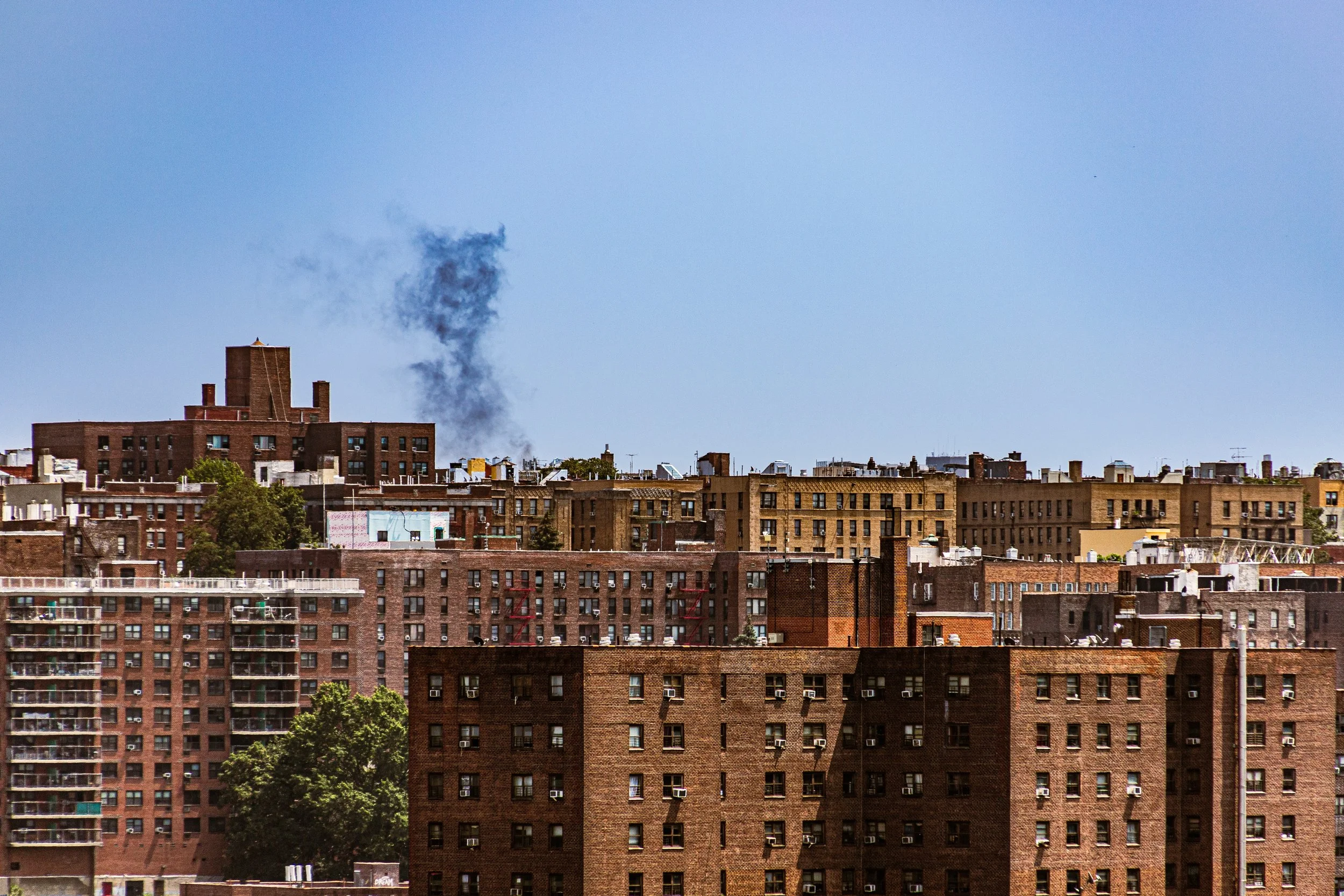
Repetitions & Patterns is the practice of building a photograph around recurrence—grids of windows, repeating arches, aligned rooftops, stoops in sequence, or a chorus of repeated objects—so rhythm becomes the structure. The subject is often the pattern itself, and the city reads like a designed system instead of a single moment.
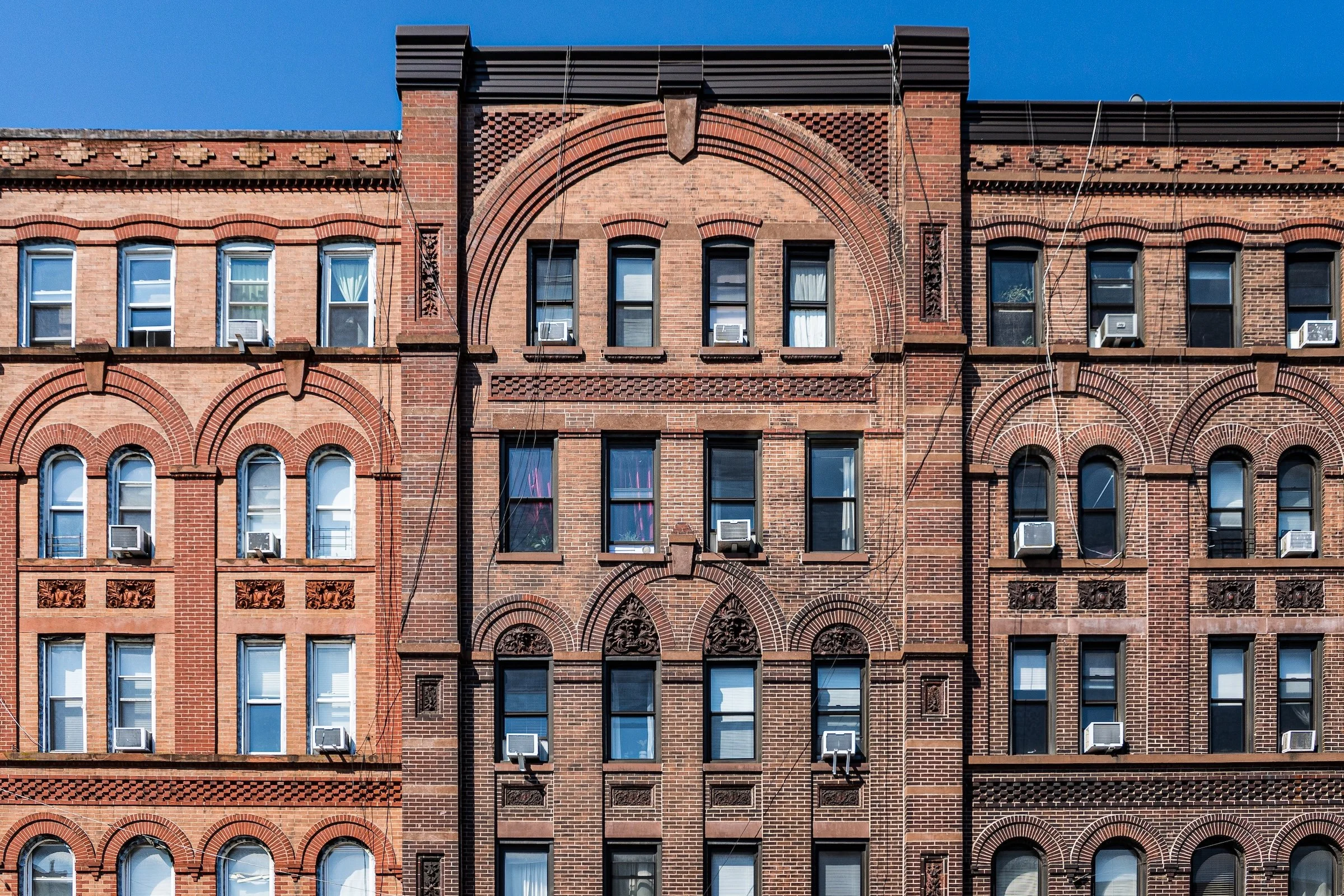
Upright Alignment is the practice of photographing architecture so it stands straight—verticals stay vertical, horizons stay level, and the building reads like a composed portrait rather than a collapsing snapshot. It’s the “square-up” instinct: the frame becomes an act of respect for structure.
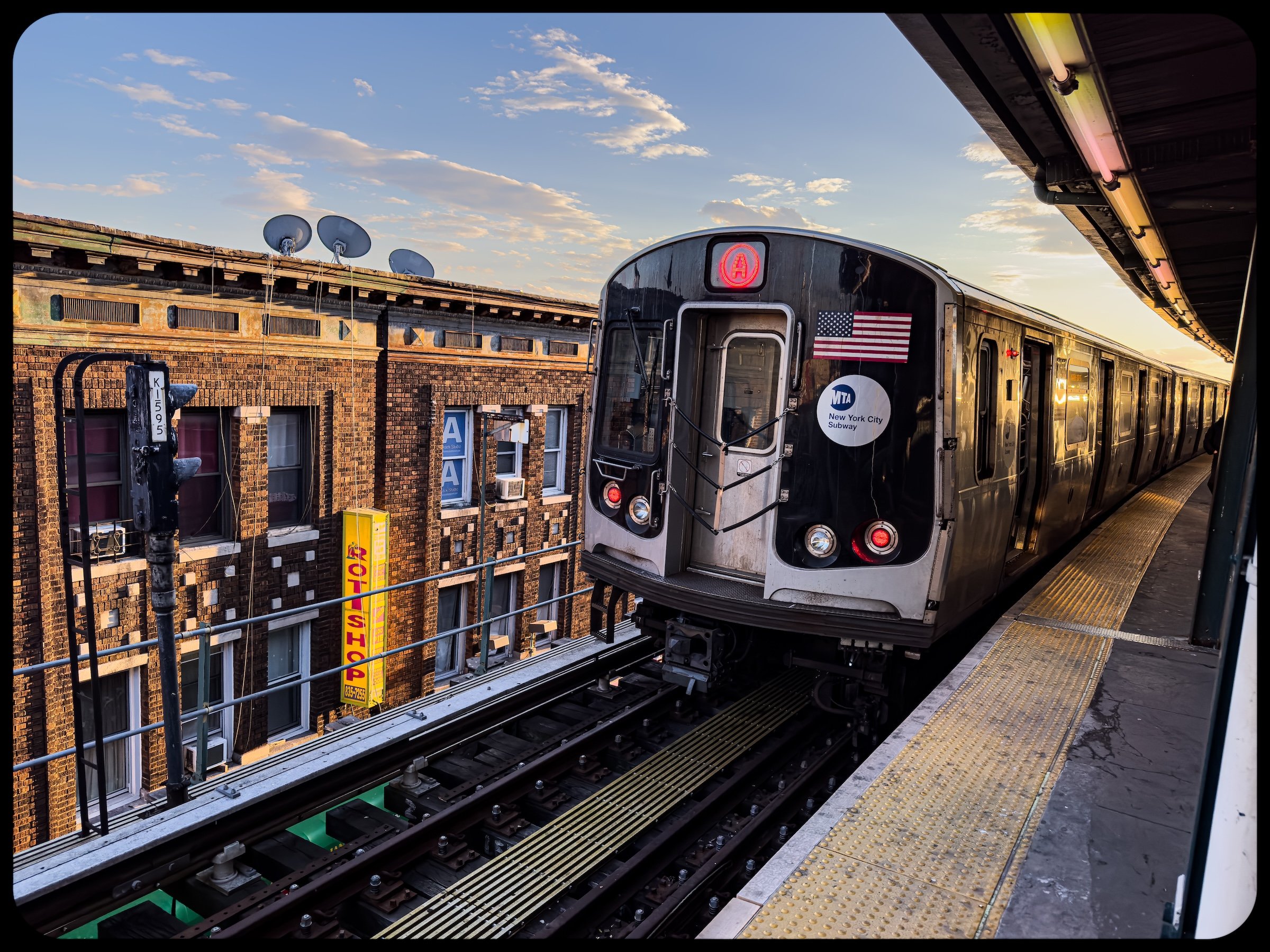
Vanishing Points is the practice of composing a photograph around a point of convergence—where parallel lines (tracks, curbs, facades, canals, fences, shadows) appear to meet in the distance. It’s the visual spell that turns a street or corridor into a story with a destination.
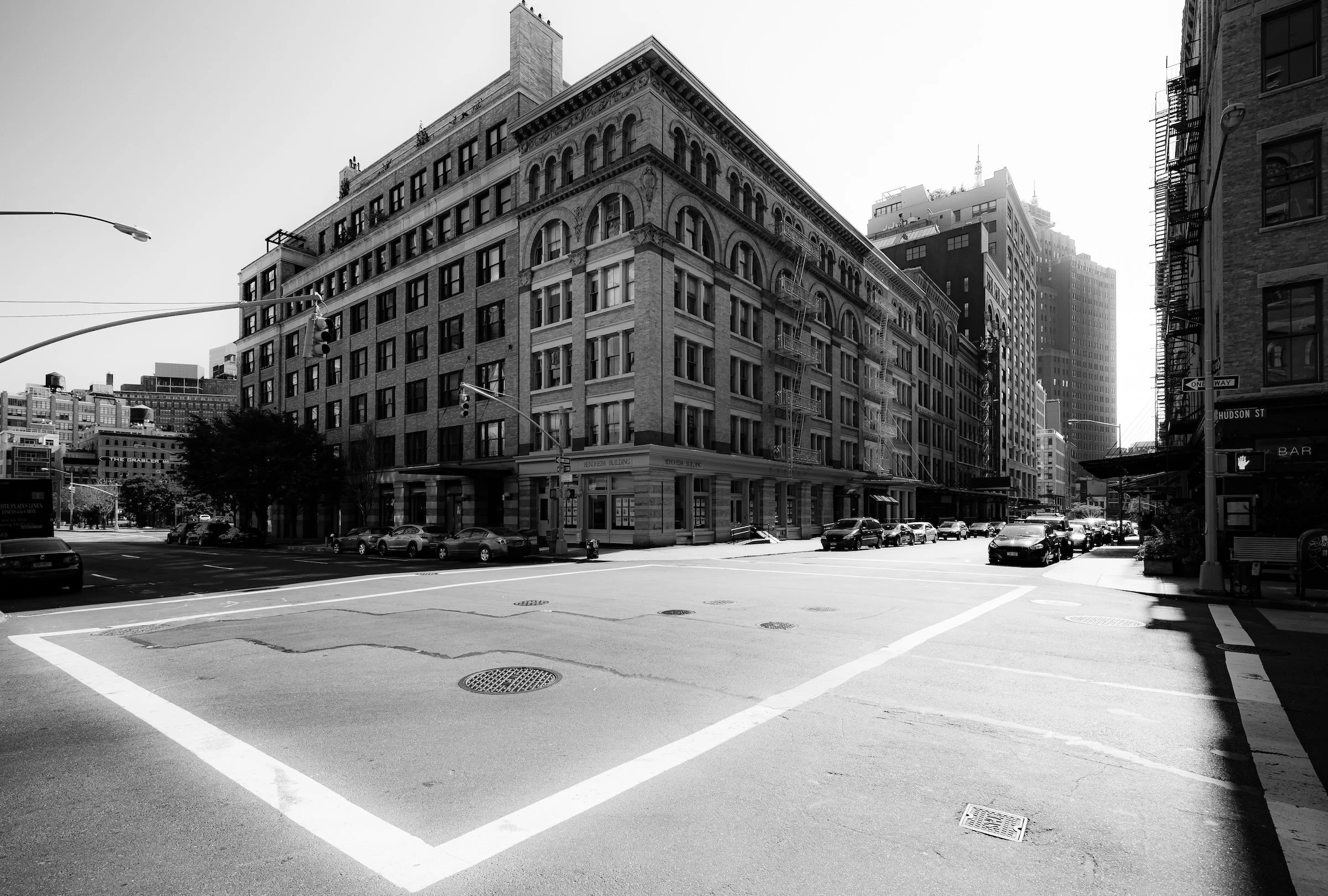
Wedge Geometry is the practice of composing photographs around wedge-shaped spatial tension—where sidewalks, curbs, lawns, walls, corners, rooflines, or converging architectural edges create a strong directional shape that organizes the frame. The image may still contain triangles, but the deeper logic is broader than that: it is about how a wedge of space, surface, or structure can steer the eye and give the composition both force and clarity.
Layered Echoes
(Complexity & Depth)
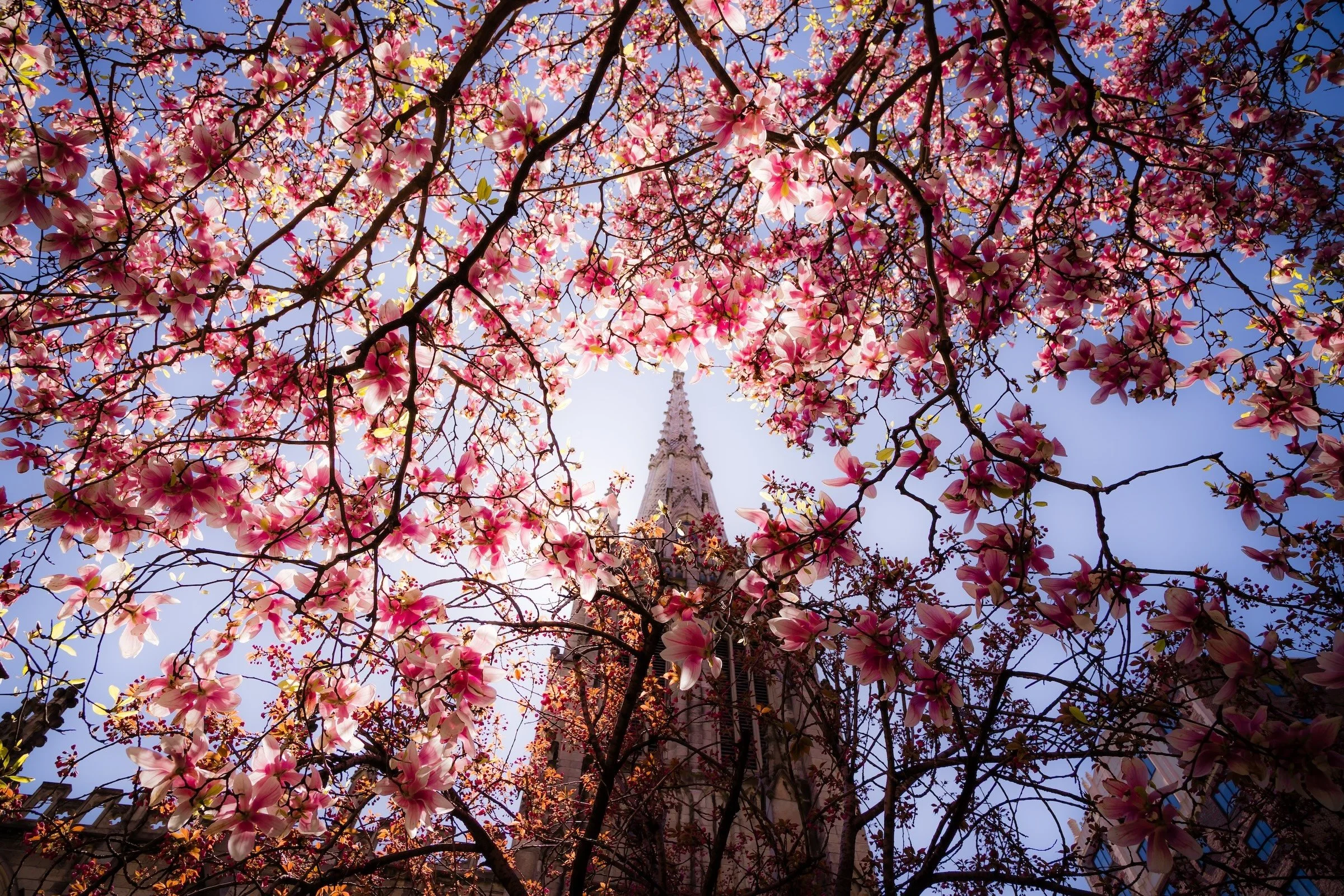
Custom Framing is the deliberate use of a built or found “frame-within-the-frame” to shape what the viewer sees—branches, windows, arches, railings, doorways, architectural cutouts, even the negative space between buildings. The goal isn’t just to “surround” the subject, but to design a threshold: a controlled opening that directs attention, establishes depth, and turns the edge of the photograph into an active compositional tool.
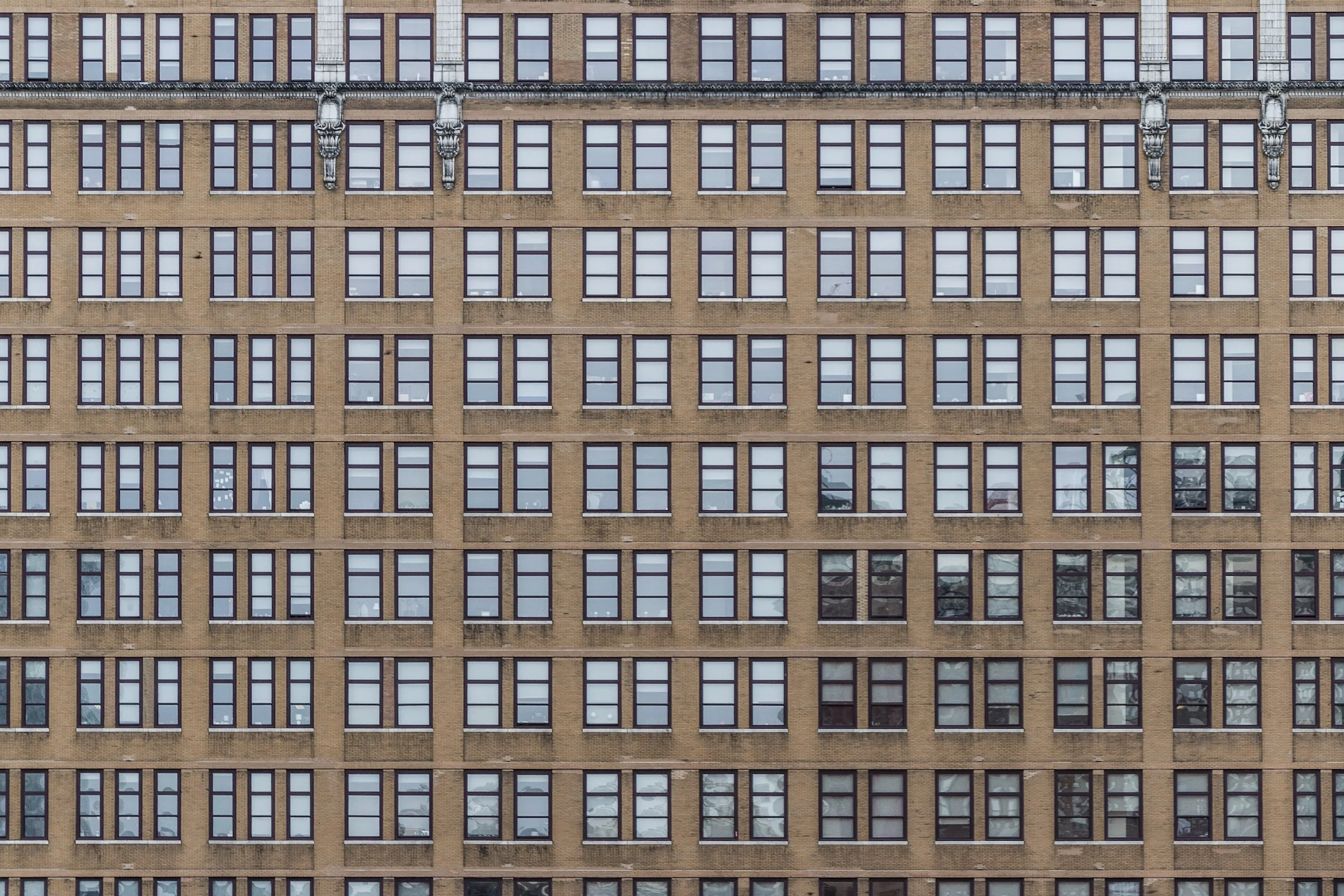
Glassy Eyes is the practice of treating windows as the city’s gaze: repeating panes that read like pupils, grids that feel like a thousand watching eyes, and reflective glass that turns a building into a living surface. The subject isn’t “a building” so much as the expression created by its windows—orderly, anxious, playful, severe, curious.
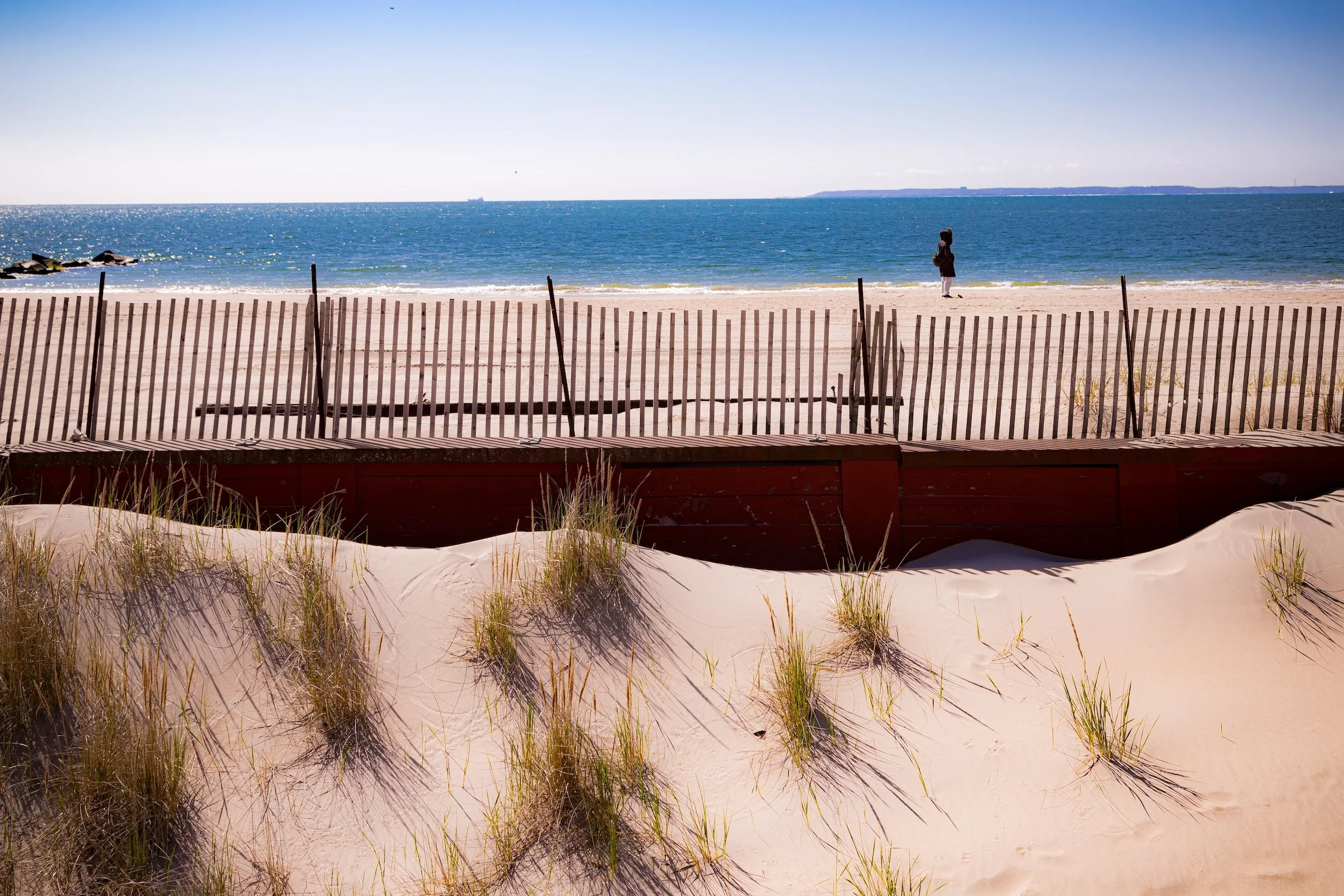
A compositional approach built around layered horizons—shorelines, skylines, rooflines, bridge decks, cloud banks, and water bands—arranged so they feel like music: repeating lines, echoed edges, and visual rhythm across the frame.
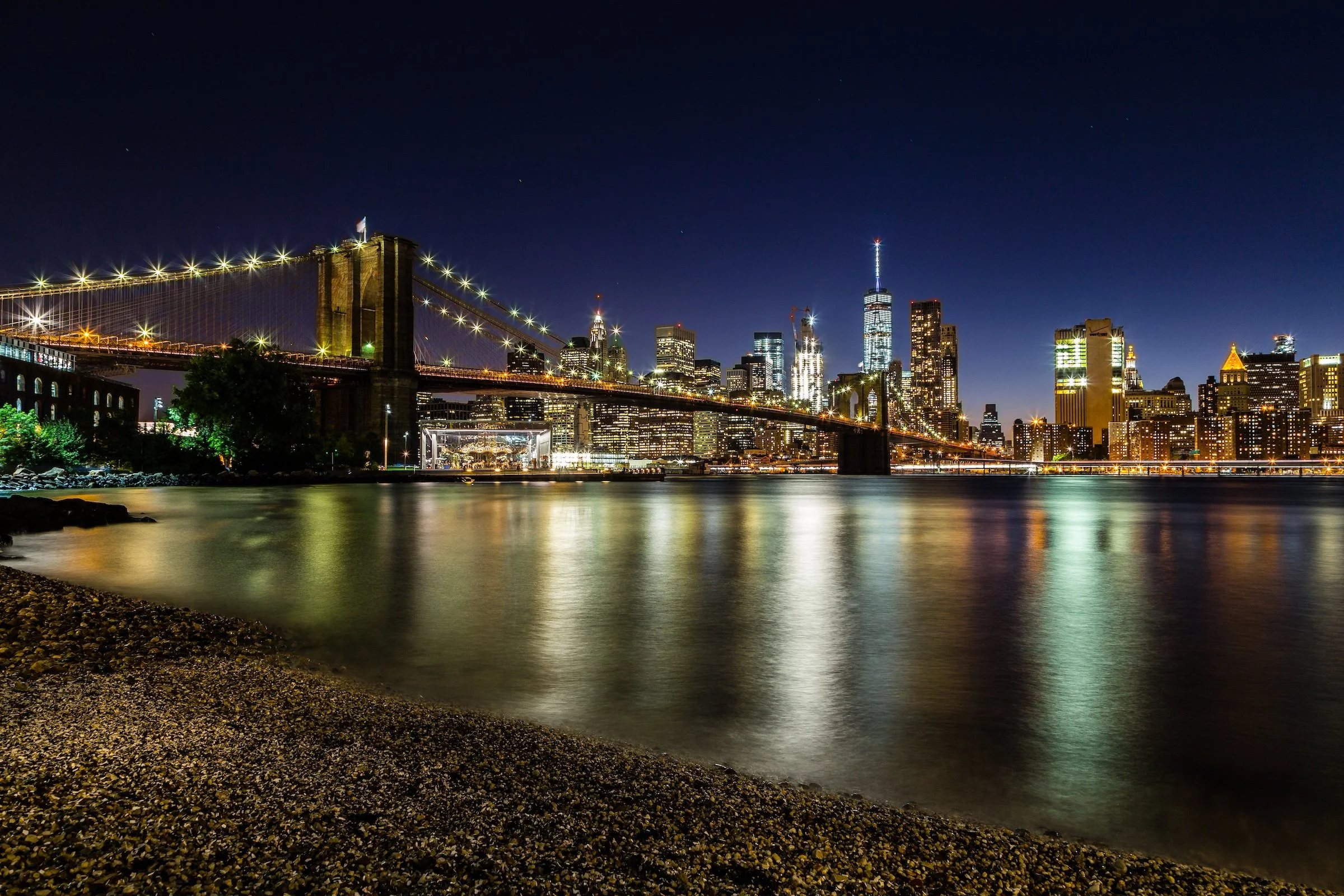
A technique where slower shutter speeds (from fractions of a second to many seconds) transform movement into blur, streaks, and flow—turning crowds into mist, traffic into light trails, and water into glass.
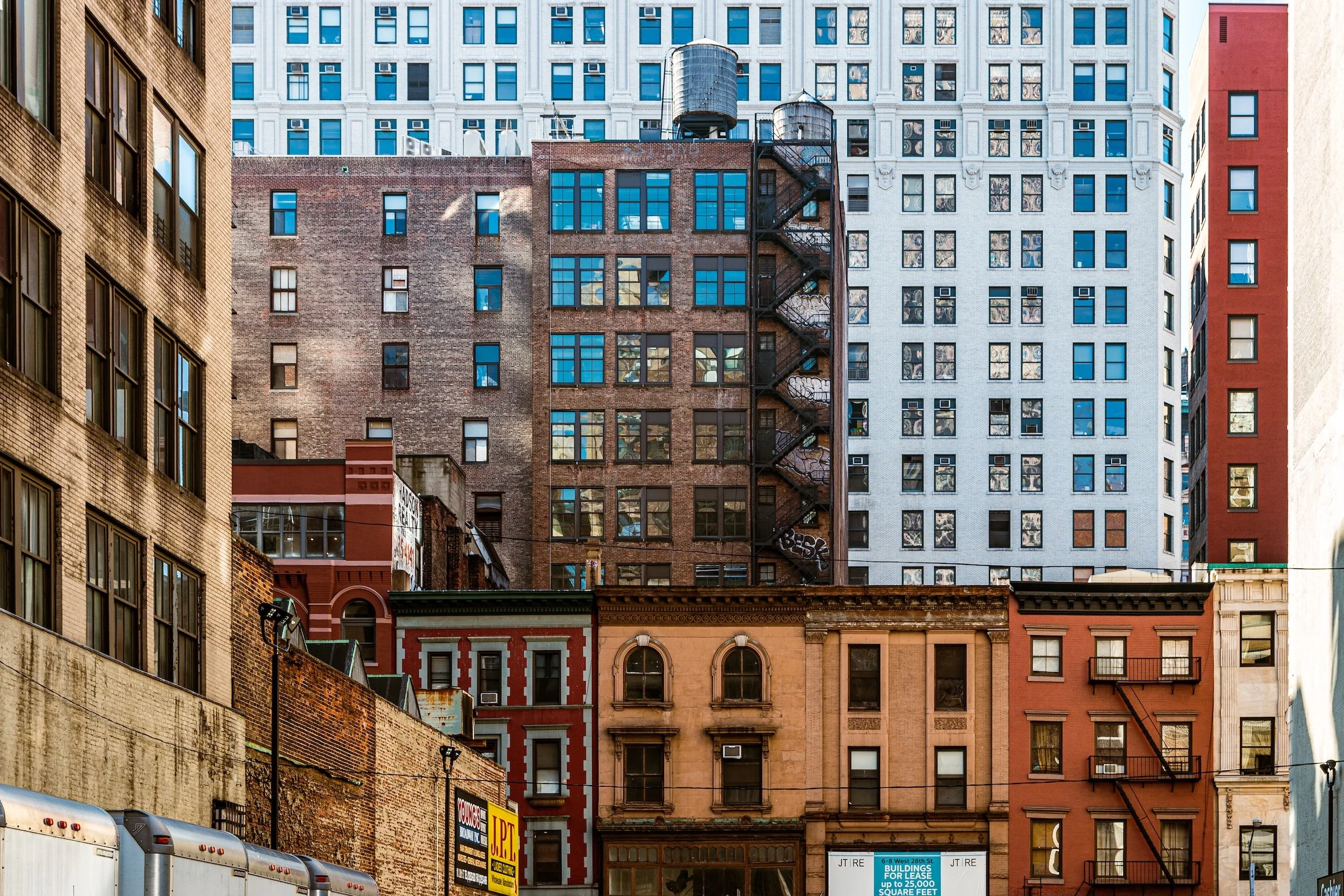
A depth-building strategy where the frame is constructed from overlapping layers—walls, buildings, fences, lots, signs, trees—so that space steps backward in clear stages. Receding Planes emphasizes how the city is built: surfaces in front of surfaces, corridors inside corridors.
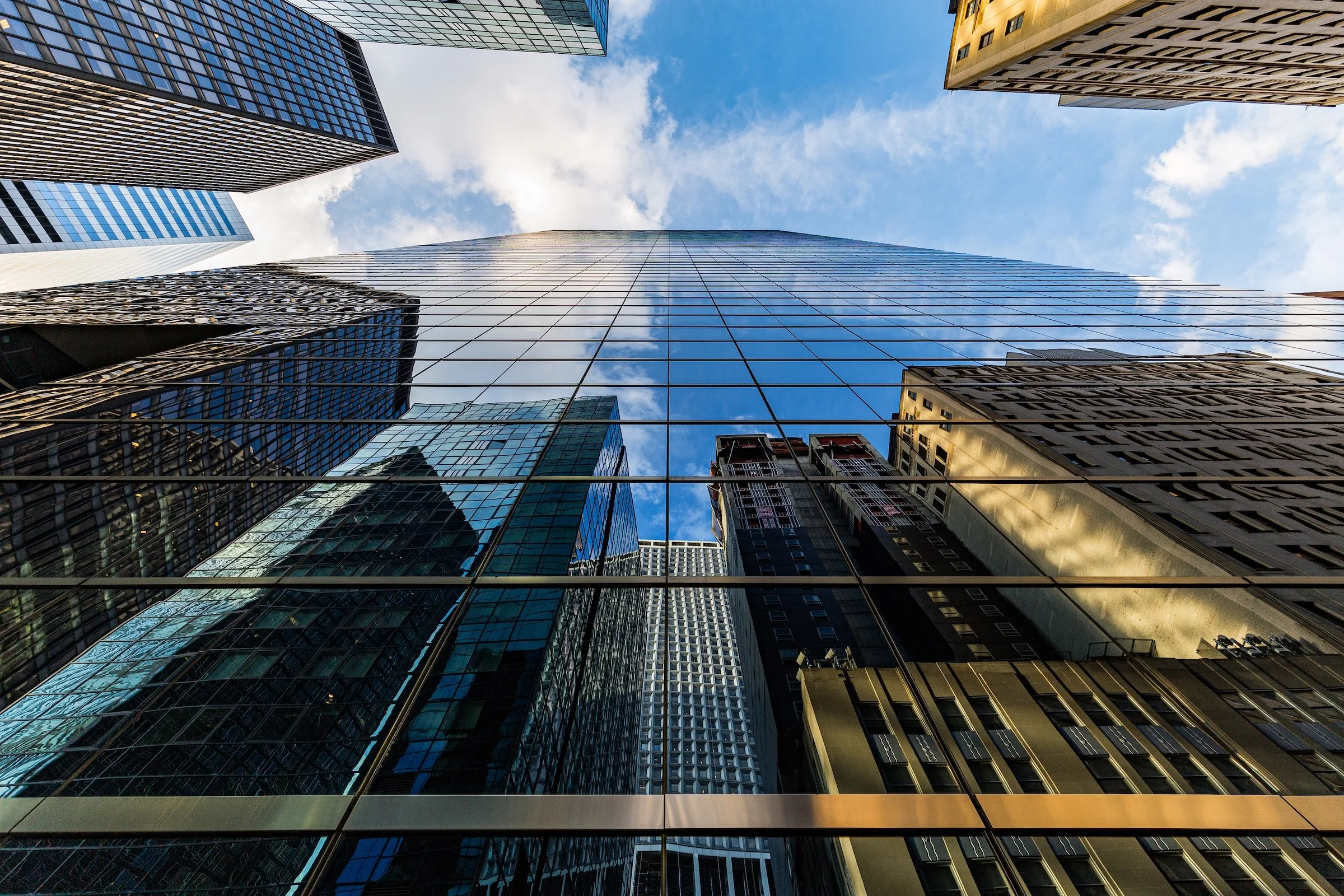
Reflected City is the practice of using large surfaces—glass, polished stone, metal, water, glossy paint—to capture a second scene inside the first. The world becomes a double exposure you didn’t manufacture: skyline inside a window grid, trees rippling across a façade, a street folded into chrome.
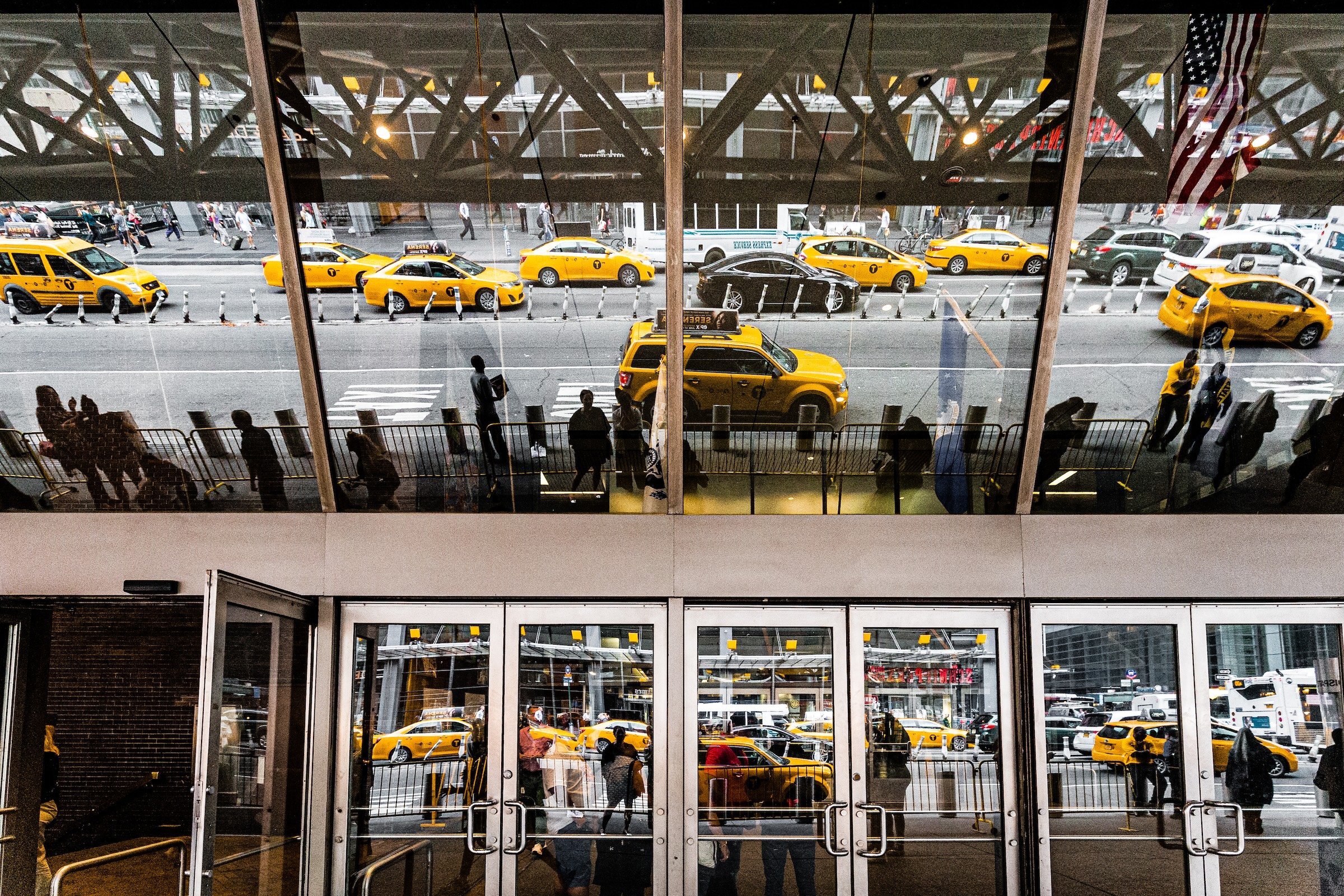
Urban Mosaic is the practice of building a photograph from fragments—layers, reflections, frames, signage, repeated windows, and partial scenes—so the image reads like a collage of city moments rather than a single-subject view.
New York City
Use this custom Google map to explore where every neighborhood in all five boroughs of New York City is located.
The Five Boroughs
One of New York City’s unique qualities is its organization in to 5 boroughs: Manhattan, Brooklyn, Queens, The Bronx, and Staten Island. These boroughs are part pragmatic administrative districts, and part vestiges of the region’s past. Each borough is an entire county in New York State - in fact, Brooklyn is, officially, Kings County, while Staten Island is, officially Richmond County. But that’s not the whole story …
Initially, New York City was located on the southern tip of Manhattan (now the Financial District) that was once the Dutch colony of New Amsterdam. Across the East River, another city was rising: Brooklyn. In time, the city planners realized that unification between the rapidly rising cities would create commercial and industrial opportunities - through streamlined administration of the region.
So powerful was the pull of unification between New York and Brooklyn that three more counties were pulled into the unification: The Bronx, Queens, and Staten Island. And on January 1, 1898, the City of New York unified two cities and three counties into one Greater City of New York - containing the five boroughs we know today.
But because each borough developed differently and distinctly until unification, their neighborhoods likewise uniquely developed. Today, there are nearly 390 neighborhoods, each with their own histories, cultures, cuisines, and personalities - and each with residents who are fiercely proud of their corner of The Big Apple.