BRONX PARK
The Bronx
Geographic Setting
Stretching from Gun Hill Road in the north to East 180th Street in the south, and from Webster Avenue on the west to the Bronx River Parkway and Bronxdale Avenue on the east, Bronx Park forms the natural heart of the borough. Encompassing roughly 718 acres, it is a landscape of extraordinary ecological and cultural richness—home to two world-renowned institutions: the Bronx Zoo and the New York Botanical Garden. The park’s terrain follows the winding course of the Bronx River, the only freshwater river that runs entirely within New York City, bordered by dense woodlands, meadows, and carefully designed gardens.
Bronx Park divides and connects the borough at once. To its west rise the residential neighborhoods of Fordham, Belmont, and Bedford Park; to its east, Bronxdale, West Farms, and Allerton. Within its expanse are quiet picnic lawns, bike paths, and forest trails that belie the city’s density just beyond its borders. The park’s dual character—half urban wilderness, half monumental civic institution—reflects its 19th-century vision as both a refuge for nature and a classroom for humankind.
Etymology
The park takes its name from the Bronx River, which itself honors Jonas Bronck, the 17th-century Scandinavian settler whose farmstead near today’s Mott Haven lent his name to the region. When the City of New York consolidated the Bronx’s southern towns in 1874 and sought parkland for its growing northern districts, the natural valley of the Bronx River presented an ideal site for preservation. The name Bronx Park—simple yet geographic—affirmed the connection between the landscape and the borough’s defining waterway.
The Neighborhood
Origins through the 19th Century
The creation of Bronx Park was part of New York’s 1884–1888 park expansion initiative, which sought to secure open green spaces before urban sprawl overtook the rural Bronx. Inspired by the work of Frederick Law Olmsted, the New York City Parks Department purchased the land in 1888, preserving more than 600 acres of river valley, forest, and meadow.
Before becoming a park, this land had a long history of settlement. The Siwanoy, an Algonquian-speaking people, lived along the Bronx River for centuries, relying on its fish, shellfish, and fertile soil. In the 17th and 18th centuries, European settlers established mills along the river, harnessing its flow for industry. One such mill—Lorillard Snuff Mill, built in 1840 by the tobacco-manufacturing Lorillard family—still stands within the park’s northern section and remains one of New York’s oldest surviving industrial buildings.
With the park’s founding, New York sought to blend natural preservation with public enlightenment. The city soon leased large portions of the park to two newly formed institutions dedicated to the study of nature: the New York Botanical Garden (1891) and the New York Zoological Society (1895), which would create the Bronx Zoo.
The New York Botanical Garden: A Living Museum of Plants
Founded in 1891 by botanist Nathaniel Lord Britton and his wife, Elizabeth Knight Britton, the New York Botanical Garden (NYBG) was modeled on the great botanical institutions of Europe—especially London’s Kew Gardens. The Brittons, inspired by a visit to Kew, envisioned a scientific and educational garden that would bring together botany, horticulture, and conservation under one roof.
The city allocated 250 acres in the park’s northern section for the project, with funding from both public and private sources. The original plan, designed by landscape architects Frederick Law Olmsted Jr. and John Charles Olmsted, combined formal gardens with preserved woodland. At its center rose the Enid A. Haupt Conservatory (completed in 1902), an Italian Renaissance–style glasshouse that remains one of New York’s most iconic structures. Nearby, the Mertz Library, housing one of the world’s largest collections of botanical literature, underscored the garden’s scholarly mission.
Throughout the 20th century, the NYBG expanded its collections and research programs, becoming a global leader in plant taxonomy, conservation, and education. Its living collections now include over one million plants from every climate and continent, displayed across landscapes such as the Rock Garden, the Native Plant Garden, and the Peggy Rockefeller Rose Garden.
Today, the NYBG continues to blend science and public engagement—hosting art exhibitions, seasonal festivals, and research initiatives that address climate change and biodiversity loss. Its Bronx River setting, with restored wetlands and the historic Lorillard Mill, makes it both a cultural landmark and an ecological refuge in the heart of New York City.
Bronx Park Video Coming Soon
Mid–Late 20th Century: Decline and Renewal
Like much of the Bronx, Bronx Park weathered difficult decades in the mid-20th century. The construction of the Bronx River Parkway (1925–1950s) improved accessibility but narrowed the park’s footprint. By the 1970s, economic decline and city neglect left portions of the park and river polluted and overgrown. Community and institutional efforts, however, sparked a remarkable turnaround.
The Bronx River Restoration Project (founded 1974) began cleaning debris and restoring habitats, a movement later continued by the Bronx River Alliance, which today manages ongoing ecological rehabilitation. By the early 21st century, sections of the river once choked with refuse had returned to life, with fish, herons, and even beavers reclaiming their habitats.
The NYBG and Bronx Zoo, through education and outreach, became vital anchors during the borough’s recovery—offering free programs for local schools and serving as green sanctuaries amid urban renewal.
21st Century: A Living Legacy
Today, Bronx Park stands as the ecological and cultural heart of the Bronx—a rare synthesis of wilderness, science, and civic design. The Bronx River Greenway now threads through its length, connecting pedestrians and cyclists to the river’s full 23-mile course from Westchester to the East River.
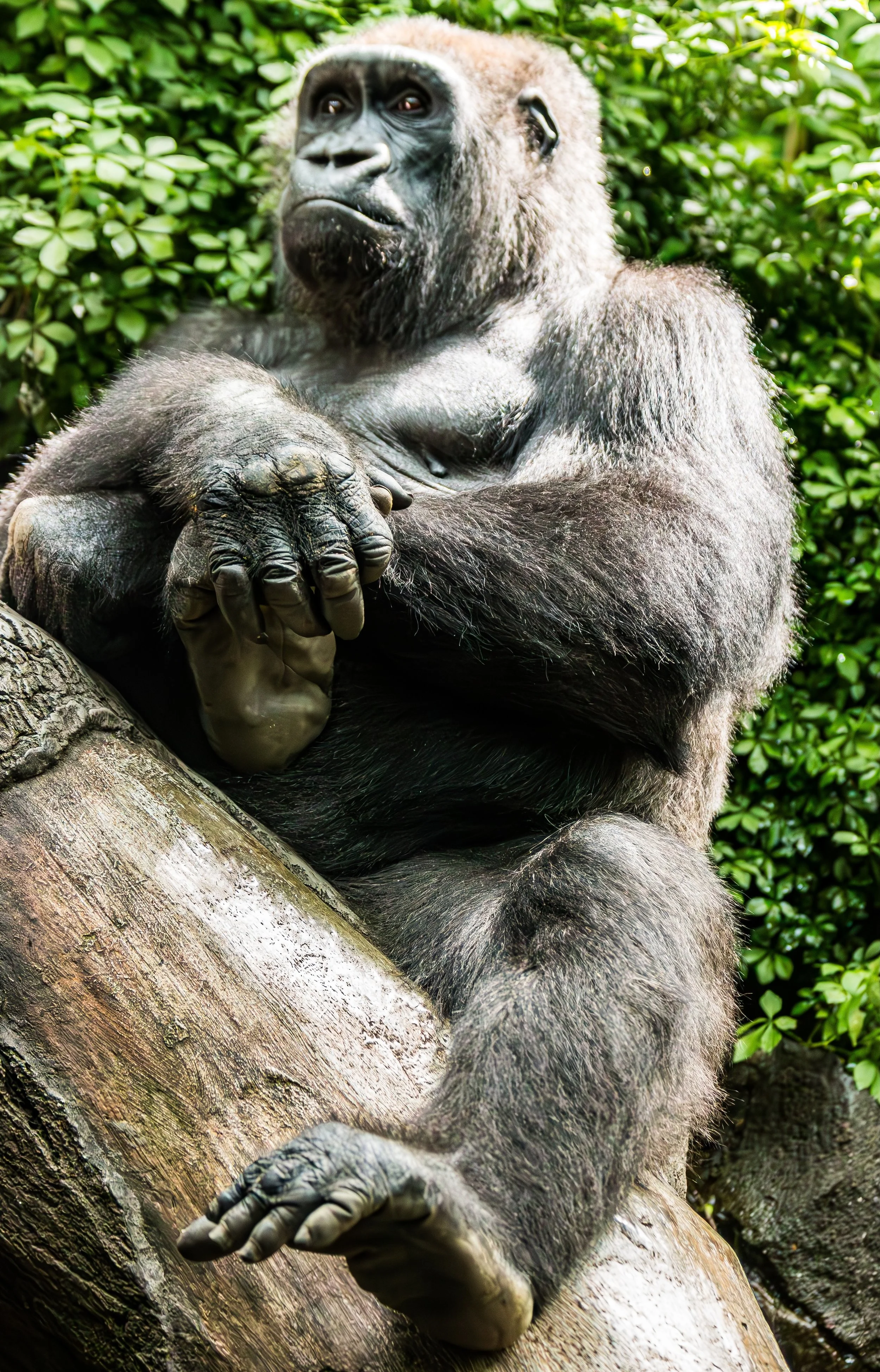
The Bronx Zoo continues to balance spectacle and stewardship, integrating digital learning, conservation partnerships, and immersive exhibits. The New York Botanical Garden, designated a National Historic Landmark, leads global research on plant conservation while welcoming millions of visitors to seasonal shows like the Holiday Train Show and Orchid Exhibition.
Together, these institutions transform Bronx Park into both classroom and cathedral—a space where urban life and natural systems coexist.
Bronx Park Photo Gallery
Spirit and Legacy
The spirit of Bronx Park lies in its unity of nature, knowledge, and renewal. Once a pastoral valley of mills and meadows, it became a modern epicenter of environmental awareness—a place where generations have come to marvel, learn, and breathe.
On a spring morning, mist rises off the Bronx River as the first subway cars rumble past the treetops. Children laugh outside JungleWorld, botanists collect specimens near the Thain Forest, and families picnic beneath oaks older than the borough itself. The park endures as more than a landscape—it is the Bronx’s green soul, a living reminder that even within the largest city in America, the wild and the wondrous remain within reach.
New York City
Use this custom Google map to explore where every neighborhood in all five boroughs of New York City is located.
The Five Boroughs
One of New York City’s unique qualities is its organization in to 5 boroughs: Manhattan, Brooklyn, Queens, The Bronx, and Staten Island. These boroughs are part pragmatic administrative districts, and part vestiges of the region’s past. Each borough is an entire county in New York State - in fact, Brooklyn is, officially, Kings County, while Staten Island is, officially Richmond County. But that’s not the whole story …
Initially, New York City was located on the southern tip of Manhattan (now the Financial District) that was once the Dutch colony of New Amsterdam. Across the East River, another city was rising: Brooklyn. In time, the city planners realized that unification between the rapidly rising cities would create commercial and industrial opportunities - through streamlined administration of the region.
So powerful was the pull of unification between New York and Brooklyn that three more counties were pulled into the unification: The Bronx, Queens, and Staten Island. And on January 1, 1898, the City of New York unified two cities and three counties into one Greater City of New York - containing the five boroughs we know today.
But because each borough developed differently and distinctly until unification, their neighborhoods likewise uniquely developed. Today, there are nearly 390 neighborhoods, each with their own histories, cultures, cuisines, and personalities - and each with residents who are fiercely proud of their corner of The Big Apple.