
GARMENT DISTRICT
Manhattan
Geographic Setting
Centrally located in Midtown Manhattan, the Garment District — often styled as the Fashion District — occupies the rectangular core bounded by Fifth Avenue and Ninth Avenue, from 34th Street north to 40th Street. Within these few dense blocks, for over a century, the threads of an entire industry have been spun, stitched, and exported to the world. The district’s low-slung loft buildings, freight elevators, and narrow showrooms once defined the look of American style — from Seventh Avenue’s “Fashion Row” to the hum of sewing machines behind unmarked doors. Though transformed by time, the area remains the spiritual and historical center of American fashion.
Etymology and Origins
The Garment District’s name is as literal as it is legendary. It arose from the neighborhood’s dominance in clothing manufacturing during the early 20th century, when nearly 75 percent of all women’s and children’s apparel sold in the United States was made within a few blocks of Seventh Avenue. Yet its origins reach back to an older story — of immigration, labor, and invention.
In the mid-19th century, garment production was scattered throughout Lower Manhattan, particularly in the Lower East Side, where Jewish and Italian immigrants operated small tailoring shops in tenement apartments. The mass production of uniforms during the Civil War, followed by the mechanization of sewing machines, transformed tailoring into industry. By the 1890s, the overcrowded conditions downtown drove manufacturers northward, seeking modern loft buildings with better light, ventilation, and proximity to transportation hubs like Pennsylvania Station (completed 1910).
Early 20th Century: Seventh Avenue and the Rise of American Fashion
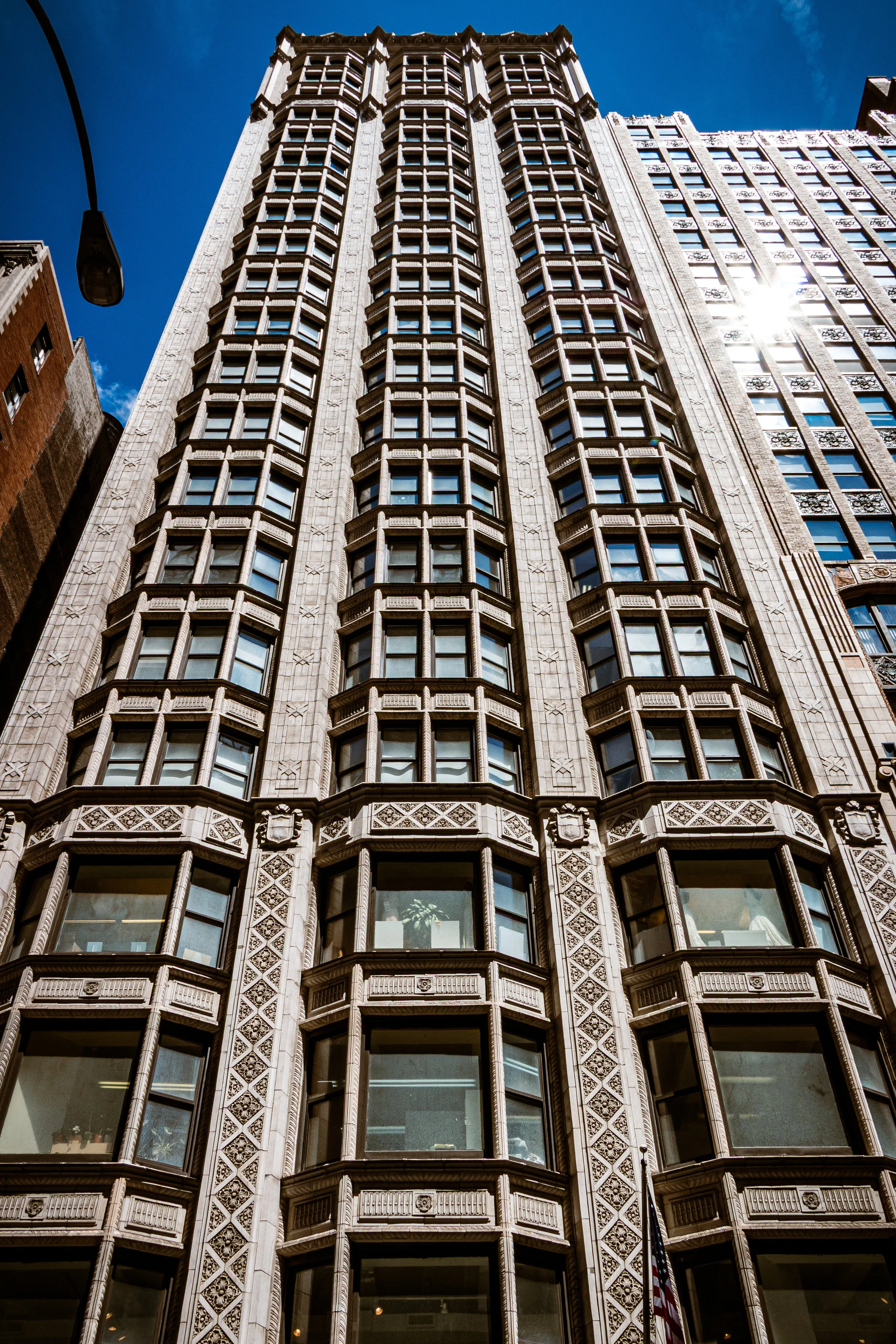
The shift northward consolidated around Seventh Avenue, where new loft buildings — purpose-built for garment work — rose in quick succession between 35th and 40th Streets. Their design was functional: large windows for natural light, open floor plans for cutting tables, and sturdy freight elevators to move bolts of fabric. These became the quintessential Garment District buildings, many of which still stand.
By 1919, Seventh Avenue had become known as Fashion Avenue, and New York had surpassed Paris as the center of ready-to-wear clothing. The Triangle Shirtwaist Factory fire of 1911, which killed 146 workers downtown, galvanized labor reform and safety standards, shaping the industry’s conscience as much as its commerce. Labor unions such as the International Ladies’ Garment Workers’ Union (ILGWU) and the Amalgamated Clothing Workers of America emerged from this era, linking the district’s history inseparably with the fight for workers’ rights.
The district became both a workplace and a theater of ambition. Designers, cutters, pressers, and models shared the same blocks; showrooms buzzed with fittings and buyers’ meetings; pushcarts and trucks crowded the curbs. The neighborhood’s energy was tactile — the literal hum of creation.
Mid-20th Century: The Golden Age of American Design
The 1930s through the 1960s marked the Garment District’s golden age. As European fashion houses were disrupted by war, American designers came into their own. Names like Claire McCardell, Norman Norell, and Hattie Carnegie turned the concept of ready-to-wear into an art form. Factories and ateliers filled the midblock lofts, while buyers from across the nation streamed through showrooms on Seventh Avenue.
Broadway’s Paramount Building and the Fashion Center Building became landmarks of the trade. The area also gave rise to a unique ecosystem of supporting industries — button-makers, pleaters, pattern drafters, and fabric wholesalers — all densely clustered within walking distance. The neighborhood’s streets read like a lexicon of craft: Needle Trades Plaza, Fashion Tower, Cutter’s Alley.
The district’s social fabric was equally vivid. Delis, coffee counters, and luncheonettes catered to seamstresses and designers alike; Yiddish, Italian, and English mingled in the air. The ILGWU’s “Dress Parade”, an annual event, celebrated union pride with music and floats.
Garment / Fashion District Photographic Video
Late 20th Century: Decline and Adaptation
By the 1970s and 1980s, globalization began to erode the district’s manufacturing dominance. As production shifted overseas to cheaper labor markets, many factories closed or moved. The neighborhood’s population of workers — once numbering in the hundreds of thousands — dwindled.
Yet the Garment District adapted rather than disappeared. Design studios, pattern makers, and sample rooms continued to operate, supported by the Fashion Institute of Technology (FIT) on Seventh Avenue. FIT, founded in 1944, became the district’s intellectual and creative anchor, training generations of designers and preserving the neighborhood’s link to artistry and education.
Throughout the 1980s and 1990s, preservationists and industry leaders fought to protect manufacturing zoning and keep production local. The Garment Center Business Improvement District (BID) was established in 1993 to maintain the district’s infrastructure and promote its creative legacy.
Even as mass production left, creativity remained. Independent designers, small ateliers, and costume makers for Broadway and film kept the craft alive. The area’s authenticity — its raw light, its bolts of fabric stacked to the ceiling — drew photographers, stylists, and dreamers.
21st Century: Reinvention and Resilience
In the 21st century, the Garment District has continued its evolution from factory floor to creative corridor. While large-scale manufacturing has largely departed, the area thrives as a hub of fashion design, prototyping, and media production. The Fashion Walk of Fame, installed along Seventh Avenue between 35th and 41st Streets, honors designers from Halston to Calvin Klein, symbolizing the district’s ongoing influence.
Adaptive reuse has reshaped the old lofts into offices for media, architecture, and tech firms, even as small garment shops persist on upper floors. The Garment District Alliance, successor to the BID, sponsors public art installations and pedestrian plazas that have reactivated the streetscape.
Still, the hum of sewing machines and the scent of fabric dye linger. The D&D Building, Mood Fabrics, and dozens of suppliers continue to serve students and professionals alike — tactile reminders that the industry’s heart still beats here.
Garment / Fashion District Photo Gallery
Architecture and Atmosphere
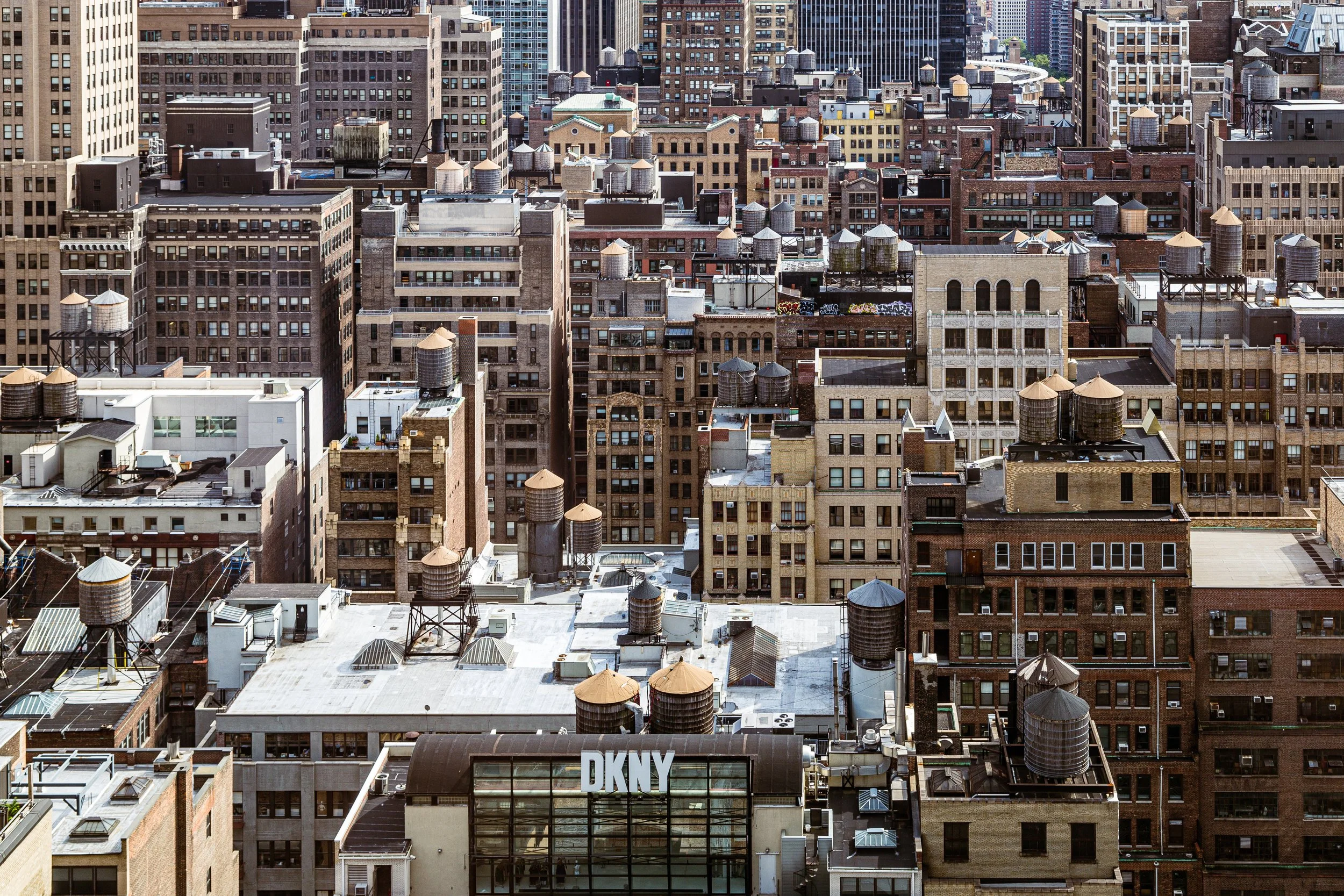
Architecturally, the Garment District is a vertical village of work. Early 20th-century loft buildings in terra cotta and brick dominate, their façades punctuated by rhythmic rows of industrial windows. The Art Deco Fashion Tower (1930) on Seventh Avenue epitomizes the district’s optimism — sleek, geometric, and adorned with stylized figures representing the garment trades.
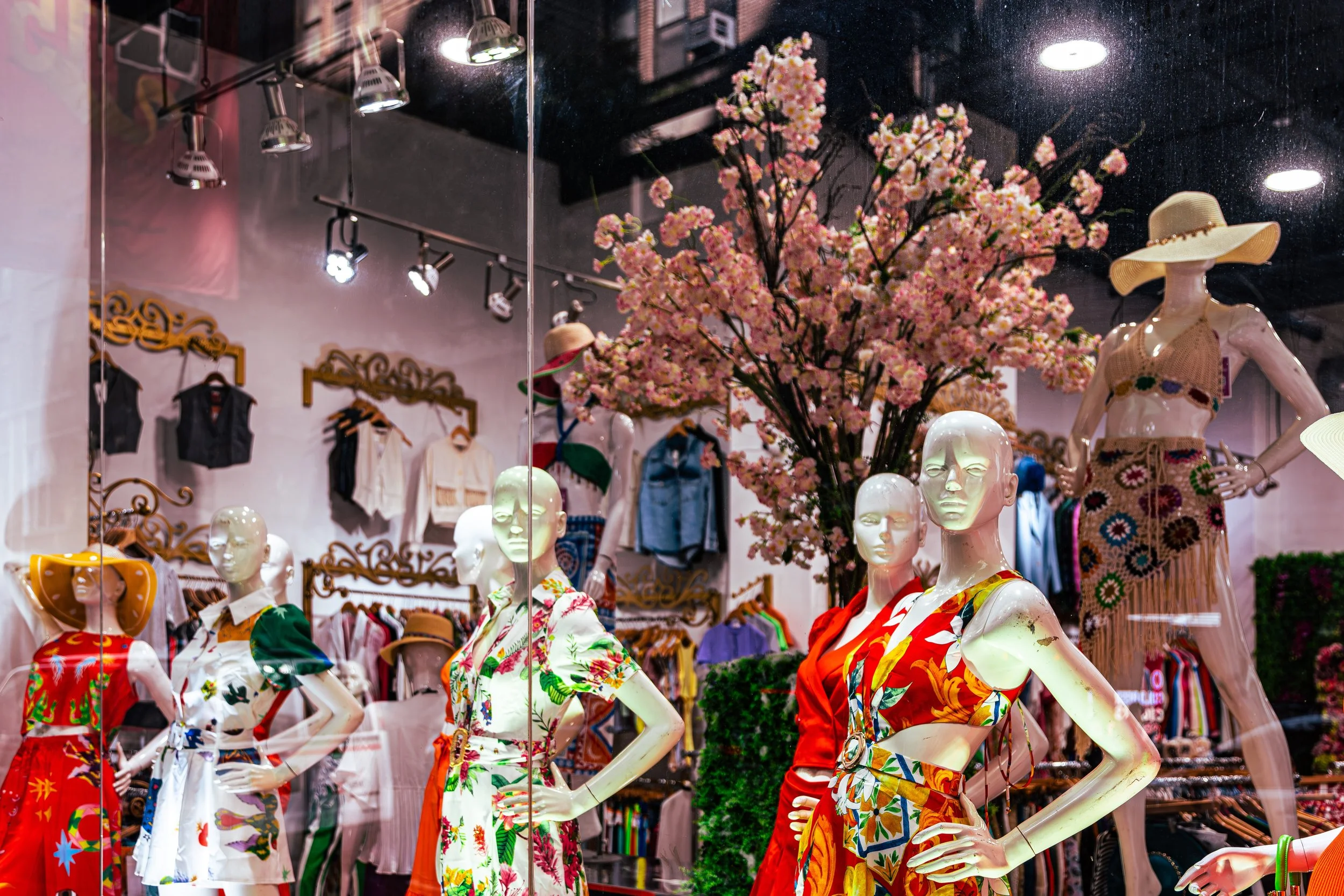
At street level, the atmosphere remains kinetic: rolling racks of fabric on the sidewalks, mannequins in windows, and couriers weaving through traffic with garment bags over their shoulders. The streets still hum with creation — even if the couture has shifted from mass production to prototype.
Spirit and Legacy
The Garment District’s legacy is craftsmanship made democratic. It was here that haute couture met industry, and art met labor — where the idea of American fashion, practical and expressive, took shape. Its story is one of hands and heart: the immigrant tailor, the pattern cutter, the designer sketching late at night above Seventh Avenue.
New York City
Use this custom Google map to explore where every neighborhood in all five boroughs of New York City is located.
The Five Boroughs
One of New York City’s unique qualities is its organization in to 5 boroughs: Manhattan, Brooklyn, Queens, The Bronx, and Staten Island. These boroughs are part pragmatic administrative districts, and part vestiges of the region’s past. Each borough is an entire county in New York State - in fact, Brooklyn is, officially, Kings County, while Staten Island is, officially Richmond County. But that’s not the whole story …
Initially, New York City was located on the southern tip of Manhattan (now the Financial District) that was once the Dutch colony of New Amsterdam. Across the East River, another city was rising: Brooklyn. In time, the city planners realized that unification between the rapidly rising cities would create commercial and industrial opportunities - through streamlined administration of the region.
So powerful was the pull of unification between New York and Brooklyn that three more counties were pulled into the unification: The Bronx, Queens, and Staten Island. And on January 1, 1898, the City of New York unified two cities and three counties into one Greater City of New York - containing the five boroughs we know today.
But because each borough developed differently and distinctly until unification, their neighborhoods likewise uniquely developed. Today, there are nearly 390 neighborhoods, each with their own histories, cultures, cuisines, and personalities - and each with residents who are fiercely proud of their corner of The Big Apple.