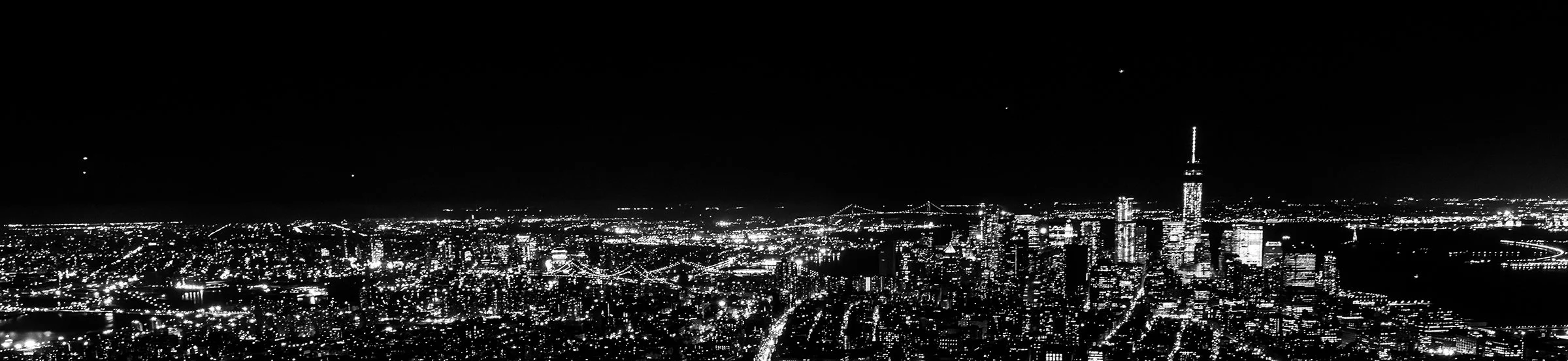

Wedge Geometry
Definition:
Wedge Geometry is the practice of composing photographs around wedge-shaped spatial tension—where sidewalks, curbs, lawns, walls, corners, rooflines, or converging architectural edges create a strong directional shape that organizes the frame. The image may still contain triangles, but the deeper logic is broader than that: it is about how a wedge of space, surface, or structure can steer the eye and give the composition both force and clarity.
Usage:
Use Wedge Geometry when you want a frame to feel directional, structured, and spatially charged. It is especially effective for:
wedges of lawn, sidewalk, curb, and retaining wall that create strong ground planes,
street corners and intersections where pavement and building edges converge into a visual spear,
gabled houses, peaked roofs, and angled facades where the built form pushes into the frame,
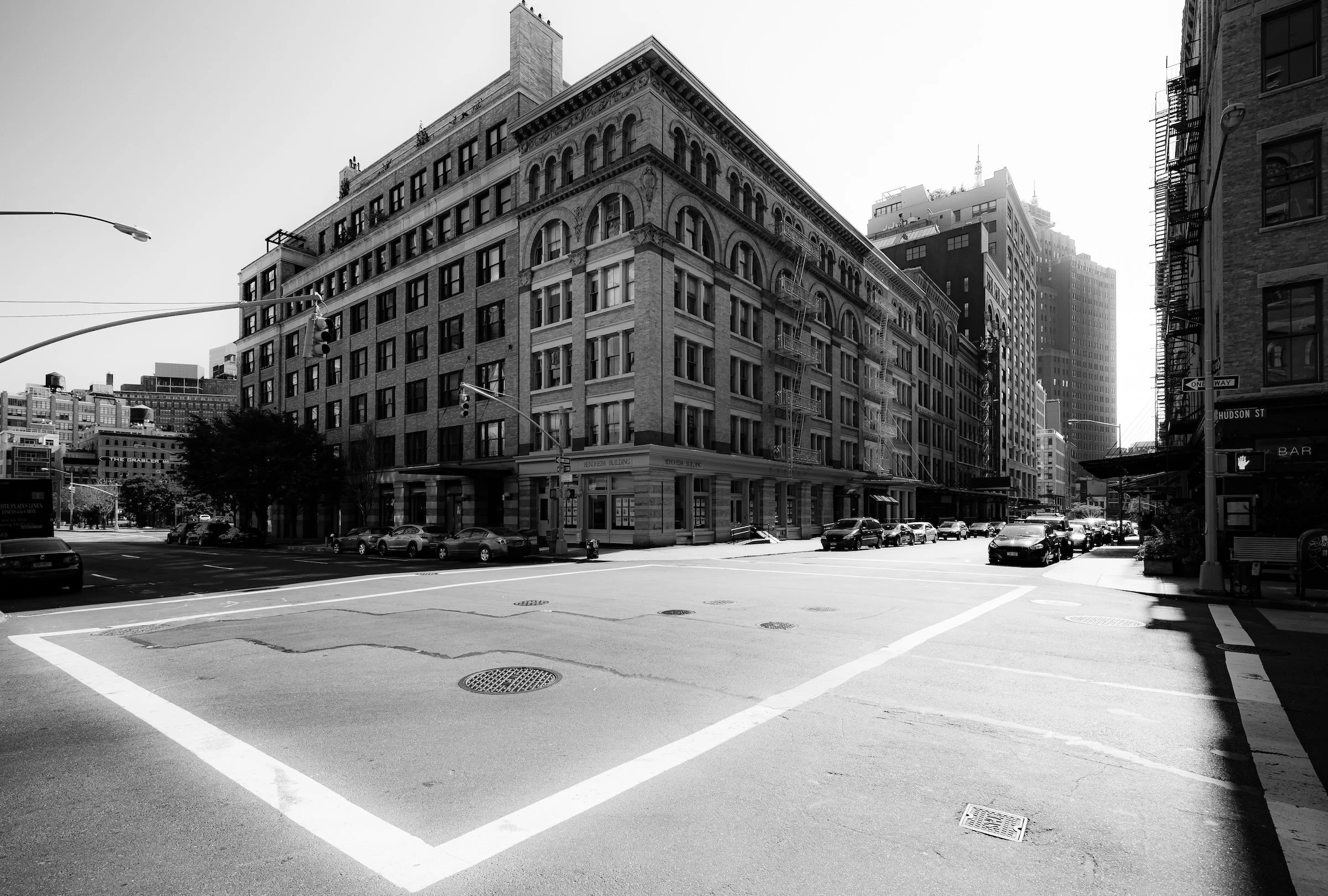
urban scenes where a corner building, crosswalk, or slice of roadway creates a wedge of tension,
architectural fragments where converging lines turn space itself into the subject.
This strategy works best when the wedge is clear enough to anchor the image but flexible enough to carry the rest of the scene with it. Choose the wedge, commit to the angle, and let the geometry do the steering.
In Depth:
A wedge is one of the most useful and underrated forms in photography because it combines stability with movement. Like a triangle, it can anchor a composition, but unlike a simple triangle, a wedge often feels more spatial, more directional, and more alive. It suggests depth, thrust, approach, and pressure. It does not merely sit in the frame; it pushes through it.
That is why wide-angle perspectives so often pair well with Wedge Geometry. A wider field of view exaggerates the relationship between near and far, making the wedge feel sharper and more forceful:
the near edge becomes larger and more assertive,
the far edge becomes a destination,
converging boundaries feel steeper and more dramatic,
and the frame begins to read as a spatial structure rather than a flat scene.
But Wedge Geometry is not dependent on the lens alone. What matters most is the way the image is organized. A suburban lawn can become a wedge. A corner crosswalk can become a wedge. A sloped retaining wall, a row of facades, a triangular roofline, or a slice of intersection pavement can all serve the same role. The point is not simply to find a triangle, but to recognize when a wedge of space is doing the real compositional work.
A few field instincts help Wedge Geometry land consistently:
Find the directional force.
A wedge works best when it clearly pushes the eye somewhere—toward a house, a corner building, a storefront row, or a vanishing edge.
Watch the borders.
Because wedges often rely on sharp edges and strong boundaries, clutter at the margins becomes especially noticeable. Keep the edges of the frame clean enough for the wedge to read.
Use texture to make the wedge physical.
Brick, lawn, siding, sidewalk, asphalt, stone, and shadow all help the geometry feel grounded rather than abstract.
Let the wedge lead, not decorate.
If the shape is only incidental, the image may belong somewhere else. Wedge Geometry works best when the wedge is one of the main reasons the frame holds together.
Allow for variation.
Some wedges are literal and sharp; others are implied through converging lines, building mass, or shifting ground planes. Both can work, so long as the spatial tension remains clear.
The examples below show how this plays out across suburban lots, city intersections, corner buildings, and built environments where wedges of pavement, lawn, facade, or perspective become the hidden architecture of the frame.
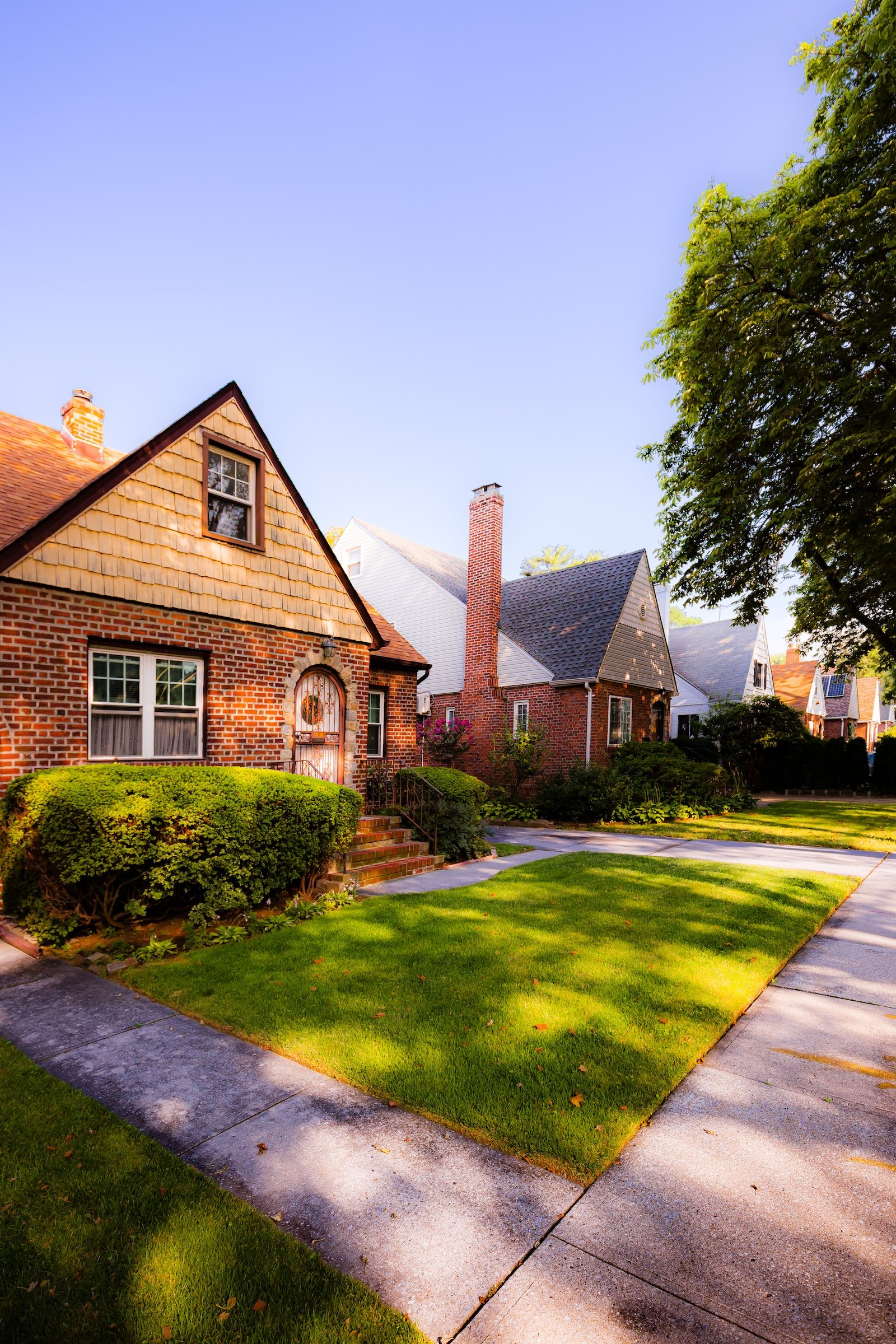
Gable Geometry (Wedges You Can’t Unsee)
These images feature literal roof triangles and peaked silhouettes—wide-angle framing makes them feel bold, graphic, and portrait-like.
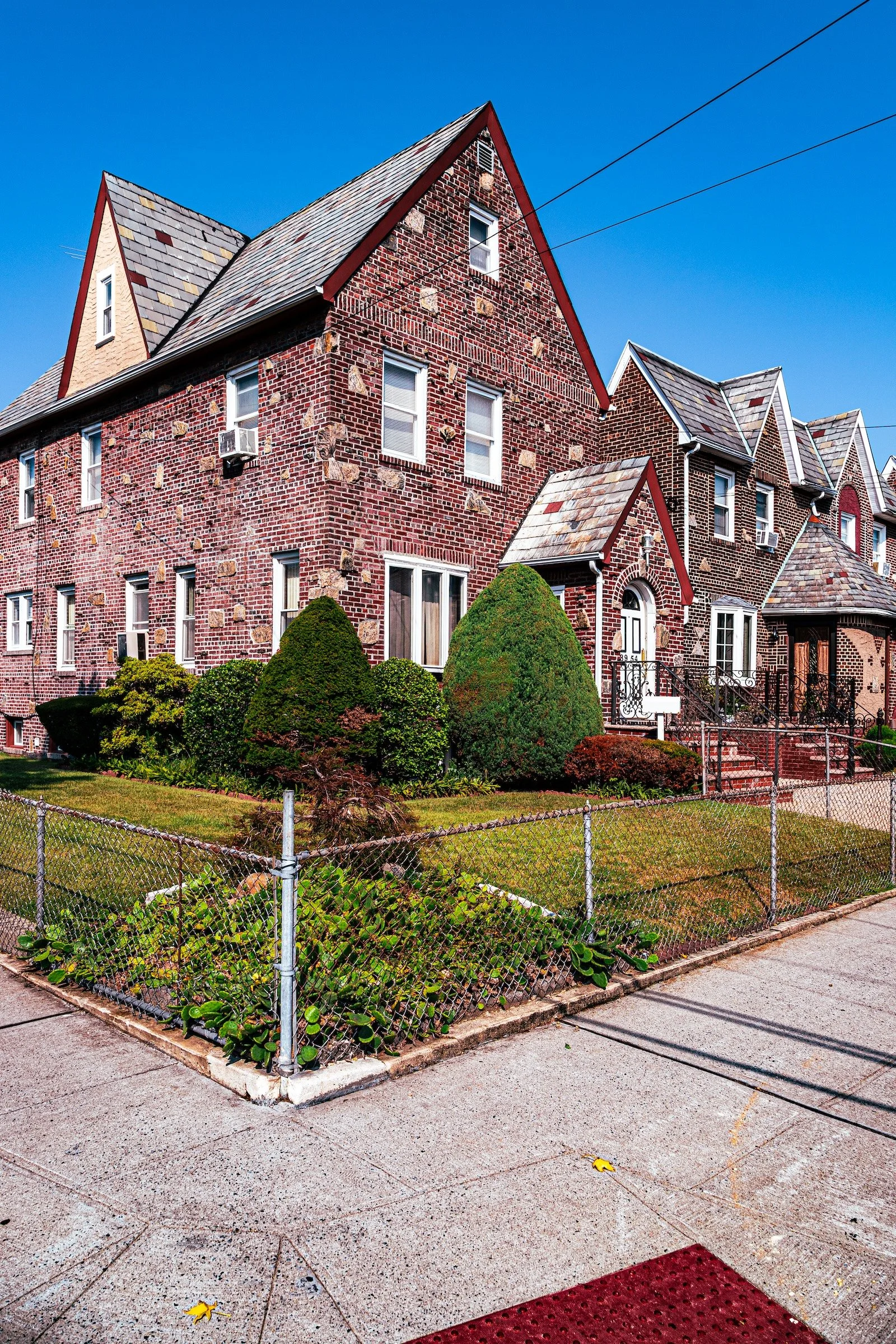
Bellerose Manor - Queens - 80-54 Portrait
The triangle here is architecture as emblem: the roofline and facade create a clean, recognizable shape, and the wide perspective gives it presence. This is the triangle as identity—simple, stable, memorable.
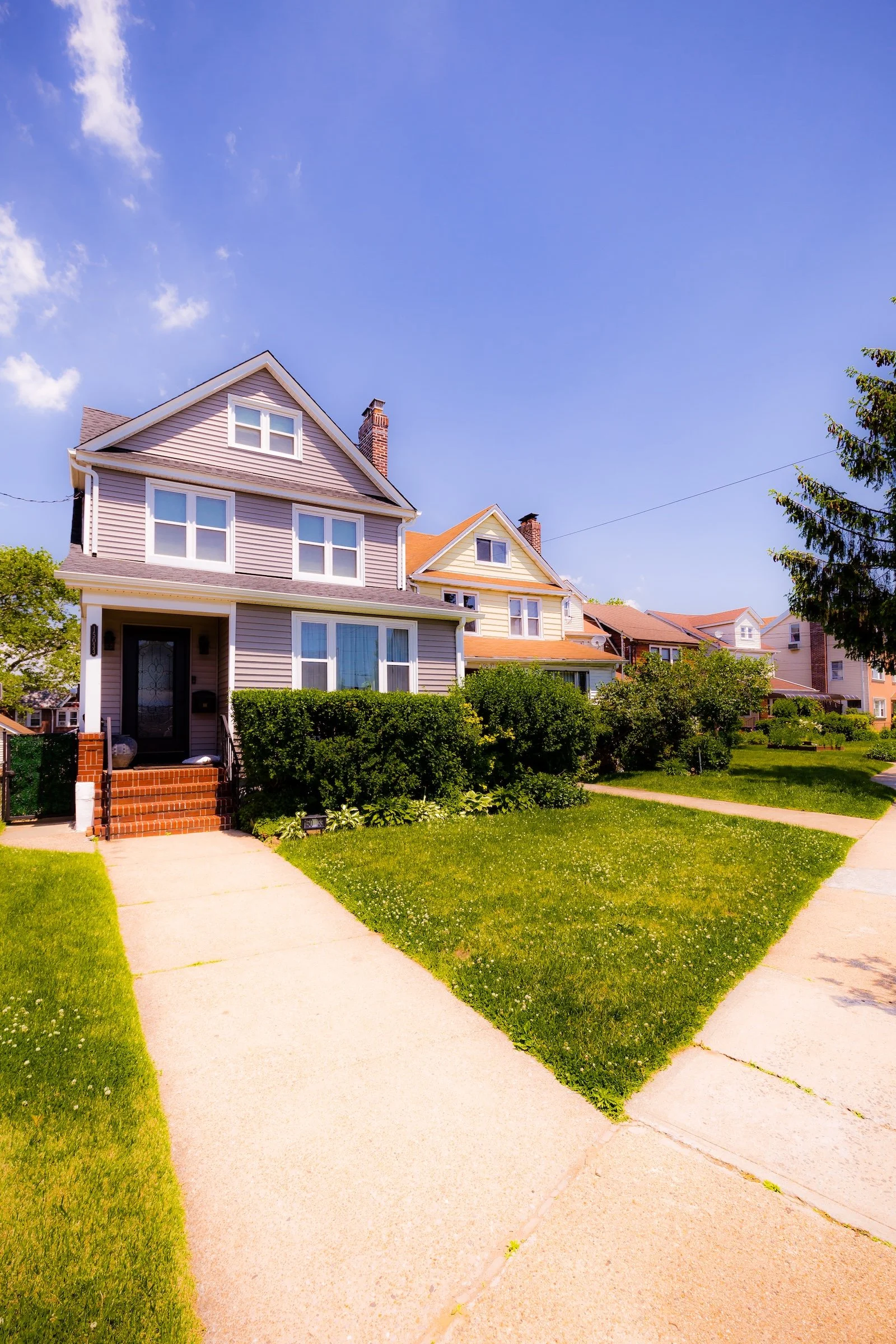
Lawn Wedges (Ground Planes as Triangles)
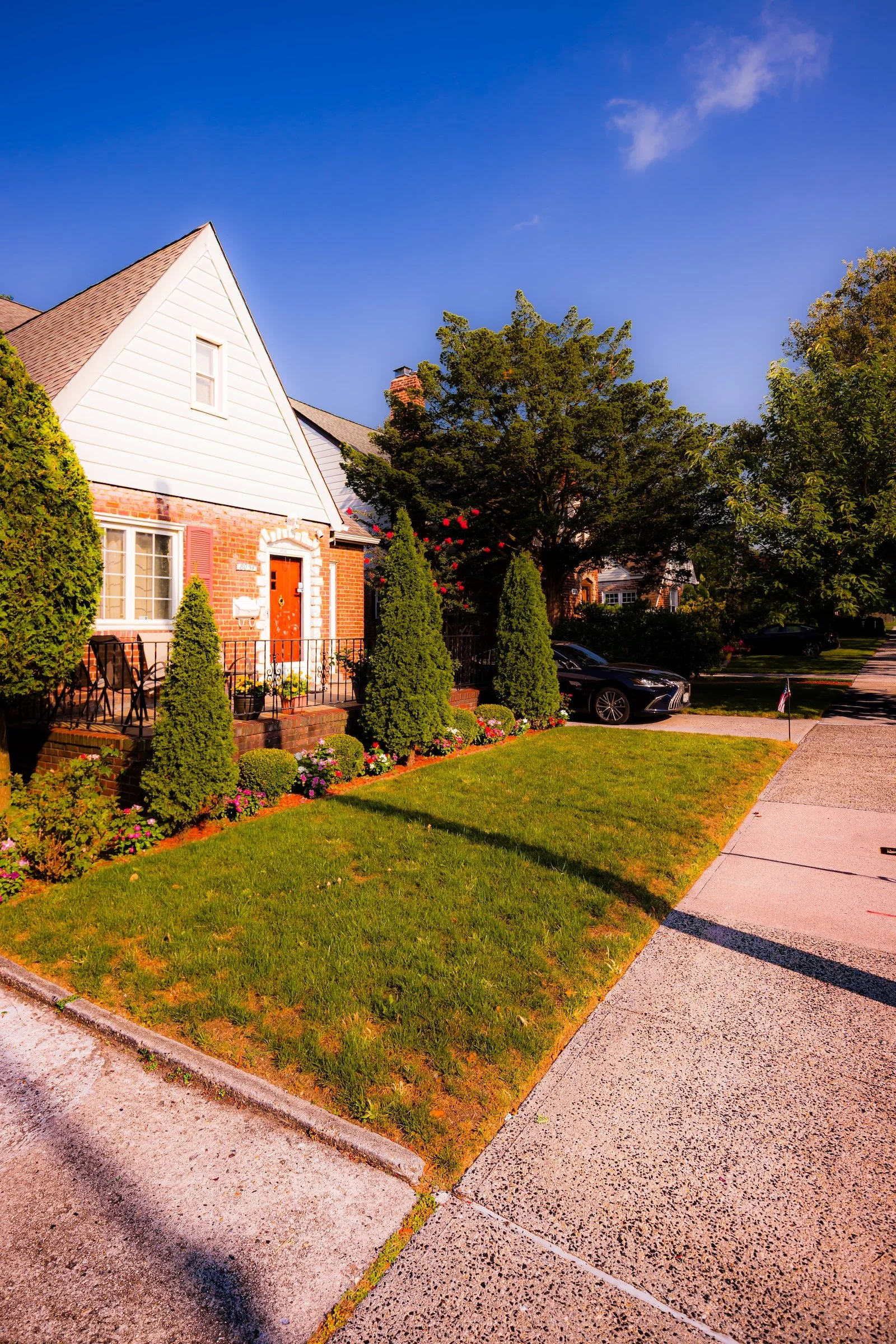
These images show the triangle not in the roof, but underfoot—grass, sidewalk, and curb forming wedges that guide the eye and create quiet drama.
Bellerose Manor - Queens - 235th Lawn Portrait
A suburban masterclass: the lawn becomes a triangular plane, pointed toward the house like a gentle arrow. The wide angle expands the foreground, making the wedge feel bigger and more intentional.
Implied Triangles (When Lines Converge Into a Wedge)
These are triangles made from perspective rather than literal edges—street lines, building faces, and converging planes that create a triangular “force” in the composition.
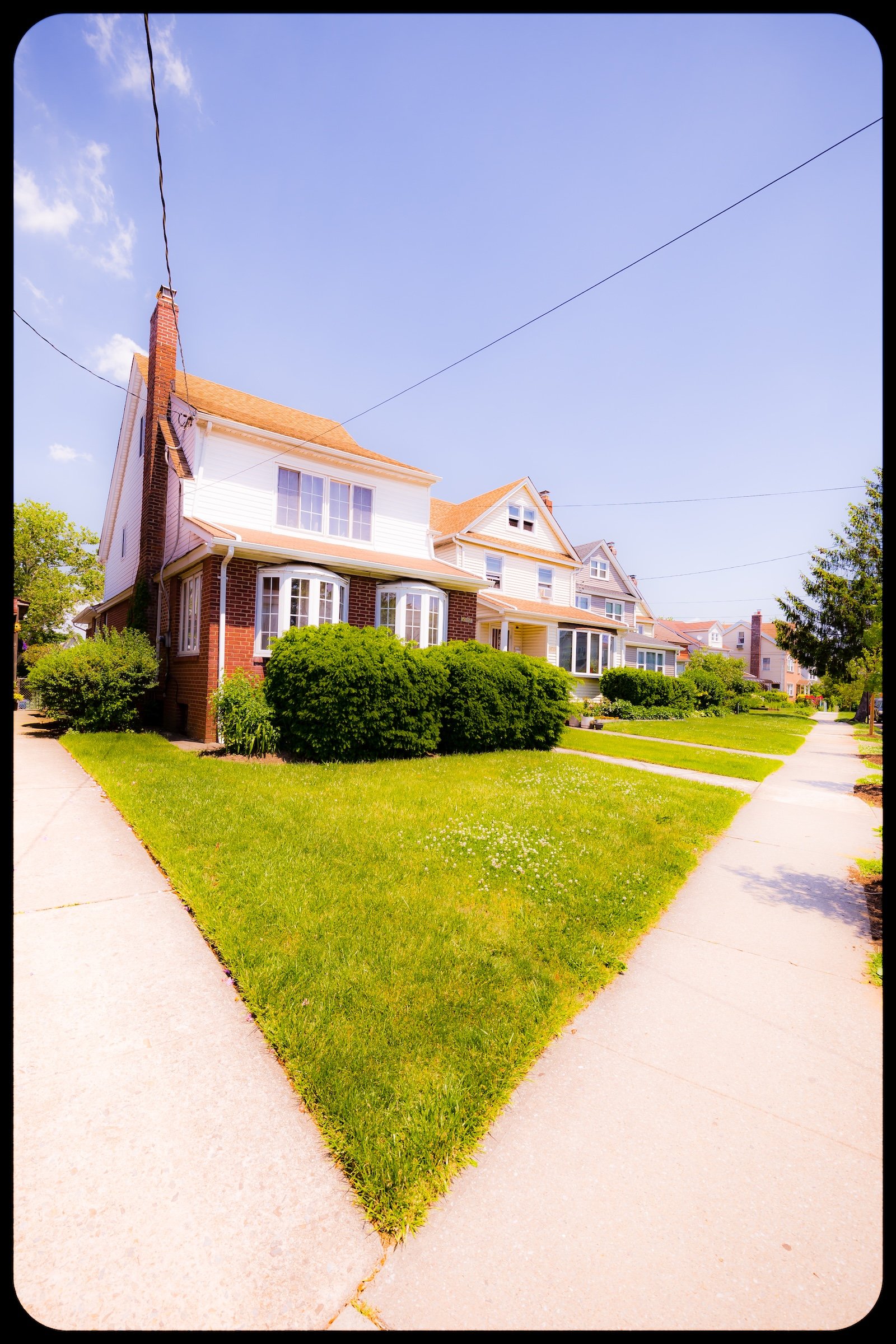
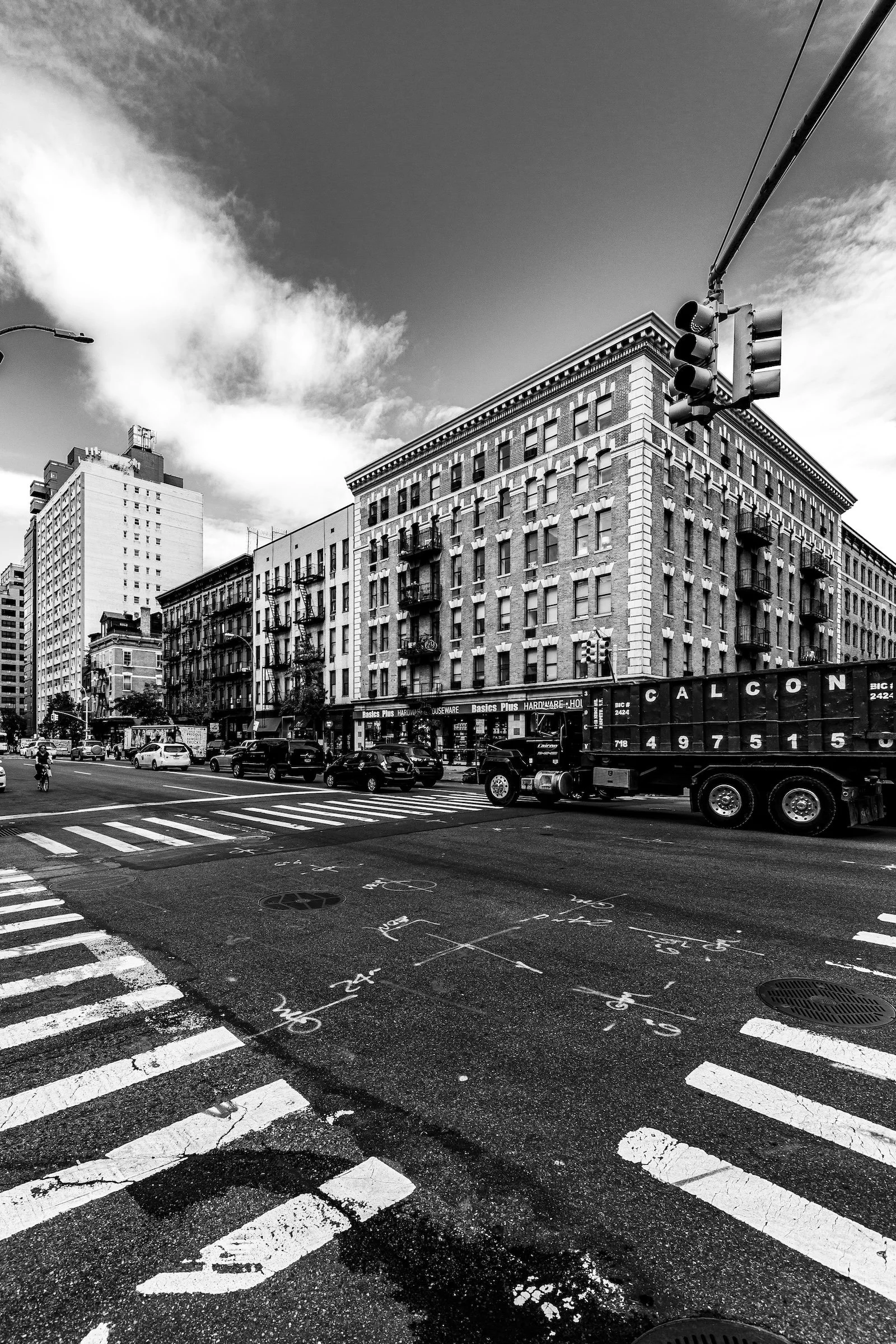
East Village - Manhattan - 12th & 3rd
A street corner wedge: the curb and building edges form a triangle that points into the block. The wide framing gives the corner a sense of momentum—like the city is pivoting around the apex.

Lower East Side - Manhattan - Henry & Clinton
Convergence as triangle: edges of buildings and street lines compress into a directional wedge. The triangle is less “object” and more “current”—a flow that carries the eye forward.
Graphic Tiles (Triangles as Pattern and Design)
These images treat triangles as a design motif—repeated shapes, diamond grids, and graphic surfaces where geometry becomes texture.
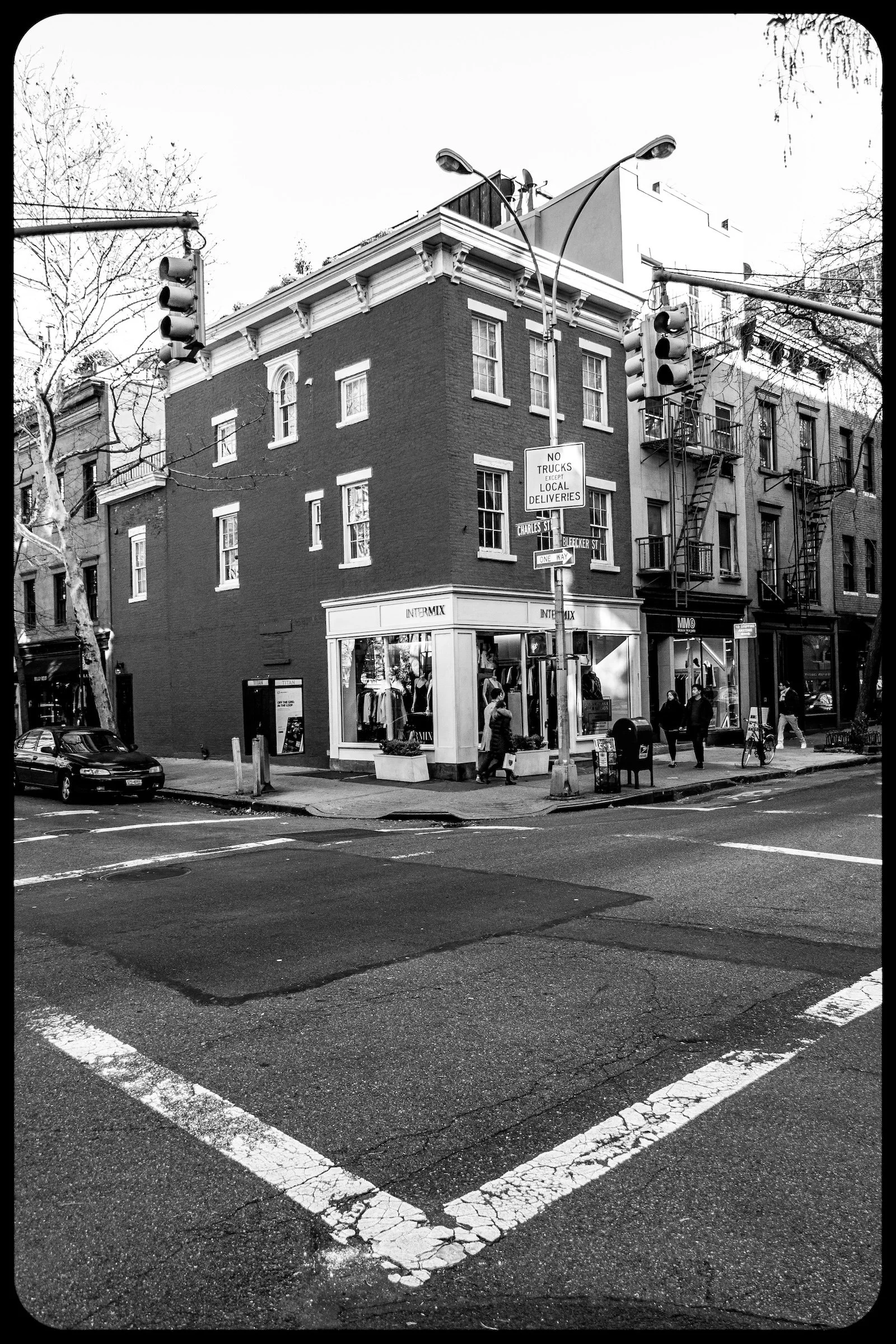
West Village - Manhattan - Diamonds
A triangle ecosystem: diamond shapes subdivide into triangles, turning the frame into a patterned surface. The wide angle helps by making the geometry feel immersive—like you’re standing inside the design.
Explore Further