

RICHMOND TOWN
Staten Island
Geographic Setting
Bounded by Richmond Road to the north, the Willowbrook Parkway (Korean War Veterans Parkway) to the east, Amboy Road to the southeast, Ocean View Cemetery to the southwest, Corbin Avenue to the west, and Arthur Kill Road to the northwest, Richmond Town lies at the geographic and historical heart of Staten Island. Nestled amid the island’s central highlands, it occupies a landscape of rolling hills and tree-lined roads that preserve the rhythm of colonial-era pathways. The neighborhood’s crossroads—where Richmond Road, Arthur Kill Road, and Amboy Road meet—have served as a civic and commercial hub for over three centuries.
The surrounding area blends preserved parkland, historic structures, and quiet residential enclaves. To the east rise the wooded slopes of the Greenbelt, Staten Island’s great inland park system; to the south and west stretch the mid-island’s suburban neighborhoods. At its center lies Historic Richmond Town, a meticulously restored village and museum complex that serves as the borough’s living archive—an open-air time capsule of Staten Island’s evolution from rural township to urban borough. Few places in New York City embody such tangible continuity between past and present.
Etymology
Richmond Town derives its name from Charles Lennox, the First Duke of Richmond, for whom Staten Island’s county—Richmond County—was named when the English took control of the region in the late 17th century. The term “Richmond” came to signify both administrative authority and geographic centrality. When the island’s government seat was established here in the early 18th century, the area became known as Richmond or Richmond Town, a name reflecting its role as the county’s civic core.
Over time, the two words merged into a single, enduring identity—one that connects place to purpose. Even after government functions shifted elsewhere, the name Richmond Town continued to evoke the island’s historical nucleus: the meeting point of its people, institutions, and memory.
The Neighborhood
Origins through the 19th Century
Richmond Town traces its origins to the late 1600s, when English settlers began establishing farms and civic buildings in what was then the township of Southfield. In 1728, the area was designated as the seat of Richmond County, and a courthouse and jail were constructed near the intersection of Richmond Road and Arthur Kill Road. The settlement quickly became known as “the County Seat,” serving as the center of government, commerce, and community for Staten Island’s scattered villages.
Through the 18th and 19th centuries, Richmond Town developed as a self-contained rural community. Its core comprised civic structures—the courthouse, clerk’s office, and public square—surrounded by taverns, shops, blacksmiths, and farmhouses. The Voorlezer’s House (1695), one of the oldest surviving schoolhouses in the United States, and the Third County Courthouse (1837) stand as architectural witnesses to this era.
Agriculture dominated the surrounding landscape. Farms produced grain, livestock, and dairy for the island and the city beyond, while local mills operated along nearby creeks. The crossroads at Richmond Road linked the county seat to other island communities, ensuring a steady flow of trade and travelers. By the mid-19th century, Richmond Town had become the administrative and symbolic heart of Staten Island—a village of modest scale but immense significance.
Early 20th Century: Civic Decline and Historical Awakening
The early 20th century brought dramatic shifts. With Staten Island’s consolidation into Greater New York City (1898), county government functions gradually migrated north toward St. George, near the ferry terminal and commercial harbor. Richmond Town’s political importance waned, and many of its civic buildings fell into disuse. Its rural setting, once an asset, now left it isolated from the borough’s growing transportation network.
Yet this decline set the stage for preservation. As suburban development advanced elsewhere, historians and civic leaders recognized the uniqueness of Richmond Town’s surviving 18th- and 19th-century architecture. In the 1930s and 1940s, local preservationists—including the Staten Island Historical Society—began advocating for the restoration of the village as a living museum. Their efforts were bolstered by the establishment of Historic Richmond Town in the mid-20th century, an ambitious project to restore, relocate, and interpret historic buildings from across Staten Island within the village’s original footprint.
During this period, the area remained semi-rural, dotted with early-20th-century homes and open fields. Its quiet roads—Richmond, Arthur Kill, and Clarke Avenues—retained the curves and stone walls of their colonial origins, setting the stage for Richmond Town’s rebirth as a place where history could be both studied and lived.
Richmond Town Video Coming Soon
Mid–Late 20th Century: The Living Museum and the Modern Suburb
The postwar decades transformed Richmond Town into both a cultural destination and a stable residential enclave. In 1958, Historic Richmond Town officially opened as an open-air museum operated by the Staten Island Historical Society in partnership with the City of New York. Over the next two decades, dozens of historic buildings were restored or moved to the site—including the Bodine House, Treasurer’s Office, and Guyon Store—creating an authentic 19th-century streetscape unmatched elsewhere in the city. The site became a centerpiece for education, historical reenactments, and seasonal events such as Richmond County Fair, which continues to draw thousands annually.
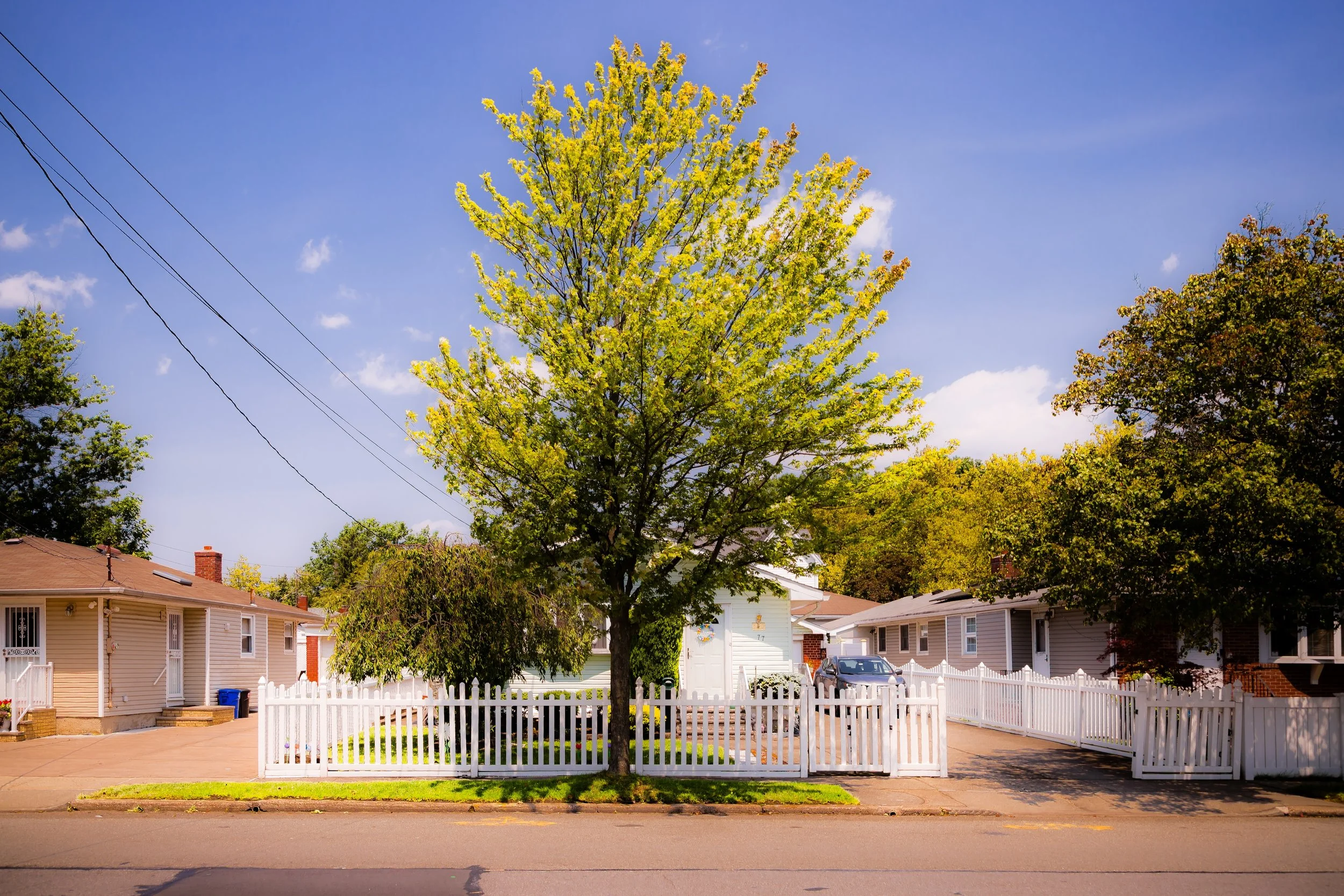
Meanwhile, the surrounding neighborhood developed into a quiet, low-density suburb. Postwar housing tracts spread south and west, yet within Richmond Town’s boundaries, architectural preservation and zoning protections limited intrusive development. The completion of the Willowbrook (Korean War Veterans) Parkway in the 1960s improved access while defining the area’s eastern edge. Civic associations and local advocates ensured that new construction complemented the historic setting, maintaining the neighborhood’s unique sense of scale and authenticity.
By the late 20th century, Richmond Town had achieved dual status: a living museum embodying Staten Island’s colonial and agrarian past, and a residential community prized for its tranquility, greenery, and proximity to the island’s central parks and cultural landmarks.
21st Century: Heritage, Stewardship, and Renewal
In the 21st century, Richmond Town remains both a neighborhood and a museum—a rare coexistence of living community and preserved history. The Historic Richmond Town complex continues to expand its mission, curating new exhibits, hosting artisans, and conducting archaeological research that deepens understanding of Staten Island’s early life. The Historical Society’s archives serve scholars from across the nation, while public events—from old-fashioned fairs and lantern tours to craft markets and food festivals—connect residents and visitors to the borough’s living heritage.
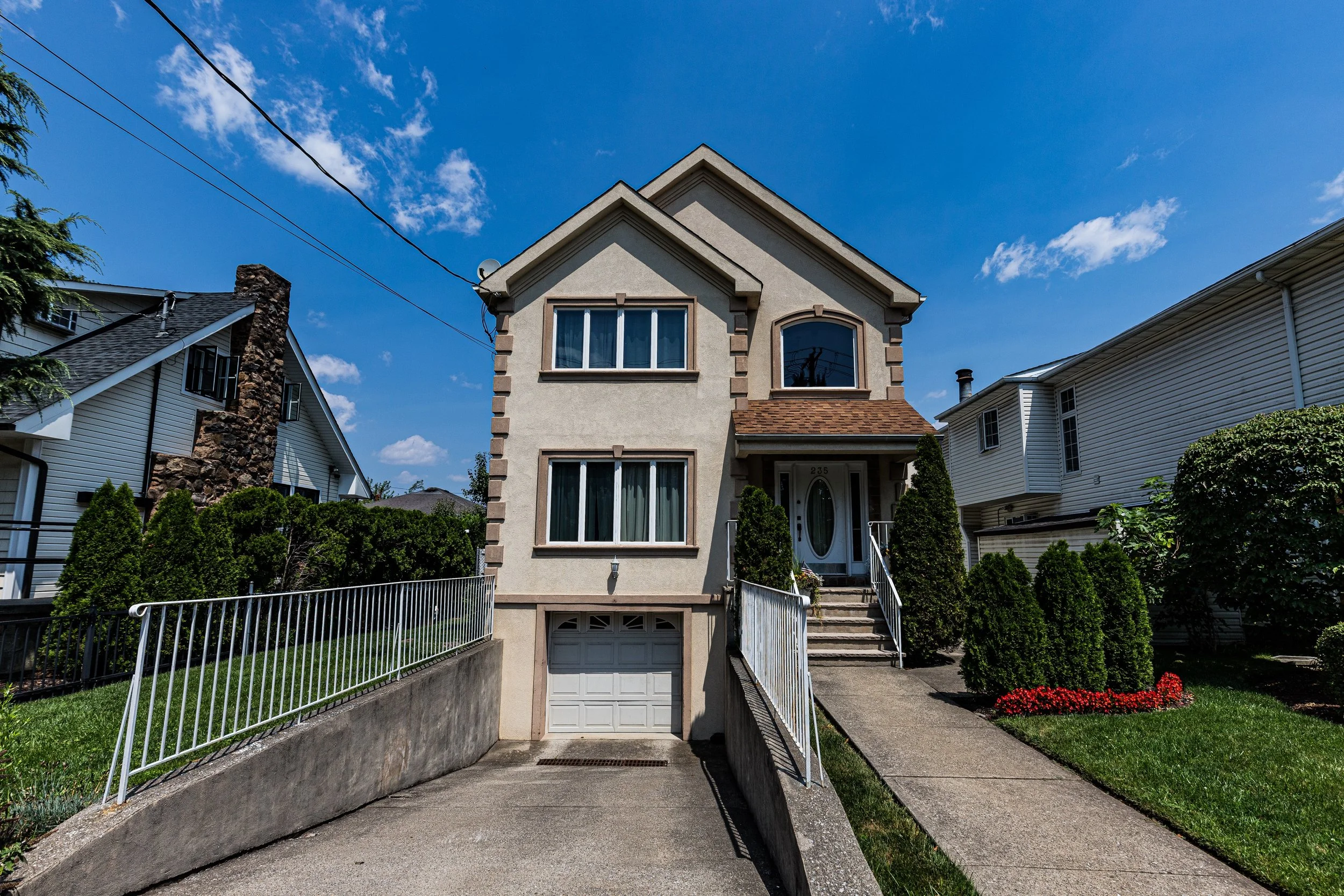
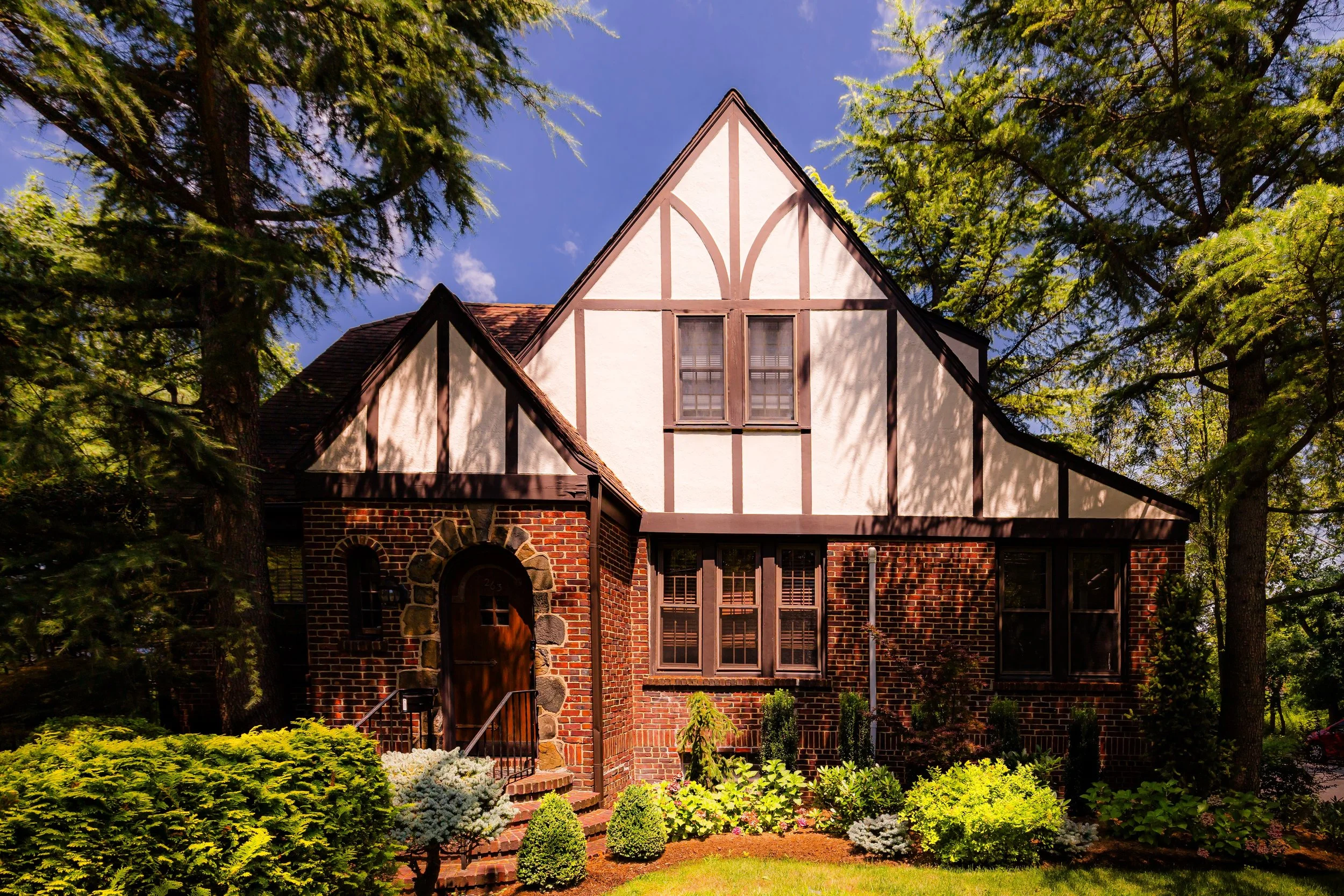
Beyond the museum grounds, Richmond Town’s residential streets retain an almost rural calm. Wide lawns, mature trees, and Colonial- and Tudor-style homes give the area a timeless character. The proximity of Latourette Park, Willowbrook Park, and the Greenbelt adds layers of ecological richness, offering miles of trails and forested buffers. Community organizations remain vigilant in preserving this balance between cultural preservation and suburban livability.
Modern infrastructure, improved schools, and careful planning have made Richmond Town one of Staten Island’s most desirable addresses, particularly for those drawn to its history and landscape. Even as the island around it urbanizes, Richmond Town remains an oasis—a reminder that progress need not erase the past, and that heritage, when tended with care, can remain vibrantly alive.
Richmond Town Photo Gallery
Spirit and Legacy
The spirit of Richmond Town lies in its deep roots—roots that reach back to Staten Island’s founding and continue to nourish its identity today. It is a place where every lane, stone wall, and gabled roof tells a story: of farmers and ferrymen, of civic leaders and craftsmen, of generations who built a community that endures beyond time.
Its legacy is not merely architectural but moral: a testament to the value of preservation, education, and continuity. Here, history is not confined to glass cases but walks the streets in the footsteps of those who came before. Richmond Town remains both a sanctuary and a crossroads—the soul of Staten Island’s past, still at the center of its present.
New York City
Use this custom Google map to explore where every neighborhood in all five boroughs of New York City is located.
The Five Boroughs
One of New York City’s unique qualities is its organization in to 5 boroughs: Manhattan, Brooklyn, Queens, The Bronx, and Staten Island. These boroughs are part pragmatic administrative districts, and part vestiges of the region’s past. Each borough is an entire county in New York State - in fact, Brooklyn is, officially, Kings County, while Staten Island is, officially Richmond County. But that’s not the whole story …
Initially, New York City was located on the southern tip of Manhattan (now the Financial District) that was once the Dutch colony of New Amsterdam. Across the East River, another city was rising: Brooklyn. In time, the city planners realized that unification between the rapidly rising cities would create commercial and industrial opportunities - through streamlined administration of the region.
So powerful was the pull of unification between New York and Brooklyn that three more counties were pulled into the unification: The Bronx, Queens, and Staten Island. And on January 1, 1898, the City of New York unified two cities and three counties into one Greater City of New York - containing the five boroughs we know today.
But because each borough developed differently and distinctly until unification, their neighborhoods likewise uniquely developed. Today, there are nearly 390 neighborhoods, each with their own histories, cultures, cuisines, and personalities - and each with residents who are fiercely proud of their corner of The Big Apple.