
EAST ELMHURST
Queens
Geographic Setting
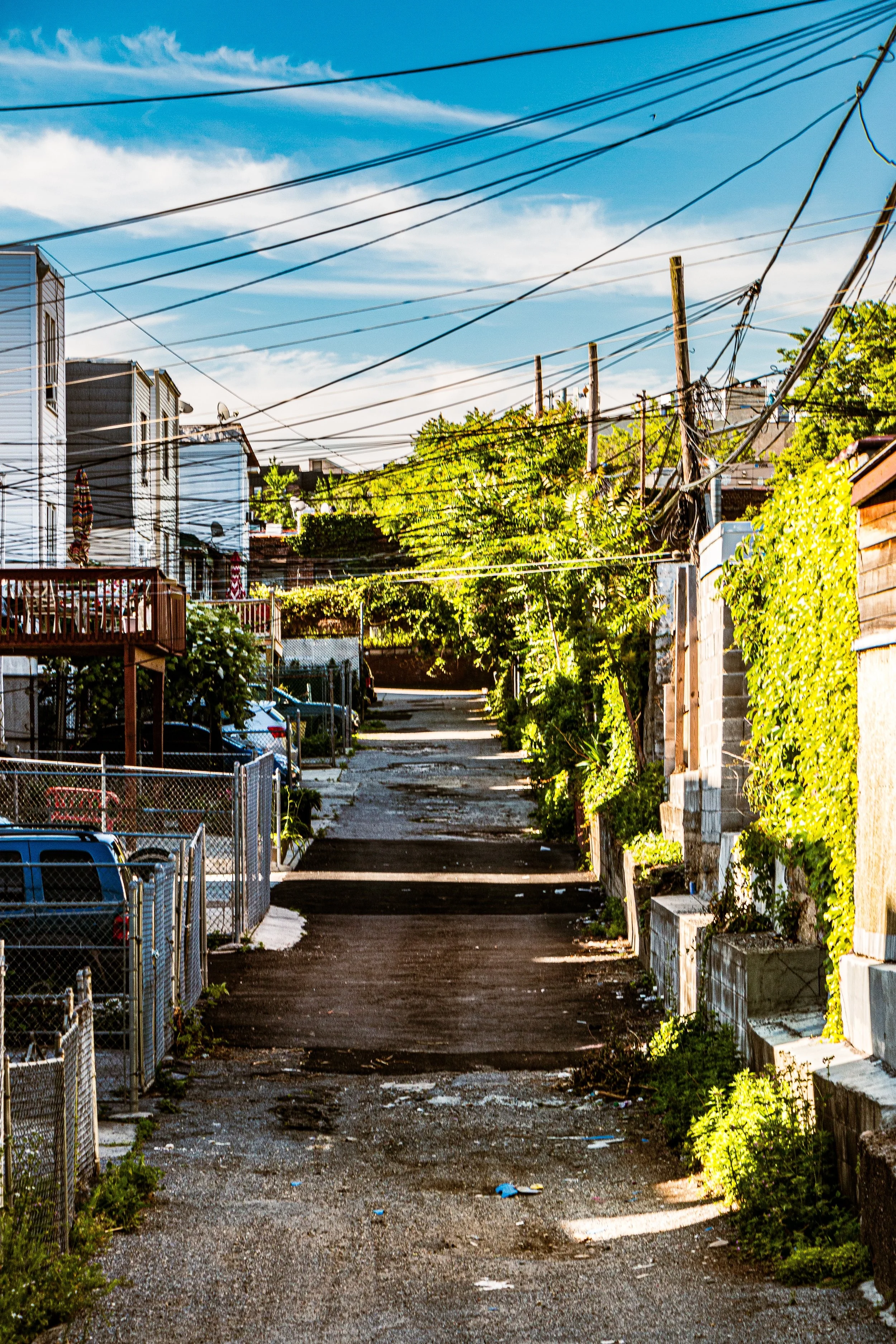
Bounded by the Grand Central Parkway to the north and east, Northern Boulevard to the south, and the Brooklyn–Queens Expressway (BQE) to the west, East Elmhurst occupies a triangular sweep of land between Jackson Heights, Flushing Bay, and LaGuardia Airport. The neighborhood sits on level ground once characterized by tidal creeks and marshes that fed into the bay, now replaced by tree-lined residential streets, schools, and parks. Its location—tucked between major expressways and airport runways—gives it both exceptional accessibility and a unique sense of enclosure, a quiet pocket of mid-20th-century homes just beyond the city’s busiest transit corridors.
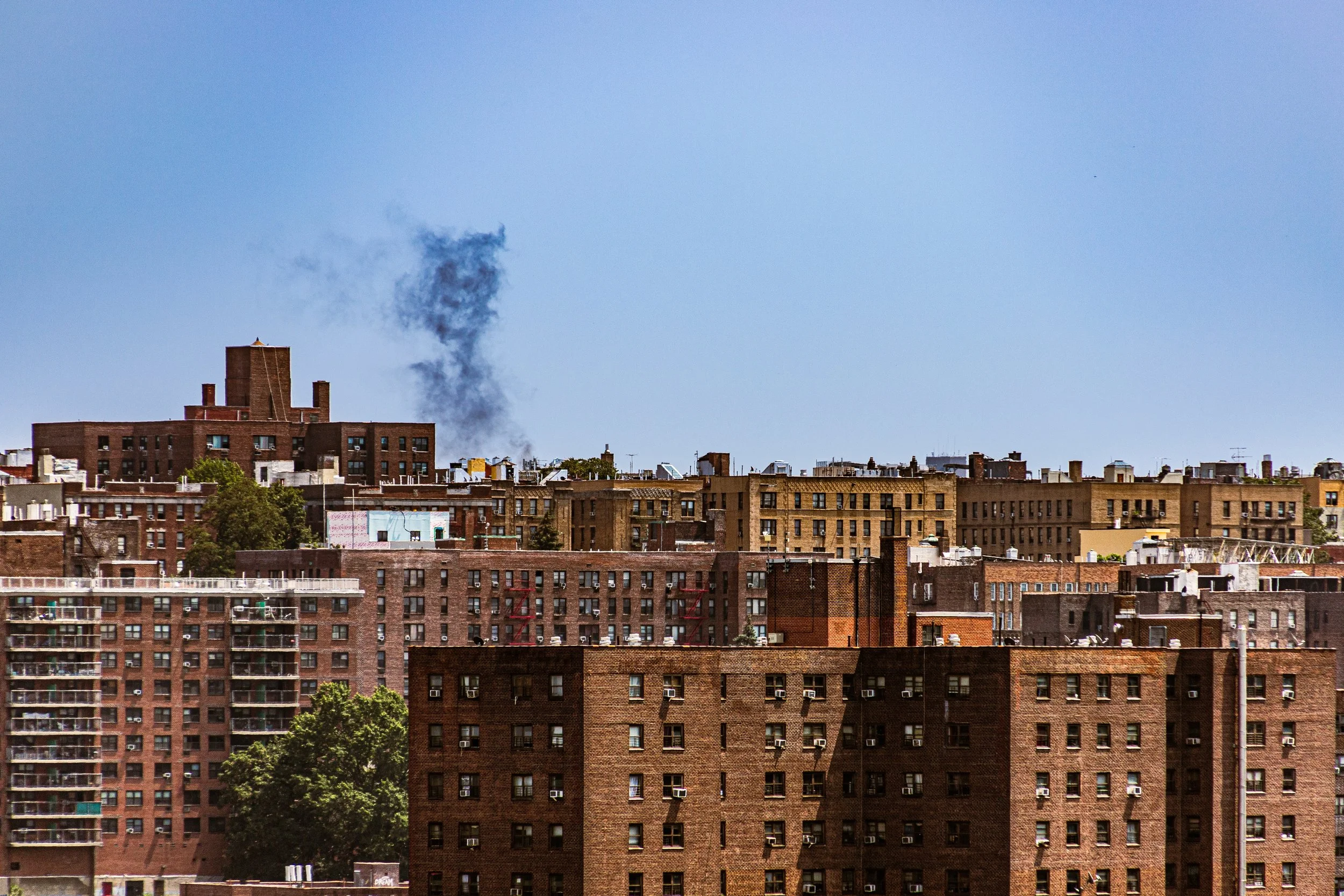
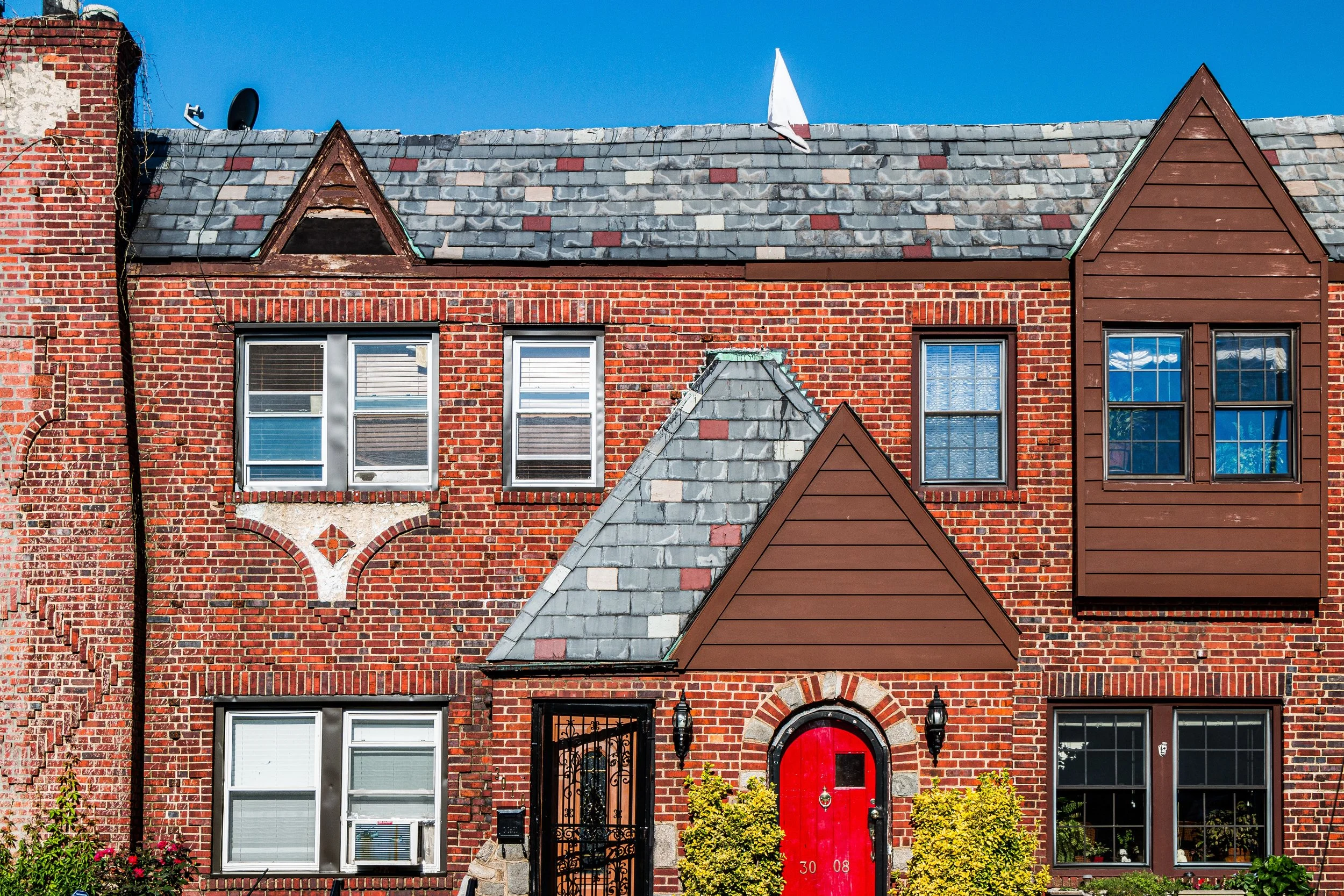
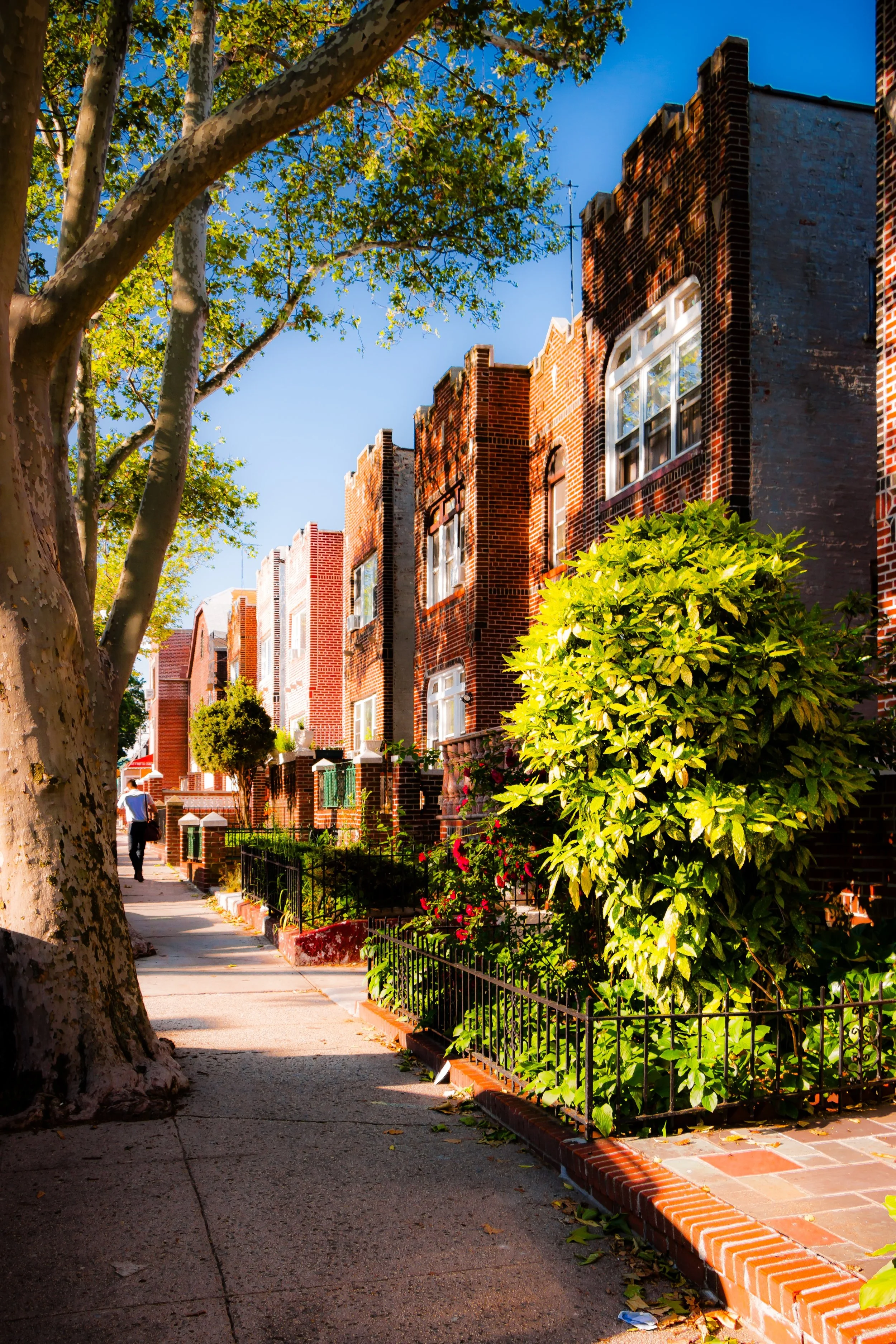
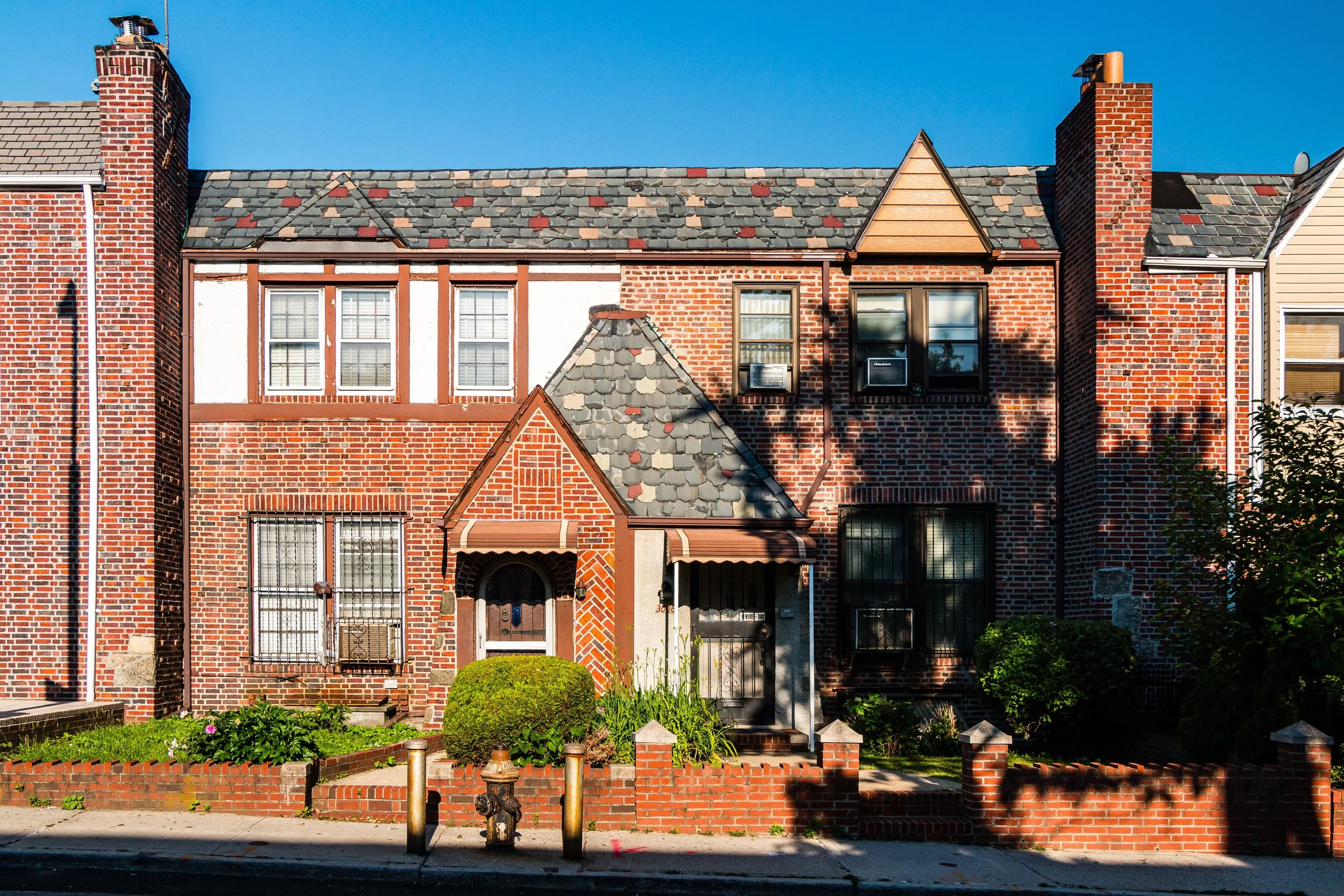
Astoria Boulevard, running diagonally through the heart of the neighborhood, serves as East Elmhurst’s principal commercial spine, linking local businesses, groceries, and family-run restaurants. Ditmars Boulevard, 90th Street, and 25th Avenue define secondary routes, while side streets are composed largely of brick single- and two-family houses built between the 1930s and 1960s. Along the northern edge, LaGuardia Airport looms as both neighbor and landmark—its terminals visible from residential blocks, its planes tracing the skyline. Despite proximity to constant motion, East Elmhurst remains deeply residential, with front yards, sidewalks, and community institutions that preserve its suburban rhythm.
Etymology and Origins
Despite its position north of its namesake, “East Elmhurst” derives its name from Elmhurst, the southern nearby district that grew from the colonial-era village of Newtown. The term “Elmhurst,” meaning a grove of elms, was adopted in 1896 by real estate developer Cord Meyer Jr., who sought to replace the less fashionable name “Newtown” with one evoking greenery and suburban refinement. When housing spread eastward in the early 20th century, developers naturally extended the designation, promoting East Elmhurst as a modern residential enclave within reach of Manhattan.
Before its development, the area consisted largely of farmland and tidal meadows along the western shore of Flushing Bay. Dutch and English settlers in the 17th century used the land for agriculture, while later generations—linked to nearby Jackson Heights and North Beach—tended orchards, dairy herds, and nurseries. In the late 19th century, the Brooklyn–Queens Trolley Line and improved ferry access made the region more accessible, setting the stage for suburban growth in the following century.
The Neighborhood
Early 20th Century: Suburban Expansion and Aviation Frontiers
The modern story of East Elmhurst began in the 1920s and 1930s, as New York City’s expanding middle class sought new residential opportunities beyond the crowded inner boroughs. Developers subdivided former farmland into neatly gridded streets north of Northern Boulevard, advertising “garden homes by the bay.” The first houses—modest brick and stucco dwellings with small front lawns—were built for city workers, teachers, and tradespeople.
The most transformative change arrived in 1939 with the opening of LaGuardia Airport. Carved out of the old North Beach Amusement Park and surrounding wetlands, the airport brought both opportunity and upheaval. East Elmhurst’s northern edge was effectively redrawn by the construction of runways and the Grand Central Parkway, which provided direct highway access to Manhattan. The project created jobs and stimulated local commerce but also introduced a permanent soundtrack of aircraft overhead—one that still defines daily life.
Despite these changes, East Elmhurst retained a suburban calm, protected from industrial development by zoning and geography. Its proximity to both Manhattan and Flushing Bay made it appealing to middle-income families seeking affordable homes within city limits.
Mid-20th Century: African-American and Caribbean Enclave
By the 1940s and 1950s, East Elmhurst had become a vibrant center of African-American homeownership—one of the first in New York City to attract upwardly mobile Black professionals and entertainers. As housing discrimination and redlining restricted opportunities elsewhere, East Elmhurst offered a rare pathway to stability and community pride. Notable residents included figures such as Malcolm X, Louis Armstrong, Ella Fitzgerald, Willie Mays, and Langston Hughes, many of whom lived within a few blocks of one another.
The neighborhood’s welcoming atmosphere and affordable single-family homes made it a magnet for African-American families from Harlem and the Bronx, as well as for Caribbean immigrants from Jamaica, Trinidad, Barbados, and other islands. Churches such as Our Lady of Fatima, The First Baptist Church of East Elmhurst, and Community United Methodist Church became community anchors, hosting social gatherings, youth programs, and civil rights meetings.
Though the nearby airport brought noise and air pollution, it also provided steady employment. Many residents worked as mechanics, clerks, or attendants at LaGuardia, while others commuted easily to city jobs via Northern Boulevard and the newly expanded IND subway lines in adjacent Jackson Heights. Block associations flourished, maintaining the neighborhood’s orderly appearance and civic spirit.
East Elmhurst Video Coming Soon
Late 20th Century: Resilience Amid Urban Change
The 1960s and 1970s tested East Elmhurst’s stability as New York City faced economic decline and urban disinvestment. Airport expansion projects displaced portions of the neighborhood’s northern edge, while rising property taxes and aging infrastructure posed new challenges. Yet East Elmhurst proved remarkably resilient. Its strong tradition of homeownership and community organization—embodied by groups like the East Elmhurst–Corona Civic Association—helped maintain safety and cleanliness even during the city’s hardest years.
The construction of the LaGuardia Marriott Hotel (1981) and subsequent airport modernizations reshaped the neighborhood’s skyline, but residential life remained largely intact. New waves of immigrants—Latino, South Asian, and West African families—joined the existing African-American and Caribbean base, broadening the neighborhood’s cultural profile while sustaining its middle-class identity.
21st Century: Diversity, Transit, and Environmental Renewal
In the 2000s and 2010s, East Elmhurst experienced a quiet renaissance. Its proximity to both LaGuardia Airport and Flushing Meadows–Corona Park made it an appealing residential option for professionals seeking access to transit, green space, and neighborhood calm. The city’s massive LaGuardia redevelopment project, launched in 2015, brought new infrastructure, job opportunities, and aesthetic improvements—though also renewed concerns about traffic and environmental impact.
At the same time, environmental restoration projects along Flushing Bay and Alley Creek have sought to mitigate flooding and reclaim the wetlands that once defined the landscape. Gorman Playground, Langston Hughes Playground, and other local parks remain cherished gathering spaces, while block associations and civic groups continue to advocate for noise control and sustainable urban planning.
Culturally, East Elmhurst remains deeply rooted in its midcentury heritage. The Louis Armstrong House Museum—technically just across the Corona border—continues to draw visitors from around the world, symbolizing the neighborhood’s connection to music and history. Streets named for civil rights figures, annual community parades, and local murals celebrate a legacy of perseverance, artistry, and pride.
East Elmhurst Photo Gallery
Spirit and Legacy
East Elmhurst’s spirit is defined by resilience and unity. Shaped by migration, bounded by highways and skyways, it has remained a haven of homeownership and neighborly care for nearly a century. Its modest houses, tended gardens, and tree-lined sidewalks speak to generations of families who built stability and dignity within the ever-changing city.
New York City
Use this custom Google map to explore where every neighborhood in all five boroughs of New York City is located.
The Five Boroughs
One of New York City’s unique qualities is its organization in to 5 boroughs: Manhattan, Brooklyn, Queens, The Bronx, and Staten Island. These boroughs are part pragmatic administrative districts, and part vestiges of the region’s past. Each borough is an entire county in New York State - in fact, Brooklyn is, officially, Kings County, while Staten Island is, officially Richmond County. But that’s not the whole story …
Initially, New York City was located on the southern tip of Manhattan (now the Financial District) that was once the Dutch colony of New Amsterdam. Across the East River, another city was rising: Brooklyn. In time, the city planners realized that unification between the rapidly rising cities would create commercial and industrial opportunities - through streamlined administration of the region.
So powerful was the pull of unification between New York and Brooklyn that three more counties were pulled into the unification: The Bronx, Queens, and Staten Island. And on January 1, 1898, the City of New York unified two cities and three counties into one Greater City of New York - containing the five boroughs we know today.
But because each borough developed differently and distinctly until unification, their neighborhoods likewise uniquely developed. Today, there are nearly 390 neighborhoods, each with their own histories, cultures, cuisines, and personalities - and each with residents who are fiercely proud of their corner of The Big Apple.