
Sunflections
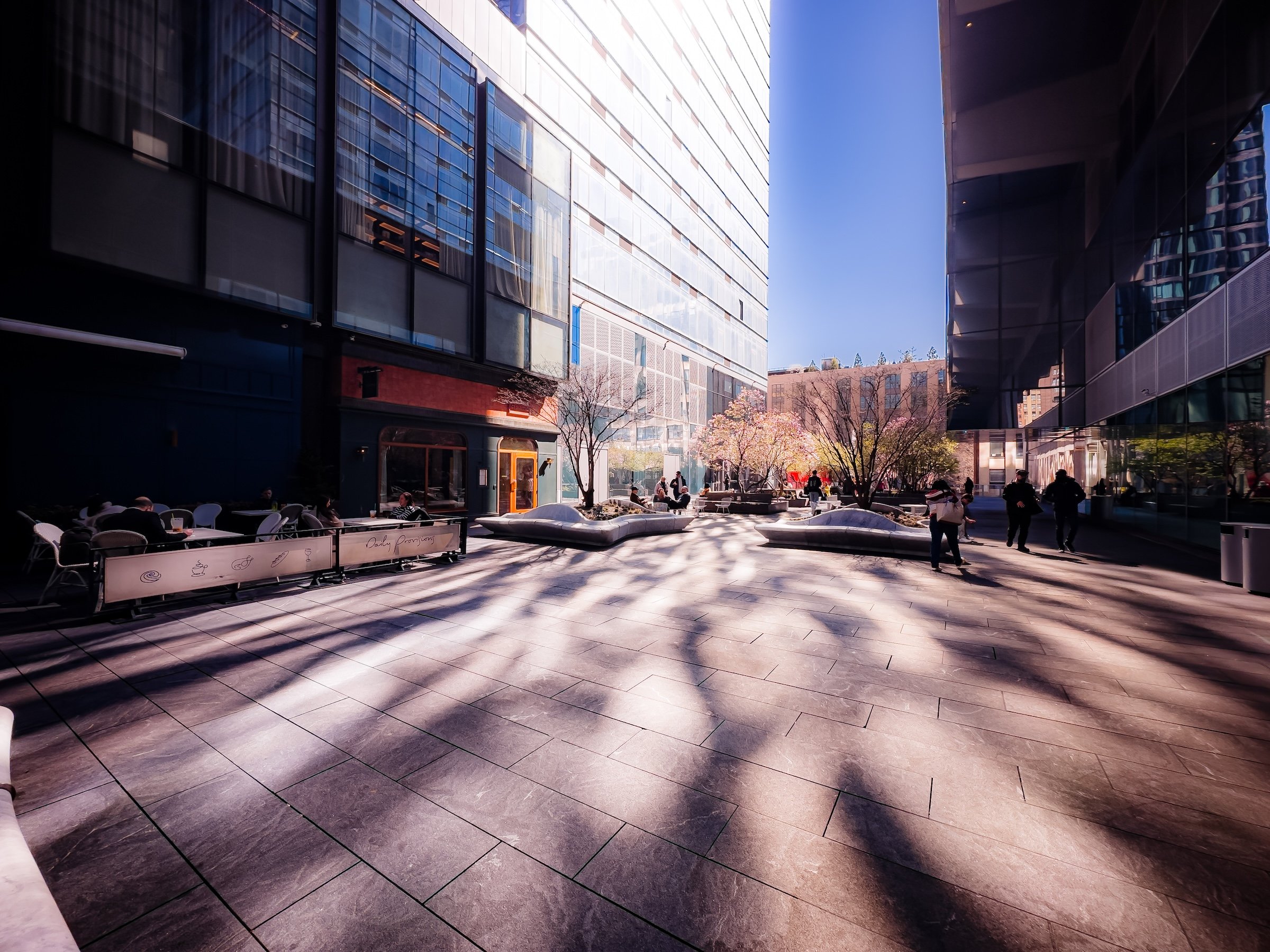
Hudson Yards - Manhattan - Rivers Of Sun
Definition:
Reflected sunlight that lands on pavement, sidewalks, façades, or other surfaces as luminous shapes—bands, ripples, patches, or drifting “spotlights.” Unlike lens flare (which happens inside the camera), Sunflections are light that the city redirects back into the scene: bounced from glass, metal, water, polished stone, or wet ground.
Usage:
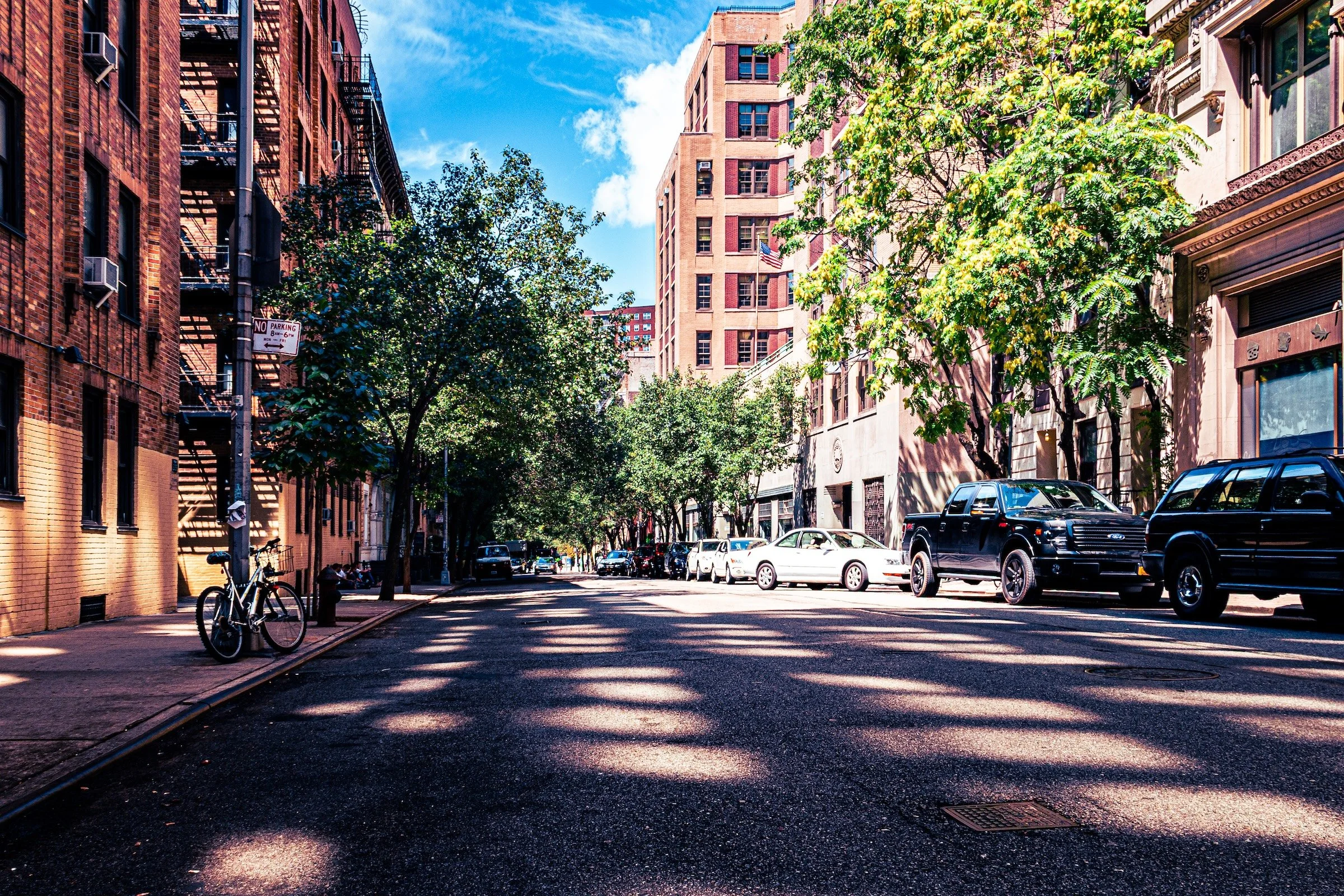
You can use Sunflections to turn a plain surface into an active compositional tool. They can create rhythm across the ground plane, pull the eye forward like a path, add energy to quiet streets, and balance heavy architecture or deep shadow with controlled brightness.
Sunflections are one of those quiet street phenomena that start showing up everywhere once you learn to notice them: reflected sunlight that turns an ordinary surface into an active part of the scene. They can appear as luminous bands on pavement, rippling highlights along a sidewalk, or unexpected “spotlights” drifting across brick and stone when nearby glass catches the sun. The effect is subtle enough to miss—and strong enough to completely change the mood and structure of a photograph once you build a frame around it.
In Depth:
I coined the term Sunflections as a way to name (and therefore reliably seek) this specific kind of reflected light. They’re not the sun itself, and they’re not lens flare. They’re sunlight redirected by the city—bounced from windows, metal, polished stone, water, or wet ground—then painted back onto the street in shapes that behave like their own subject. In practice, Sunflections can create rhythm, pull the viewer’s eye forward, add drama to otherwise flat ground planes, and counterbalance heavy architecture or deep shadow.
Sunflections are also wonderfully portable. I find them across New York City constantly, but they’re not “an NYC thing.” The same visual behavior shows up in Paris, Tallinn, and anywhere else you have sun + reflective surfaces + the right angle. That universality is part of why they belong in the Photographic Lexicon: this is a repeatable way of seeing, not a one-off trick.
A few quick ways to spot them in the field:
Look for reflective surfaces nearby—glass façades, windows, metal panels, polished stone, water, or even bright painted walls.
Pay attention to sun angle. Lower angles (morning, late afternoon, winter sun) tend to produce more dramatic shapes and longer “runs” of reflected light.
After rain—or when sidewalks and streets are freshly washed—Sunflections often become brighter and more defined.
Move your position. With Sunflections, a few steps left or right can completely change the pattern and where it lands.
Below are ten launch examples that show Sunflections in different forms: on streets and sidewalks, across landmark settings, and up the sides of buildings when glass turns the city into a natural light projector. Each image includes a brief note on what the Sunflections are doing in the frame, and why I consider it a strong example of the concept.
Ground Plane Sunflections:
These are the “classic” Sunflections: light patterns that turn asphalt, concrete, and stone into an active compositional surface.
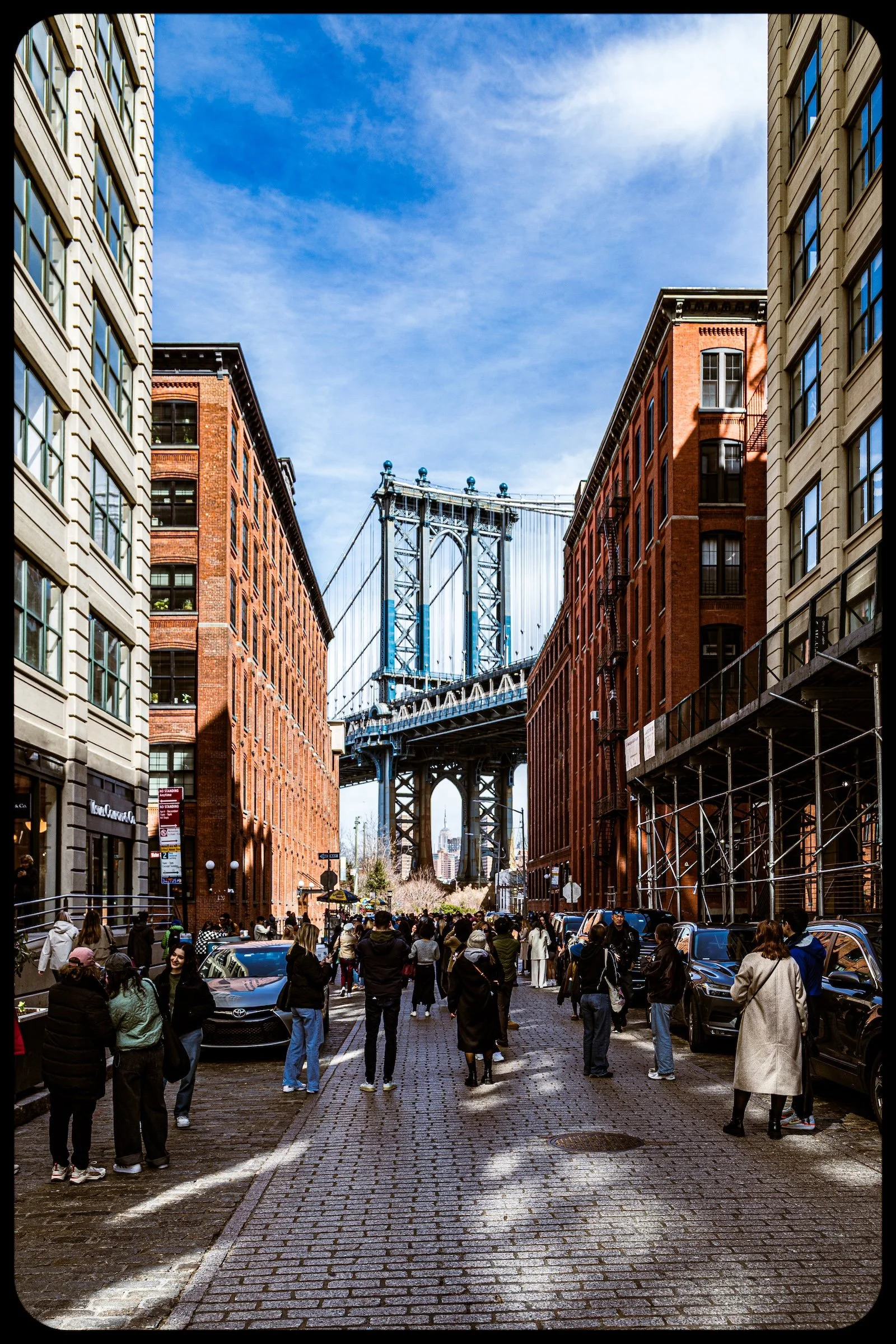
Sunflections on cobblestones add texture and atmosphere to a classic landmark frame, giving the ground its own energy alongside the crowd and architecture. Use them as a “quiet counterweight”: they can balance busy scenes by anchoring the bottom half of the frame.
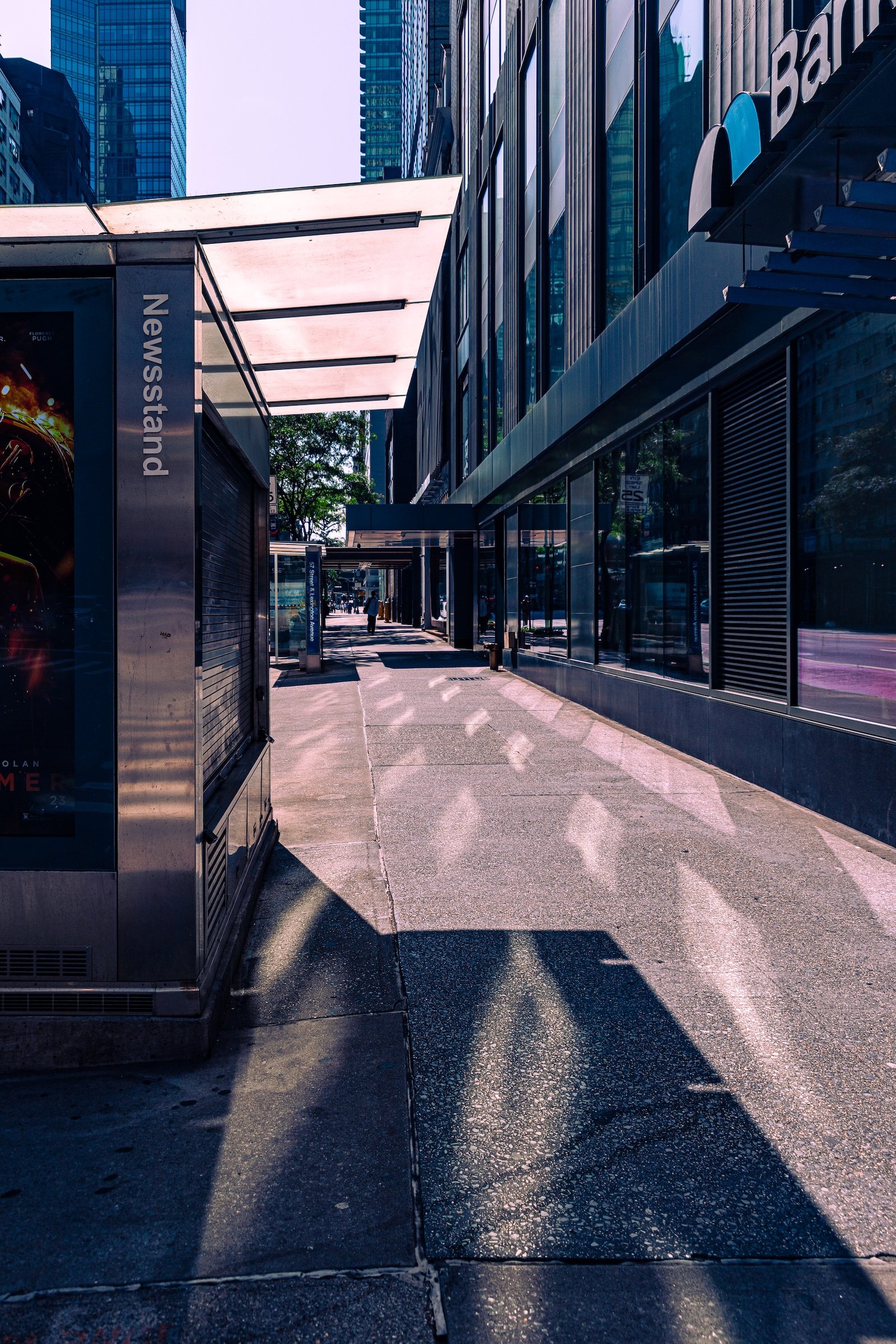
Midtown East - Manhattan - Sidewalk Ripples (Newsstand)
Here the sidewalk stops being “empty space” and becomes the subject, with sunflections forming repeated shapes that lead down the corridor. Step left/right a few feet to refine the pattern—Sunflections change dramatically with small shifts in position.
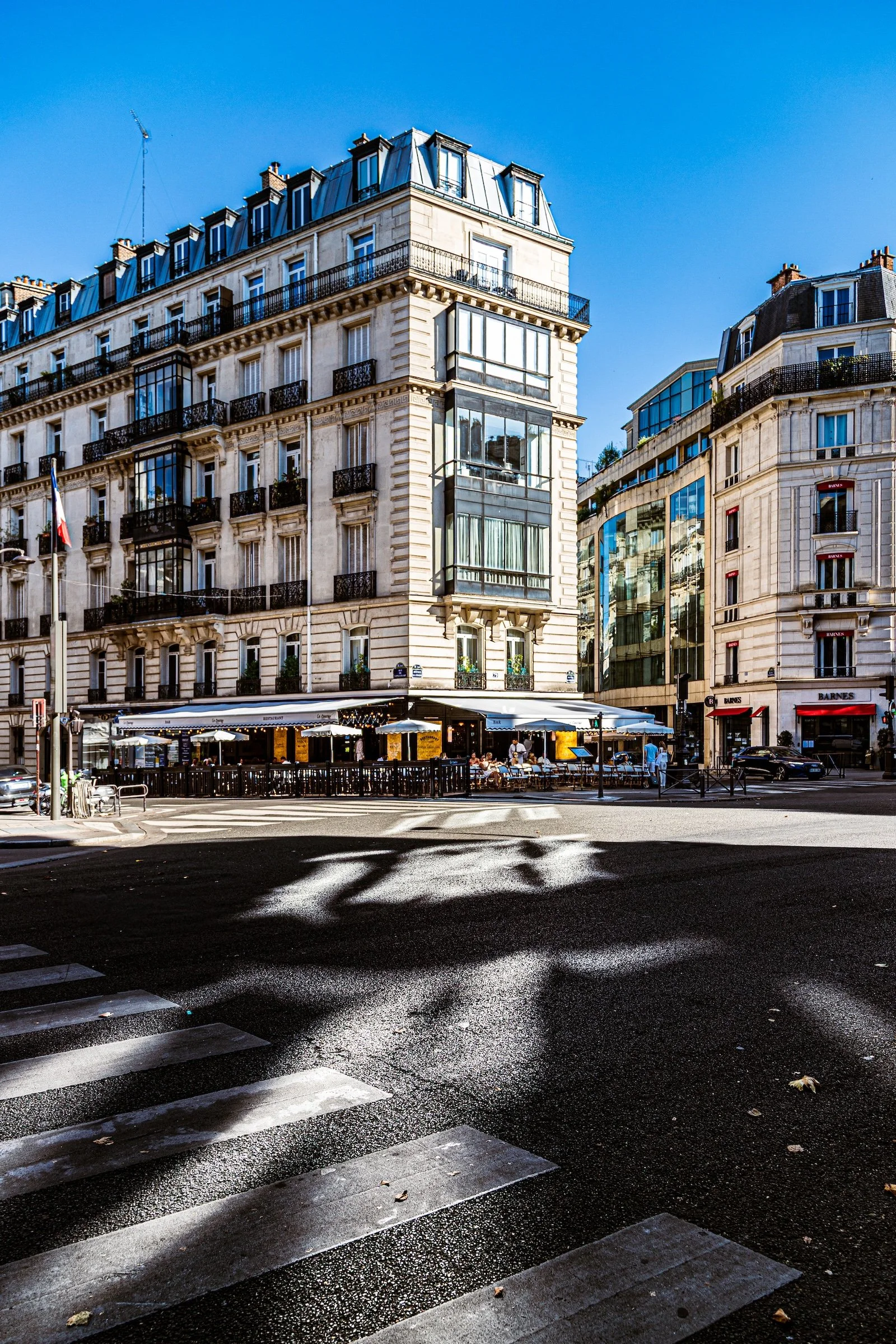
Paris — Crosswalk Shimmer
Sunflections paint the wet street with bright strokes that pull your eye across the intersection and into the architecture beyond. After rain (or street cleaning), look for low sun angles and compose so the brightest patches become your foreground rhythm.
Vertical and façade sunflections:
Sometimes Sunflections “climb” the city—reflections from glass or water can wash light up onto brick, stone, or metal like a natural spotlight.
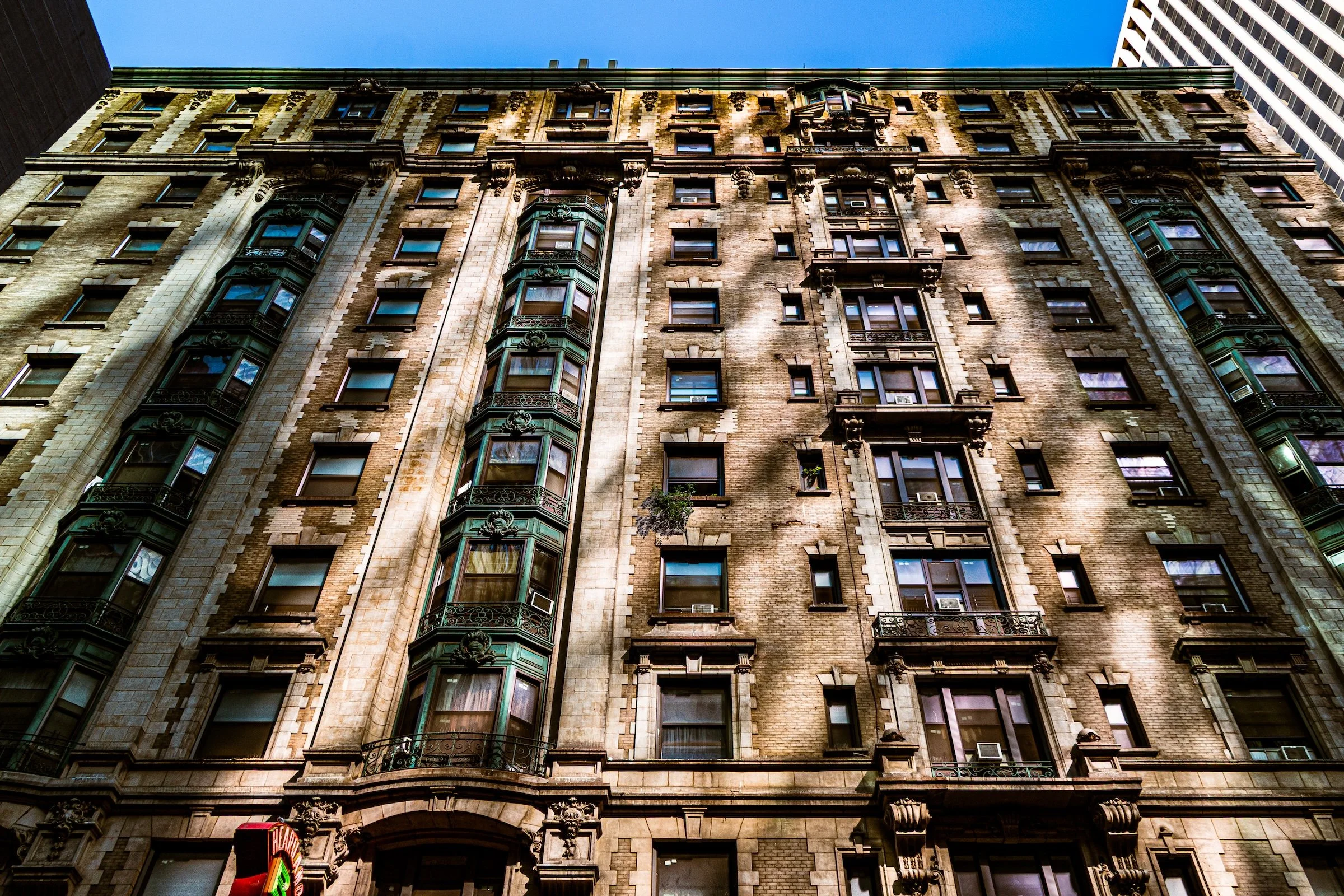
Theater District - Manhattan - Glass Floodlight (Blue-Sky Façade)
A nearby glass surface turns sunlight into a shifting wash across the façade, creating luminous bands that animate an otherwise static wall. Watch for reflective buildings opposite your subject—then move until the reflected light lands where you want it.
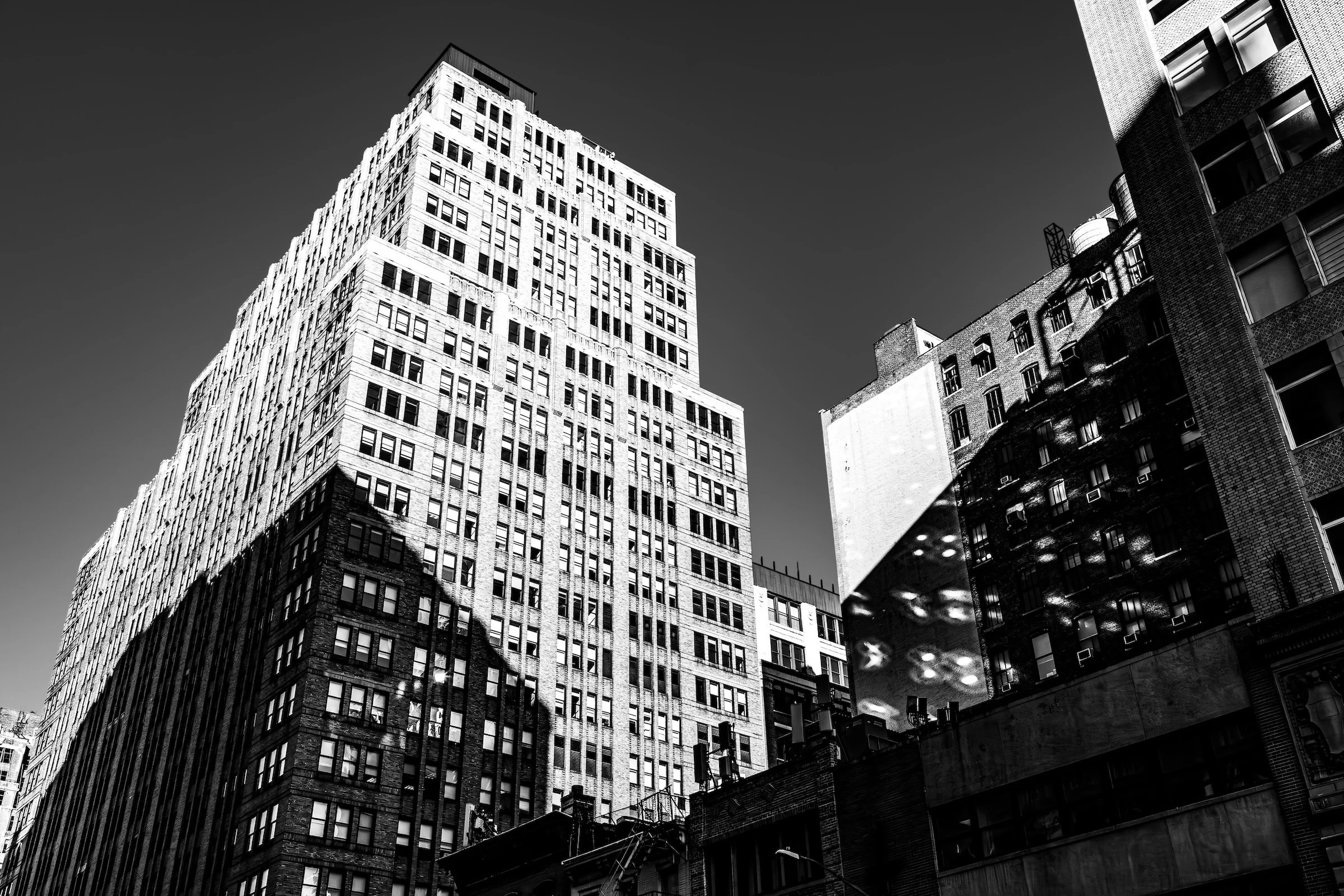
In black and white, Sunflections read like pure pattern—bright “constellations” against deep shadow that emphasize contrast and geometry. Convert to B/W when the reflection is more about shape than color; it makes the phenomenon feel graphic and intentional.
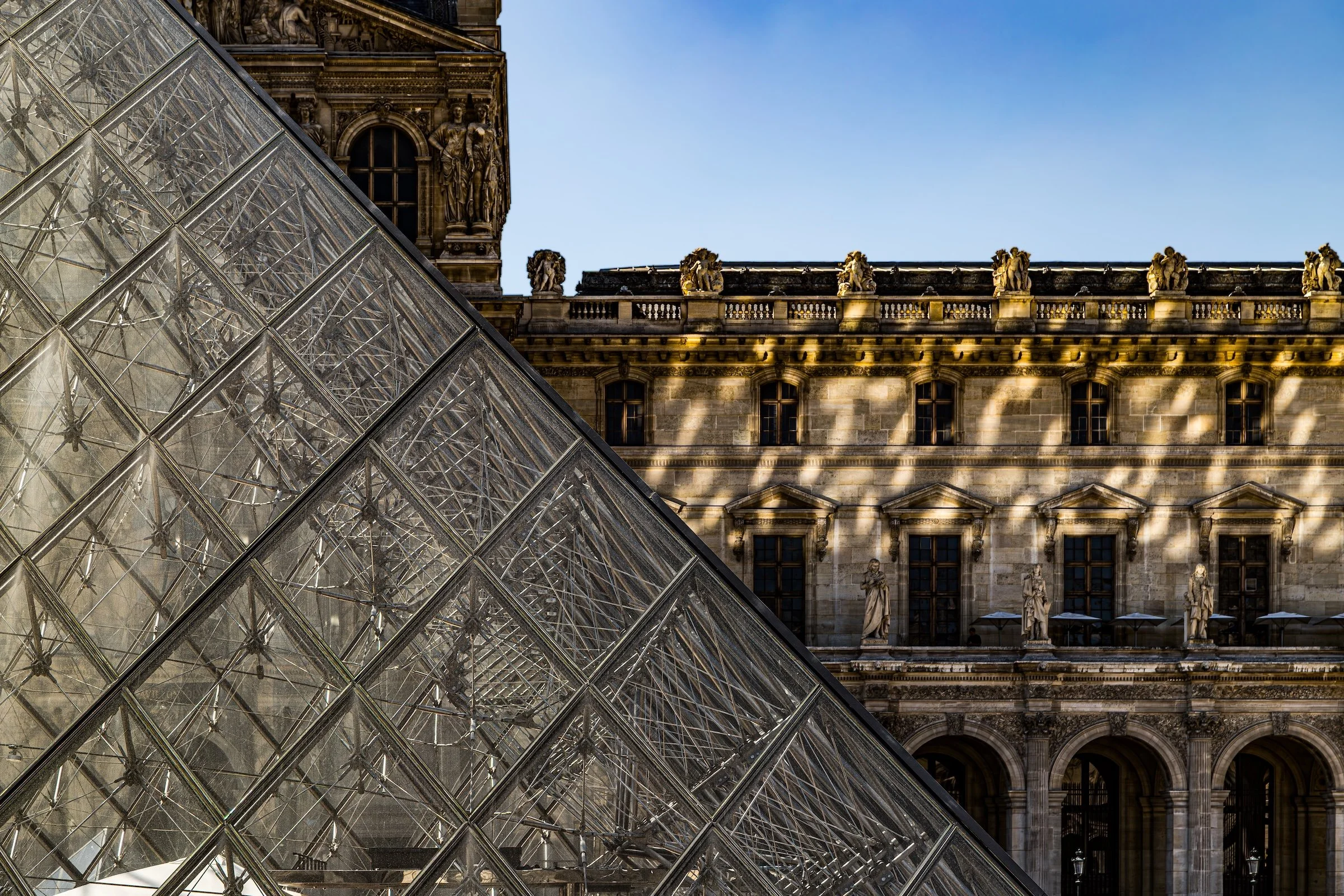
The pyramid’s glass structure becomes a light engine, producing repeating, angled highlights across the museum façade like a second layer of architecture. Look for reflective grids (glass, metal frameworks) and use them to create parallel rhythms across a simpler surface.
Plazas and street corners:
These examples show Sunflections as a tool for organizing open space—turning plazas, corners, and wide sidewalks into something with movement and weight.
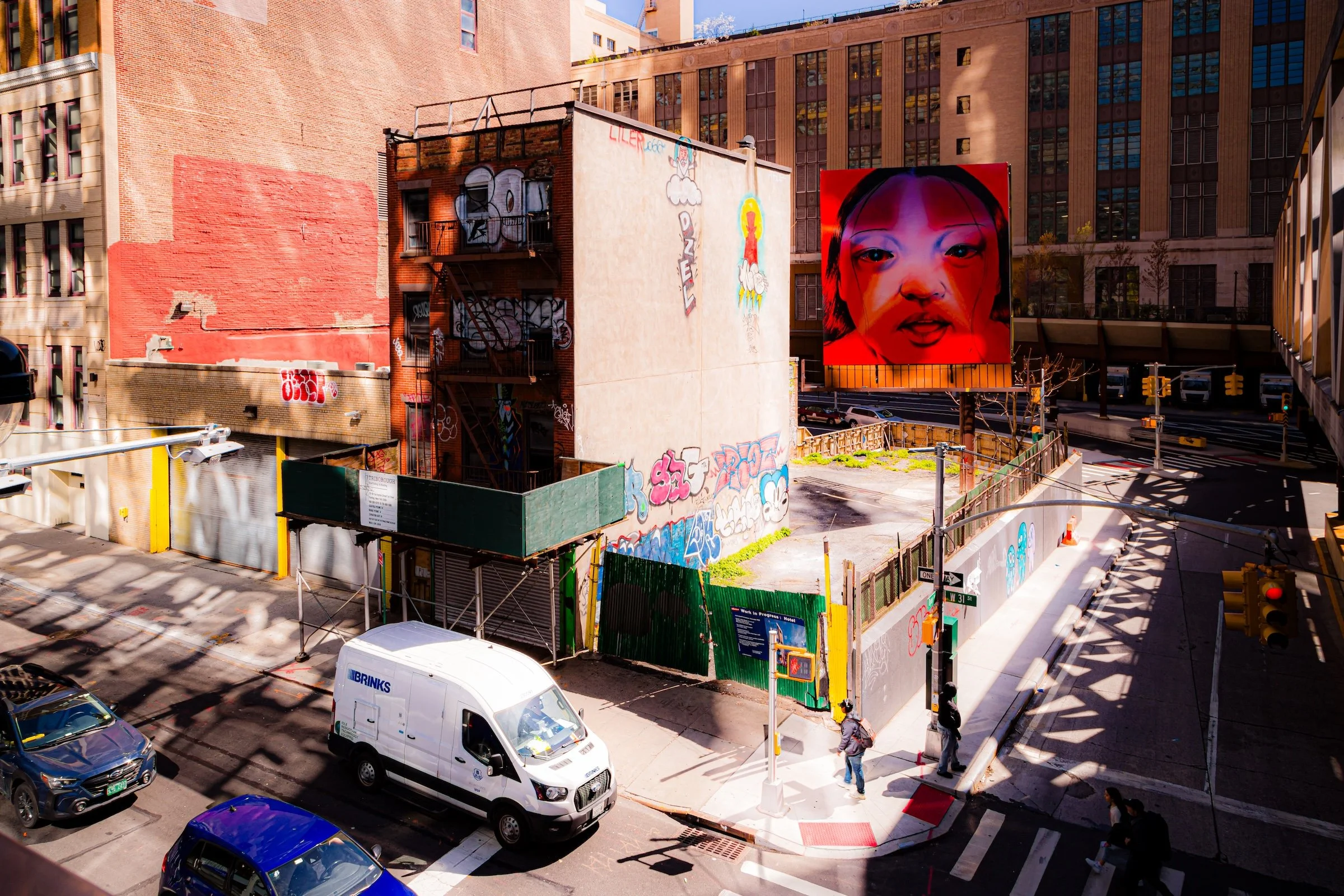
Hudson Yards - Manhattan - High Line Corner Glow
Sunflections create a luminous “path” across the ground plane that guides you into the scene and softens the hardness of the built environment. In open plazas, treat the brightest reflection as your main subject—then build the rest of the composition around it.
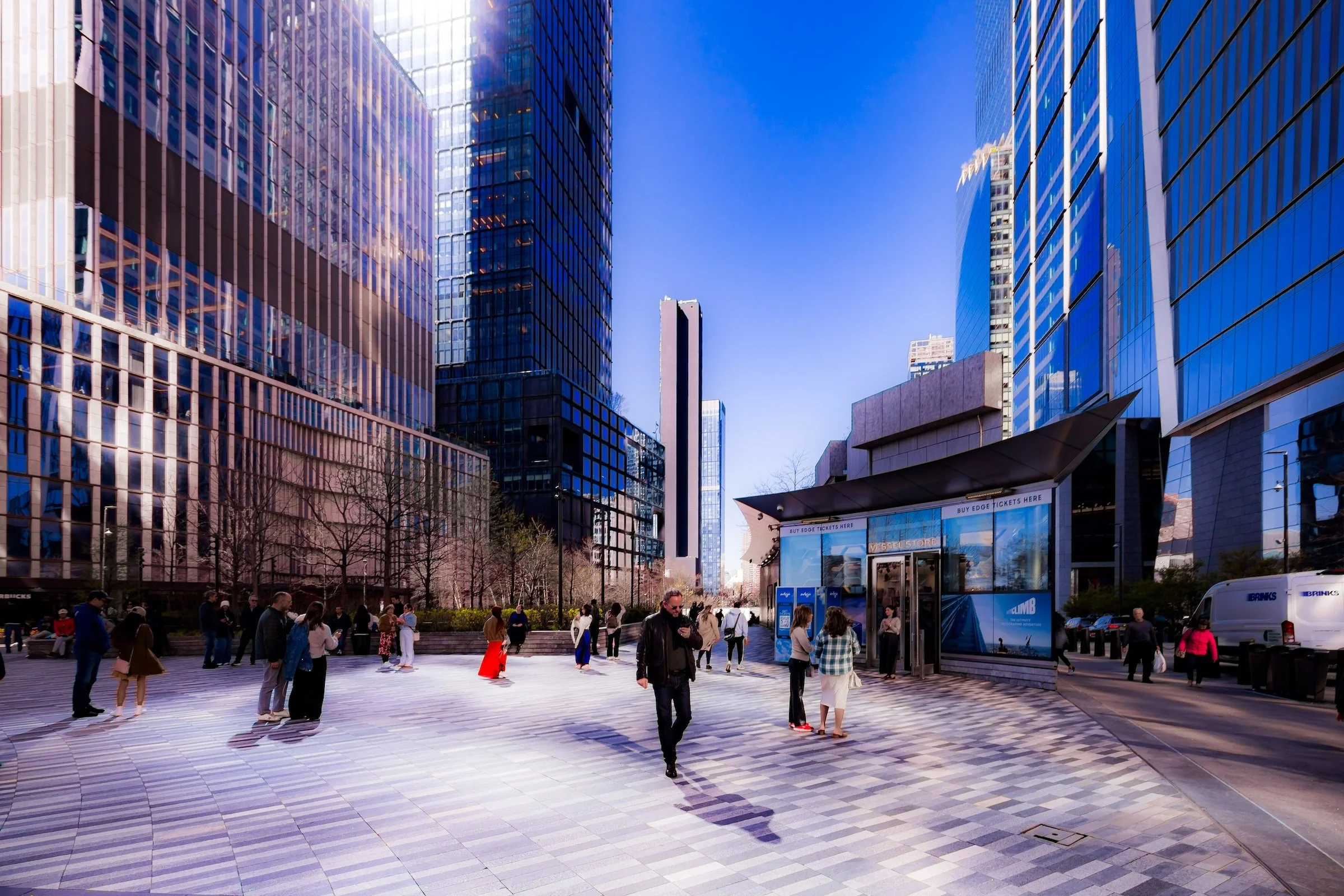
Hudson Yards - Manhattan - Backyard Liquid Sun
Here the reflections make the plaza feel staged, like light is being poured into the space to reveal people, benches, and trees. Use Sunflections to add depth: place the brightest patch in the mid-foreground and let it fade naturally into shadow.
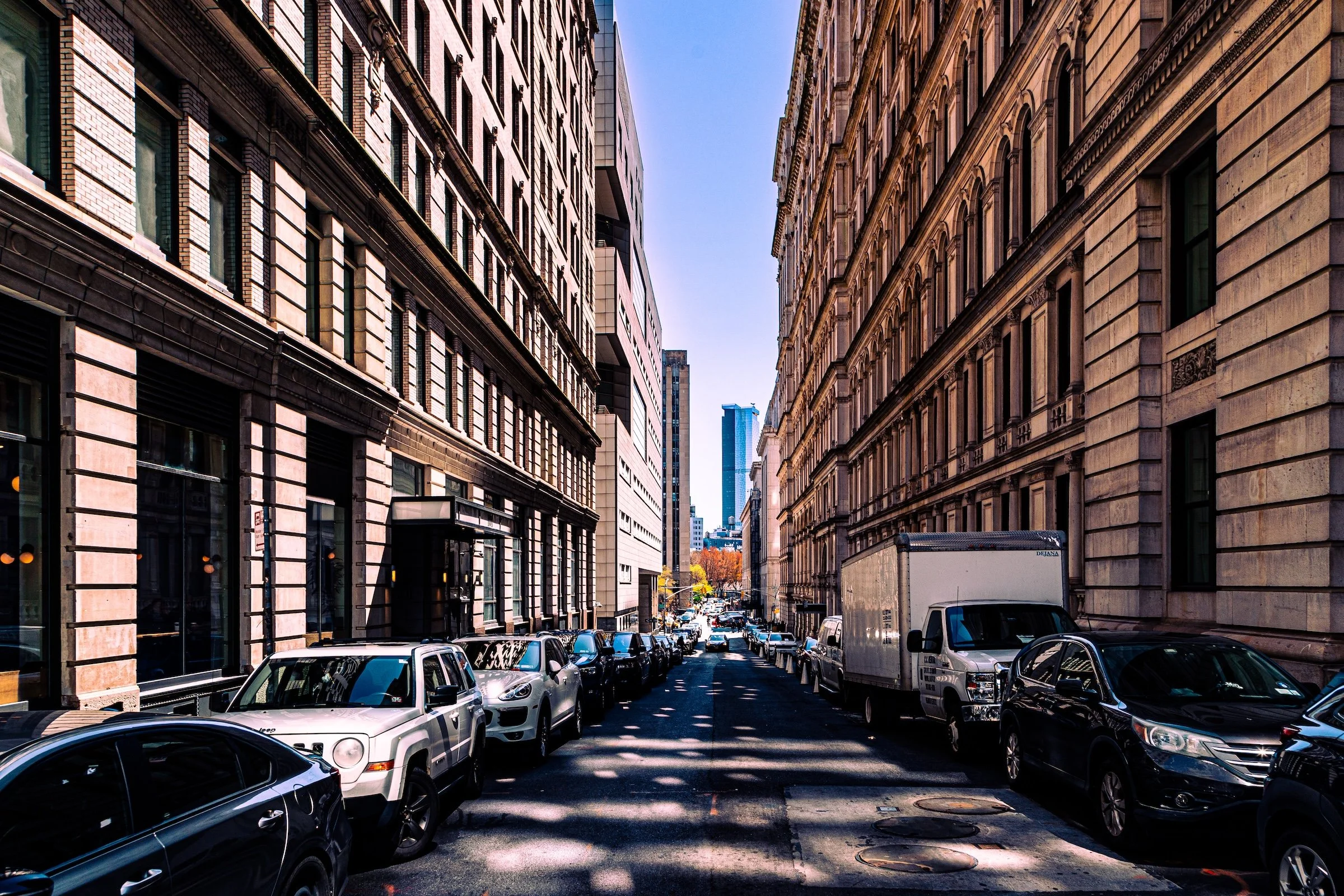
Civic Center - Manhattan - Shadowfield Intersection
Sunflections scatter across the street as small highlights inside a larger pattern of shadow, creating a layered “light map” that gives the frame structure. When both shadows and Sunflections are present, expose for the highlights and let the shadows become the supporting architecture.
Explore Further