
Urban Monoliths
Definition:
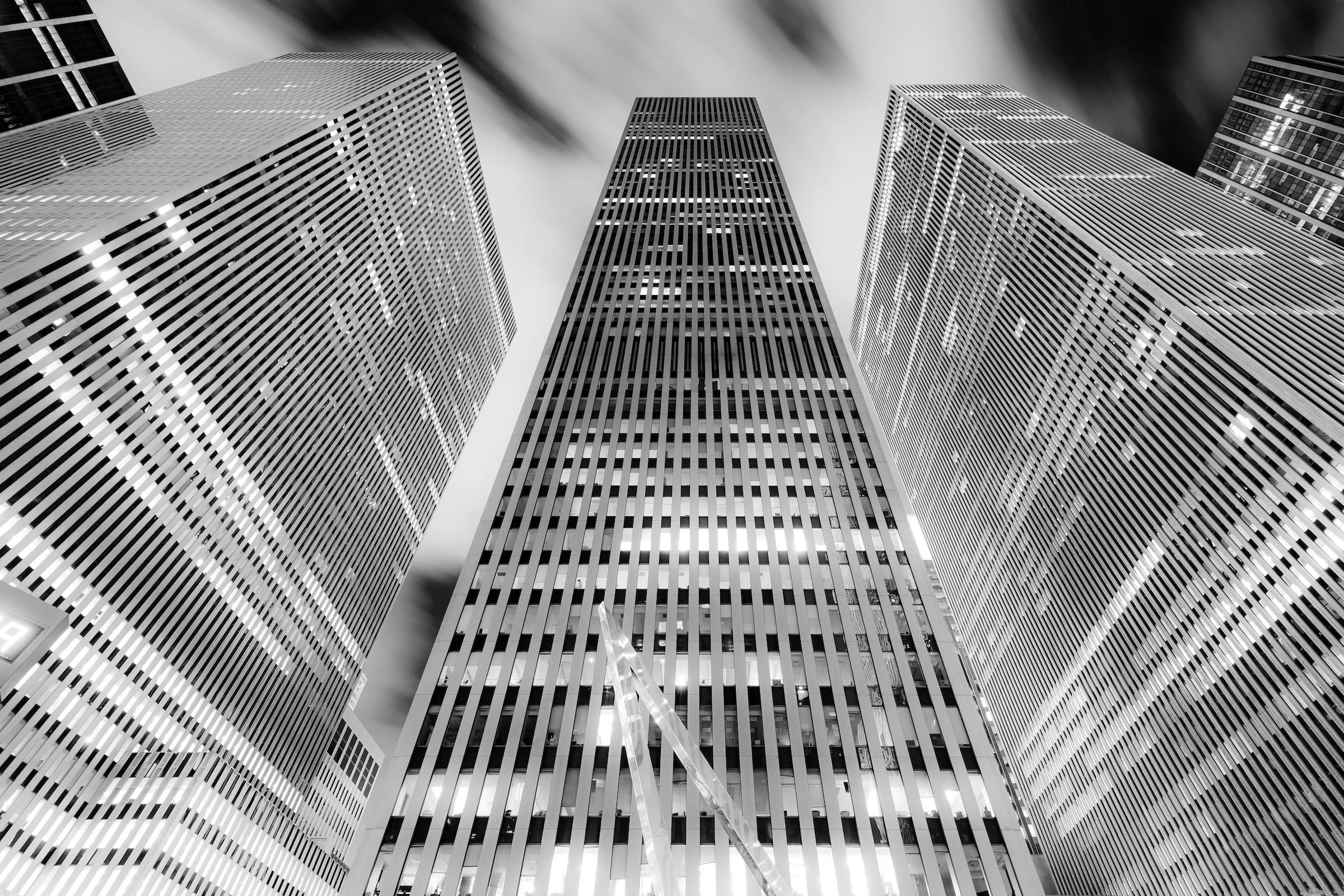
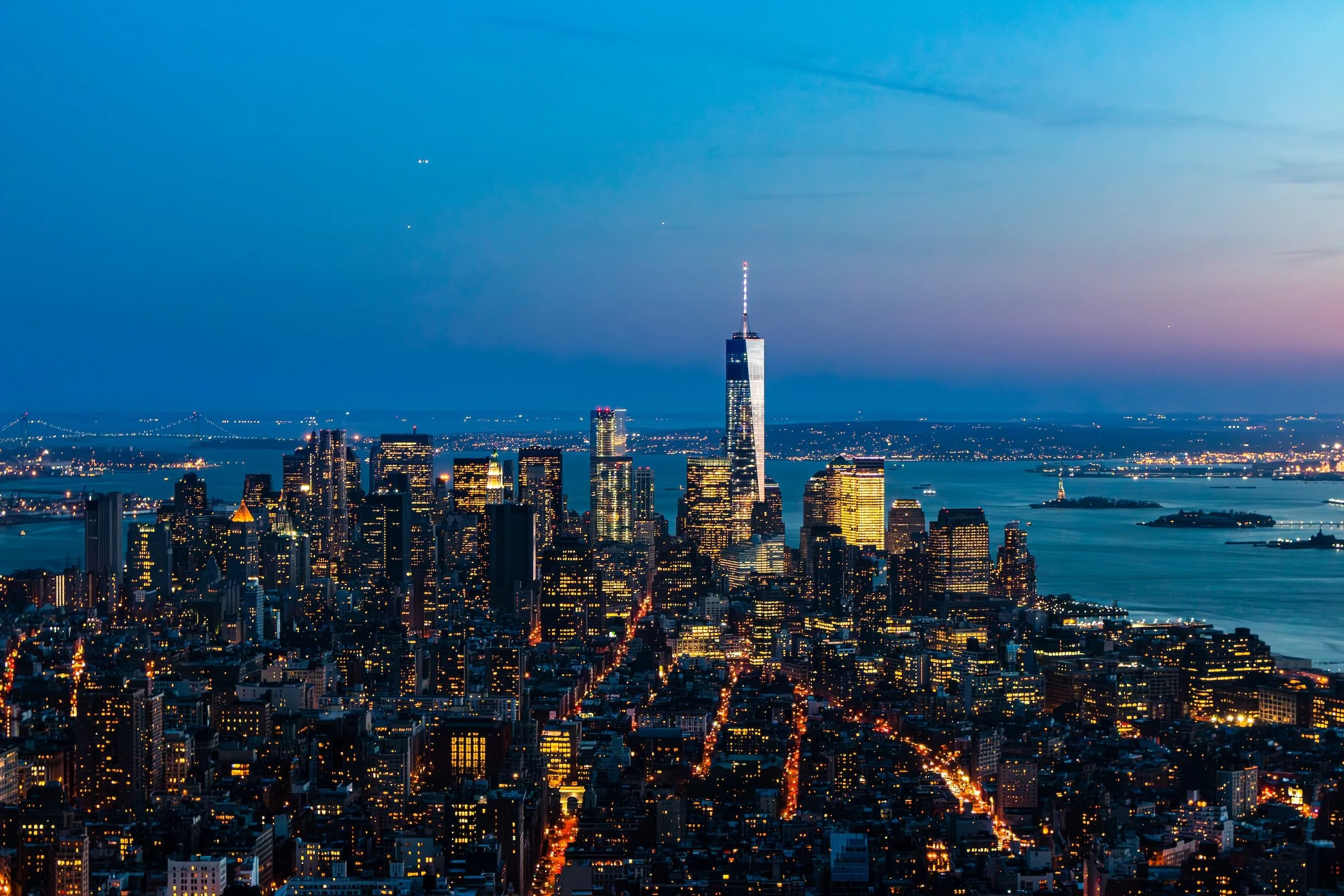
Urban Monoliths is the practice of photographing the city as single, dominant forms—structures so massive they read less like “buildings” and more like objects: towers, bridges, slabs, and silhouettes that hold the frame through sheer presence.
Usage:
Use Urban Monoliths when you want a photograph to feel weighted—when scale isn’t background context, but the point. This approach is especially powerful for:
landmark forms (towers and bridges that behave like icons),
industrial structures (gantries, cranes, girders, underpasses),
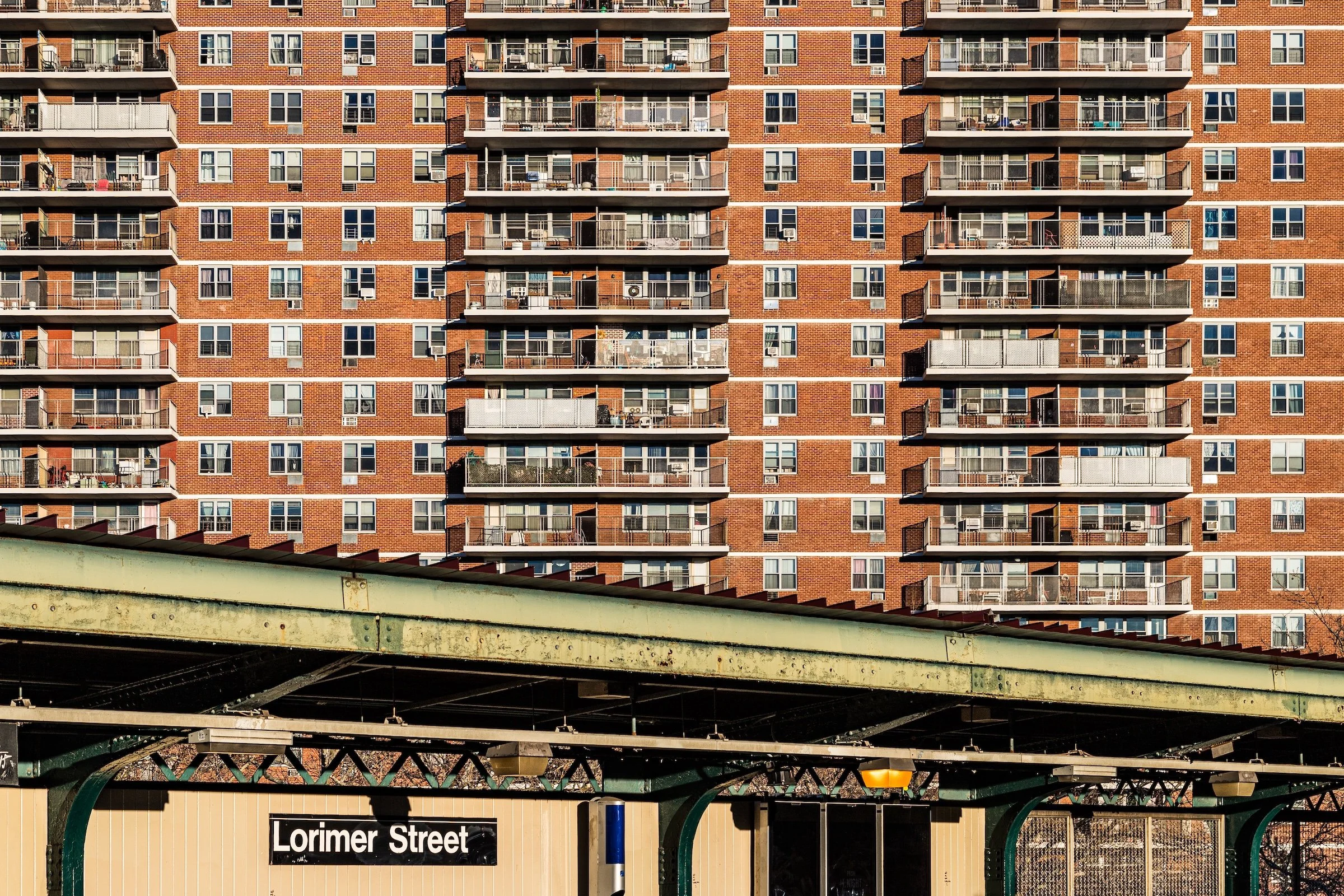
architectural blocks (facades that read as one continuous surface),
silhouettes and high-contrast scenes where form becomes mythology.
Urban Monoliths work best when the composition is decisive: simplify, commit, and let the structure dominate without apology.
In Depth:
Cities are full of “things,” but only some of those things feel like monuments—not because they’re historic (though sometimes they are), but because they behave like a gravitational mass in your frame. You can feel them before you even photograph them: they redirect your route, they block your sky, they control your light.
Urban Monoliths is a Lexicon term because it describes a repeatable way of seeing:
Look for singular dominance. One structure should carry the image’s authority.
Let the human scale disappear (or become a tiny measurement). If everything is equally important, nothing is monolithic.
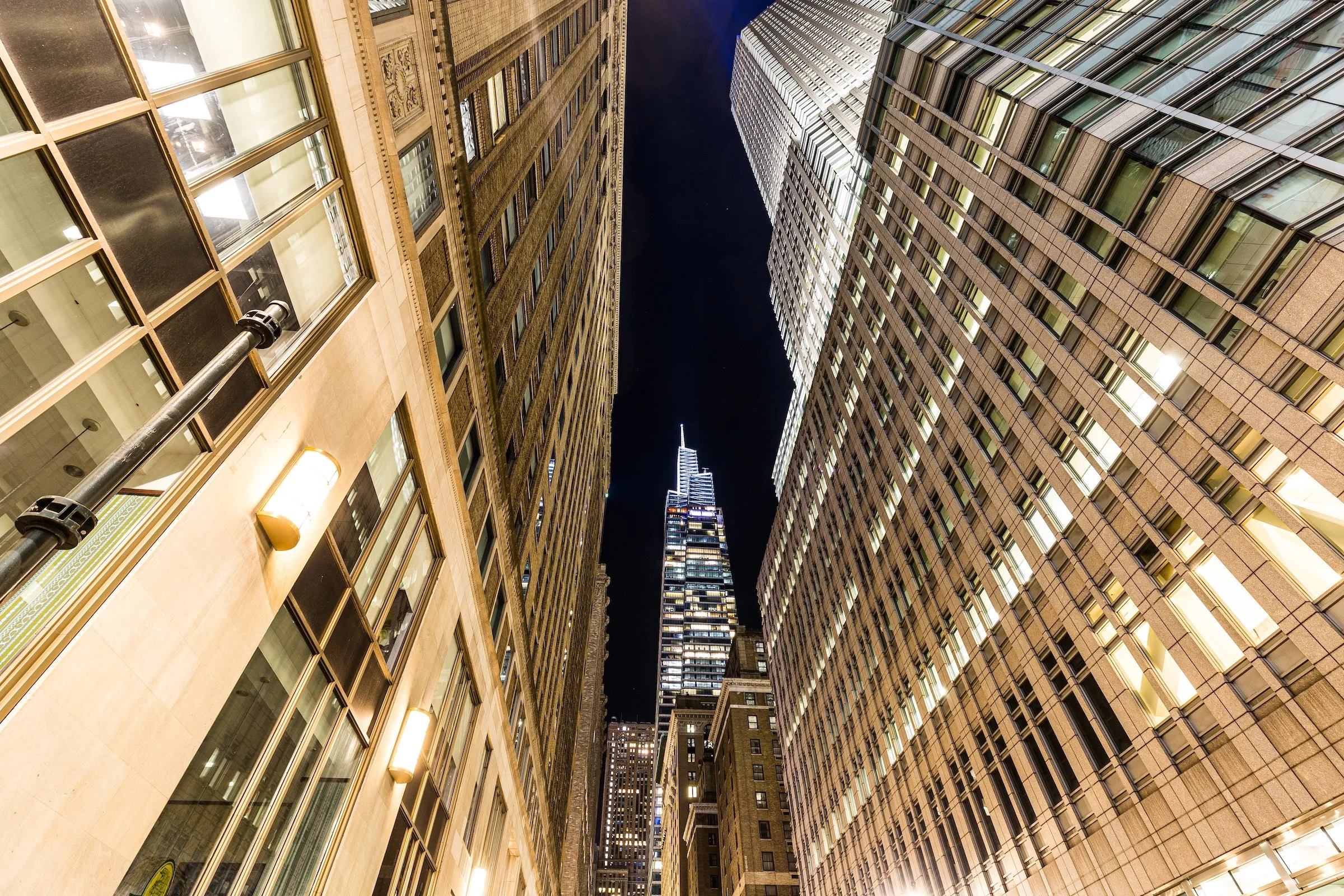
Choose angles that emphasize mass. Low angles, tight crops, and silhouette compositions make structures feel inevitable.
Use negative space as proof of size. A huge sky around a tower, or water beneath a bridge, becomes “breathing room” that makes the form feel even heavier.
Lean into tonal simplicity. Monoliths love clean contrast—dark against light, or patterned facades against blank sky.
The ten examples below show different kinds of monoliths: suspension bridges as drawn steel mountains, industrial skeletons as engineered beasts, towers as night icons, and blocky facades that feel like modern cliff faces.
Suspension Monuments (Bridges as Giants)
These images treat bridges as the city’s most literal monuments—structures that don’t just connect land, but reshape the skyline through scale, cable geometry, and silhouette.
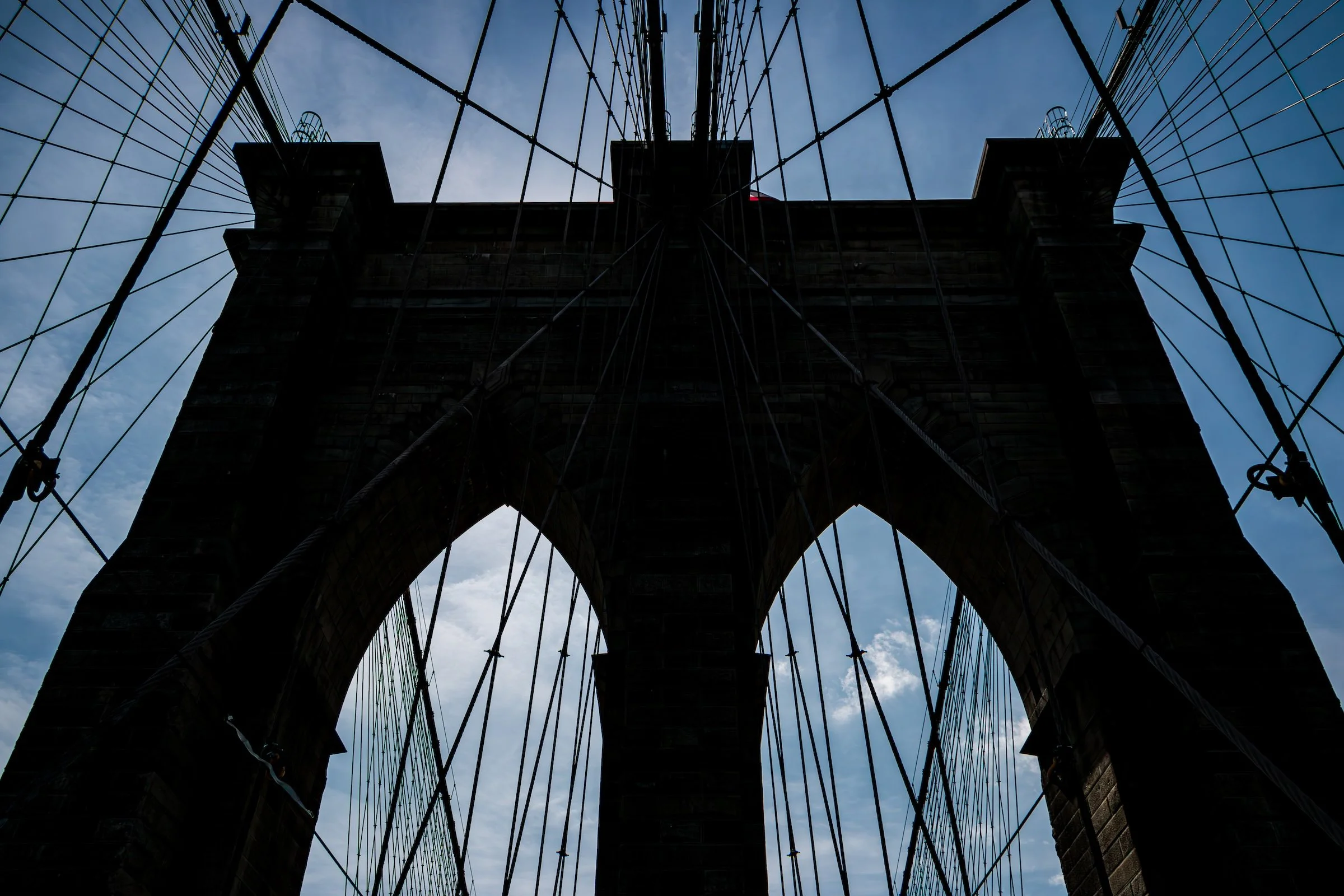
Brooklyn Heights - Brooklyn - The Brooklyn Bridge
A cathedral of stone and cable. The upward angle turns the bridge into a looming presence, and the web of suspension lines becomes the “aura” around the monolith—proof of force, tension, and engineering.
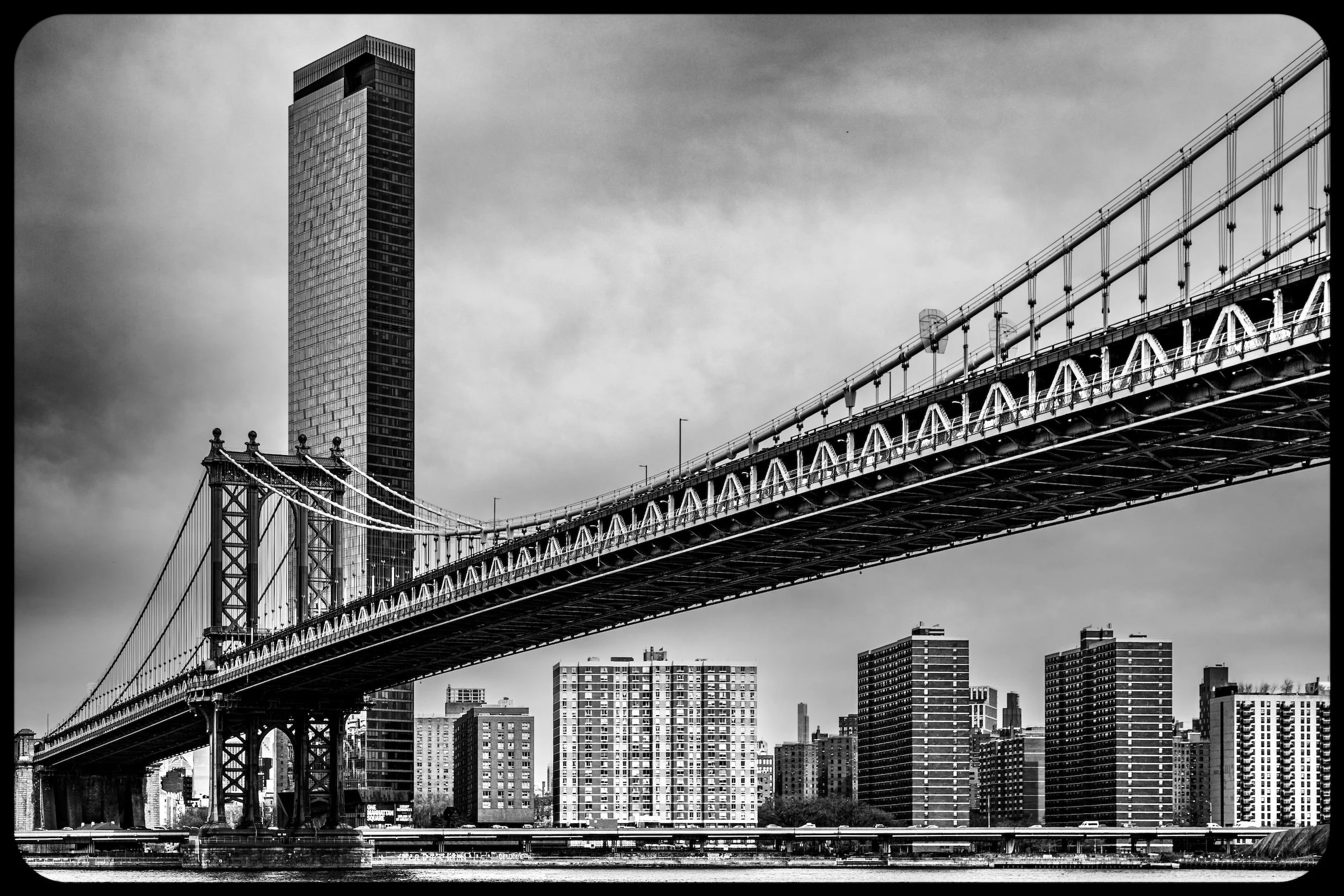
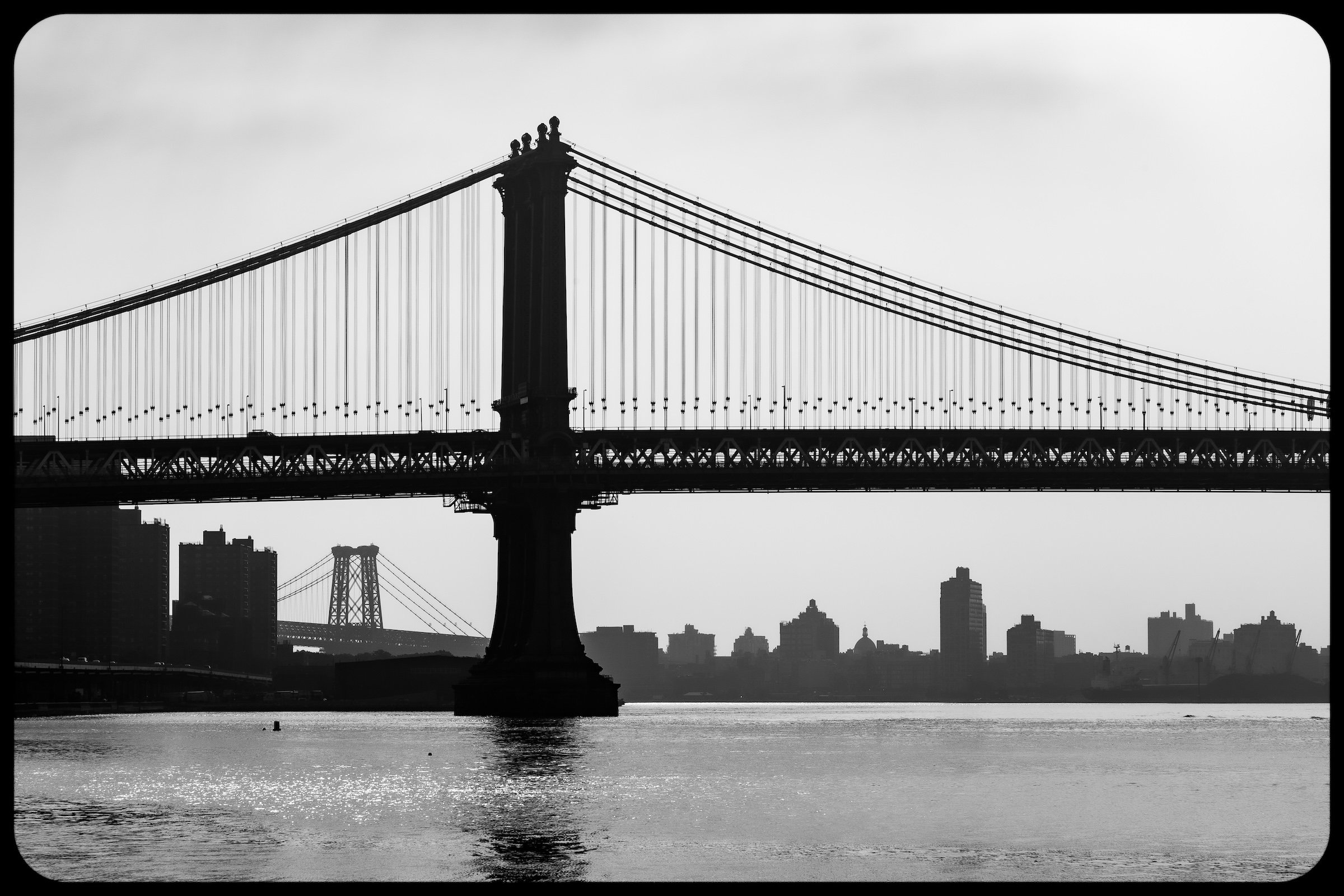
South Street Seaport - Manhattan - Bridges in Silhouette
A monolith in pure outline: the bridge becomes a graphic cutout against bright sky and water. The skyline beneath feels miniature, like geology at the base of an engineered mountain.
Industrial Skeletons (Beams, Cranes, and Engineered Muscle)
These images emphasize the city’s working monoliths—structures that feel less like “architecture” and more like machinery at building-scale.
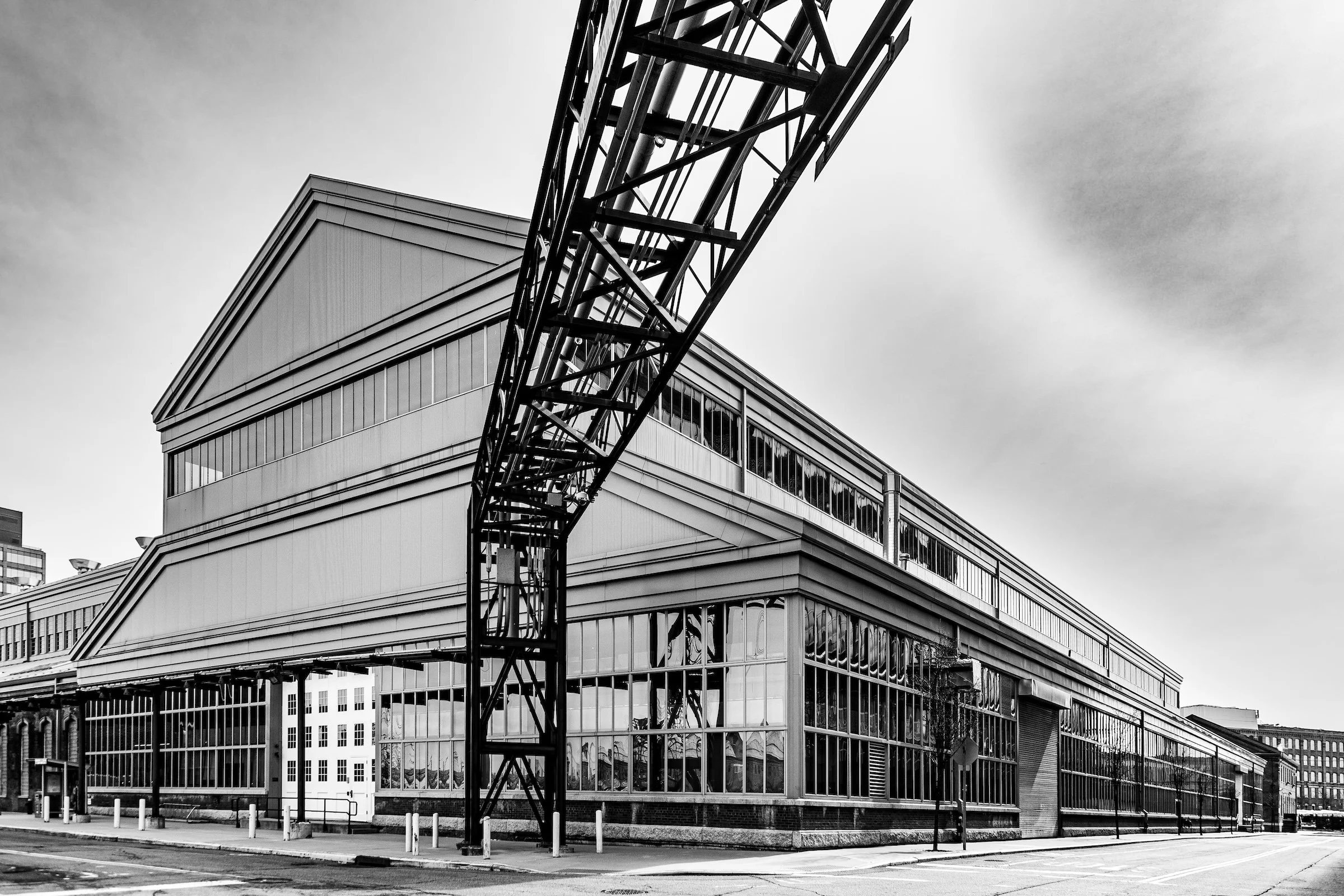
Brooklyn Navy Yard - Brooklyn - Gantry
A strong example of industrial dominance: the overhead framework slices through the sky like a blade, while the long building beneath reads as a grounded mass. The monolith here is part structure, part mechanism.
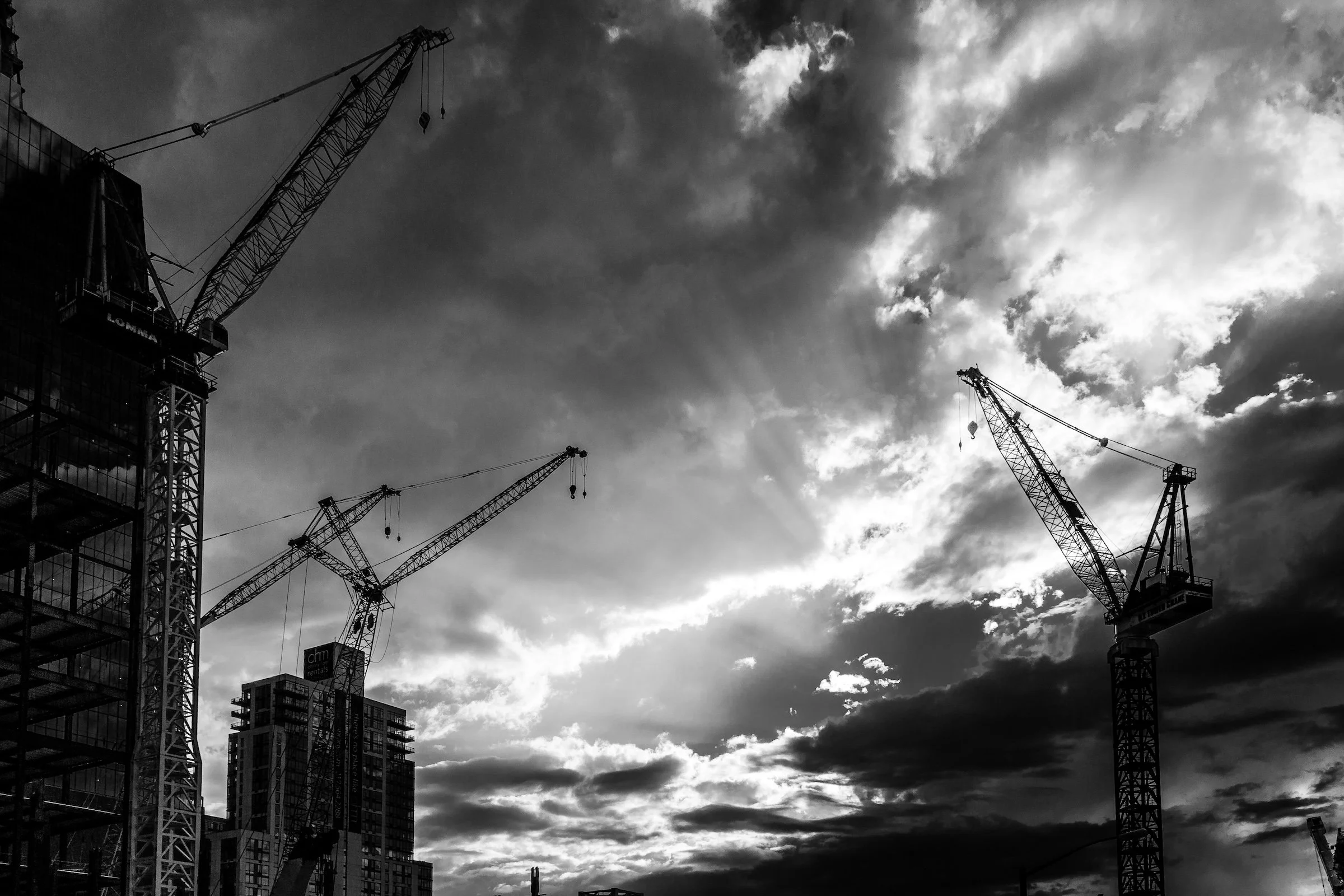
Hudson Yards - Manhattan - Streaming
Cranes turn the skyline into a field of articulated arms—giant, angular shapes that make the sky feel occupied. The light breaking through clouds adds drama, but the real subject is the scale of construction itself: the city mid-transformation.
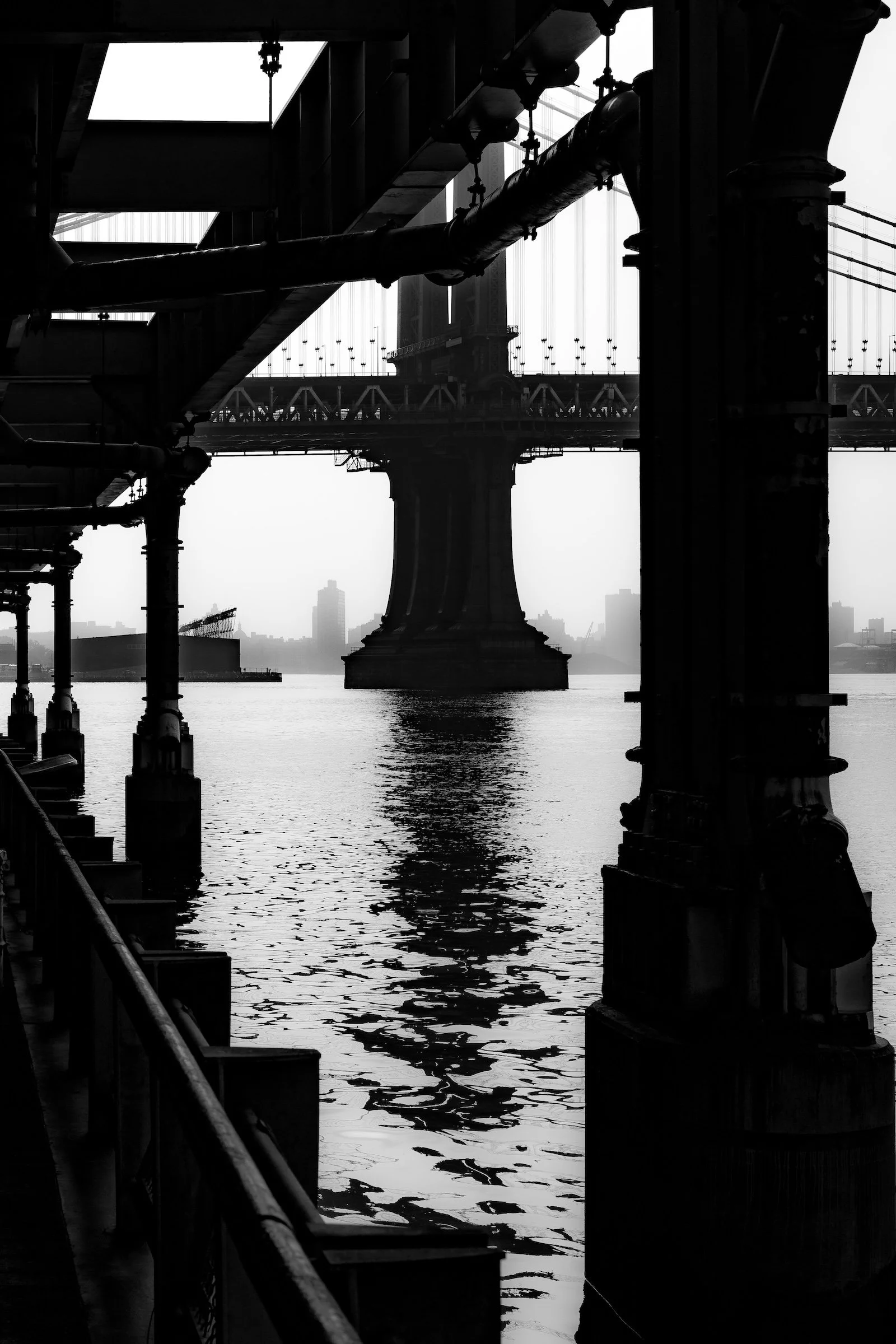
Two Bridges - Manhattan - FDR-Catherine Slip
This one is monolithic through layering: heavy beams and pipes form a dark foreground cage, and the bridge tower in the distance becomes an icon framed by industrial shadow. The mass feels infrastructural—like you’ve stepped inside the skeleton of the city.
Vertical Icons (Towers as Myth)
These are monoliths in the classic sense—single vertical forms that become symbols, especially when photographed with reverence and restraint.

Empire District (Tenderloin) - Manhattan - Empire State Building At Night
A perfect urban monolith: the tower rises like a lit spear above darker canyon walls. The surrounding buildings become mere context, and the night sky gives the Empire State the kind of isolation that makes it feel timeless.
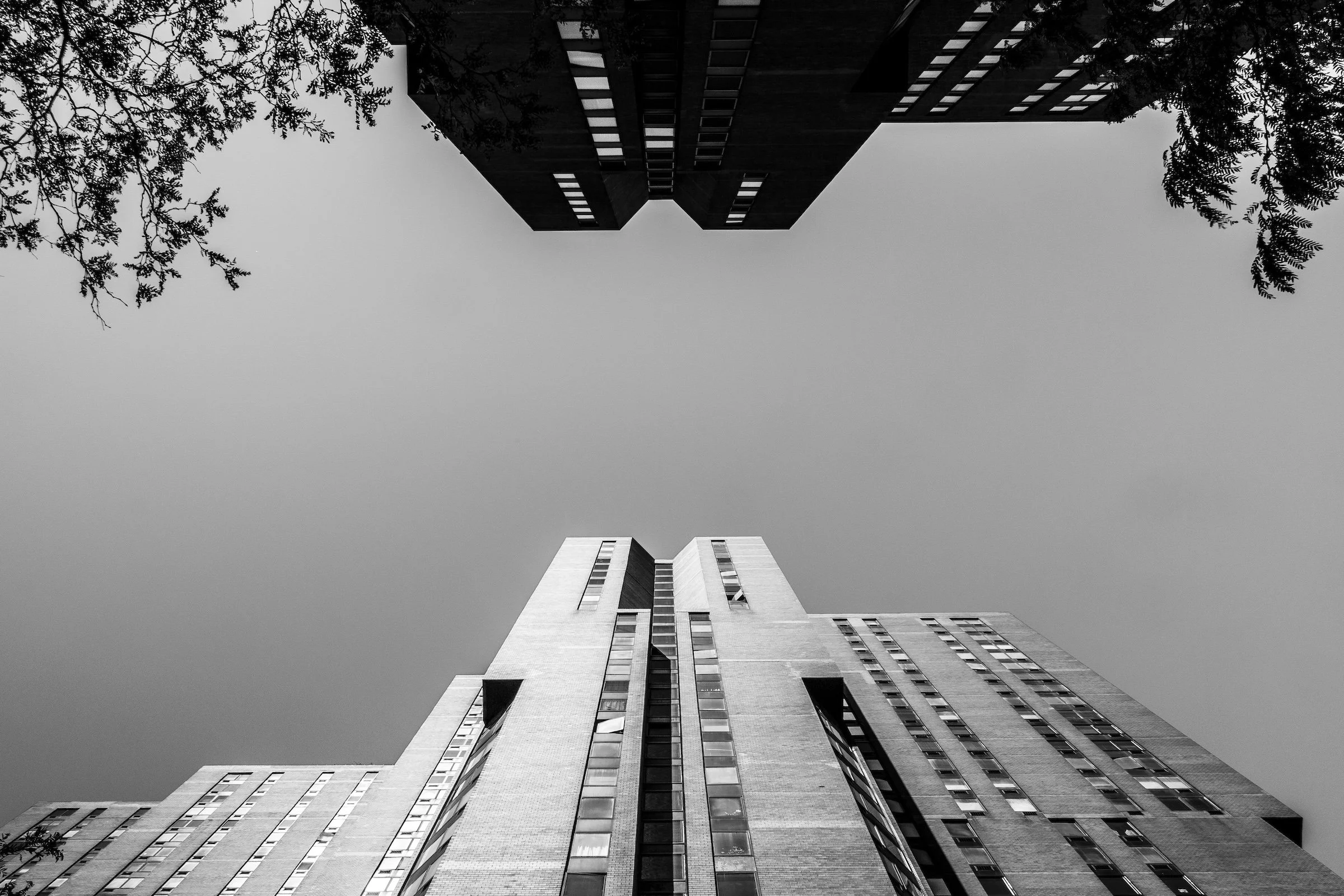
Modern Cliff Faces (Blocks that Behave Like Terrain)
These images lean into the idea that some buildings read like geology—stacked, heavy, and continuous, with windows acting like texture rather than “detail.”
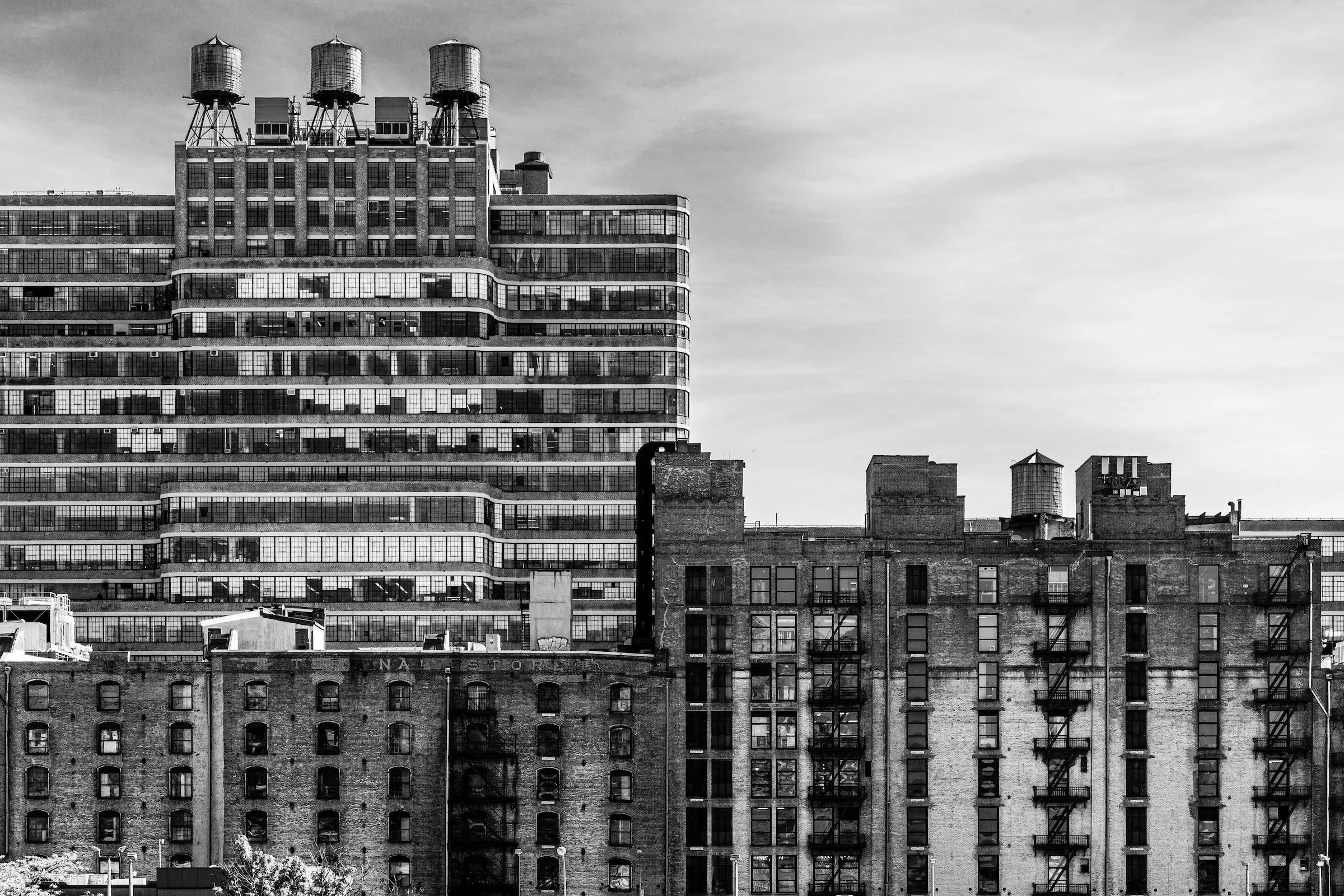
Hudson Yards - Manhattan - Starrett-Lehigh Building
The building reads as a single immense slab—horizontal banding, dense window fields, and rooftop water towers like punctuation marks. The older brick foreground deepens the sense of mass: layers of city piled into one frame.
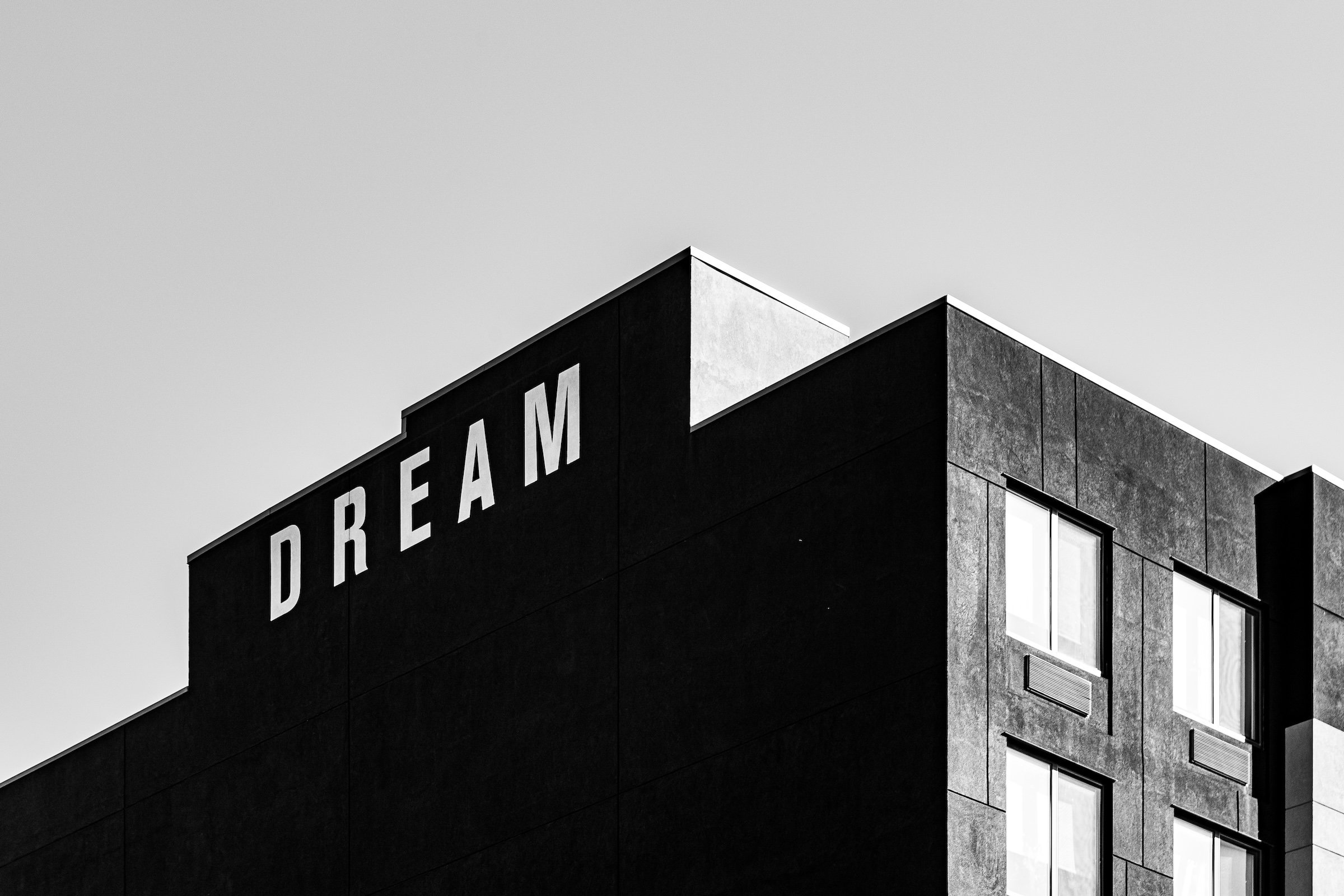
A monolith through minimalism: a sharp-edged block with bold lettering and almost no visual clutter. The negative sky amplifies the form’s authority, and the word “DREAM” turns the structure into an object with a message—part building, part billboard, part manifesto.
Explore Further