
ROCKAWAY BEACH
Queens
Geographic Setting
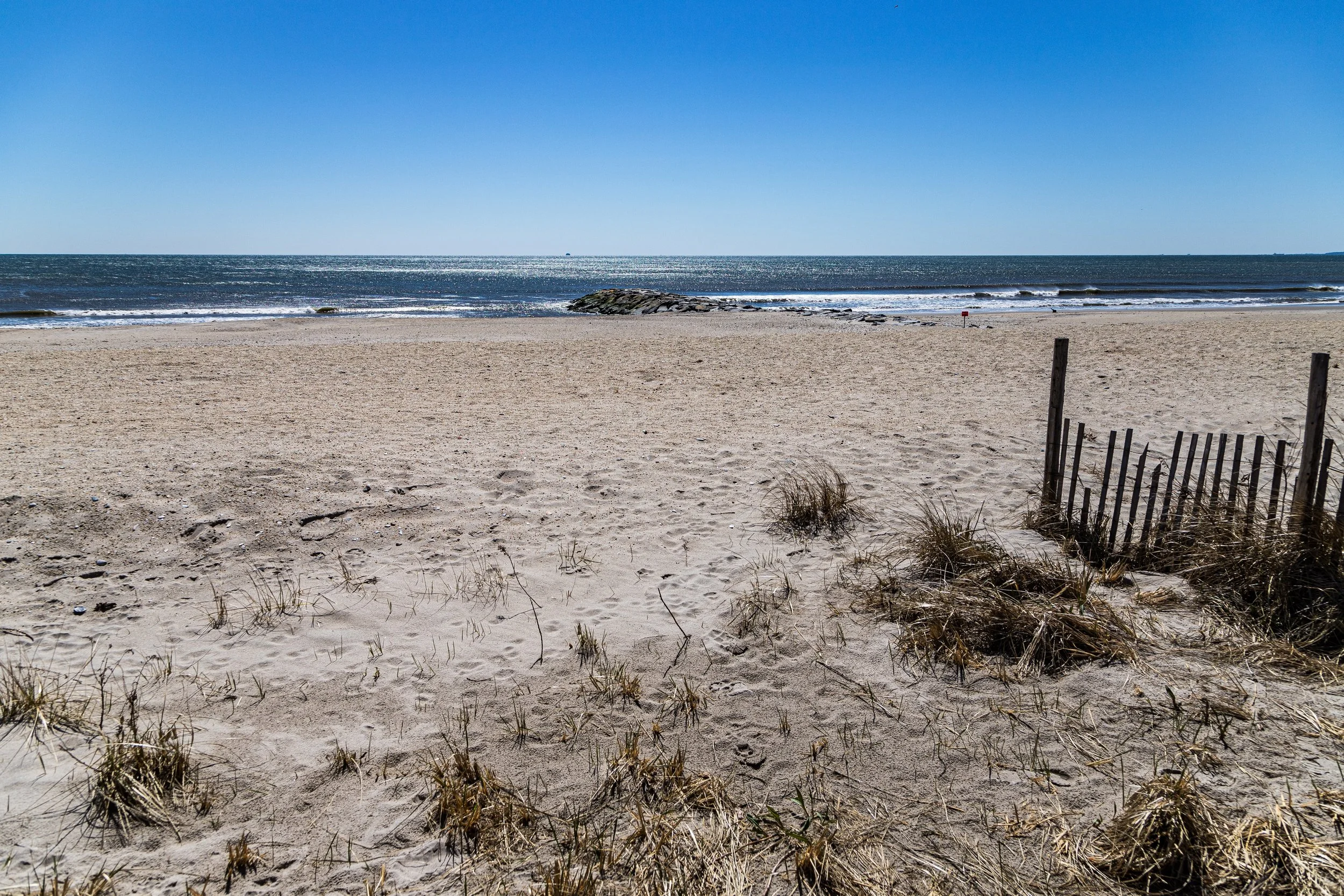
Bounded by Beach 108th Street to the west, Beach 77th and 79th Streets to the east, Jamaica Bay to the north, and the Atlantic Ocean to the south, Rockaway Beach occupies the central stretch of the Rockaway Peninsula—an oceanfront neighborhood whose wide beaches, boardwalk, and maritime character define one of New York City’s most distinctive coastal communities. The neighborhood forms the living, breathing midpoint of the peninsula: less insular than Belle Harbor or Neponsit to the west, yet more residential than Arverne or Edgemere to the east.
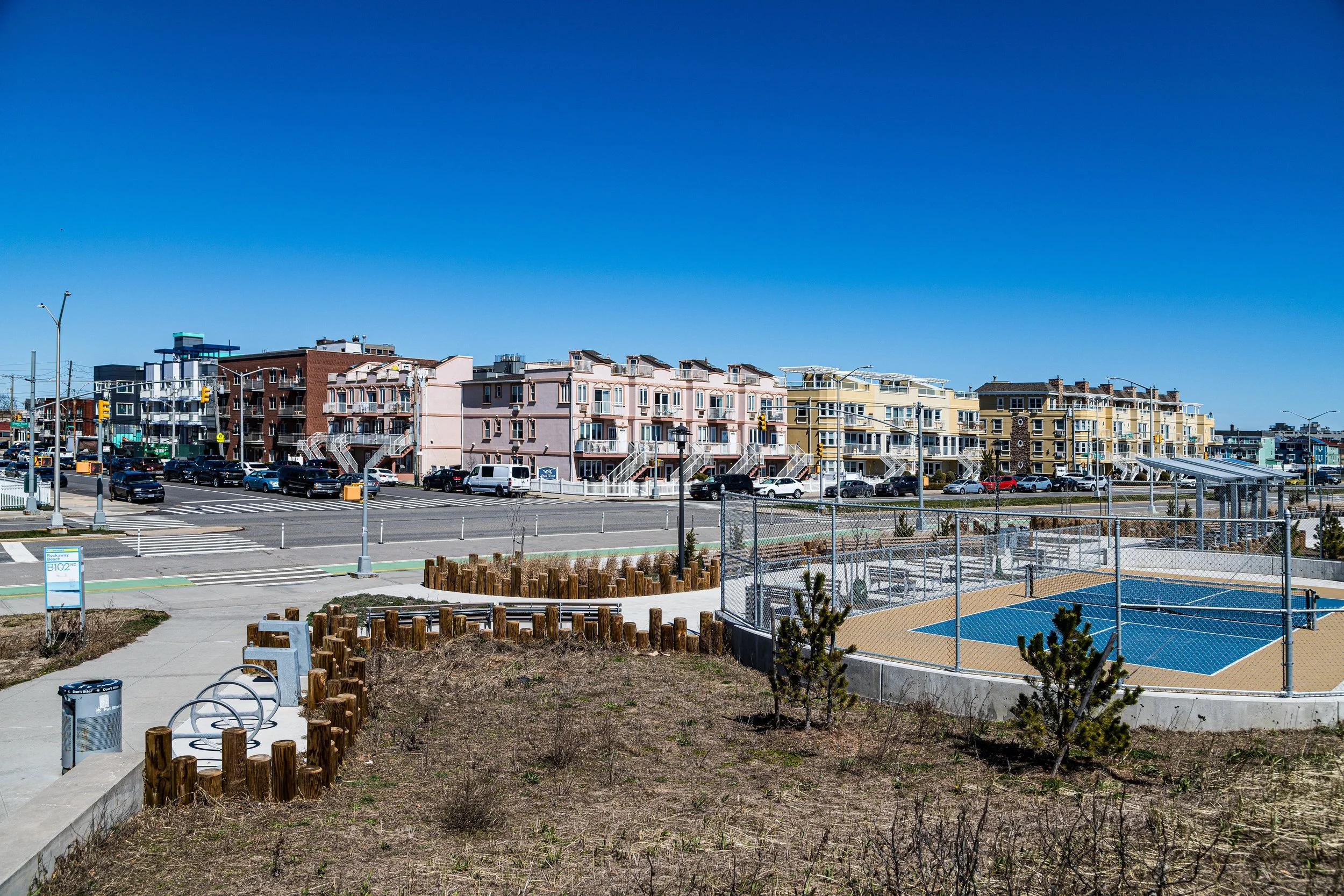
Rockaway Beach Boulevard, Beach Channel Drive, and Shore Front Parkway run parallel through its heart, linking the oceanfront to the bay and providing lifelines of movement through the barrier island. The Rockaway Freeway and A train corridor divide the neighborhood’s residential grid—low-rise bungalows, two-family houses, and small apartment buildings—from the dunes and boardwalk beyond. The Rockaway Beach Boardwalk, stretching for miles along the oceanfront, remains the community’s defining promenade—a public space that unites generations of surfers, swimmers, and sun-seekers under the constant rhythm of the Atlantic surf.
Etymology and Origins
The name “Rockaway” derives from the Algonquian word Reckowacky or Reckonwacky, translated roughly as “place of sands” or “lonely place.” The Rockaway Peninsula was originally home to the Lenape people, who fished and harvested shellfish along its tidal inlets for centuries before European settlement.
In the colonial period, the Rockaway lands were claimed by Dutch and English settlers as part of the Town of Hempstead, and by the early 19th century, the peninsula had become a popular destination for seaside excursions. Wealthy New Yorkers traveled by stagecoach and ferry to escape the summer heat, giving rise to the earliest resort developments in what would become Rockaway Beach. The arrival of the Long Island Rail Road in 1880 made the area accessible to middle-class families, ushering in its transformation into one of the nation’s first large-scale seaside resorts.
The Neighborhood
19th Century: The Rise of a Seaside Playground
During the late 19th century, Rockaway Beach emerged as the centerpiece of New York’s coastal leisure culture. Entrepreneurs built hotels, dance halls, and bathhouses along the shoreline, catering to thousands of visitors arriving daily by train and steamboat. Rockaway Beach Boulevard—then known as Seaside Avenue—was lined with resort cottages, saloons, and amusements, while long wooden piers extended into the Atlantic to accommodate excursion steamers.
In 1876, developer William Wainwright formally established “Rockaway Beach” as a resort district, distinguishing it from neighboring Seaside and Holland. The Rockaway Beach Hotel, a grand wooden structure facing the ocean, became the crown jewel of the development, though it was destroyed by fire only a few years later—a recurring fate for much of the wooden resort infrastructure.
The extension of the Rockaway Beach Branch of the Long Island Rail Road (1880s) further fueled the district’s growth, transforming it from an exclusive retreat into a middle-class and working-class vacation destination. By the early 1900s, amusement rides, roller coasters, and beachfront arcades drew comparisons to Coney Island, cementing Rockaway Beach’s reputation as “New York’s Playground by the Sea.”
Early–Mid 20th Century: From Resort to Year-Round Community
As the 20th century progressed, Rockaway Beach evolved from a transient resort into a permanent residential community. The decline of large-scale resort tourism—accelerated by fires, storms, and the rise of automobile travel to Long Island and New Jersey beaches—led many summer cottages and bungalows to be converted into year-round homes.
During the 1930s and 1940s, major public works projects under Robert Moses reshaped the peninsula. The Rockaway Boardwalk, completed in 1931, unified the beachfront into a continuous public promenade stretching miles along the Atlantic. The Shore Front Parkway, built soon after, displaced numerous old amusements but established a protected coastal corridor that endures today.
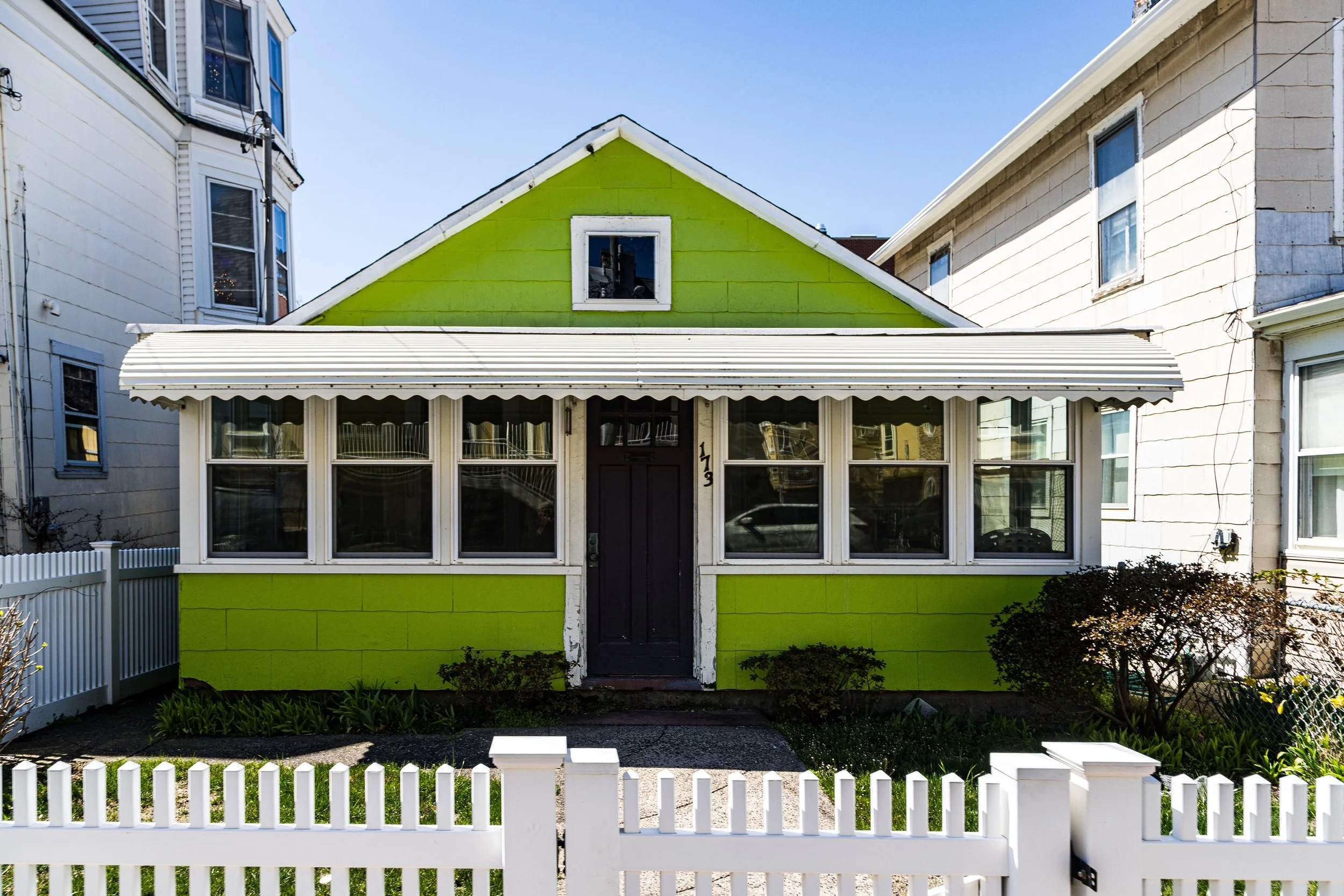
After World War II, Rockaway Beach became a haven for returning veterans, immigrants, and working-class families seeking affordable housing within reach of the city. Bungalows—originally built for summer visitors—were winterized and expanded, forming the patchwork of homes that still characterizes the neighborhood. Irish, Italian, and Jewish families predominated through mid-century, joined later by Puerto Rican, Caribbean, and African-American residents who added new dimensions to the local culture.
Rockaway Beach Video Coming Soon
Late 20th Century: Decline, Resilience, and Cultural Rebirth
By the 1970s, economic decline, urban disinvestment, and the closure of major amusement facilities left Rockaway Beach struggling. Vacant lots replaced resorts, and many bungalows fell into disrepair. Yet through these decades of hardship, a strong community identity persisted—rooted in the area’s working-class character, love of the ocean, and resilient civic organizations.
The surfing community, which had quietly taken hold in the 1960s, played a key role in preserving the area’s beach culture. Even as other city beaches banned the sport, Rockaway Beach remained a haven for surfers who braved rough Atlantic waves year-round. Local surf clubs and youth programs became sources of pride and continuity, keeping the neighborhood connected to its maritime identity even during lean years.
By the 1990s, waves of Latino, Caribbean, and South Asian families—along with artists and young professionals—began revitalizing the area. Small businesses, beachside cafés, and arts collectives reanimated stretches of Rockaway Beach Boulevard, blending the old with the new.
21st Century: Storm, Renewal, and Renaissance
The 21st century has brought both tragedy and transformation to Rockaway Beach. Hurricane Sandy (2012) devastated much of the peninsula, destroying homes, inundating streets, and tearing apart sections of the iconic boardwalk. Yet the disaster also galvanized the community and spurred one of the city’s most ambitious coastal recovery efforts.
The rebuilt Rockaway Boardwalk, completed in 2017, features resilient concrete construction, sand dunes, and new recreational spaces that have redefined the oceanfront as both public park and storm barrier. The resurgence of surfing culture, coupled with an influx of artists, restaurateurs, and new residents, has turned Rockaway Beach into a year-round destination once again.
Today, the neighborhood thrives as a dynamic, multicultural seaside community. Surf schools, taco stands, yoga studios, and art installations coexist with century-old churches, VFW halls, and Irish pubs. The A train still rumbles to its terminus at Beach 116th Street, linking this Atlantic outpost to Manhattan’s core in less than an hour—a reminder of how uniquely urban this beach remains.
Rockaway Beach Photo Gallery
Spirit and Legacy
The spirit of Rockaway Beach lies in its paradox: a small-town seaside heart beating within America’s largest metropolis. It is a neighborhood built on motion—of waves, trains, storms, and people—each generation reshaping but never erasing its identity.
New York City
Use this custom Google map to explore where every neighborhood in all five boroughs of New York City is located.
The Five Boroughs
One of New York City’s unique qualities is its organization in to 5 boroughs: Manhattan, Brooklyn, Queens, The Bronx, and Staten Island. These boroughs are part pragmatic administrative districts, and part vestiges of the region’s past. Each borough is an entire county in New York State - in fact, Brooklyn is, officially, Kings County, while Staten Island is, officially Richmond County. But that’s not the whole story …
Initially, New York City was located on the southern tip of Manhattan (now the Financial District) that was once the Dutch colony of New Amsterdam. Across the East River, another city was rising: Brooklyn. In time, the city planners realized that unification between the rapidly rising cities would create commercial and industrial opportunities - through streamlined administration of the region.
So powerful was the pull of unification between New York and Brooklyn that three more counties were pulled into the unification: The Bronx, Queens, and Staten Island. And on January 1, 1898, the City of New York unified two cities and three counties into one Greater City of New York - containing the five boroughs we know today.
But because each borough developed differently and distinctly until unification, their neighborhoods likewise uniquely developed. Today, there are nearly 390 neighborhoods, each with their own histories, cultures, cuisines, and personalities - and each with residents who are fiercely proud of their corner of The Big Apple.