
Repetitions & Patterns
Definition:
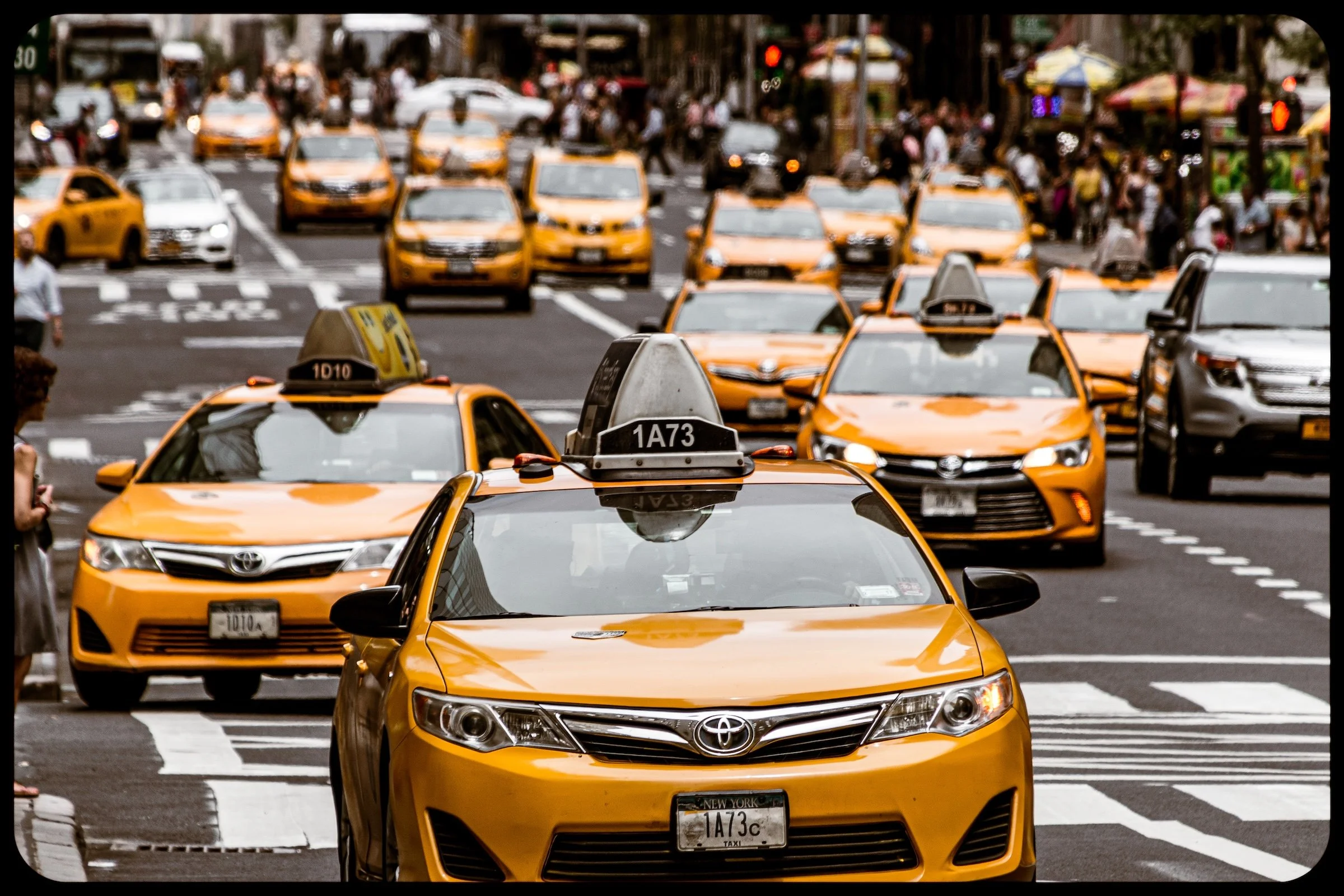
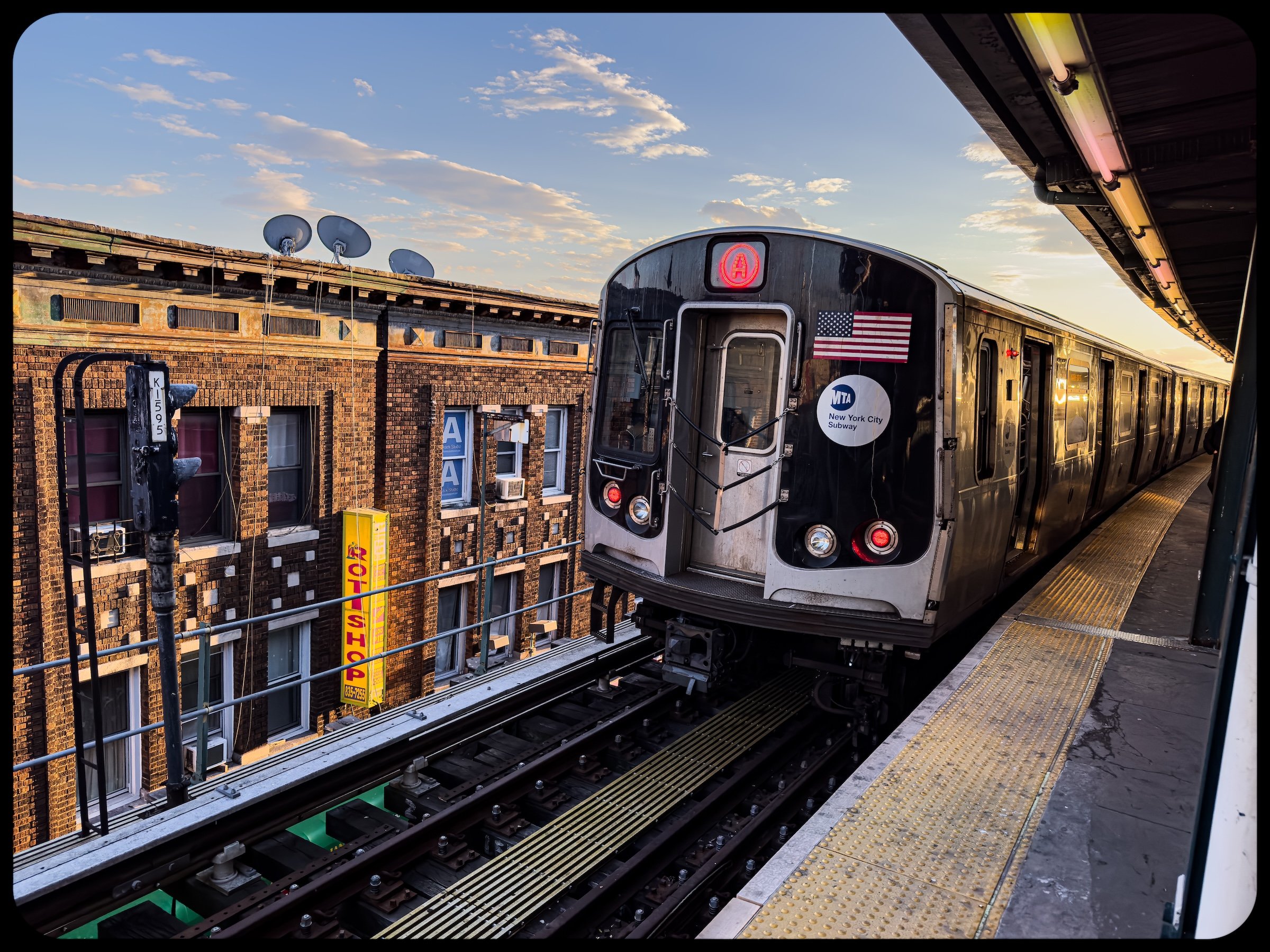
Repetitions & Patterns is the practice of building a photograph around recurrence—grids of windows, repeating arches, aligned rooftops, stoops in sequence, or a chorus of repeated objects—so rhythm becomes the structure. The subject is often the pattern itself, and the city reads like a designed system instead of a single moment.
Usage:
Use Repetitions & Patterns when you want the frame to feel musical—visual beats that repeat, vary, and resolve. This approach is especially powerful for:
architectural repetition (windows, bays, arches, columns),
streetscape rhythm (stoops, fences, gates),
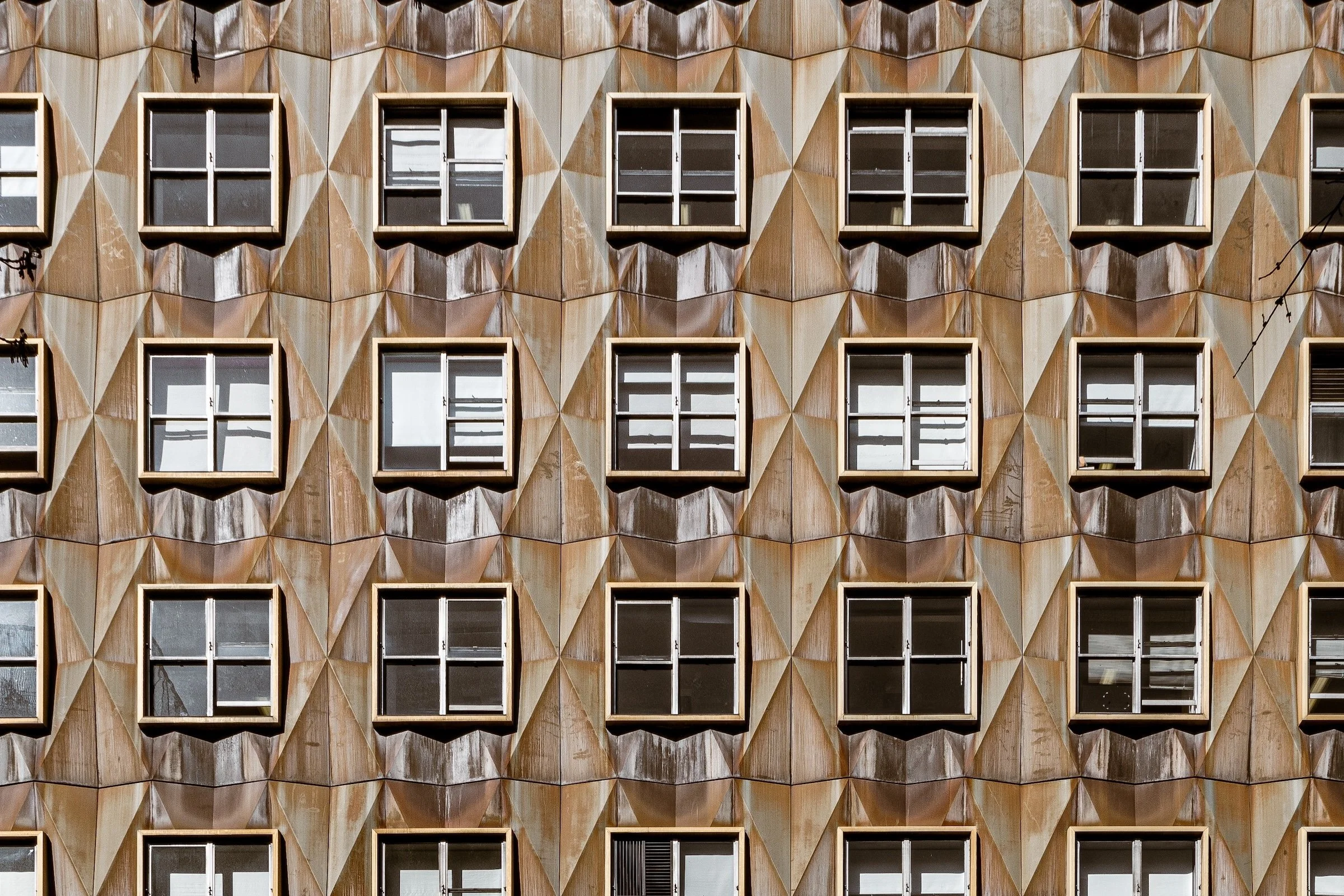
surface repetition (bubbles, brickwork, rust geometry),
compositional repetition (triangles, diagonals, repeating negative space).
The best patterns include variation: a break, a shift, an interruption that keeps the repetition alive rather than mechanical.
In Depth:
Cities are pattern engines disguised as chaos. Once you start looking for repetition, the street becomes a score: modules repeat, forms echo, and small deviations become accents. Repetitions & Patterns is a Lexicon term because it names a reliable compositional strategy—one that can turn ordinary scenes into images with built-in structure and rhythm.
A few field instincts help this click consistently:
Find the unit. What’s repeating—arches, windows, stoops, bubbles, triangles? Identify the smallest repeating element.
Find the tempo. Is the repetition tight and dense, or spaced and calm? Rhythm changes the emotional feel.
Honor alignment. Patterns weaken when the frame tilts away from their logic. Square up when you can.
Look for the break. A missing piece, a different color, a human figure, a shadow—one interruption often becomes the point.
Choose how much to reveal. Tight crops make patterns abstract; wider frames show pattern as place.
Below are ten examples grouped by the type of repetition they emphasize: architectural modules, ornamental rhythms, surface repetition, and geometric echoes.
Architectural Modules (Windows, Bays, Facade Grids)
These images treat architecture as a repeating instrument—stacked floors, consistent spacing, and modular windows that create calm, structured rhythm.
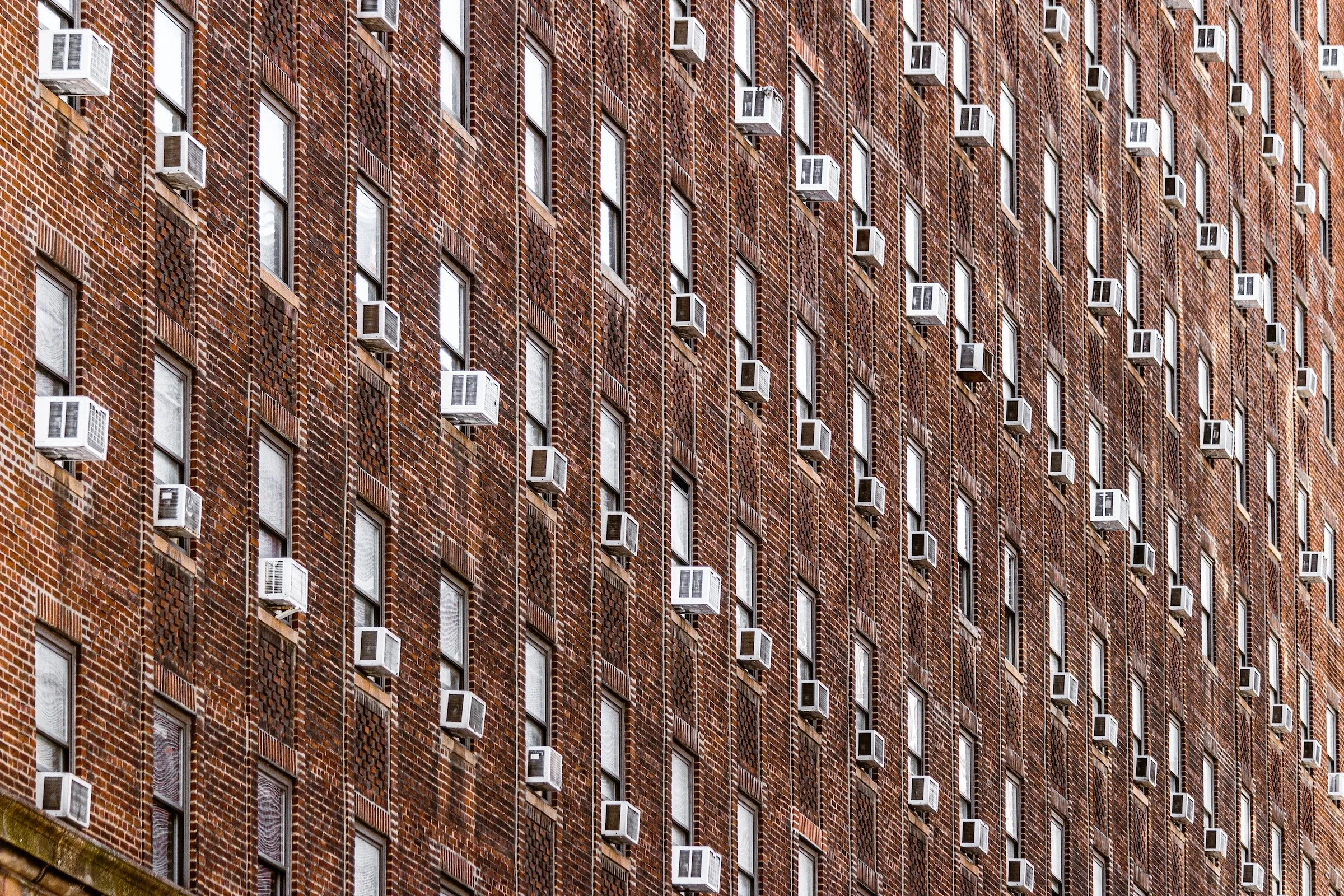
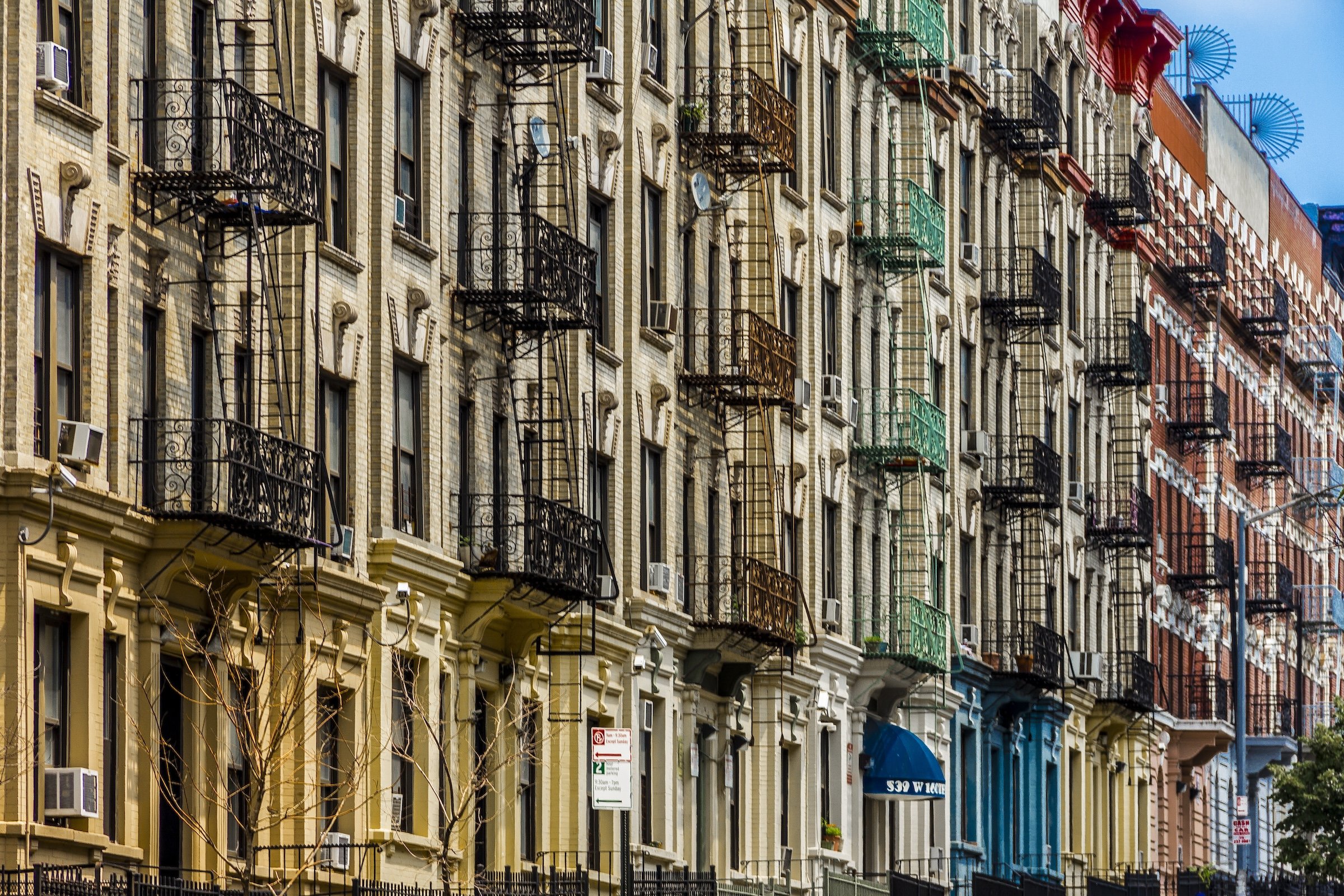
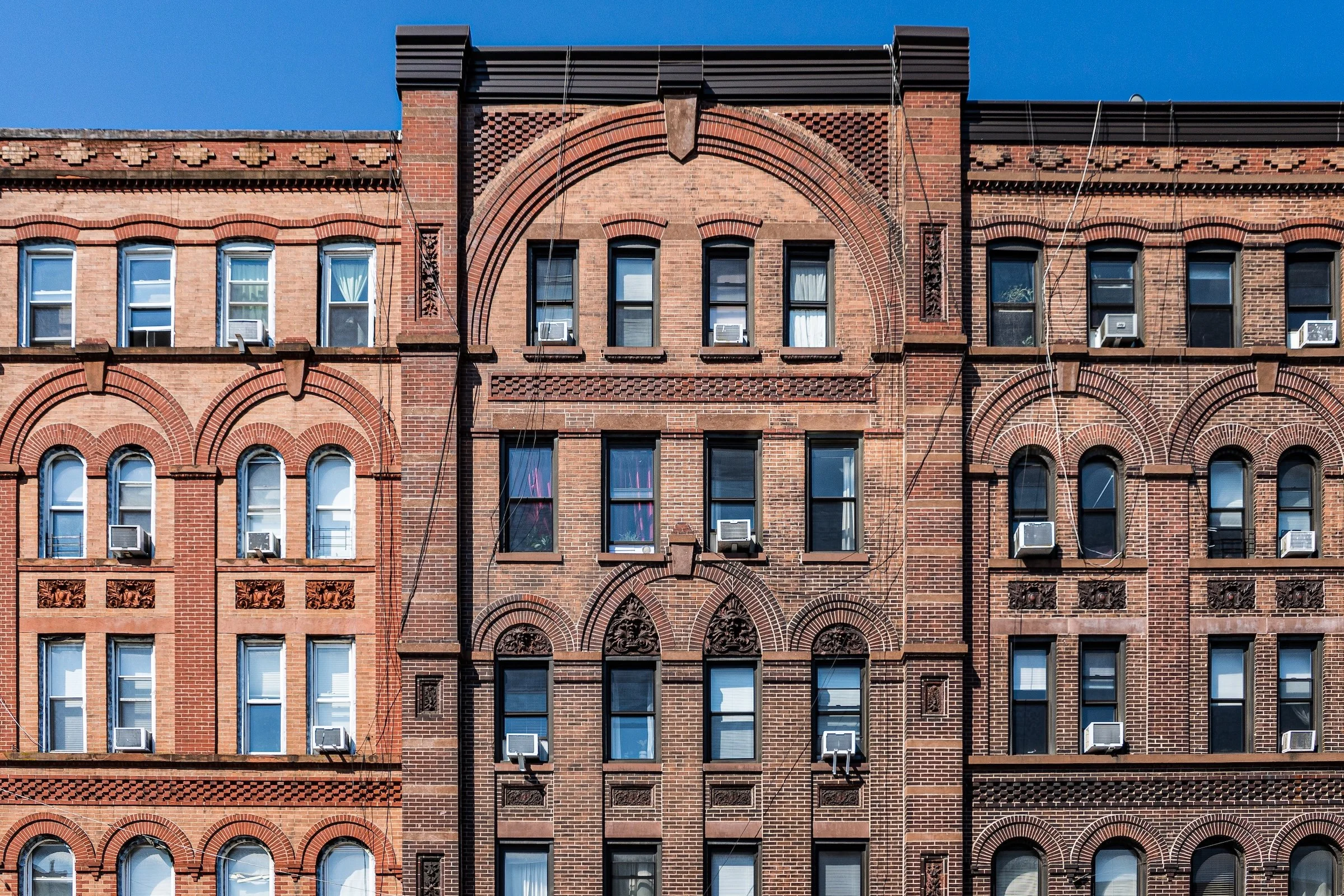
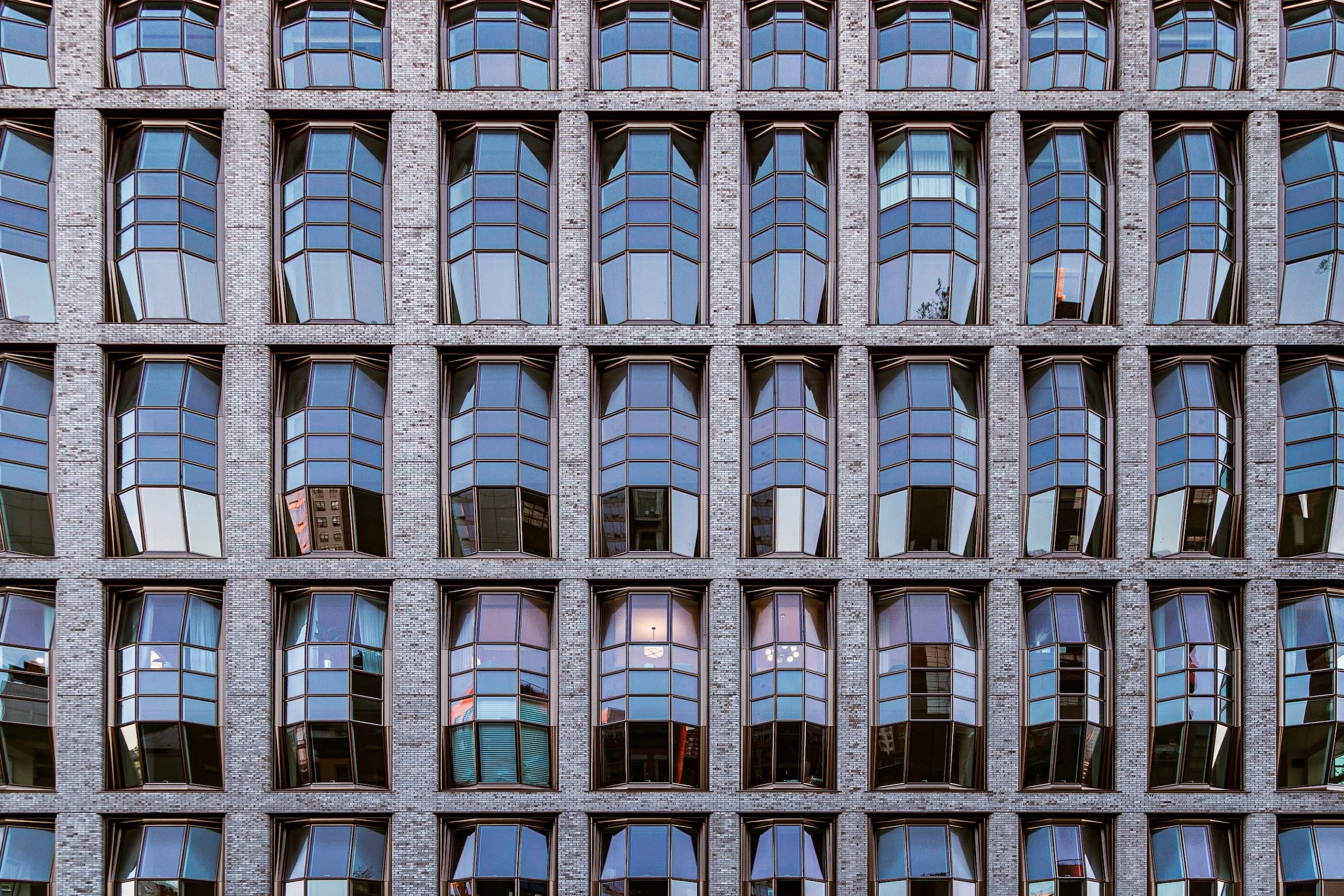
Washington Heights - Manhattan - W160
A street wall of repeated living units—windows, bays, and stacked verticals that turn the building into a rhythm instrument. Even small variations (curtain tones, slight setbacks) become accents.
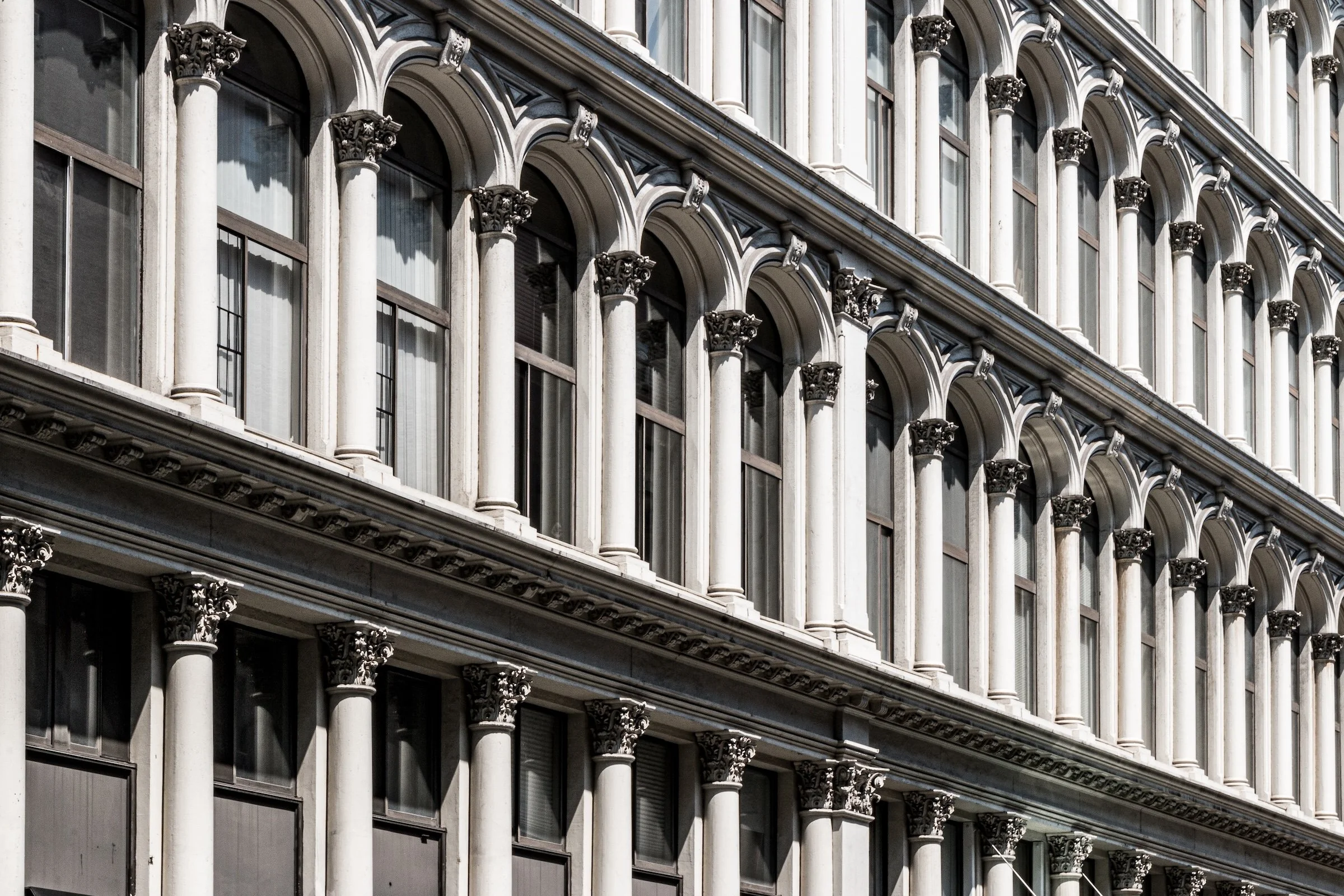
Greenwich Village - Manhattan - The Cast Iron Building
Cast iron repetition with personality: repeated bays and structural divisions that feel engineered, while ornament and detail keep the pattern from going sterile. It’s a perfect example of rhythm plus variation.
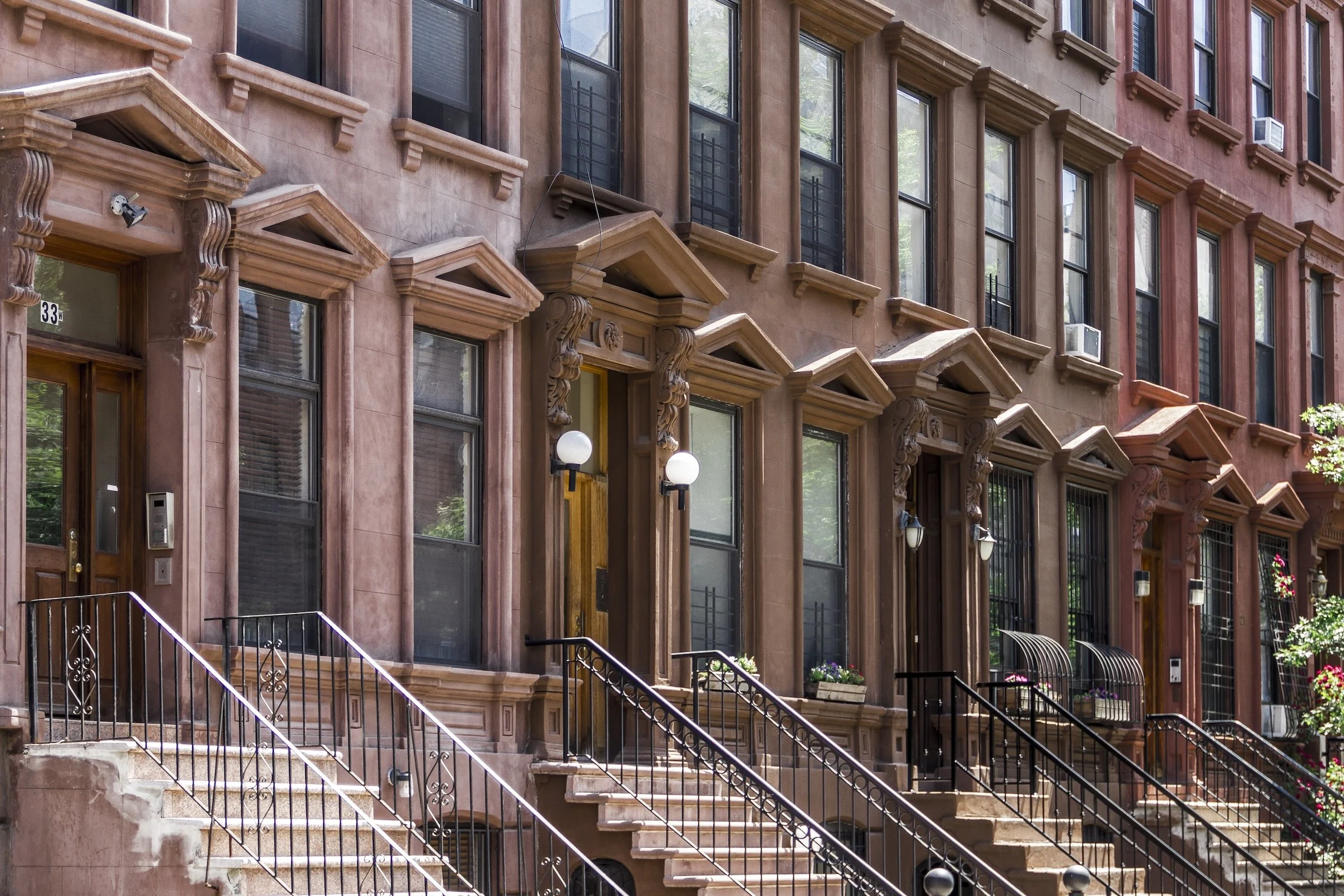
Rowhouse Cadence (Stoops, Steps, and Street Alignment)
This group is repetition as neighborhood signature—recurring gestures that feel cultural, not just architectural.
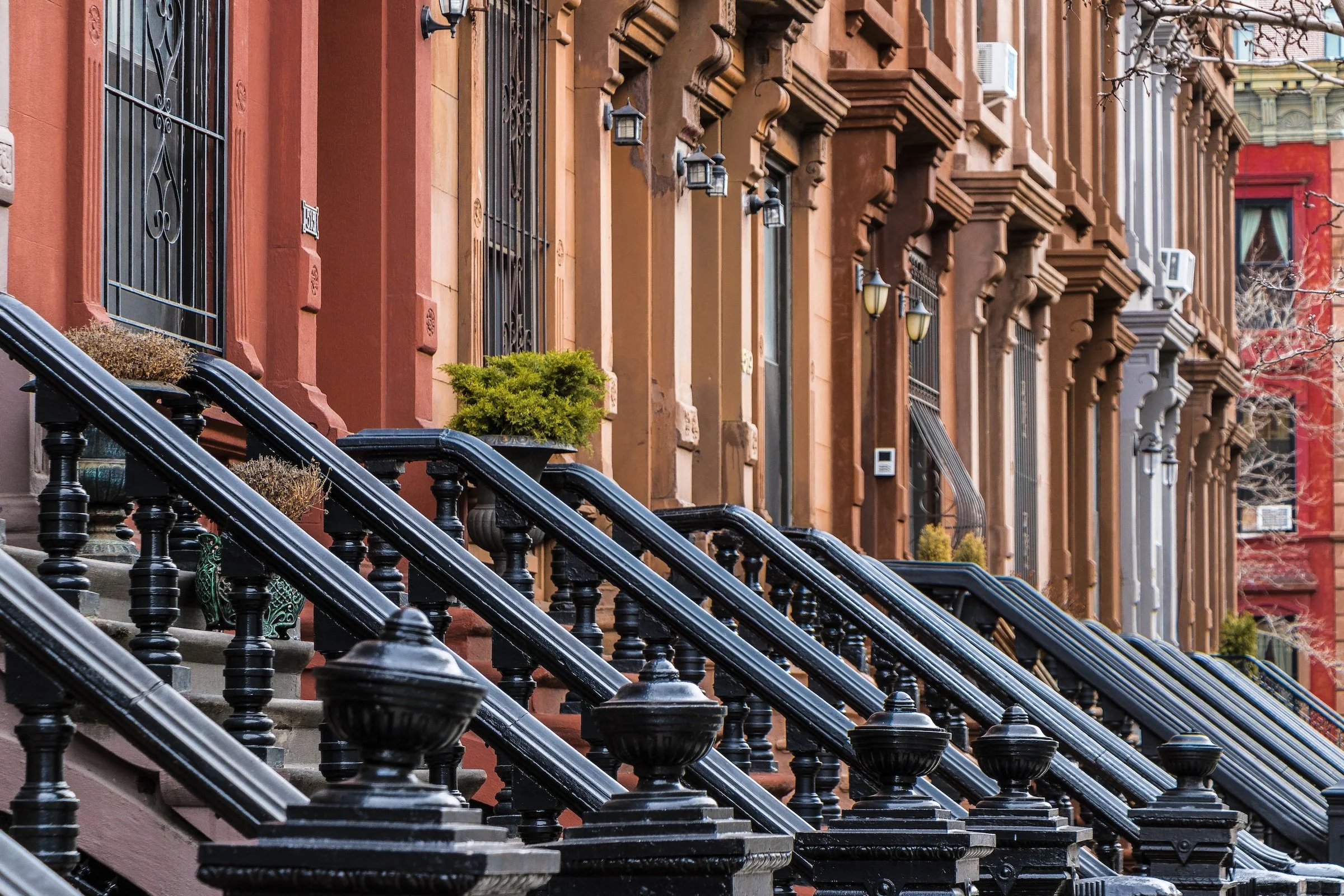
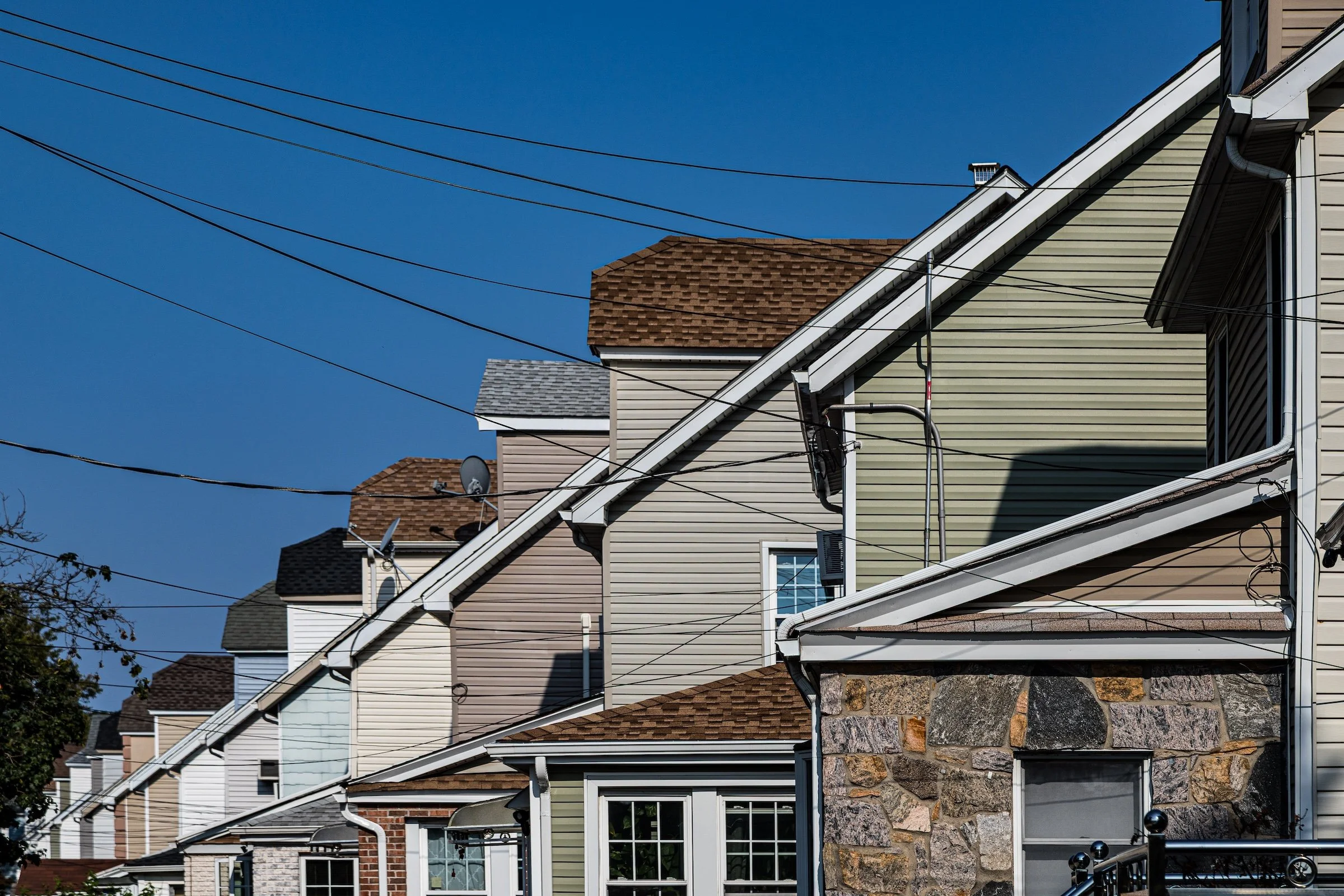
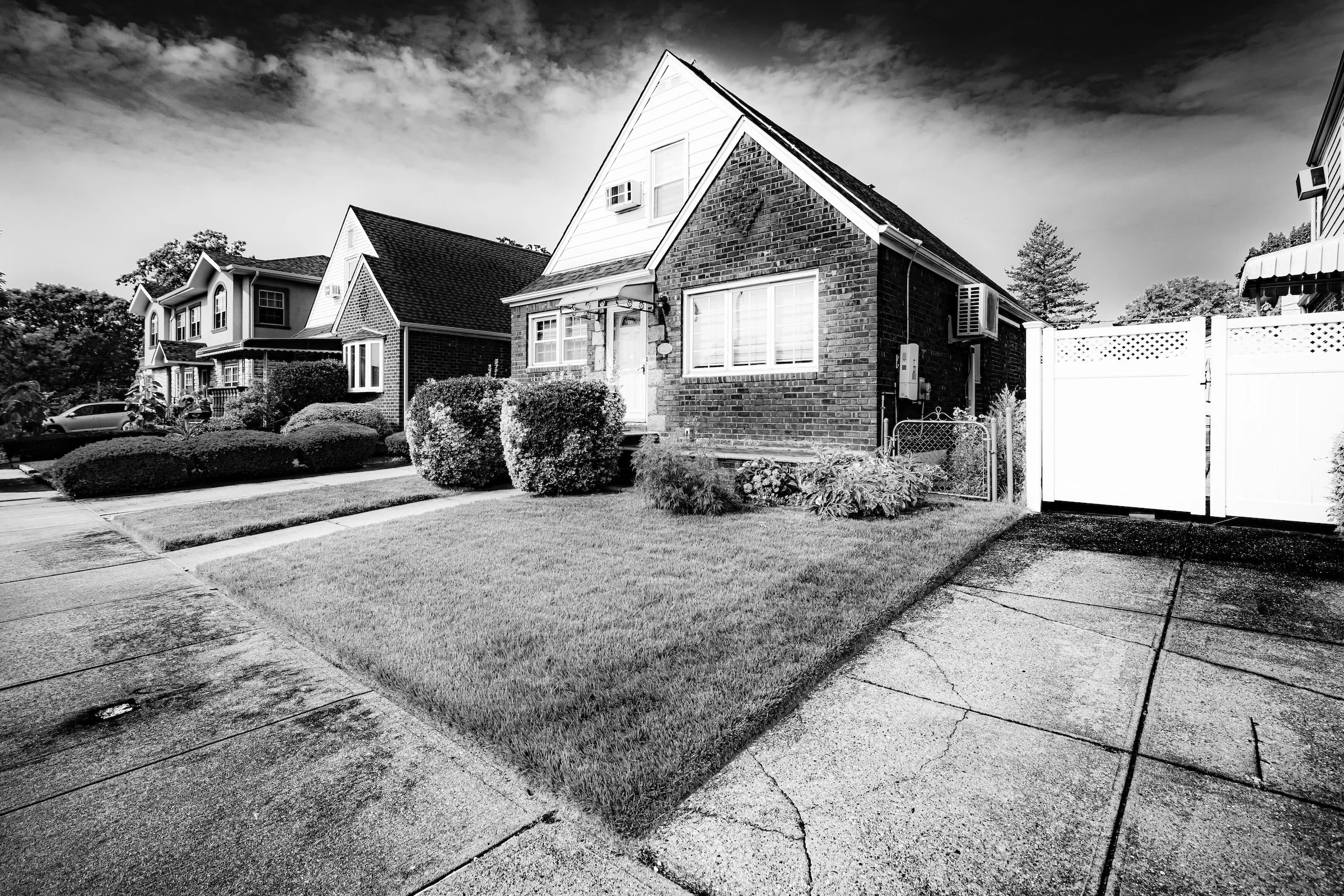
Bellerose Manor - Queens - Alignment
A quieter rhythm, but extremely satisfying: repetition expressed through order, symmetry, and matched elements. The frame reads like a composed diagram of suburban calm—pattern as precision.
Arches & Gateways (Repeating Frames as Rhythm)
Here repetition is created by repeated openings—arches and structural ribs that turn space into a measured sequence.
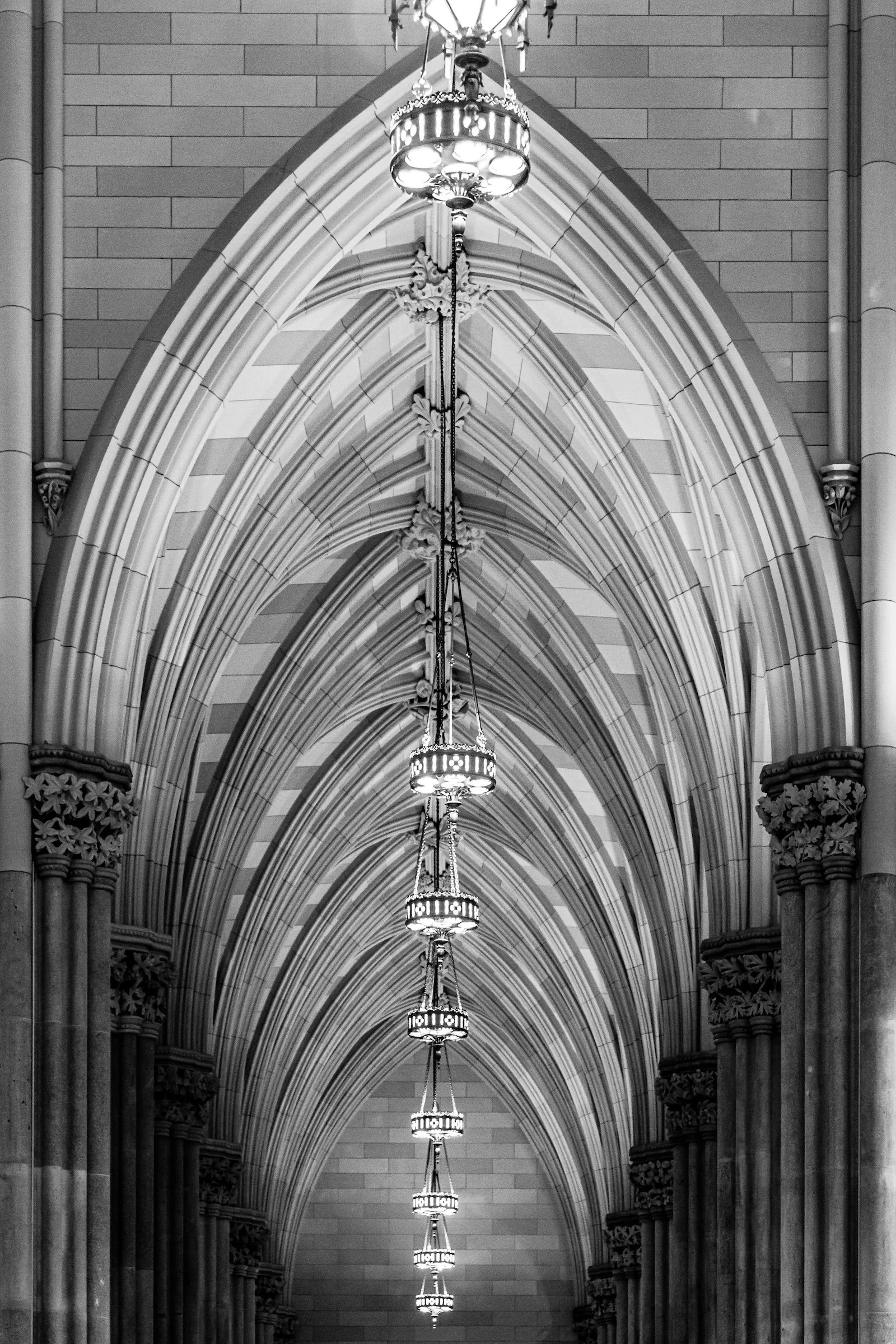
Midtown East - Manhattan - St. Patrick's Arches
A disciplined run of arches where the curve itself is the repeating unit. Your eye moves from one opening to the next almost automatically—pattern as guided attention, with architecture providing the metronome.
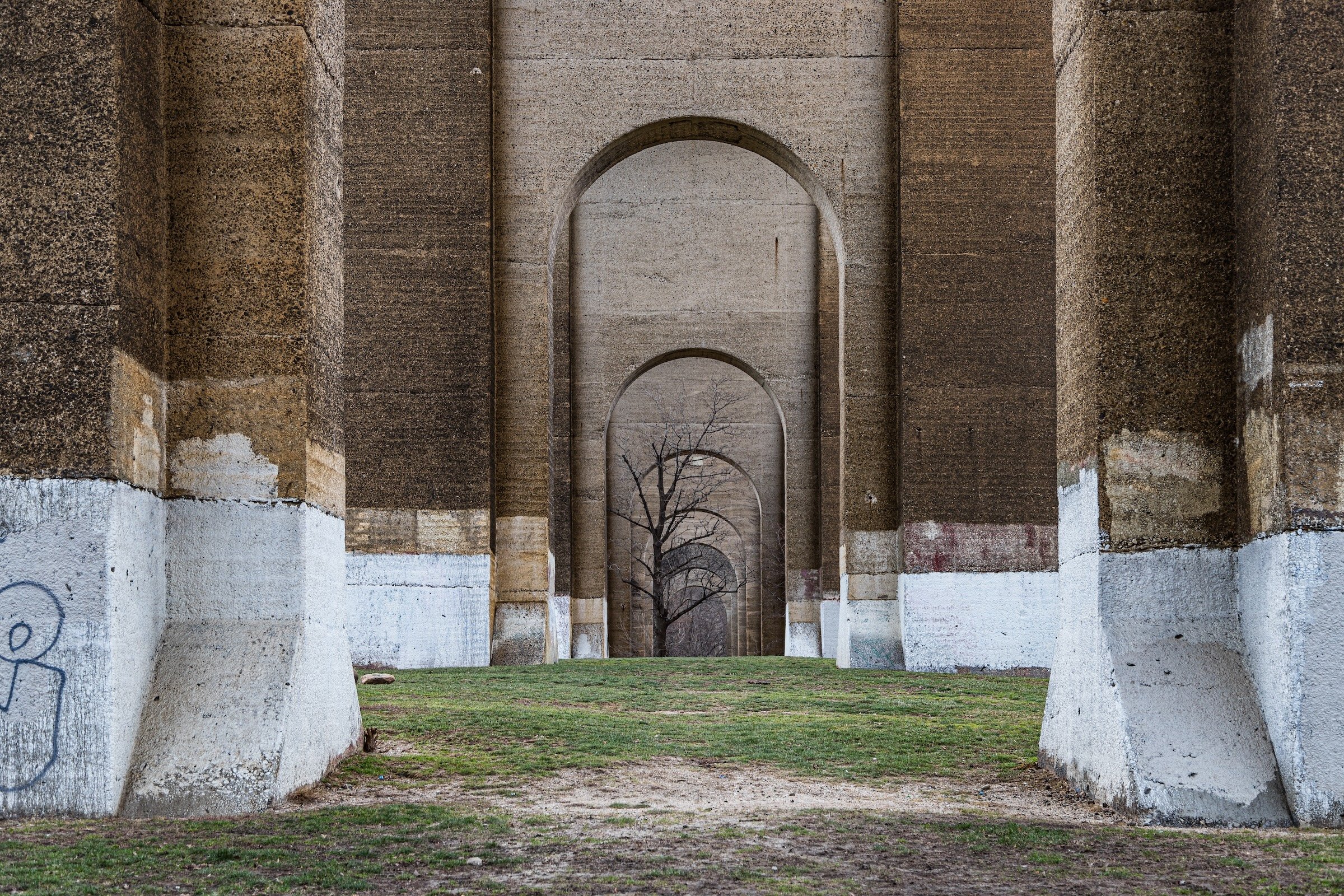
Ditmars - Steinway - Queens - Under The Gate
A sequence of structural frames that repeats into space, creating rhythm and depth at once. Each “frame” feels like a beat you can walk through—repetition as a corridor.
Surface & Graphic Echoes (Pattern on the Skin of the City)
These examples live on surfaces and shapes—marks, textures, and repeated geometry that turn a plane into a patterned field.
Explore Further