Wide Angles & Triangles
Definition:
Wide Angles is the practice of using a wide-angle perspective to make triangles feel inevitable—gables, wedges of lawn, street corners, window bays, and converging lines that form strong triangular shapes. The wide lens doesn’t just record the angle; it amplifies it, stretching edges, deepening corners, and turning geometry into the subject - framing photos around the fusion of triangles.
Usage:
Use Wide Angles when you want a frame to feel structured and dynamic at the same time. It’s especially powerful for:
gabled houses and peaked roofs (classic triangle silhouettes),
wedges of lawn, sidewalk, and curb that create triangular ground planes,
street corners and intersections where lines converge into a wedge,
architectural fragments where a triangle can act as a “visual spear” through the frame.
This technique thrives on commitment: get close, choose the triangle, and let the edges do the steering.
In Depth:
Triangles are one of the most stable shapes in design—architects and engineers love them for a reason. In photography, a triangle can do two seemingly opposite things at once: it can stabilize a composition (because it’s structurally “solid”) and it can energize it (because it points somewhere).
Wide-angle perspective is the triangle’s best friend because it exaggerates the relationship between near and far:
the near corner becomes big and authoritative,
the far edge becomes a destination,
converging lines feel sharper and more dramatic,
and the whole frame can read like a constructed diagram.
A few field instincts that help Wide Angle Triangle land consistently:
Find a clean apex. Triangles need a clear “point” (roof peak, curb corner, wedge tip).
Watch the borders. Wide angles make edge clutter loud. Keep your triangle edges clean.
Use texture to emphasize planes. Brick, lawn, siding, pavement—texture makes the triangle feel physical.
Let lines converge on purpose. If the triangle is implied (not literal), align the frame so the viewer can feel the wedge.
Don’t fear asymmetry. A triangle can anchor the image even when the rest of the frame is busy—sometimes that contrast is the magic.
The examples below show how this plays out across suburban Queens geometry, Manhattan street wedges, and architectural triangles that appear as “found shapes” inside complex city scenes.
Gable Geometry (Triangles You Can’t Unsee)
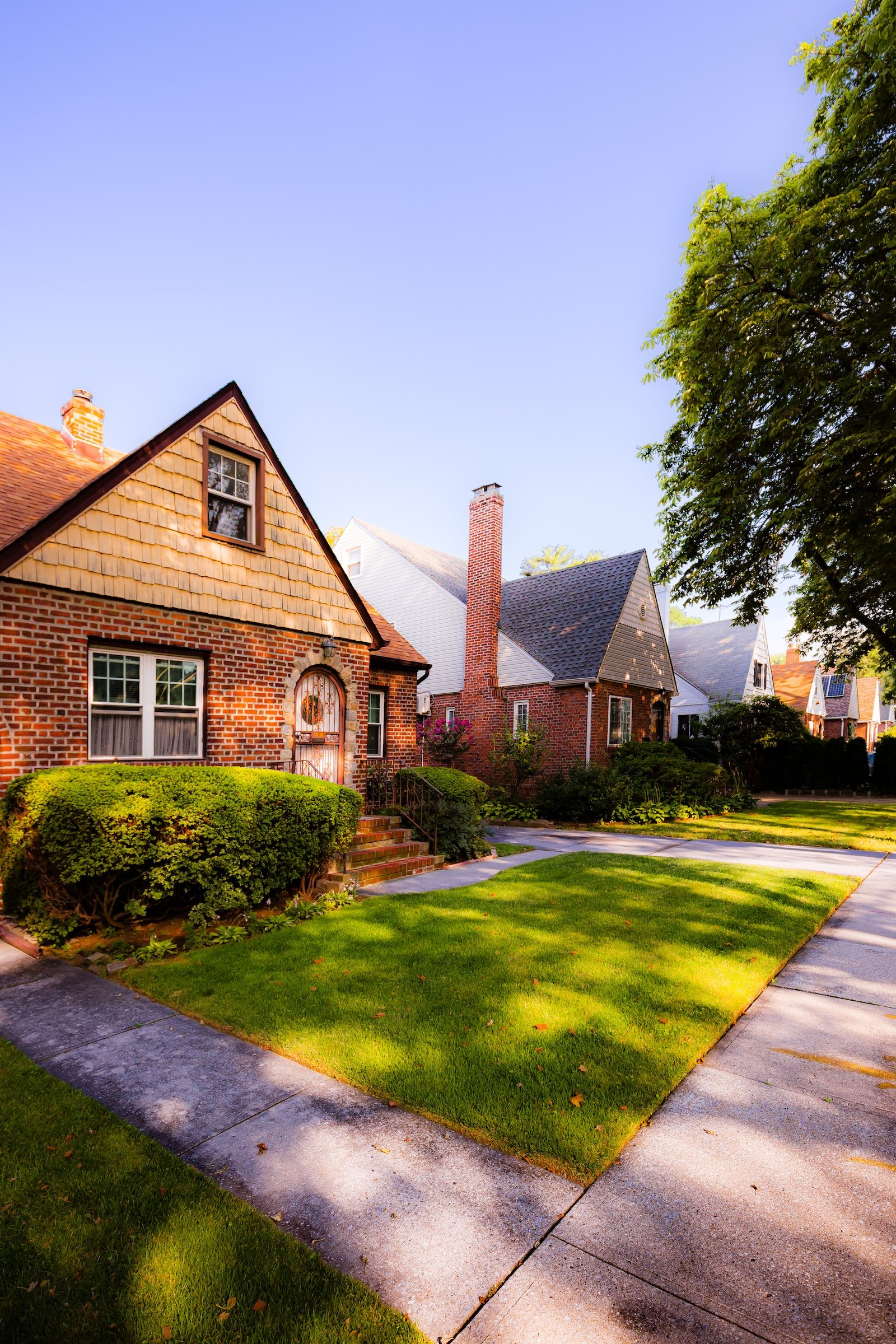
These images feature literal roof triangles and peaked silhouettes—wide-angle framing makes them feel bold, graphic, and portrait-like.
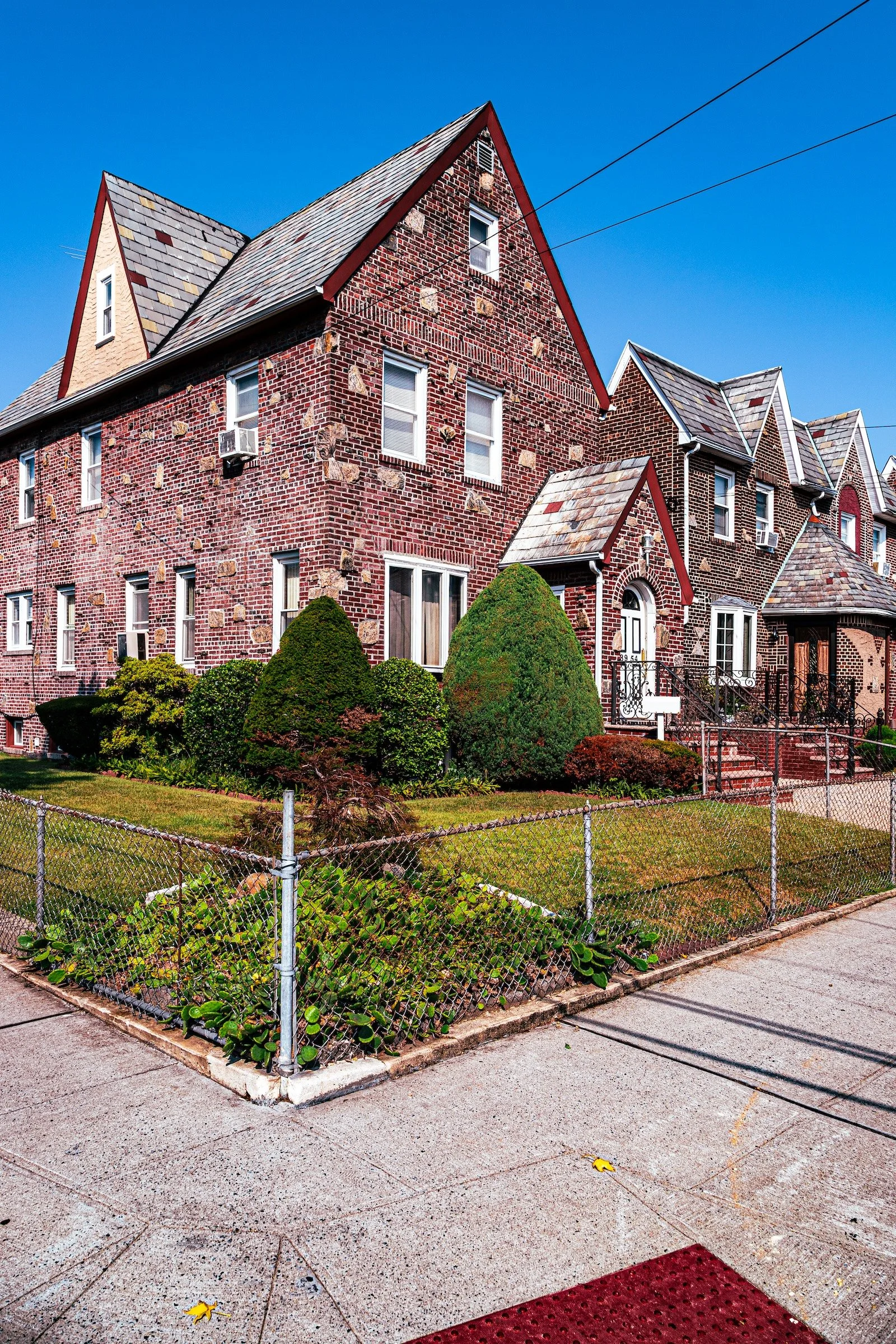
Bellerose Manor - Queens - 80-54 Portrait
The triangle here is architecture as emblem: the roofline and facade create a clean, recognizable shape, and the wide perspective gives it presence. This is the triangle as identity—simple, stable, memorable.
Lawn Wedges (Ground Planes as Triangles)
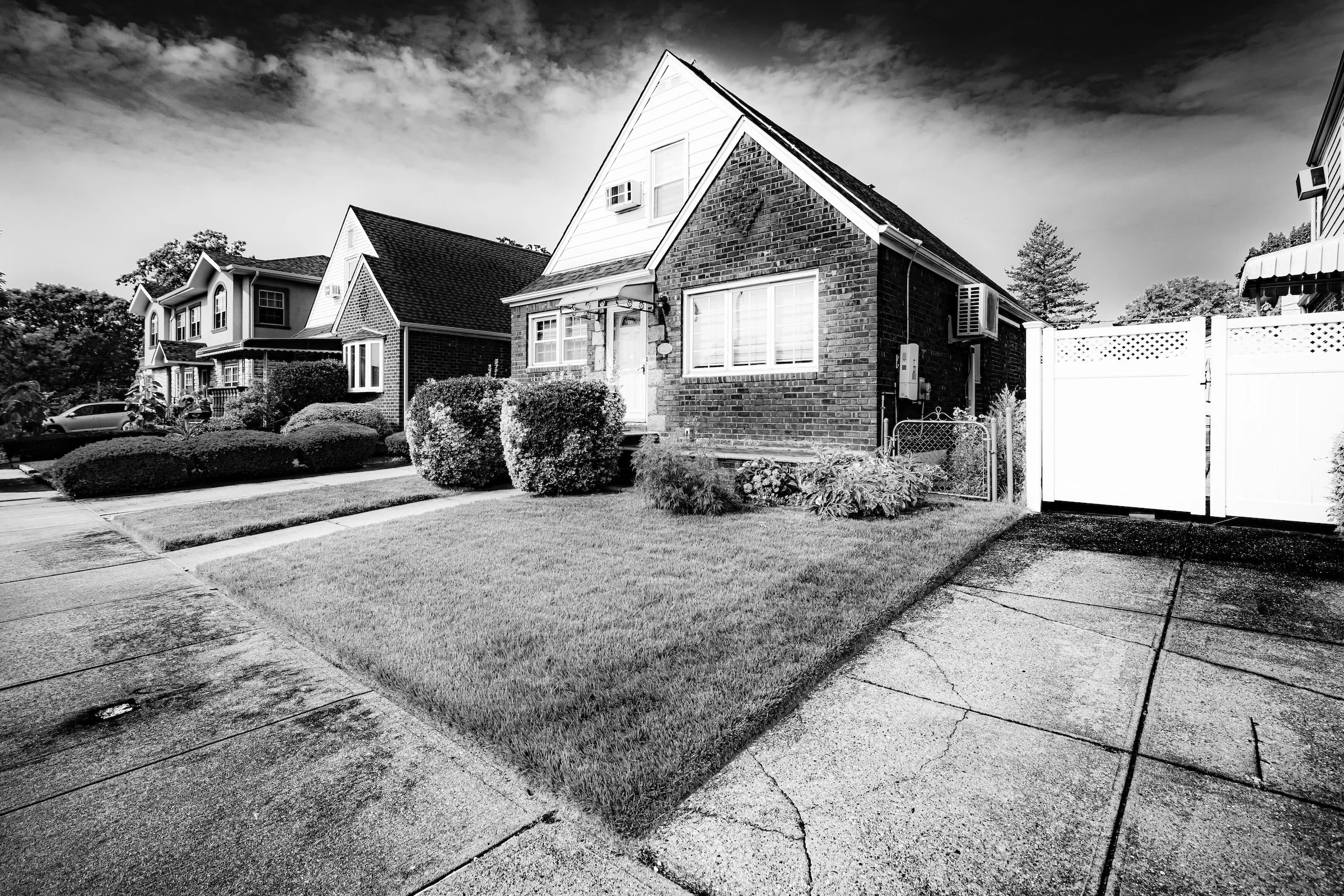
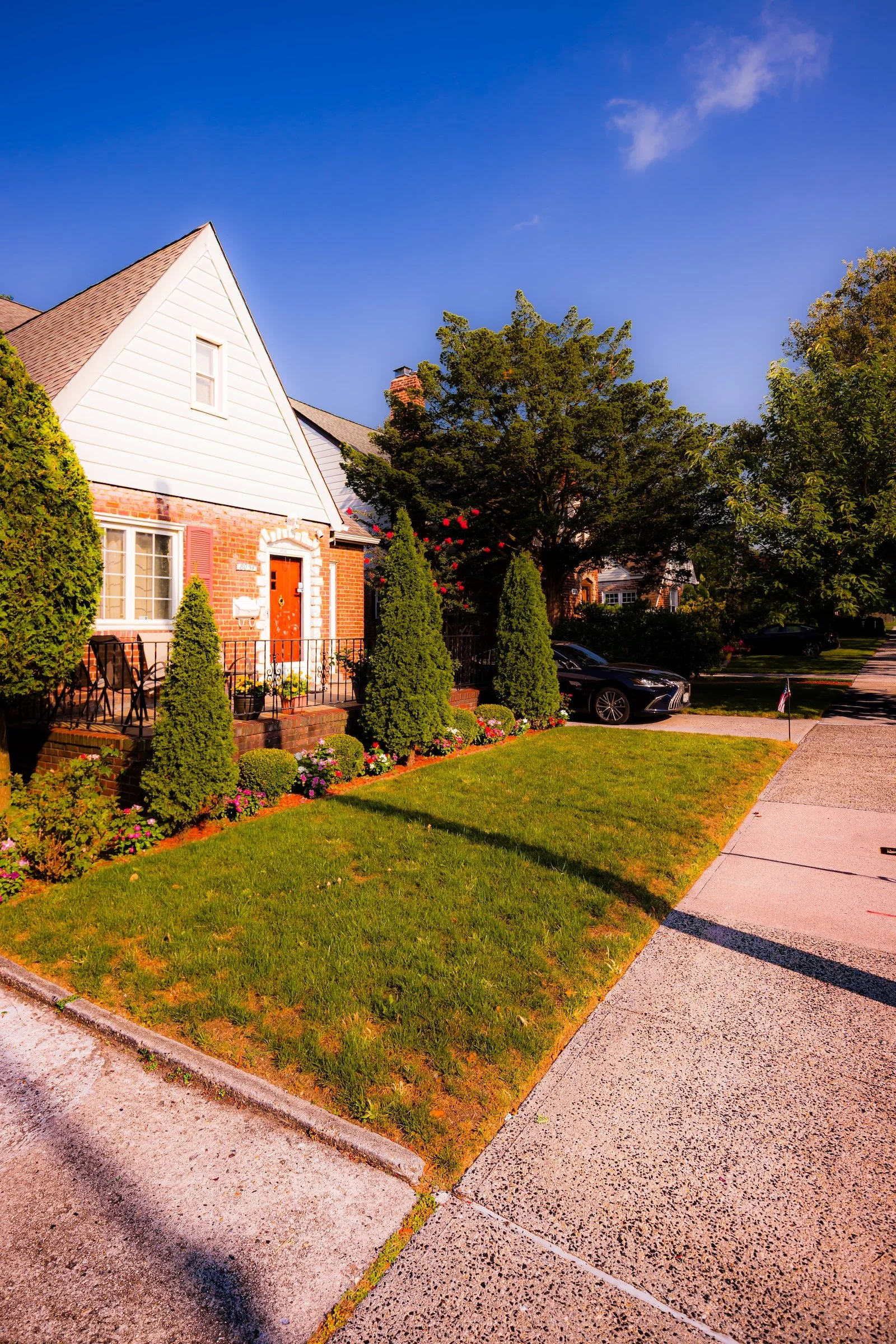
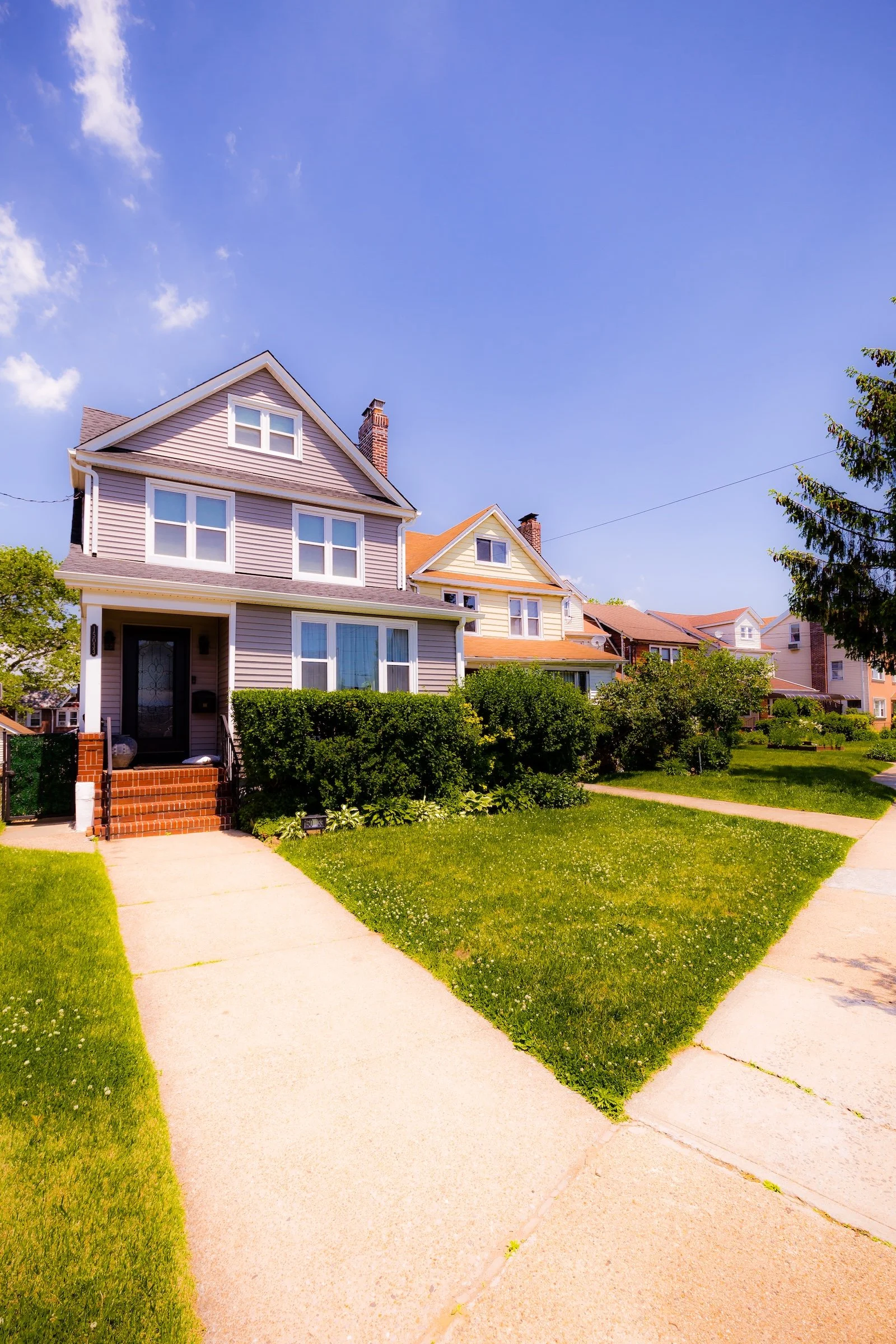
These images show the triangle not in the roof, but underfoot—grass, sidewalk, and curb forming wedges that guide the eye and create quiet drama.
Bellerose Manor - Queens - 235th Lawn Portrait
A suburban masterclass: the lawn becomes a triangular plane, pointed toward the house like a gentle arrow. The wide angle expands the foreground, making the wedge feel bigger and more intentional.
Implied Triangles (When Lines Converge Into a Wedge)
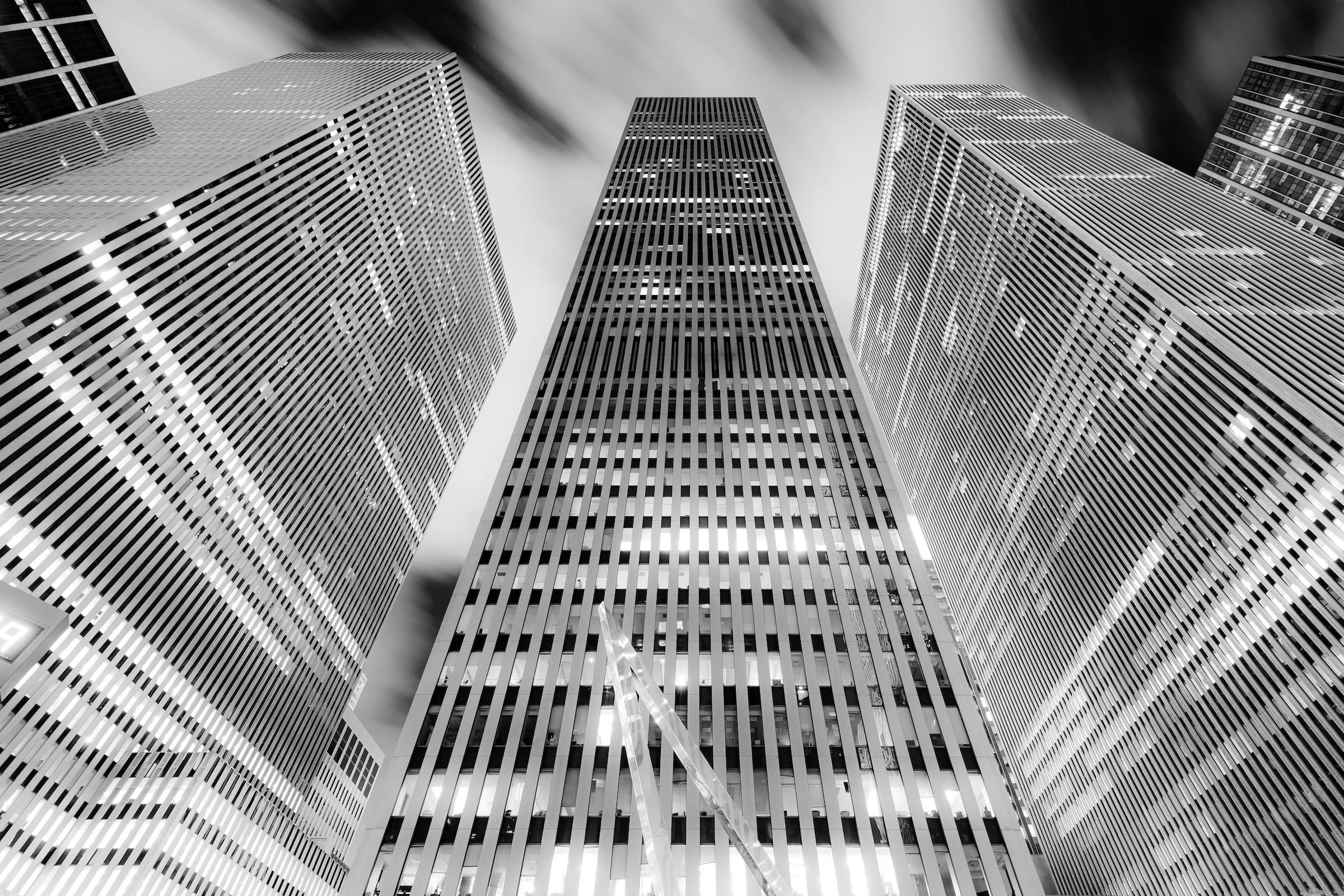
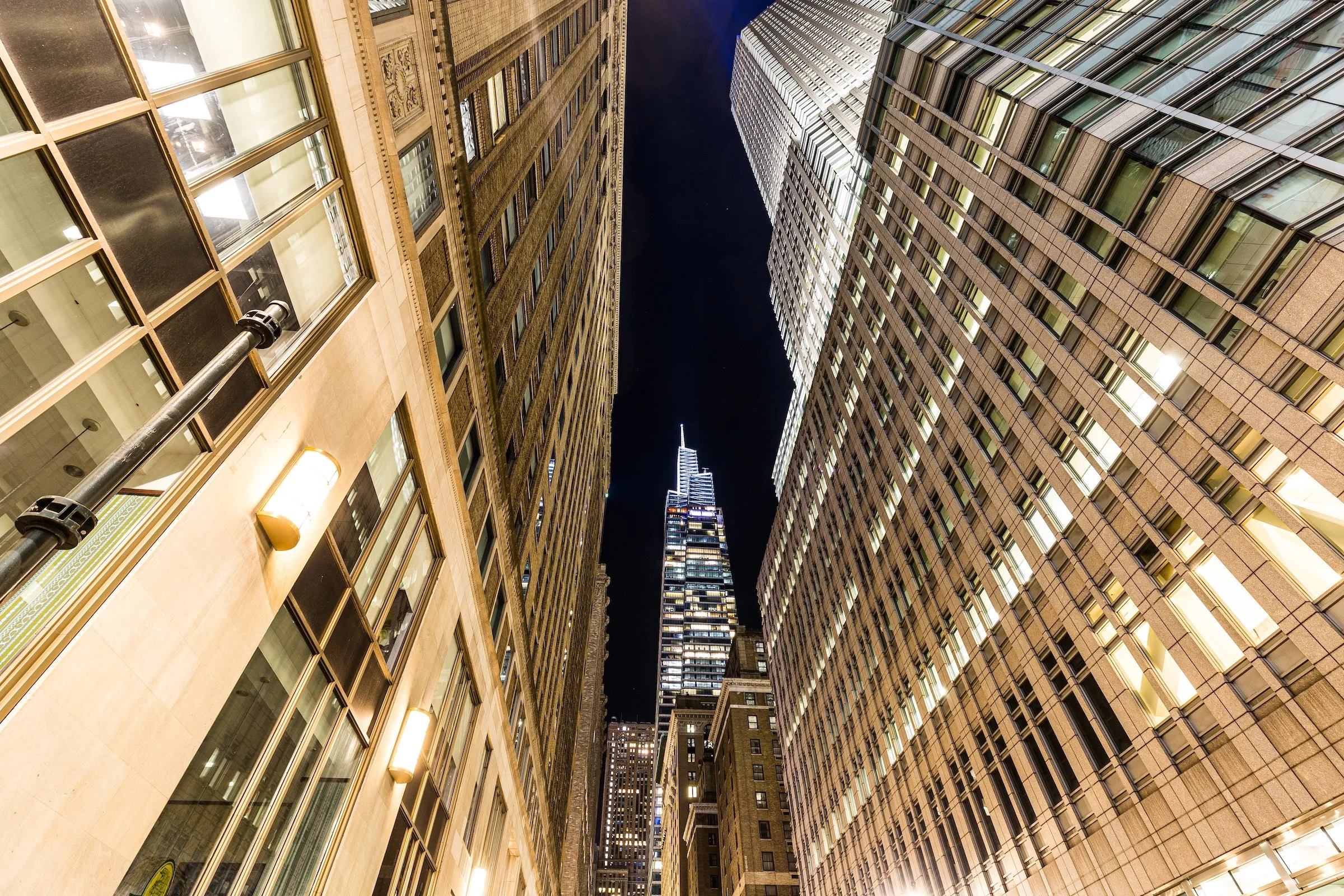
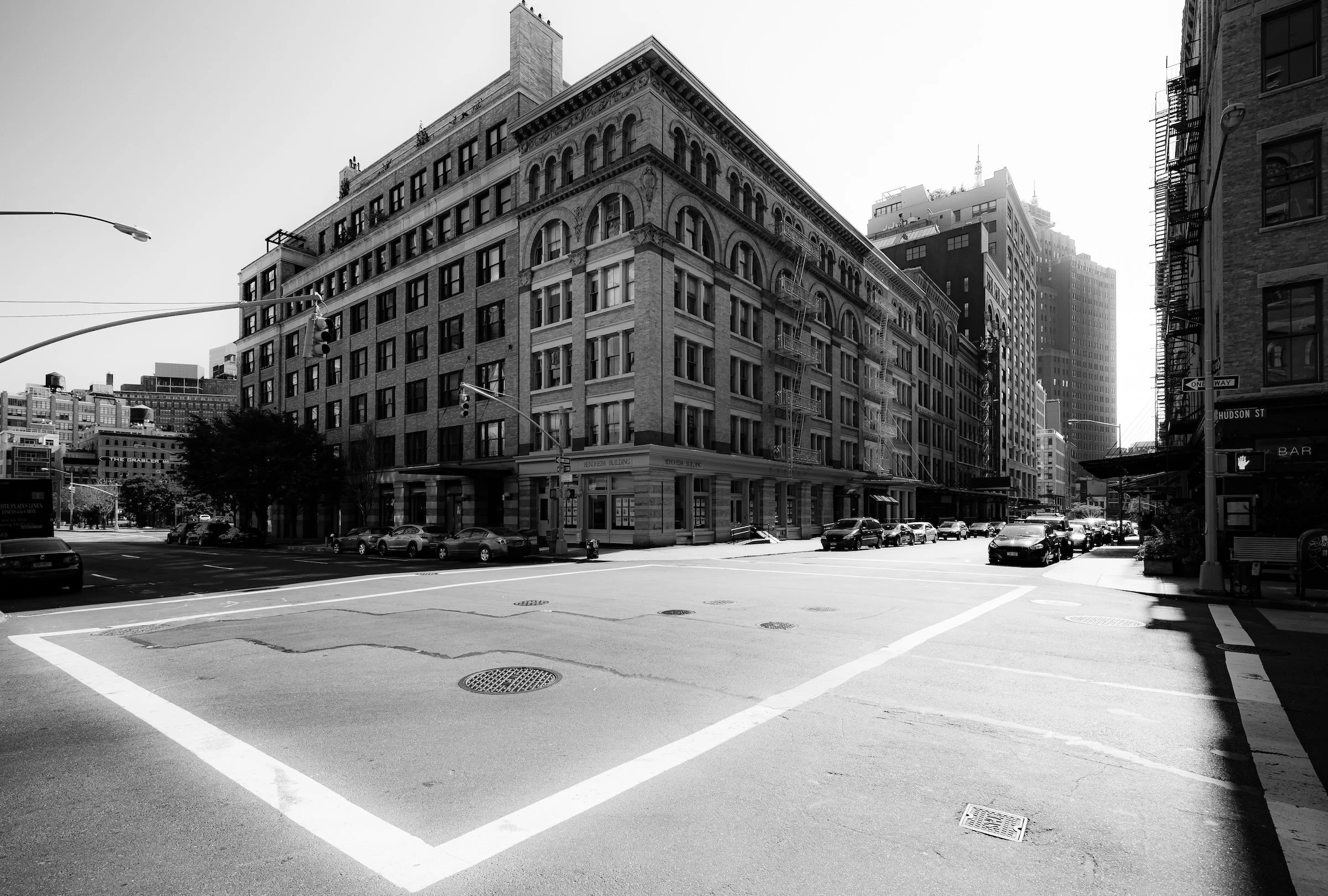
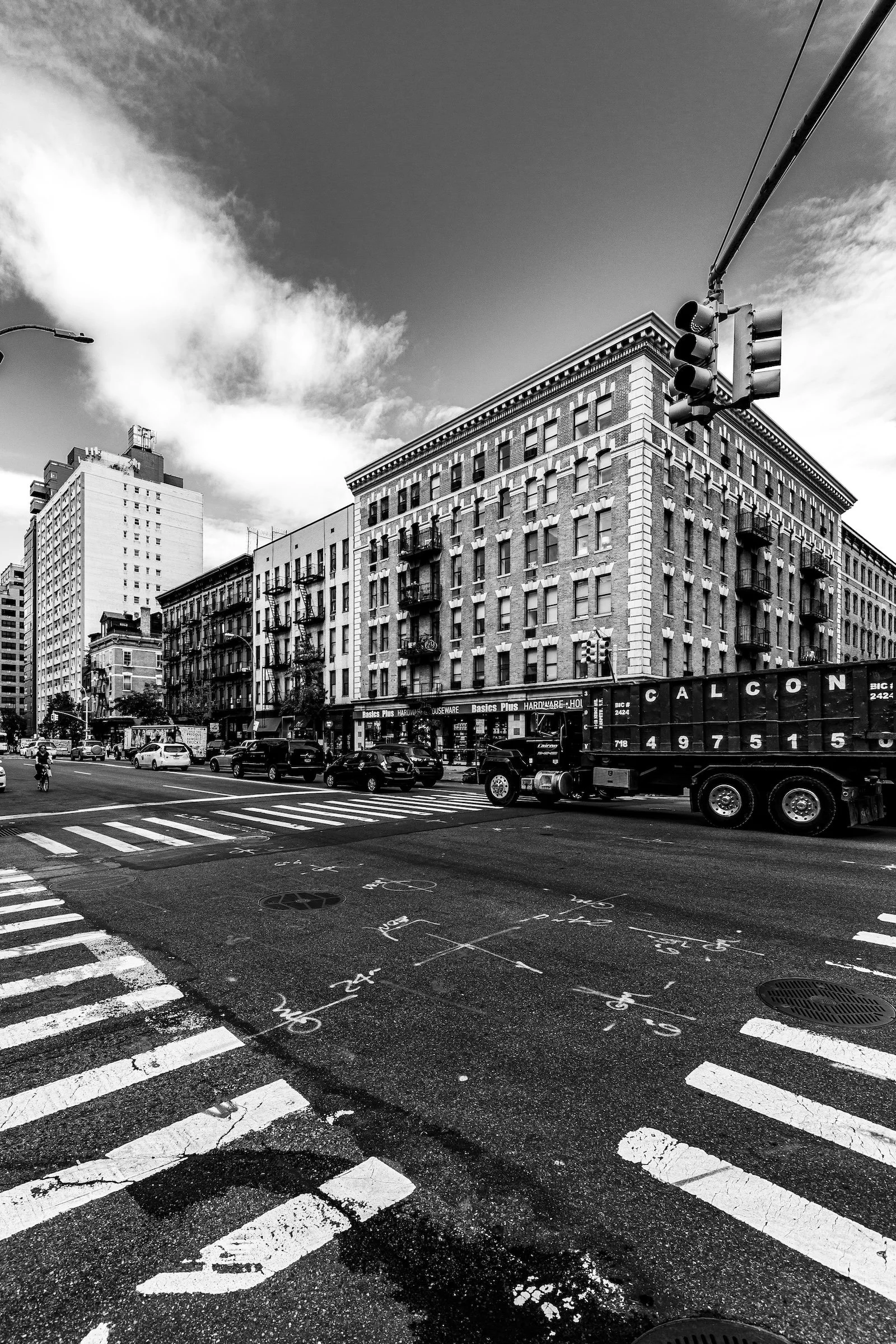
These are triangles made from perspective rather than literal edges—street lines, building faces, and converging planes that create a triangular “force” in the composition.
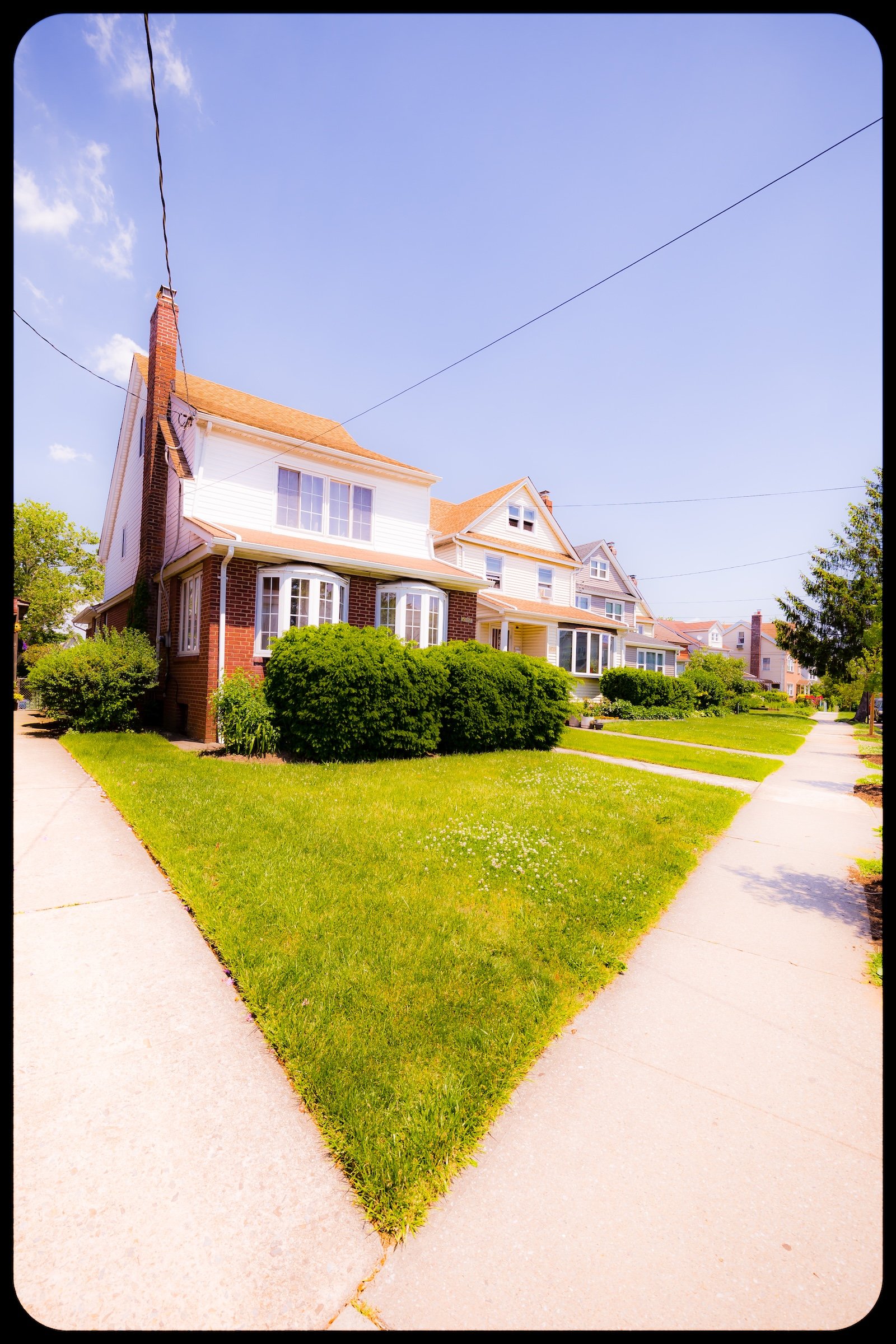
East Village - Manhattan - 12th & 3rd
A street corner wedge: the curb and building edges form a triangle that points into the block. The wide framing gives the corner a sense of momentum—like the city is pivoting around the apex.

Lower East Side - Manhattan - Henry & Clinton
Convergence as triangle: edges of buildings and street lines compress into a directional wedge. The triangle is less “object” and more “current”—a flow that carries the eye forward.
Graphic Tiles (Triangles as Pattern and Design)
These images treat triangles as a design motif—repeated shapes, diamond grids, and graphic surfaces where geometry becomes texture.
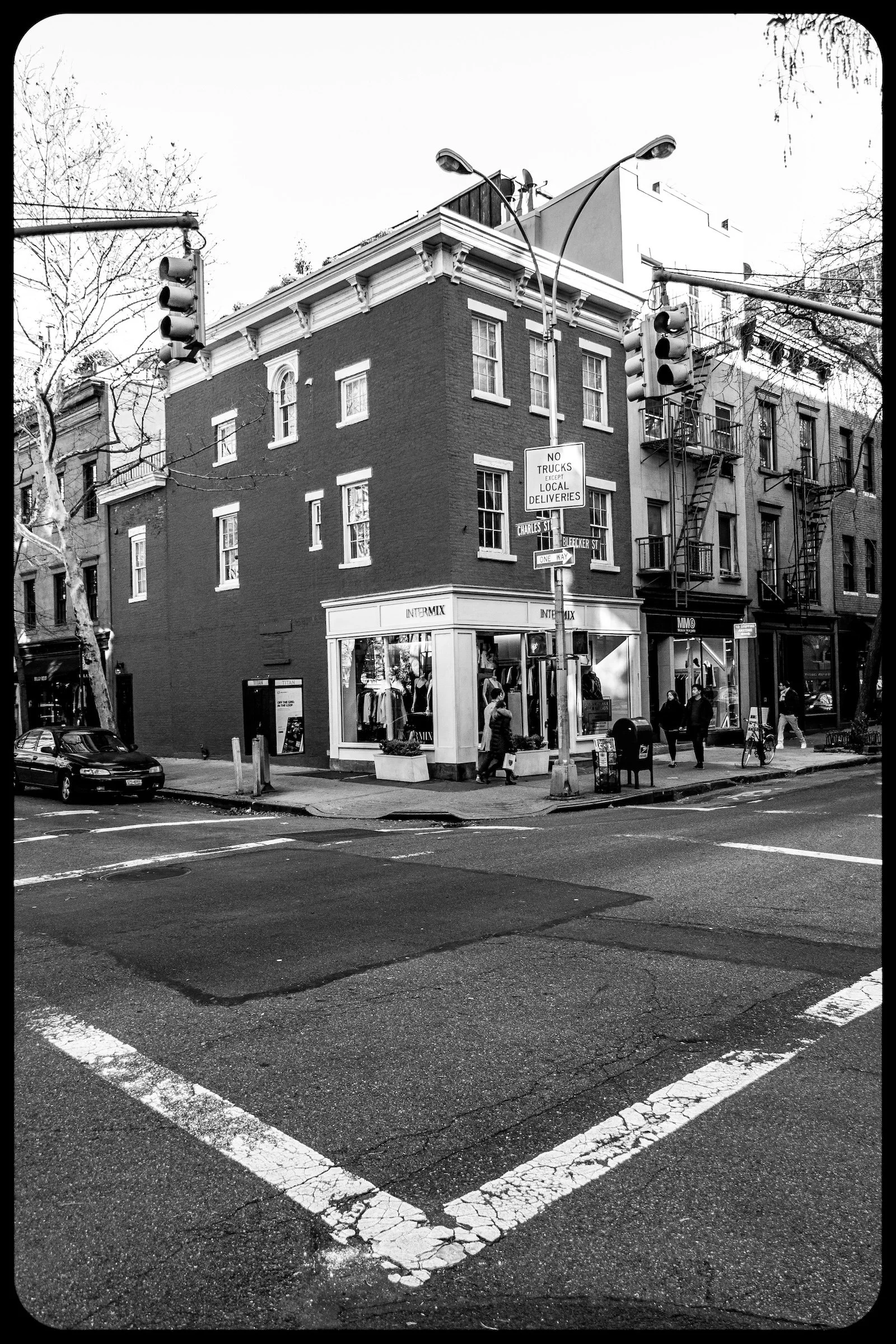
West Village - Manhattan - Diamonds
A triangle ecosystem: diamond shapes subdivide into triangles, turning the frame into a patterned surface. The wide angle helps by making the geometry feel immersive—like you’re standing inside the design.
Explore Further