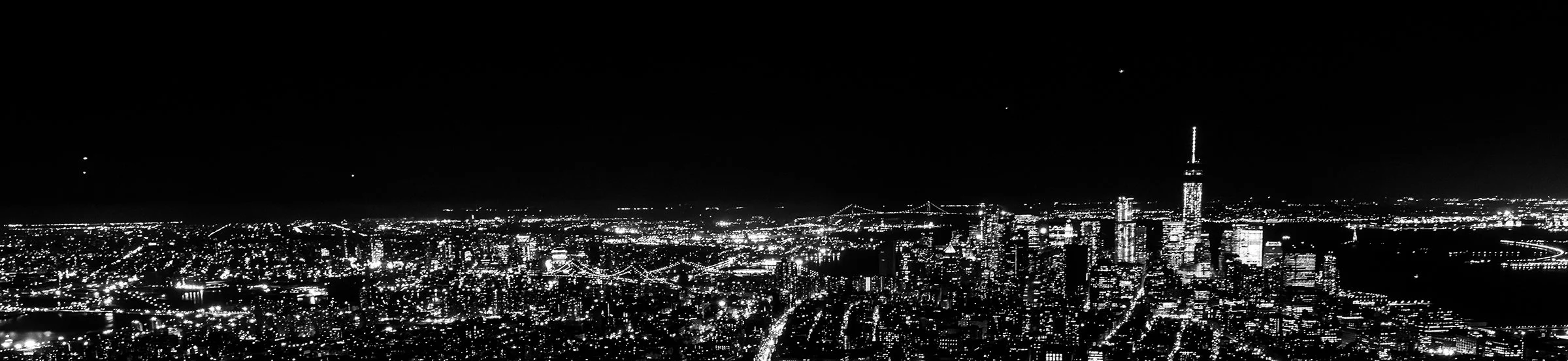

The Wraparound
Definition:
The Wraparound is the wide-angle technique of placing the viewer at a bend, corner, or seam so the scene appears to curve around them. It’s the feeling of being inside the geometry—where streets, walls, rails, or facades sweep outward to the left and right, and depth becomes a physical sensation.
Usage:
Use The Wraparound when you want a photograph to feel spatial—not just “a view,” but an environment you could step into. It’s especially powerful when:
a curve (street, curb, track, railing) creates a natural arc through the frame
a corner turns one scene into two (left world / right world)
the foreground is close enough to exaggerate depth and scale
the edges of the frame actively participate (rails, walls, building faces “hug” the viewer)
Wraparound images often thrive on commitment: get close, choose the pivot point, and let the space unfurl.
In Depth:
The Wraparound is essentially a way of photographing corners as engines.
A corner is where the city reveals its hidden structure: two streets meet, two facades collide, a tunnel turns, an overpass curves, a storefront wraps a sidewalk. With a wide lens (or simply a wide perspective choice), the frame stops being a window and becomes a room—and the viewer feels held inside it.
A few field notes that make the effect click:
Find the pivot. The pivot can be a building corner, a railing post, a curb edge, a column, a stairwell landing. Put it where the eye can lock on.
Let two directions exist at once. A strong wraparound frame usually offers “left path” and “right path,” even if one is subtle.
Foreground is the secret sauce. The closer the near geometry (curb, cobbles, tiles, fence), the more the scene opens like a fan.
Watch the edges. Wide frames punish mess. Clean your borders so the “wrap” feels intentional, not accidental.
Embrace curvature. Perfectly straight lines aren’t required—sometimes the slight bend is what creates the hug.
The examples below show The Wraparound across different environments: open-air street curves, corner storefronts, underpasses, stairwells, and urban canyons where the city folds around you.
Open-Air Wrap (Streets That Bend and Unfurl)
These images use streets, curbs, and sightlines to create the sensation of the frame “opening” outward—like the viewer is standing at the hinge point of the neighborhood.
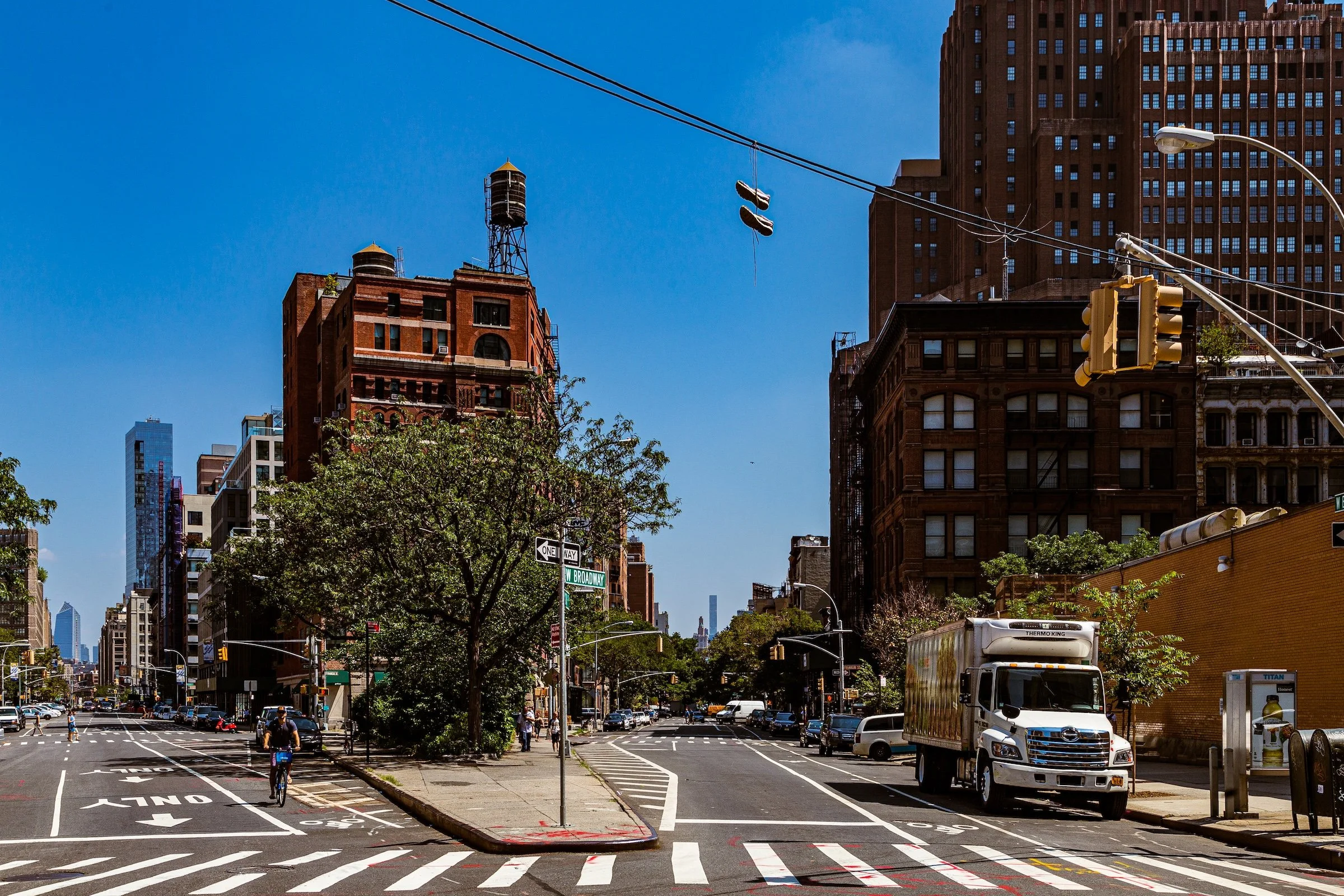
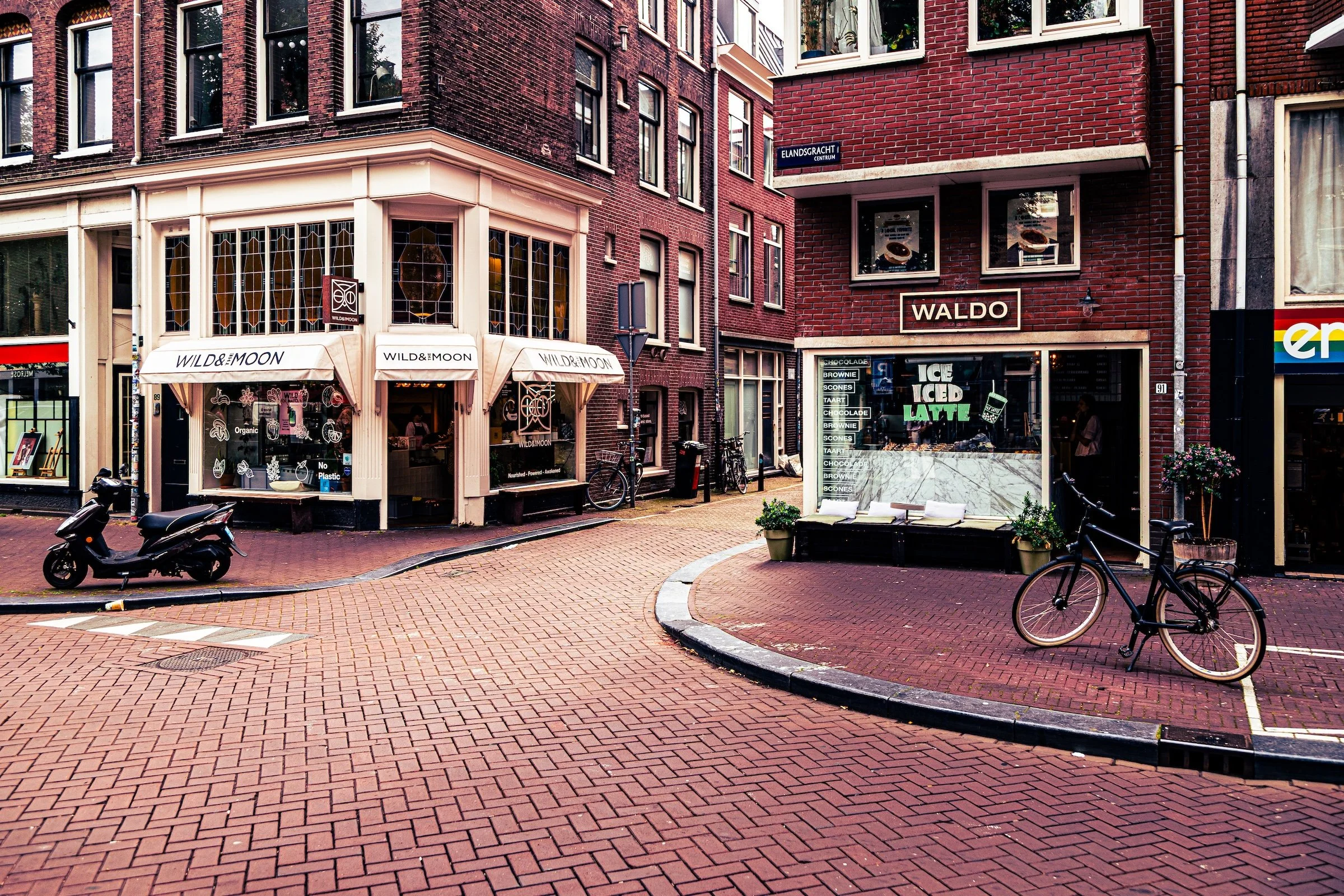
Jordaan - Amsterdam - Wild & Moon
The brick paving arcs through the frame like a tide line, pulling storefronts into a cozy, European wrap. The corner is friendly and intimate: you can feel the street “holding” the scene with soft curvature.
Corner Anchors (One Pivot, Two Worlds)
These frames hinge on a strong corner—often a building edge—so the viewer reads the image as two simultaneous streetscapes stitched together.
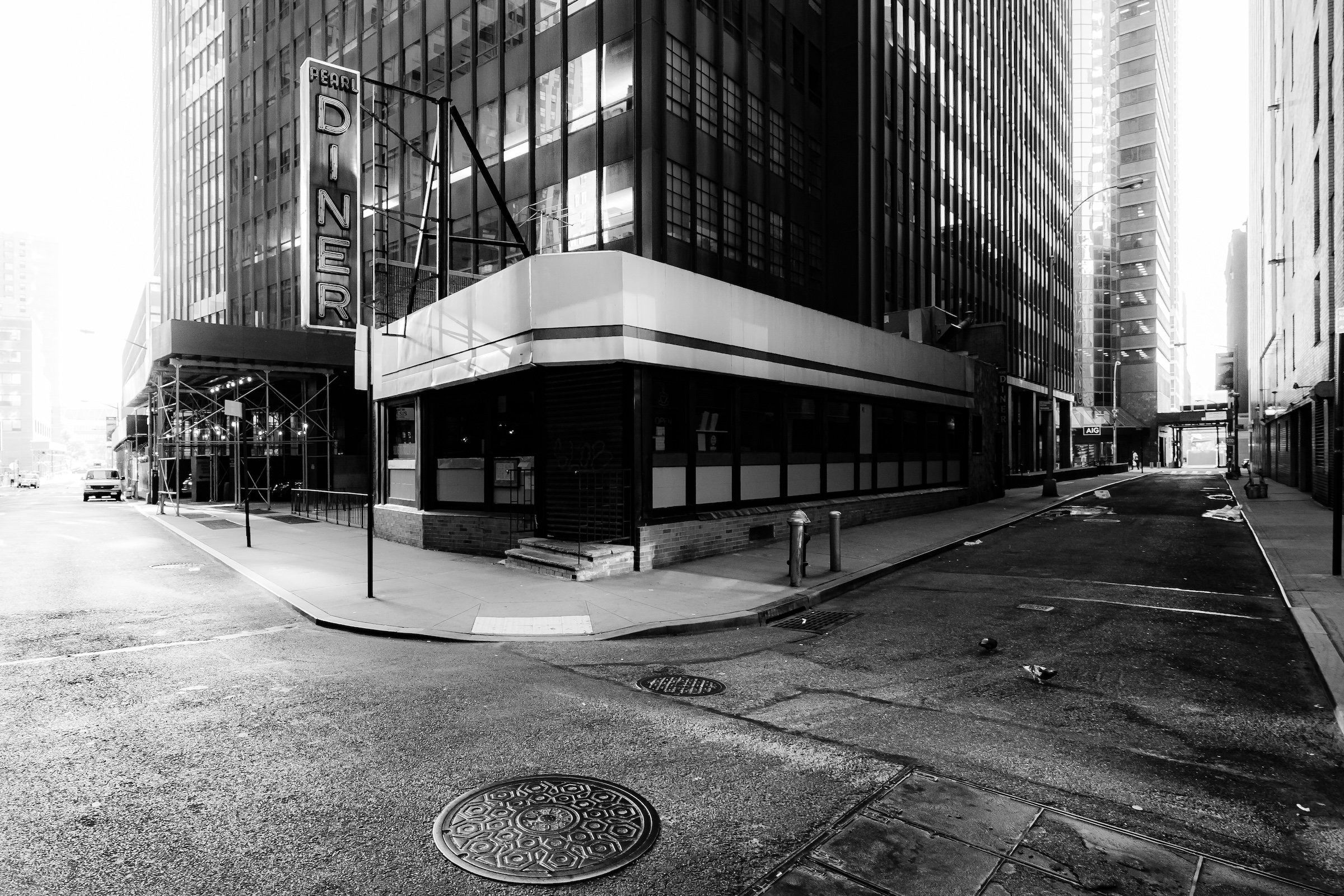
Financial District - Manhattan - Pearl Diner
The diner’s corner is the spine of the photo: left side dissolves into bright openness, right side stretches into a shadowed canyon. Wraparound here is contrast—two atmospheres sharing one address.
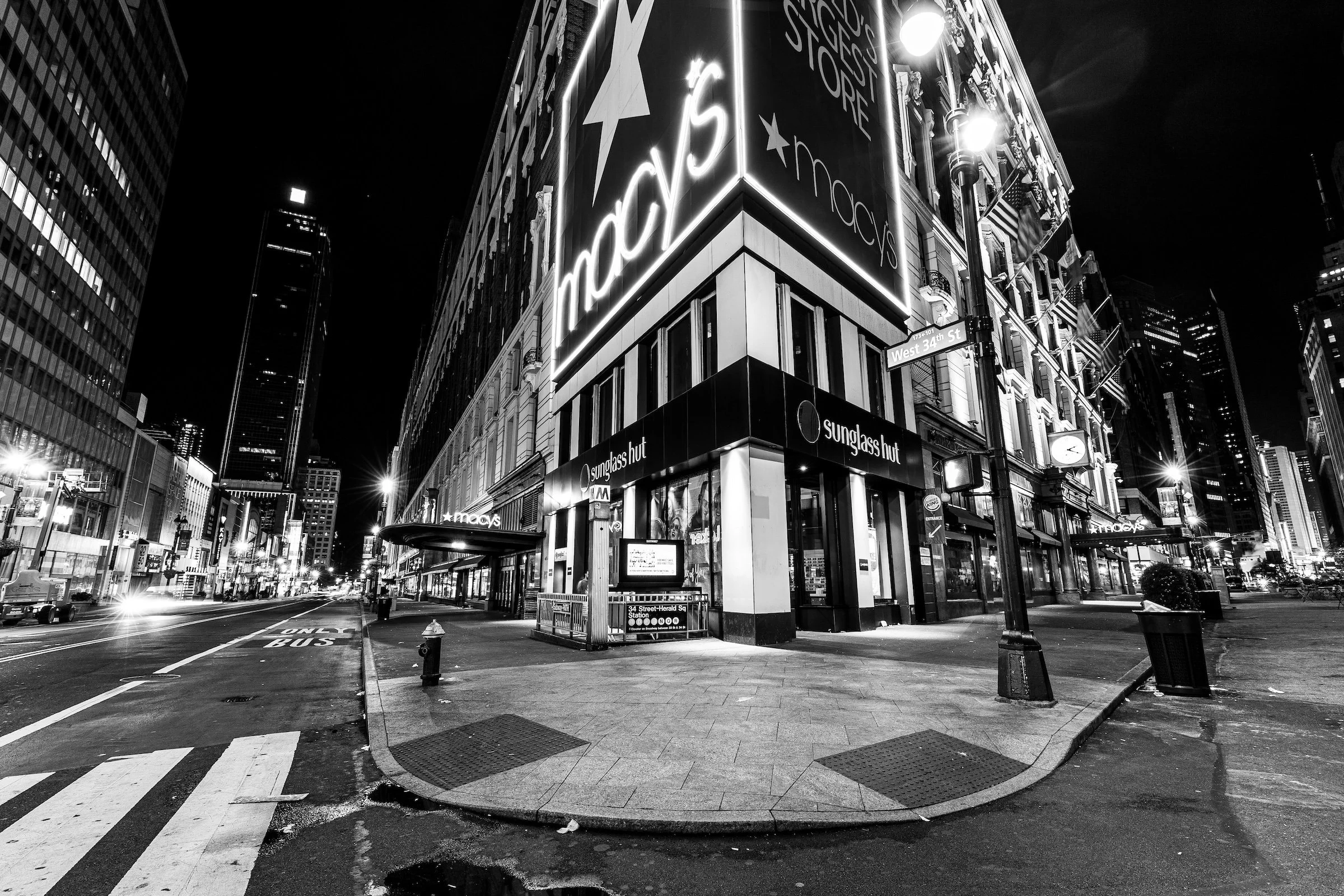
Garment / Fashion District - Manhattan - Macys
A neon-lit corner becomes a beacon, and the sidewalks sweep around it like water around a rock. The wide perspective turns the building into a wedge—an urban prow—while the streets flare outward into night.
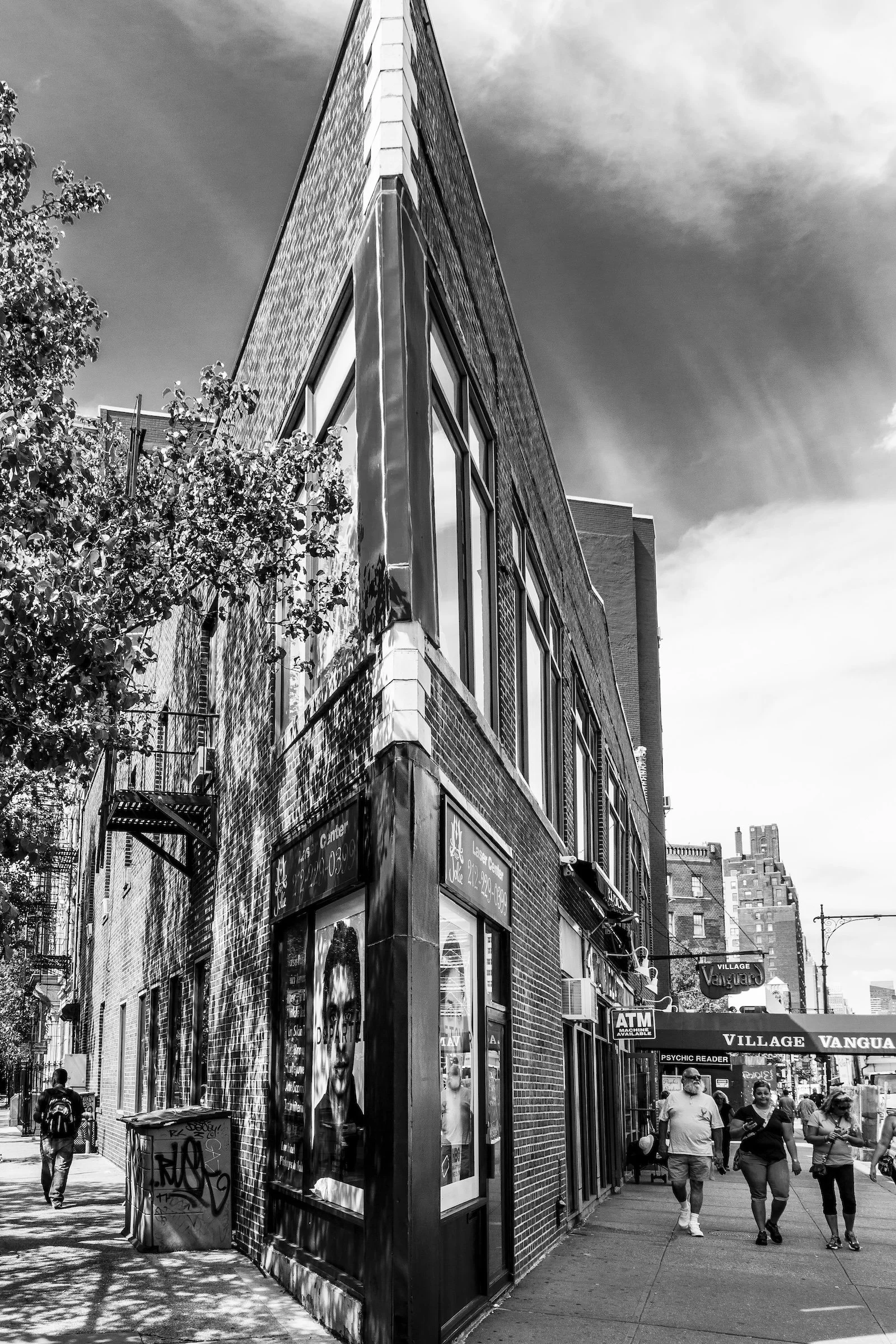
West Village - Manhattan - Split Screen
A literal split: left sidewalk recedes into calm shade; right sidewalk spills into people, signage, and storefront energy. The corner structure makes the frame feel like a fold—two scenes joined at the seam.
Under & Through (Wraparound in Constrained Space)
Tunnels, underpasses, and stairwells are natural wraparound factories: walls curve, ceilings press down, and perspective becomes visceral.
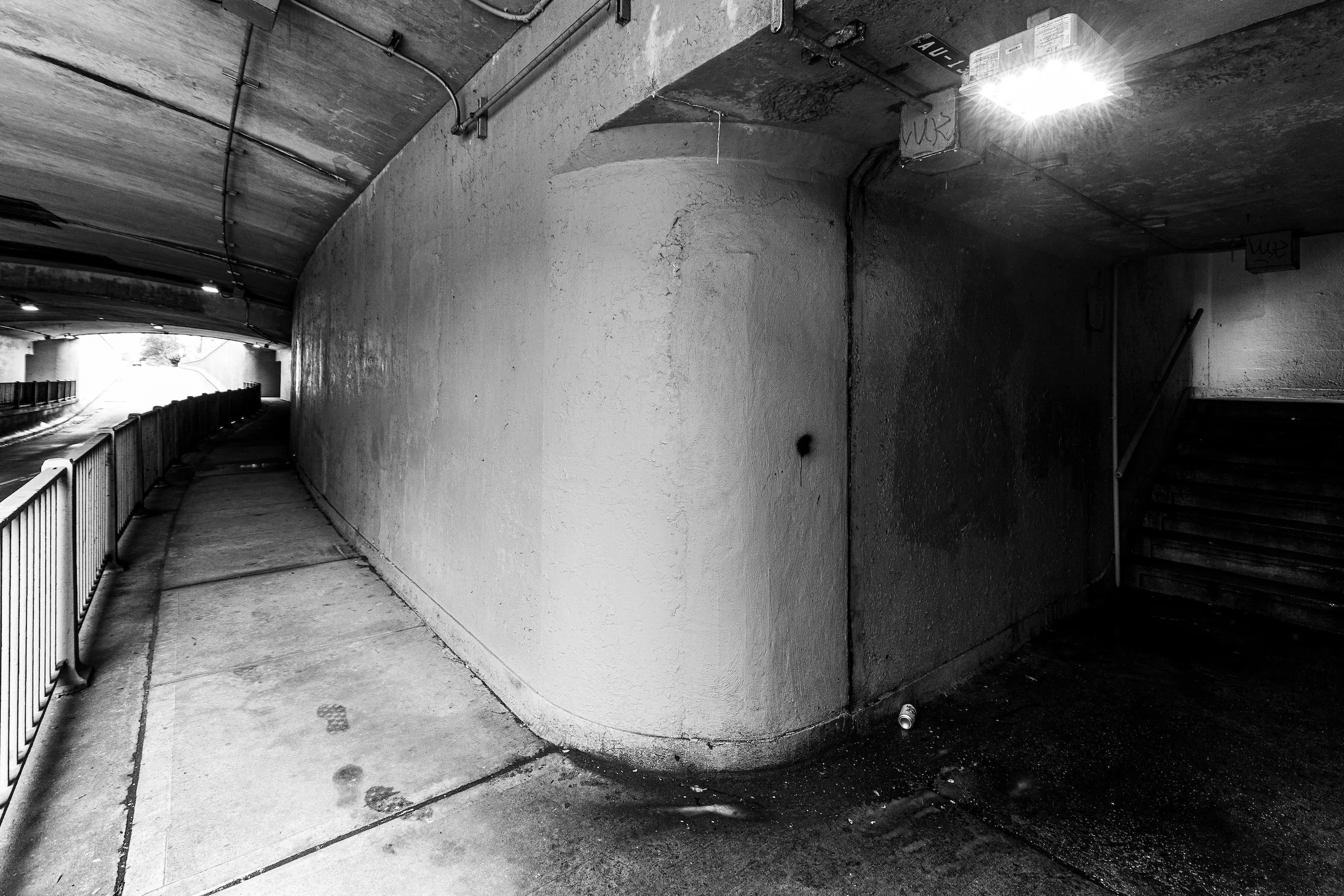
Kew Gardens - Queens - Under Austin
The rounded wall is the star—its curve creates a physical “hug” that guides the eye toward the light ahead. The frame feels navigational, like you’re moving through the architecture rather than observing it.
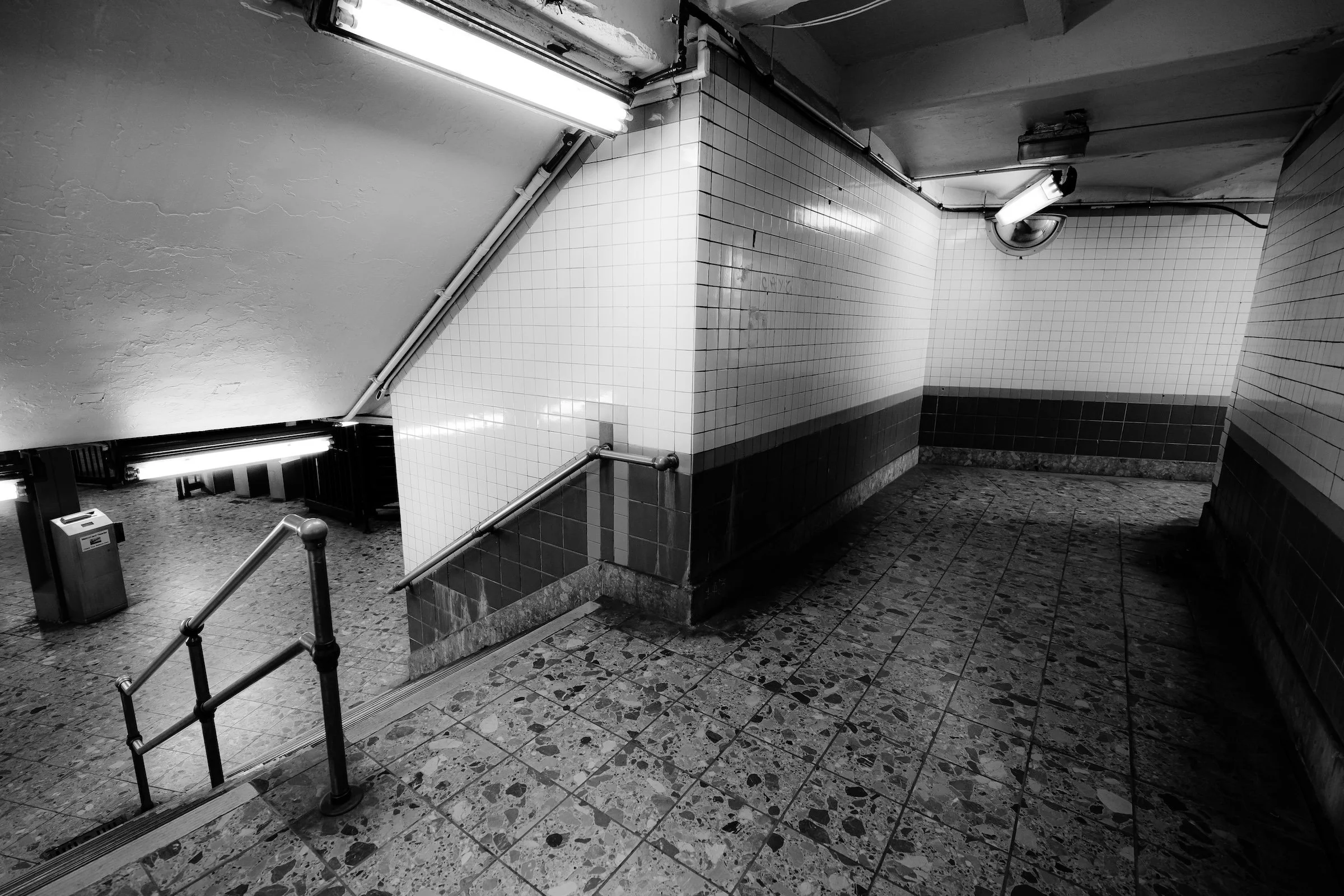
Industrial Wrap (Hard Geometry, Deep Pull)
These examples use rails, bridges, cobbles, and canyon-like streets to create wraparound energy—where structure dominates and space feels engineered.
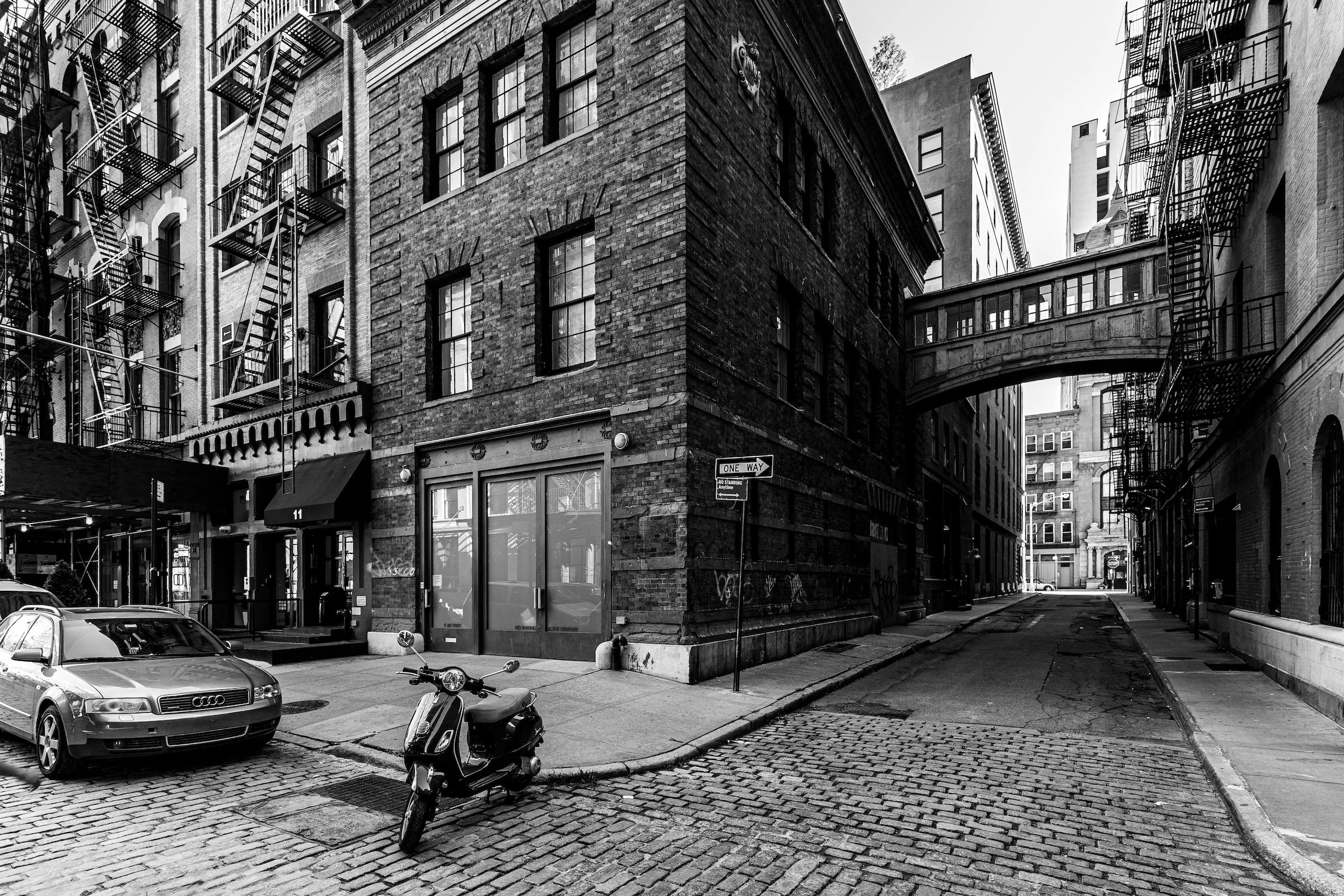
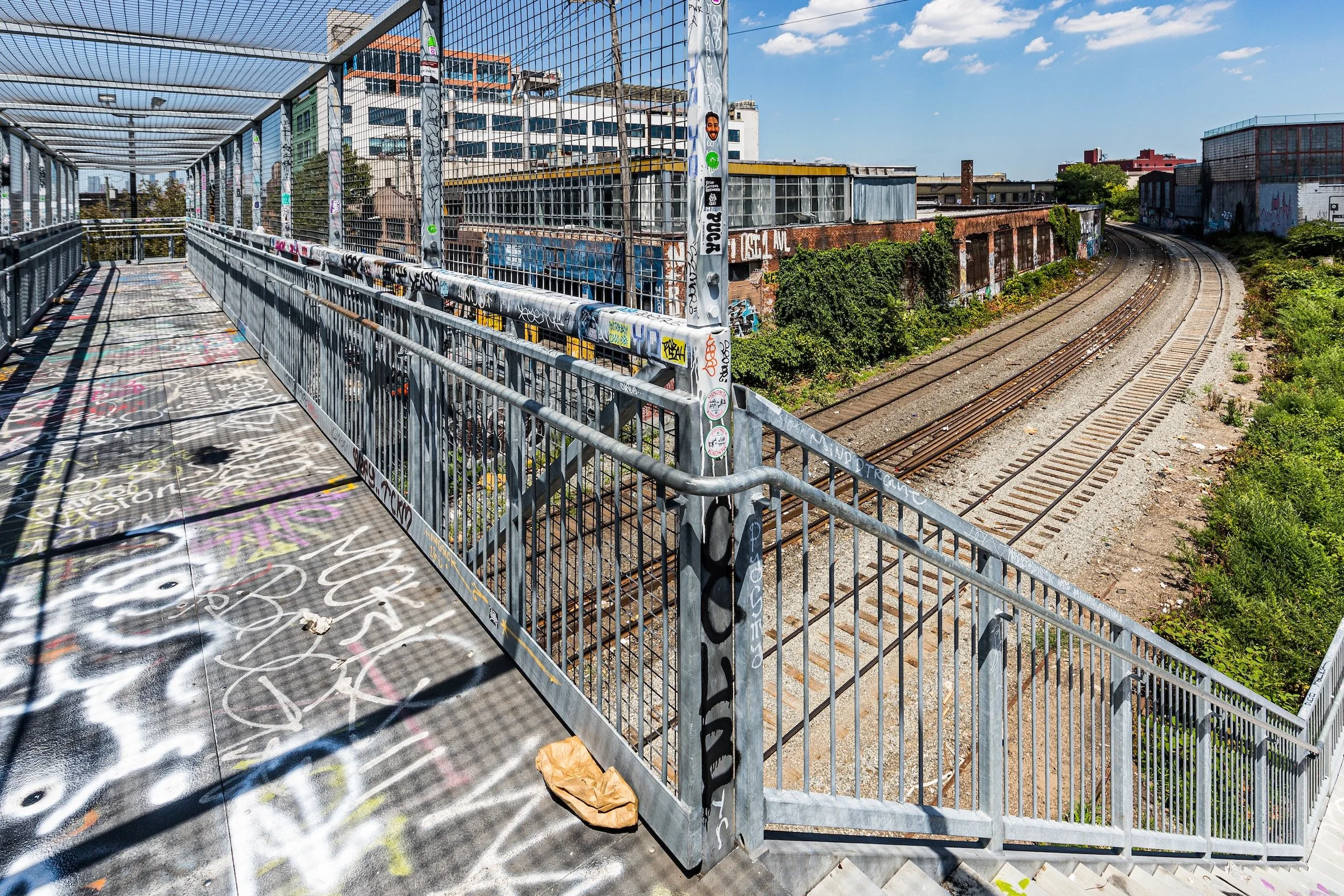
East / Industrial Williamsburg - Brooklyn - Scott Avenue Overpass
A perfect wraparound hinge: stairs descend, rails curve, and the tracks sweep away into the distance. The fence grid and graffiti textures add a second rhythm, making the whole frame feel like an industrial diagram you can step into.
Explore Further