
Sky Dramatic
Definition:
Sky Dramatic is the deliberate use of the sky as an active subject—storm weight, sculpted cloud texture, sunbursts, clean blue voids, and rare events (like rainbows)—so the atmosphere doesn’t just “sit behind” the city, but drives the mood, contrast, and structure of the photograph.
Usage:
You can use Sky Dramatic to turn an ordinary street or building study into something cinematic. A charged sky can add scale, tension, and narrative; it can brighten and simplify a frame with blue-space minimalism, or compress everything into high-contrast intensity when clouds thicken and light turns directional.
Sky Dramatic is less about chasing “pretty skies” and more about recognizing when the atmosphere becomes a compositional engine. The city is full of rigid geometry—windows, facades, edges, grids—and the sky is where that geometry meets something living and unstable. When those two languages collide, the frame wakes up.
In Depth:
I use Sky Dramatic as a way to name (and therefore reliably seek) moments when the atmosphere becomes the dominant design element—a sky that behaves like architecture, like texture, like spotlight, or like a looming ceiling. In practice, dramatic skies can give you instant mood, deepen depth cues, amplify scale, and add contrast that makes built forms read cleaner and more intentional.
Sky Dramatic is also wonderfully portable. New York gives you endless tall edges to frame the sky, but the same phenomenon appears anywhere the weather has personality: coastal light, inland thunderheads, European sunset bands, and those rare “the sky is performing” moments that make you stop mid-step.
A few quick ways to spot it in the field:
Look up before you choose a subject. Let the sky tell you what kind of frame it wants (minimal, high-contrast, textured, storm-heavy, glowing).
Use architecture as a bracket: corners, rooflines, and street canyons turn the sky into a shaped object instead of empty space.
Watch the transitions—storm edges, clearing breaks, post-rain light, and late-day color bands are where drama concentrates.
Expose intentionally: protect highlights if there’s a sunburst; let buildings drop darker if the sky is the main story.
Commit to the sky’s role. If the sky is “the thing,” simplify everything else so it doesn’t compete.
Below are ten launch examples that show Sky Dramatic in different forms: storm ceilings, textured cloud fields, sunbursts, skyline-scale drama, and atmosphere used as both backdrop and subject. Each image includes a brief note on what the sky is doing in the frame, and why I consider it a strong example of the concept.
Sky as Architecture (Framed by the Built World)
These are the “classic” Sky Dramatic frames—where buildings act like brackets, turning the sky into a shaped, deliberate subject.
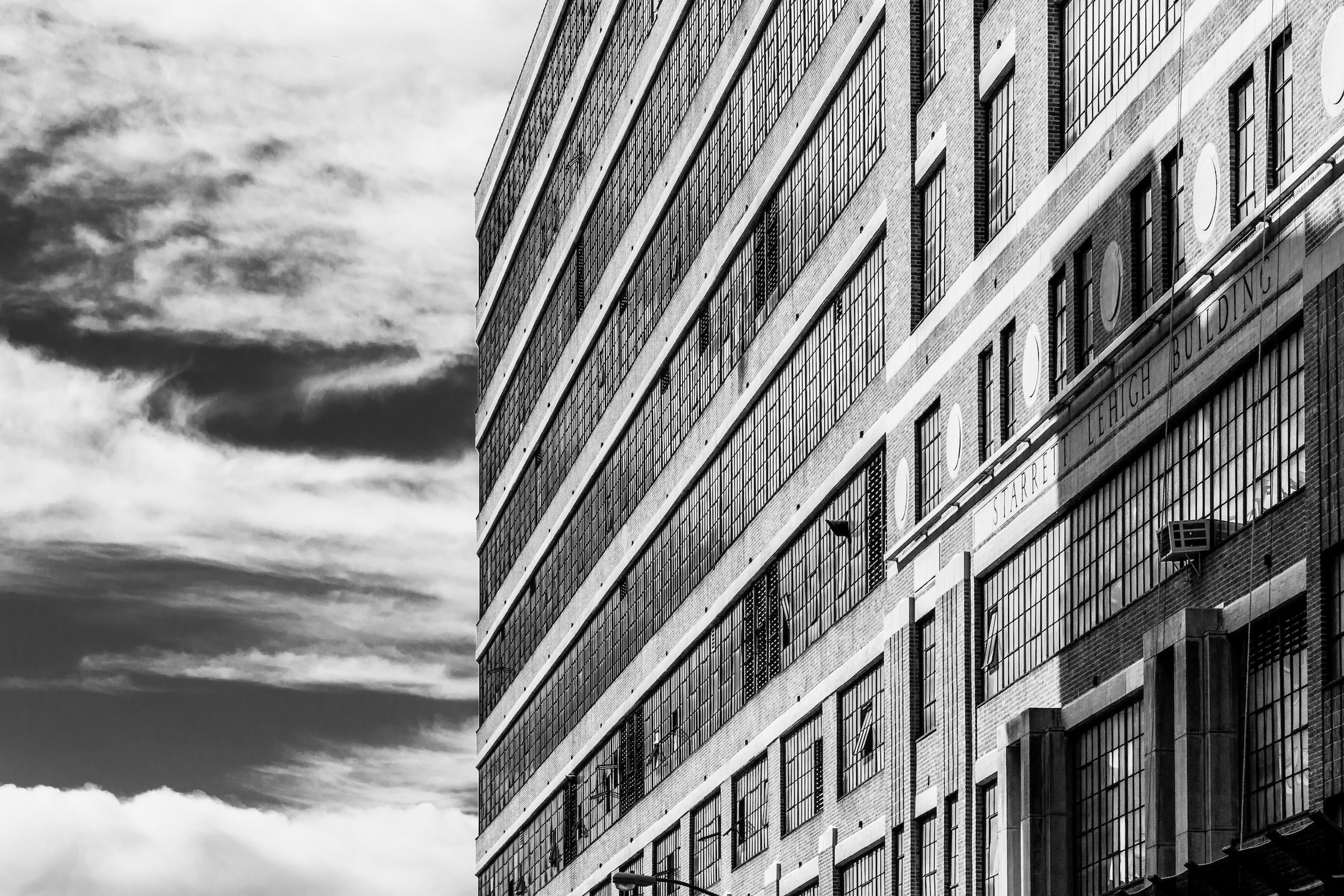
Chelsea - Manhattan - Starrett Lehigh Sky
The long industrial façade functions like a ruler against the cloud layers, making the sky read as stacked bands rather than “background.” This works best when you keep the building’s lines clean and let the sky carry the tonal drama.
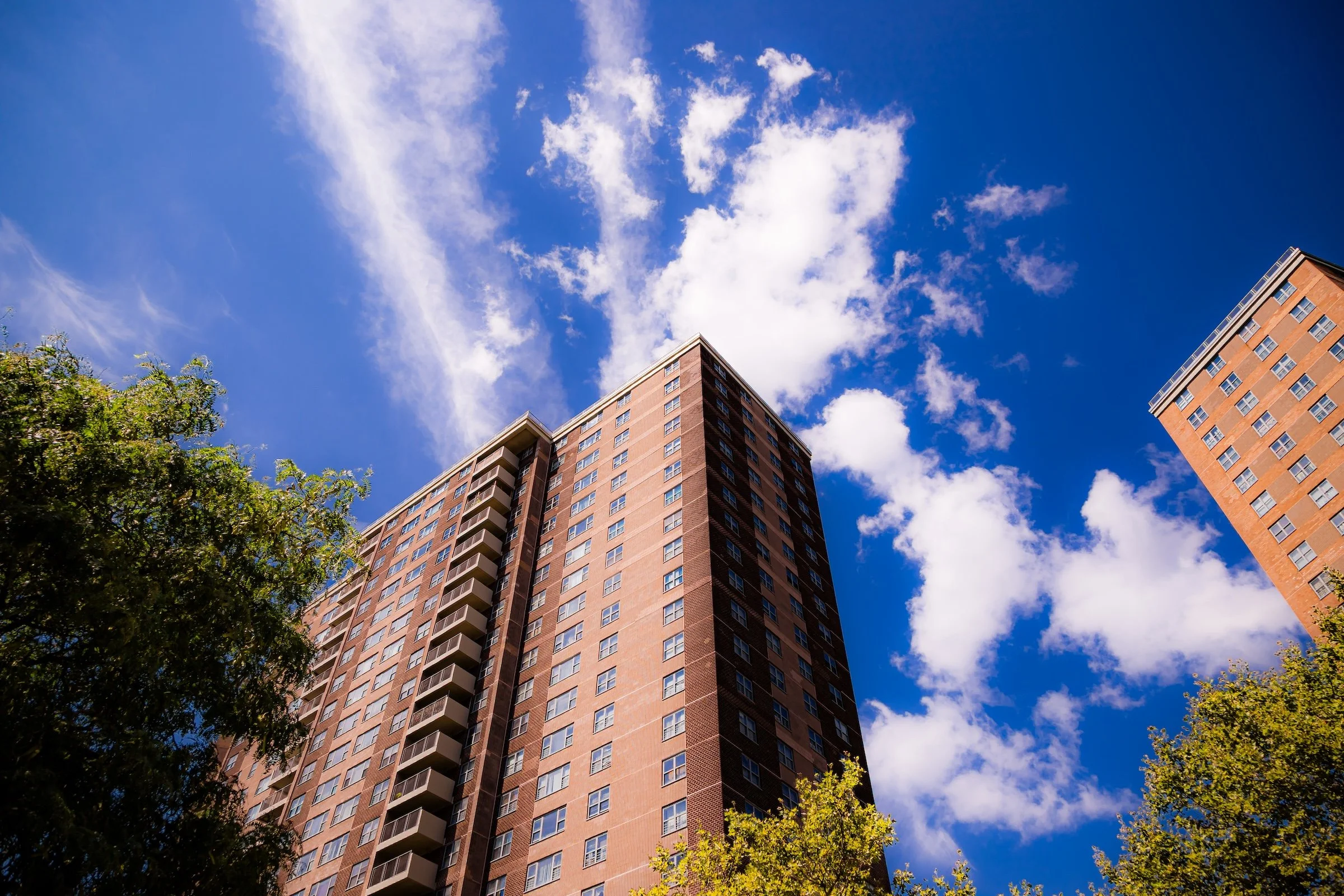
Co-Op City - The Bronx - Dreiser Skies
Here the sky is spacious, bright, and active—blue depth with cloud motion—while the towers anchor the frame like cornerstones. The drama comes from scale: wide atmosphere above, dense city below, and a viewpoint that makes the buildings feel like they’re reaching into weather.
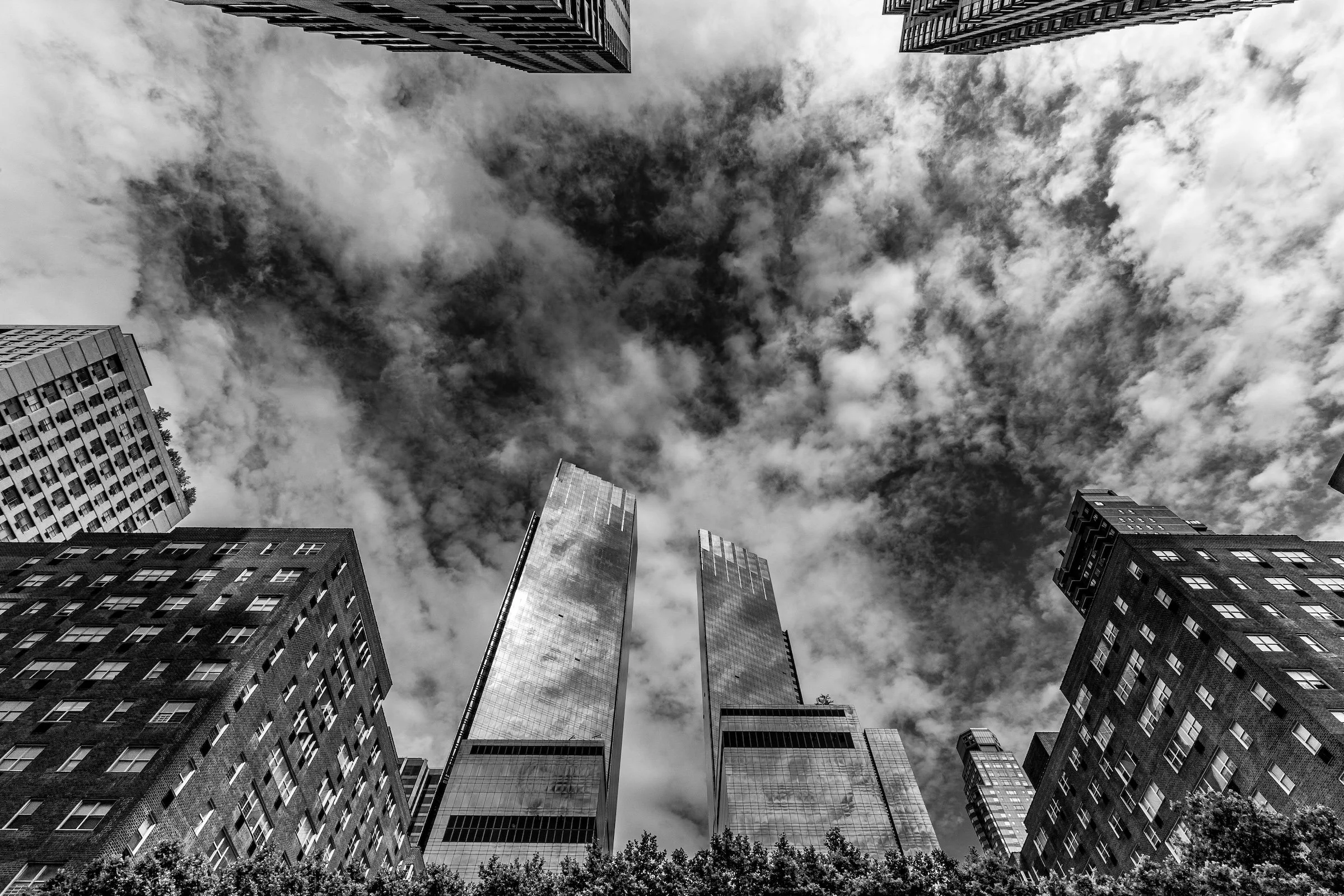
Lincoln Square - Manhattan - Time Warner
The upward canyon view turns the sky into a turbulent ceiling—texture and contrast pressed between city walls. In black and white, the cloud detail becomes almost geological, and the buildings read as dark, stabilizing edges that keep the chaos contained.
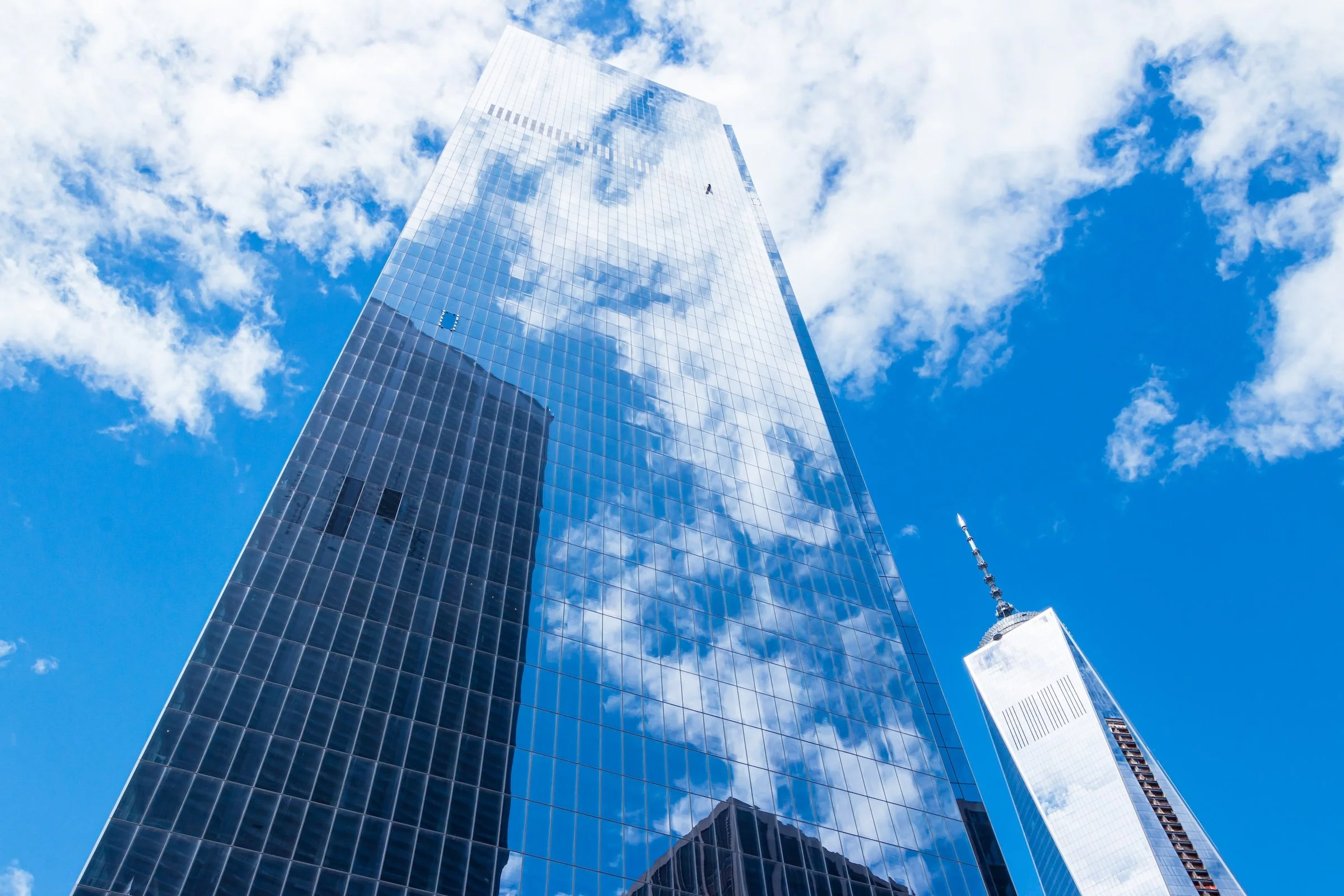
World Trade Center - Manhattan - WTC Sky
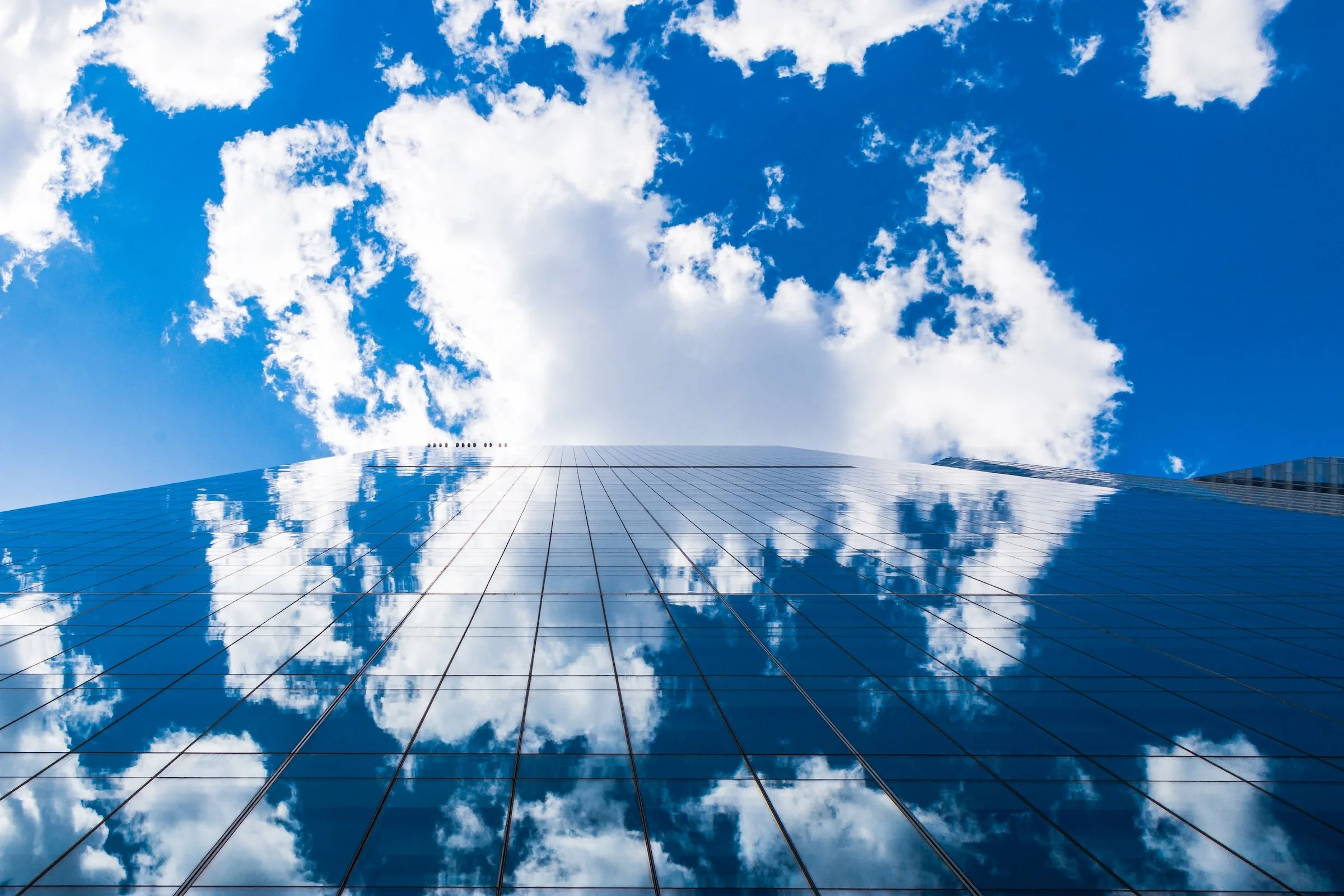
This is Sky Dramatic through clarity: big blue, crisp clouds, and reflective glass that doubles the atmosphere into the architecture itself. When the sky is this clean, the move is minimalism—let the reflection and the vertical rise do the heavy lifting.
Storm Weight and City Tension (When Weather Adds Pressure)
These examples lean into atmosphere as mood: looming clouds, heavy gradients, and skies that make the city feel cinematic and charged.
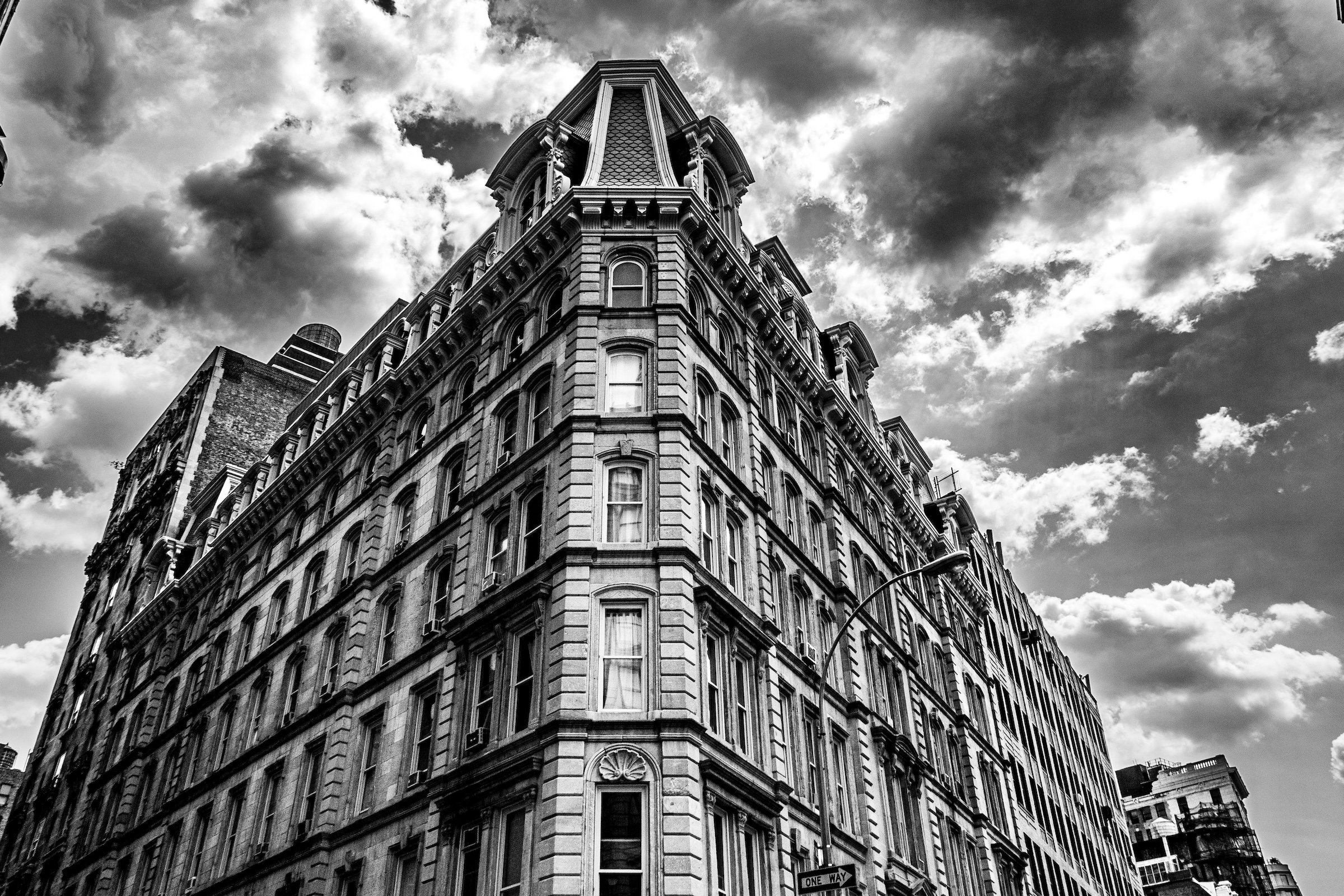
Empire District (Tenderloin) - Manhattan - Classic Broadway
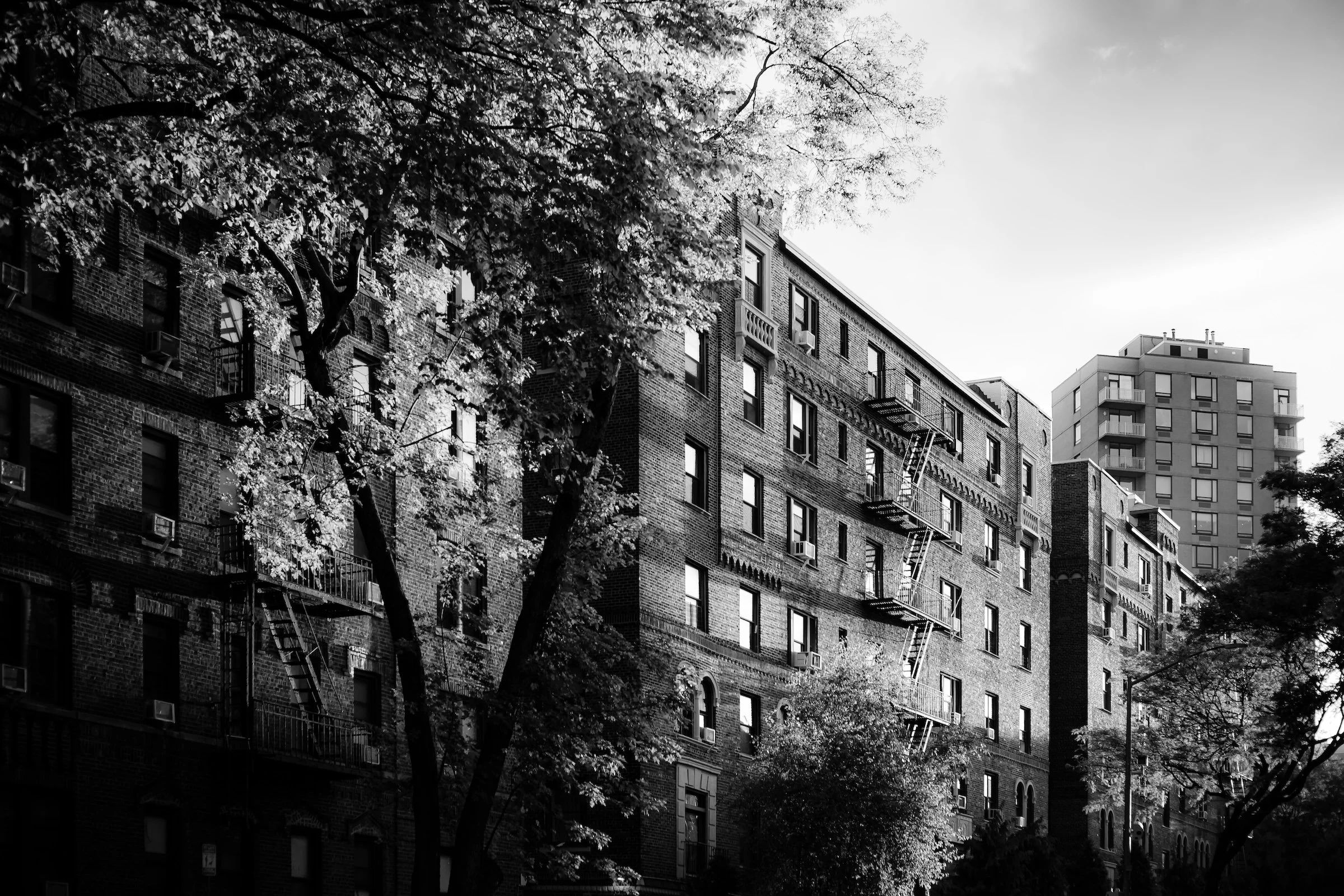
A classic New York corner becomes mythic when the sky turns theatrical—bright breaks, deep shadows, and high tonal separation. This is a great reminder that Sky Dramatic doesn’t require a “storm”; it requires a sky that sculpts the subject with contrast.
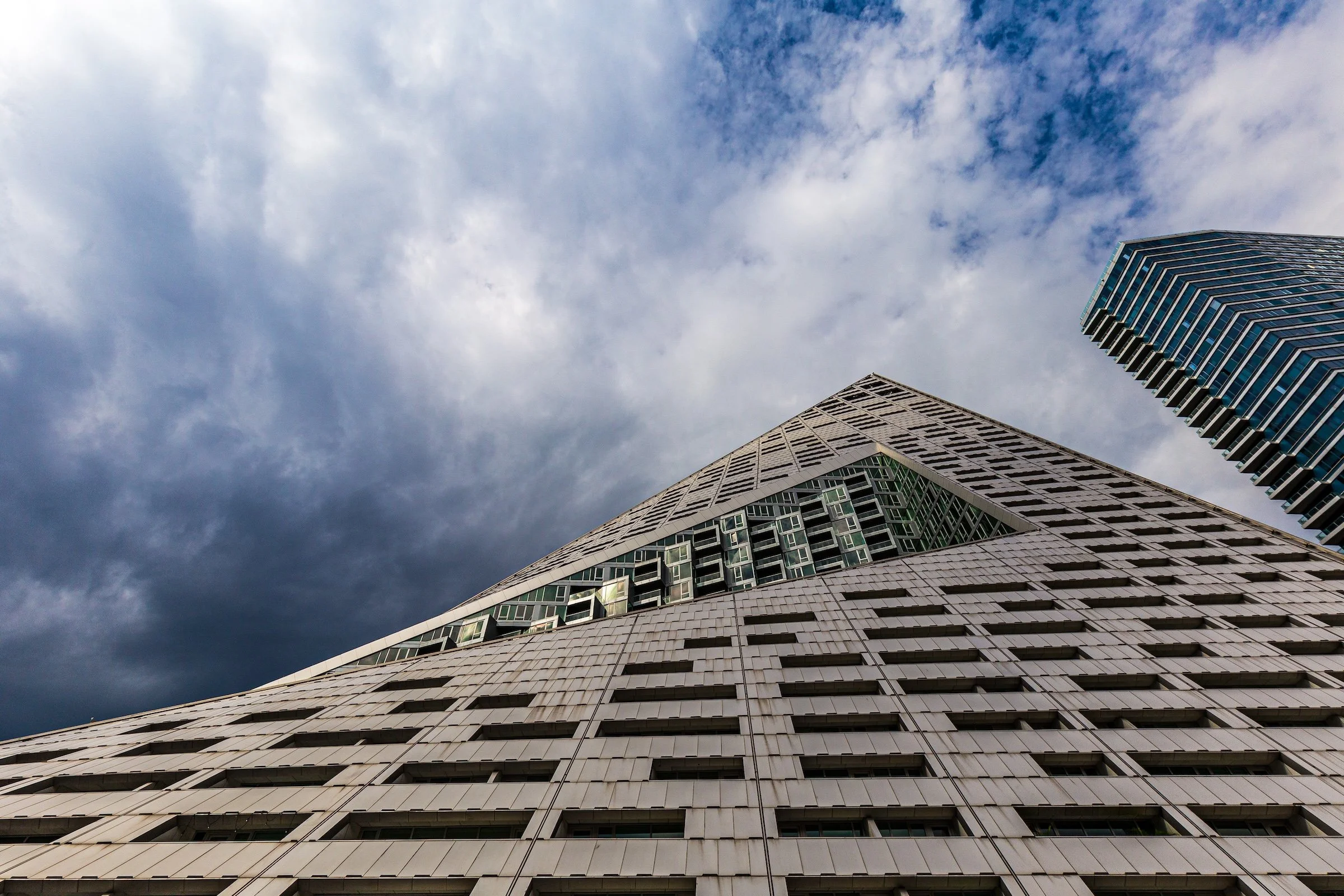
Hell's Kitchen (Clinton) - Manhattan - VIA
The sky here isn’t just dark—it feels directional, like weather moving through the frame. The building angles amplify that motion, and the composition succeeds because the clouds create tension while the architecture provides a sharp, graphic counterpoint.
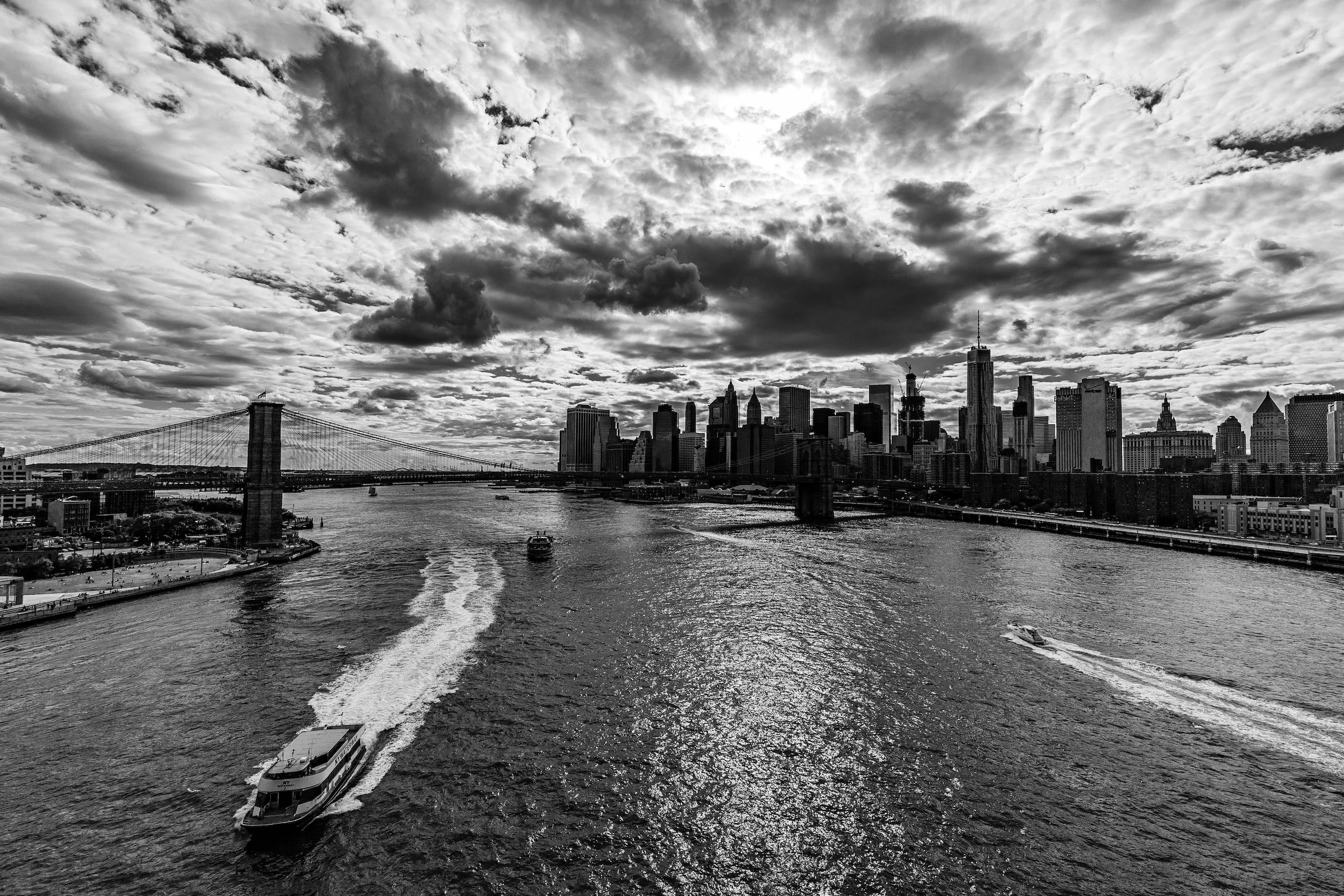
Two Bridges - Manhattan - East River Wake
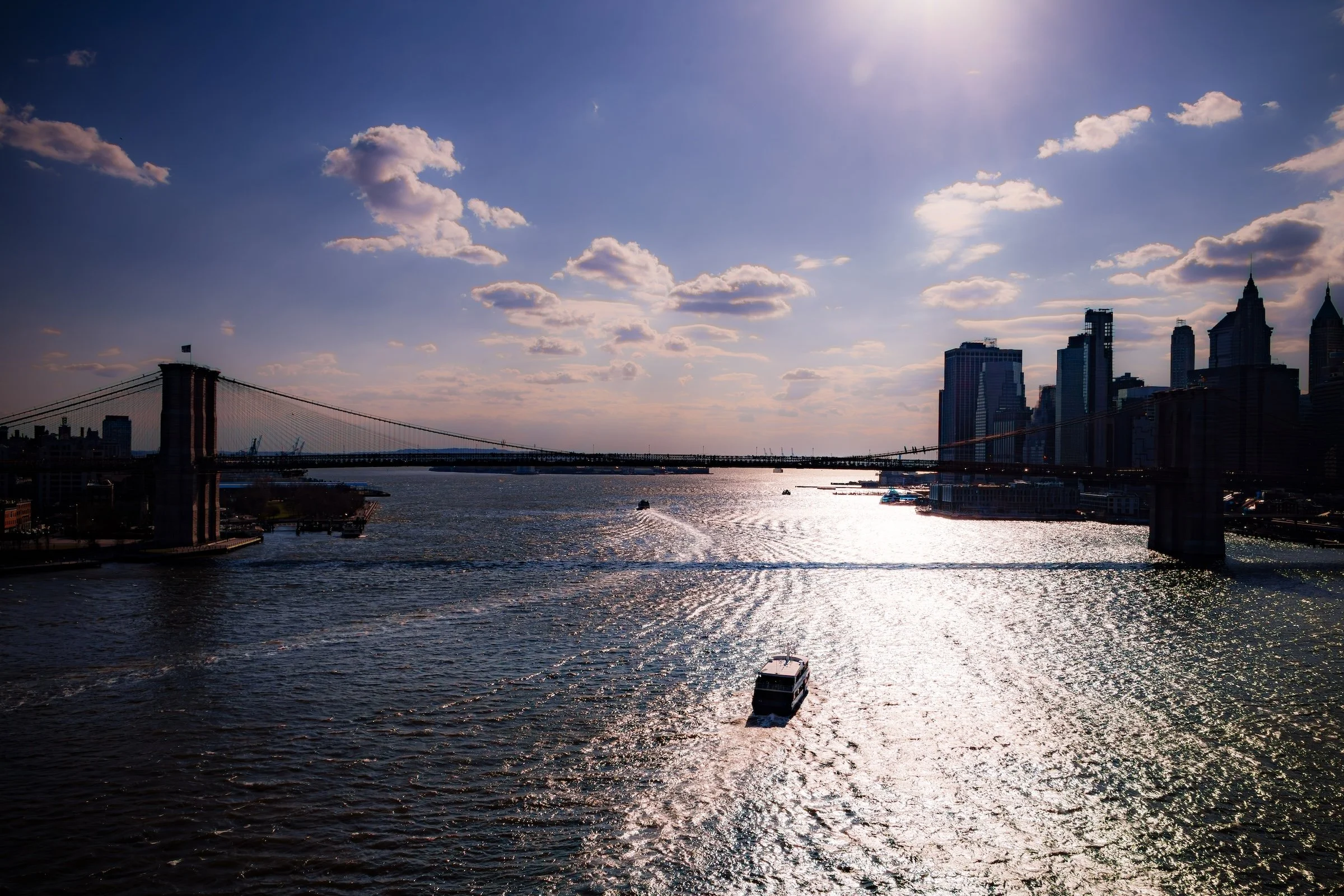
The skyline sits under a sky that reads like a roiling canopy—big tonal range, layered cloud mass, and a luminous break that pulls the eye toward the city. The wake and water texture echo the cloud turbulence, tying sky and ground into one continuous drama.
Sky Events and Texture (Bursts, Fields, and Rare Color)
These are the moments where the sky becomes a distinct phenomenon—sunburst, patterned cloud fields, and that once-in-a-while gift: a rainbow.
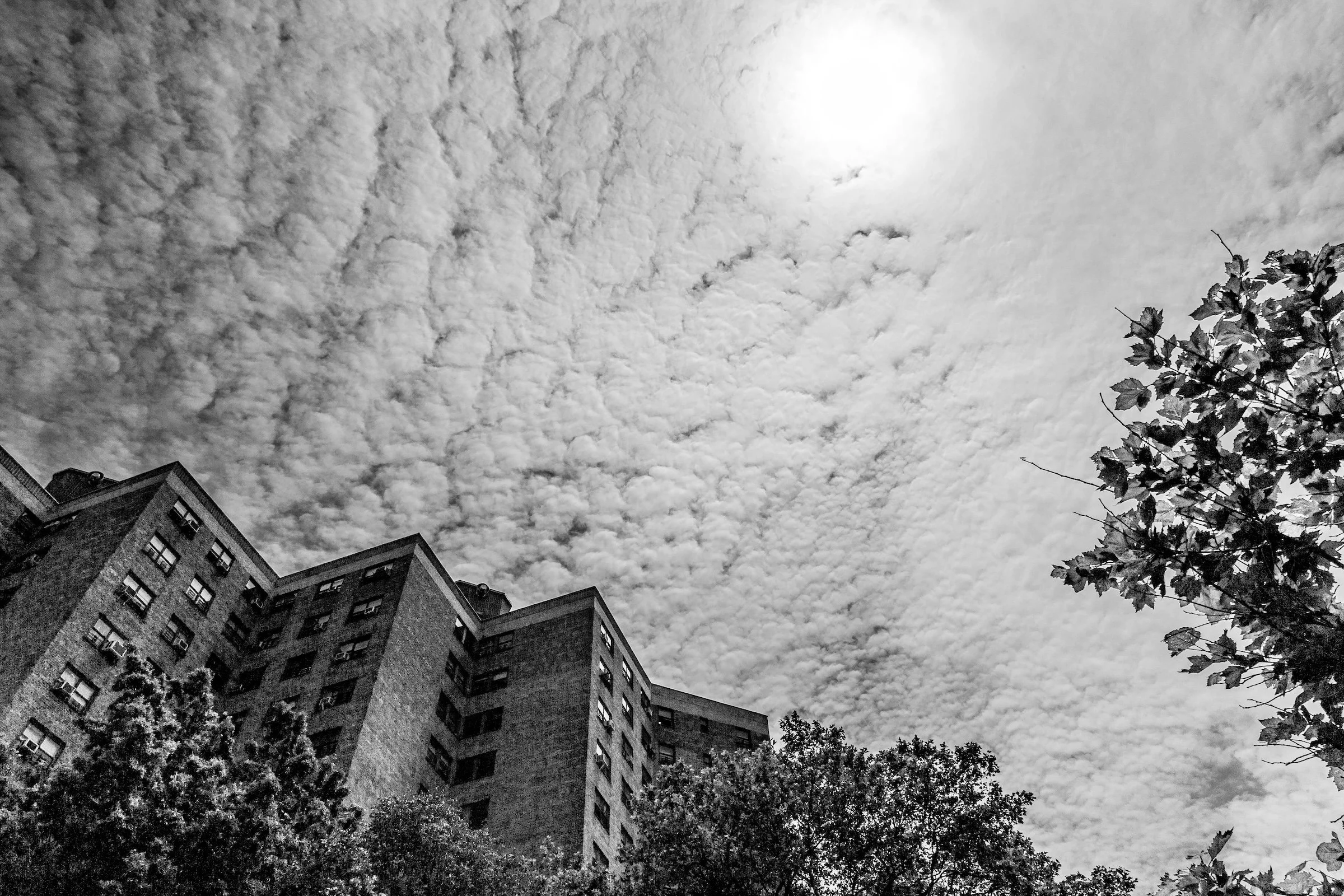
Lower East Side - Manhattan - Baruch Sunburst
The sun becomes a puncture through texture, turning the sky into an active light source rather than a passive ceiling. Frames like this reward restraint: keep the foreground simple, protect the highlights, and let the burst “announce” the mood.
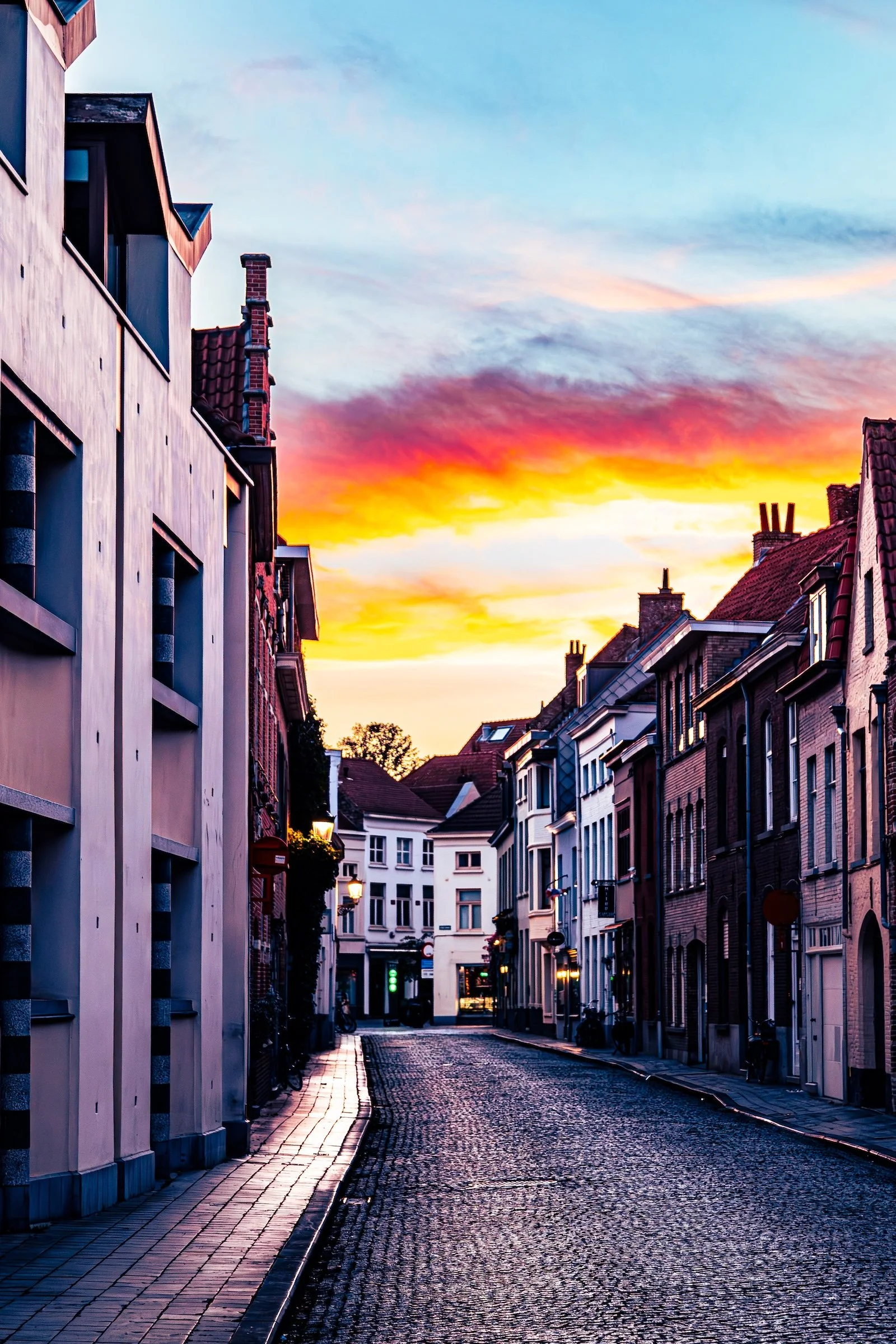
Magdalena Quarter - Brugge - Driekroezenstraat Rainbow
This is atmosphere as narrative: warm horizon glow, cooler upper sky, and a rainbow that turns an ordinary street into a once-only stage. When the sky hands you a rare event, simplify your choices—strong leading lines, stable horizon, and let the color do the storytelling.
Explore Further