
Geographic Setting
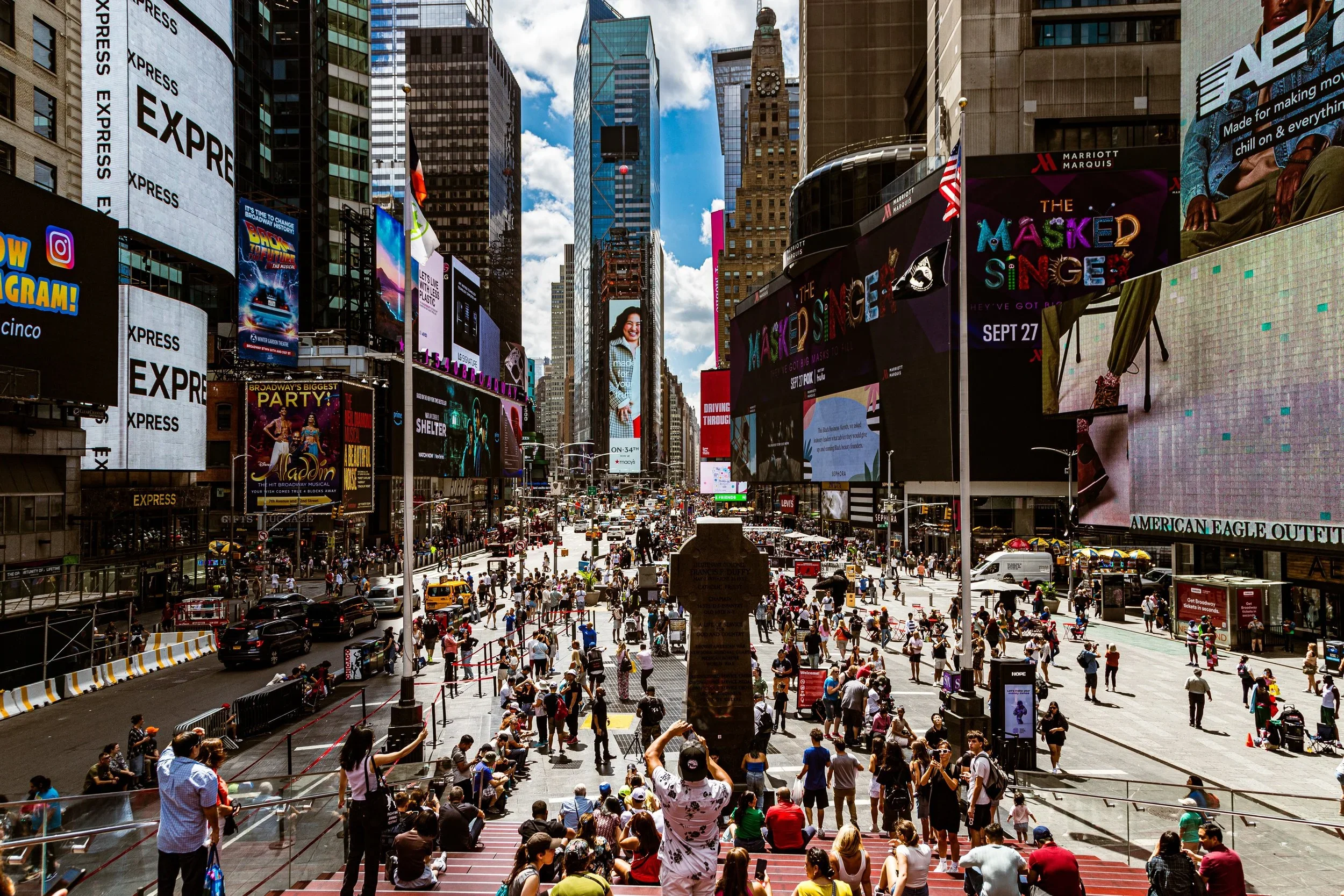
Bounded by West 40th Street to the south and West 53rd Street to the north, and stretching from Eighth Avenue eastward to Sixth Avenue, the Theater District—anchored by Times Square—is the pulsating heart of New York’s entertainment world and one of the most storied urban crossroads on Earth. It lies at the meeting point of Midtown and Hell’s Kitchen, radiating outward from Broadway and Seventh Avenue, which intersect at 42nd Street beneath the blazing canopy of neon and LED lights.
Within this grid stands a dense constellation of theaters—majestic houses like the Shubert, Majestic, Palace, Winter Garden, and New Amsterdam—along with hotels, restaurants, studios, and rehearsal spaces that collectively define the Broadway theater industry. Above street level, glass towers house media firms, production companies, and global brands, while at the street’s surface flows an unending tide of visitors, performers, and dreamers. The district’s layered geography—old marquees beside new skyscrapers—mirrors the rhythm of the city itself: tradition illuminated by perpetual reinvention.
Etymology and Origins
The Theater District’s identity is inseparable from Times Square, which takes its name from The New York Times. In 1904, publisher Adolph S. Ochs moved the paper’s headquarters to a new tower at 42nd Street and Broadway—then called Longacre Square—and persuaded the city to rename the plaza Times Square. That same year, electric lights illuminated the newly built Times Tower, heralding both a new century and a new civic icon.
The “Broadway” label, however, predates the name “Times Square.” The street itself—once part of the colonial Bloomingdale Road—had been associated with theaters since the late 19th century, when producers, driven north from Union Square and Herald Square by rising rents, began establishing playhouses in the 40s and 50s blocks. By the 1910s, the Broadway corridor between 40th and 53rd Streets was home to more than forty theaters, creating a district unlike any in the world: a place where architecture, performance, and commerce merged into spectacle.
The Neighborhood
Early 20th Century: The Birth of Broadway’s Golden Mile
The first decades of the 20th century marked the Theater District’s meteoric rise. Oscar Hammerstein I’s Victoria Theatre (1899) at 42nd Street and Seventh Avenue helped inaugurate the new “Broadway” north. Theaters multiplied along West 44th, 45th, and 47th Streets, each designed in ornate styles ranging from Beaux-Arts to Neoclassical. The New Amsterdam Theatre (1903), with its Art Nouveau interiors, became home to Florenz Ziegfeld’s Follies, setting the standard for Broadway glamour.
As electric signage transformed the skyline, Times Square became synonymous with spectacle. Its first New Year’s Eve celebration, held in 1904, drew thousands; by 1907, the first illuminated ball drop inaugurated a ritual that would become global. Hotels like the Astor, Knickerbocker, and Algonquin catered to performers, producers, and patrons, while restaurants such as Sardi’s (opened 1927) became gathering places for theatrical society.
The district’s energy was inseparable from its contradictions—high art beside hustle, creative ambition amid relentless commercialism. Vaudeville, musical comedy, and experimental drama all coexisted in an ecosystem that made Broadway the benchmark of American entertainment.
Mid-20th Century: Neon, Fame, and Decline
The interwar years and midcentury decades brought both glitter and grit. The 1920s and 1930s saw Broadway’s golden age, when composers like George Gershwin, Cole Porter, and Irving Berlin redefined American music and playwrights such as Eugene O’Neill and Clifford Odets gave voice to national drama. The neighborhood’s theaters, adorned with blazing marquees, became symbols of cultural aspiration.
However, postwar shifts brought challenges. The spread of television, suburbanization, and the city’s economic decline eroded audiences in the 1950s–1970s. Times Square, once glamorous, deteriorated into a landscape of neon fatigue—strip clubs, grindhouse cinemas, and adult bookstores filled the spaces once occupied by legitimate theaters. Crime and decay plagued the streets, even as a few determined producers and performers kept Broadway alive.
Amid decline, the architectural treasures of the district endured. The Shubert Organization and preservation advocates fought to save endangered playhouses from demolition. Their efforts culminated in the 1980s designation of the Broadway Theater District as a National Register Historic District, protecting forty-one theaters as landmarks. The lights never went out entirely—they merely dimmed before the next renaissance.
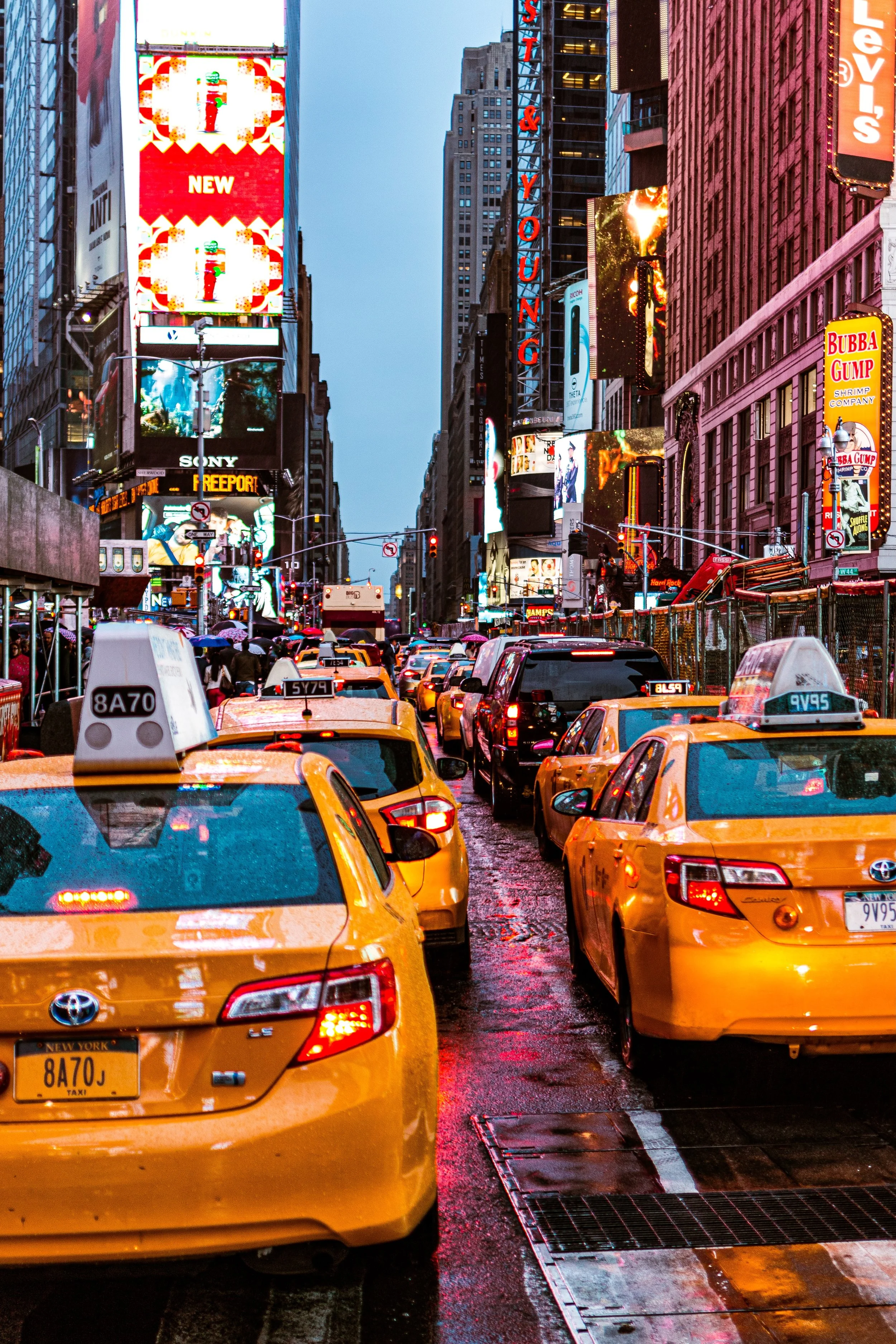
Theater District (Times Square) Photographic Tour
Late 20th Century: Rebirth and Renaissance
The Theater District’s renewal began in the 1980s and accelerated in the 1990s, through coordinated public and private efforts. Under Mayor Ed Koch and later Mayor Rudy Giuliani, the city launched major redevelopment initiatives. The 42nd Street Development Project, spearheaded by the New 42nd Street organization and the Times Square Alliance, restored historic theaters like the New Victory, Lyric, and Ford Center for the Performing Arts (now the Lyric Theatre). The city reclaimed the area from decades of neglect, replacing adult cinemas with family entertainment, restaurants, and hotels.
Disney’s restoration of the New Amsterdam Theatre (1997) symbolized the district’s rebirth, reopening with The Lion King and reestablishing Broadway as the epicenter of mainstream American theater. Towering billboards and LED screens replaced old neon, transforming Times Square into a 24-hour media spectacle—a global emblem of New York’s renewal.
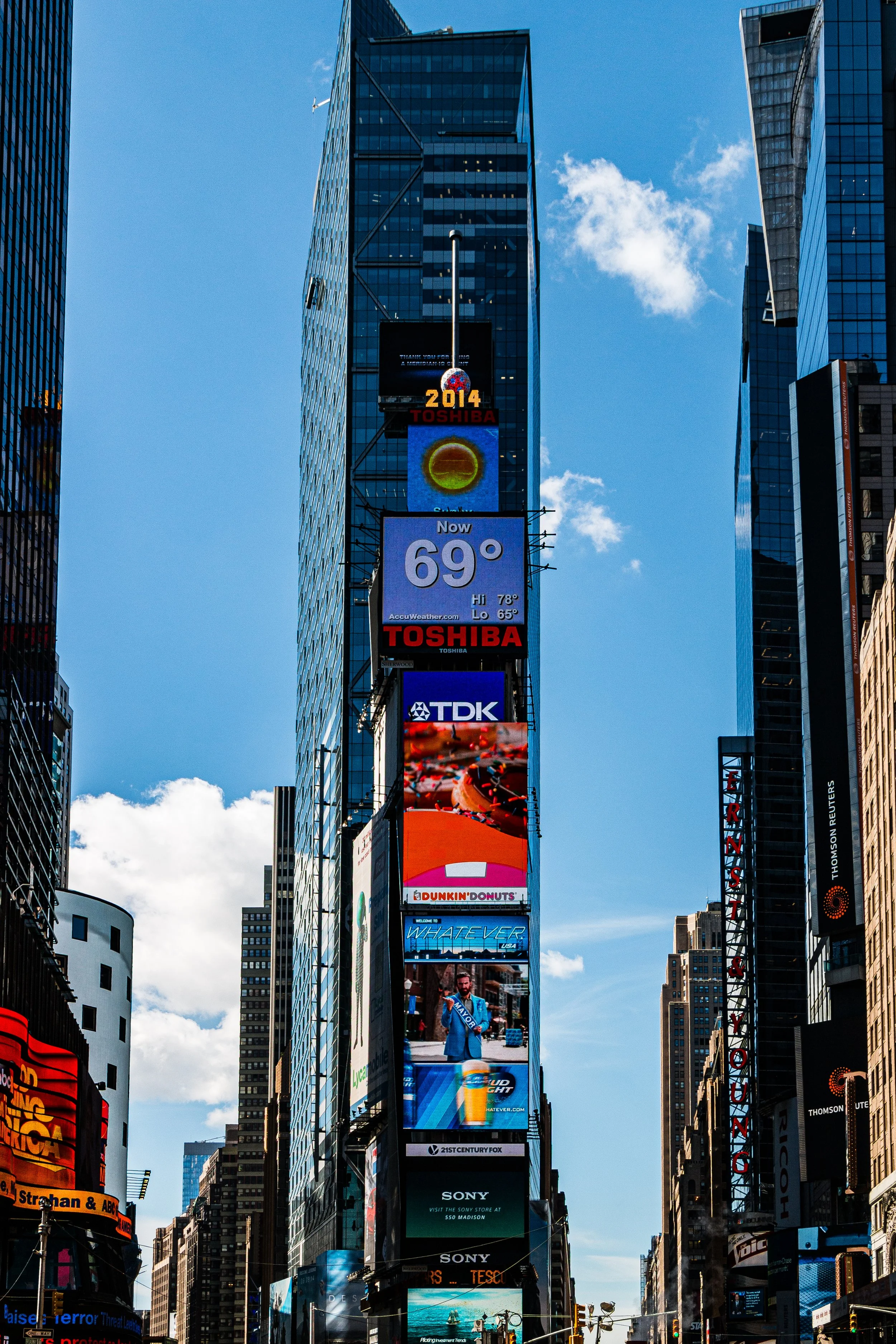
The area’s new skyline, anchored by One Times Square (site of the New Year’s Eve ball drop) and Condé Nast’s 4 Times Square, reflected a new civic confidence. By the dawn of the 21st century, the Theater District had reclaimed its dual identity: a historic core of live performance set within a neon-lit metropolis of commerce and tourism.
21st Century: Broadway’s Continuity and Global Reach
Today, the Theater District remains the beating heart of American performing arts. More than 40 active theaters, including the Richard Rodgers, Majestic, Minskoff, and Winter Garden, host productions that define the global standard for musical and dramatic performance. Long-running shows like The Phantom of the Opera (until 2023), Chicago, The Lion King, and Hamilton have turned the district into both pilgrimage site and creative laboratory.
Times Square itself has evolved into a pedestrian-friendly plaza, redesigned in 2009–2017 with expanded walkways, public seating, and performance spaces that reflect the city’s embrace of public life. Crowds of visitors—nearly 50 million annually—fill the streets day and night, making it one of the world’s most photographed locations. Yet even amid its commercial glow, the core of the Theater District remains tied to artistry and craft: backstage carpenters, costume makers, stagehands, and performers sustain a creative ecosystem that continues to reinvent itself.
The district also houses television studios, rehearsal halls, and institutions like the Actors’ Equity Building and Theater Row, ensuring that Broadway remains not only a place of spectacle, but a working neighborhood of artists.
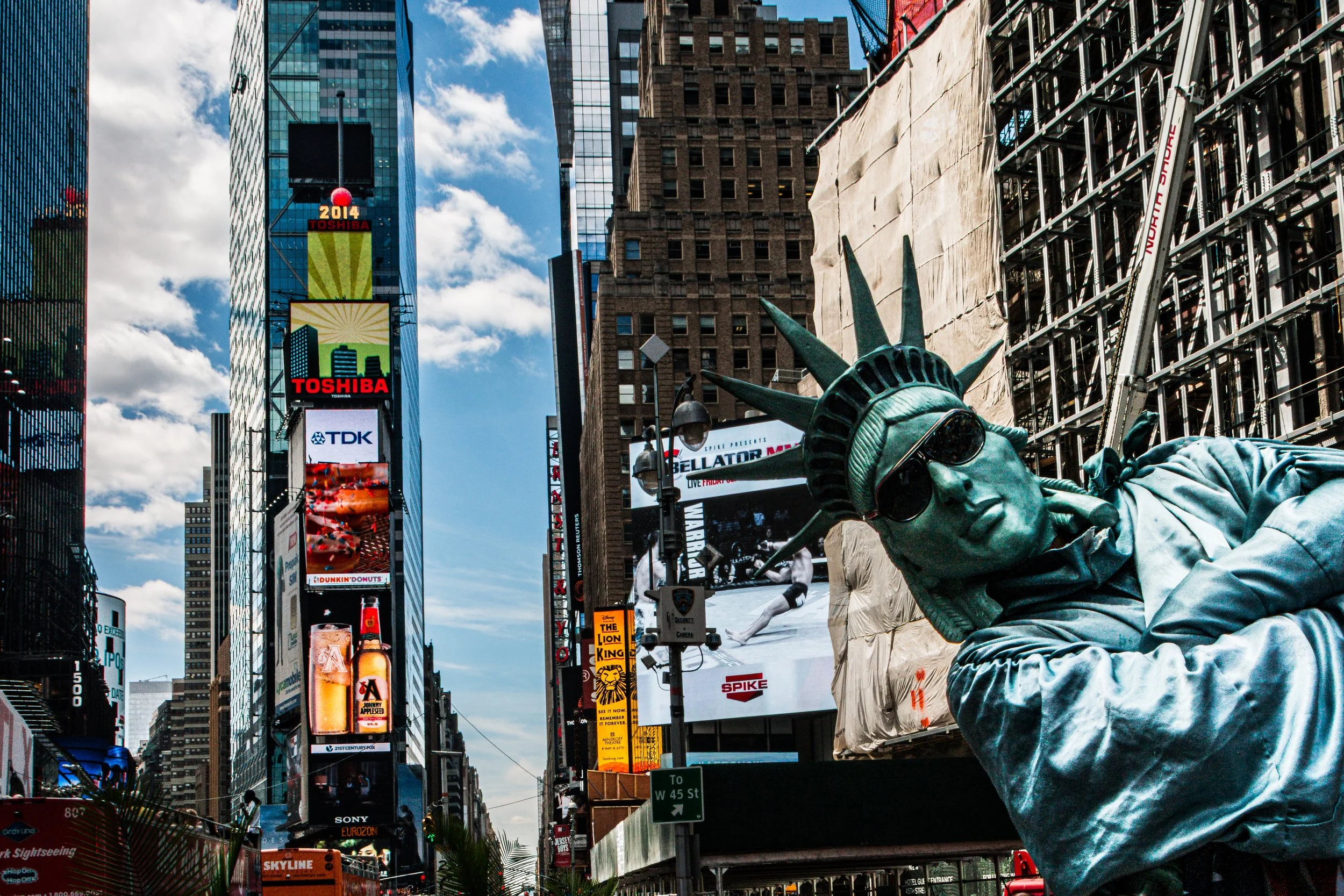
Theater District (Times Square) Photo Gallery
Spirit and Legacy
The Theater District embodies the spirit of New York’s perpetual performance—its resilience, reinvention, and refusal to fade. From gaslight to LED, from vaudeville to hip-hop musicals, its stages have mirrored the nation’s heartbeat and broadcast it to the world. The story of Times Square is one of redemption through creativity: a reminder that even the most commercialized square can remain sacred ground when art persists within it.
At night, as marquees ignite along West 44th and 45th Streets and the crowd’s roar mingles with the city’s pulse, the Theater District reveals its essence: spectacle as survival, community as chorus. It is the city’s eternal stage—a place where illusion becomes heritage, and every curtain call reaffirms the truth that Broadway is not merely a street, but a state of mind.
New York City
Use this custom Google map to explore where every neighborhood in all five boroughs of New York City is located.
The Five Boroughs
One of New York City’s unique qualities is its organization in to 5 boroughs: Manhattan, Brooklyn, Queens, The Bronx, and Staten Island. These boroughs are part pragmatic administrative districts, and part vestiges of the region’s past. Each borough is an entire county in New York State - in fact, Brooklyn is, officially, Kings County, while Staten Island is, officially Richmond County. But that’s not the whole story …
Initially, New York City was located on the southern tip of Manhattan (now the Financial District) that was once the Dutch colony of New Amsterdam. Across the East River, another city was rising: Brooklyn. In time, the city planners realized that unification between the rapidly rising cities would create commercial and industrial opportunities - through streamlined administration of the region.
So powerful was the pull of unification between New York and Brooklyn that three more counties were pulled into the unification: The Bronx, Queens, and Staten Island. And on January 1, 1898, the City of New York unified two cities and three counties into one Greater City of New York - containing the five boroughs we know today.
But because each borough developed differently and distinctly until unification, their neighborhoods likewise uniquely developed. Today, there are nearly 390 neighborhoods, each with their own histories, cultures, cuisines, and personalities - and each with residents who are fiercely proud of their corner of The Big Apple.