
NOMAD
Manhattan
Neighborhood Profile
Short for "North of Madison Square Park," NoMad is a high-style district where historic Beaux-Arts architecture meets the cutting edge of New York’s hotel and culinary scenes. Once the heart of "Tin Pan Alley," the neighborhood has been reborn as a sophisticated crossroads of luxury residences and creative tech hubs, all centered around the lush greenery and iconic views of Madison Square.
Geographic Setting
Bounded by West 23rd Street to the south and West 30th Street to the north, and stretching from Sixth Avenue (Avenue of the Americas) to Madison Avenue, NoMad—an abbreviation for “North of Madison Square”—occupies a vital and resurgent stretch at the heart of Manhattan. Once a Gilded Age hotel district, later a wholesale corridor, it has reemerged in the 21st century as one of the city’s most vibrant intersections of history, design, and contemporary urban life.
Its geography places it at the nexus of multiple worlds: Chelsea to the west, Murray Hill to the east, Flatiron below, and Midtown South just above. The centerpiece of the district, Madison Square Park, lies just beyond its southern border, but its influence radiates northward—tree-lined streets, restored prewar façades, and adaptive reuse of historic buildings into boutique hotels, luxury apartments, and creative offices. The neighborhood’s urban fabric blends late-19th-century grandeur with modern energy: iron-and-brick lofts flank sleek new towers, while wide avenues—Broadway, Fifth Avenue, and Madison Avenue—serve as its organizing arteries. Day and night, NoMad hums with a mix of old New York elegance and global sophistication.
Etymology and Origins
The name “NoMad” emerged in the early 2000s, coined by urban planners and real estate developers to describe the area immediately north of Madison Square Park. But its origins lie in the 19th century, when this part of Manhattan was known simply as Madison Square North—a genteel residential and hotel district that formed part of the city’s Gilded Age social core. By embracing the portmanteau “NoMad,” the neighborhood acknowledged both continuity and rebirth: an identity rooted in its proximity to Madison Square yet redefined by creative reinvention.
Before its rise as a fashionable address, this land formed part of the old Ruggles Farm, parceled into city lots after the Commissioners’ Plan of 1811. The opening of Madison Square Park in the 1840s spurred northward migration of Manhattan’s elite from Washington Square, setting the stage for NoMad’s golden age.
The Neighborhood
19th Century: From Mansion Row to Hotel Capital
In the mid-1800s, NoMad blossomed as one of New York’s premier residential and cultural quarters. The construction of Madison Square Park (1847) transformed the surrounding blocks into a magnet for affluence and architecture. Elegant brownstones and townhouses lined Fifth Avenue, while private carriage houses and clubs filled the midblocks. By the 1870s, the area had evolved into the city’s grandest hotel district—an epicenter of urban society.
Landmarks of this era included the Fifth Avenue Hotel (1859) at 23rd Street and Fifth Avenue, among the first buildings in the city to feature elevators, and the Gilsey House Hotel (1871) at Broadway and 29th Street, an opulent cast-iron masterpiece by architect Stephen Decatur Hatch. The Hoffman House, Victoria, and Brunswick Hotels followed, turning the area into a magnet for politicians, artists, and socialites. Delmonico’s Restaurant, relocated to Fifth Avenue and 26th Street in 1876, hosted the city’s elite dining society, while the Madison Square Theatre and Lambs Club brought theater and culture to the district.
Alongside luxury, progress took shape: Madison Avenue (opened 1836, extended northward) provided a quieter alternative to bustling Fifth, and Broadway became a parade route for civic celebrations. By century’s end, NoMad’s streets reflected New York’s ascent as a modern metropolis—a blend of refinement, innovation, and spectacle.
Early 20th Century: Commerce Replaces the Carriage Trade
As the city’s social elite moved uptown to the new mansions along Central Park, NoMad’s hotels and residences gradually gave way to commerce. The early 1900s saw the rise of wholesale trade, publishing, and textile showrooms within its sturdy masonry buildings. The lofts that replaced brownstones were utilitarian yet beautifully crafted—terra-cotta façades, large arched windows, and cast-iron columns suitable for manufacturing and display.
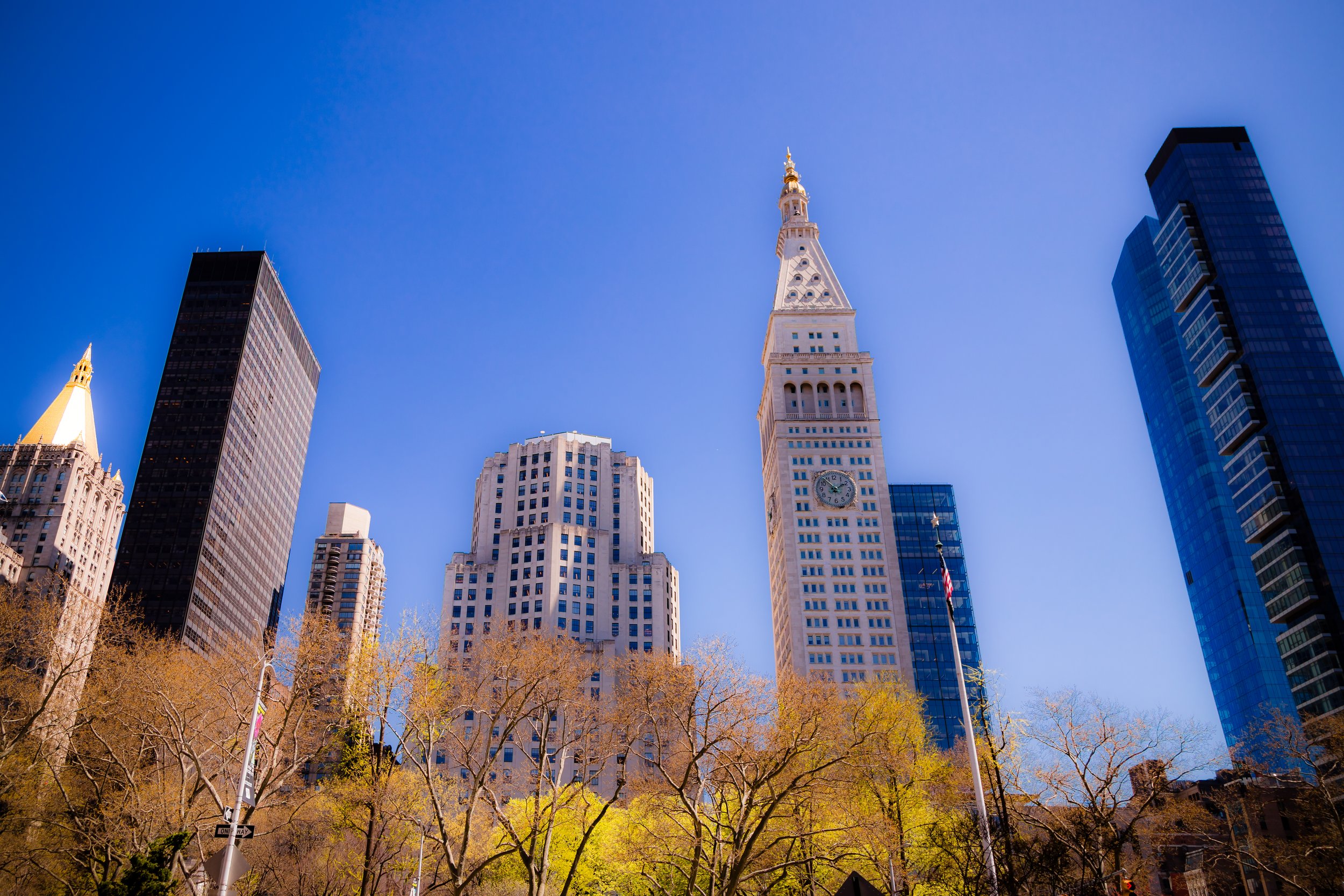
Among the area’s enduring landmarks from this period is the New York Life Building (Cass Gilbert, 1928) at Madison Avenue and 26th Street, whose gilded pyramid crown still commands the skyline. The nearby Metropolitan Life Insurance Tower (1909)—once the tallest building in the world—symbolized corporate modernity. Though technically just south of NoMad, its shadow defined the district’s northern visual horizon for decades.
The early 20th century also saw the establishment of numerous clubs and institutions, including the Gertrude Rhinelander Waldo Mansion (now Ralph Lauren’s flagship), the Prince George Hotel (1904), and the Church of the Transfiguration (1850), fondly known as the “Little Church Around the Corner.” By the 1930s, NoMad had transitioned from social hub to the practical heart of Manhattan’s middle economy—its architecture solid, its streets industrious.
NoMad Photographic Tour
Mid–Late 20th Century: Industry, Decline, and Rediscovery
By midcentury, NoMad was dominated by the garment and toy trades, its loft buildings filled with showrooms and small manufacturers. The glamour of the Gilded Age had faded; neon signs and delivery trucks replaced gaslights and carriages. Yet its architectural bones endured. Many 19th-century structures survived intact, albeit under layers of grime and neglect.
In the 1970s and 1980s, as industry left Manhattan, NoMad entered a period of quiet decline. Vacant warehouses and wholesale shops defined its streets. However, its central location and sturdy building stock soon attracted a new wave of tenants—photographers, designers, and small publishers seeking affordable space near Midtown. The seeds of revitalization were sown through adaptive reuse, aided by the city’s landmark preservation movement, which recognized the historic significance of nearby Madison Square North Historic District (1999).
21st Century: Renaissance of Style and Culture
NoMad’s rebirth in the 21st century has been nothing short of transformative. Historic lofts have been meticulously restored, while new glass-and-steel towers rise with architectural sensitivity to the district’s heritage. The opening of The NoMad Hotel (2012) at Broadway and 28th Street symbolized the neighborhood’s reemergence as a center of urban elegance—its interiors by Jacques Garcia capturing the area’s Gilded Age soul for a new generation. Boutique hotels such as The Ace, The Evelyn, and The Ritz-Carlton NoMad (2022) followed, establishing the district as one of Manhattan’s most desirable destinations for travelers and residents alike.
The neighborhood’s creative economy flourishes in former showrooms now occupied by design firms, tech companies, and advertising studios. Dining and nightlife—spearheaded by the pioneering Eleven Madison Park, Scarpetta, and The Breslin—have redefined NoMad’s streets as corridors of culinary innovation. Public art and landscaping improvements along Broadway and 29th Street have revived its pedestrian life, reconnecting it with the renewed vitality of Madison Square Park.
Despite its transformation, NoMad has preserved its essential texture. The cast-iron facades of the Gilsey House, Baumann Brothers Furniture Building, and St. Sava’s Cathedral stand beside modern towers like 277 Fifth Avenue and Madison House, creating an architectural dialogue that bridges centuries.
NoMad Photo Gallery
Through The Lens
The Architectural Gateway of NoMad
The spirit of NoMad (North of Madison Square Park) is defined by its role as a historic and modern crossroads. During my 2014 documentation, I sought to capture the neighborhood's legacy as a grand architectural gateway, anchored by the iconic intersection of Broadway and Fifth Avenue.
Photographer's Insight:
The Definitive Flatiron: I focused on the "prow" of the Flatiron Building from a northern perspective (see “Flatiron Public Plaza” and “Flatiron Floral”). The brilliant August sunlight emphasizes the vertical rhythms of the facade, while the inclusion of the red flowering bushes in the foreground anchors the building within the living, seasonal pulse of the park.
Modernist Ascent: I sought to capture the "New NoMad" by documenting the sleek, dark glass of the One Madison tower (see “One Madison”). The building's minimalist, boxy silhouette stands in sharp contrast to the surrounding Beaux-Arts and Renaissance Revival masonry, reflecting the district's ongoing vertical evolution.
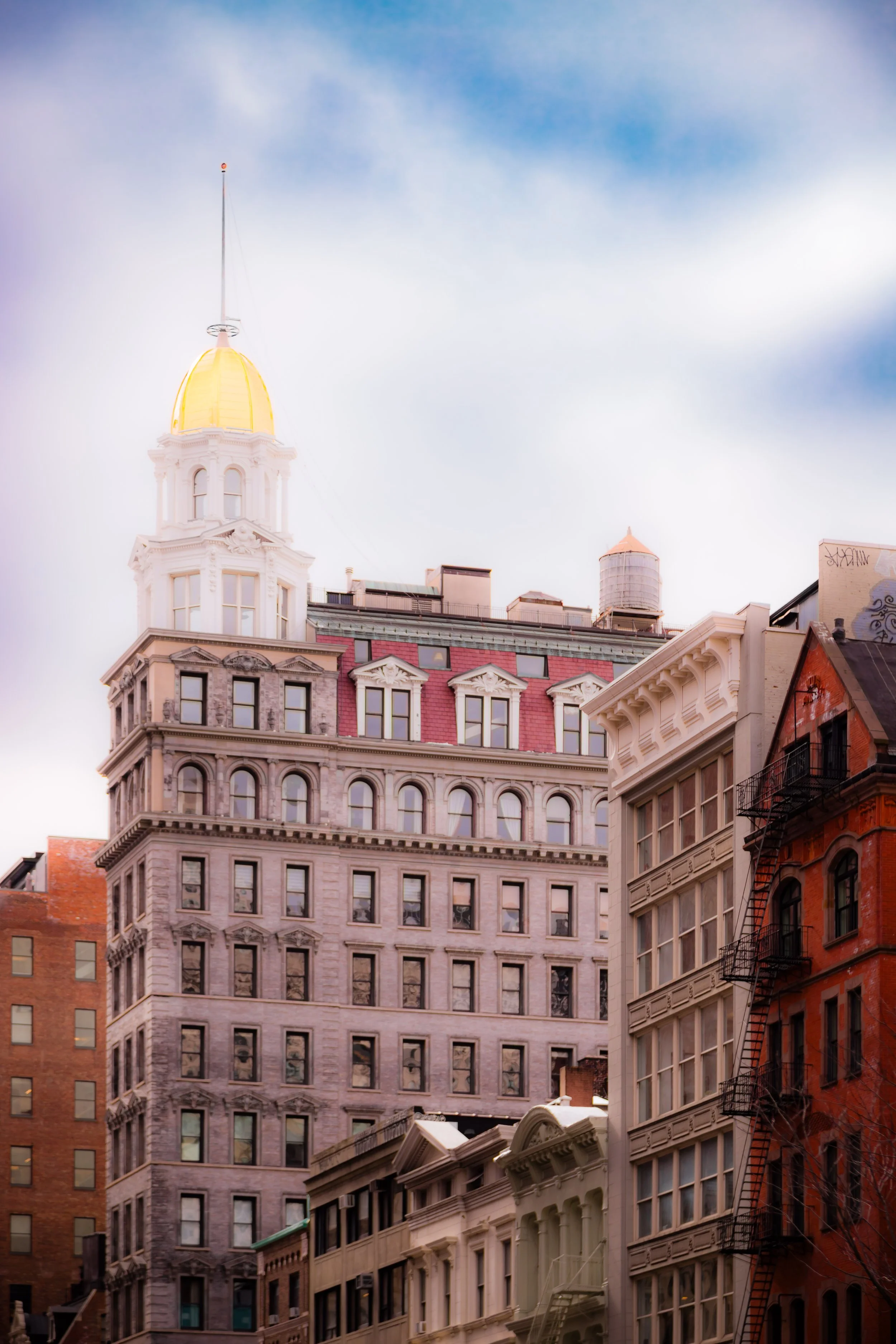
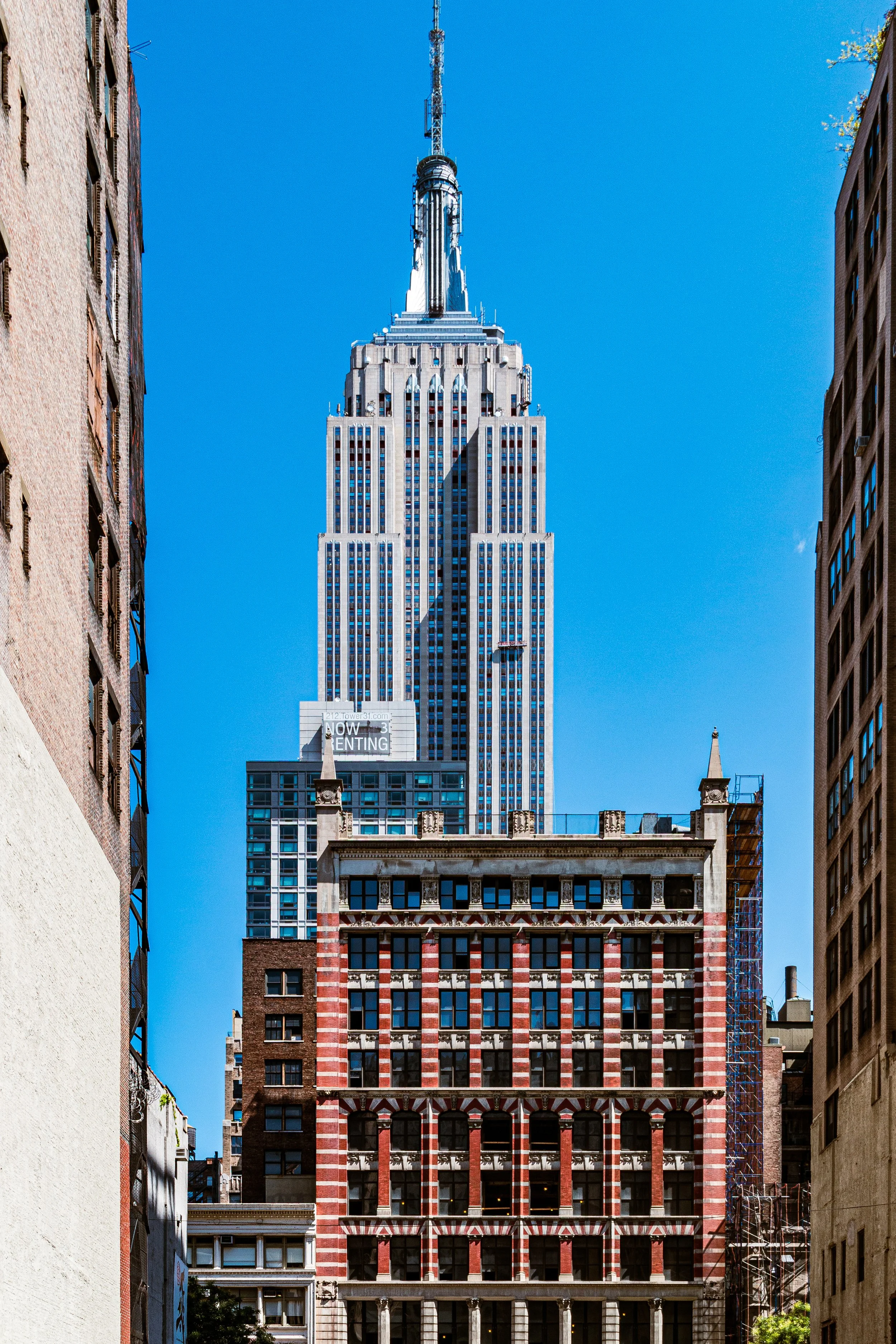
Ornamental Grandeur: I spent time documenting the ornate rooflines and dormer windows that define the older fabric of the district. Under the clear morning sky, the intricate stone carvings and iron railings are highlighted in high-relief, illustrating the district’s legacy of exceptional architectural craftsmanship.
Spirit and Legacy
NoMad’s story is one of cyclical reinvention—of luxury giving way to labor, industry to artistry, and history to renewal. Few places in New York so vividly capture the city’s capacity to adapt while honoring its past. From Gilded Age parlors to coworking lofts, from hotel ballrooms to Michelin-starred dining rooms, NoMad has continually redefined urban sophistication without erasing its origins.
NoMad District Field Notes
-
Field Note: August 10, 2014 | 09:40 AM
Conditions: 76°F | Humidity: 78% (Daily High)
My few minutes in NoMad yielded what I consider to be one of the definitive captures of the Flatiron Building in my entire collection (“Flatiron Floral”). The atmospheric conditions were singular: a vast, cloudless blue sky served as the perfect backdrop for the building’s limestone textures, while the lush, flowering planters in the foreground provided a vibrant, human-scaled contrast to the towering architecture of the district.
Other neighborhoods visited:
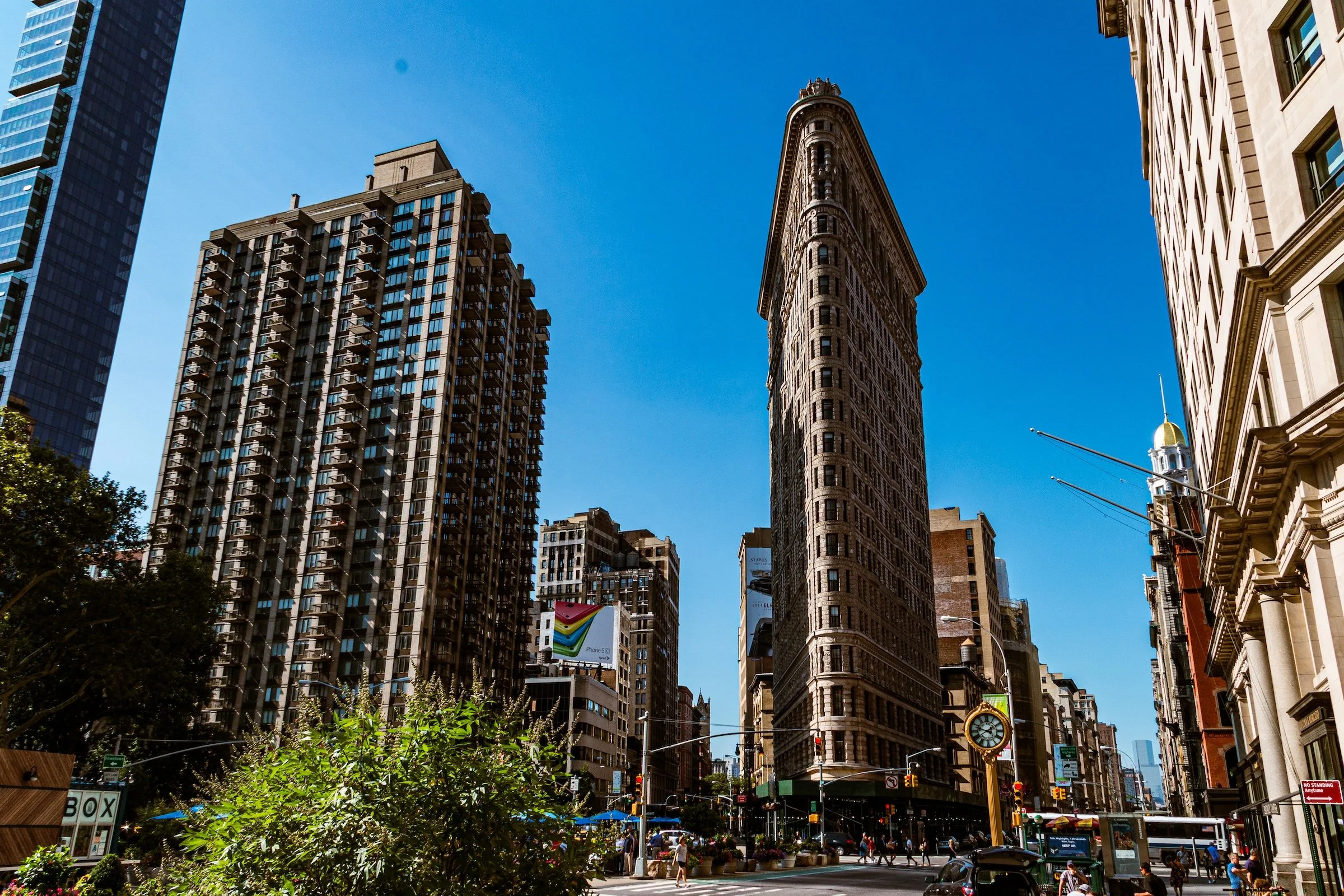
Flatiron Public Plaza - Click To Purchase Print
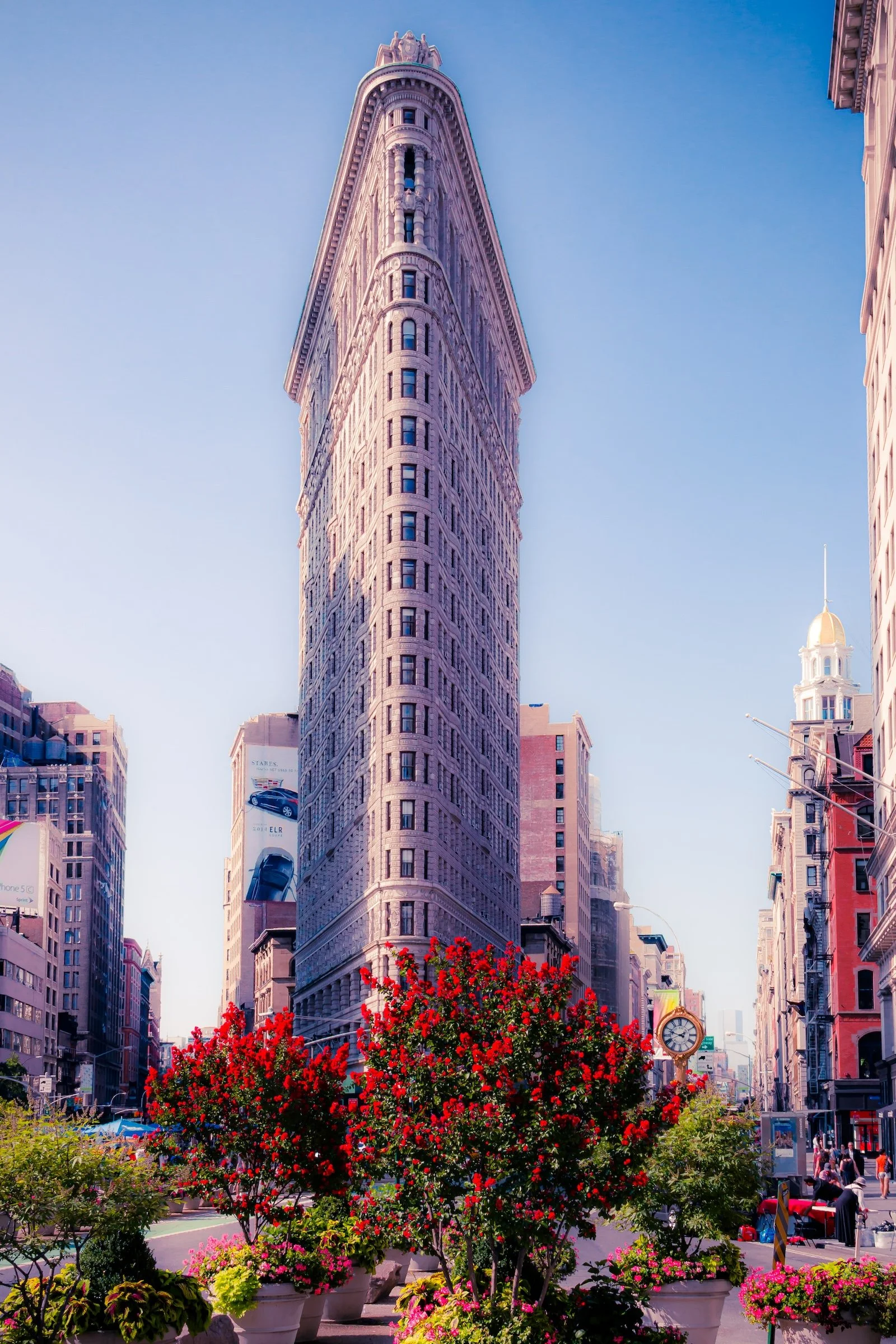
Flatiron Floral - Click To Purchase Print
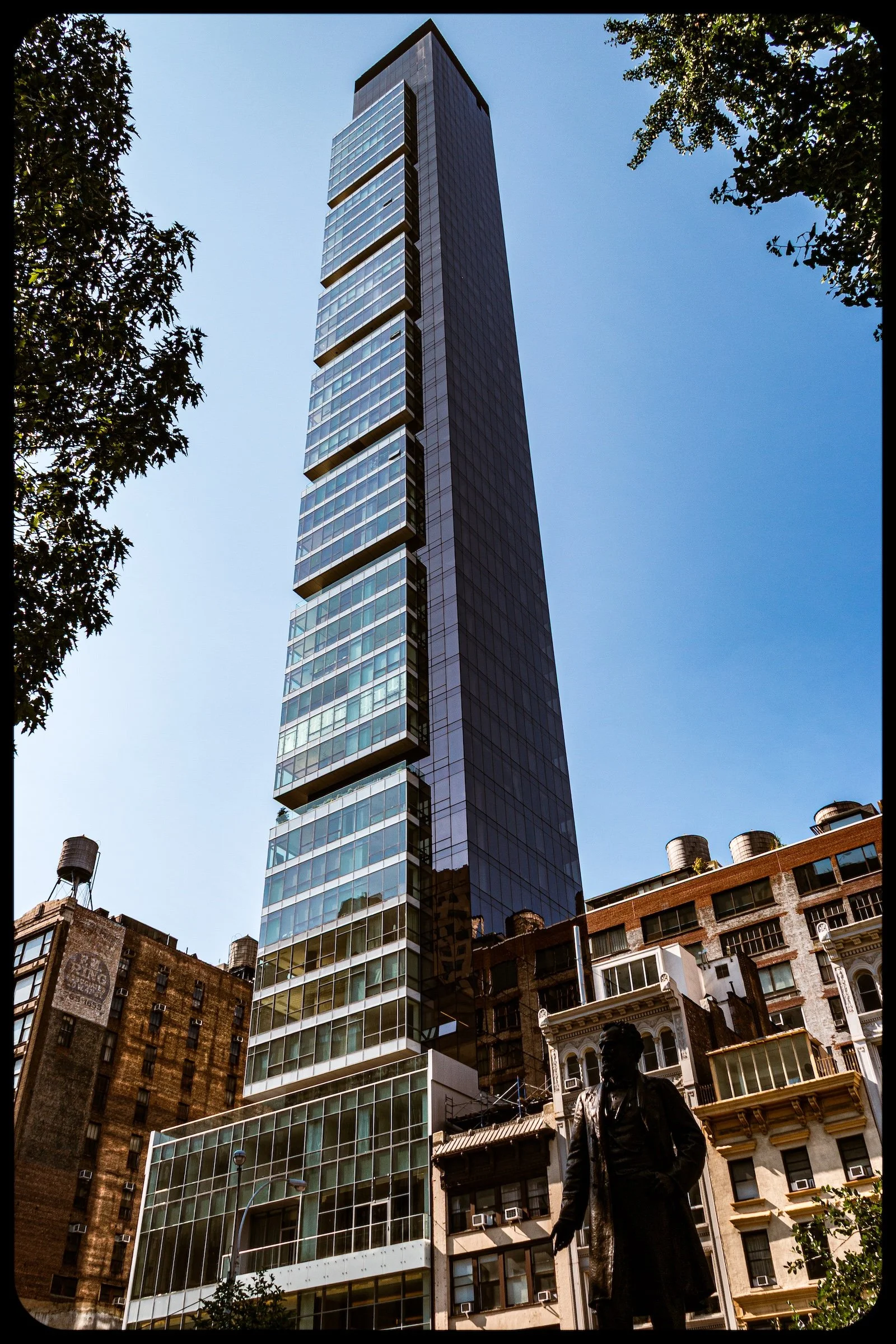
One Madison - Click To Purchase Print
Use this custom Google map to explore where every neighborhood in all five boroughs of New York City is located.
The Five Boroughs
One of New York City’s unique qualities is its organization in to 5 boroughs: Manhattan, Brooklyn, Queens, The Bronx, and Staten Island. These boroughs are part pragmatic administrative districts, and part vestiges of the region’s past. Each borough is an entire county in New York State - in fact, Brooklyn is, officially, Kings County, while Staten Island is, officially Richmond County. But that’s not the whole story …
Initially, New York City was located on the southern tip of Manhattan (now the Financial District) that was once the Dutch colony of New Amsterdam. Across the East River, another city was rising: Brooklyn. In time, the city planners realized that unification between the rapidly rising cities would create commercial and industrial opportunities - through streamlined administration of the region.
So powerful was the pull of unification between New York and Brooklyn that three more counties were pulled into the unification: The Bronx, Queens, and Staten Island. And on January 1, 1898, the City of New York unified two cities and three counties into one Greater City of New York - containing the five boroughs we know today.
But because each borough developed differently and distinctly until unification, their neighborhoods likewise uniquely developed. Today, there are nearly 390 neighborhoods, each with their own histories, cultures, cuisines, and personalities - and each with residents who are fiercely proud of their corner of The Big Apple.