CENTRAL PARK
Manhattan
Geographic Setting
Stretching from 59th Street to 110th Street and from Central Park West to Fifth Avenue, Central Park lies at the very heart of Manhattan — a vast rectangle of meadows, lakes, forests, and rocky outcrops that together form the green soul of New York City. Encompassing 843 acres, the park divides the island physically and unites it spiritually: a democratic landscape shared by millions, framed by the skyline of the world’s densest metropolis. Its borders touch nearly every major neighborhood — Harlem to the north, the Upper West and East Sides to the west and east, Midtown to the south — making it both literal and symbolic center, a sanctuary within the city’s ceaseless motion.
Etymology and Origins
The name Central Park is as straightforward as its vision was radical. Conceived in the 1850s, when Manhattan’s population was exploding and green space was scarce, the park was intended to provide “a common ground for all classes” — a natural refuge accessible to every resident. The site, then known as Seneca Village and The Commons, consisted of rocky farmland, swamps, and small settlements, including a significant community of free Black landowners, Irish immigrants, and working-class families. These residents were displaced by the city’s use of eminent domain between 1853 and 1856 — a fact now central to the park’s layered social history.
The Neighborhood
Design and Vision: The Greensward Plan
In 1857, the city held a design competition to transform this uneven terrain into a grand public landscape. The winners, Frederick Law Olmsted and Calvert Vaux, proposed the Greensward Plan, a revolutionary design that combined pastoral beauty, romantic vistas, and democratic access. Their vision was not merely of a park but of an antidote to urban chaos — a place where nature and society could coexist in harmony.
Olmsted and Vaux imagined the park as a series of distinct landscapes, each evoking a different emotional tone: the Ramble, a wilderness of winding paths and woodland; the Great Lawn, a vast communal field; the Mall and Literary Walk, a formal promenade shaded by American elms; and the North Woods, a miniature forest echoing the wildness of the Hudson Valley. To maintain uninterrupted pastoral views, they innovated with transverse roads — sunken cross streets that allowed city traffic to pass invisibly beneath.
Construction began in 1858, employing thousands of immigrant laborers who blasted rock, hauled soil, and planted more than 270,000 trees and shrubs. When completed in 1876, Central Park was not simply the first landscaped public park in America — it was a masterpiece of civic imagination, a democratic Eden built by design.
19th Century: A Democratic Experiment
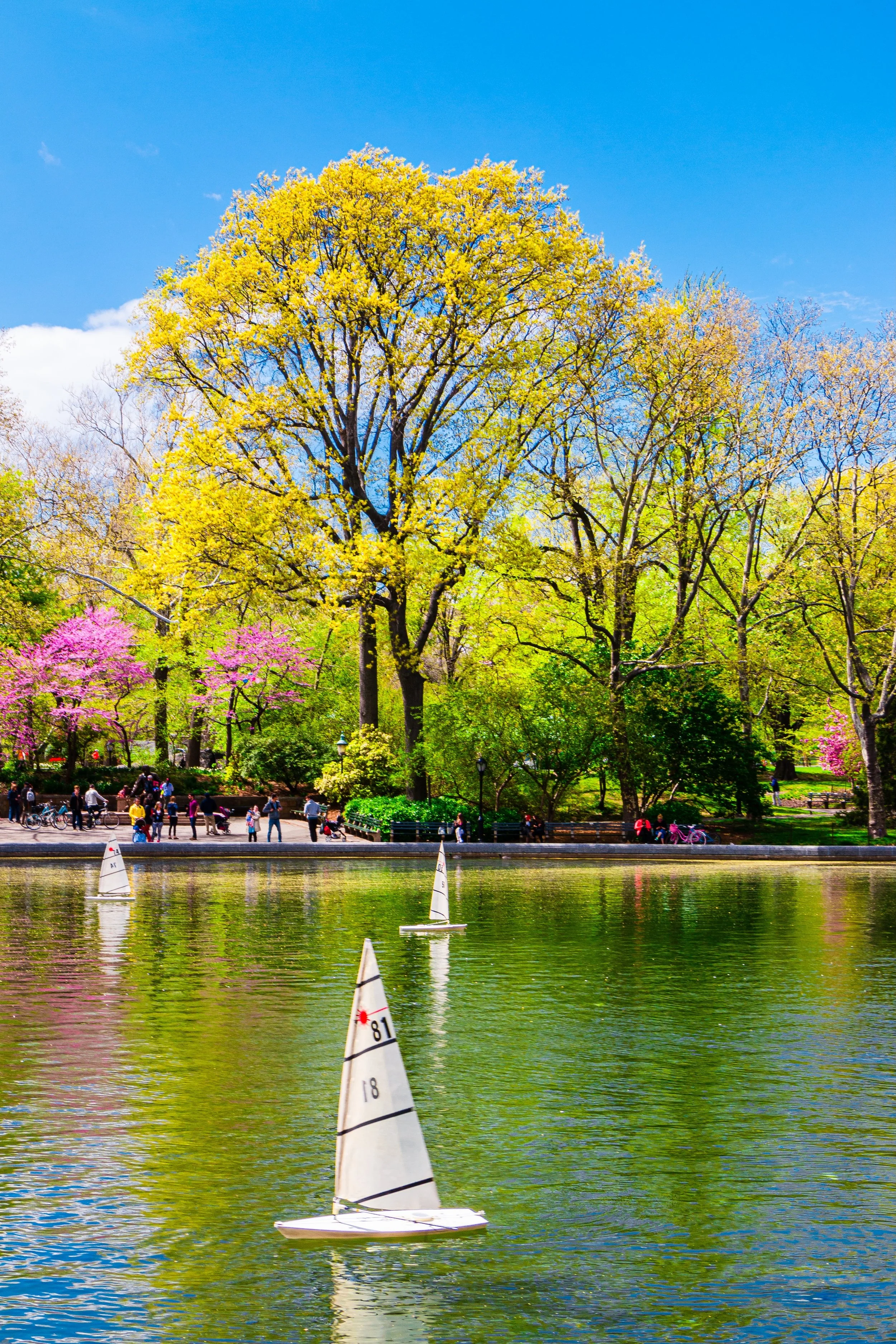
From the moment of its opening, Central Park transformed New York’s social life. Carriages promenaded along the drives, families picnicked on the lawns, and skaters glided across The Lake in winter. The park became a theater of democracy — one in which the wealthy and the working class shared the same paths and vistas.
Yet the park’s early years were also marked by class tension. Olmsted’s rules banned organized sports, music, and public demonstrations, reflecting the Victorian ideal of “passive recreation.” Over time, however, the park’s users reshaped it according to their needs — ballplayers claimed meadows, musicians held concerts, and immigrant families made it their weekend refuge. The people democratized what the planners had idealized.
Early 20th Century: Expansion and Adaptation
As the city grew upward and outward, Central Park evolved. The turn of the 20th century brought new amenities — the Central Park Zoo, the Sheep Meadow (so named for the grazing flock that remained until 1934), and the Metropolitan Museum of Art, whose east façade now forms one of the park’s monumental anchors.
In the 1930s, Robert Moses, as Parks Commissioner, oversaw an extensive renovation: playgrounds, ballfields, and the Wollman Rink were added, adapting the park to the needs of a modern metropolis. While Moses’s interventions were controversial, they reaffirmed the park’s vitality as a living, evolving space.
Central Park Photograph Video
Mid-20th Century: Decline and Revival
By the 1960s and 1970s, decades of neglect and fiscal crisis left Central Park in disrepair. Lawns eroded, fountains broke, and crime rose. Yet even in decay, the park remained a stage for the city’s spirit — from civil rights rallies to anti-war protests, from the folk revival at the Naumburg Bandshell to the dawn of outdoor rock concerts.
The park’s renewal began in the 1980s with the creation of the Central Park Conservancy, a public-private partnership dedicated to restoration and maintenance. Led by visionaries like Elizabeth Barlow Rogers, the Conservancy restored Olmsted and Vaux’s design principles while replanting trees, repairing paths, and revitalizing lakes and meadows. This collaboration became a global model for urban park management.
Late 20th–21st Century: The People’s Park Restored
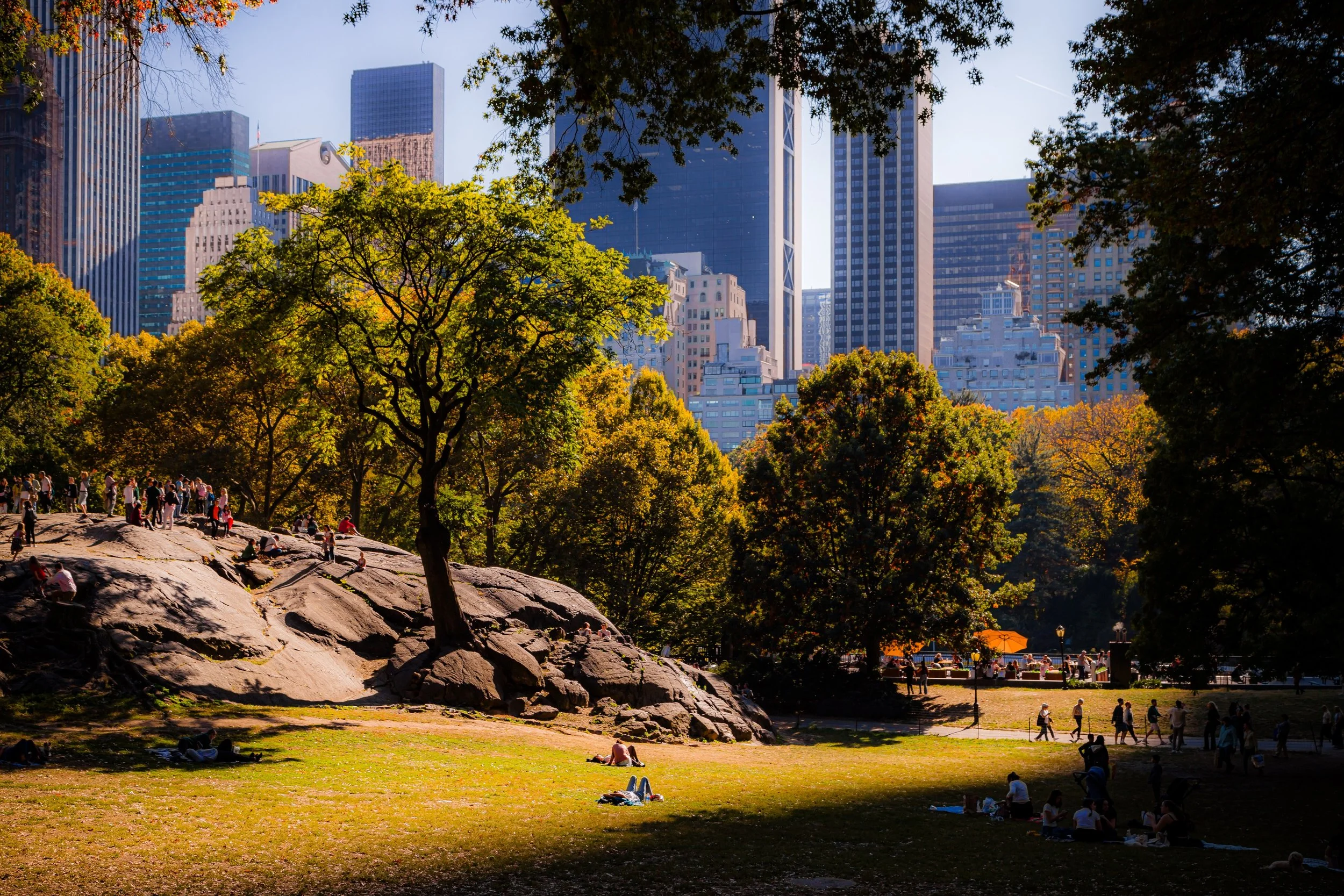
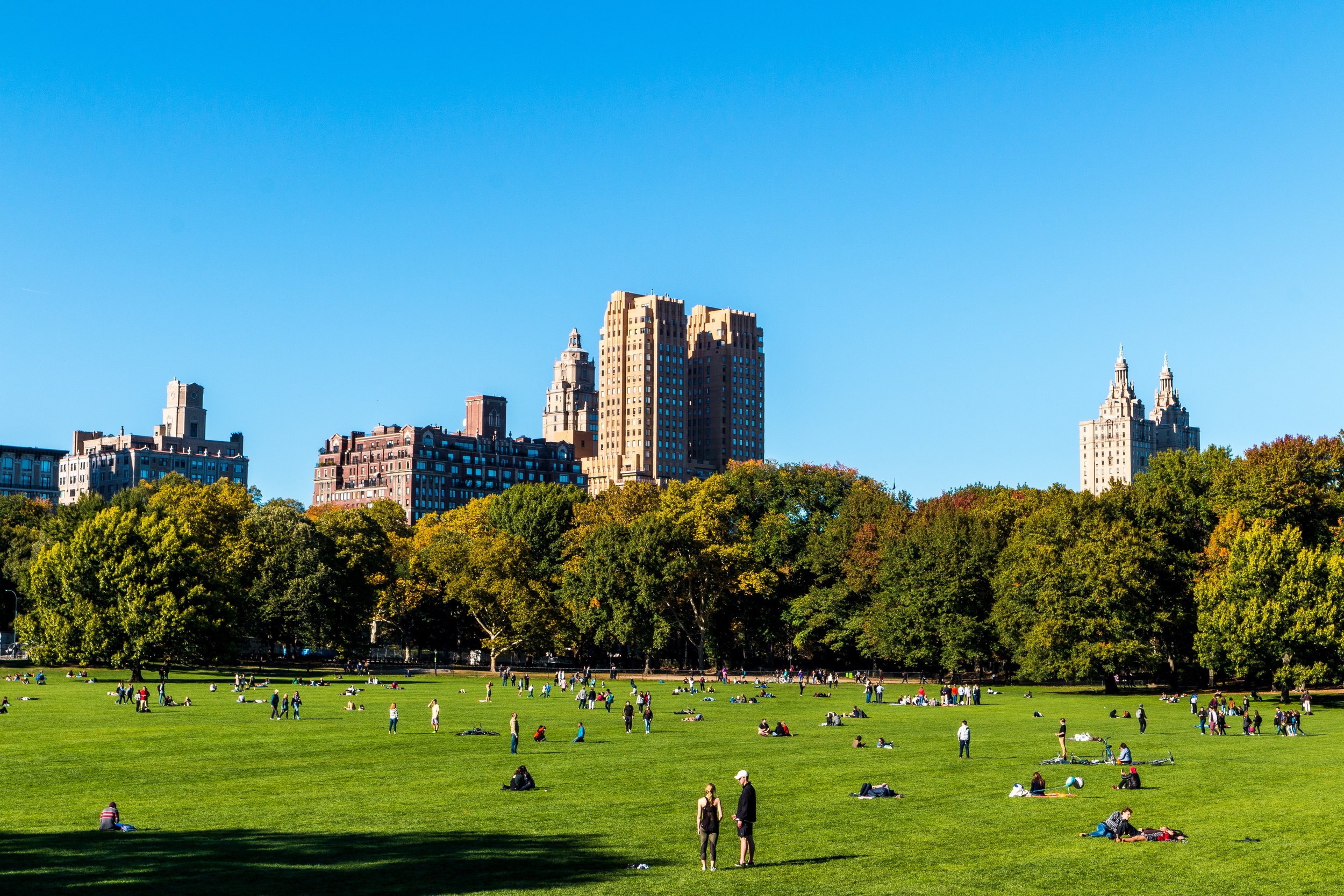
Today, Central Park stands renewed yet timeless. Its landscapes — from the Great Lawn and Belvedere Castle to the Conservatory Garden and Harlem Meer — serve every demographic of the city. Joggers circle the Reservoir, musicians perform beneath the elms, and families from every borough gather on the grass. The park hosts cultural landmarks such as SummerStage, the Shakespeare in the Park festival, and marathon finishes, reaffirming its role as New York’s collective living room.
Environmental initiatives have restored native ecosystems to the North Woods and the Ramble, reintroducing species long absent from Manhattan. Central Park today supports over 230 bird species and a biodiversity unthinkable a century ago.
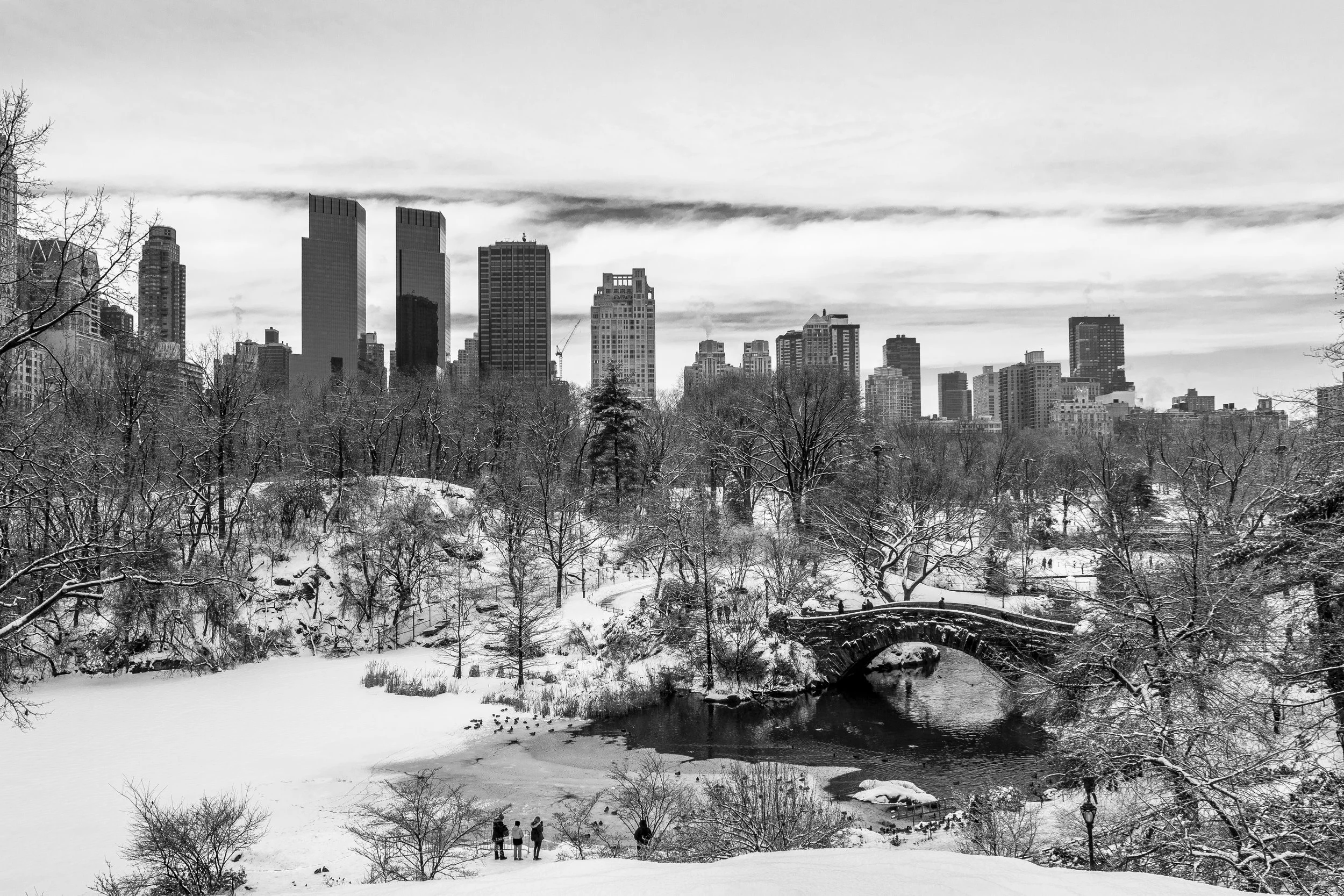
In winter, the park glows beneath snowfall; in summer, it hums with life. The skyline — from Essex House to the towers of Billionaires’ Row — frames it like a vast amphitheater, a constant reminder that this pastoral refuge exists not apart from the city, but at its heart.
Architecture and Atmosphere
Architecturally, Central Park is a composition in landscape, water, and light. Its bridges and arches — crafted of sandstone, granite, and cast iron — form a language of craftsmanship that connects its meadows and glades. Structures like Bethesda Terrace and Belvedere Castle fuse Gothic and Italianate motifs with the geometry of nature.
The atmosphere shifts by the hour. At dawn, the park is serene, its paths dappled with mist and morning runners. By midday, it becomes a carnival of motion — cyclists, buskers, children, tourists, and artists intertwining like the park’s own curving paths. At dusk, the lamps flicker on and the reflections of the city shimmer in the lake’s dark surface — the eternal dialogue between nature and metropolis.
Central Park Photo Gallery
Spirit and Legacy
Central Park’s legacy is democratic beauty — the belief that all people deserve access to nature, art, and leisure in the heart of the city. It embodies the American experiment in landscape form: civic equality expressed through design.
It has witnessed the march of suffragists, the joy of reunions, the grief of memorials, and the play of countless generations. It is the city’s memory and its release — a place where solitude and community coexist in perfect proportion.
New York City
Use this custom Google map to explore where every neighborhood in all five boroughs of New York City is located.
The Five Boroughs
One of New York City’s unique qualities is its organization in to 5 boroughs: Manhattan, Brooklyn, Queens, The Bronx, and Staten Island. These boroughs are part pragmatic administrative districts, and part vestiges of the region’s past. Each borough is an entire county in New York State - in fact, Brooklyn is, officially, Kings County, while Staten Island is, officially Richmond County. But that’s not the whole story …
Initially, New York City was located on the southern tip of Manhattan (now the Financial District) that was once the Dutch colony of New Amsterdam. Across the East River, another city was rising: Brooklyn. In time, the city planners realized that unification between the rapidly rising cities would create commercial and industrial opportunities - through streamlined administration of the region.
So powerful was the pull of unification between New York and Brooklyn that three more counties were pulled into the unification: The Bronx, Queens, and Staten Island. And on January 1, 1898, the City of New York unified two cities and three counties into one Greater City of New York - containing the five boroughs we know today.
But because each borough developed differently and distinctly until unification, their neighborhoods likewise uniquely developed. Today, there are nearly 390 neighborhoods, each with their own histories, cultures, cuisines, and personalities - and each with residents who are fiercely proud of their corner of The Big Apple.