
GLEN OAKS
Queens
Geographic Setting
Bounded by 74th Avenue and Northwell Health–Long Island Jewish Medical Center and Union Turnpike to the south, Little Neck Parkway to the west, the Grand Central Parkway to the north, and the Nassau County line to the east, Glen Oaks lies at the extreme northeastern corner of Queens—a serene, low-density neighborhood that marks the threshold between New York City and suburban Long Island. Set on gently rolling ground between Floral Park, Bellerose, and Douglaston–Little Neck, it is a community of garden apartments, co-ops, and single-family homes surrounded by parkland, hospitals, and schools. Its landscape, characterized by orderly tree-lined streets and manicured courtyards, reflects the postwar ideal of suburban living within the city’s limits.
The neighborhood’s main artery, Union Turnpike, runs east–west along its southern border, providing access to nearby Glen Oaks Village, Queens County Farm Museum, and the commercial centers of Bellerose and New Hyde Park. North–south routes such as Little Neck Parkway and Commonwealth Boulevard connect residents to the Grand Central Parkway and the Long Island Expressway beyond. The area’s major institutions—including Northwell Health’s Long Island Jewish Medical Center, Cohen Children’s Medical Center, and The Zucker Hillside Hospital—form a healthcare campus that serves much of Queens and Nassau, anchoring the neighborhood’s northern edge. Nearby, Glen Oaks Library, P.S. 186, and several local parks complete a civic core that feels more like a village than a city.
Etymology and Origins
The name “Glen Oaks” was chosen in the late 1940s for its lyrical evocation of landscape—“glen” for the gentle valleys that once defined the area’s terrain, and “oaks” for the mature trees that lined its rural roads. Before development, the land had long been part of the Town of Hempstead’s westernmost farms and meadows, later incorporated into Queens when the borough joined Greater New York City in 1898. For centuries, this was countryside: fields of vegetables and flowers, dotted with small homesteads and woodlots.
The neighborhood as we know it emerged after World War II, when New York faced a severe housing shortage and suburbanization was transforming the metropolitan fringe. In 1947, the Glen Oaks Village cooperative housing project was conceived as one of the largest and most ambitious middle-income developments in the city. Built on former farmland by builder Samuel Lefrak and partners, Glen Oaks Village became a pioneering example of self-contained, affordable urban planning—a “garden apartment” community that balanced density with open space. The development’s name soon extended to the entire surrounding area.
The Neighborhood
Mid-20th Century: The Planned Garden Community
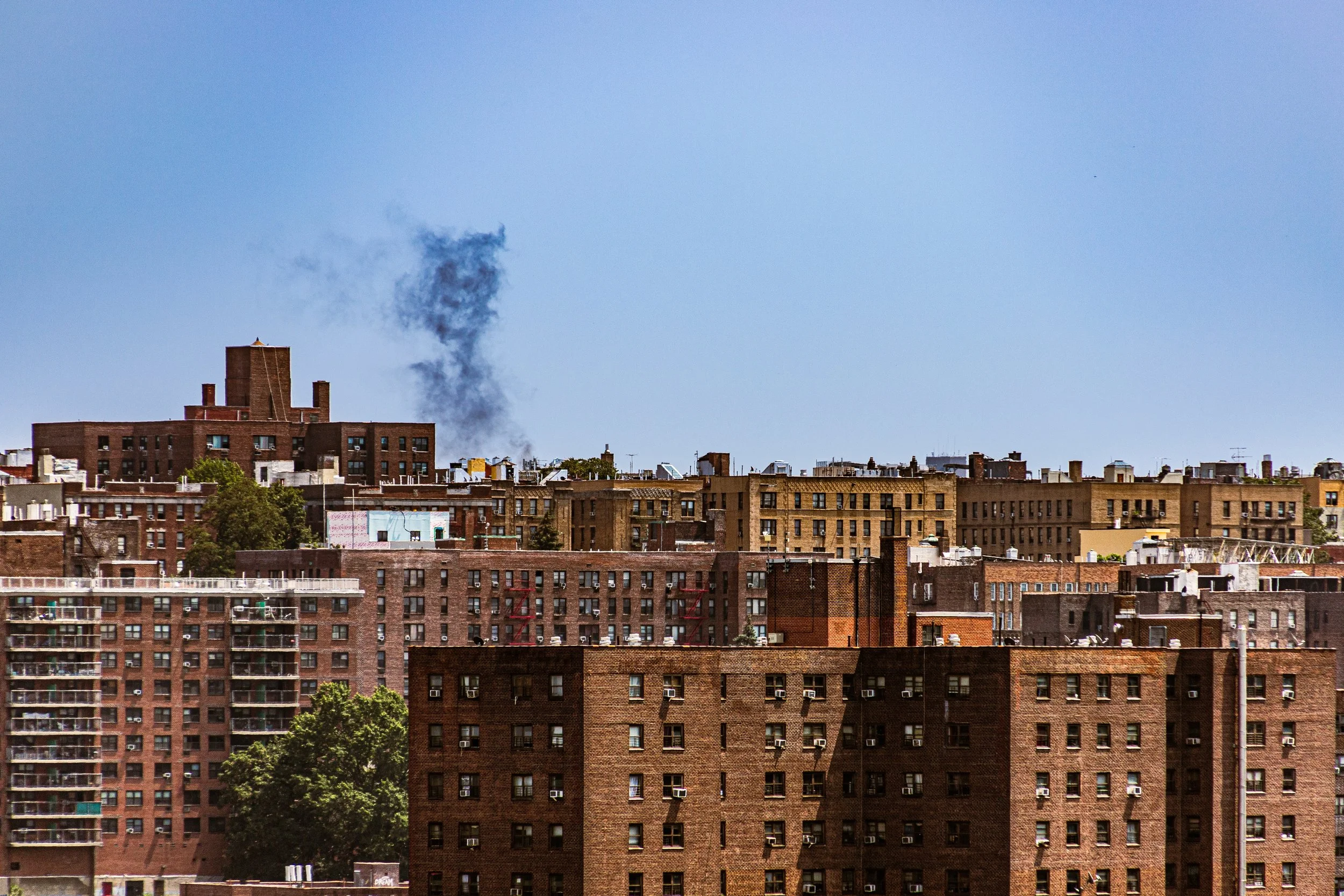
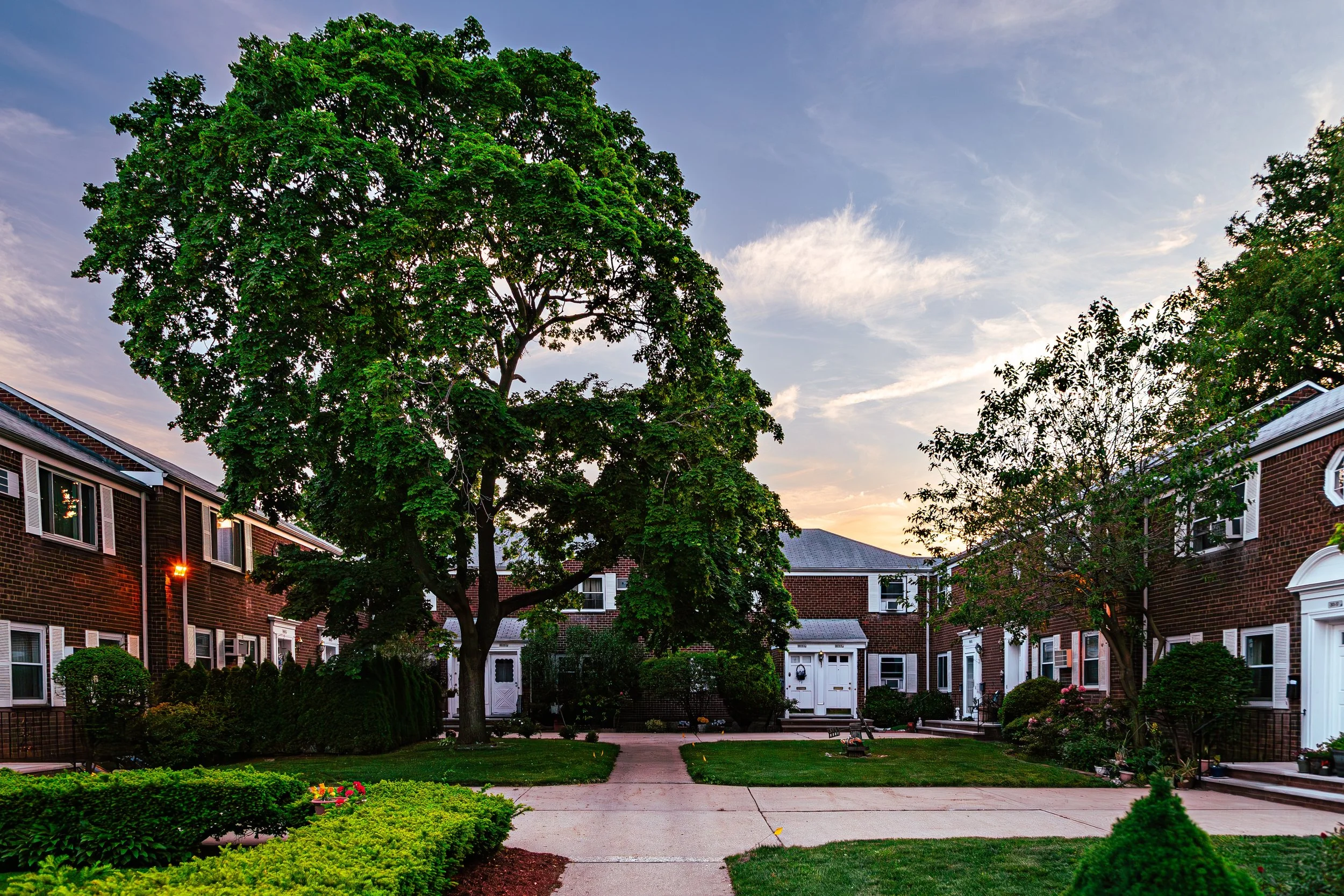
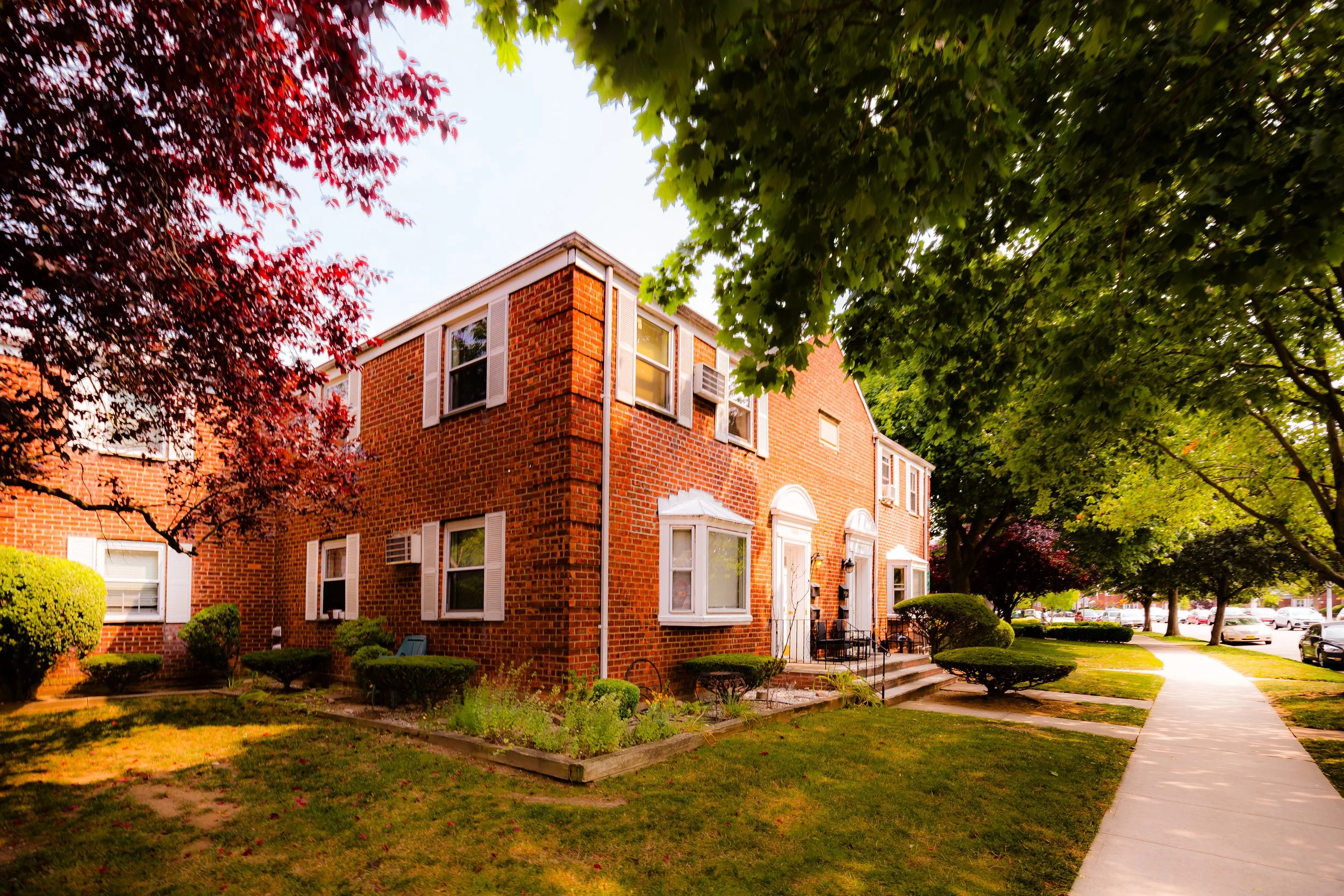
Construction of Glen Oaks Village began in 1948 and continued through the early 1950s. When completed, it included nearly 3,000 two-story brick buildings arranged around landscaped courtyards and interior walkways, housing approximately 10,000 residents. The design, influenced by the Garden City movement and federal housing guidelines of the era, emphasized greenery, safety, and community cohesion. Each apartment had cross-ventilation and direct sunlight; the complex included playgrounds, laundry rooms, and parking lots carefully integrated into the layout.
From the start, Glen Oaks Village was conceived as a co-op rather than rental housing, encouraging residents to take collective responsibility for maintenance and governance. This model fostered a strong civic culture that endures today—one of the most stable and tightly knit cooperative communities in New York.
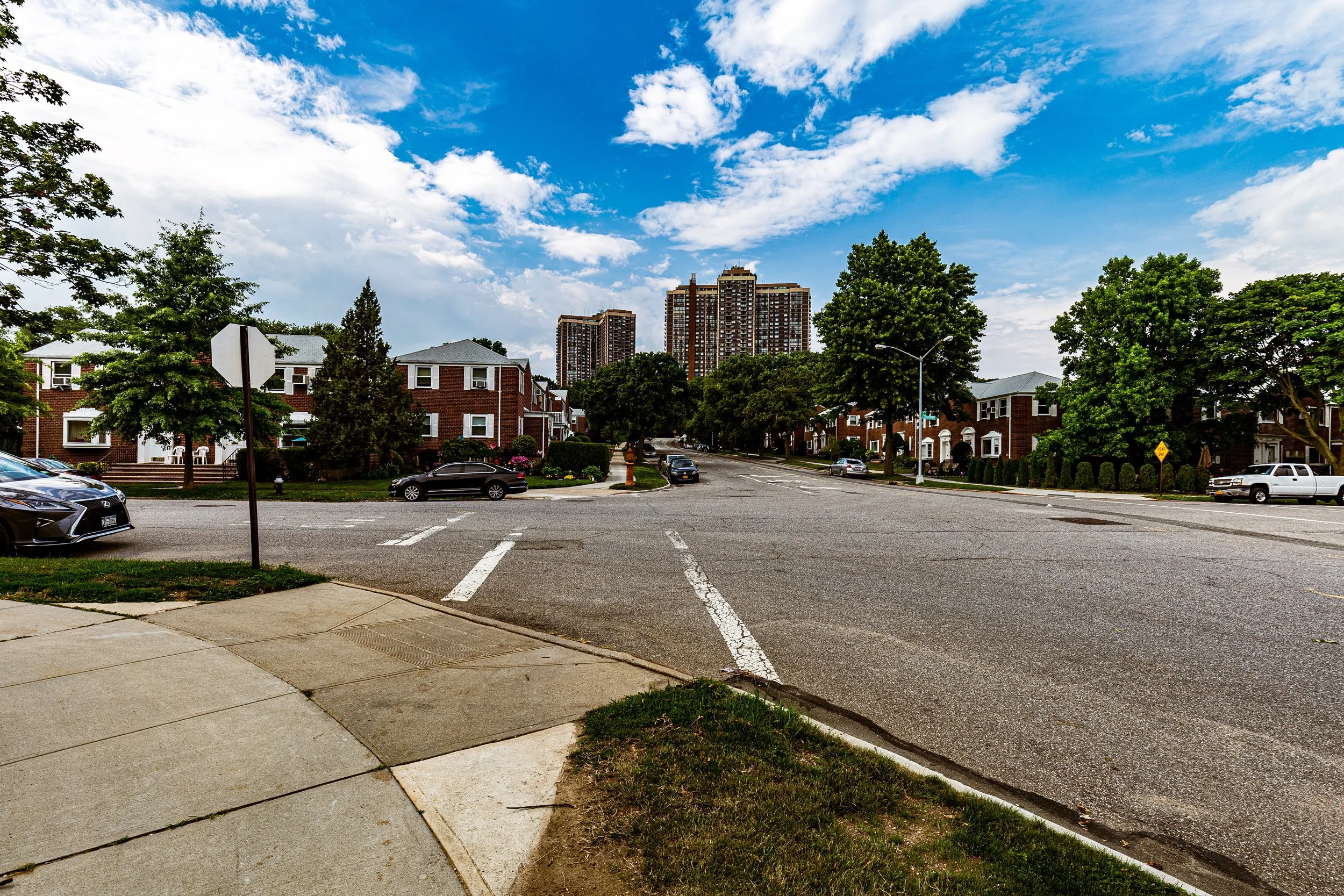
Surrounding the core co-op development, additional single-family homes and small apartment buildings rose throughout the 1950s and 1960s, extending the neighborhood’s grid eastward to the Nassau line. The Glen Oaks Shopping Center (est. 1950s) provided groceries, pharmacies, and everyday services, while nearby schools—P.S. 186 (Castlewood), P.S. 266, and later M.S. 172—anchored family life. The opening of the Grand Central Parkway to the north provided quick access to the city, while the suburban streetscape—complete with front lawns, street trees, and neighborhood associations—gave Glen Oaks a distinctly non-urban feel.
Community and Character
Throughout the mid-20th century, Glen Oaks became a haven for middle-income New Yorkers seeking homeownership within city boundaries. Many of its first residents were World War II veterans, teachers, civil servants, and professionals of Jewish, Italian, and Irish descent. The neighborhood’s culture emphasized civic participation, education, and pride of place. Glen Oaks Village Co-op Board meetings, block associations, and garden clubs became staples of local life, while nearby institutions such as Our Lady of the Snows Roman Catholic Church and Temple Torah served the community’s spiritual and social needs.
The proximity of the Long Island Jewish Medical Center campus, which expanded rapidly in the 1950s and 1960s, added another dimension to neighborhood life. Many hospital staff settled in Glen Oaks, and the area became known for its stability, cleanliness, and proximity to major medical and educational institutions.
Glen Oaks Video Coming Soon
Late 20th Century: Evolution and Diversity
By the 1970s and 1980s, Glen Oaks remained remarkably stable even as other parts of Queens urbanized. Its cooperative housing model and strict by-laws preserved both its physical appearance and its community cohesion. However, demographic shifts across Queens gradually reached the area. A new generation of residents—South Asian, East Asian, and Caribbean-American families—began purchasing homes and co-op shares, adding cultural and linguistic diversity to a neighborhood long defined by its suburban homogeneity.
Despite these changes, Glen Oaks retained its reputation for orderliness and self-sufficiency. The Glen Oaks Library, rebuilt in 2013 as one of Queens Library’s greenest and most modern branches, became a local landmark, offering community programs in multiple languages. The Queens County Farm Museum, just across the parkway, serves as both a historical reminder of the area’s agrarian past and a recreational destination for families.
21st Century: Balance and Renewal
In the 21st century, Glen Oaks continues to exemplify the promise of postwar suburbia—adapted, diversified, but intact. Its co-ops remain among the most affordable and desirable in Queens, prized for their quality construction, greenery, and community spirit. The neighborhood’s population reflects Queens’ global mosaic, yet the physical and social structure of Glen Oaks has preserved a strong sense of continuity.
The nearby Northwell Health complex has grown into one of New York’s largest medical hubs, ensuring local employment and world-class healthcare access. Meanwhile, traffic-calming projects, bike paths, and landscaping initiatives have improved the neighborhood’s walkability. Green spaces—including Little Neck Parkway’s landscaped medians, the grounds of Glen Oaks Village, and nearby Alley Pond Park—continue to define the area’s visual identity.
Although officially part of New York City, Glen Oaks still feels more like a small Long Island suburb: quiet streets, low-rise housing, and a neighborly ethos where residents know one another by name. The combination of civic engagement, green space, and architectural consistency has given Glen Oaks a timeless quality rare in the five boroughs.
Glen Oaks Photo Gallery
Spirit and Legacy
Glen Oaks’ enduring legacy lies in its success as a planned community that grew into a living neighborhood—proof that cooperative ideals and urban design can foster not just housing but a way of life. Its story bridges eras: from farmland to garden suburb, from homogeneous suburbia to a vibrant multicultural enclave.

New York City
Use this custom Google map to explore where every neighborhood in all five boroughs of New York City is located.
The Five Boroughs
One of New York City’s unique qualities is its organization in to 5 boroughs: Manhattan, Brooklyn, Queens, The Bronx, and Staten Island. These boroughs are part pragmatic administrative districts, and part vestiges of the region’s past. Each borough is an entire county in New York State - in fact, Brooklyn is, officially, Kings County, while Staten Island is, officially Richmond County. But that’s not the whole story …
Initially, New York City was located on the southern tip of Manhattan (now the Financial District) that was once the Dutch colony of New Amsterdam. Across the East River, another city was rising: Brooklyn. In time, the city planners realized that unification between the rapidly rising cities would create commercial and industrial opportunities - through streamlined administration of the region.
So powerful was the pull of unification between New York and Brooklyn that three more counties were pulled into the unification: The Bronx, Queens, and Staten Island. And on January 1, 1898, the City of New York unified two cities and three counties into one Greater City of New York - containing the five boroughs we know today.
But because each borough developed differently and distinctly until unification, their neighborhoods likewise uniquely developed. Today, there are nearly 390 neighborhoods, each with their own histories, cultures, cuisines, and personalities - and each with residents who are fiercely proud of their corner of The Big Apple.