
For The Love of Old Things
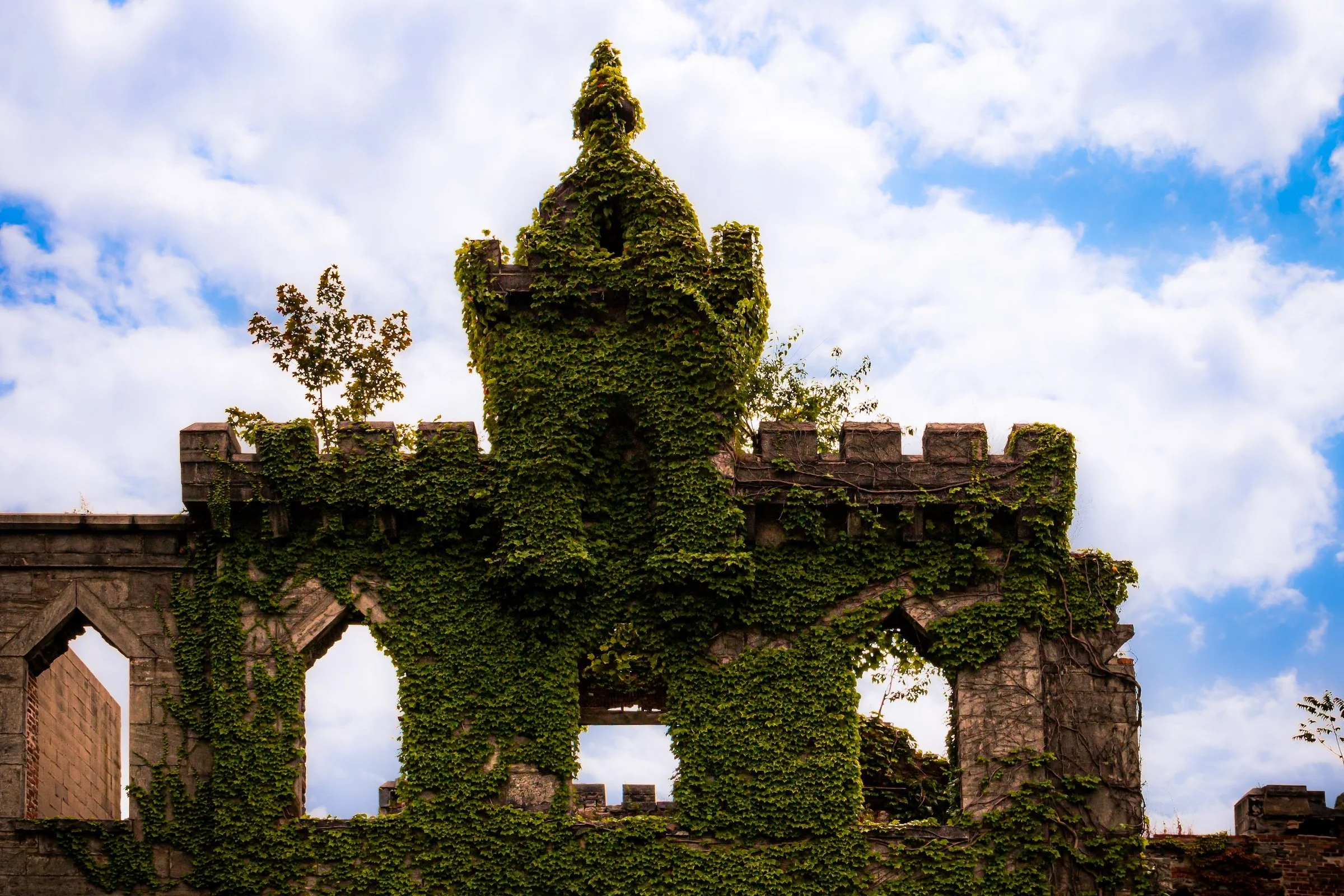
Roosevelt Island - Manhattan - Smallpox Hospital
Definition:
A photographic devotion to age, wear, and survival: weathered facades, peeling paint, rusted hardware, old infrastructure, ghost signage, and objects that look slightly out of time. For The Love Of Old Things isn’t nostalgia for its own sake—it’s attention to the city’s material memory.
Usage:
Use this approach to make time visible. Old things carry texture, tone, and story without needing explanation. They can act as anchors in a fast-changing city—proof of continuity, or proof of what’s disappearing.
In Depth:
I photograph old things the way I photograph trees: not as “subjects,” but as living archives. Rust is a language. Peeling paint is an event. Faded lettering is a voice that hasn’t fully stopped speaking. The key is to let the object’s surface be the narrative—while composing cleanly enough that the frame feels deliberate, not merely sentimental.
A few quick ways to spot them in the field:
Look for patina gradients: rust, oxidized metal, sun-bleached paint, salt-stained wood.
Hunt for ghost text: old ads, painted letters, half-erased names.
Notice functional relics: old stations, benches, railings, industrial remnants still in use.
Favor simple compositions: when texture is the story, clutter dilutes it.
Pay attention to repair and improvisation: boarded windows, patched masonry, makeshift reinforcements.
Below are ten launch examples that show For The Love Of Old Things in different forms: stranded objects, weathered signage, industrial ghosts, and infrastructure that still carries yesterday in its bones. Each image includes a brief note on what the “oldness” is doing in the frame, and why it’s a strong example of the concept.
Stranded Relics and Displaced Objects
Old things become most haunting when they’re out of place—survivors in the wrong habitat.
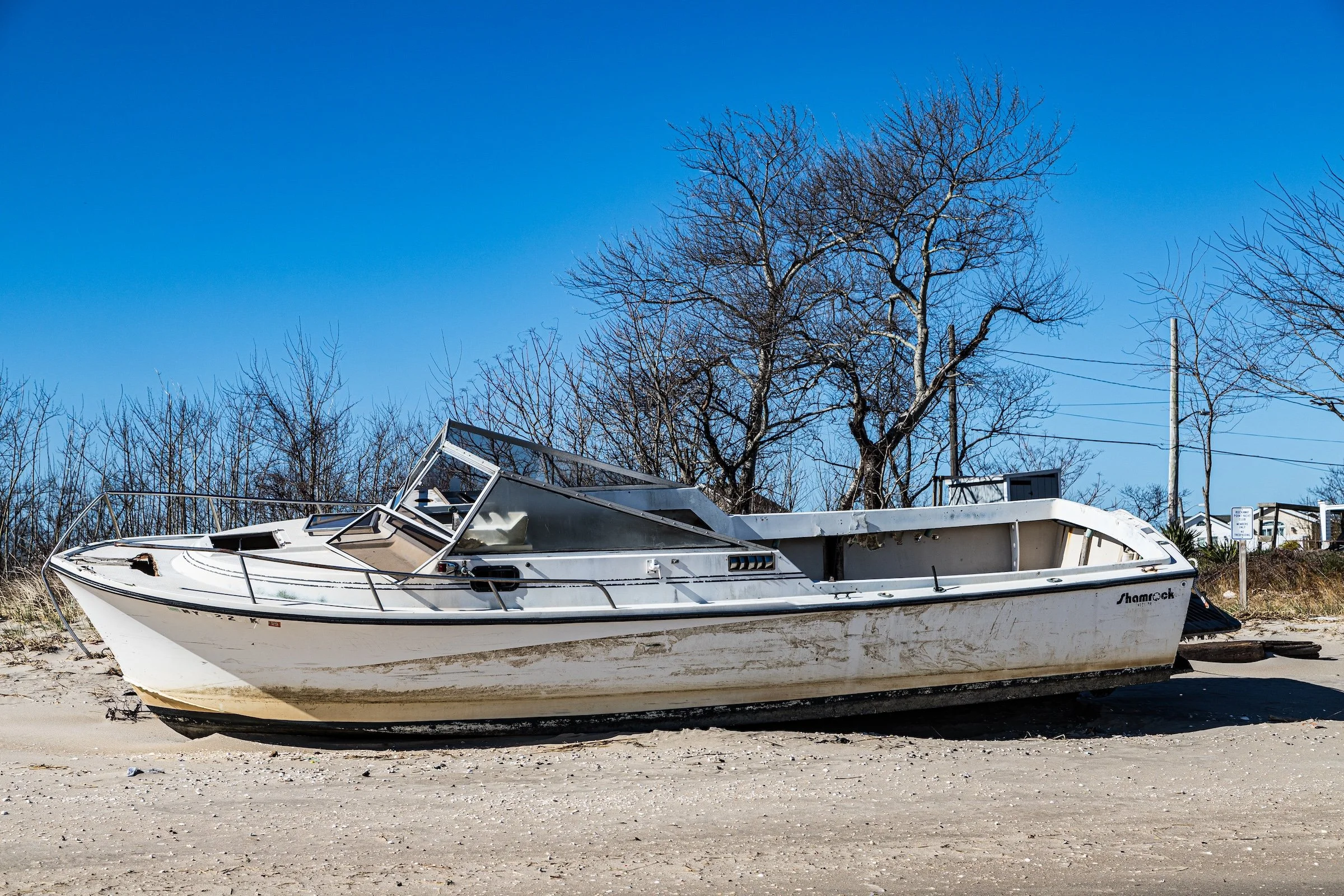
Breezy Point - Queens - Beached
A boat on sand reads like a sentence with missing context—storm, time, abandonment, fate. The power is in the mismatch: something built for motion now held still.
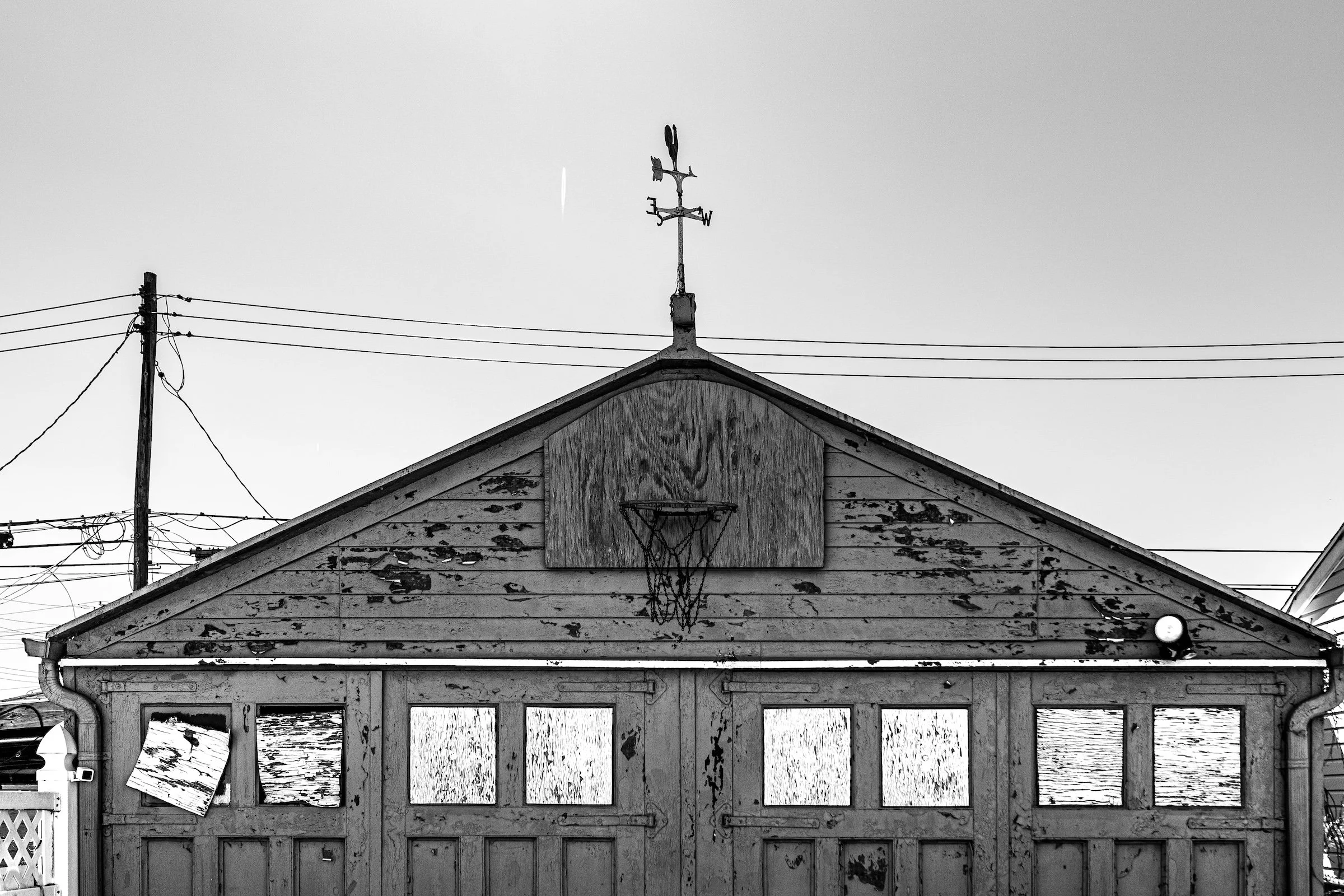
Gerritsen Beach - Brooklyn - Weather Vane
The weather vane is a tiny instrument from another era—functional, ornamental, quietly precise. Against sky, it becomes a symbol of time measured slowly.
Ghost Letters and Industrial Memory
These images treat old typography and industrial surfaces as the city’s archival layer.
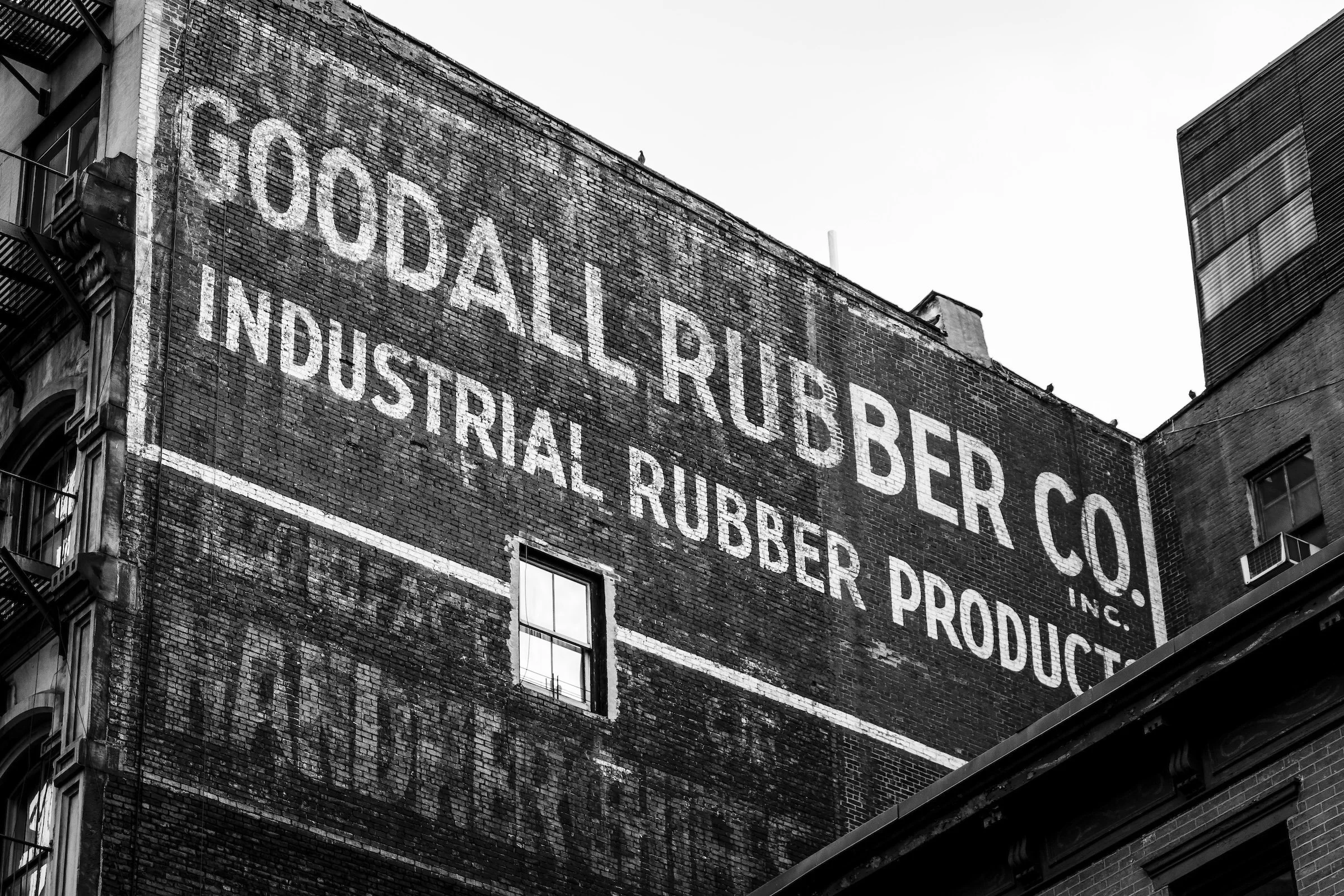
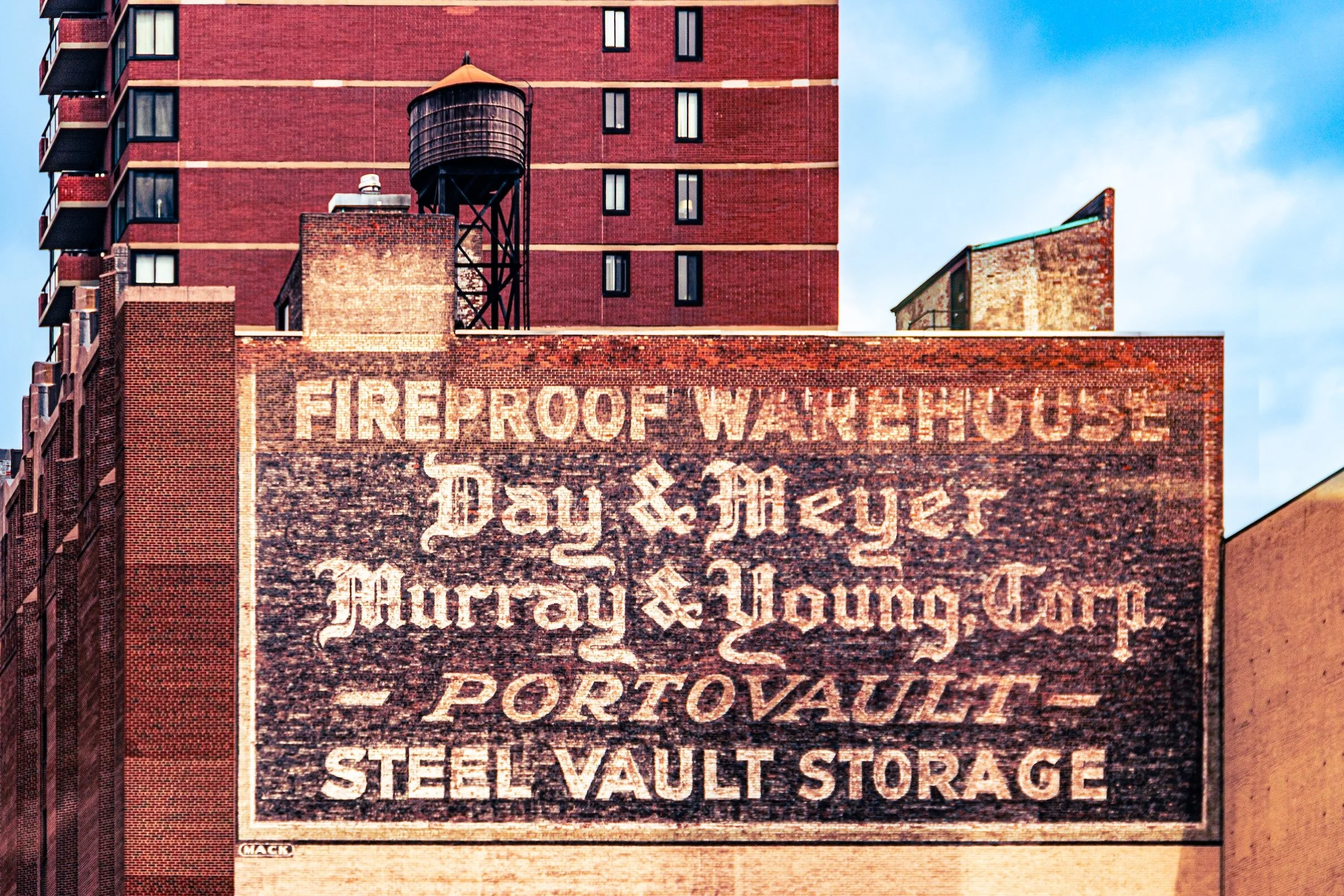
Upper East Side - Manhattan - Fireproof Warehouse
Big, declarative industrial text carries an era’s confidence. The photograph becomes a study in persistence: language meant to last, still doing its job decades later.
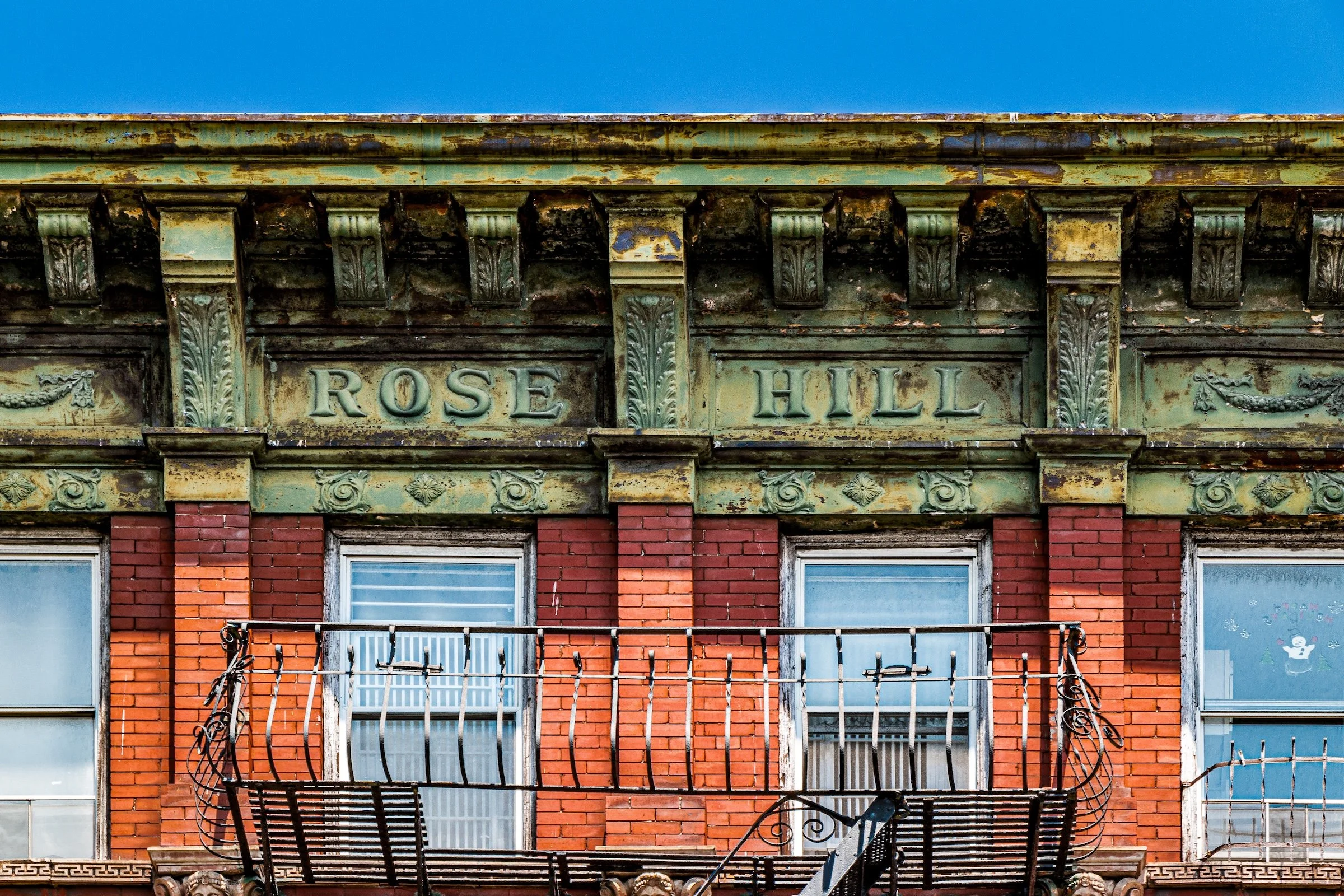
Doors, Thresholds, and Weathered Entrances
Old things often live at the threshold—doors and storefronts that carry the touch of thousands of days.
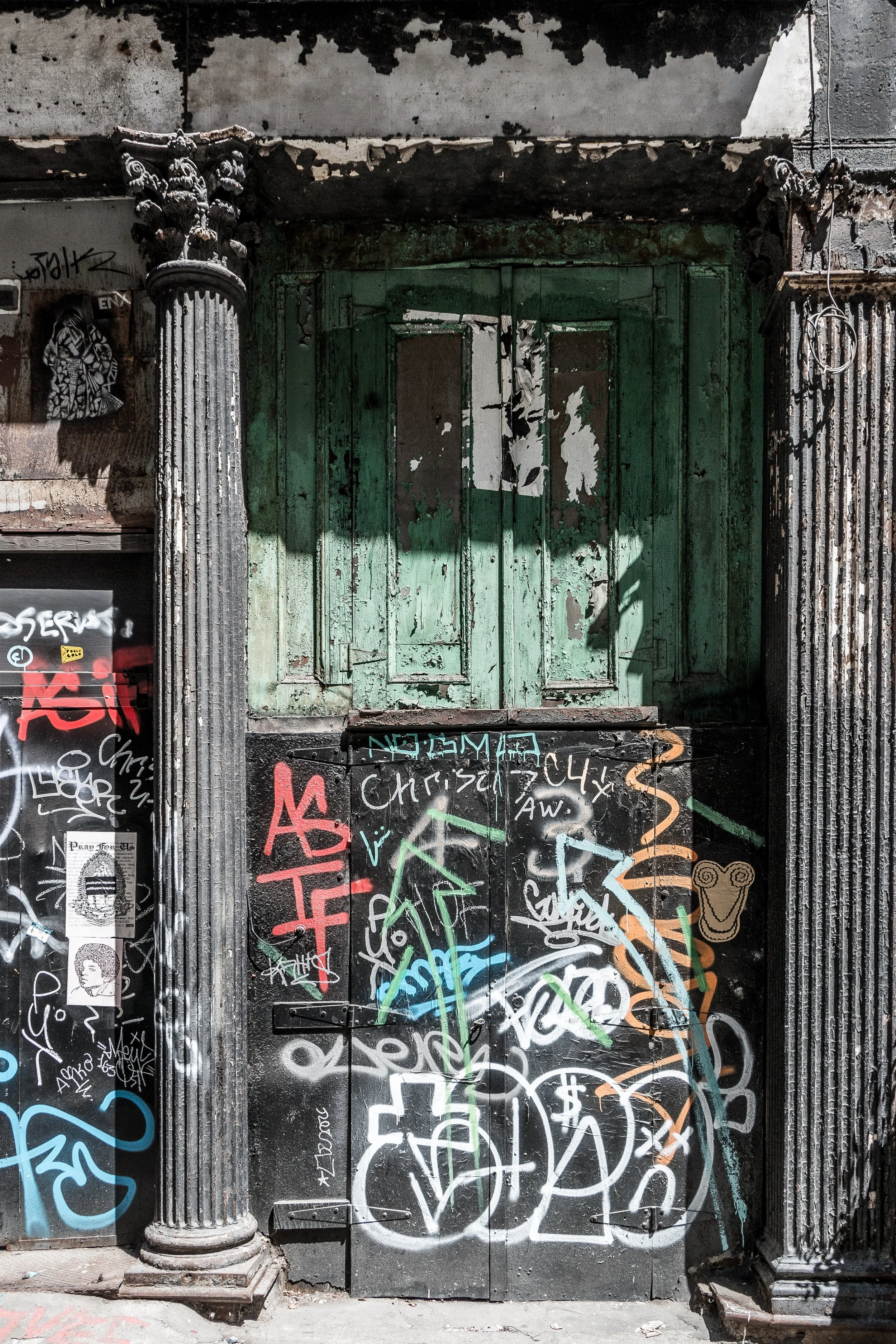
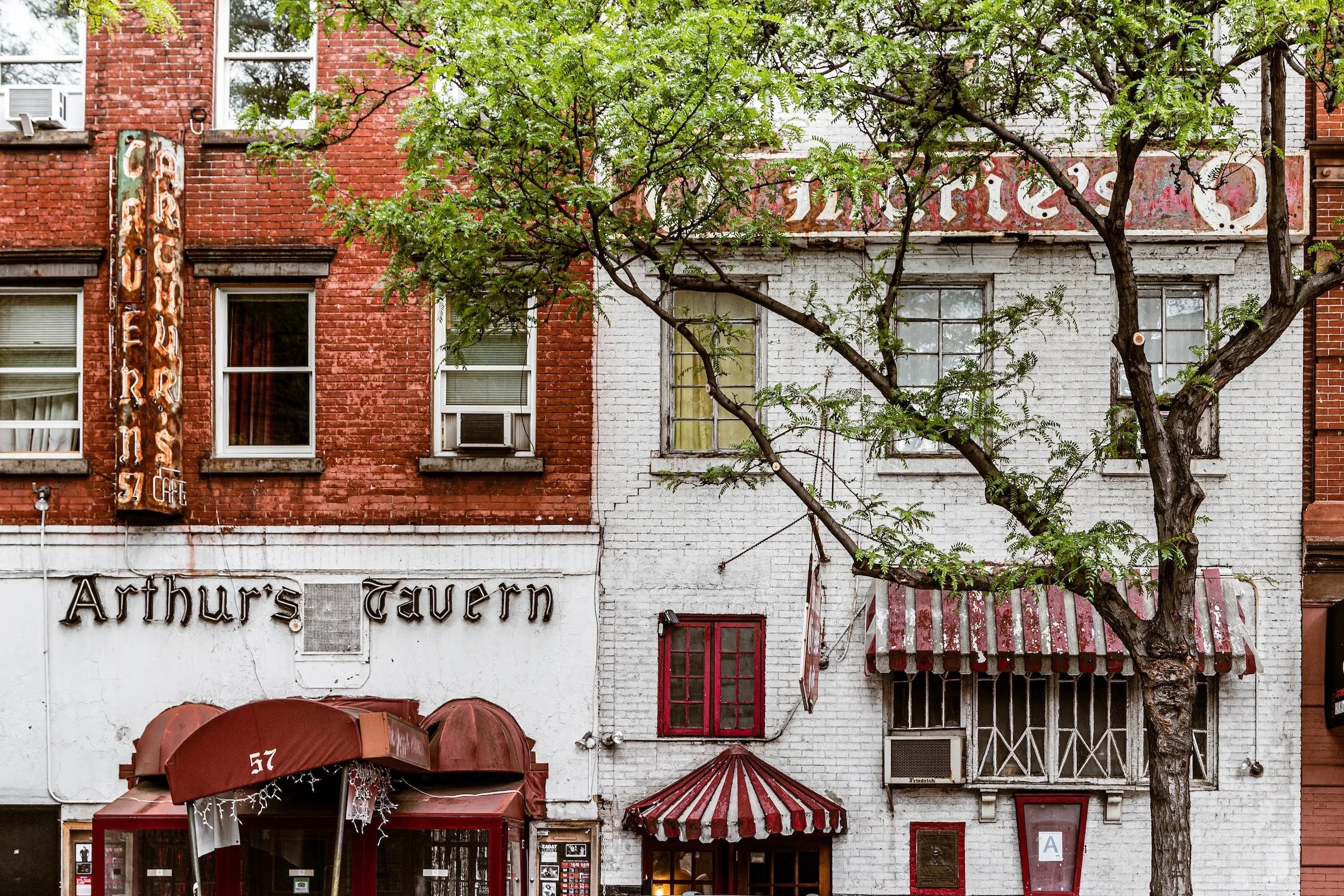
West Village - Manhattan - Arthur's Tavern
The tavern façade is a classic “time capsule” subject—type, paint, and street presence that resists modernization. The photo works when it feels like you’re meeting an old character, not documenting a storefront.
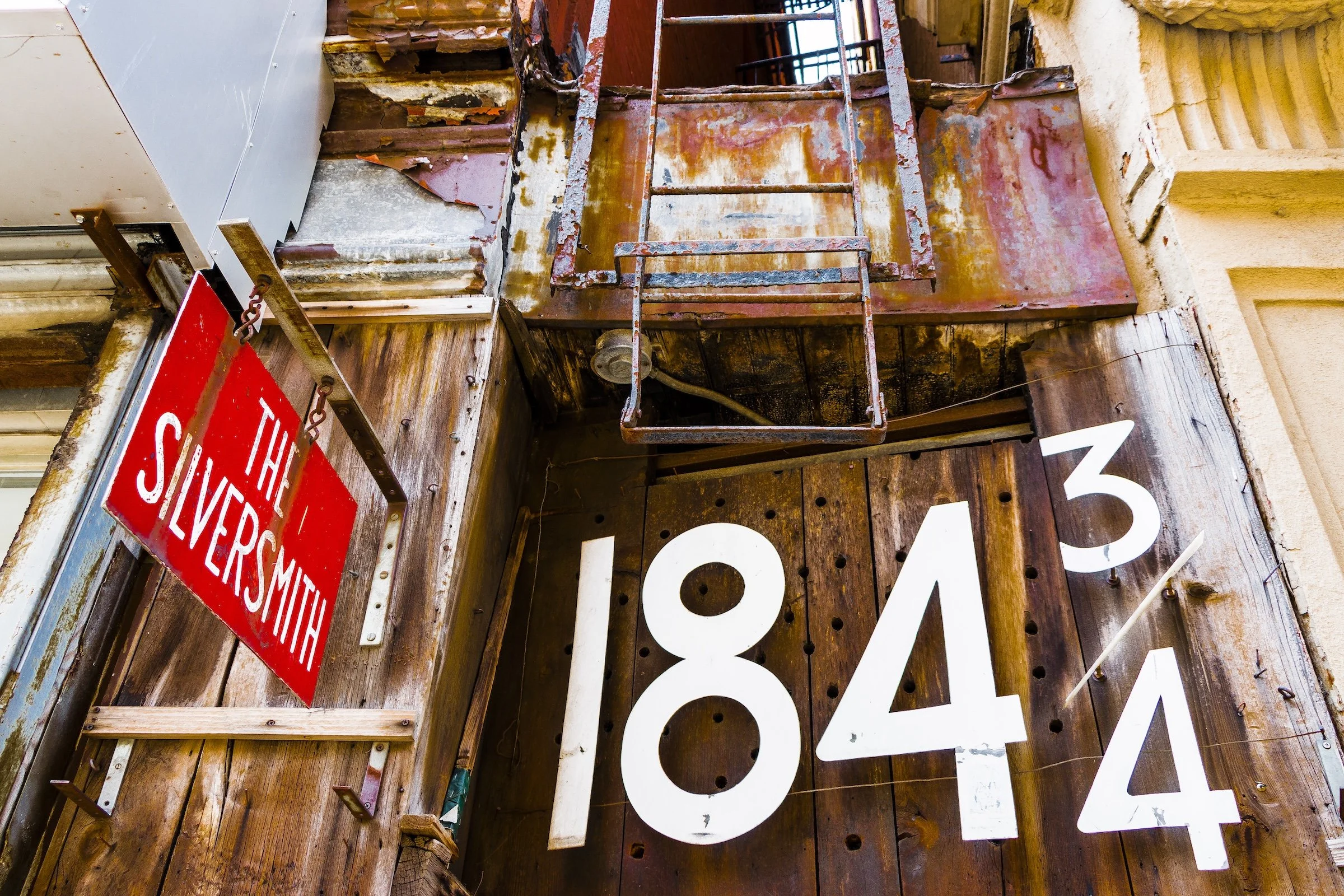
West Village - Manhattan - The Silversmith
Here, the beauty is in the accumulated detail: signage, hardware, and architectural quirks stacked into a single textured statement. Old things love company—layers make them richer.
Explore Further