
WINDSOR TERRACE
Brooklyn
Geographic Setting
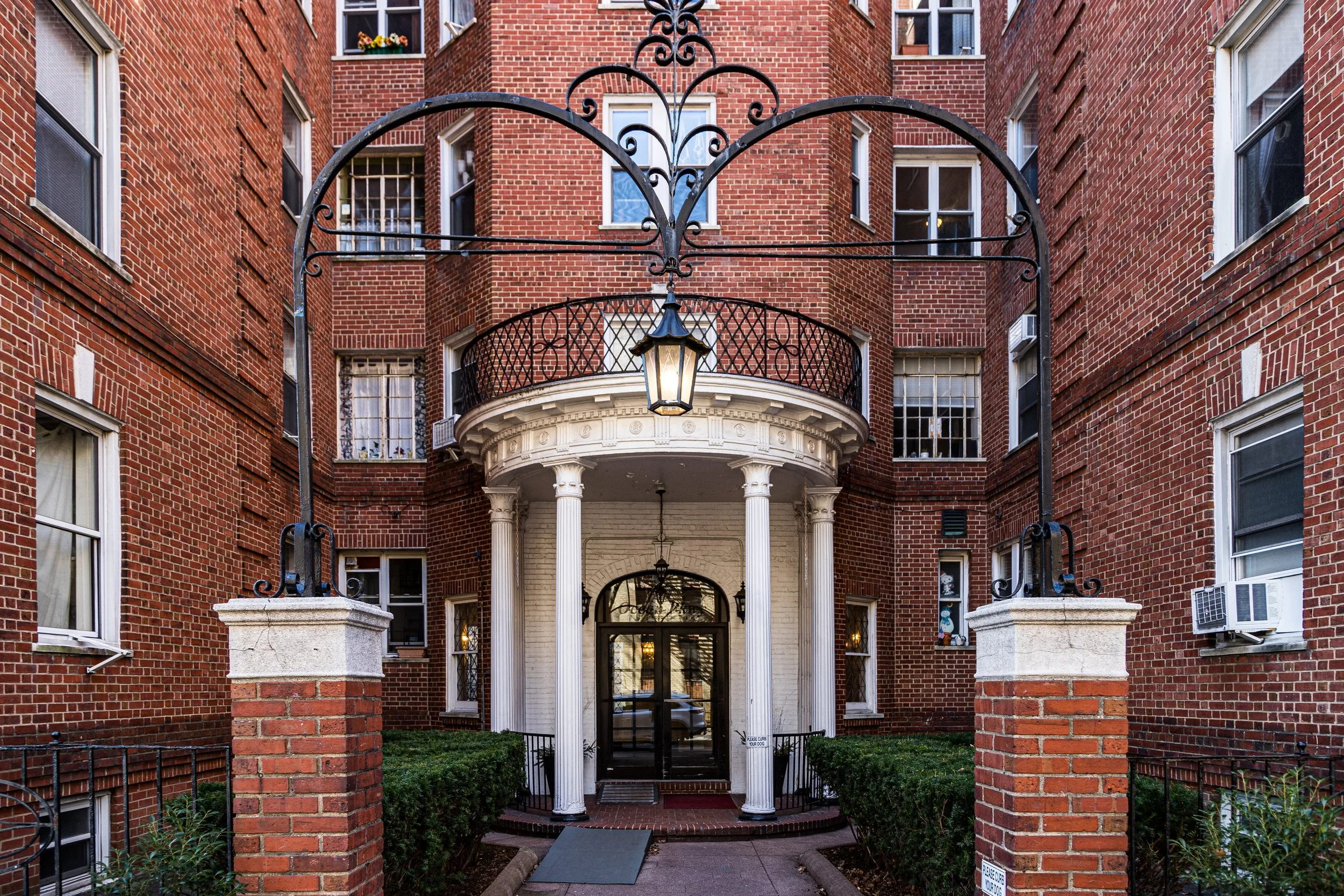
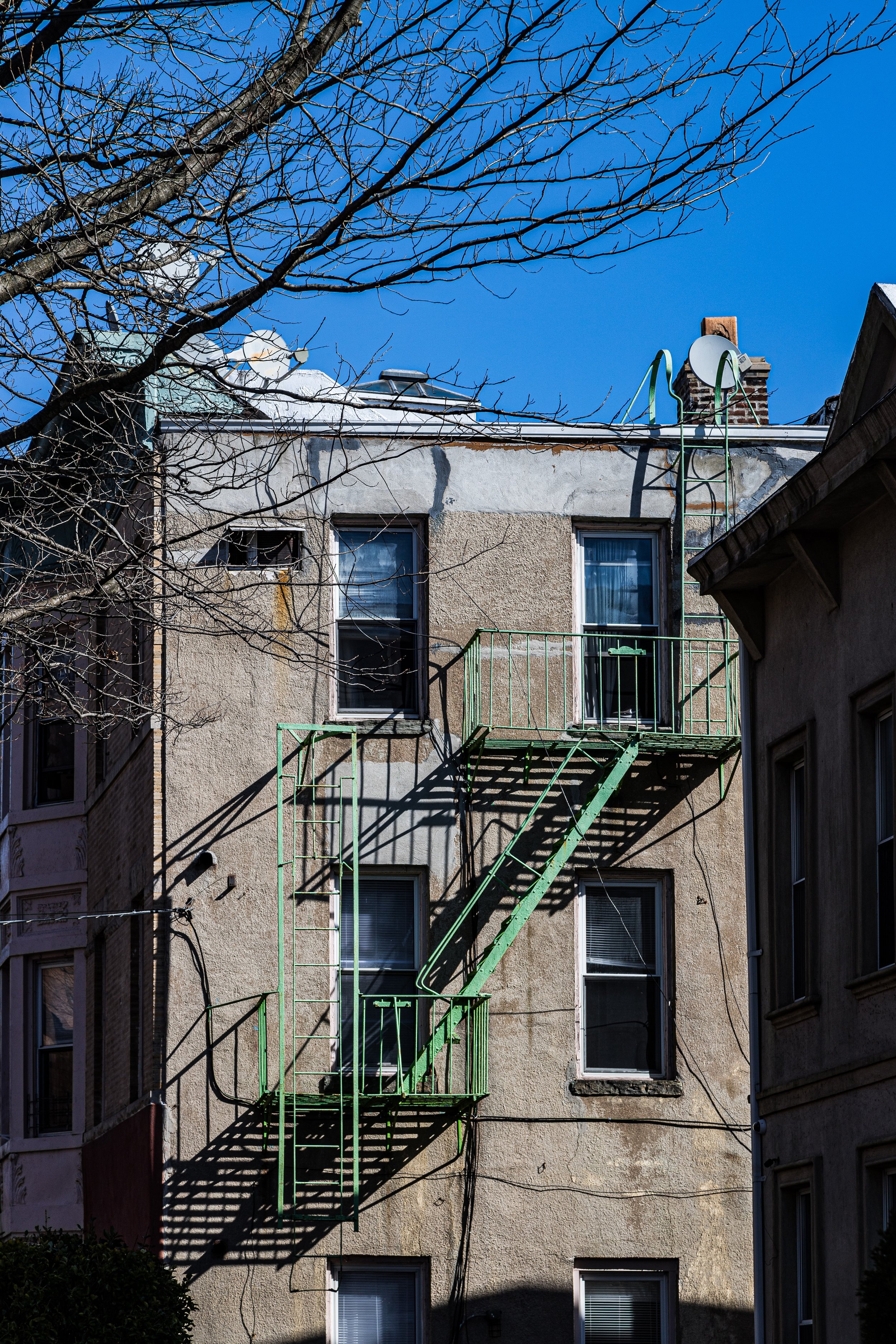
Bounded by Prospect Park to the east, Green-Wood Cemetery to the west, Prospect Park West to the northwest, and Caton Avenue to the south, Windsor Terrace forms one of Brooklyn’s most serenely situated neighborhoods—a narrow, elevated stretch between two of the borough’s grandest green spaces. The terrain undulates gently, offering glimpses of treetops, skyline, and the cemetery’s stately monuments. Its quiet, residential blocks of brick and limestone rowhouses, wood-frame homes, and prewar apartment buildings radiate from Prospect Avenue, Seeley Street, and Vanderbilt Street, the neighborhood’s principal corridors. This enclave’s proximity to both park and cemetery lends it a rare dual tranquility: urban yet pastoral, enclosed yet connected to the city’s heartbeat just beyond.
Etymology and Origins
The name “Windsor Terrace” dates to the mid-19th century and was chosen by developer Charles Batchelor, who borrowed “Windsor” from the English royal seat and added “Terrace” to evoke both its elevation and its orderly residential design. Before urban subdivision, this area belonged to the rural Town of Flatbush, its hillsides cultivated by Dutch settlers whose farms bordered the Old Gowanus Road. The creation of Prospect Park in the 1860s and the proximity of Green-Wood Cemetery—already established as a famed rural cemetery—made the land between them highly desirable for suburban housing. Early promotional maps presented Windsor Terrace as a “park-side retreat” for respectable families seeking fresh air and stability near the expanding city.
The Neighborhood
19th Century: Parkside Village and Expansion
During the 1860s–1880s, Windsor Terrace developed incrementally as a compact residential hamlet aligned with the city’s transit growth. Wooden cottages and small frame houses filled its narrow plots, soon joined by modest brick rowhomes as nearby Park Slope urbanized. The opening of the Prospect Park and Coney Island Railroad (later part of today’s F/G line) improved access, linking Windsor Terrace to both downtown Brooklyn and the oceanfront resorts. The Holy Name of Jesus Parish (est. 1878) became a cornerstone of the community, reflecting the growing Irish Catholic population that would define the neighborhood for generations.
Early 20th Century: Working-Class Stability and Civic Identity
By the 1910s, Windsor Terrace had taken firm root as a stable, working- and middle-class enclave. Its position between two monumental landscapes lent an enduring sense of calm, while proximity to trolleys and subway lines allowed residents—many employed in public service, transit, and construction—to commute easily. Brick rowhouses, small apartment buildings, and corner stores defined its human scale. Prospect Park Southwest and Prospect Avenue hosted bakeries, delis, and taverns that doubled as neighborhood institutions. The close-knit community, largely Irish and Italian through mid-century, valued continuity and self-reliance, producing generations of families who rarely strayed far from their stoops.
Windsor Terrace Photographic Video
Mid–Late 20th Century: Continuity Through Change
While much of Brooklyn underwent sharp demographic transitions in the postwar decades, Windsor Terrace remained notably steady. The 1950s–1970s saw minor apartment construction near Fort Hamilton Parkway and small-scale modernization of housing stock, but the neighborhood’s essential character—a village bordered by parkland—persisted. The decline of local industry and the city’s fiscal crisis in the 1970s touched Windsor Terrace lightly compared to surrounding districts, shielded by a strong parish life, active civic associations, and the continuing presence of multigenerational families.
21st Century: Quiet Revival and New Generations
In the early 2000s, Windsor Terrace began to attract a new generation of residents drawn by its tranquility, its tree-lined proximity to Prospect Park, and its intimate village scale. Rising housing values followed, yet the neighborhood avoided the wholesale redevelopment seen elsewhere in Brooklyn. Today, Windsor Terrace blends legacy families with new arrivals—teachers, artists, and professionals—who value its sense of continuity. Cafés and family-run restaurants line Prospect Park West, while the restored Pavilion Theater and the Green-Wood Cemetery perimeter paths serve as gathering points for weekend life.
Windsor Terrace Photo Gallery
Spirit and Legacy
Windsor Terrace’s enduring identity rests on its rare geography and steadfast modesty. Between the grandeur of Prospect Park and Green-Wood Cemetery, it has long embodied the city’s elusive middle ground—a place where the urban and the pastoral coexist in balance. Its history is one of endurance rather than reinvention, of quiet rhythms preserved through changing times.
New York City
Use this custom Google map to explore where every neighborhood in all five boroughs of New York City is located.
The Five Boroughs
One of New York City’s unique qualities is its organization in to 5 boroughs: Manhattan, Brooklyn, Queens, The Bronx, and Staten Island. These boroughs are part pragmatic administrative districts, and part vestiges of the region’s past. Each borough is an entire county in New York State - in fact, Brooklyn is, officially, Kings County, while Staten Island is, officially Richmond County. But that’s not the whole story …
Initially, New York City was located on the southern tip of Manhattan (now the Financial District) that was once the Dutch colony of New Amsterdam. Across the East River, another city was rising: Brooklyn. In time, the city planners realized that unification between the rapidly rising cities would create commercial and industrial opportunities - through streamlined administration of the region.
So powerful was the pull of unification between New York and Brooklyn that three more counties were pulled into the unification: The Bronx, Queens, and Staten Island. And on January 1, 1898, the City of New York unified two cities and three counties into one Greater City of New York - containing the five boroughs we know today.
But because each borough developed differently and distinctly until unification, their neighborhoods likewise uniquely developed. Today, there are nearly 390 neighborhoods, each with their own histories, cultures, cuisines, and personalities - and each with residents who are fiercely proud of their corner of The Big Apple.