
Shadowroots
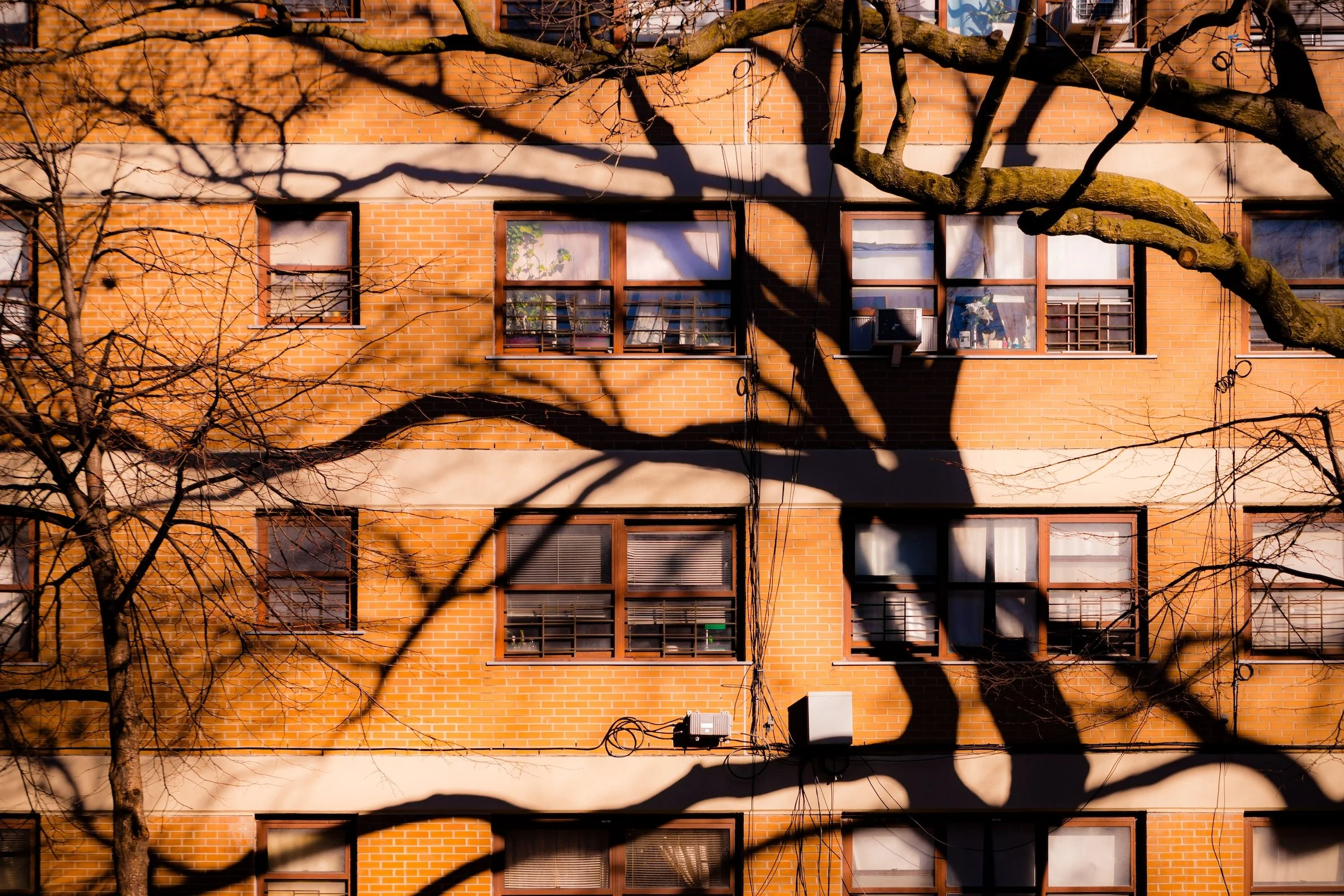
Williamsburg - Brooklyn - Flowing Shadows.jpg
Definition:
Shadowroots are organic, branching shadows—most often from leafless trees—where the shadow reads like a second body: roots, veins, nervous system. The strongest examples fuse the tree and its shadow into one connected composition.
Usage:
Shadowroots are one of the most reliable ways to give a quiet scene a pulse. They can turn ordinary streets, lawns, and sidewalks into structured ground planes—adding rhythm, direction, and mood even when nothing else is moving. In suburban settings especially, they become a kind of visual spell: the neighborhood goes still, and the trees quietly redraw the world.
Shadowroots can function as leading lines, as compositional scaffolding, or as the subject itself. When the branching is bold and the landing zone is clean, the shadow-body becomes the photograph’s true architecture.
In Depth:
I coined Shadowroots as a way to name (and therefore reliably seek) a specific kind of organic shadow that feels fundamentally different from projected geometry. These aren’t grids pasted onto surfaces by infrastructure. They’re living silhouettes—branching, fractal, vein-like forms—that behave like roots laid across pavement. What makes Shadowroots distinct is the sense of fusion: the tree and its shadow feel like one organism stretched across two planes. The trunk becomes an anchor; the ground becomes the page; the shadow becomes a second anatomy.
Shadowroots matter because they add narrative and atmosphere to otherwise ordinary scenes. They can guide the eye through a frame, introduce a surreal double-body effect, and give calm streets a mythic undertone—especially in winter and early spring when branches are at their most articulate. In practice, Shadowroots can serve as leading lines, foreground drama, or the emotional center of the image.
Shadowroots are also wonderfully portable. This isn’t an NYC thing; it’s a sun-and-tree thing. Anywhere you have low-angle light, bare branches, and a clean landing zone, the same visual behavior appears. That universality is part of why Shadowroots belong in the Photographic Lexicon: this is a repeatable way of seeing, not a one-off seasonal trick.
A few quick ways to spot them in the field:
Favor leafless trees and low sun; winter and early spring are prime.
Look for clean landing zones (simple asphalt, sidewalks, lawns) where the “root system” can read.
Compose for fusion: keep source and shadow in relationship, not as separate subjects.
Watch for scale; the shadow-body often reads larger than the tree, which is part of the magic.
Move until the branching feels expressive, not tangled noise.
Below are ten launch examples that show Shadowroots in different forms: signature fusion frames, ground-plane root systems that lead the eye, and quieter suburban scenes where the phenomenon becomes atmosphere. Each image includes a brief note on what the Shadowroots are doing in the frame, and why I consider it a strong example of the concept.
Signature Shadowroots (Full Fusion)
These are the “purest” Shadowroots—tree and shadow held together so the viewer feels the organism split across two planes: body above, root-body below.
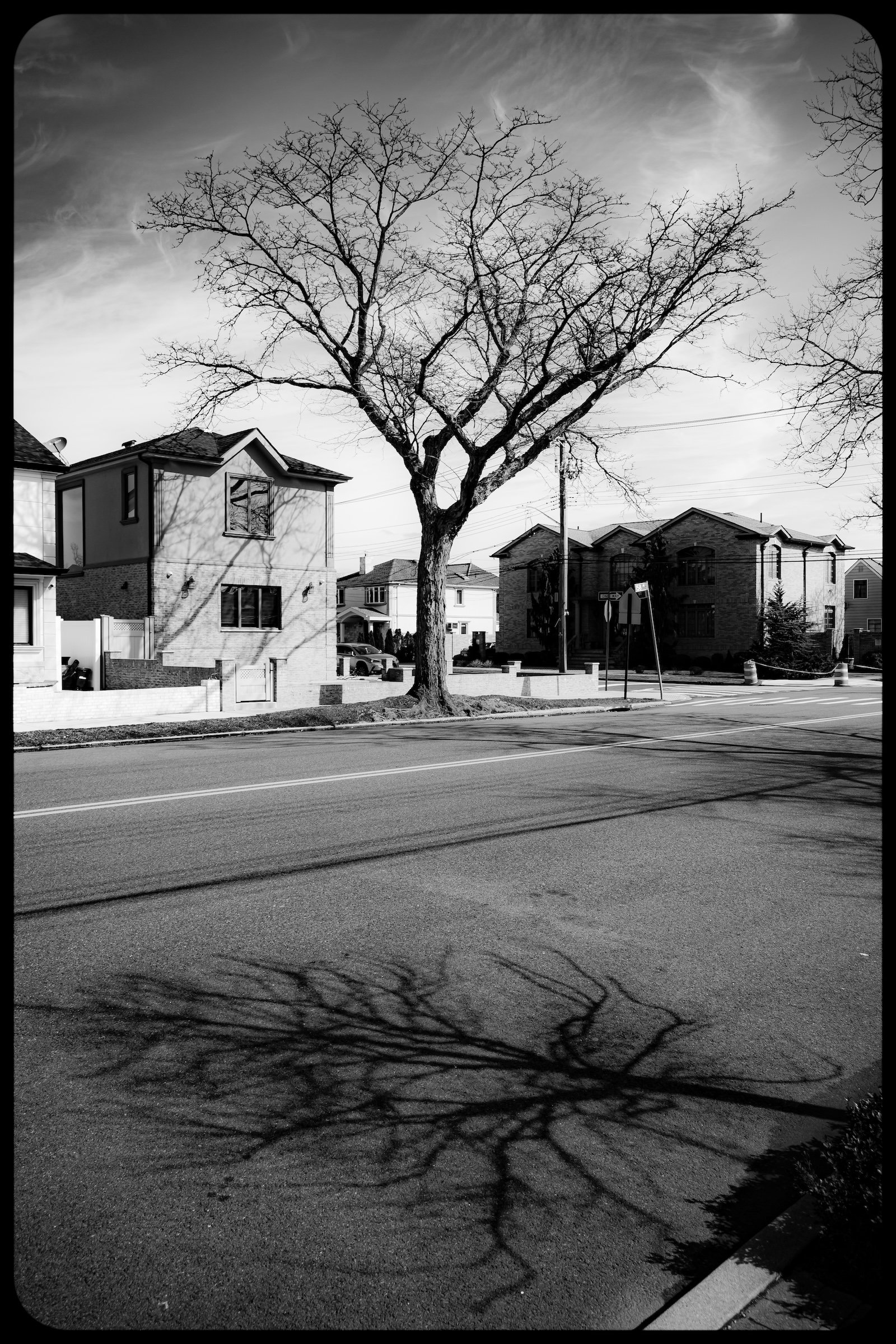
Howard Beach — Queens — Asphalt Root System
The tree anchors the scene while its shadow spreads across the street like a root network searching for purchase. The fusion is what makes it feel alive: you’re not just seeing “shadow,” you’re seeing the tree’s second body take over the ground plane.
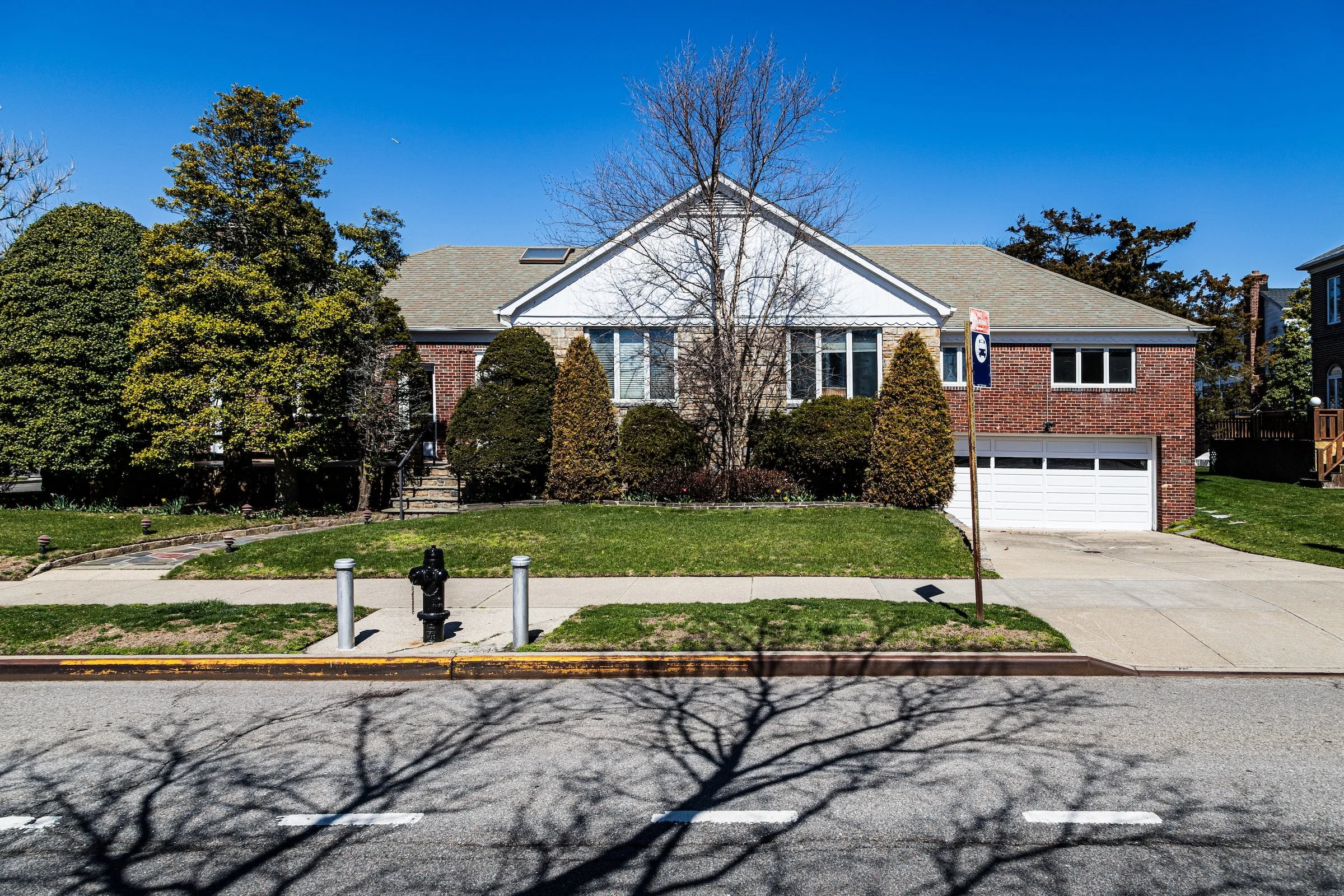
Belle Harbor — Queens — Double Anatomy
Here the trunk becomes a vertical spine and the shadow becomes a horizontal echo, expanding the tree’s presence across the frame. When caster and cast-shadow are held together like this, the image becomes more than documentation—it becomes a visual metaphor.

South Beach — Florida — Palm Shadow Totem
Even with a palm, the Shadowroots logic holds: a living form projects an identity-shape that becomes the composition’s emotional center. The crisp silhouette turns a simple facade into a stage, and the “second body” reads instantly against the street.
Ground-Plane Root Systems
In these examples, the shadow-body does most of the compositional work—acting as leading lines, rhythm, and drama across asphalt and sidewalk.
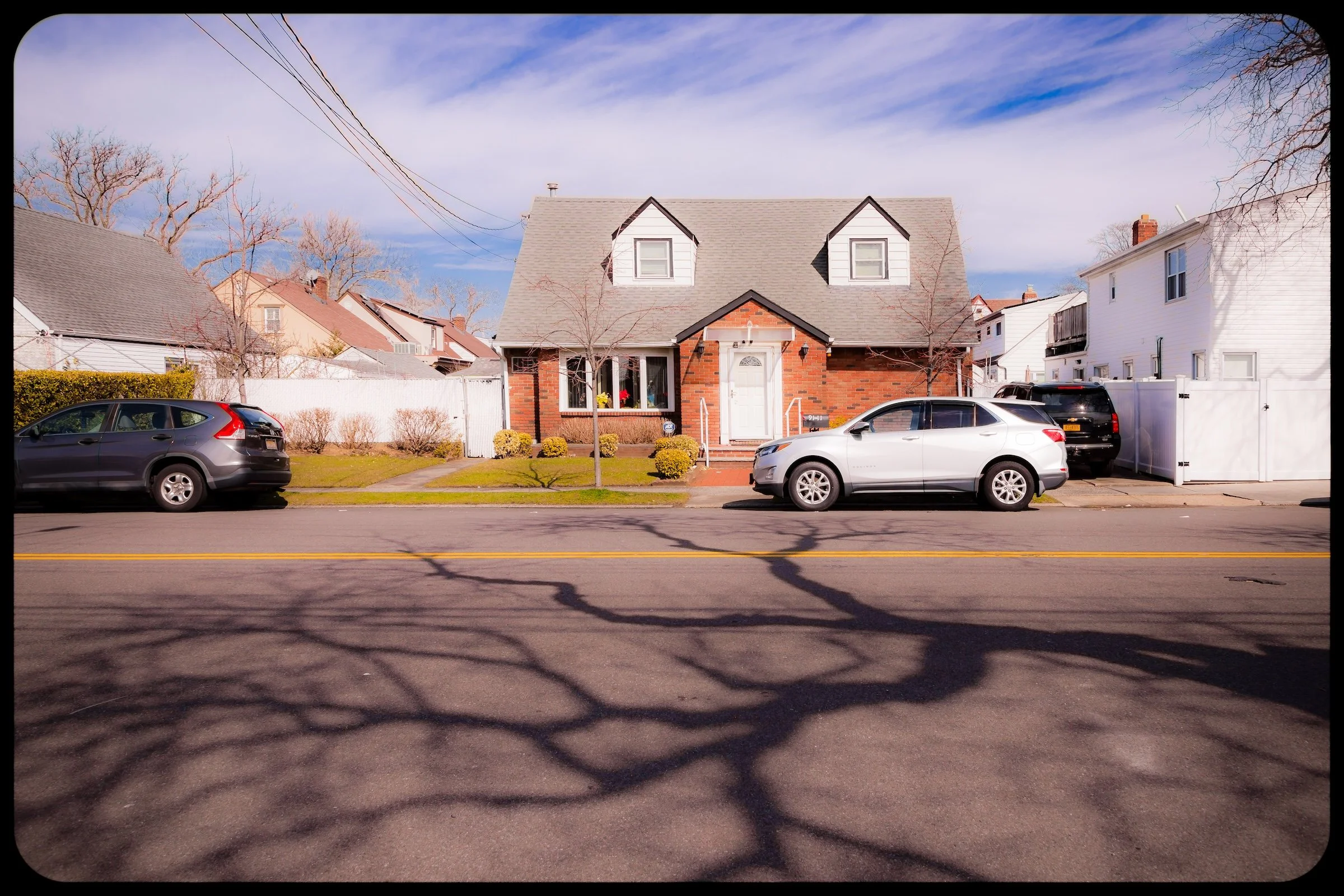
Howard Beach — Queens — Root Veins Across the Lane
The branching shadow splits the asphalt into organic pathways, creating rhythm and direction in a calm suburban frame. Shadowroots don’t require spectacle—when the root-web is strong, it can supply the scene’s entire sense of movement.
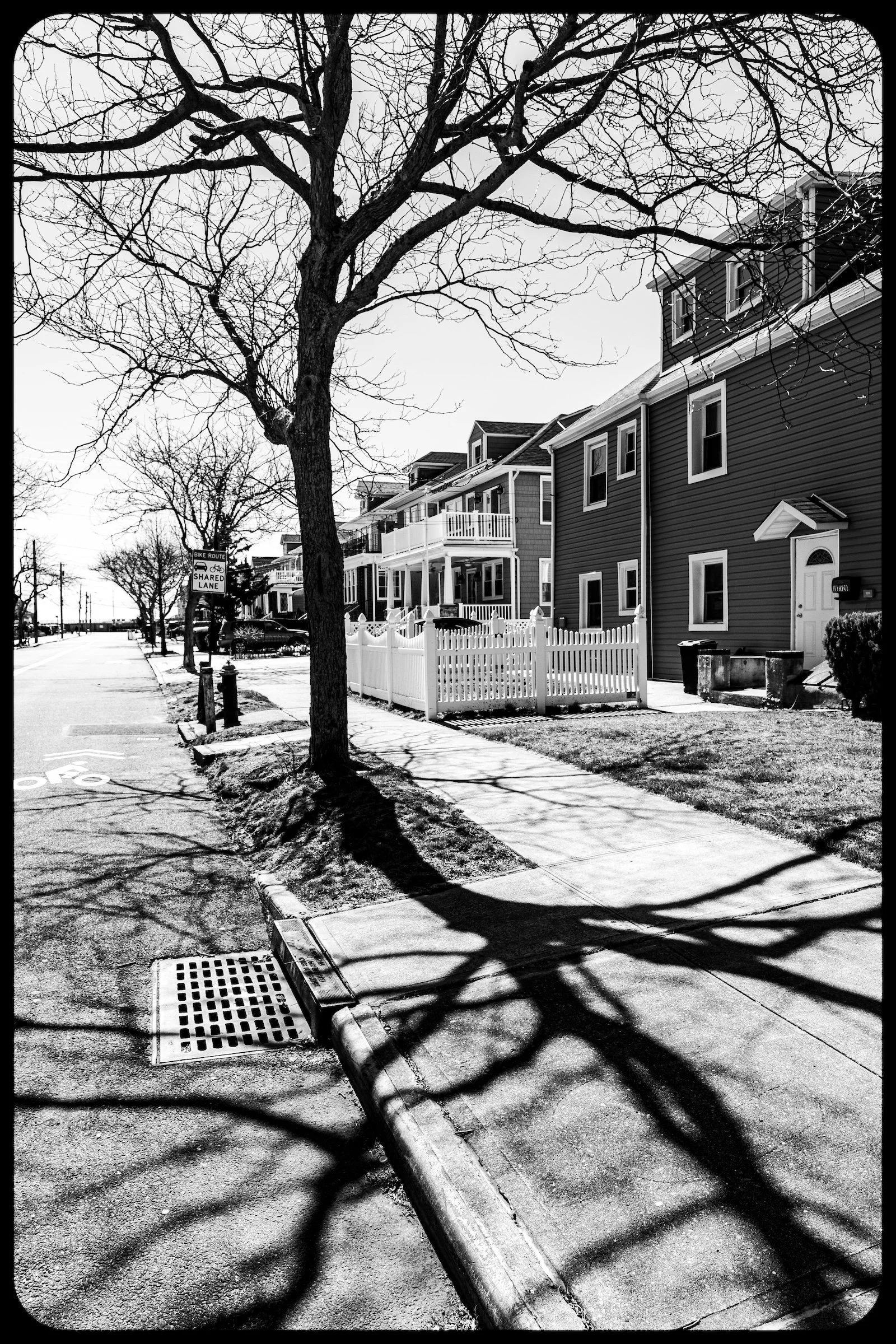
Belle Harbor — Queens — Streetwide Roots
The shadow-body spreads wide enough to change the emotional temperature of the street, adding gravity to an otherwise quiet moment. Shadowroots work best when the surface is simple—the cleaner the pavement, the more the branching reads like ink.
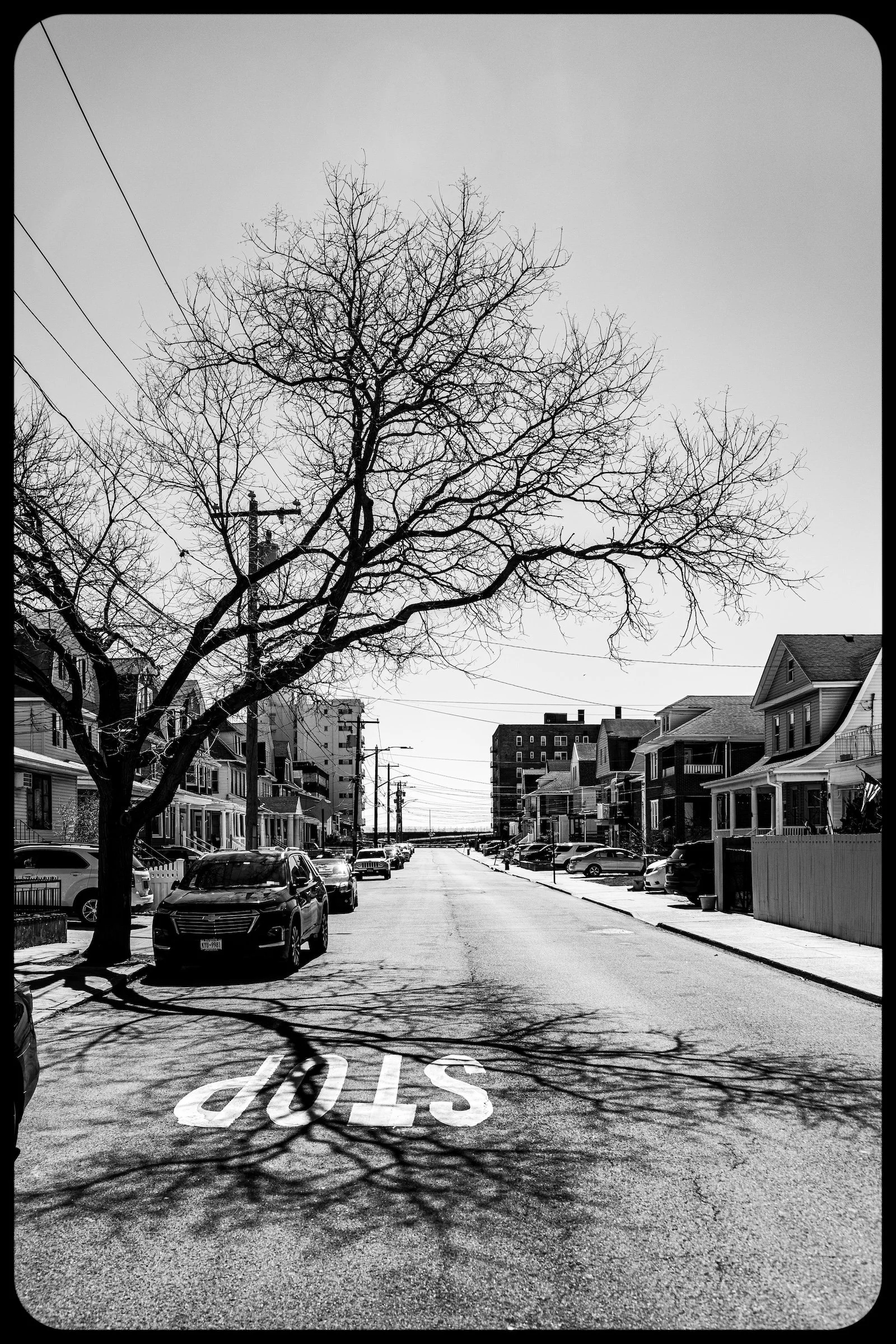
Rockaway Park — Queens — Sidewalk Root Rhythm
Here the roots behave like organic leading lines, pulling the viewer forward while staying slightly uncanny. It’s a great example of how Shadowroots can provide the “energy” in a photograph even when everything else is still.
Lawns and Quiet Streets
Shadowroots love calm residential settings because the shadow-body has room to stretch—and the scene has enough quiet to let the phenomenon feel atmospheric instead of busy.
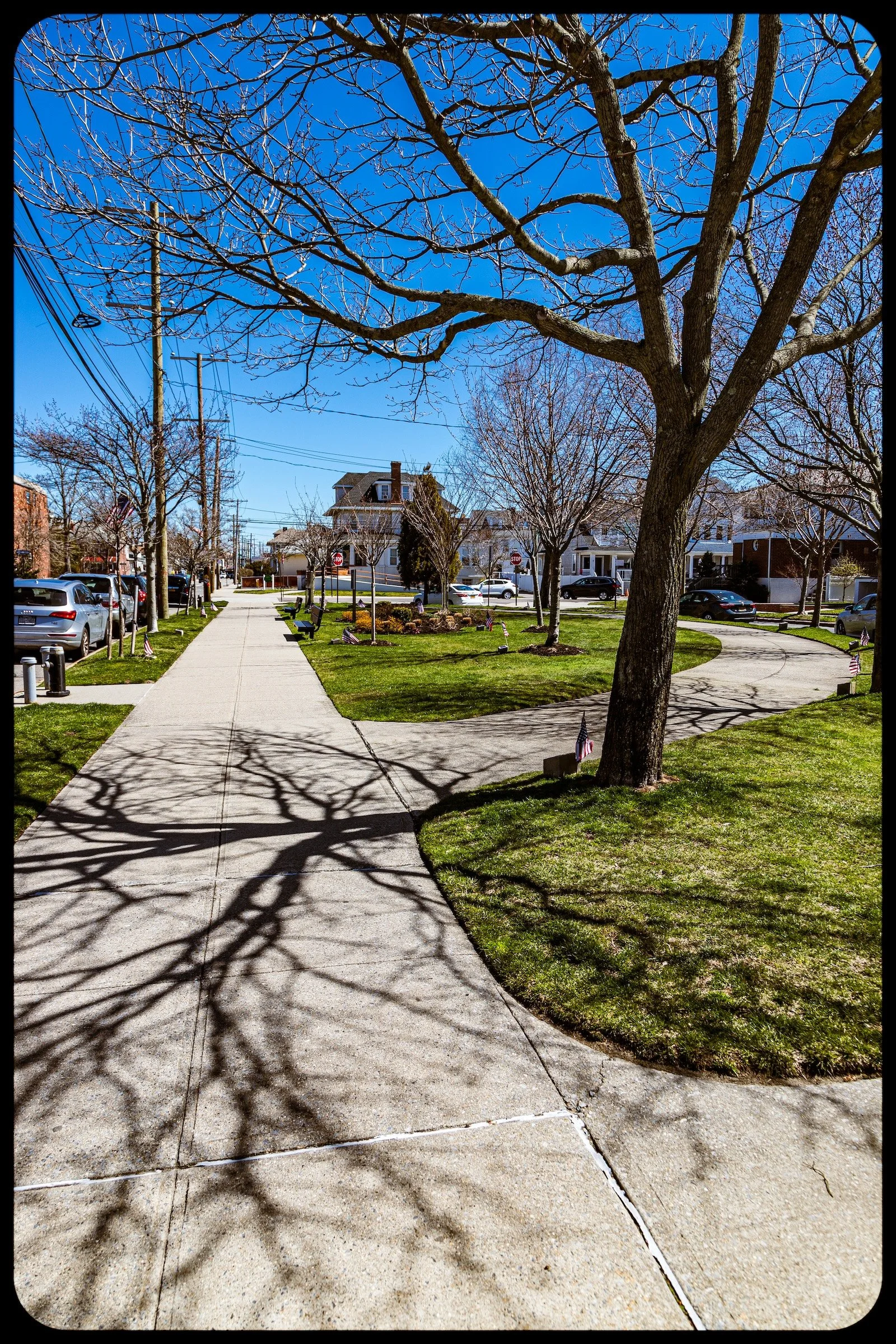
Rockaway Park — Queens — Drifted Roots
The shadow spreads across the street with a lighter touch—less graphic punch, more atmosphere—like the neighborhood is briefly haunted by its own trees. These are the Shadowroots that feel like weather: present, subtle, and unmistakably seasonal.
Explore Further