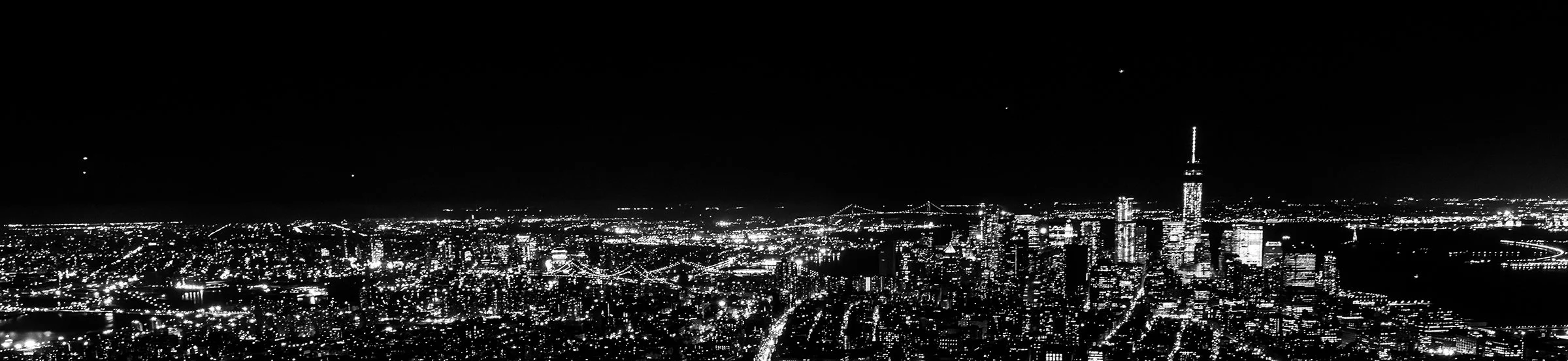

Long Exposure
Definition:
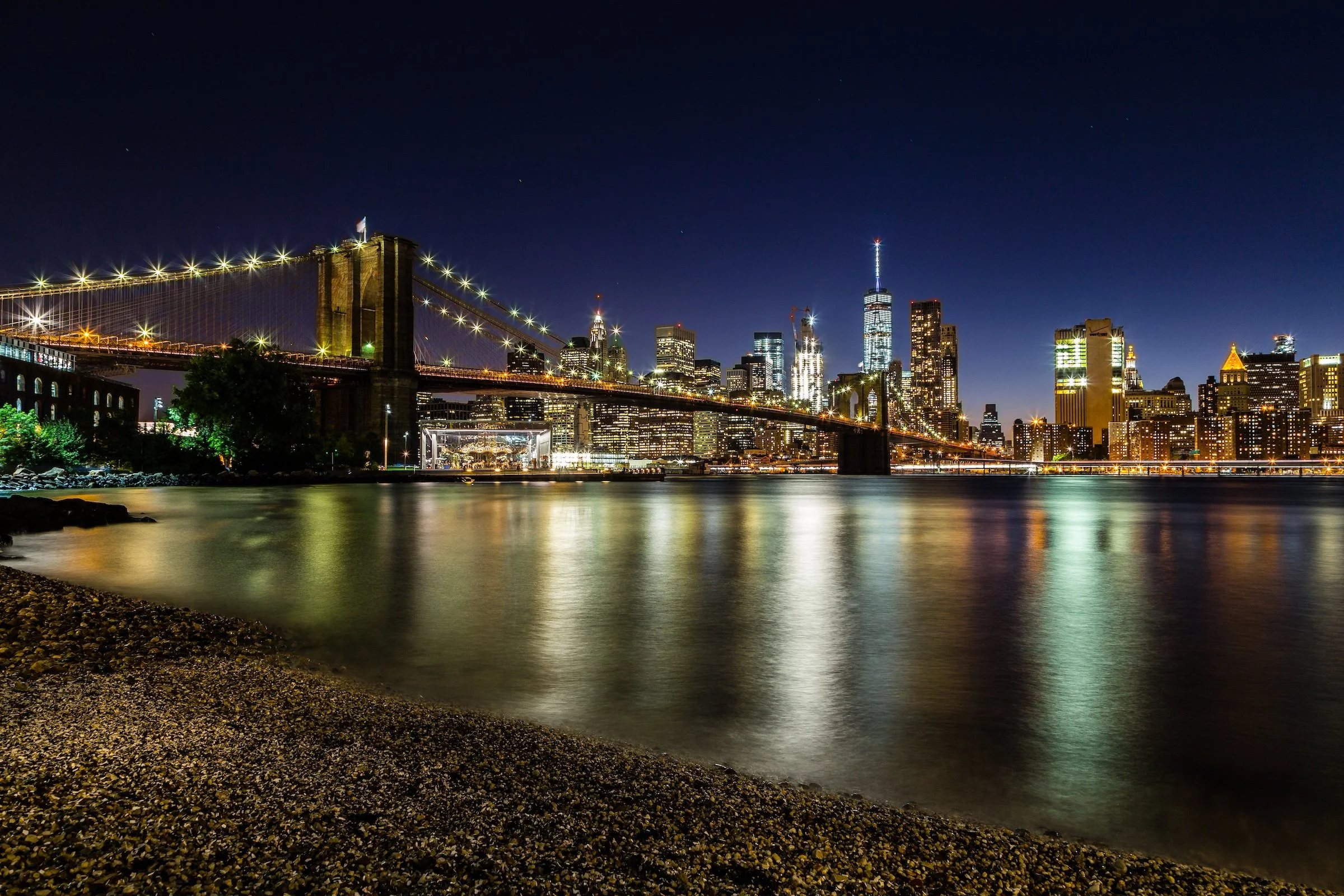
A technique where slower shutter speeds (from fractions of a second to many seconds) transform movement into blur, streaks, and flow—turning crowds into mist, traffic into light trails, and water into glass.
Usage:
Long Exposure is how you photograph time itself. It can quiet a chaotic city, exaggerate speed, or create a surreal calm where motion becomes a soft atmospheric layer around sharp architecture.
In Depth:
Long exposure is less about “slow shutter” and more about choosing what stays and what dissolves.
Three core decisions:
Anchor: what must remain sharp (buildings, a platform edge, a landmark, a single figure).
Flow: what becomes motion (people, cars, trains, water, clouds).
Duration: how much time you want to show (a whisper of blur vs. full transformation).
Practical field notes:
Stabilize: tripod, rail, or a solid surface. Even with stabilization, long exposures magnify micro-shake.
Use lower ISO and smaller apertures to extend shutter time without blowing highlights.
In bright daylight, an ND filter (neutral density) makes multi-second exposures possible.
Watch highlight clipping: long exposures love to overcook streetlights and signage.
Below are ten examples where the city becomes a time-machine: crowds soften, trains smear into speed, and night light paints the streets.
Crowd-Flow and Public Space:
Where people become atmosphere and architecture becomes the subject.
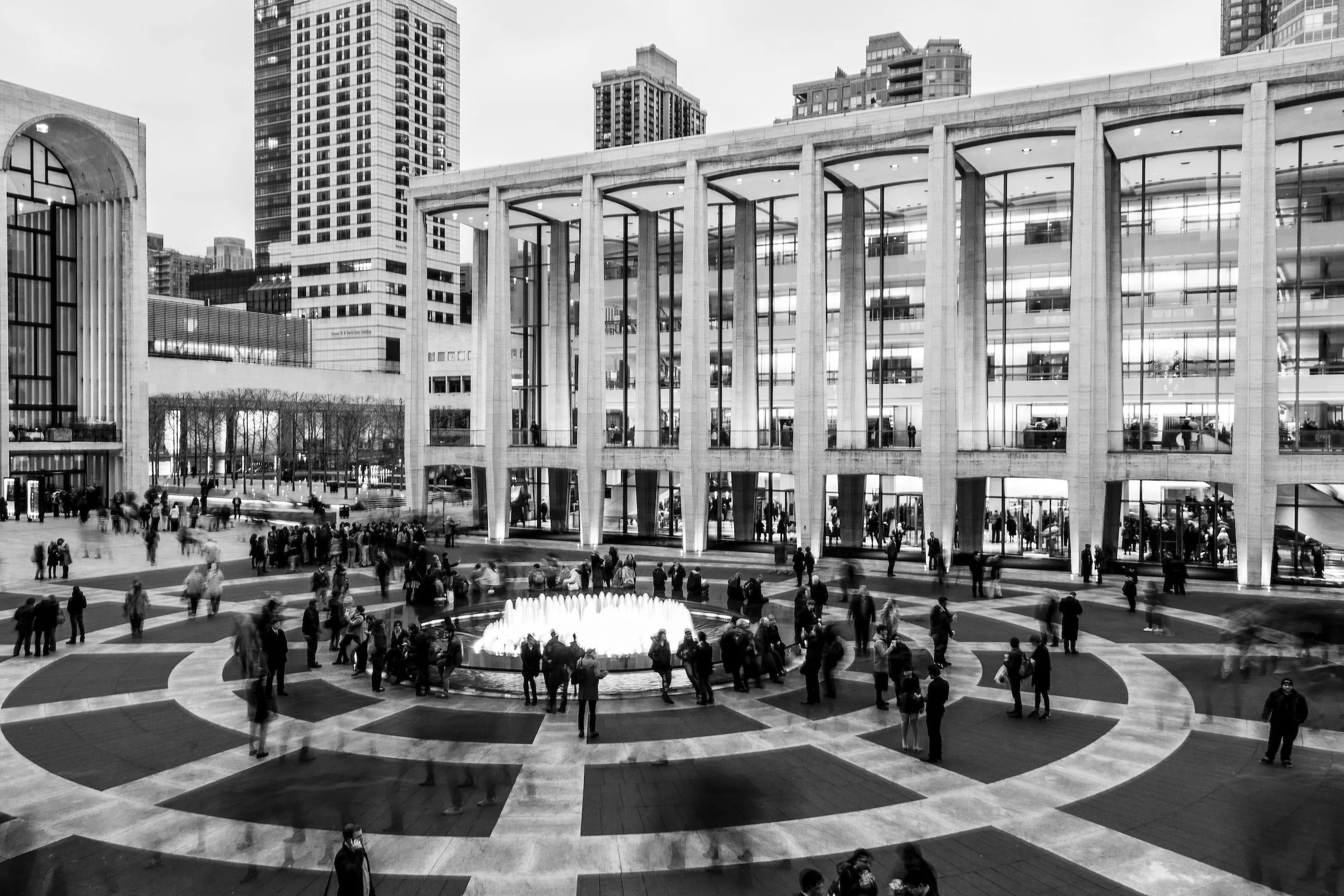
Lincoln Square - Manhattan - Lincoln Center Plaza
The plaza holds steady while the crowd becomes a soft current around the fountain. This is classic long exposure: human motion as “weather” inside a stable civic structure.
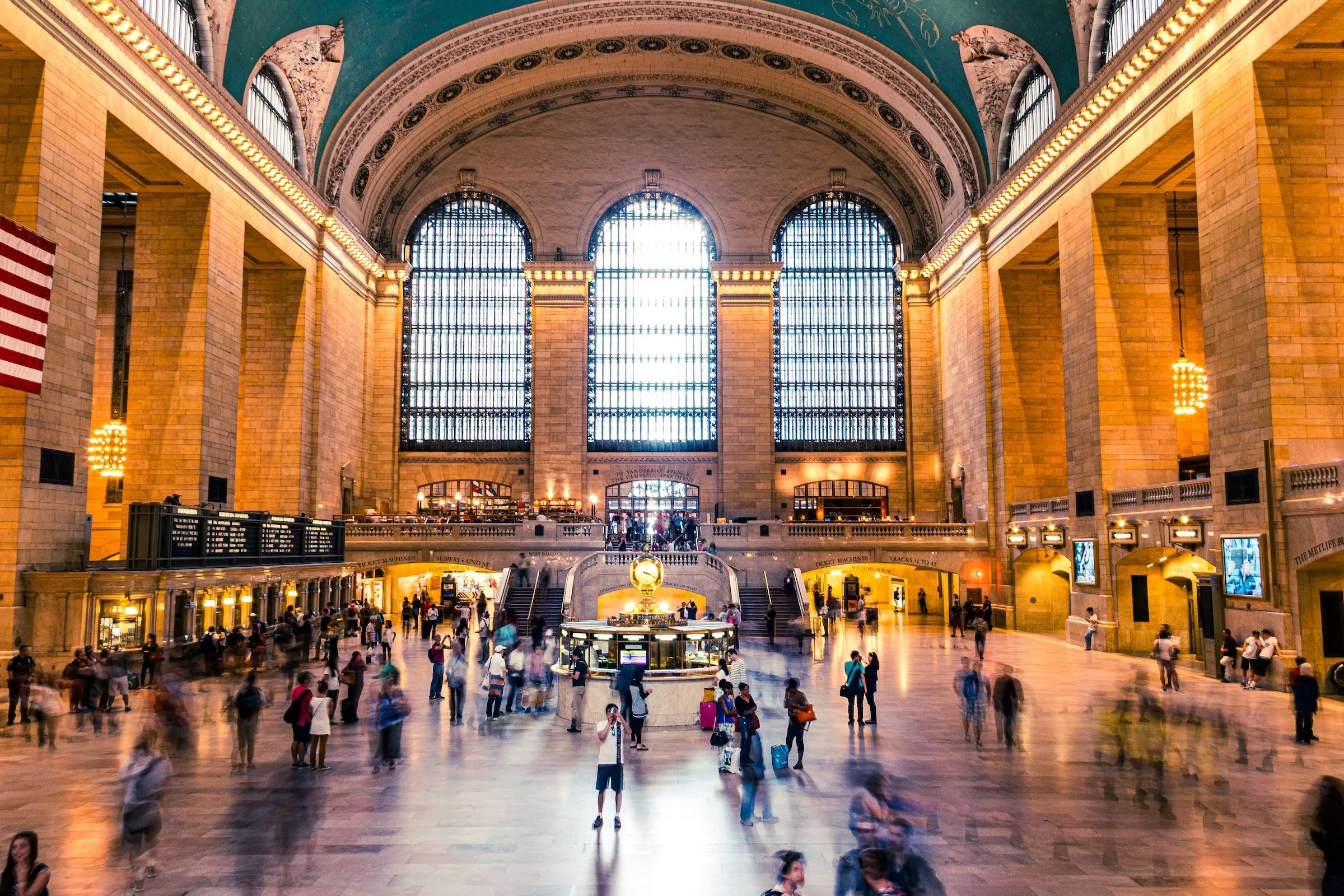
Midtown East - Manhattan - Grand Central Shuffle
The station is a cathedral of movement. The blur doesn’t hide the crowd—it defines it, turning foot traffic into a visual pulse.
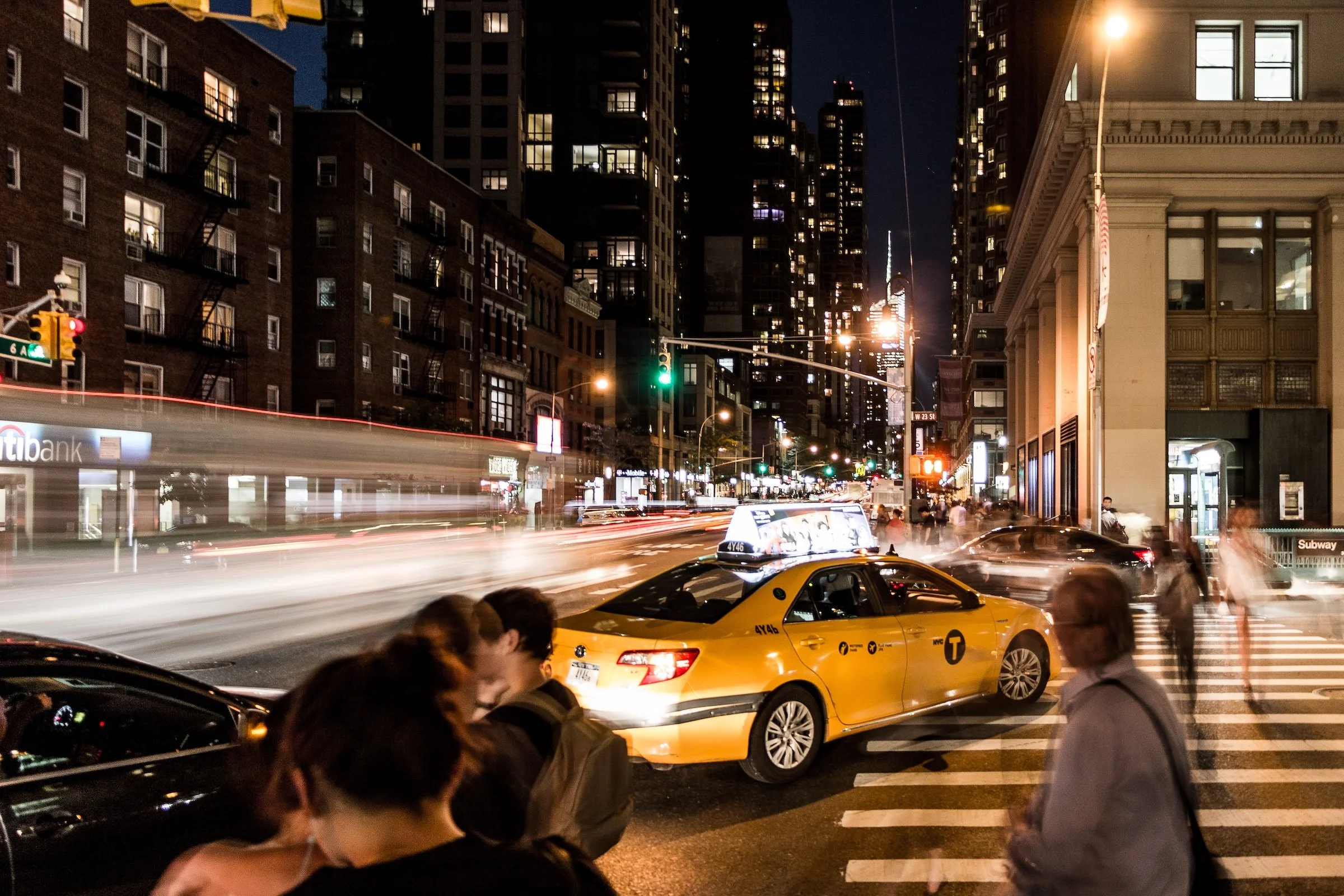
Transit as Velocity:
Where trains and vehicles become pure direction—speed rendered as form.
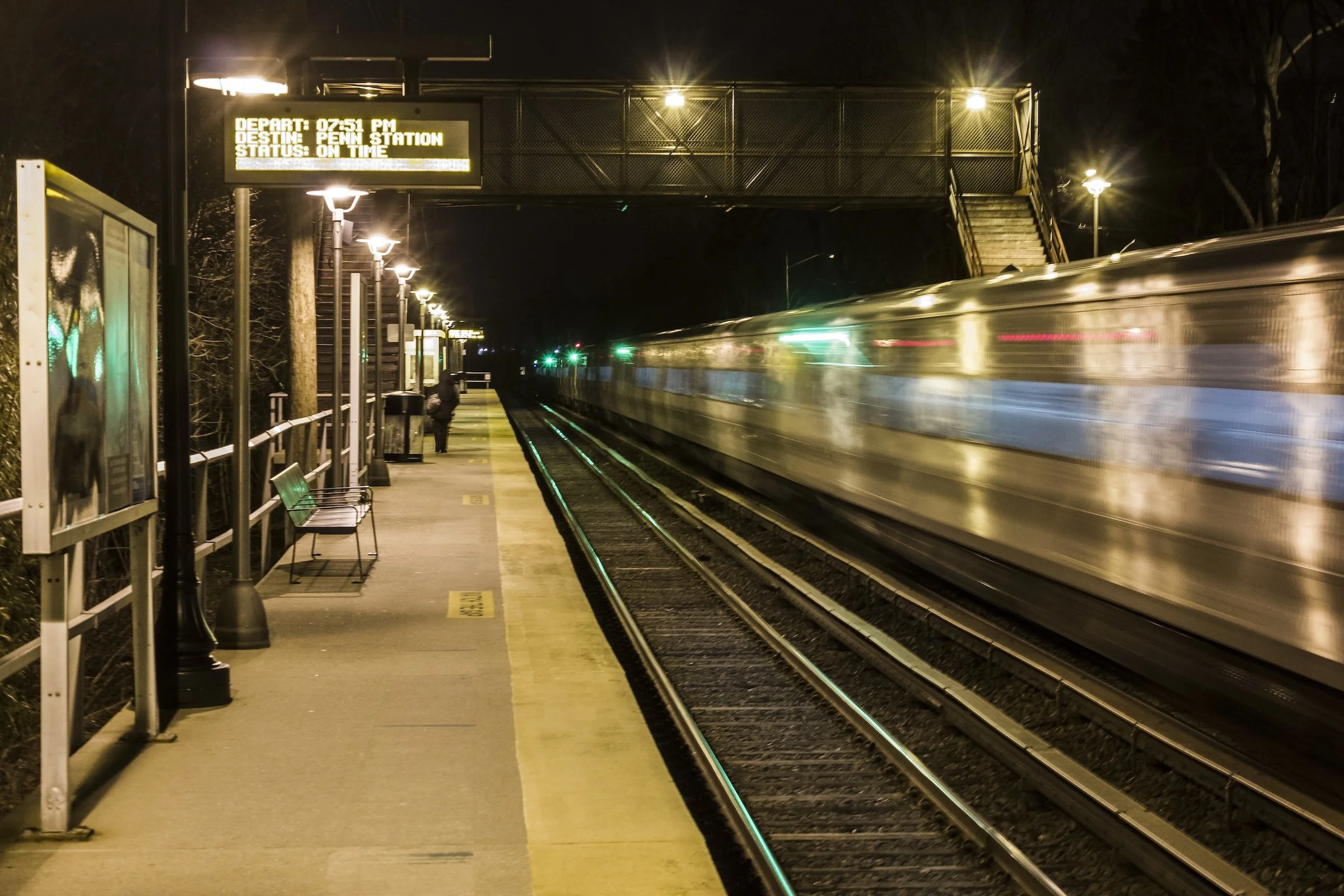
Little Neck - Queens - Night Train
The platform stays rigid while the train becomes a streaked body of motion. The strongest transit long exposures are about clean geometry—platform edge, track lines, and a single dominant blur.
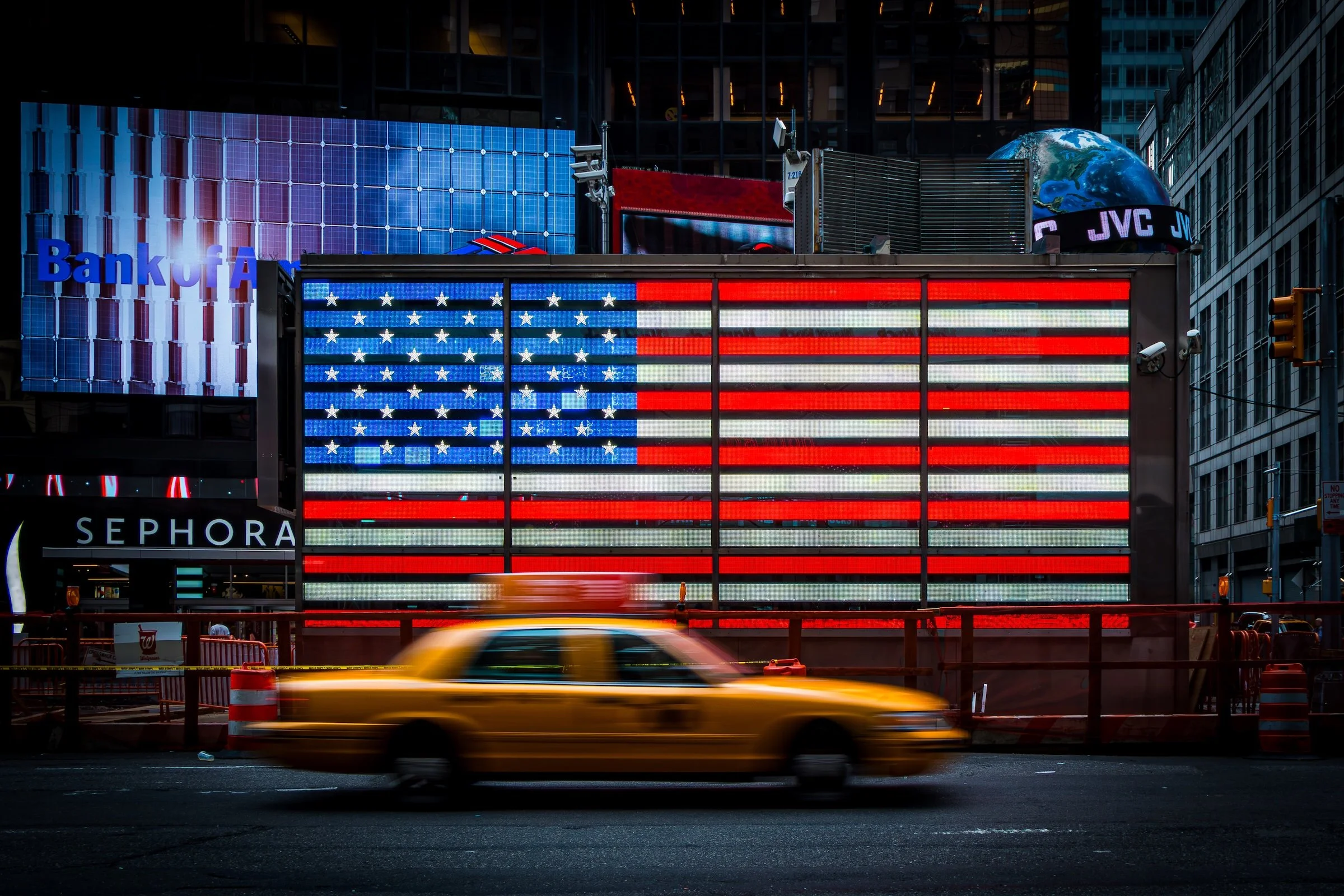
Theater District (Times Square) - Manhattan - Of America
A high-energy scene becomes graphic: bright signage + motion blur creates a layered document of speed and spectacle.
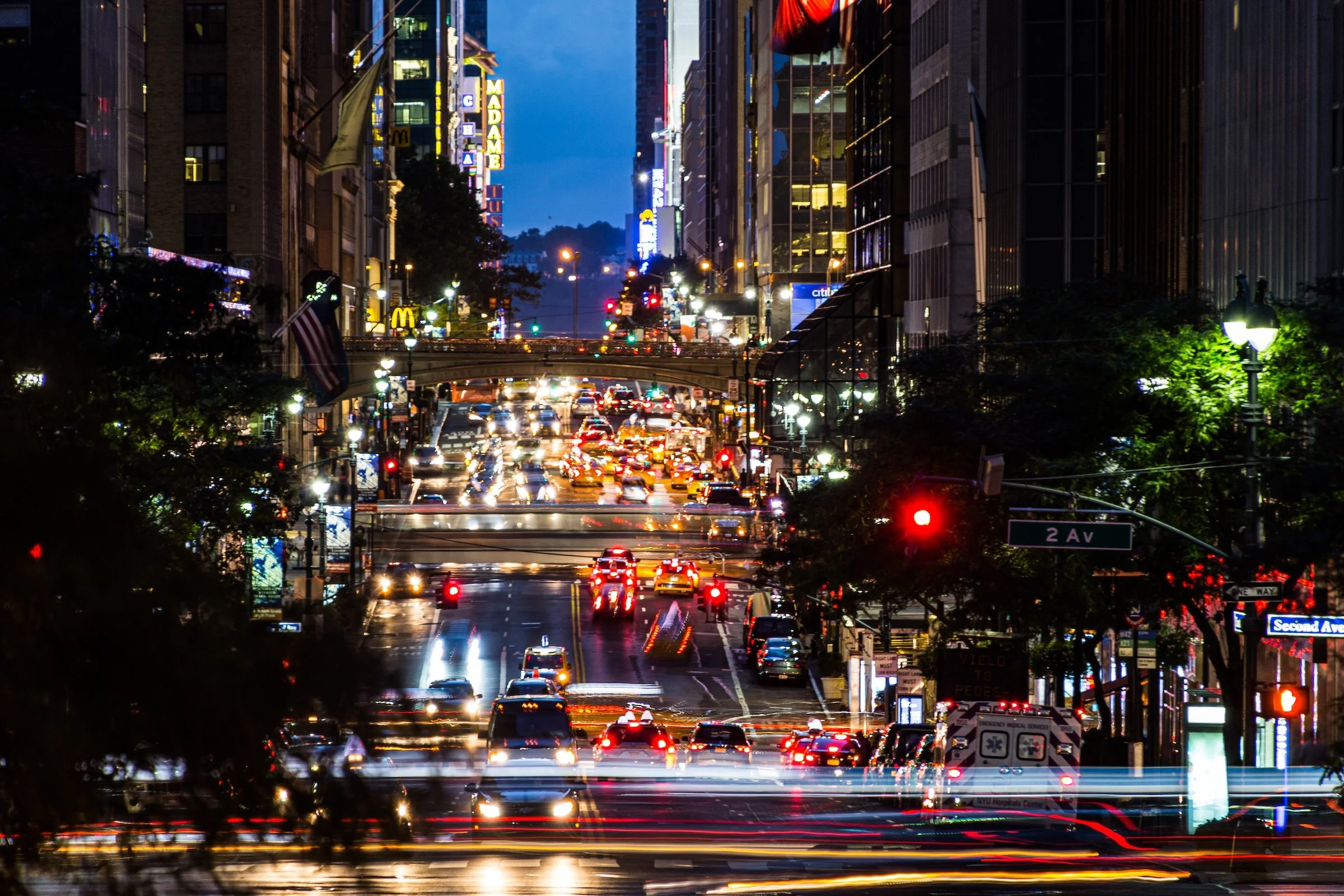
Tudor City - Manhattan - Forty-Second Street Hustle
Traffic trails and city glow turn the street into a flowing river. The trick is balancing: let the streaks lead, but keep enough sharp architecture for the viewer to stand on.

Theater District (Times Square) - Manhattan - Times Square at Night
Times Square is light itself; long exposure makes it feel like a living electric cloud. The strongest versions keep a clear horizon and a few crisp edges amid the chaos.
Night Structure and Light-Paint:
Where the city’s illumination becomes the brush—streaks, glow, and reflected color.
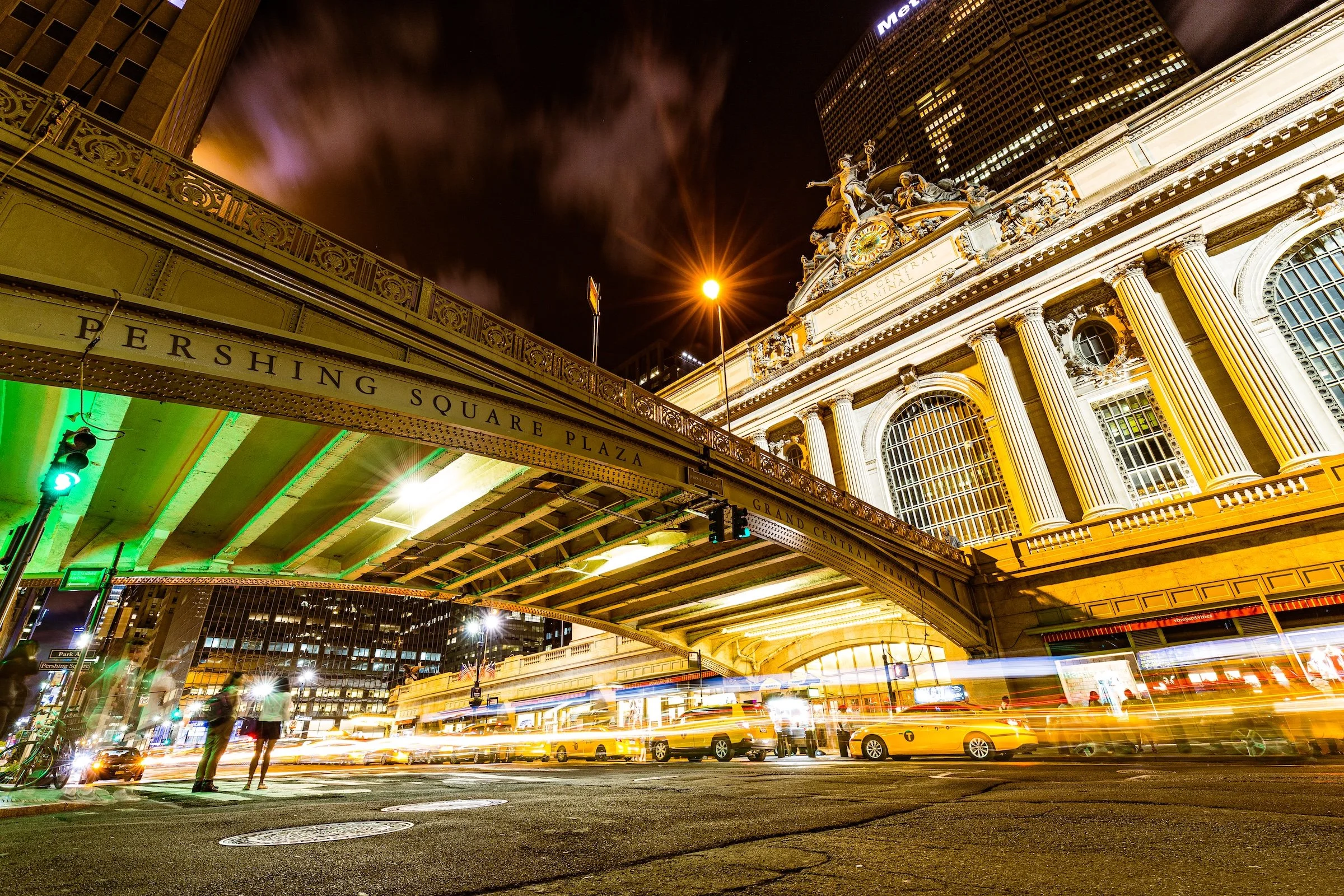
Midtown East - Manhattan - Pershing Square Plaza
Light trails and bright fixtures turn the street into a staged set. Keeping the underlying architecture crisp is what makes the glow feel intentional, not messy.
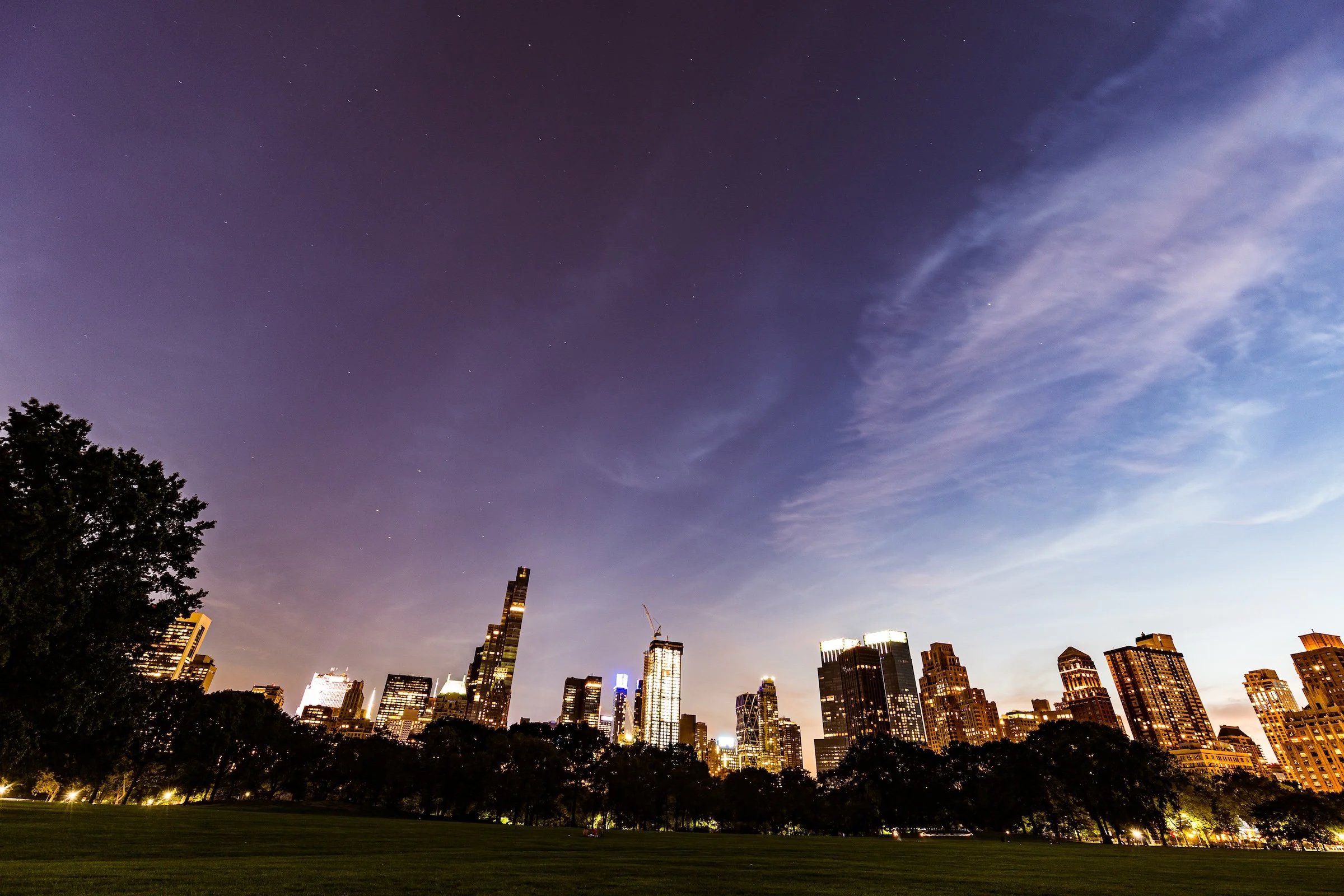
Central Park - Manhattan - City Lights
Even nature becomes a stage for long exposure—trees as silhouette anchors, skyline glow as atmosphere, and the sky as an extended tonal field.

Tudor City - Manhattan - Windsor Tower At Dusk
Dusk long exposures are about the hinge moment: enough ambient light for detail, enough darkness for glow. The sky becomes velvety, the building becomes a warm monolith, and time becomes visible.
Explore Further