
LENOX HILL
Manhattan
Geographic Setting
Occupying the southwest corner of the Upper East Side, Lenox Hill stretches from East 59th Street to East 77th Street, bounded by Lexington Avenue on the east and Fifth Avenue on the west. Within these bounds lies a remarkable concentration of old-world refinement and 20th-century evolution—the original heart of East Side prestige. To the west, Central Park defines its edge with one of Manhattan’s most elegant frontages, lined by limestone mansions and apartment palaces. To the east, the bustling corridor of Lexington and Third Avenues provides the hum of commerce, transit, and daily life.
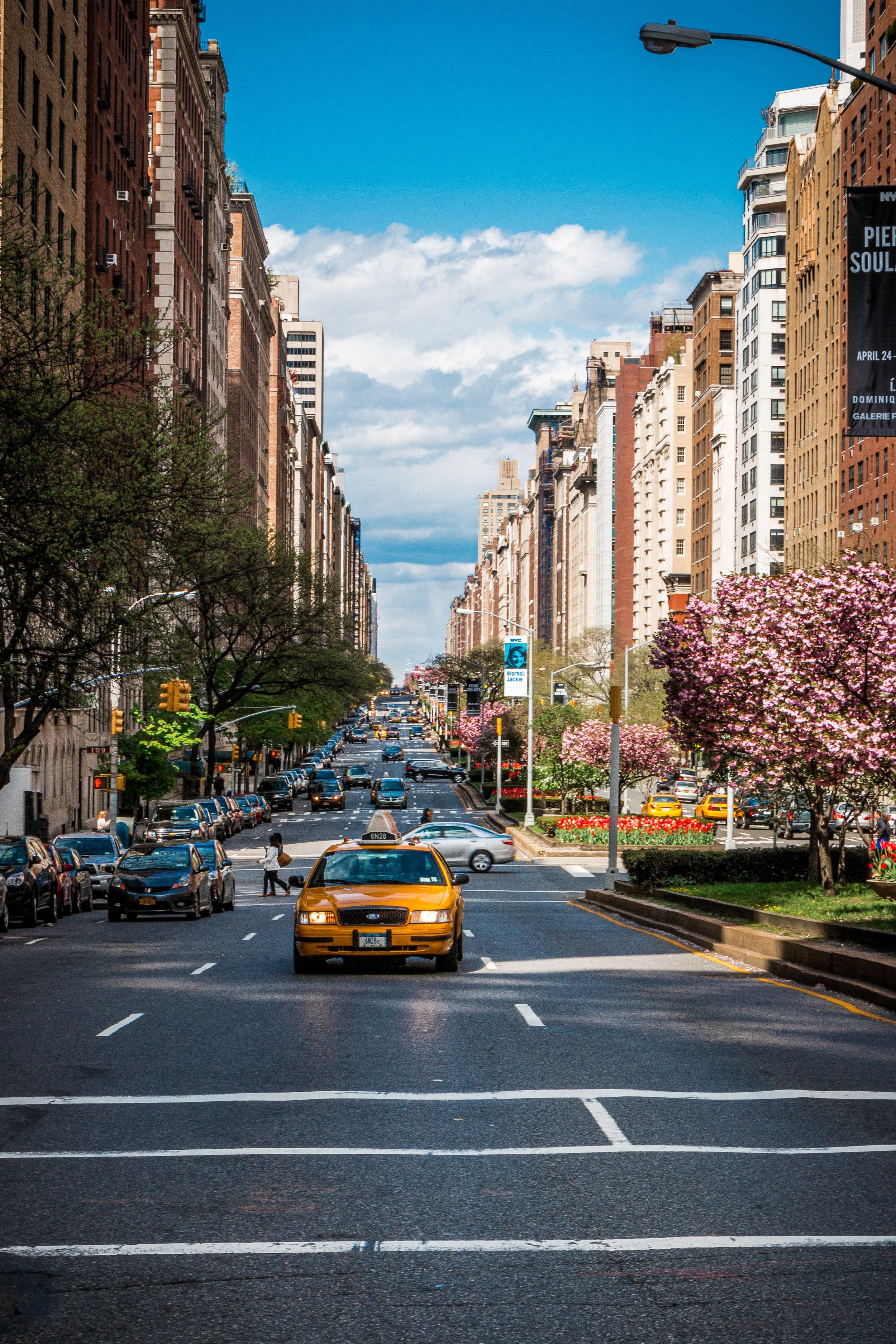
The neighborhood’s north–south arteries—Park Avenue, Madison Avenue, and Fifth Avenue—each possess distinct personalities. Park Avenue’s central mall of flowers and sculpture bisects rows of grand prewar apartment houses; Madison Avenue blends designer boutiques, galleries, and brownstones; and Fifth Avenue forms the city’s “Gold Coast,” home to the Frick Collection, the Metropolitan Club, and numerous embassies and cultural institutions. Despite its central location, Lenox Hill retains a sense of intimacy through tree-lined side streets, midblock townhouses, and hidden courtyards that preserve echoes of the Gilded Age.
Etymology and Origins
The name “Lenox Hill” derives from Robert Lenox (1759–1839), a Scottish-born merchant, philanthropist, and landowner who amassed a vast estate of some 30 acres between what are now Fifth and Park Avenues, from 68th to 74th Streets. The “hill” referenced the gentle rise of ground that sloped upward from the East River toward the spine of Park Avenue—a topographical feature that distinguished the estate from the surrounding farmland. Upon Robert Lenox’s death, his son James Lenox, an art collector and philanthropist, inherited the property and later donated portions to the city, endowing Lenox Library (which merged with the Astor and Tilden libraries to form today’s New York Public Library).
By the mid-19th century, the Lenox holdings were subdivided and sold to developers as the city’s grid advanced northward, cementing the family’s name in the geography of the Upper East Side. Though the original hill was leveled by street grading, its title endures—symbolizing both heritage and elevation, literal and social.
The Neighborhood
19th Century: From Estates to Brownstones
In the early 1800s, the Lenox estate and surrounding tracts were semi-rural, dotted with country houses, stables, and market gardens. The completion of Central Park (opened 1858) transformed the area into prime real estate. By the 1860s–1880s, rows of brownstones and Italianate townhouses replaced farmland, catering to New York’s emerging professional class. Builders such as Crosby and Wheeler and John Jacob Astor’s agents developed full rows along East 70th and 71st Streets, where carved stoops, iron railings, and leafy sidewalks created a dignified residential landscape.
Churches soon followed, including St. James’ Episcopal Church (founded 1810; rebuilt 1884) and St. Jean Baptiste Roman Catholic Church (built 1882 on Lexington Avenue), each serving distinct social circles. The Lenox Hill Neighborhood House, founded in 1894 by local reformers, provided education and social services to immigrant families, foreshadowing the neighborhood’s later blend of privilege and philanthropy.
During the late 19th century, the westward blocks nearest Fifth Avenue became the domain of the wealthy elite. Limestone mansions—many designed by McKim, Mead & White, Carrère and Hastings, and C.P.H. Gilbert—lined the parkfront. These residences, rivaling those of Fifth Avenue’s “Millionaire’s Row” below 59th Street, defined the new axis of New York opulence, attracting the Fricks, Harknesses, and Whitneys.
Early 20th Century: The Rise of the Avenue Palaces
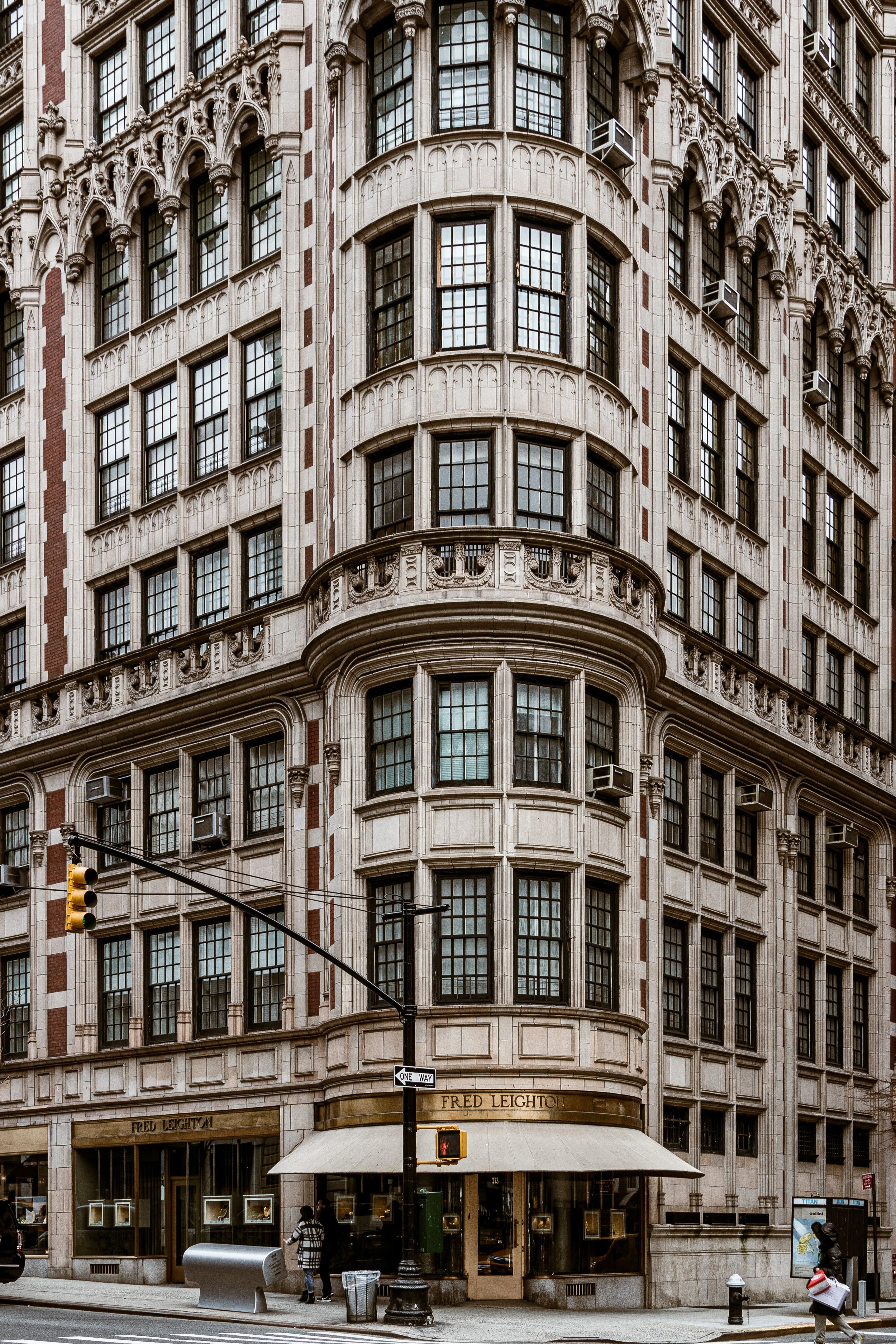
The dawn of the 20th century saw Lenox Hill’s architectural transformation from single-family mansions to luxury apartment buildings. With the opening of the Fourth Avenue Tunnel (1902), which buried the old steam railroad and created Park Avenue, developers erected grand cooperative residences with Beaux-Arts façades and doormen—an innovation blending urban density with private privilege. Buildings such as 740 Park Avenue (Rosario Candela, 1930), 730 Park Avenue (Ely Jacques Kahn, 1929), and 778 Park Avenue (Delano & Aldrich, 1931) remain architectural icons, housing the city’s most distinguished residents.
Meanwhile, Madison Avenue emerged as a refined commercial strip of art galleries, couture shops, and small hotels. The Frick Collection, occupying Henry Clay Frick’s former mansion at 70th Street and Fifth Avenue, opened to the public in 1935, transforming private luxury into civic treasure. East of Park Avenue, the smaller-scale tenements and apartment houses along Lexington and Third Avenues retained a middle-class character, housing clerks, teachers, and shopkeepers who sustained the area’s economic diversity.
Lenox Hill’s dual identity—grandeur and modesty side by side—became its enduring signature.
Lenox Hill Photographic Tour
Mid–Late 20th Century: Preservation and Renewal
In the postwar decades, Lenox Hill weathered both modernization and preservation. The construction of Lenox Hill Hospital’s new pavilion (1950s) and Weill Cornell Medical College’s expansions reinforced the neighborhood’s medical prominence. Yet many of its side streets retained their 19th-century townhouses, shielded by vigilant community groups. The Landmarks Preservation Commission (est. 1965) designated the Upper East Side Historic District (1981), protecting much of Lenox Hill’s architectural fabric from demolition.
Through the 1960s and 1970s, Madison Avenue blossomed into an international shopping corridor—lined with couture houses like Hermès, Chanel, and Ralph Lauren—while Park Avenue’s apartments remained bastions of inherited wealth. Social institutions such as the Knickerbocker Club, the Union Club, and the Asia Society (Park Avenue at 70th Street) preserved the neighborhood’s patrician air. Meanwhile, the Lenox Hill Neighborhood House expanded its mission to include early childhood education and elder services, embodying the area’s philanthropic conscience.
Cultural anchors—the Frick Collection, Whitney Museum of American Art (then on 75th Street, before its move downtown), and nearby Metropolitan Museum of Art—made Lenox Hill an artistic corridor as well as a residential one.
21st Century: Refinement, Density, and Continuity
In the 21st century, Lenox Hill has continued to balance elegance with evolution. Historic brownstones coexist with new glass condominiums rising discreetly along side streets east of Park Avenue. The neighborhood’s medical corridor—anchored by Lenox Hill Hospital, Weill Cornell, and The Rockefeller University just beyond its borders—has expanded its influence, blending scientific innovation with residential stability.
Park Avenue remains synonymous with prestige, but Lenox Hill’s social composition has broadened. Professionals, international families, and retirees share the neighborhood’s calm streets, where proximity to Central Park, cultural landmarks, and world-class schools maintains desirability. Ongoing restoration projects at the Frick Madison and nearby galleries have reasserted Lenox Hill’s role as a center of aesthetic refinement.
The neighborhood’s civic life remains robust: the Upper East Side Historic District Committee, Friends of the Upper East Side, and the Lenox Hill Neighborhood House collaborate on preservation, sustainability, and social outreach—proving that community remains the underpinning of luxury.
Lenox Hill Photo Gallery
Spirit and Legacy
Lenox Hill stands as the archetype of Upper East Side grace—a district where wealth and philanthropy, art and architecture, privilege and public conscience have long coexisted. Its townhouses and avenue palaces reflect the evolution of American urban aspiration, while its institutions embody service and continuity.
New York City
Use this custom Google map to explore where every neighborhood in all five boroughs of New York City is located.
The Five Boroughs
One of New York City’s unique qualities is its organization in to 5 boroughs: Manhattan, Brooklyn, Queens, The Bronx, and Staten Island. These boroughs are part pragmatic administrative districts, and part vestiges of the region’s past. Each borough is an entire county in New York State - in fact, Brooklyn is, officially, Kings County, while Staten Island is, officially Richmond County. But that’s not the whole story …
Initially, New York City was located on the southern tip of Manhattan (now the Financial District) that was once the Dutch colony of New Amsterdam. Across the East River, another city was rising: Brooklyn. In time, the city planners realized that unification between the rapidly rising cities would create commercial and industrial opportunities - through streamlined administration of the region.
So powerful was the pull of unification between New York and Brooklyn that three more counties were pulled into the unification: The Bronx, Queens, and Staten Island. And on January 1, 1898, the City of New York unified two cities and three counties into one Greater City of New York - containing the five boroughs we know today.
But because each borough developed differently and distinctly until unification, their neighborhoods likewise uniquely developed. Today, there are nearly 390 neighborhoods, each with their own histories, cultures, cuisines, and personalities - and each with residents who are fiercely proud of their corner of The Big Apple.