
Urban Mosaic
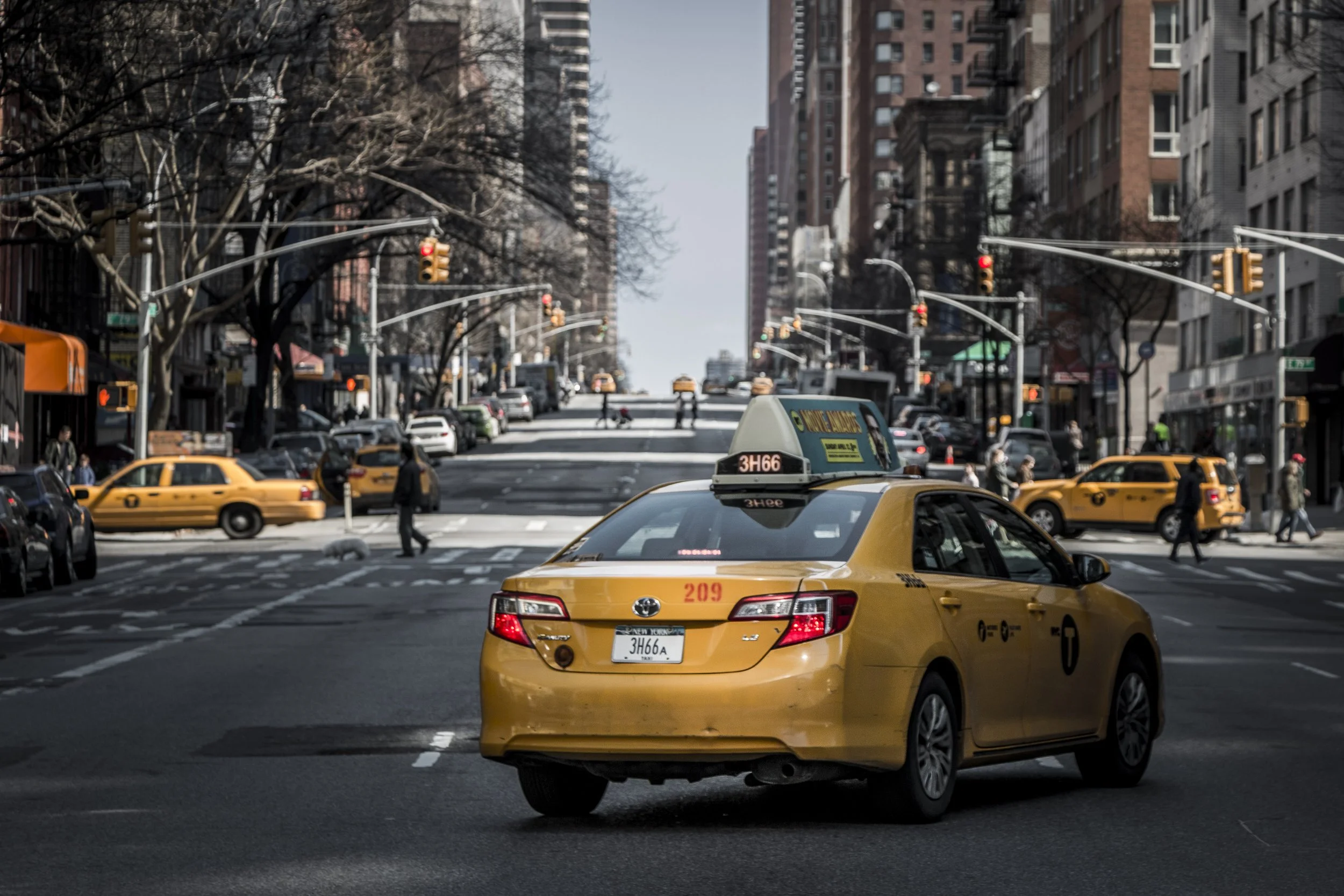
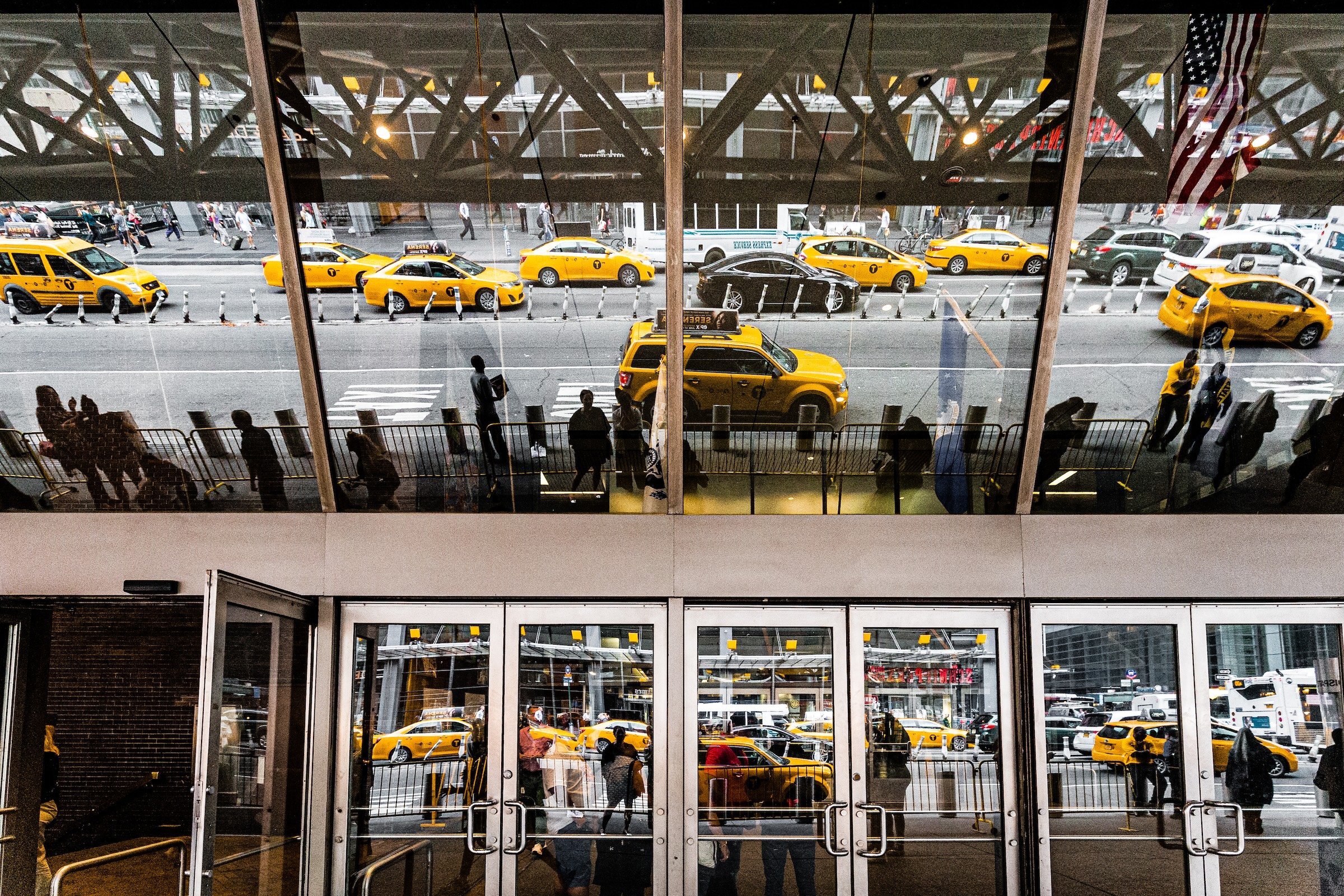
Hell's Kitchen (Clinton) - Manhattan - Taxis, Taxis, Taxis
Definition:
Urban Mosaic is the practice of building a photograph from fragments—layers, reflections, frames, signage, repeated windows, and partial scenes—so the image reads like a collage of city moments rather than a single-subject view.
Usage:
Use Urban Mosaic when the street feels too complex to “simplify,” and you decide to make that complexity the point. This approach is especially powerful for:
scenes seen through glass (reflections + interior/exterior layers),
frames-within-frames (windows, railings, structural cutouts),
storefronts and streetscapes where text + objects + people collide,
images where you want the viewer to discover the photo in pieces.
Urban Mosaic works best when every piece has a role: one fragment is the anchor, others become supporting tiles that add rhythm, meaning, or surprise.
In Depth:
Cities don’t present themselves as clean narratives. They present themselves as overlaps—things happening at once, images stacked in space, messages competing for attention, reflections turning the world into a double exposure you didn’t plan but can choose.
Urban Mosaic is a Lexicon term because it names a particular kind of photographic attention: the refusal to flatten the city into a single story. Instead, you let the frame behave like a mosaic wall—made of shards, each with its own color and texture, but arranged into a coherent whole.
A few field instincts that help mosaics click:
Pick an anchor tile. A strong mosaic image still needs a “first read” (a figure, a sign, a color block, a structural frame).
Invite the second and third read. Reflections, text, repeated windows, and background scenes become the hidden layers that reward looking.
Use edges intentionally. Mosaics love borders—window frames, metal grids, architectural seams—because they help fragments feel placed rather than accidental.
Let the city speak in typography. Words are part of the street’s texture. In mosaics, text becomes both meaning and design.
Embrace partiality. Cropped figures, cut-off signs, and clipped reflections often strengthen the collage effect.
The ten examples below show Urban Mosaic in multiple forms: glass as layering engine, architectural frames that “tile” the scene, and street typography that turns storefronts into visual patchwork.
Glass Layers (Reflections as Built-In Collage)
These images treat glass as a mosaic machine—combining two worlds (inside and outside) into one layered frame.
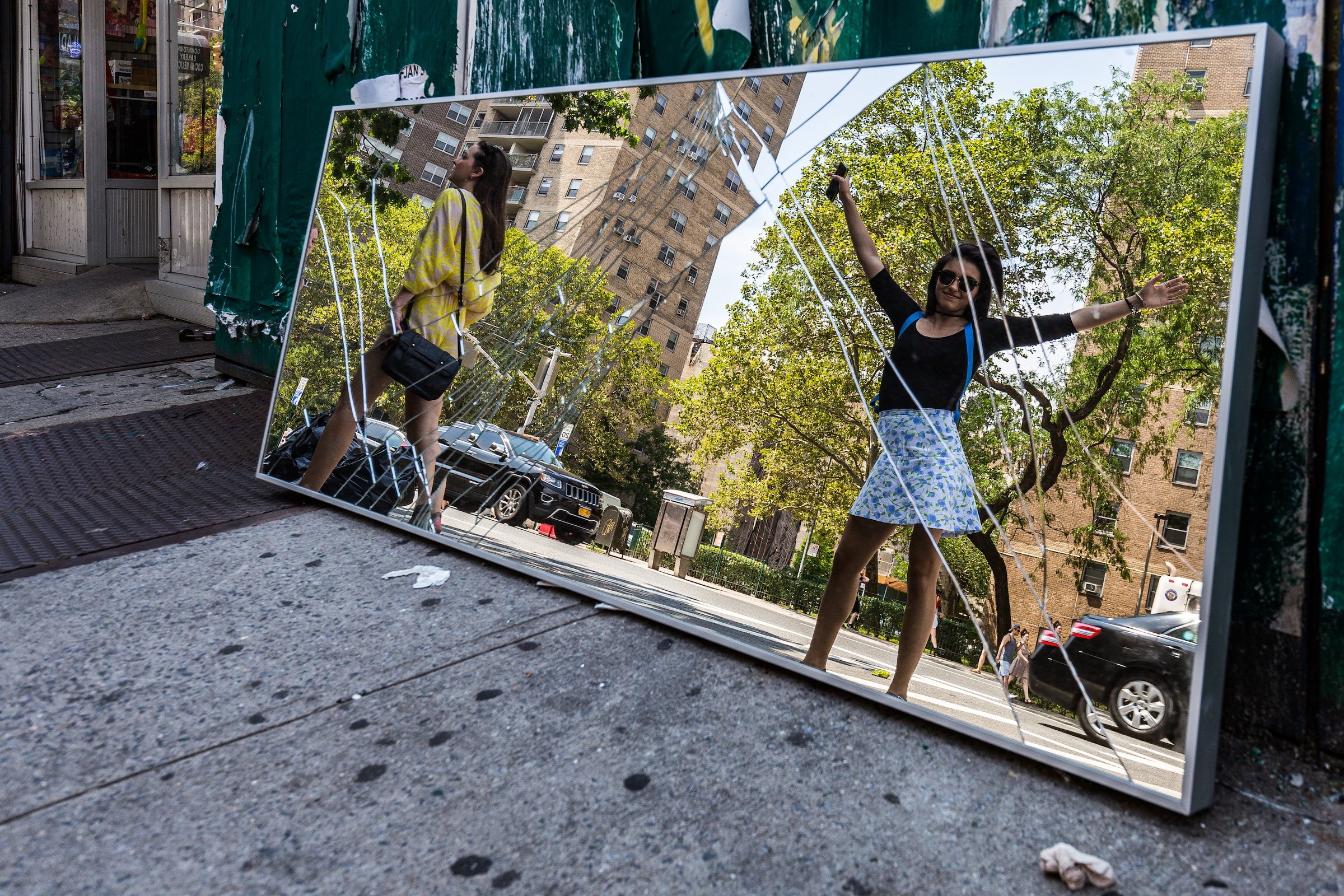
East Village - Manhattan - Reflection on 1st
A pure mosaic moment: the reflected figure becomes the “tile” that holds the frame, while the street scene behind it adds context and texture. The result reads like a staged tableau even though it’s found.

Lower East Side - Manhattan - Delancey Realistic Surrealism
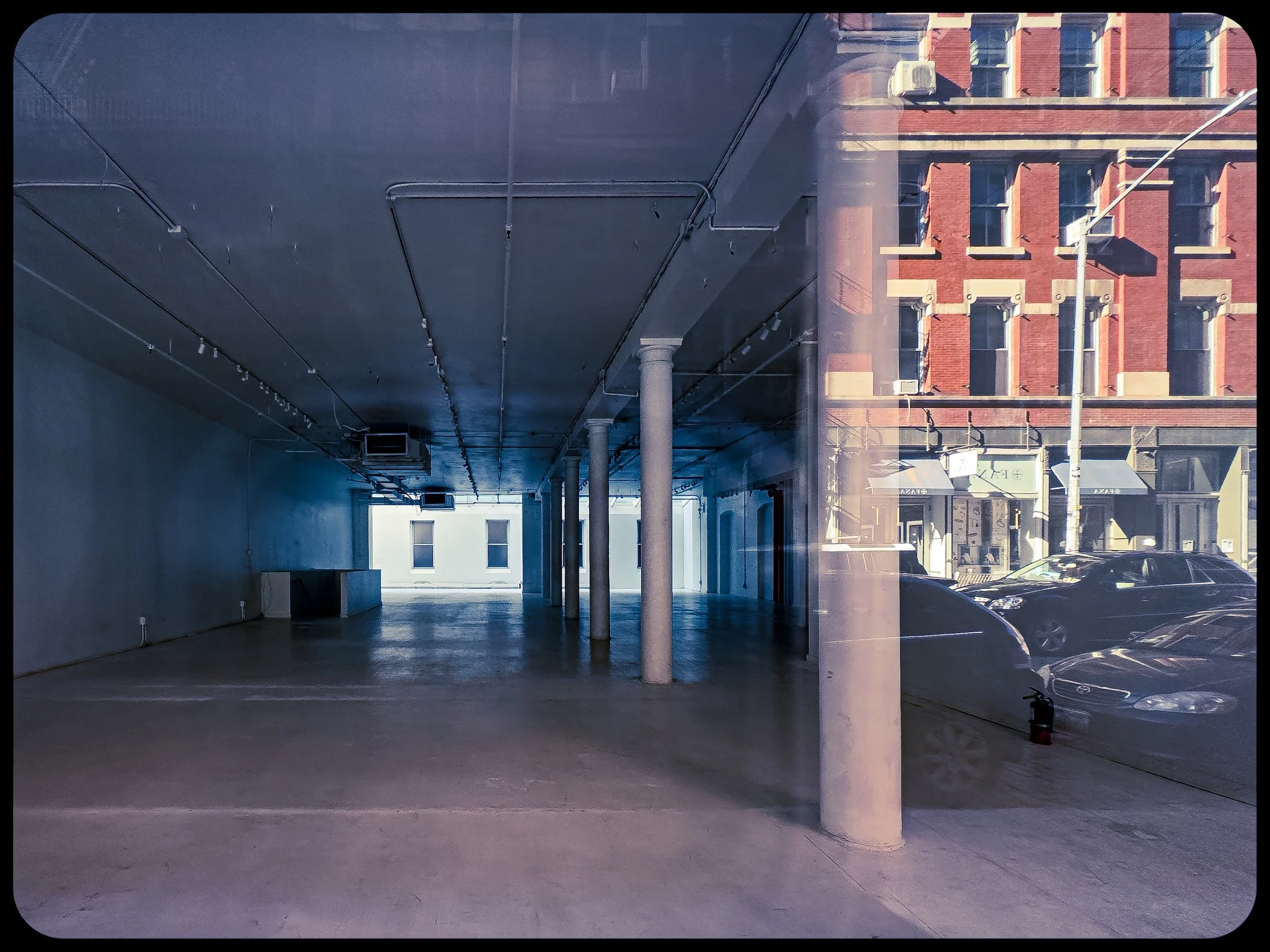
The window grid divides reality into panels, and reflections stack over the street like transparent wallpaper. The image feels assembled—multiple scenes stitched into one coherent rectangle.
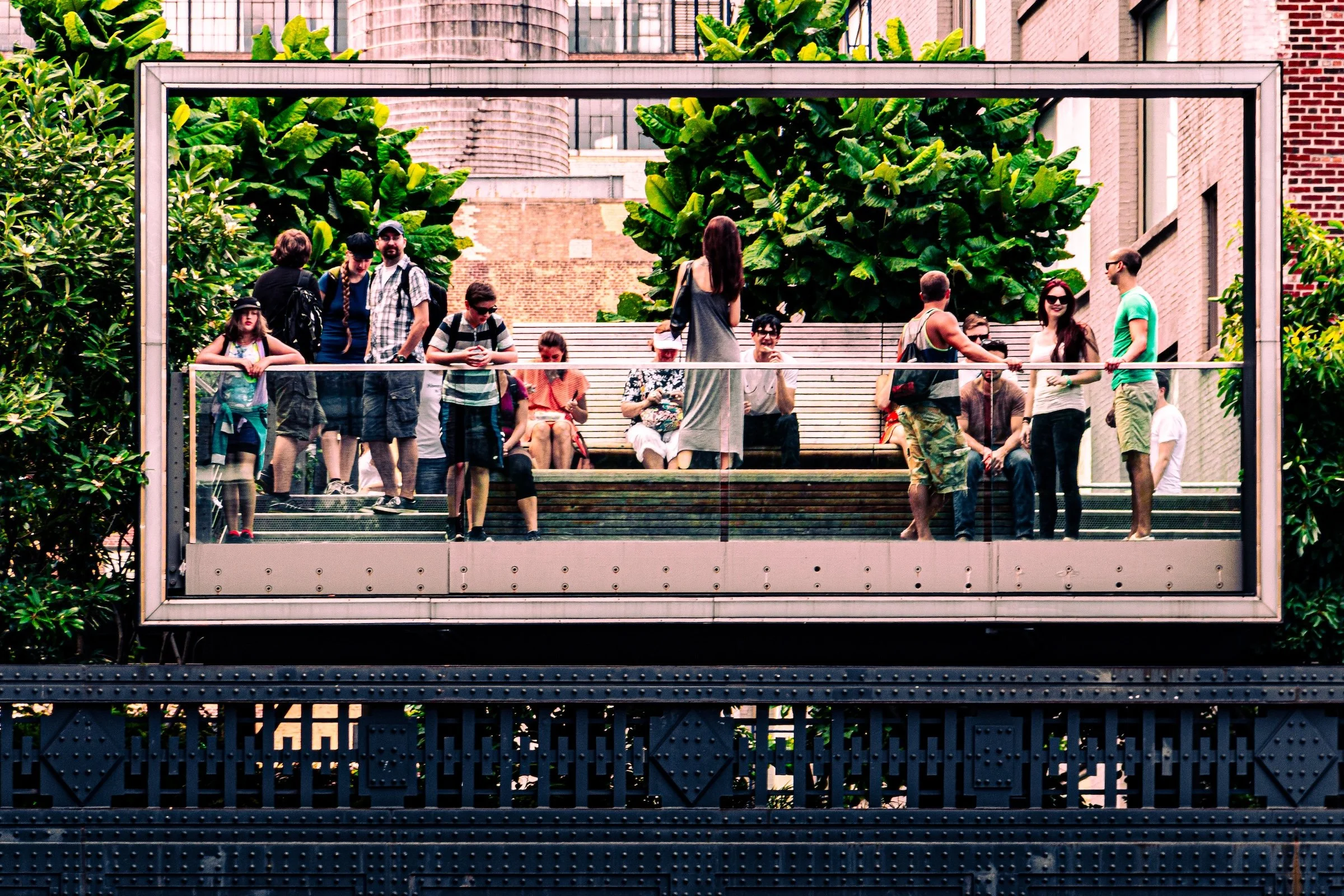
Structural Frames (When Architecture Tiles the Scene)
These examples use metal, openings, and built geometry to create a mosaic effect—dividing the world into sections, compartments, and visual rooms.
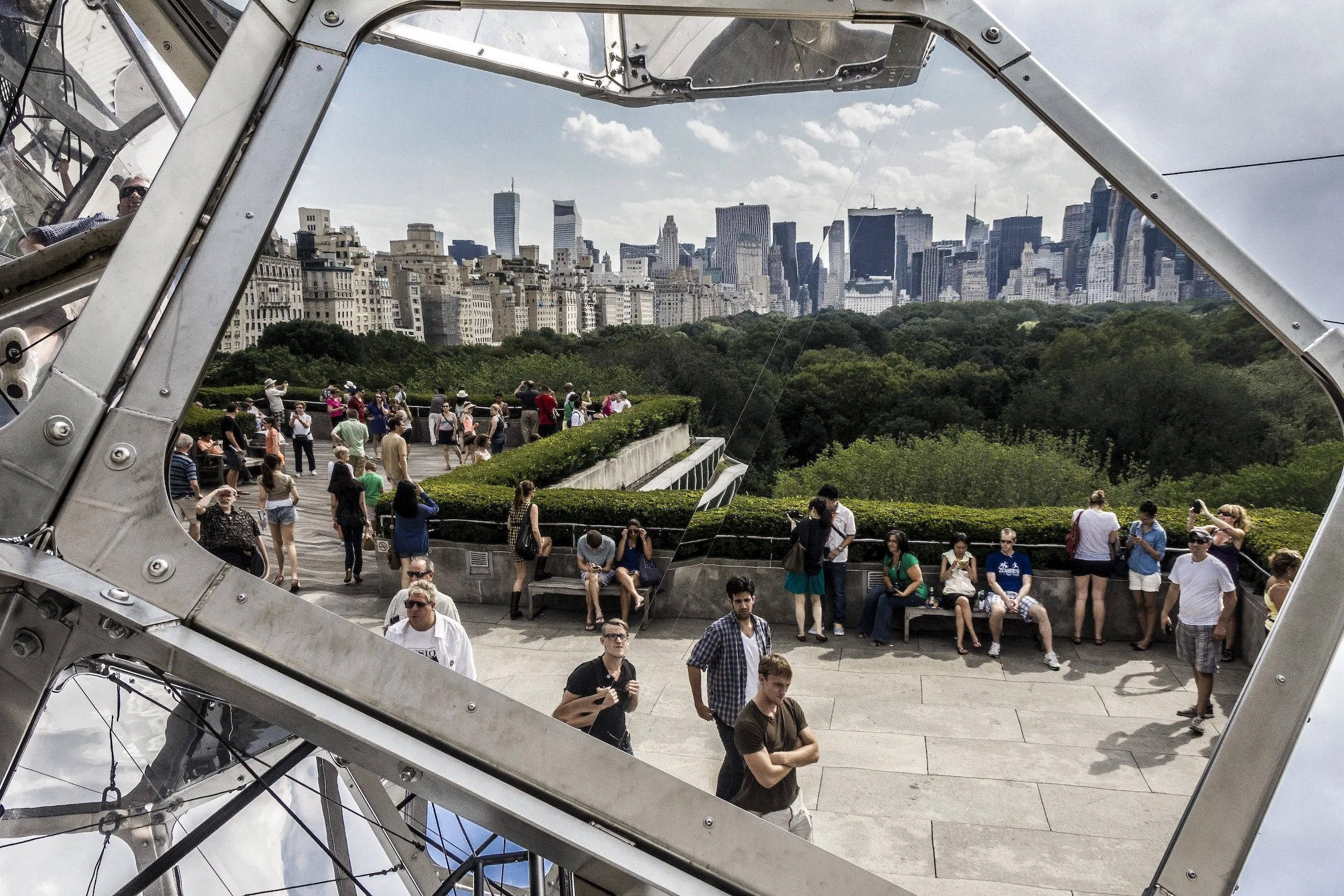
Metropolitan Hill - Manhattan - Central Park Skyline
A view broken into segments by foreground structure: the skyline becomes something you “see through,” like a picture assembled from cutouts. The crowd below adds scale and human texture to the geometry.
Street Typography & Patchwork (Signs as Tiles)
Here the mosaic is built from words, storefront materials, and graphic interruptions—messages layered over place.
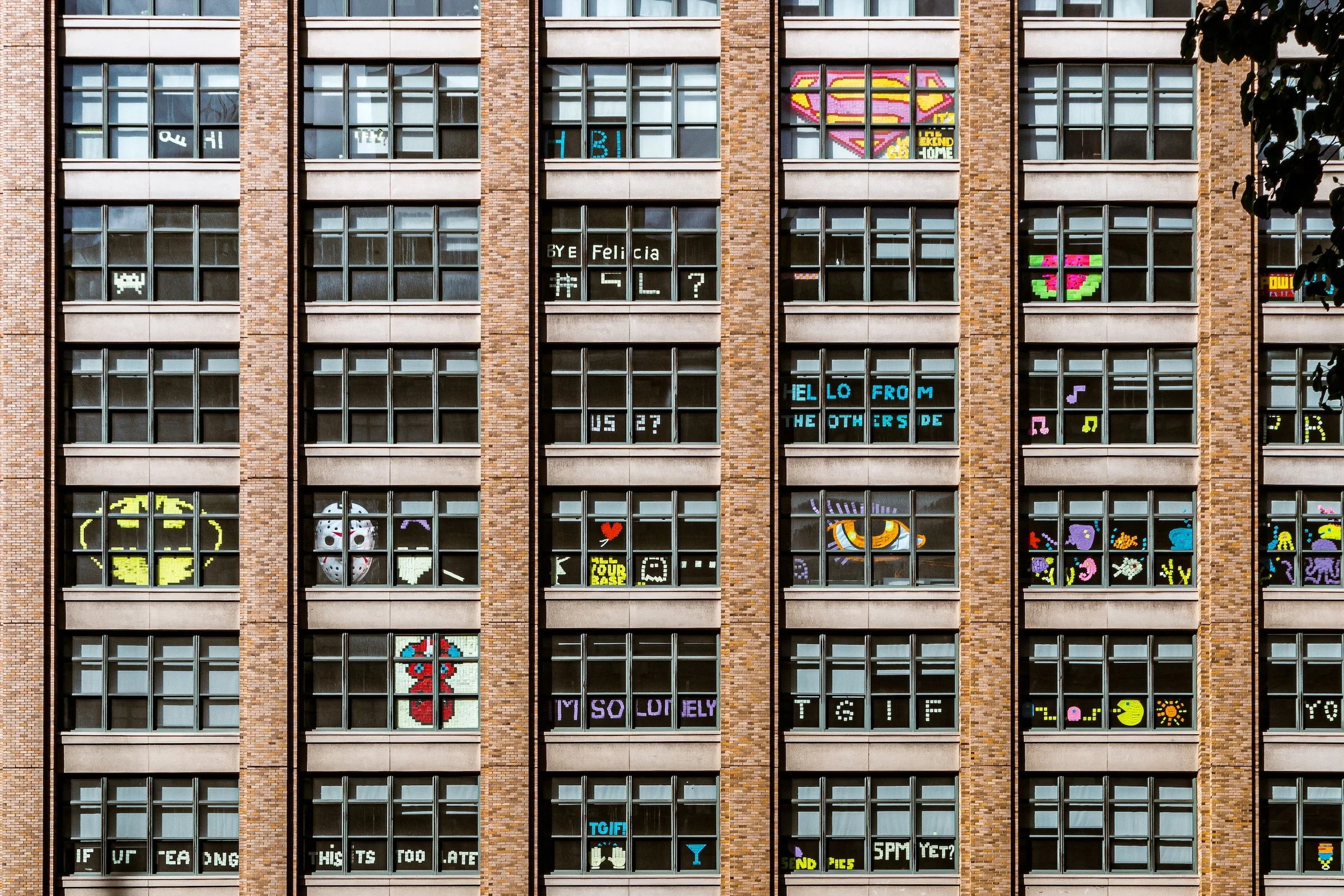
Hudson Square - Manhattan - #PostItGram
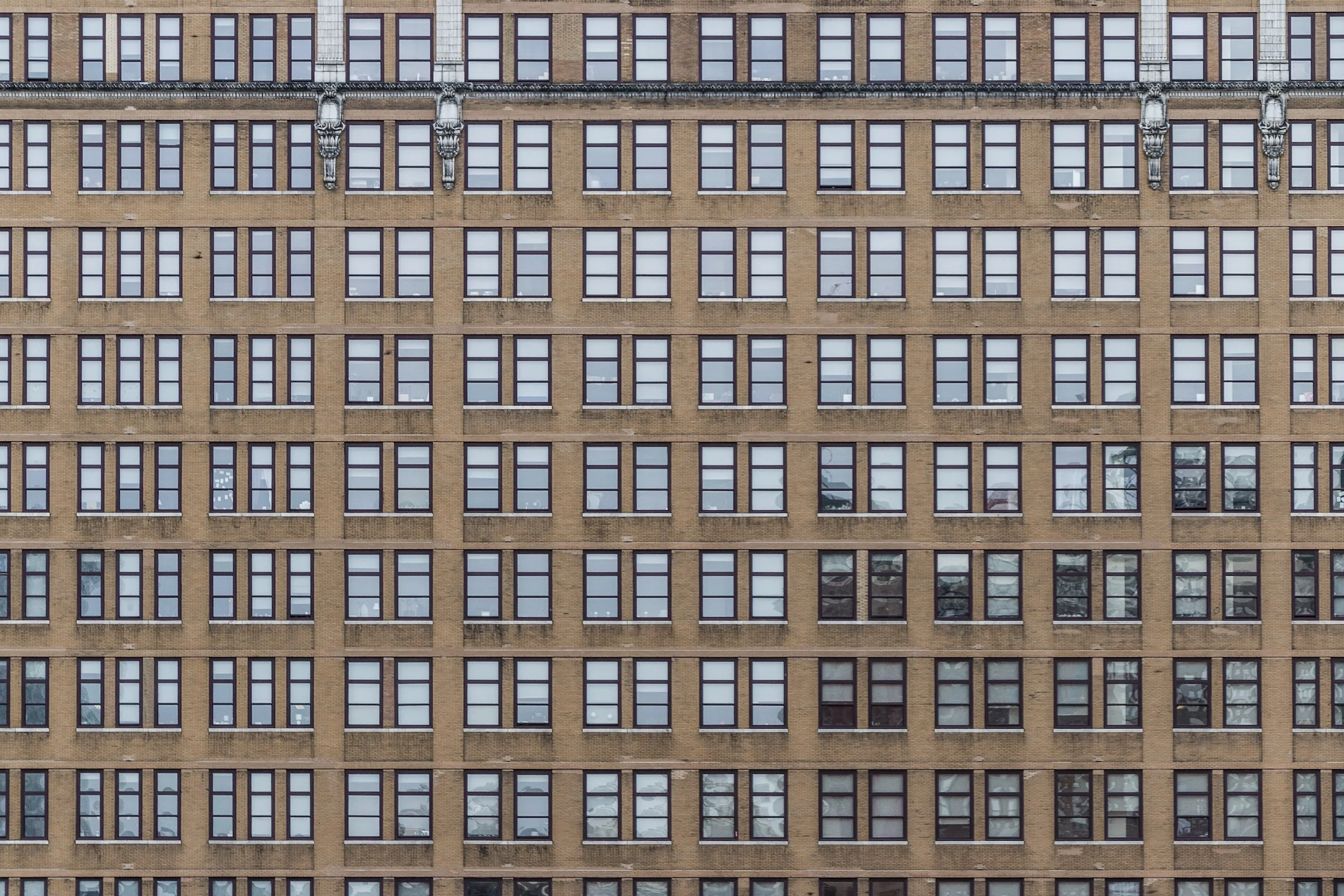
A building turned into a pixel grid—each window a tile, each color block a note in the visual chord. It reads like a public collage pasted onto a rigid architectural template.
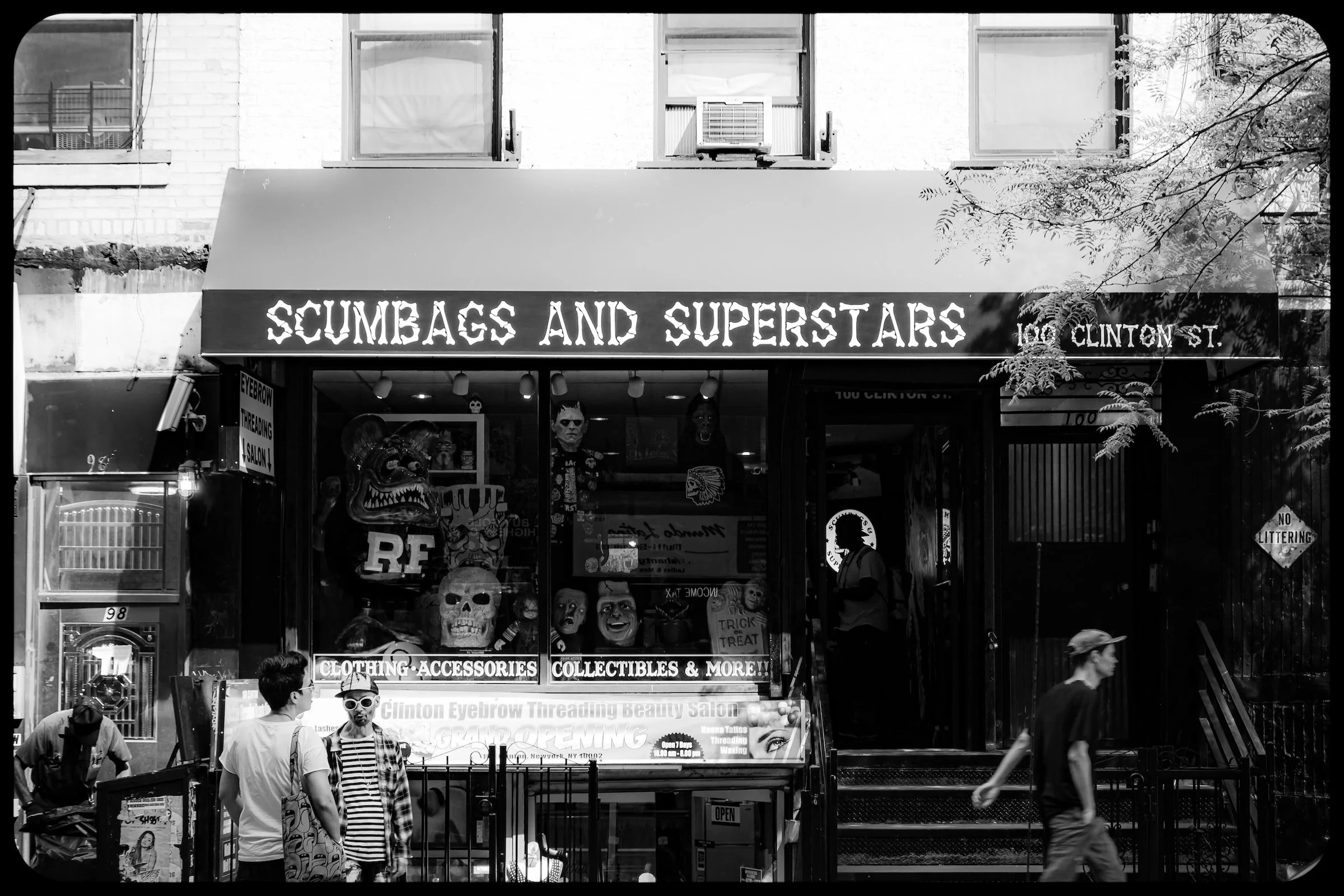
Lower East Side - Manhattan - Scumbags and Superstars
Text as centerpiece: bold lettering anchors the frame while smaller street details fill in the margins. The mosaic effect comes from the mix of sign language, faces, and storefront texture—identity built from fragments.
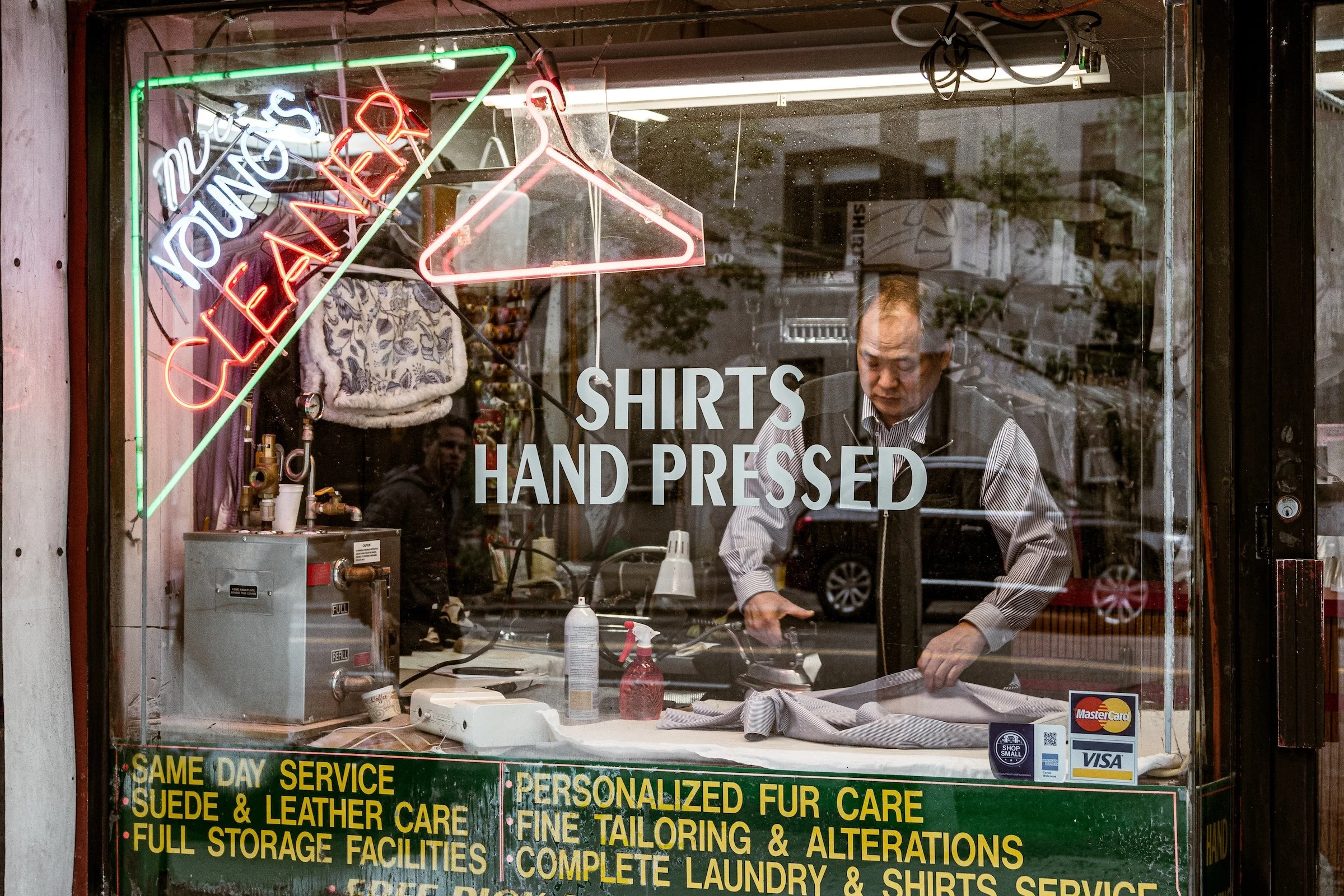
Metropolitan Hill - Manhattan - Mr Young's Cleaners
Neon, typography, and interior detail stack into a storefront collage—half advertisement, half portrait. The glass creates depth, and the sign layers the scene with character and time.
Figures as Fragments (Bodies, Statues, and Display)
These examples turn human form into mosaic material—layered, repeated, or staged inside a larger city collage.
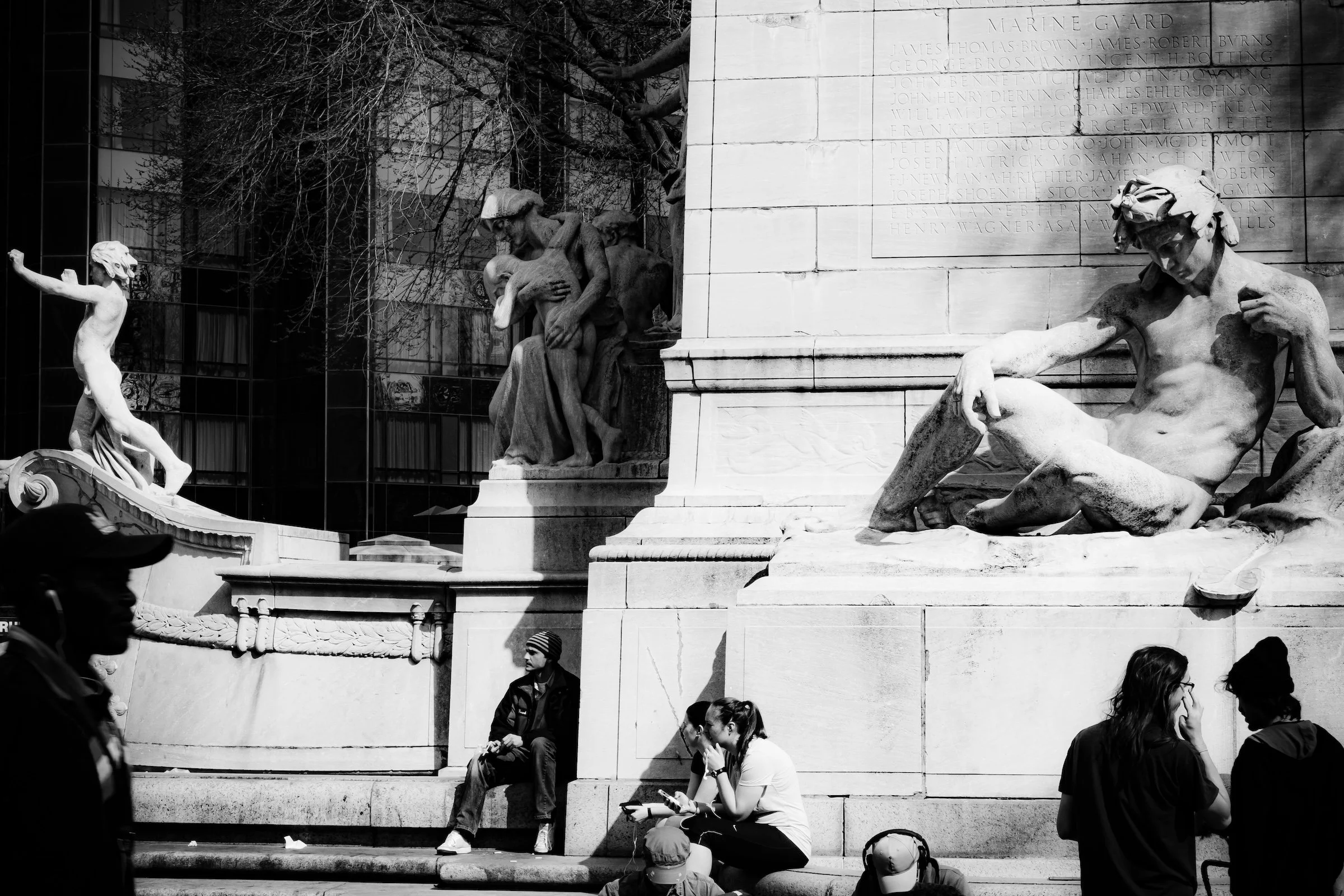
Central Park - Manhattan - Statues
Sculptural figures become the foreground tiles while the park and visitors form the softer background tessellation. The image reads like a public mural: bodies (stone and living) arranged across the frame.
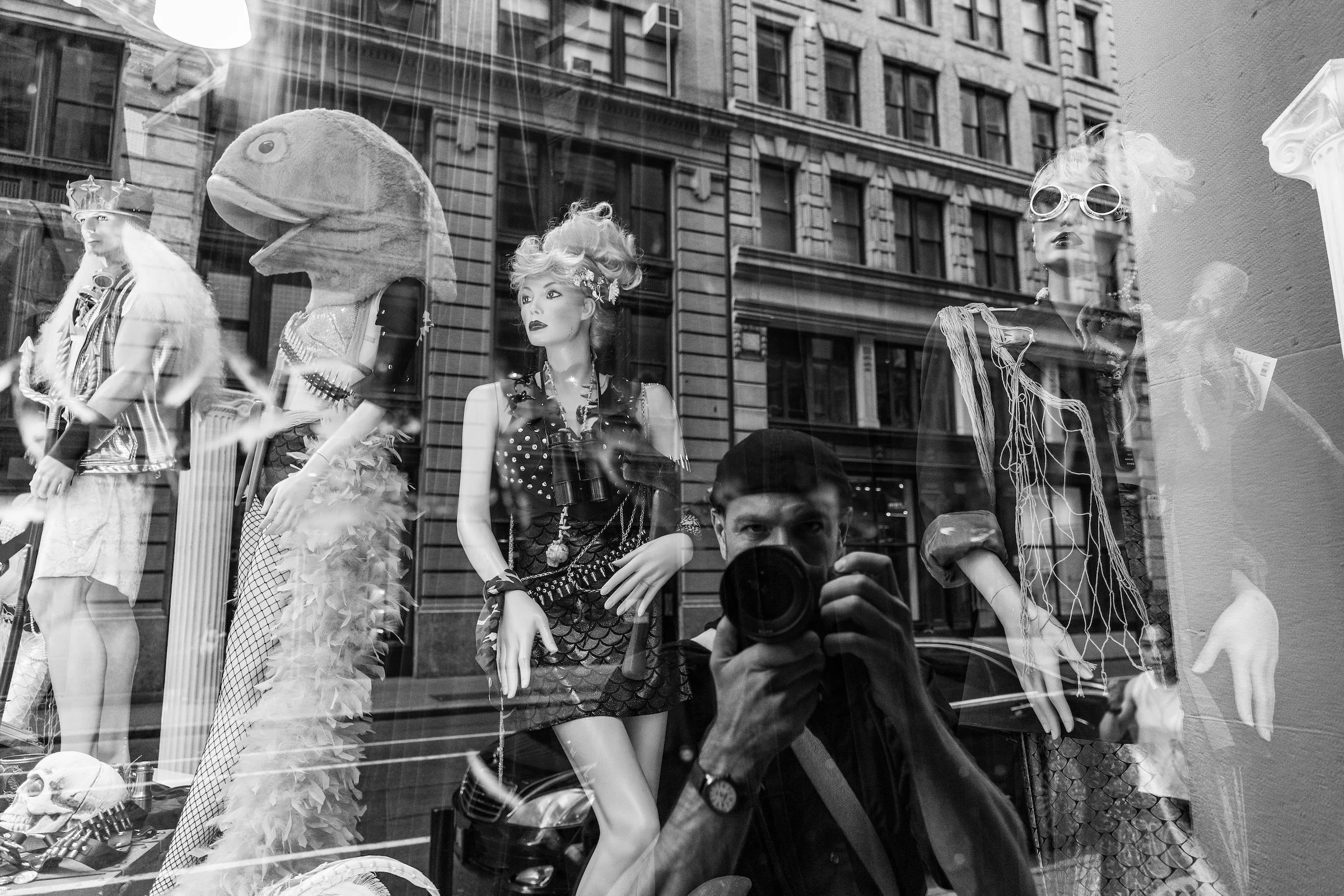
Flatiron District - Manhattan - Goddesses and Monsters
A true urban collage: mannequins, reflections, street figures, and display-world theatrics merge into one layered narrative. The power is in the ambiguity—what’s behind glass, what’s reflected, what’s real.
Explore Further