
METROPOLITAN HILL
Manhattan
Geographic Setting
Nestled within the Upper East Side between East 77th Street and East 86th Street, and stretching from Fifth Avenue east to Third Avenue, Metropolitan Hill occupies a stately rise of ground that bridges the elegance of Museum Mile and the vitality of Madison and Lexington Avenues. Though often subsumed within the broader Upper East Side identity, Metropolitan Hill possesses its own distinct topography and rhythm—a dignified slope rising gently eastward from Central Park before descending toward the denser corridors near Lexington.
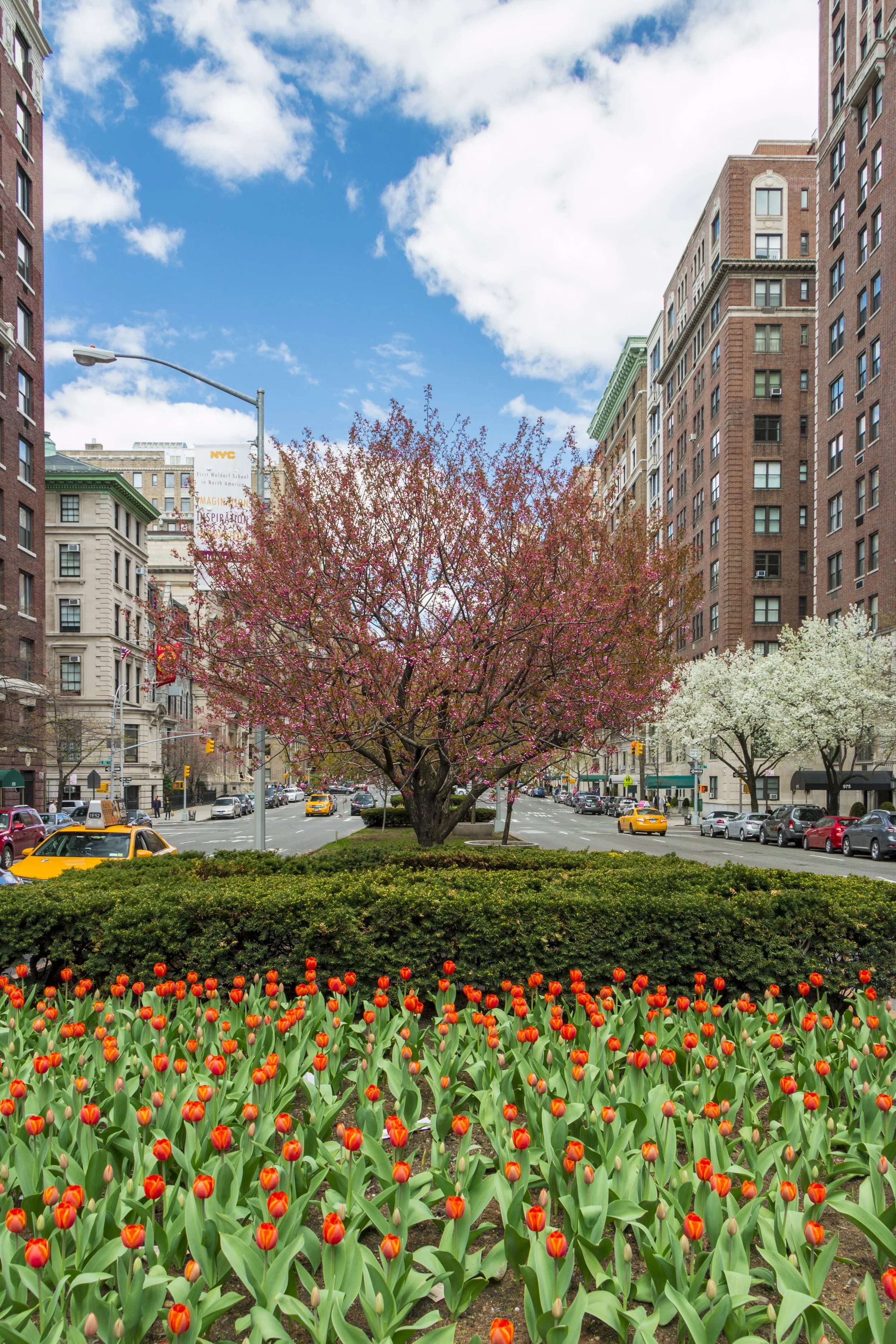
The neighborhood’s western edge, along Fifth Avenue, is among the most iconic in New York: a continuous frontage of palatial apartment houses and cultural institutions overlooking Central Park, anchored by the Metropolitan Museum of Art, whose monumental steps and Beaux-Arts façade give the area both its landmark and its name. Eastward, Madison Avenue offers a refined blend of galleries, jewelers, and couture boutiques, while Park Avenue presents an architectural procession of prewar cooperative residences shaded by manicured malls. Beyond Lexington and Third, small cafés, schools, and grocers provide a more domestic counterpoint to the grandeur to the west.
Together, these blocks compose a microcosm of the Upper East Side’s dual nature—cultural monumentality balanced by lived-in intimacy—making Metropolitan Hill one of Manhattan’s most urbane and historically layered enclaves.
Etymology and Origins
The name “Metropolitan Hill” derives from the presence and symbolic dominance of the Metropolitan Museum of Art, whose site, chosen in the 1870s, stands upon a gentle elevation at Fifth Avenue and East 82nd Street. Long before the museum’s founding, surveyors noted this rise in the land, part of the ancient Manhattan schist ridge that once crested east of the park. When the museum’s massive structure and successive expansions took shape between 1880 and 1926, they transformed both the skyline and the identity of the neighborhood. The “hill,” more metaphorical than geographic, came to denote the area’s ascent to cultural preeminence—its name reflecting both topography and civic aspiration.
Before urbanization, this tract lay within the Lenox and Schermerhorn estates, whose meadows and orchards stretched from the East River to Fifth Avenue. The Commissioners’ Plan of 1811 imposed the grid, but development lagged until Central Park’s completion and the subsequent creation of Fifth Avenue’s mansion row in the mid-19th century.
The Neighborhood
19th Century: From Farmland to the Avenue of Palaces
By the 1860s, Metropolitan Hill was being transformed from farmland into one of the most desirable residential quarters in the world. Wealthy New Yorkers, fleeing the noise of lower Manhattan, built limestone and brownstone mansions along Fifth Avenue between 79th and 86th Streets, facing the newly landscaped park. Families such as the Whitneys, Carnegies, and Berwinds erected houses that rivaled European palaces in scale and craftsmanship.
The arrival of the Metropolitan Museum of Art (opened 1880) solidified the area’s identity as the cultural apex of the city. Designed first by Calvert Vaux and Jacob Wrey Mould, and later expanded by Richard Morris Hunt and McKim, Mead & White, the museum embodied the civic grandeur of the Gilded Age. Its presence drew complementary institutions—private schools, art dealers, and collectors—who settled nearby, creating an ecosystem of affluence and art.
Eastward, Park Avenue (then still railroad-haunted Fourth Avenue) was remade in the early 20th century into a boulevard of elegance after the railroad was buried (1902–1913), giving rise to monumental apartment buildings by architects such as Rosario Candela, J.E.R. Carpenter, and Emery Roth. These structures translated the private mansion into the vertical form of the cooperative residence, defining the built character of Metropolitan Hill’s mid-blocks.
Early–Mid 20th Century: Cultural Maturity and Architectural Flourish
Between 1910 and 1940, Metropolitan Hill reached its mature form. Fifth Avenue became known as Museum Mile, anchored not only by the Metropolitan Museum but by neighboring institutions such as the Cooper Hewitt Smithsonian Design Museum (housed in the Andrew Carnegie Mansion, built 1902) and the Jewish Museum in the former Felix Warburg House (1908). Park Avenue and Madison Avenue evolved in parallel—one residential, the other commercial and cultural.
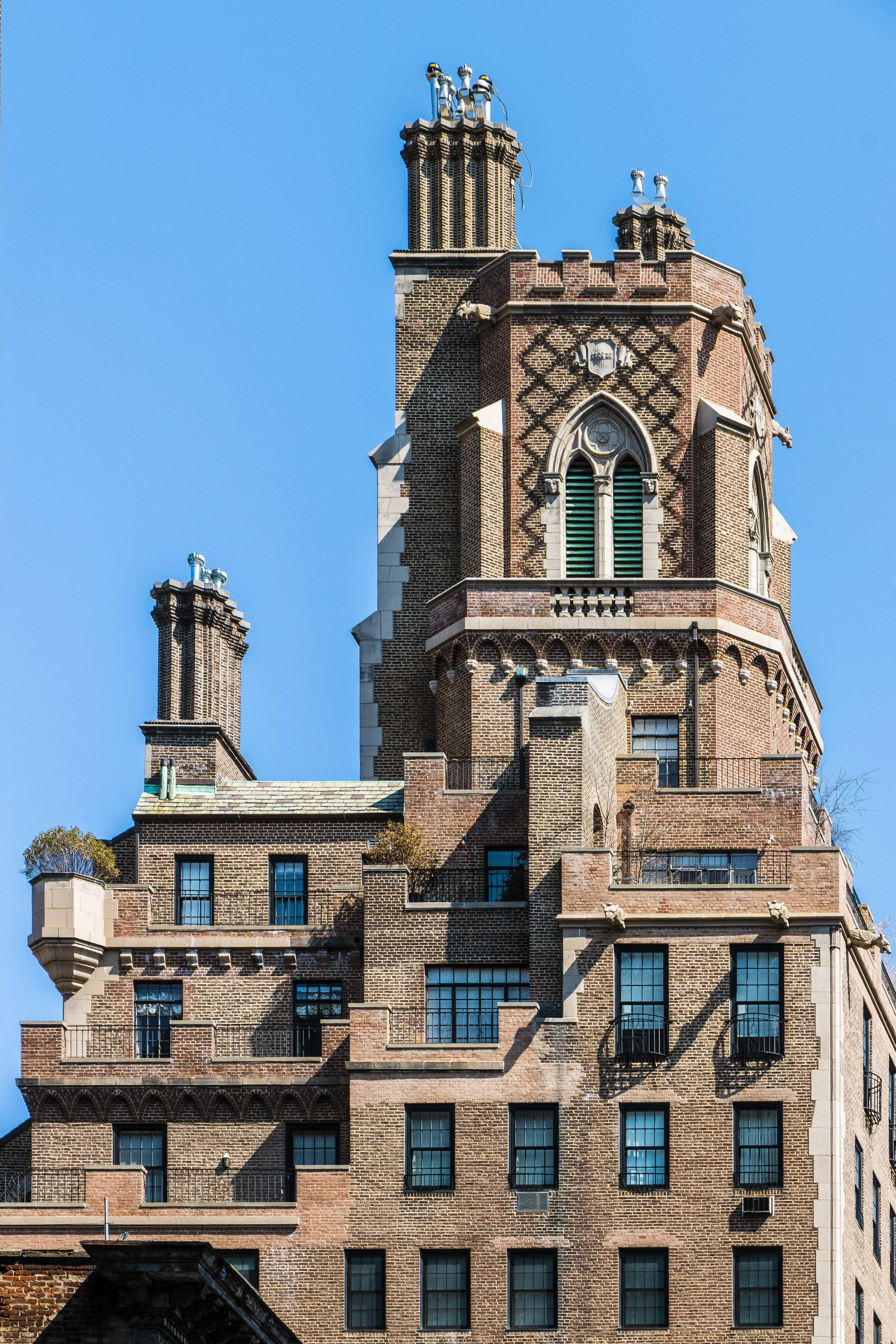
Architecturally, this period produced masterpieces of urban design: 998 Fifth Avenue (McKim, Mead & White, 1912), 820 Fifth Avenue (C.P.H. Gilbert, 1916), and 1040 Fifth Avenue (Emery Roth, 1930), among many others. These buildings replaced detached mansions with cooperative palaces that offered doormen, uniformed staff, and architectural distinction. Along Madison Avenue, small-scale stores, art galleries, and tailors sustained a European atmosphere of refinement, while east of Park Avenue, the cross streets filled with brick apartment houses and private schools—Spence, Nightingale-Bamford, and Marymount—that gave the neighborhood a cultivated rhythm.
During this period, Metropolitan Hill’s population was both affluent and philanthropic. Residents endowed hospitals, museums, and universities, shaping the cultural infrastructure of the city itself. Yet even amid such concentration of wealth, the neighborhood preserved its civility and walkability—its scale consistent, its façades harmonious, its avenues green.
Metropolitan Hill Photographic Tour
Late 20th Century: Preservation and Quiet Evolution
The postwar years brought pressures of modernization, but Metropolitan Hill resisted wholesale redevelopment. The Upper East Side Historic District, established in 1981, safeguarded much of its prewar architecture from demolition. The Landmarks Preservation Commission recognized both the neighborhood’s cohesive streetscapes and its role as a living archive of 19th- and early-20th-century urban design.
Through the 1960s and 1970s, Madison Avenue emerged as a global fashion and gallery corridor, yet remained human in scale. The Whitney Museum of American Art (then at Madison and 75th Street, designed by Marcel Breuer, opened 1966) added a note of modernist contrast. Brownstones and carriage houses along side streets were restored rather than replaced, while local associations, such as the Metropolitan Hill Preservation Council and Friends of the Upper East Side, advocated for zoning protections and streetscape integrity.
Meanwhile, the Metropolitan Museum expanded with the Temple of Dendur wing (1978) and later the American Wing (1980), cementing its role as the city’s cultural epicenter. Residential life remained remarkably stable: co-op boards, long-term tenancies, and strict preservation ordinances ensured continuity in a rapidly changing city.
21st Century: Modern Refinement amid Historic Grandeur
Today, Metropolitan Hill stands as both museum district and living neighborhood—one of Manhattan’s most graceful convergences of art, architecture, and domestic life. Along Fifth Avenue, institutions like the Neue Galerie (in the former William Starr Miller House, 1914) and the Frick Madison (temporarily relocated from East 70th Street) reinforce the area’s status as a cultural spine. Madison Avenue continues to balance global luxury retail with local charm, while Park Avenue’s courtyards bloom with seasonal plantings maintained by the Fund for Park Avenue.
Despite rising property values and global attention, the neighborhood retains its hushed atmosphere. Side streets shaded by honey locusts and oaks remain among the city’s most serene, their façades of limestone and red brick largely unchanged since the 1920s. New developments—carefully regulated to respect context—blend discreetly into the historic streetscape. The rhythm of life is dignified: mornings bring dog walkers and uniformed doormen tending to brass fixtures; afternoons see museum-goers and students passing beneath Beaux-Arts cornices; evenings belong to the soft light spilling from apartment windows across Central Park.
The Metropolitan Museum itself continues to anchor the district, not only as a repository of world art but as the symbolic heart of New York’s cultural identity. Its steps, crowded by day and luminous by night, remain the neighborhood’s agora—a civic stage beneath the great façade of the city’s enduring self-regard.
Metropolitan Hill Photo Gallery
Spirit and Legacy
Metropolitan Hill represents the pinnacle of Manhattan’s urban ideal—where art, architecture, and landscape exist in harmony. Born of privilege yet tempered by philanthropy, it embodies the belief that beauty and culture ennoble public life. From the Gilded Age mansions of Fifth Avenue to the quiet co-ops of Park and the tree-lined streets beyond Madison, it remains both a monument and a home.
New York City
Use this custom Google map to explore where every neighborhood in all five boroughs of New York City is located.
The Five Boroughs
One of New York City’s unique qualities is its organization in to 5 boroughs: Manhattan, Brooklyn, Queens, The Bronx, and Staten Island. These boroughs are part pragmatic administrative districts, and part vestiges of the region’s past. Each borough is an entire county in New York State - in fact, Brooklyn is, officially, Kings County, while Staten Island is, officially Richmond County. But that’s not the whole story …
Initially, New York City was located on the southern tip of Manhattan (now the Financial District) that was once the Dutch colony of New Amsterdam. Across the East River, another city was rising: Brooklyn. In time, the city planners realized that unification between the rapidly rising cities would create commercial and industrial opportunities - through streamlined administration of the region.
So powerful was the pull of unification between New York and Brooklyn that three more counties were pulled into the unification: The Bronx, Queens, and Staten Island. And on January 1, 1898, the City of New York unified two cities and three counties into one Greater City of New York - containing the five boroughs we know today.
But because each borough developed differently and distinctly until unification, their neighborhoods likewise uniquely developed. Today, there are nearly 390 neighborhoods, each with their own histories, cultures, cuisines, and personalities - and each with residents who are fiercely proud of their corner of The Big Apple.