
THE EMPIRE DISTRICT (TENDERLOIN)
Manhattan
Neighborhood Profile
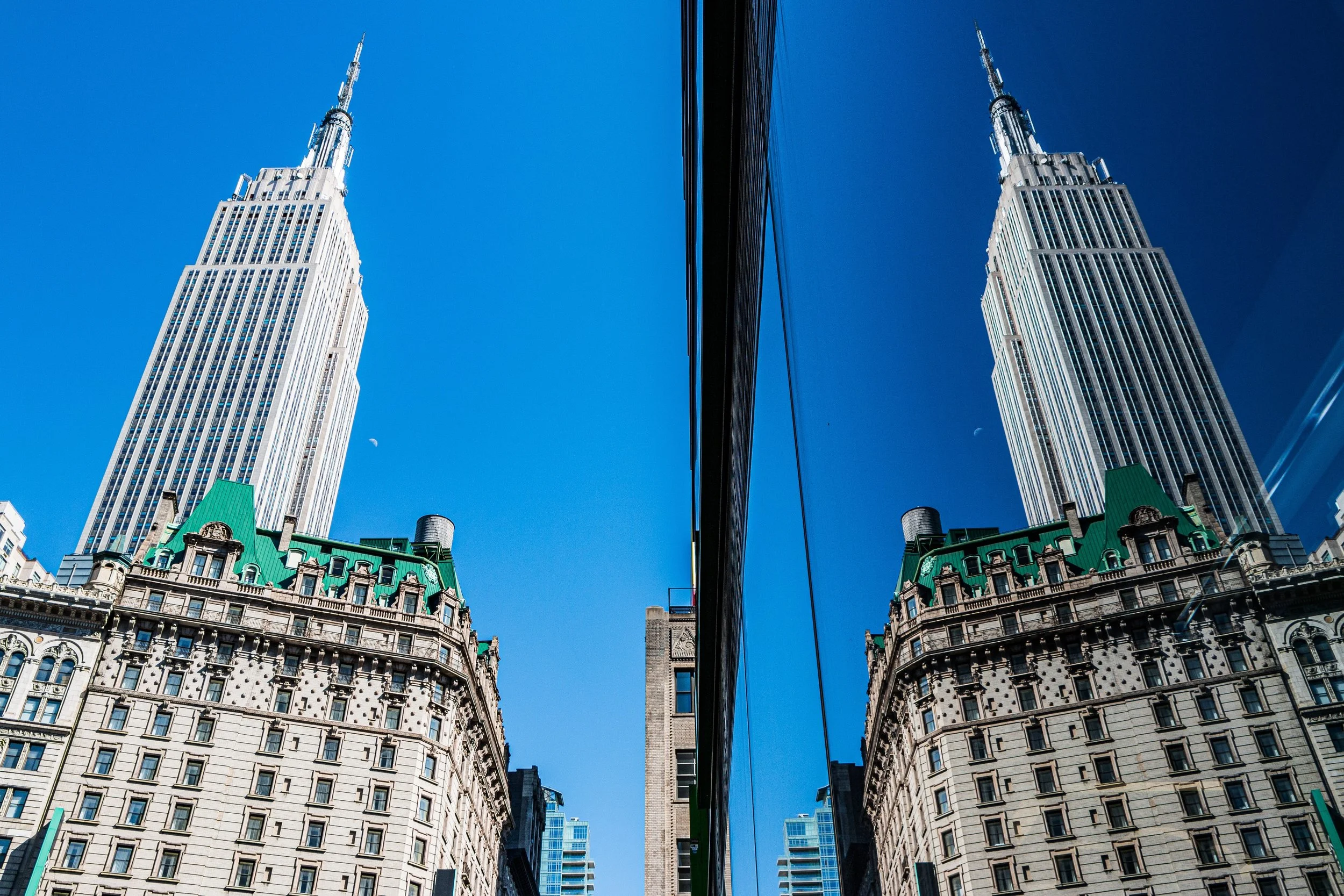
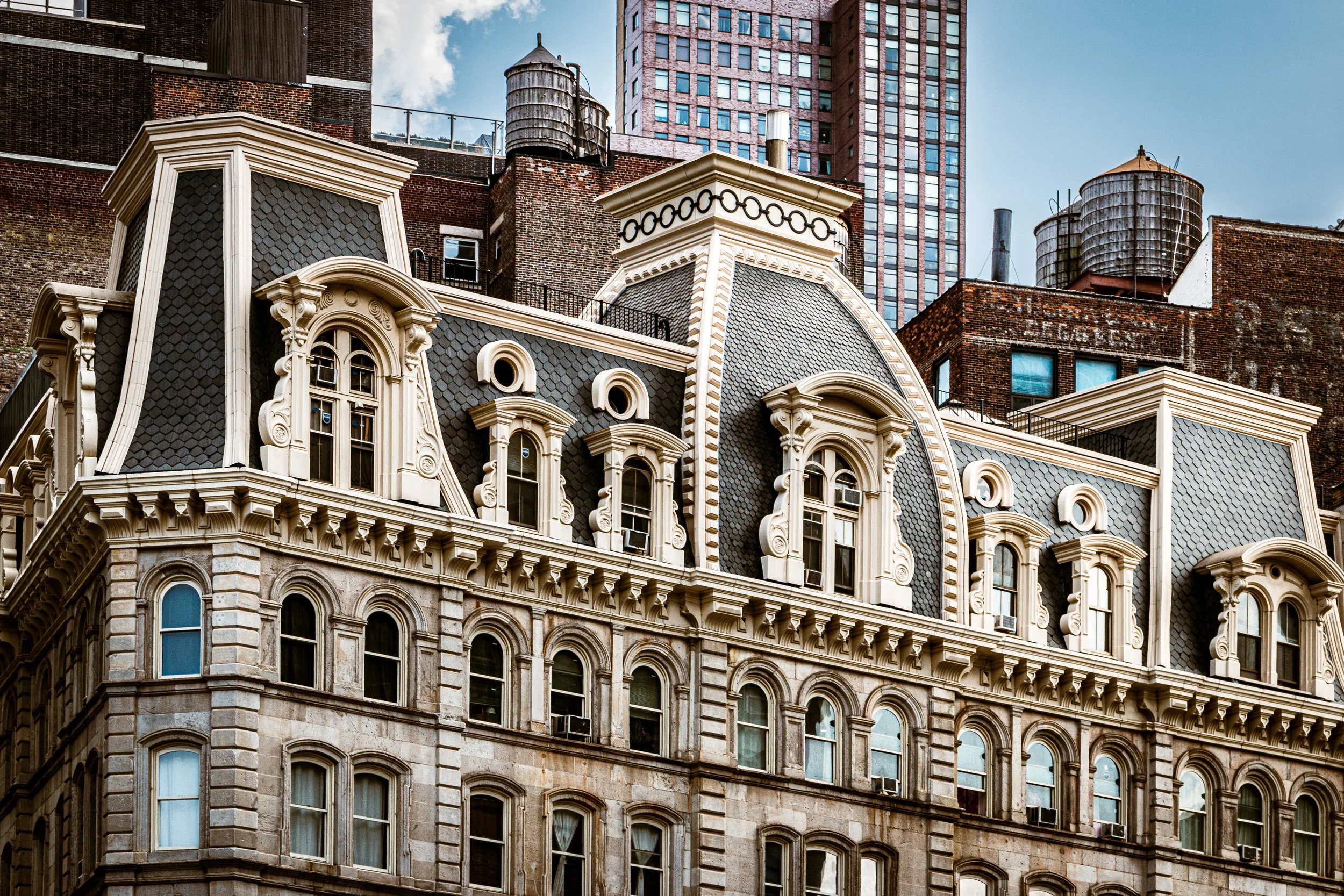
The Empire District is a study in Manhattan’s vertical evolution, where the iconic limestone majesty of the Empire State Building anchors a high-density corridor of global commerce. Beneath its modern "Empire" polish lies the historic shadow-text of the Tenderloin—a 19th-century vice and entertainment district whose gritty, complicated legacy remains visible in the weathered Second Empire masonry and vibrant neon-lit streetscapes of Koreatown.
Geographic Setting
Between Madison Avenue and Sixth Avenue from West 30th to West 34th Streets, the Empire District (Tenderloin) is Midtown’s bright central band: a dense mesh of offices, hotels, retail gravity, and older commercial blocks that feel perpetually “on.” It includes Empire State Building at its eastern edge, and it leans into the currents of Broadway and the retail crossroads near Herald Square. This is a place of frontage—store windows, lobbies, signage—and of constant reinvention, where street-level commerce and vertical office life have long negotiated control of the same blocks.
It also functions as a hinge: westward lies the station-driven Penn world; eastward the avenues narrow into older Midtown and NoMad textures. Under the “Midtown South” umbrella, this zone could feel like the “middle” of everything. Naming it separately invites the older layers back into view.
Etymology and Origins
“Empire District” is a modern, forward-facing label—an assertion of Midtown centrality anchored by the Empire State aura and the corporate-commercial identity that dominates the present landscape. The parenthetical “Tenderloin” reaches backward, reclaiming a notorious historic district name that once described a broad stretch of Manhattan known for entertainment, nightlife, and vice in the late 19th and early 20th centuries.
The Tenderloin name itself is famously tied to New York City Landmarks Preservation Commission documentation and period accounts: it’s commonly attributed to NYPD captain Alexander “Clubber” Williams in 1876, a wry reference to the graft and lucrative spoils of policing a booming nightlife zone.
In recent decades, “Midtown South” served as the convenient wrapper that softened these distinctions. “Empire District (Tenderloin)” keeps the modern recognition intact while refusing to let the older, more complicated identity vanish into a bland coordinate.
The Neighborhood
19th Century:
By the late 1800s, this general Midtown corridor had become a zone of intense commercial energy—close enough to the theater and hotel worlds to attract crowds, money, and the industries that orbit them. The Tenderloin, as a broader district, originally ran roughly from the mid-20s to the low-40s and from Fifth to Seventh Avenues—placing your 30th–34th slice squarely inside its early core.
This wasn’t a neighborhood defined by quiet domesticity. It was a neighborhood of transactions—legal and otherwise—where the city’s appetites and its moral anxieties collided in the same storefront-lit streets.
Early 20th Century:
The early 1900s intensified the area’s commercial magnetism. Retail and department-store power consolidated around the low-30s and mid-30s streets; in 1902, Macy's Herald Square moved its flagship to 34th Street and Broadway, helping fix Herald Square as a durable retail landmark.
At the same time, the Tenderloin’s reputation—already well-known—continued to echo through press, policing, and popular memory, even as individual blocks began to tilt more openly toward “respectable” commerce. The district’s story wasn’t a clean before-and-after; it was a gradual overwrite, with traces lingering beneath new signage.
Empire District Photograph Slideshow
Mid-20th Century:
Mid-century Midtown professionalized and rose upward. Office density increased, hotels shifted clientele, and the area’s public image narrowed toward business and shopping. Yet the older “Tenderloin” idea persisted as an undertow: a reminder that Midtown’s polish had been achieved through cycles of regulation, redevelopment, and reinvention—not through innate respectability.
This is where “Midtown South” becomes a particularly powerful mask: it’s neutral, clean, and geographic, and it lets the messy social history fade into the background hum.
Late 20th Century:
From the 1970s onward, these blocks became increasingly legible as the heart of mainstream Midtown commerce—tourism, retail, offices, and the daily churn of workers. The Tenderloin name, once so loud, receded into specialist memory: historians, old headlines, and a few stubborn cultural references. “Midtown South” remained the everyday umbrella—useful for orientation, but too broad to tell you why this slice feels different from the transit-heavy blocks to the west.
In this period, the district’s identity stabilized into something recognizable, even as individual buildings cycled through new tenants and new purposes.
21st Century:
The 21st century has sharpened the district’s contradictions rather than erasing them: luxury and logistics, global retail and local foot traffic, landmark iconography and relentless turnover. The “Empire District” label matches the present-tense pitch of Midtown’s core—confidence, visibility, centrality—while the “Tenderloin” parenthetical restores the deeper truth that Midtown has always contained multiple Manhattans at once.
Seen alongside the Penn District, the split also clarifies how “Midtown South” evolved: what used to be one convenient descriptor now reads as two adjacent worlds with different origin stories and different street-level tempos.
Empire District Photo Gallery
Through The Lens
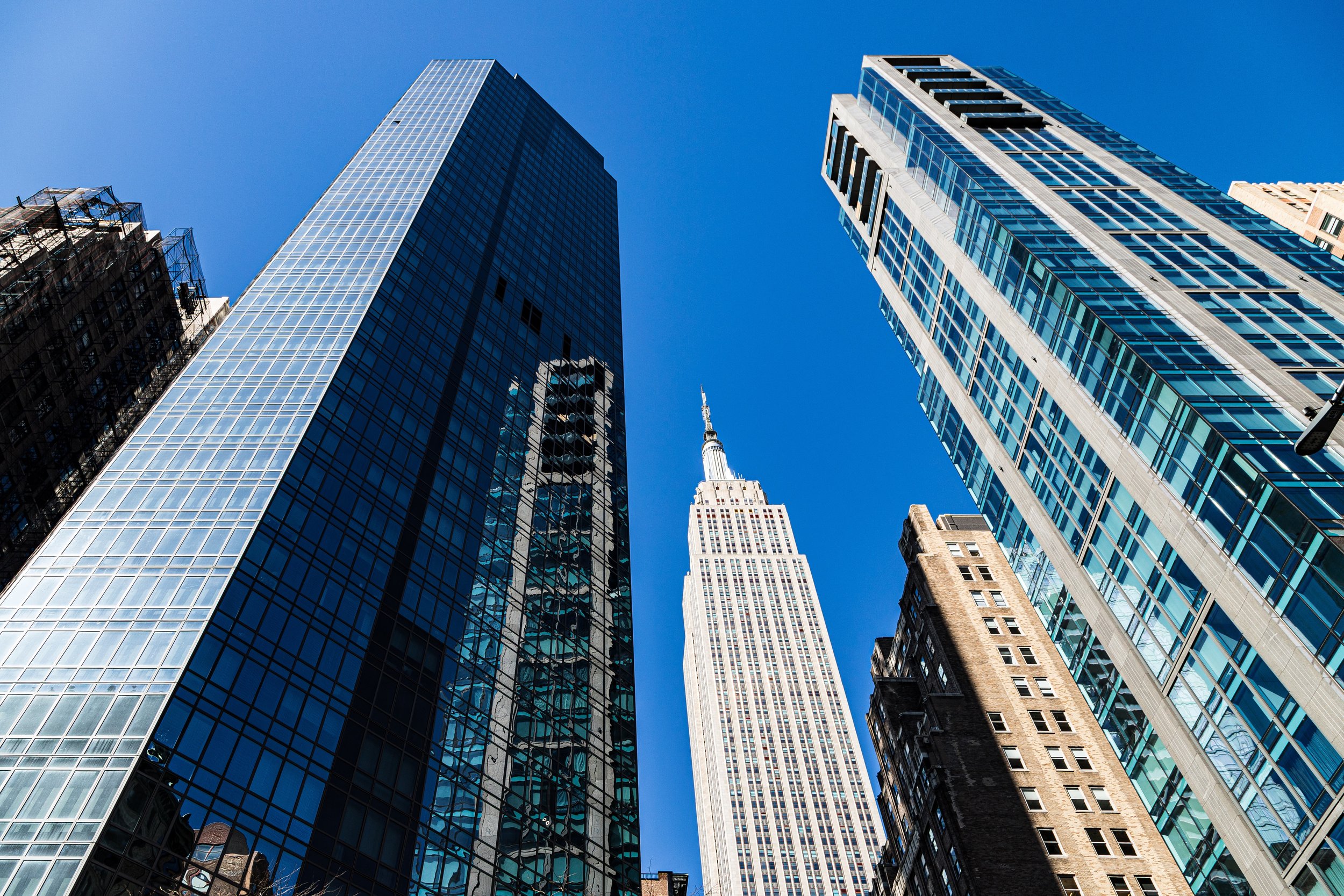
The Architectural Soul of the Tenderloin The Empire District, historically known as the Tenderloin, is a neighborhood defined by the friction between its deep, gritty history and the soaring ambitions of Midtown Manhattan. During my 2014 documentation, I sought to capture the district's "Spirit" through its disparate geometric forms—where the ornate Mansard roofs of the 19th century meet the sheer glass faces of the 21st.
Photographer's Insight:
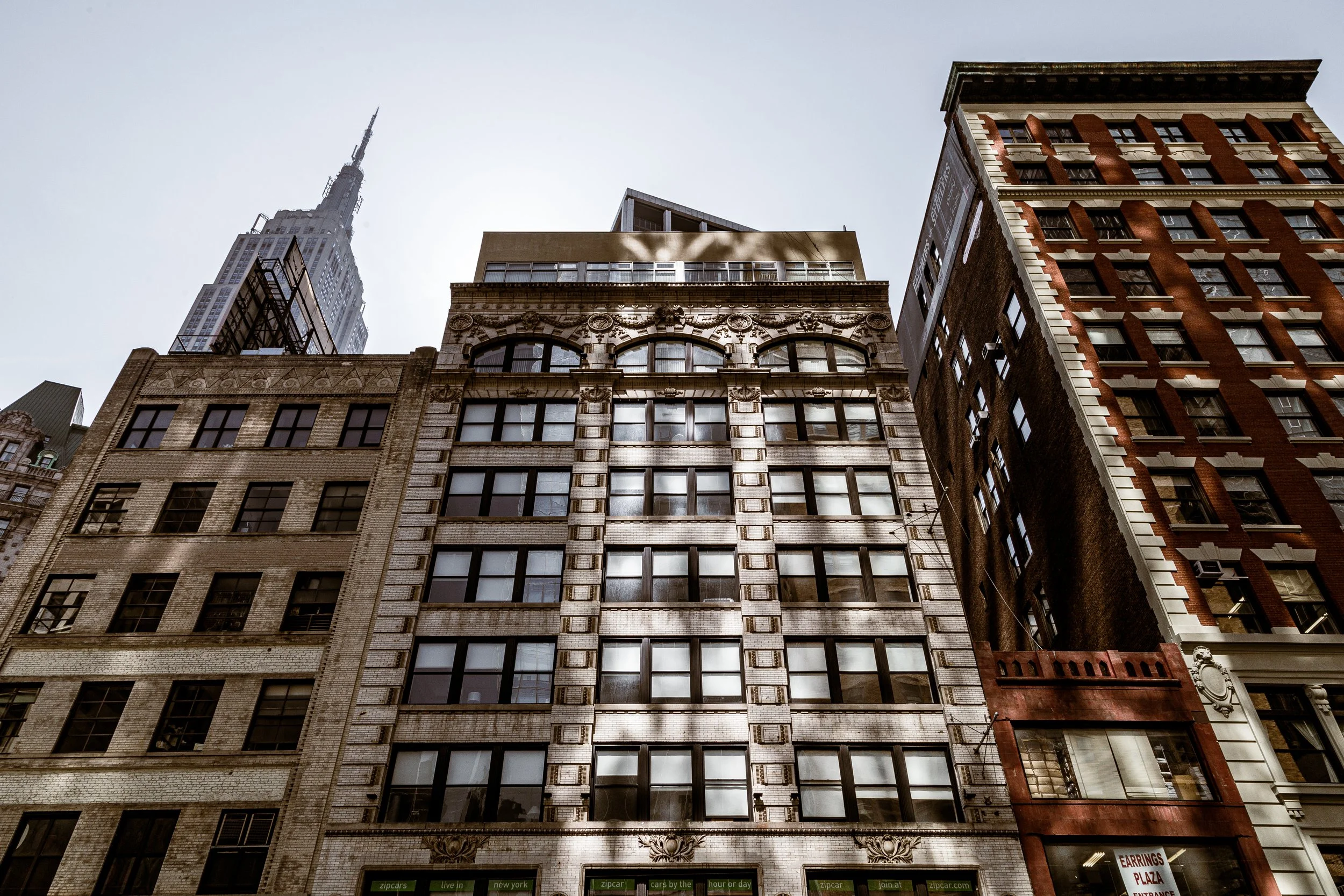
Vanished Landmarks: My documentation of the Kaskel Building at West 32nd and 5th Avenue (see “Classic Broadway” and “1234 BWay Crown”) remains a vital part of my archive. Its intricate stone carvings and classic Second Empire silhouette served as a grand gateway to Koreatown, providing a human-scaled texture that is increasingly rare in this corridor.
Vertical Transitions: I sought to illustrate the "relentless progress" of the district by framing the rising glass towers, such as 325 5th Avenue and 160 Madison, against the existing brick-and-mortar fabric of the street (see “325 Fifth”). The high-contrast light of that afternoon emphasized the sharp, reflective surfaces of the new towers, making them feel like arrivals from a future city.
The Street-Level Energy: I captured the dense, multi-layered visual environment of Koreatown, where fire escapes and vertically stacked neon signage create a rhythmic, almost overwhelming energy (see “Gone, But Not Forgotten”). This density is the true legacy of the district—a place where history isn't just a fact, but a lived experience found in the "contrasts" of every block.
Spirit and Legacy
The Empire District (Tenderloin) is a reminder that New York’s “center” is never just a postcard. The district’s legacy is built from commerce and crowds, but also from reputation—how places are praised, how they are policed, how they are renamed to make the present feel inevitable. Keeping “Tenderloin” in the title doesn’t drag the neighborhood backward; it keeps the story honest.
And that honesty matters precisely because Midtown keeps reinventing itself. Names in New York are not labels so much as layers. This hybrid one preserves both: the shining modern claim of “Empire,” and the historical shadow-text of the Tenderloin that once gave this corridor its sharp, complicated edge.
Empire District Field Notes
-
Field Note: August 10, 2014 | 01:05 PM
Conditions: 82°F | Humidity: 45%
The Empire District appeared as a study in dramatic architectural contrasts under a picture-perfect August sky. I focused on the intersection of the district's storied past and its rapid vertical ascent, from the limestone majesty of the Empire State Building (“Empire B&W Portrait”) to the glass-and-steel silhouettes of rising towers like 160 Madison. Most importantly, I documented the Kaskel Building at the gateway to Koreatown (“Gone, But Not Forgotten”)—a vibrant Second Empire landmark that would, only three years later, be lost to the city's continuous cycle of redevelopment.
Other neighborhoods visited:
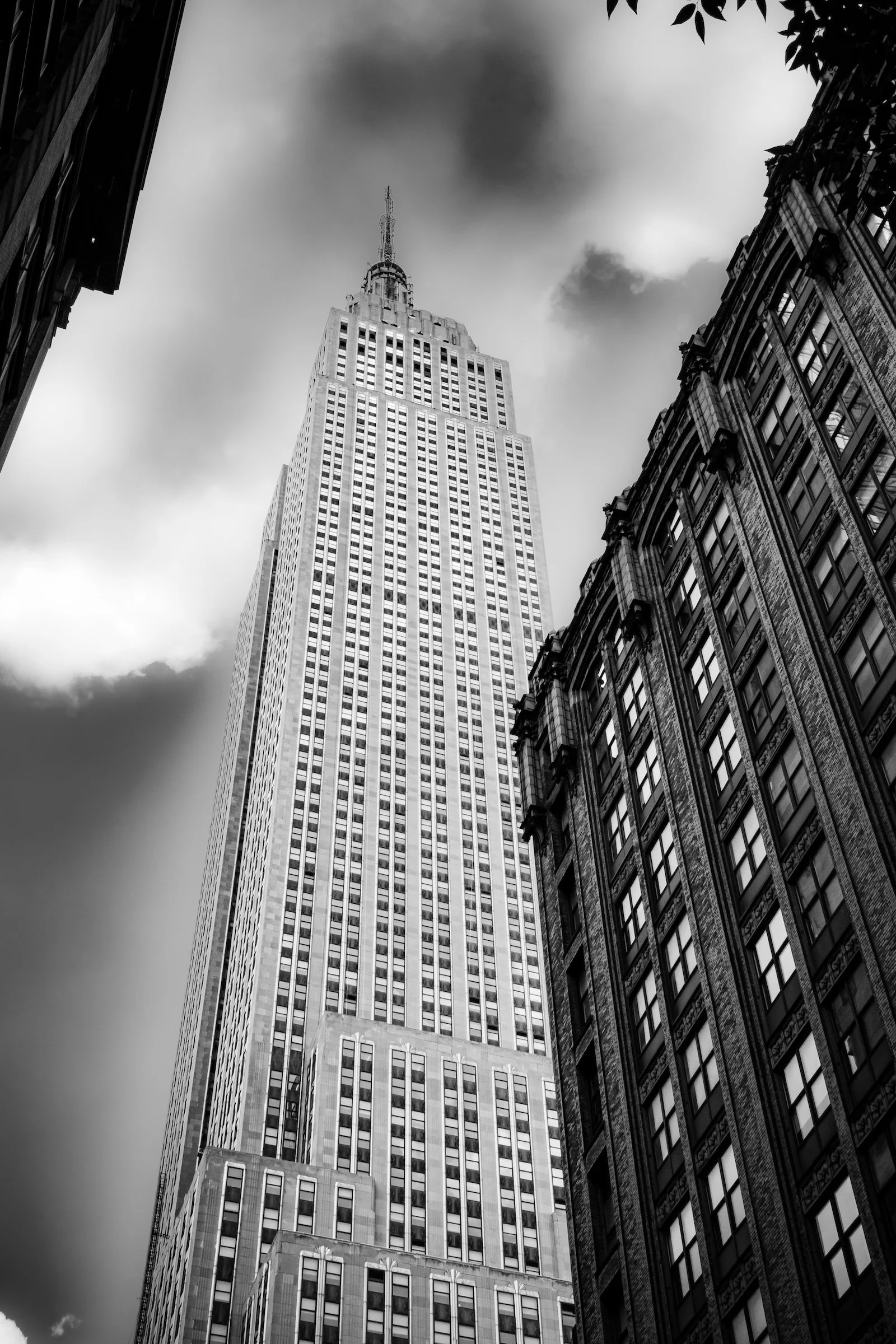
Empire B&W Portrait - Click To Purchase Print
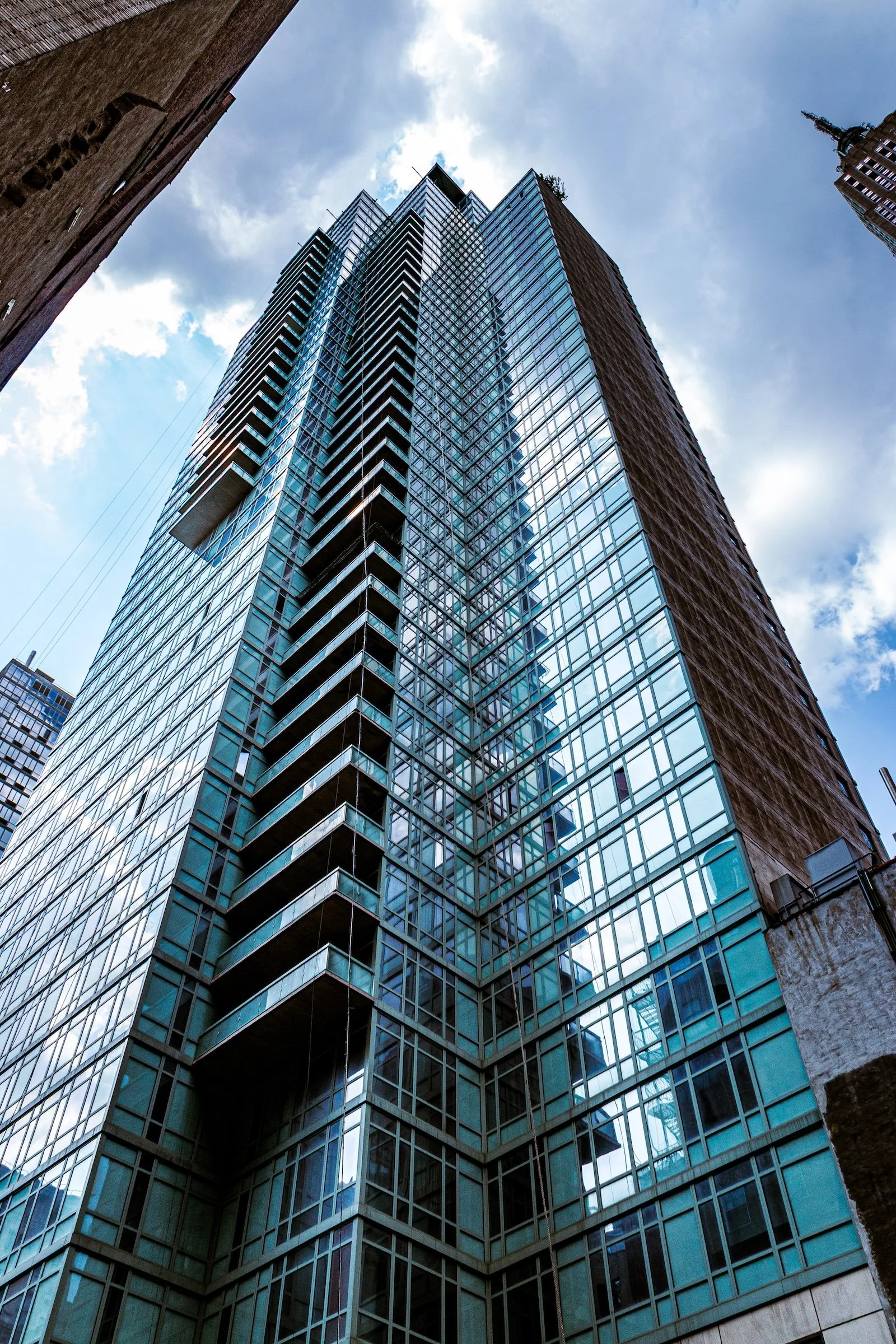
325 Fifth - Click To Purchase Prints
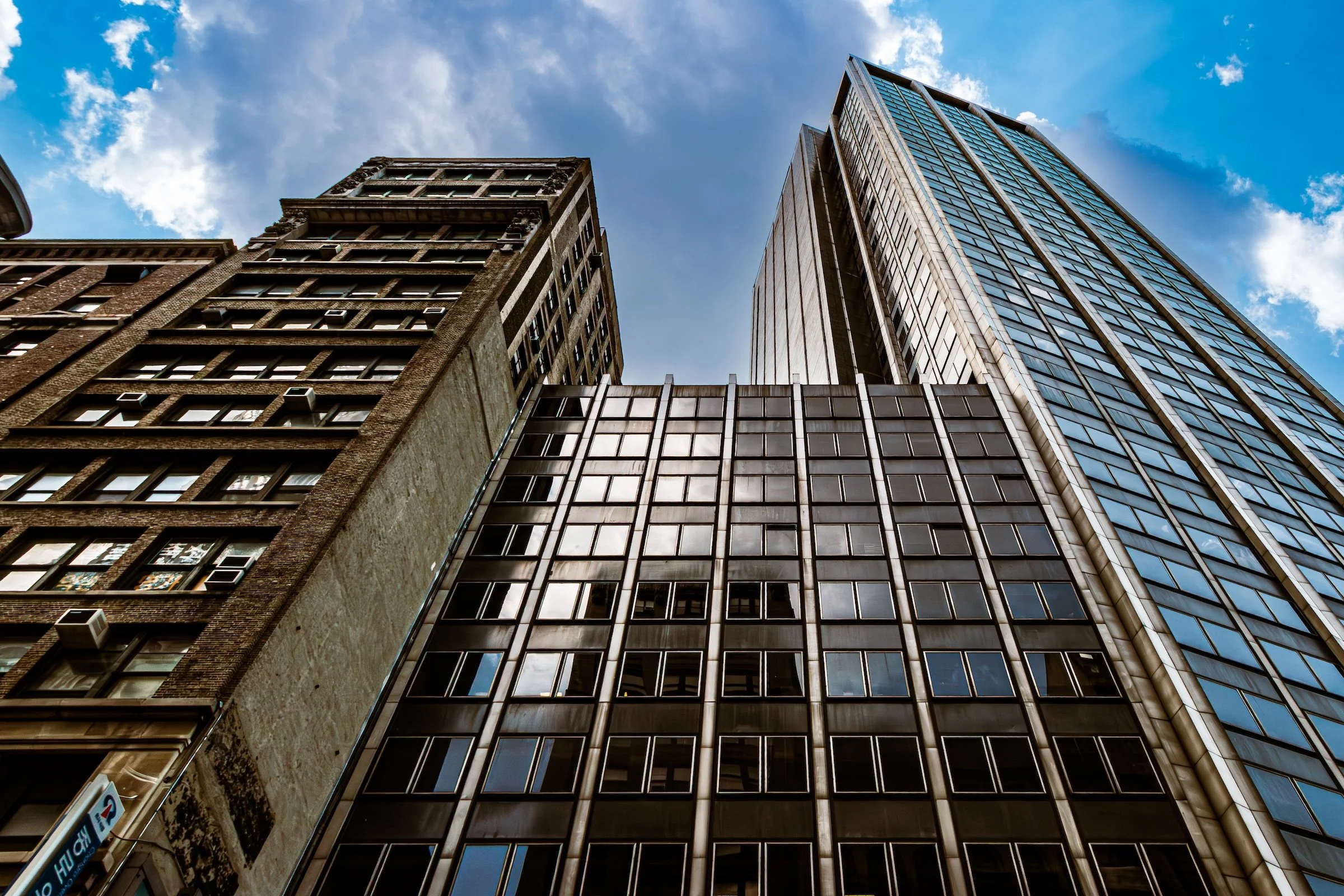
NoMad Tower - Click To Purchase Prints
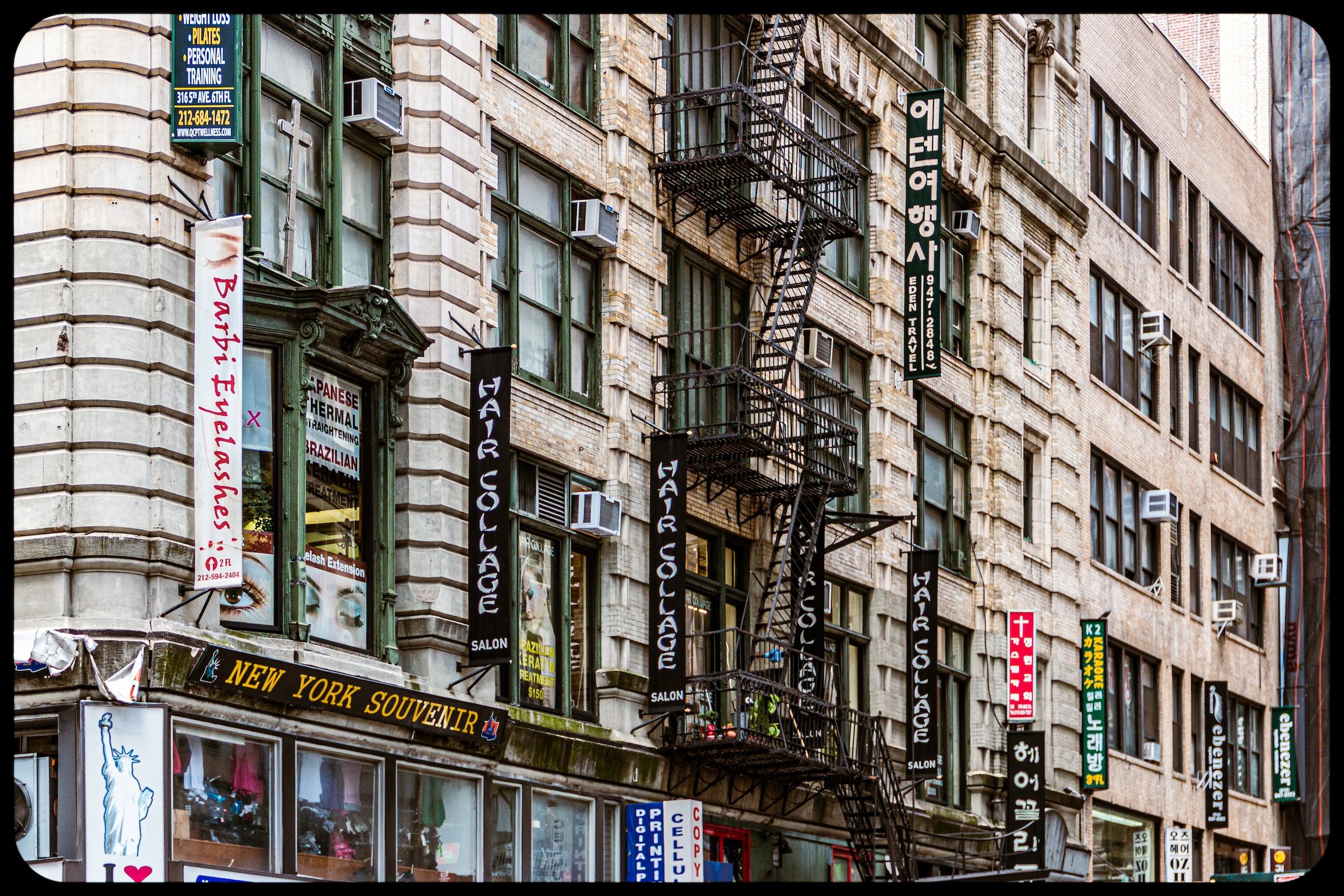
Gone, But Not Forgotten - Click To Purchase Prints
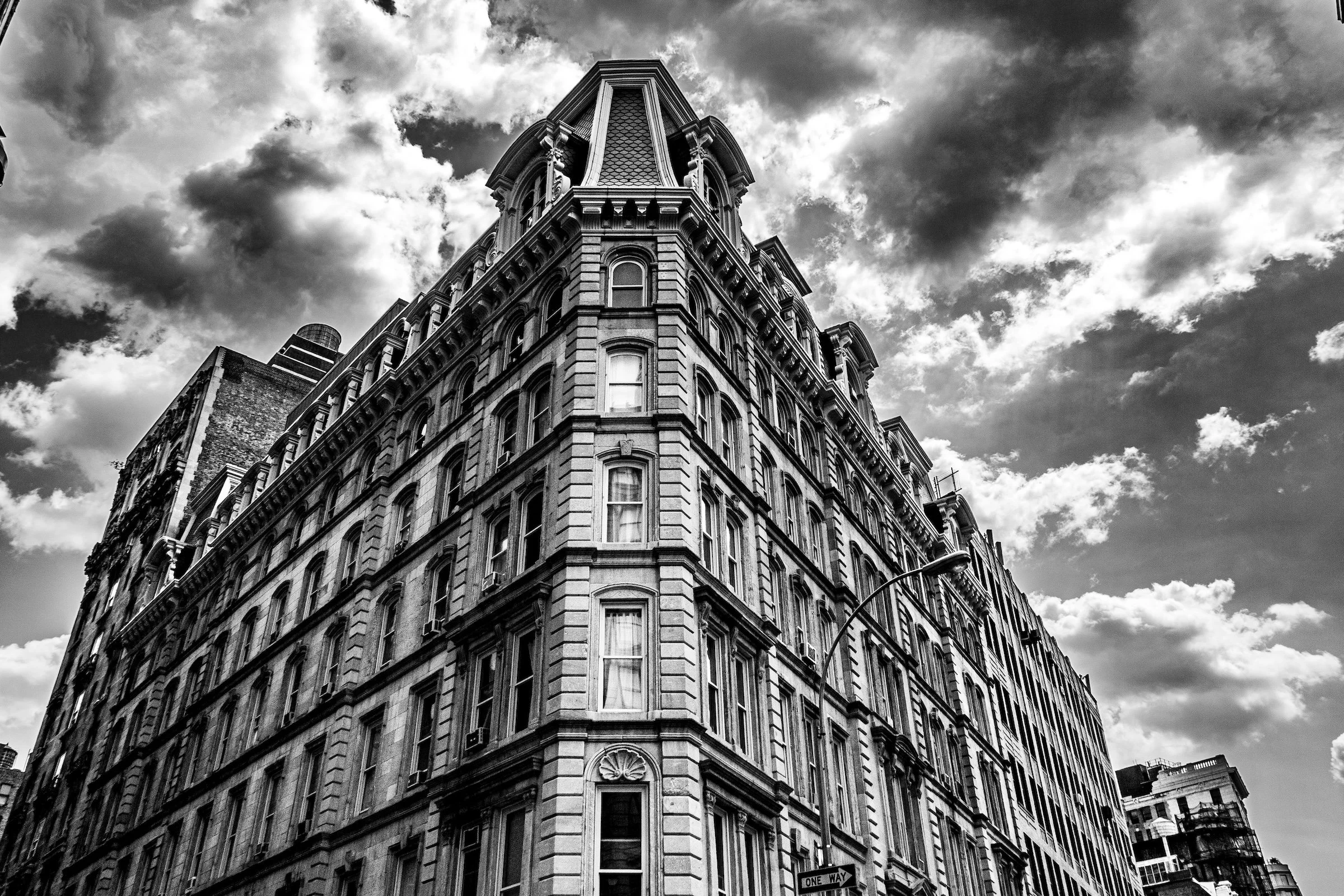
Classic Broadway - Click To Purchase Prints
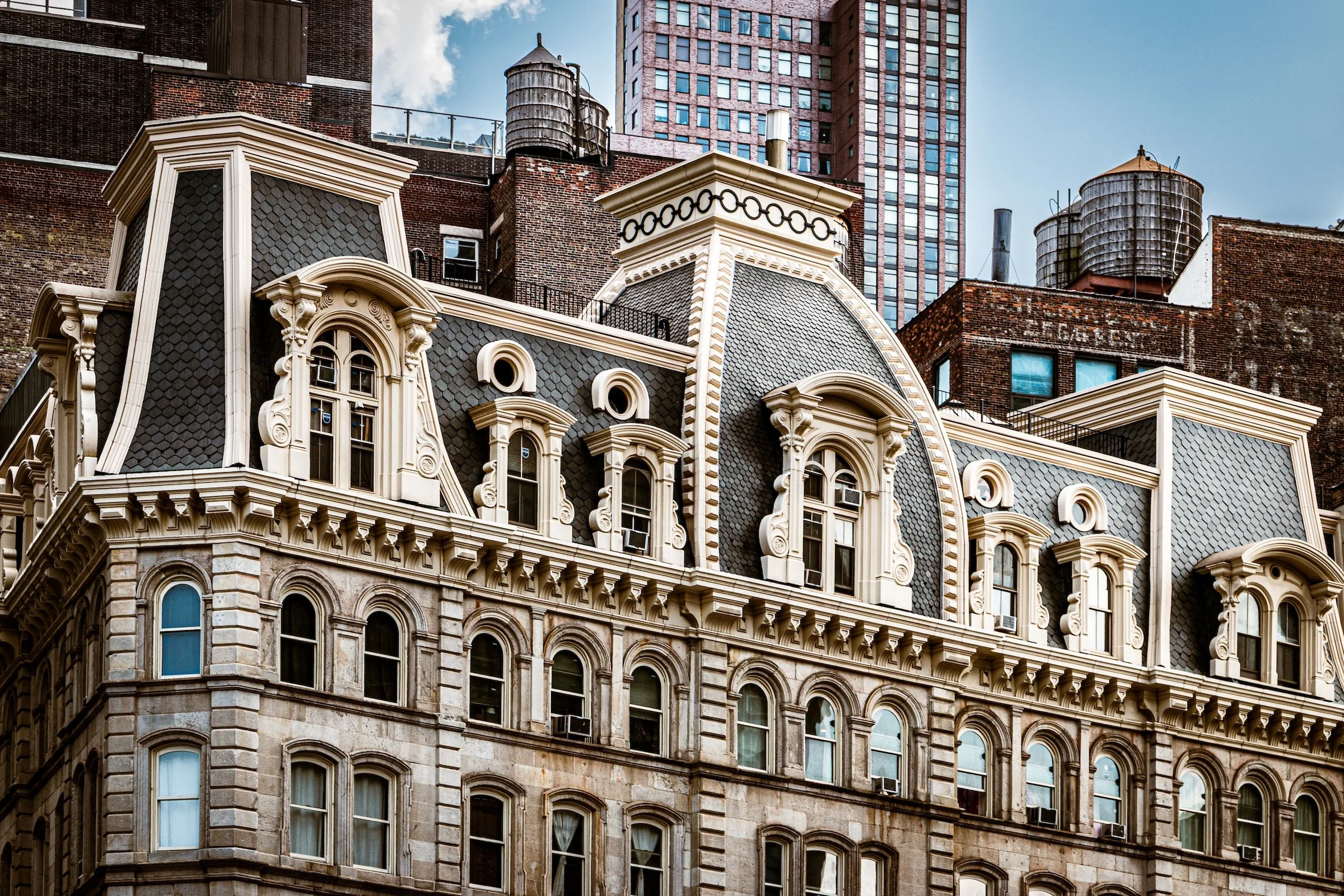
1234 BWay Crown - Click To Purchase Prints
Use this custom Google map to explore where every neighborhood in all five boroughs of New York City is located.
The Five Boroughs
One of New York City’s unique qualities is its organization in to 5 boroughs: Manhattan, Brooklyn, Queens, The Bronx, and Staten Island. These boroughs are part pragmatic administrative districts, and part vestiges of the region’s past. Each borough is an entire county in New York State - in fact, Brooklyn is, officially, Kings County, while Staten Island is, officially Richmond County. But that’s not the whole story …
Initially, New York City was located on the southern tip of Manhattan (now the Financial District) that was once the Dutch colony of New Amsterdam. Across the East River, another city was rising: Brooklyn. In time, the city planners realized that unification between the rapidly rising cities would create commercial and industrial opportunities - through streamlined administration of the region.
So powerful was the pull of unification between New York and Brooklyn that three more counties were pulled into the unification: The Bronx, Queens, and Staten Island. And on January 1, 1898, the City of New York unified two cities and three counties into one Greater City of New York - containing the five boroughs we know today.
But because each borough developed differently and distinctly until unification, their neighborhoods likewise uniquely developed. Today, there are nearly 390 neighborhoods, each with their own histories, cultures, cuisines, and personalities - and each with residents who are fiercely proud of their corner of The Big Apple.