
Shadow Projections
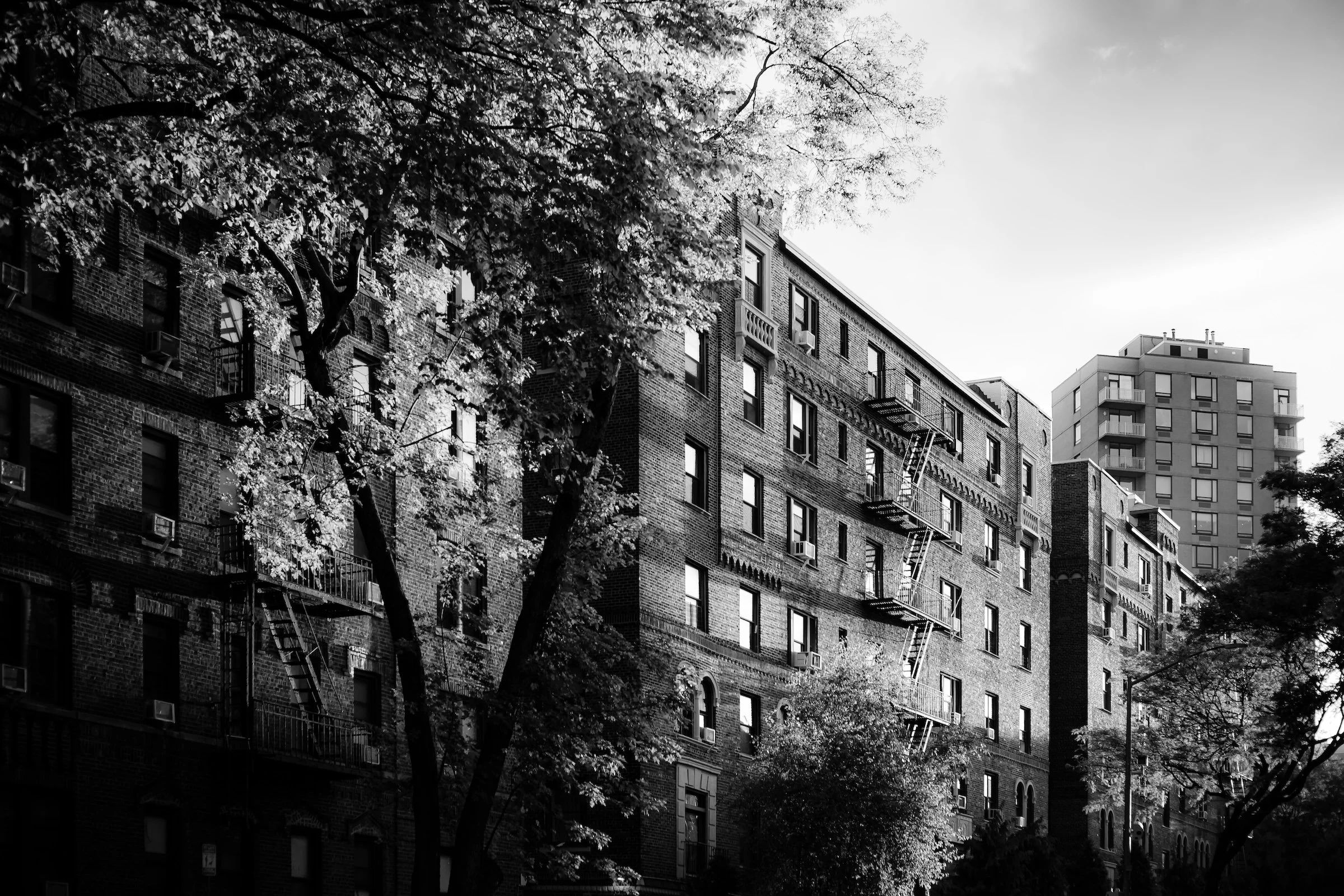
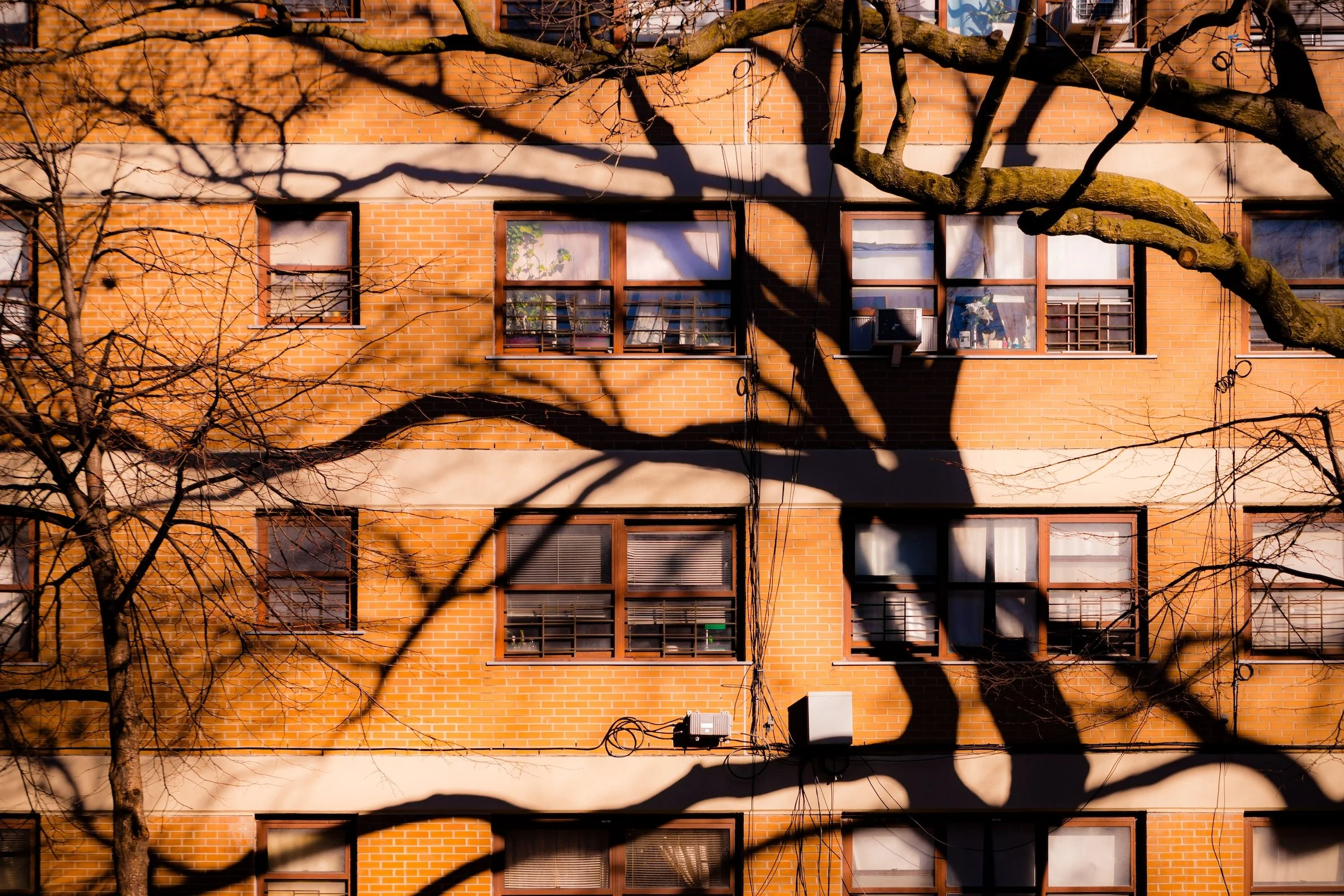
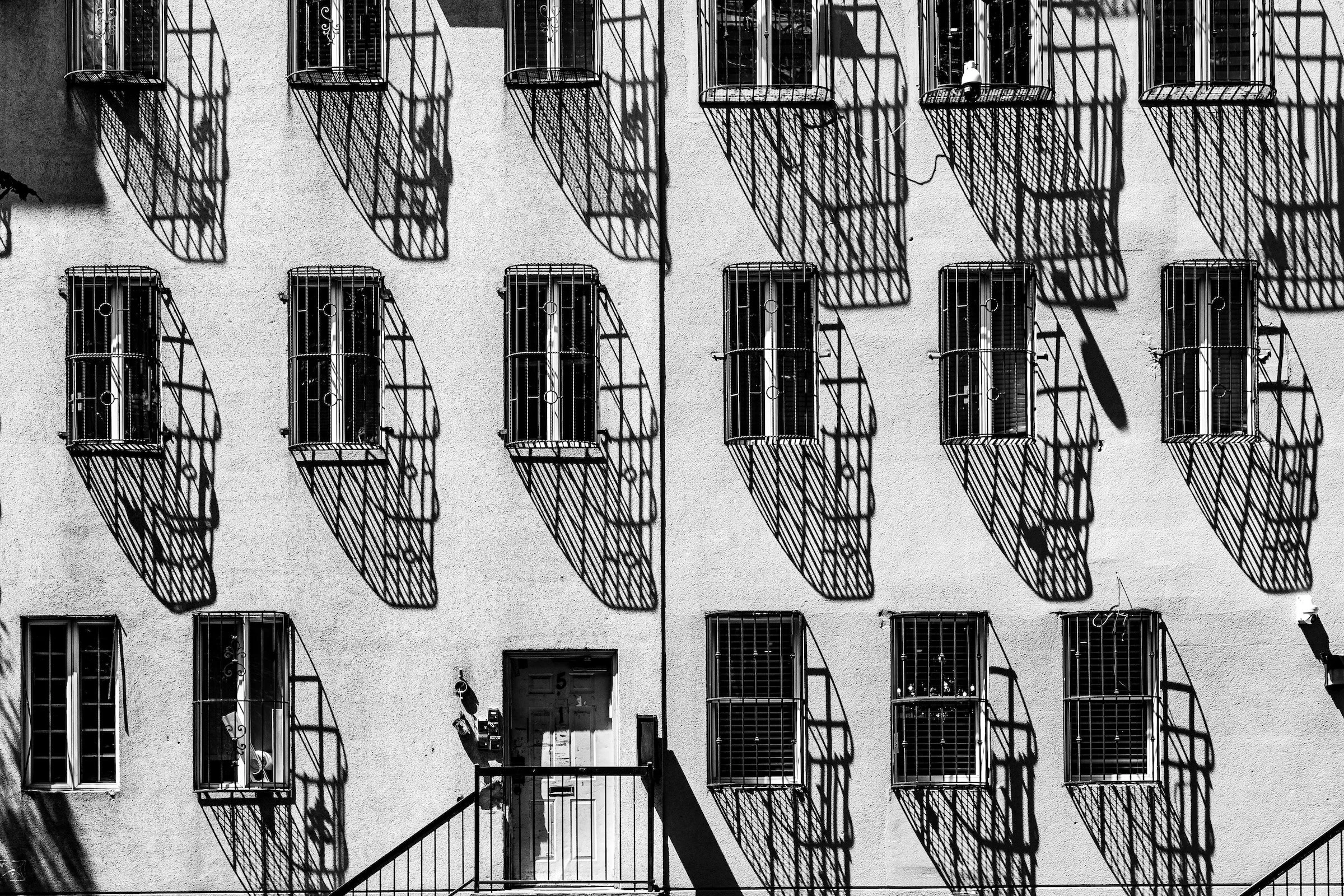
South Williamsburg — Brooklyn - Hanging Shadows
Definition:
Shadow Projections are crisp, geometric shadow-shapes cast by manmade structures—fences, railings, fire escapes, awnings, lamps—thrown onto walls and pavement as grids, stripes, ladders, and hard-edged diagonals.
Usage:
Shadow Projections are one of the fastest ways to turn an ordinary scene into graphic structure. The city becomes its own projector: ironwork, chain-link, stairs, and hardware “draw” onto sidewalks and facades, adding rhythm, direction, and architecture to surfaces that might otherwise feel flat.
This strategy works best when you treat the shadow as the primary compositional engine. Sometimes the projected pattern becomes the subject. Other times it becomes a framework that supports a street scene—leading the eye, reinforcing depth, or adding a repeatable motif across a whole photoshoot.
In Depth:
I use Shadow Projections as a way to name (and therefore reliably seek) a specific kind of shadow behavior: shadows that arrive as designed pattern. These aren’t organic silhouettes and they aren’t just “nice light.” They’re the city’s built structures acting like projectors—casting grids, bars, ladders, lattices, and repeating stripes onto whatever surface happens to be in range. In practice, Shadow Projections can create instant rhythm, carve strong diagonals, build repetition without changing the subject, and turn plain walls into graphic stages.
Shadow Projections are also wonderfully portable. They’re not tied to New York or to any one kind of neighborhood. Anywhere you have sun + a structured object + the right angle, you can find them—chain-link shadows in Queens, ironwork shadows in Brooklyn, formal architectural projections in Paris, and the same underlying geometry reappearing in Poland. That portability is exactly why they belong in the Photographic Lexicon: this is a repeatable way of seeing, not a one-off trick.
A few quick ways to spot them in the field:
Look for “projector objects”: chain-link, railings, stairs, fire escapes, awnings, lamps, grates.
Favor low-angle light for longer runs and sharper geometry.
Find simple landing zones; busy textures can swallow the pattern.
Move your position; projection geometry changes fast with small shifts.
Commit: either the projection is doing the compositional heavy lifting, or it’s just visual clutter.
Below are ten launch examples that show Shadow Projections in different forms: fire escape lattices, fence and railing grids, and architectural projections that turn walls and sidewalks into graphic design. Each image includes a brief note on what the projection is doing in the frame, and why I consider it a strong example of the concept.
Signature Shadow Projections (The City as Projector)
These are the “pure” examples—where the projected geometry becomes the main architecture of the image.
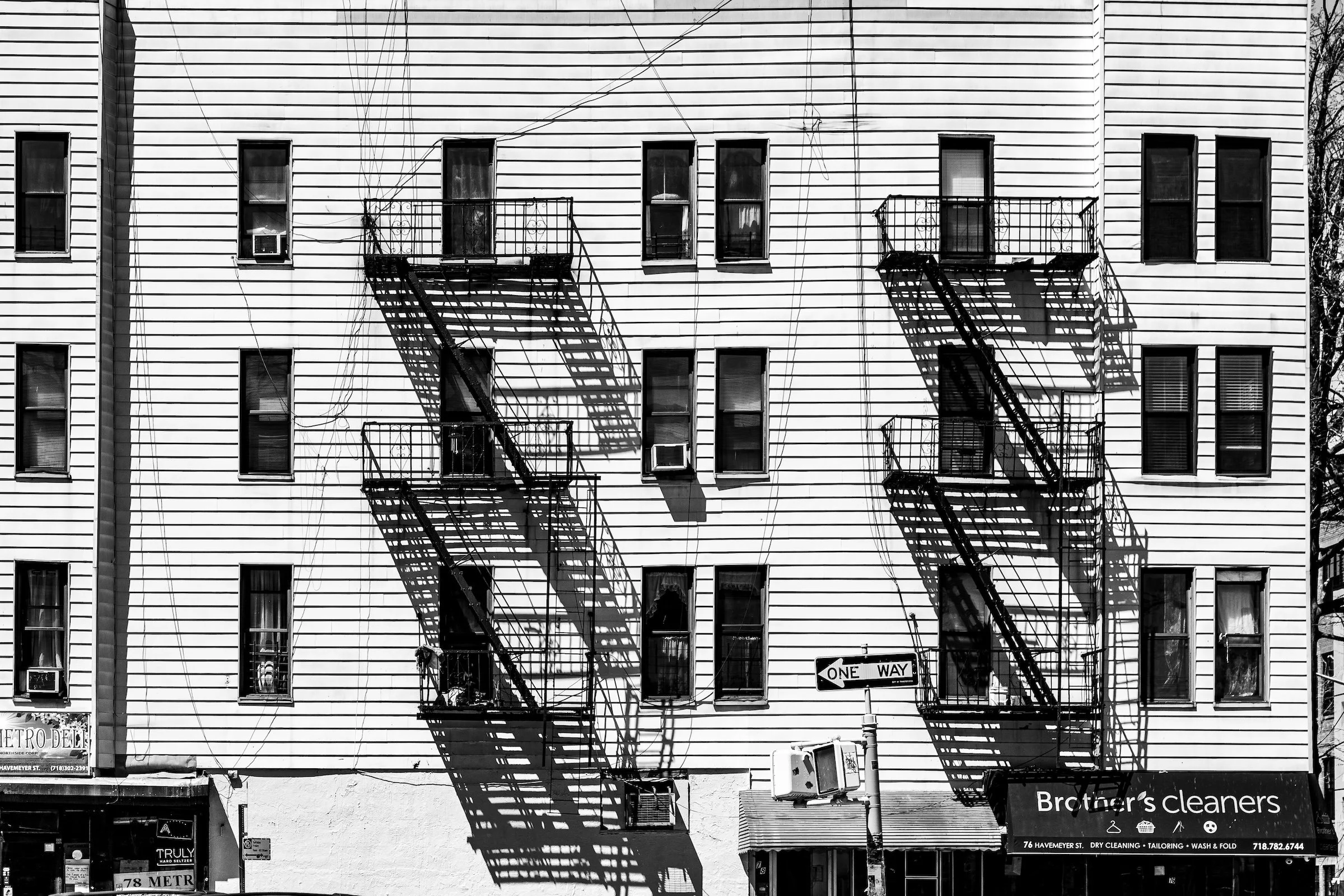
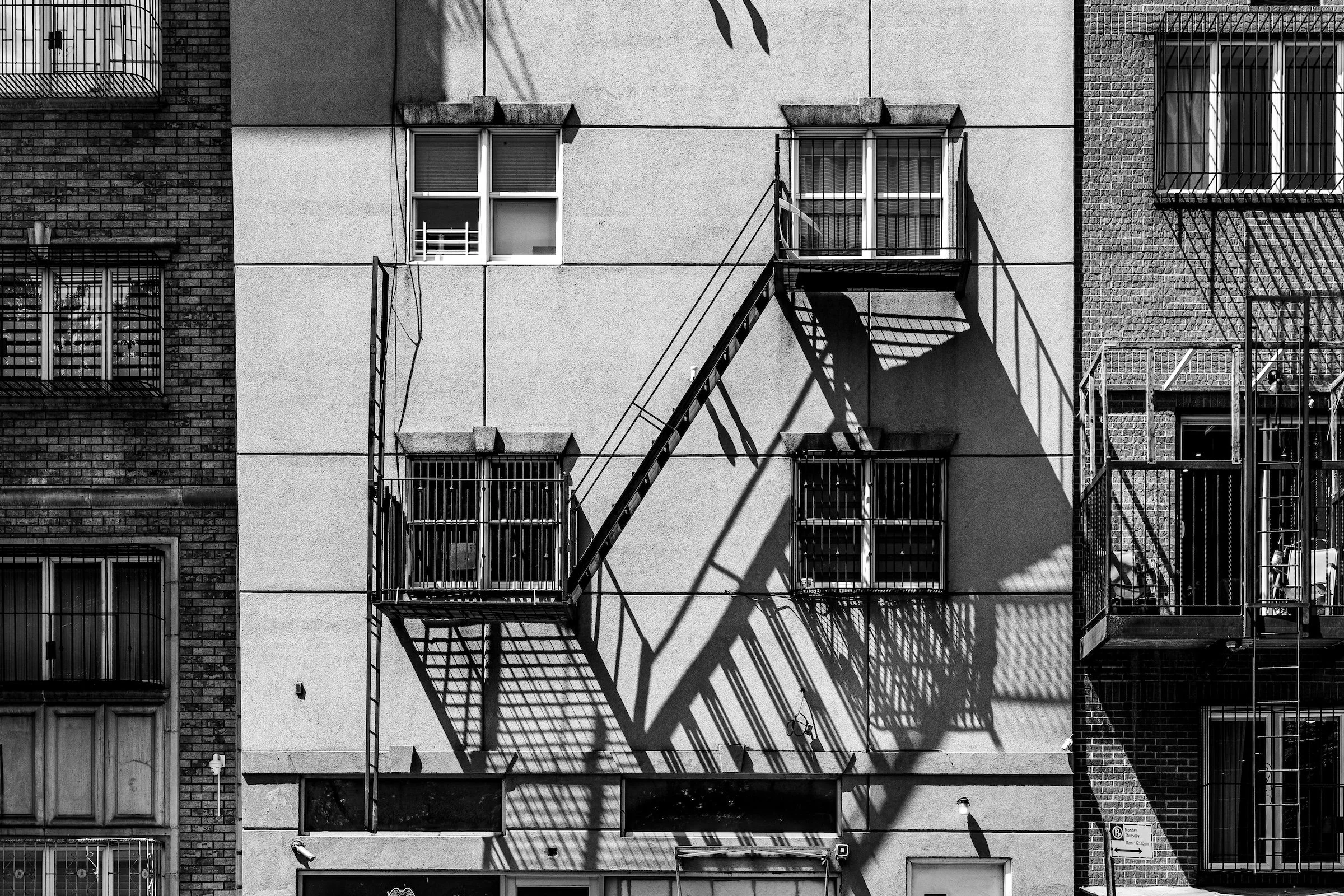
South Williamsburg — Brooklyn — Fire-Escape Blueprint
The fire escape projects a sharp lattice that reads like an architectural drawing laid over the facade. The power here is clarity: strong diagonal runs, repeated bars, and a clean landing surface that lets the projection become the scene’s true structure.
South Williamsburg — Brooklyn — Window-Cage Rhythm
This is projection as pattern—repeated window cages throwing repeated shadows that turn the wall into rhythm. The scene works because the shadows aren’t incidental; they establish a tempo the eye can follow.
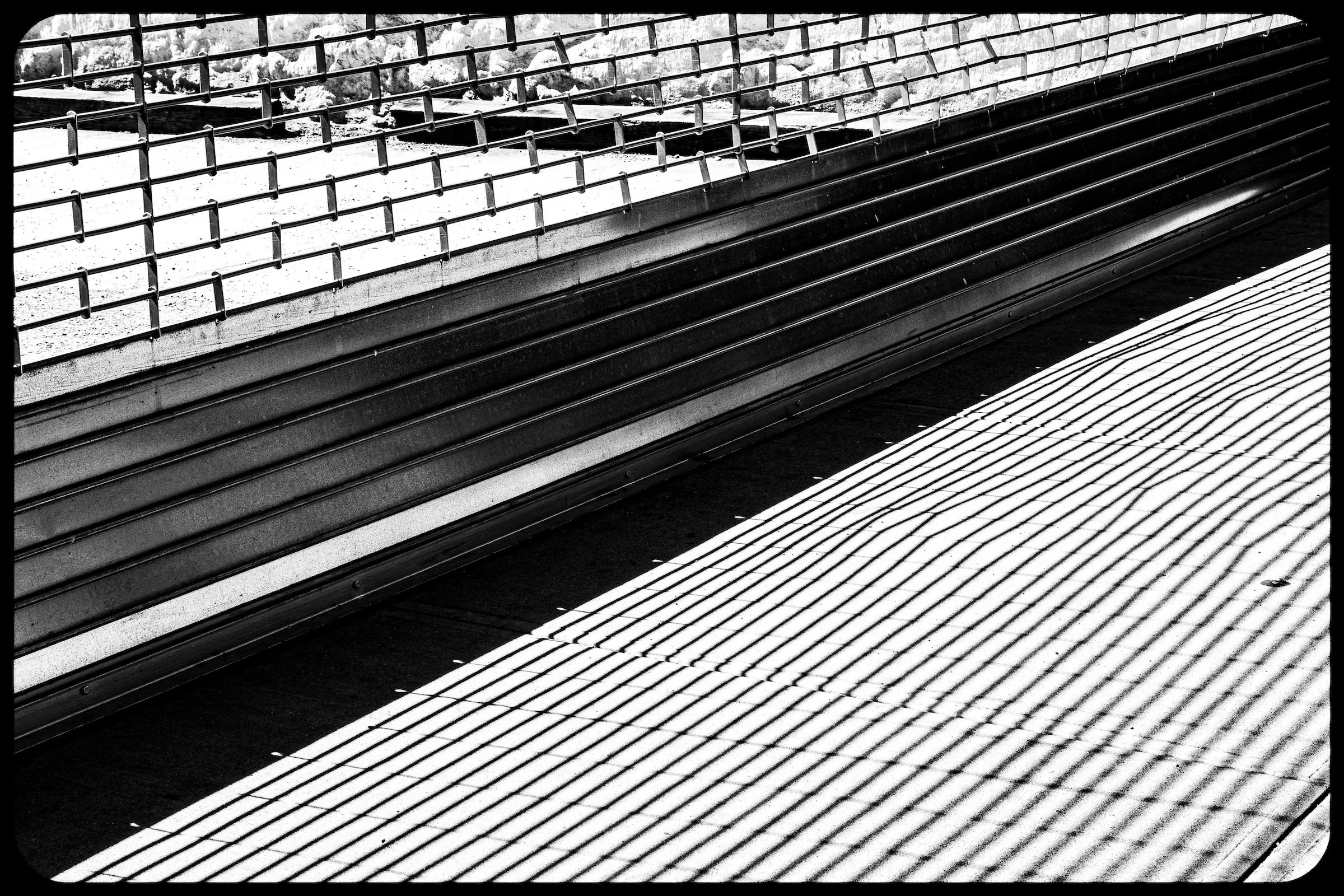
Hell’s Kitchen — Manhattan — Walkway Striations
Here the projection becomes an abstract field—parallel lines that feel almost like a printed texture across the ground plane. It’s a great reminder that Shadow Projections can live comfortably in both “place photography” and near-abstraction.
Fencework and Railing Grids (Street-Level Geometry)
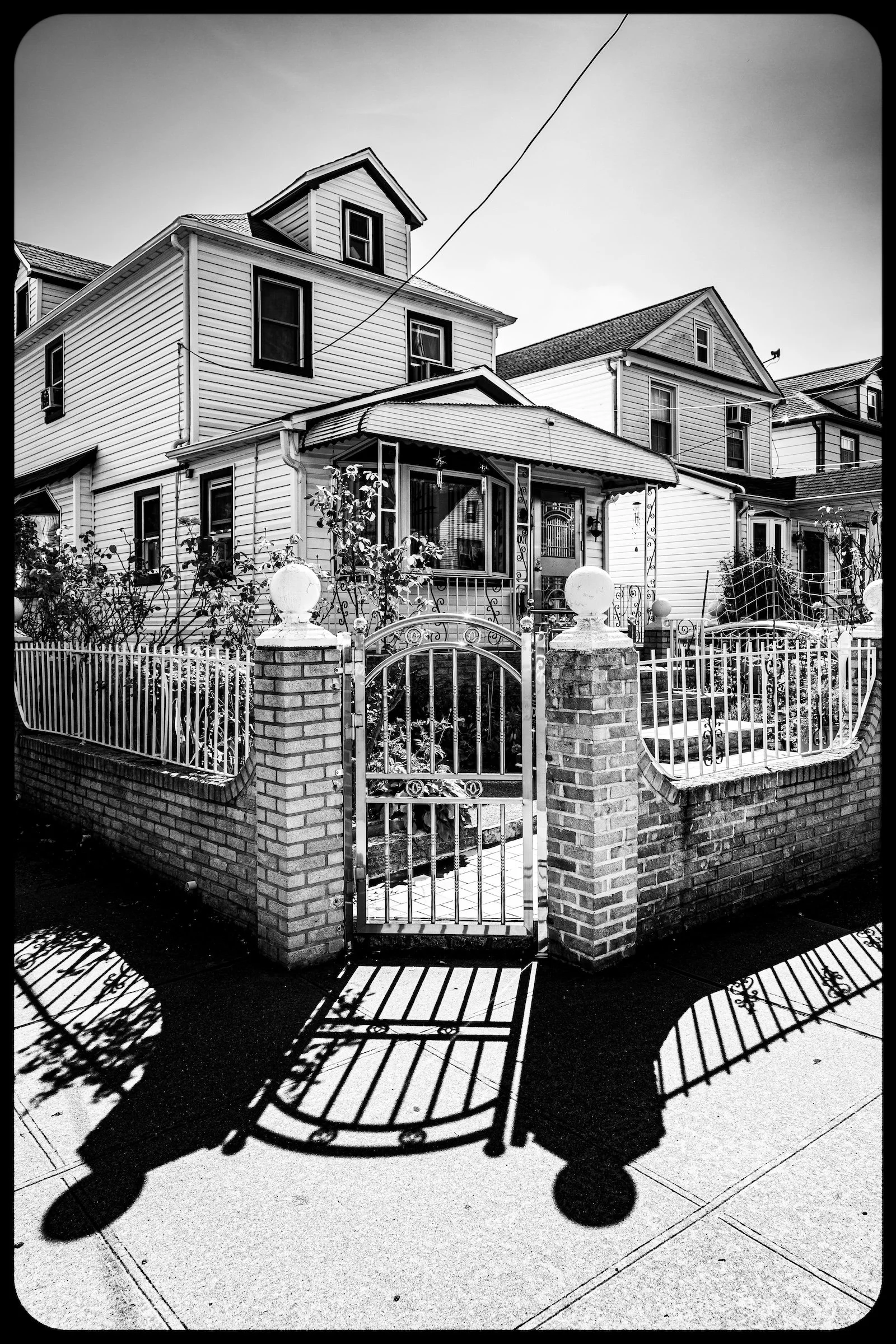
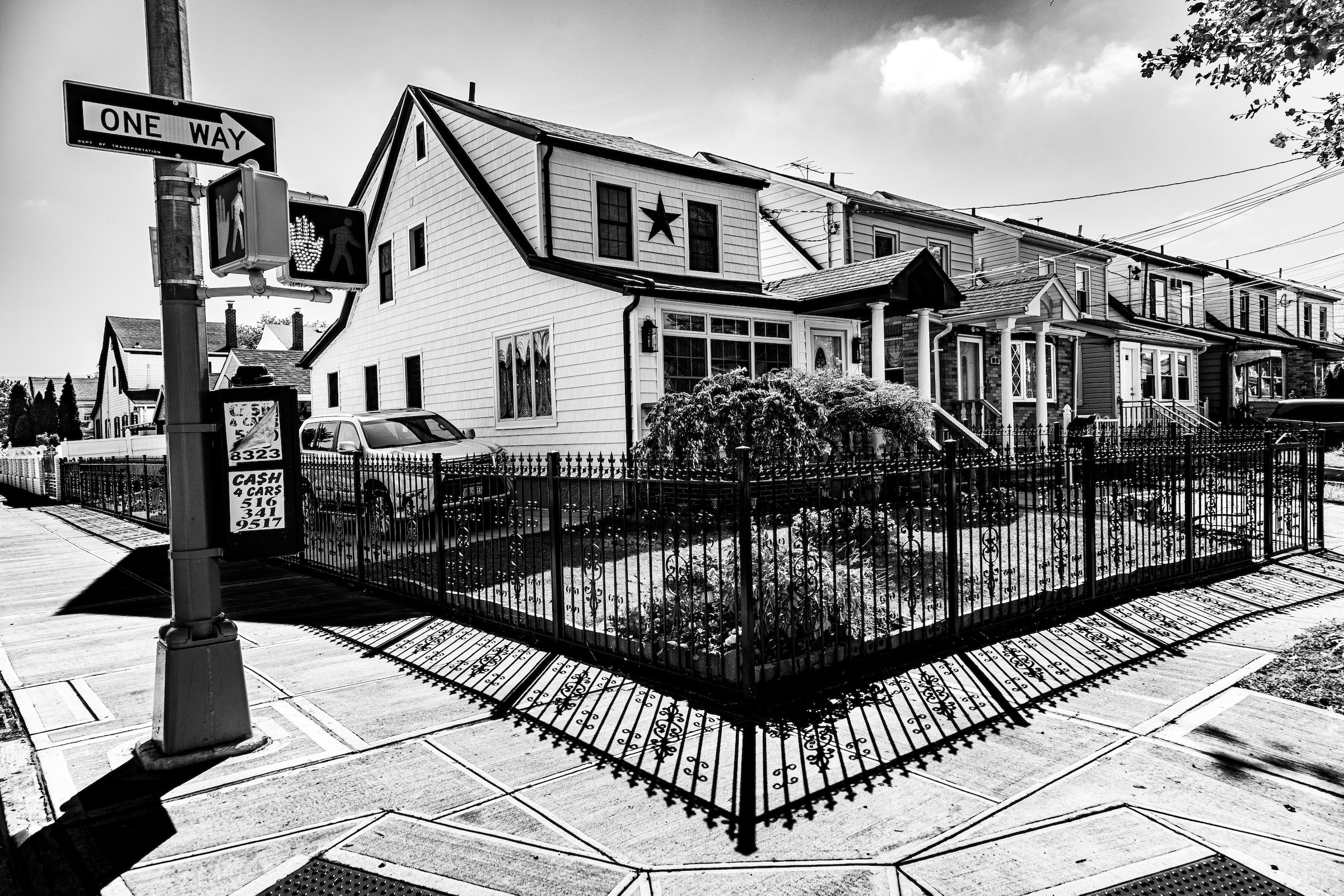
These examples show how everyday barriers—fences, gates, railings—can become graphic engines when sunlight turns them into patterned light.
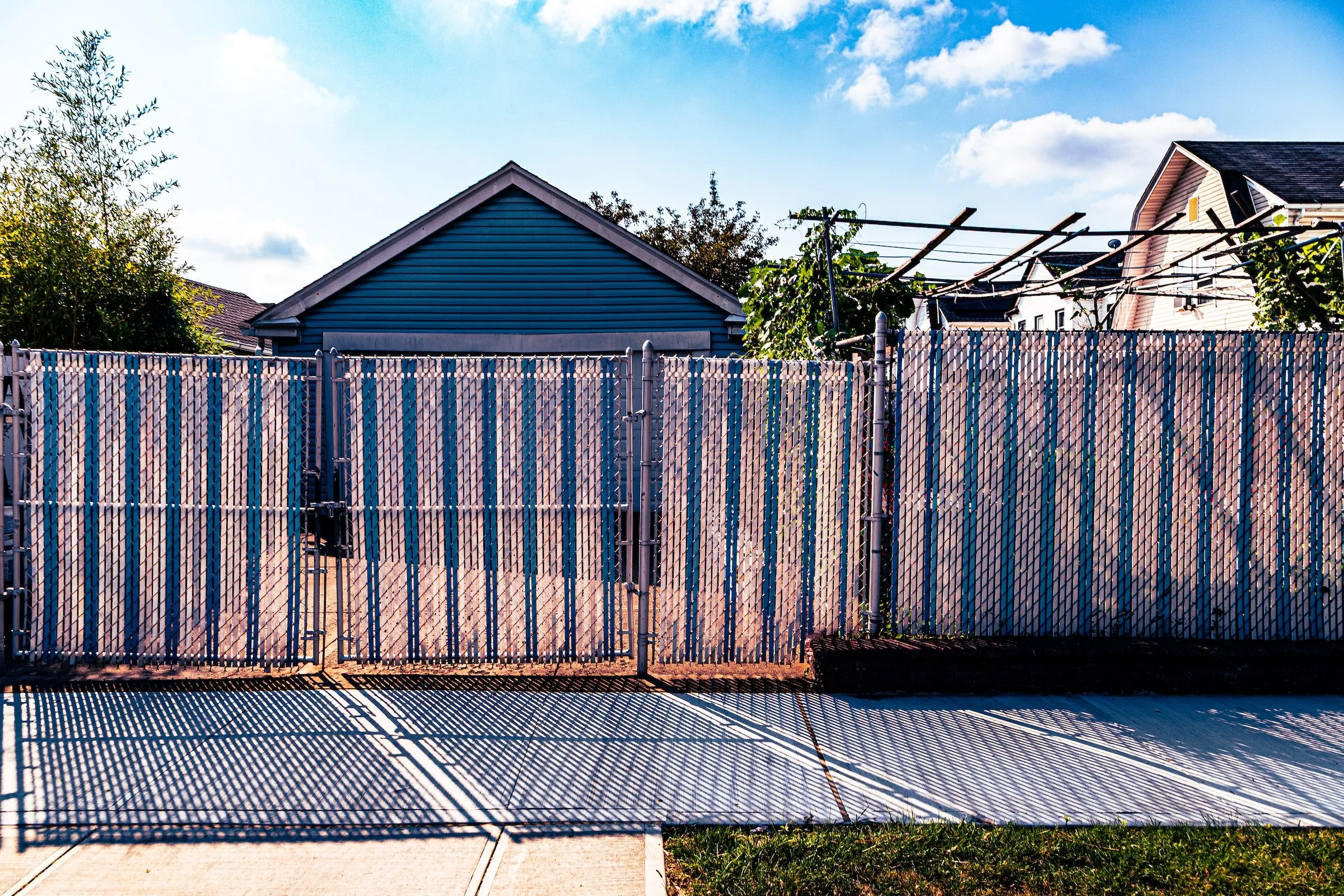
Queens Village — Queens — Chain-Link Graph Paper
The chain-link throws a dense grid that reads like graph paper across the pavement, instantly energizing an otherwise calm scene. What makes it strong is the scale: the grid is large enough to matter, and clean enough to read.
Facades as Screens (Windows, Fire Escapes, and the Graphic Wall)
These are the examples where the wall becomes a screen, and the projection creates repeatable architecture across the frame.
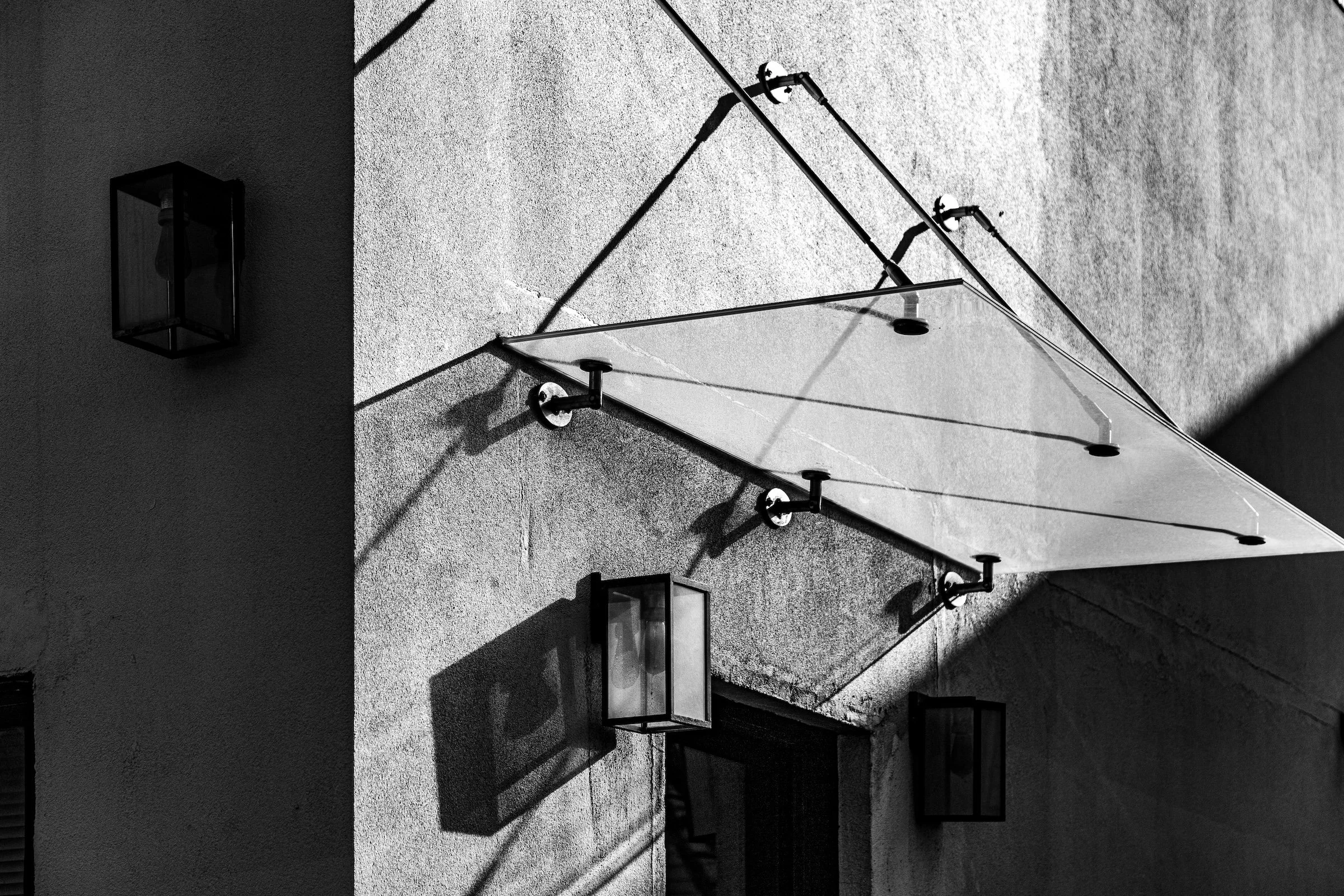
Williamsburg — Brooklyn — Diagonal Scaffold
The projected diagonals create a structural “X” language that gives the facade tension and balance. It’s a strong example of how Shadow Projections can add depth cues and directional force without changing the subject matter at all.
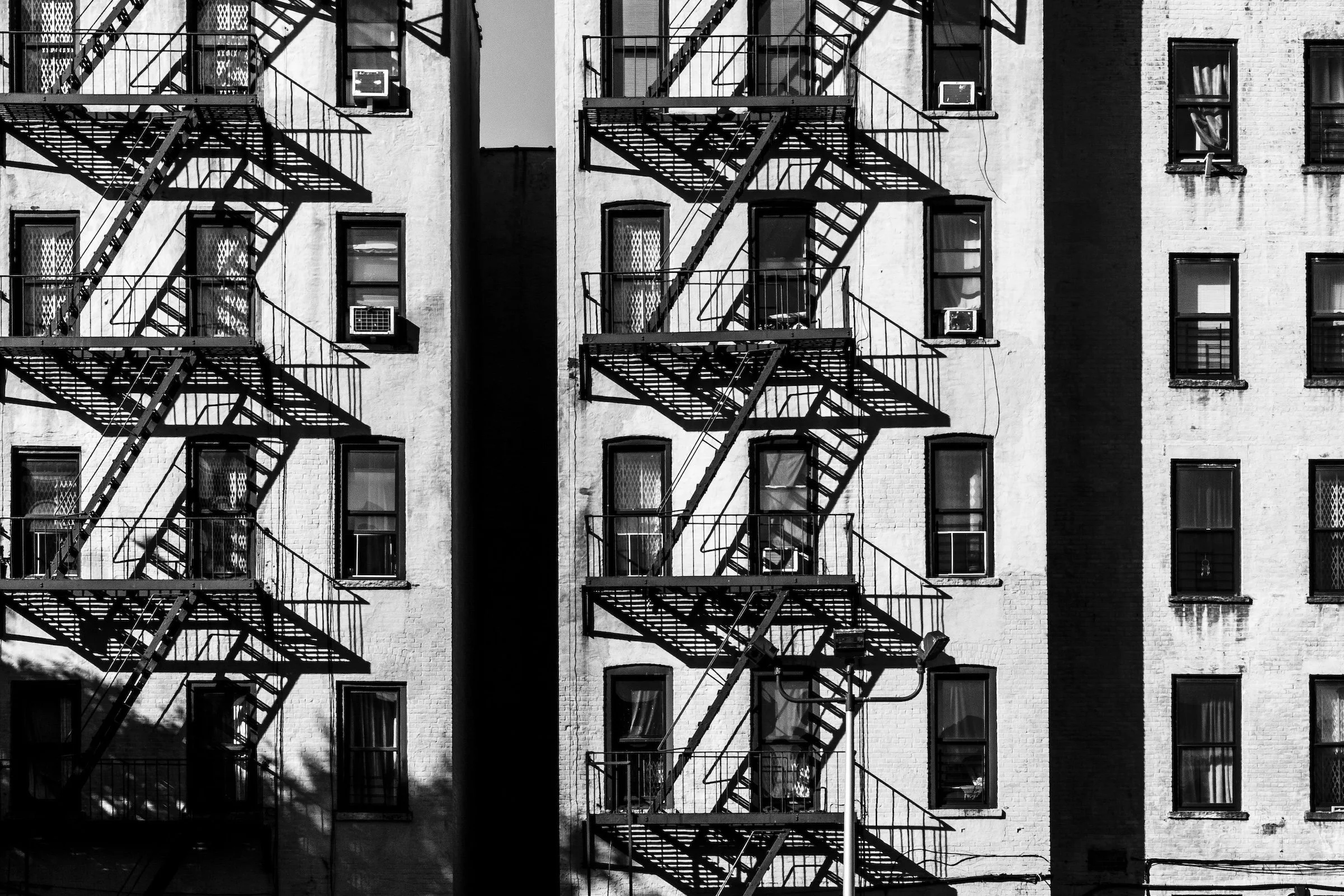
Spanish Harlem (El Barrio) — Manhattan — Staircase Shadows
Fire escape shadows turn the facade into layered geometry—horizontal platforms, diagonal stairs, and repeating bars that build a rhythmic city-grid. The projection reads like an alternate architecture, doubling what’s already there.
Shadow Projections Abroad (The Same Phenomenon, New Places)
These examples reinforce the Lexicon logic: it’s not an NYC trick; it’s a repeatable way of seeing.
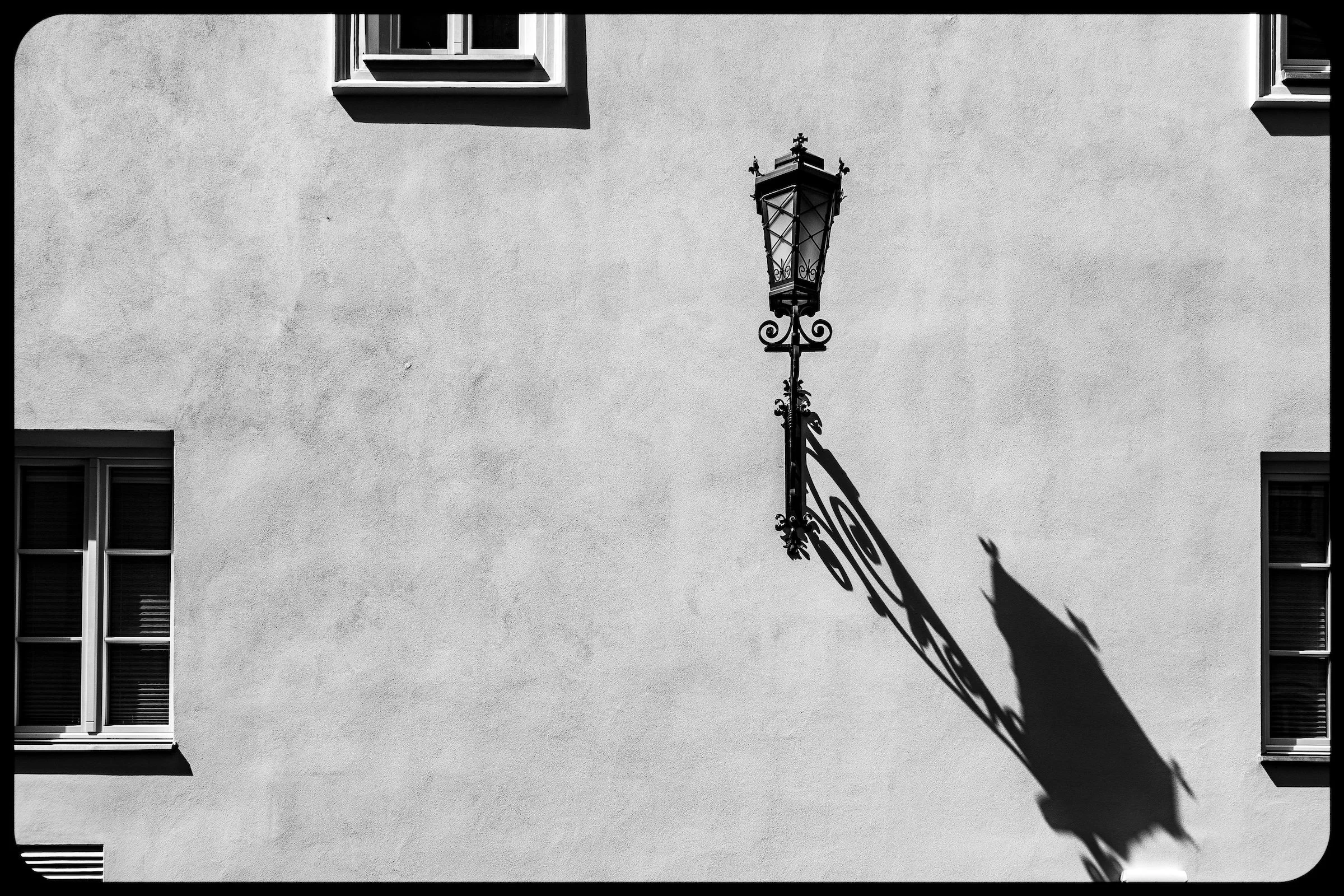
Jasna Góra — Poland — Formal Gridwork
The projection here feels almost ceremonial: clean geometry laid across a surface with a sense of order and restraint. It’s a reminder that Shadow Projections aren’t only gritty or industrial—they can be elegant and architectural.
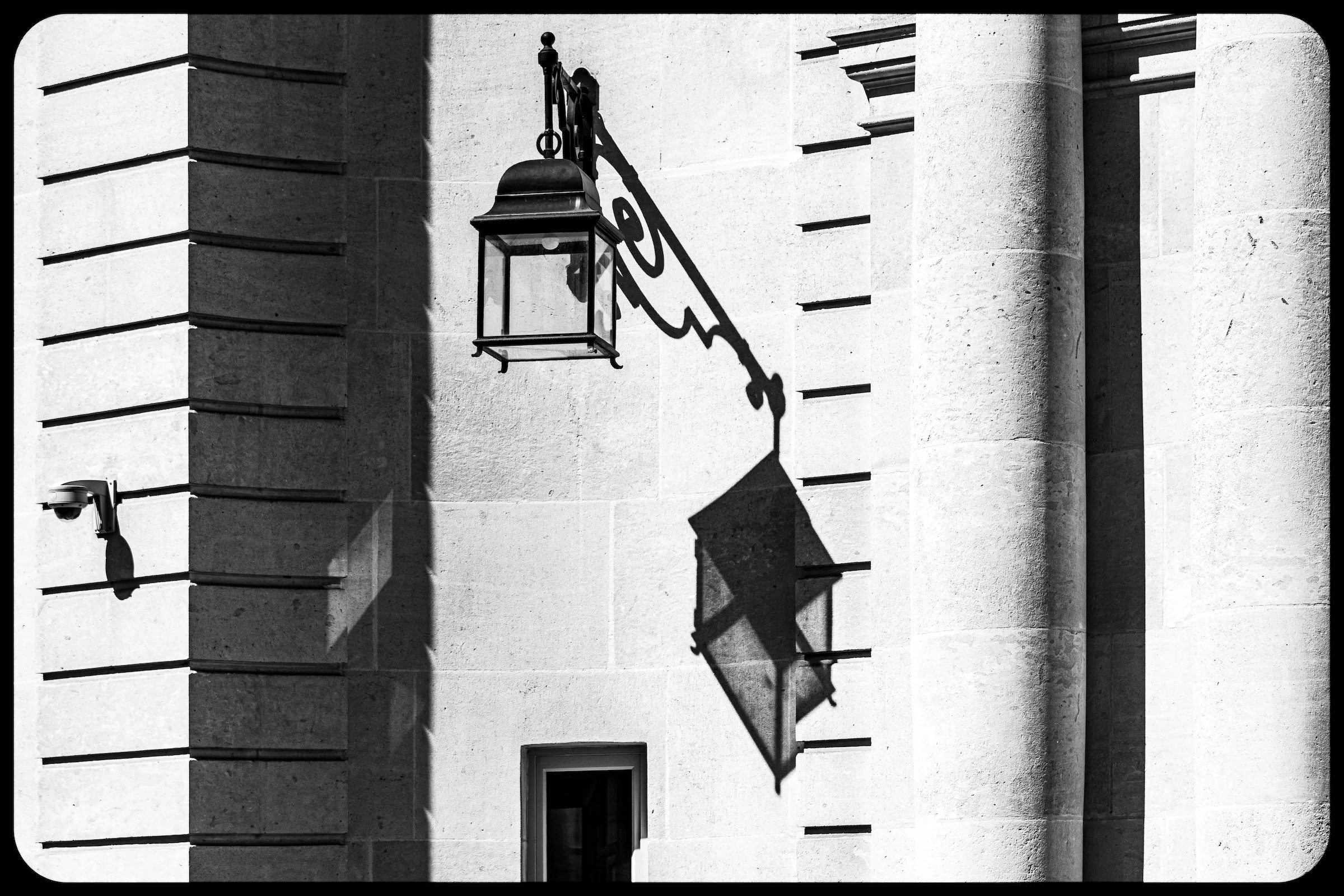
In a place defined by formal architecture, the projection becomes a kind of graphic embroidery—structured, precise, and beautifully controlled. This is Shadow Projections at their most “designed,” even though it’s still just sunlight and angle doing the work.
Explore Further