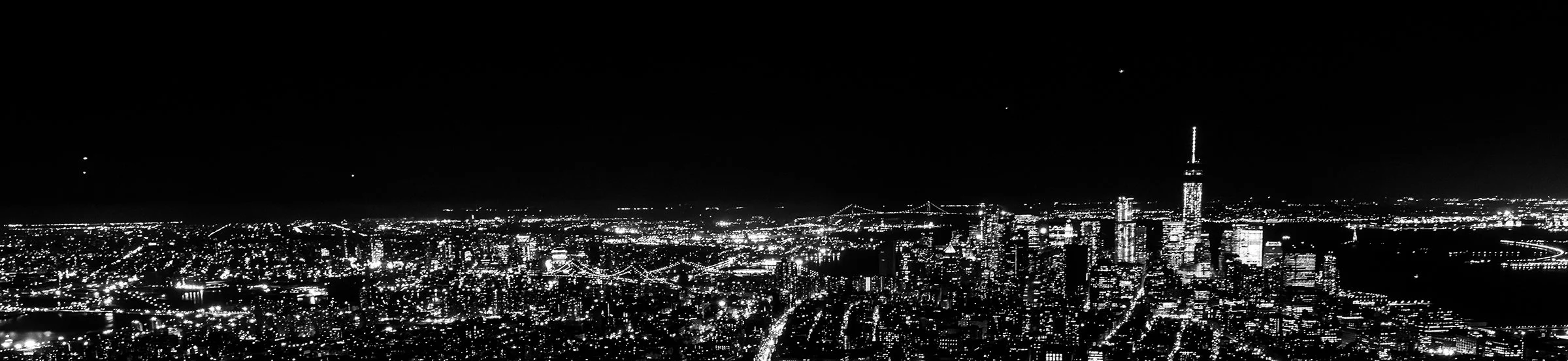

Glassy Eyes
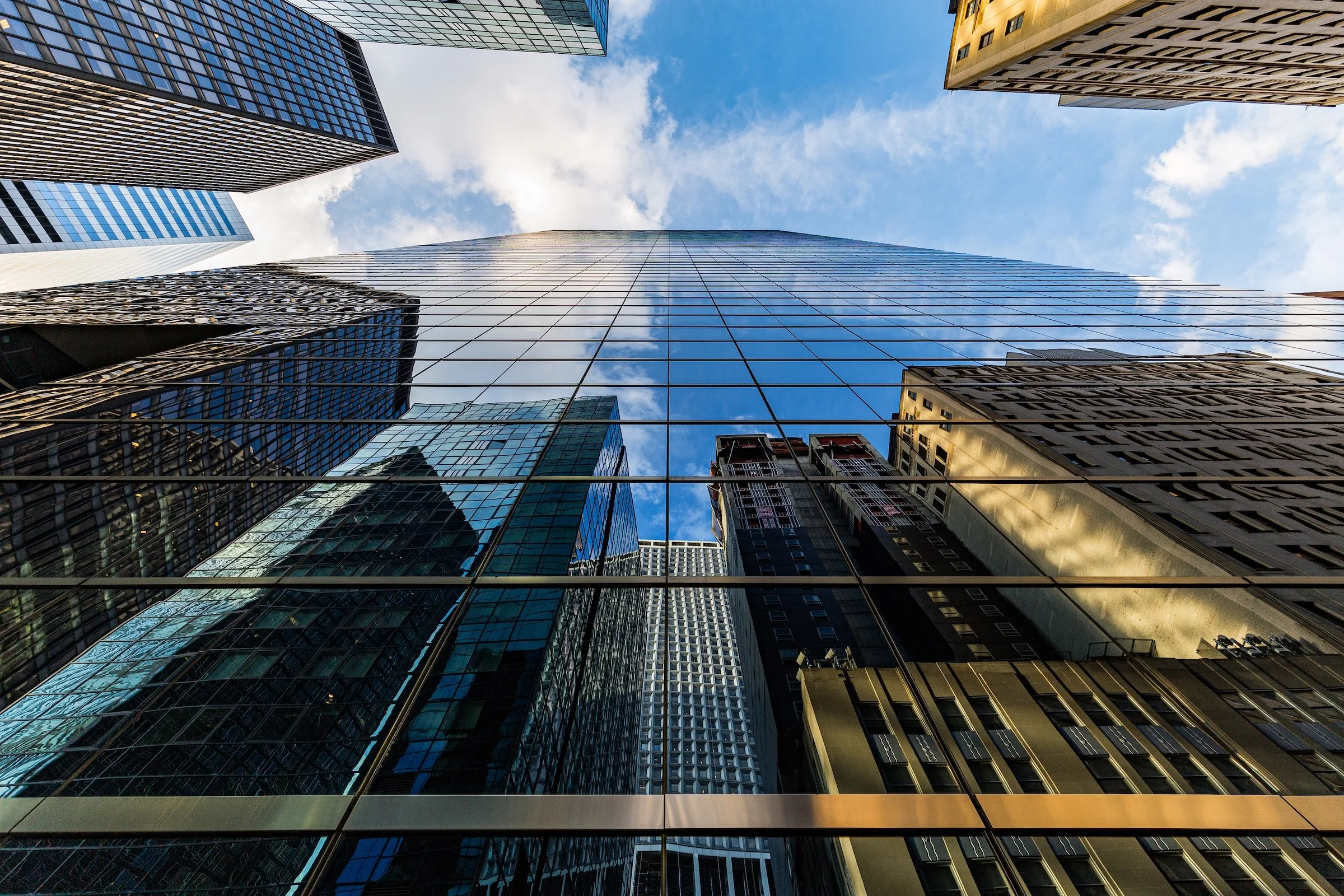
Hudson Yards - Manhattan - Windows At Scale
Definition:
Glassy Eyes is the practice of treating windows as the city’s gaze: repeating panes that read like pupils, grids that feel like a thousand watching eyes, and reflective glass that turns a building into a living surface. The subject isn’t “a building” so much as the expression created by its windows—orderly, anxious, playful, severe, curious.
Usage:
Use Glassy Eyes to give architecture a kind of character without needing people in the frame. It’s a reliable way to build photographs out of pattern, repetition, and micro-variation (open blinds, shifted reflections, a single dark pane) while keeping the composition clean and graphic. It works especially well when you want the city to feel sentient—not literally, but visually.
Sunflections is about light the city bounces back into the street. Glassy Eyes is about what the city seems to look back with.
In Depth:
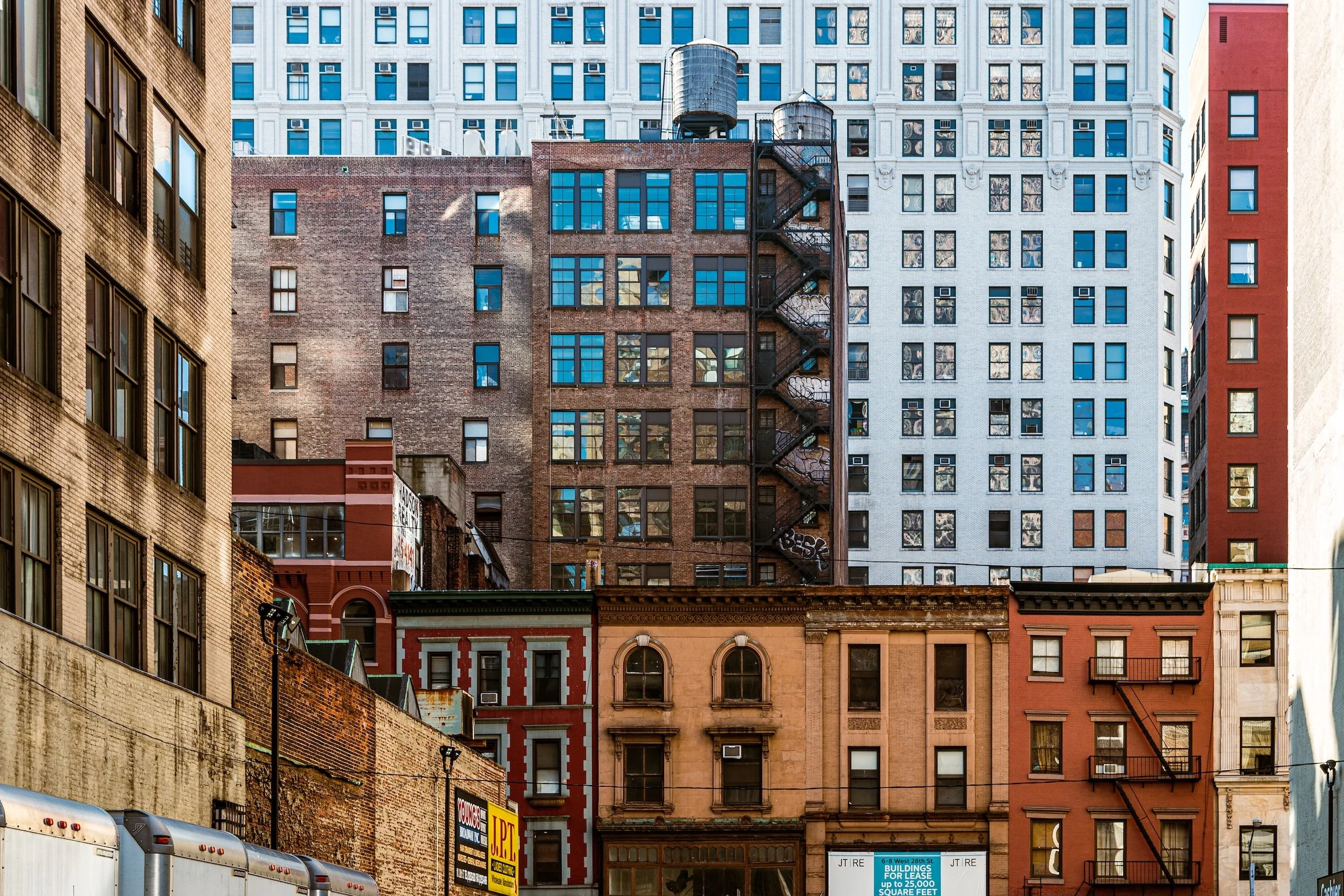
I coined Glassy Eyes because “windows” is too bland a word for what happens when you start photographing them as a face or a field of attention. Glass turns architecture into something psychological. A grid of identical panes can feel clinical. A few mismatched windows can feel human. A reflective tower can look like it’s wearing the sky.
This is also one of those techniques that rewards patience. The best frames are rarely “the whole building.” They’re the right slice—the portion where the repetition becomes hypnotic, the verticals stay disciplined, and the scene contains just enough irregularity to feel alive.
A few quick ways to spot Glassy Eyes in the field:
Look for repetition + one disruption: a single open window, a different tint, a curtain, a shadowed bay.
Seek flat light (overcast) for pure pattern, or angled sun for reflections that add a second layer of texture.
Keep your perspective squared when you want the windows to read like a grid; tilt/angle only when the distortion is part of the point.
Watch for distance compression (longer focal lengths). It turns buildings into textiles.
If the scene feels busy, simplify: tight crop, fewer edges, fewer competing lines.
Below are ten launch examples that show Glassy Eyes in different forms: as window-portraits, as massed repetition, and as ornament—where the “eyes” are framed by older architectural language.
Window portraits:
These examples treat a façade like a face—less about the whole structure and more about expression. Often the strongest “portrait” has one dominant window-zone (a bay, a stack, a corner) that becomes the subject.
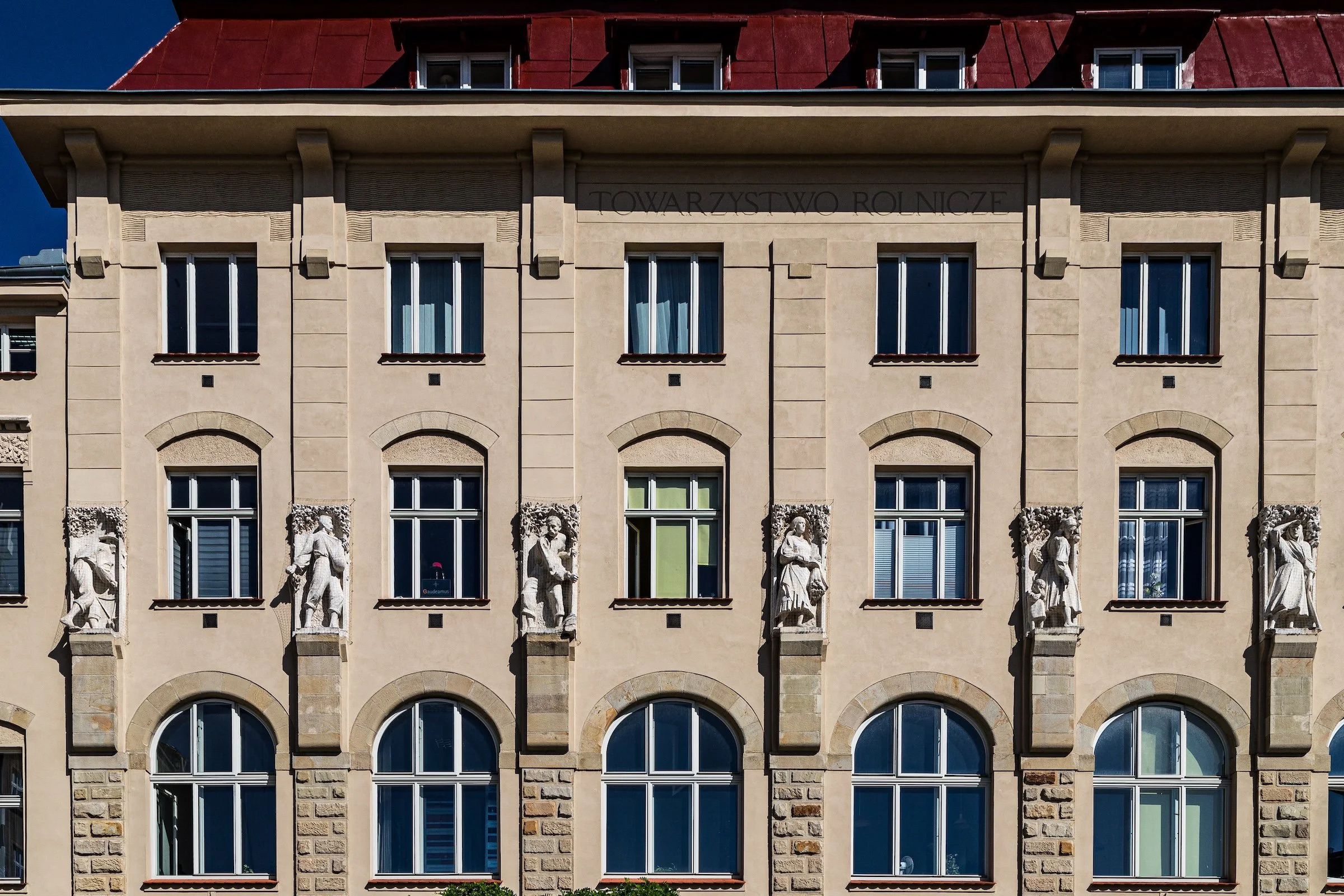
Stare Miasto - Kraków - Sculpted
Here the gaze is historical: windows framed by ornament feel less like modern surveillance and more like carved identity. Glassy Eyes doesn’t require modern glass—sometimes the “eyes” are set inside stone, tradition, and craft.
Rows at scale:
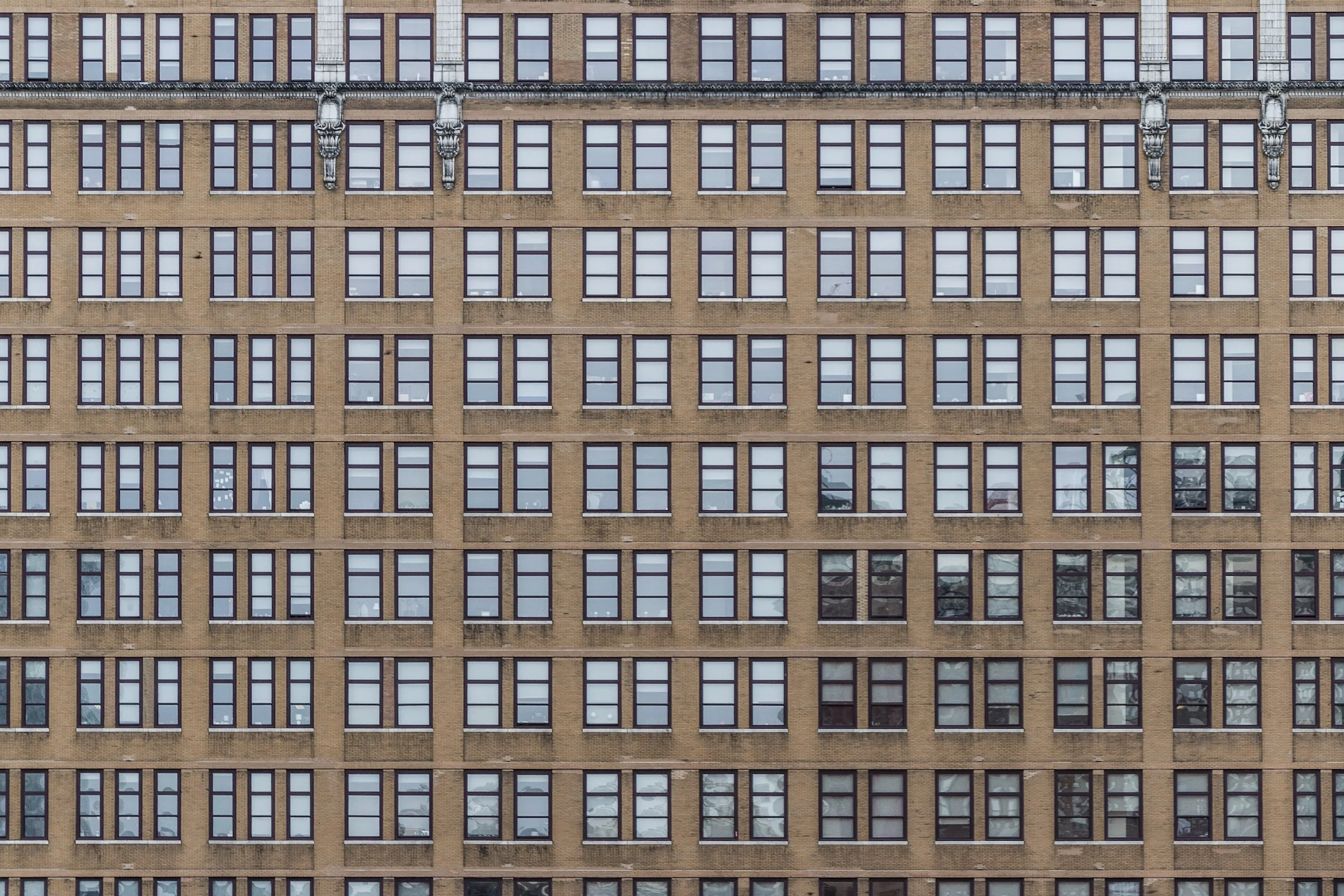
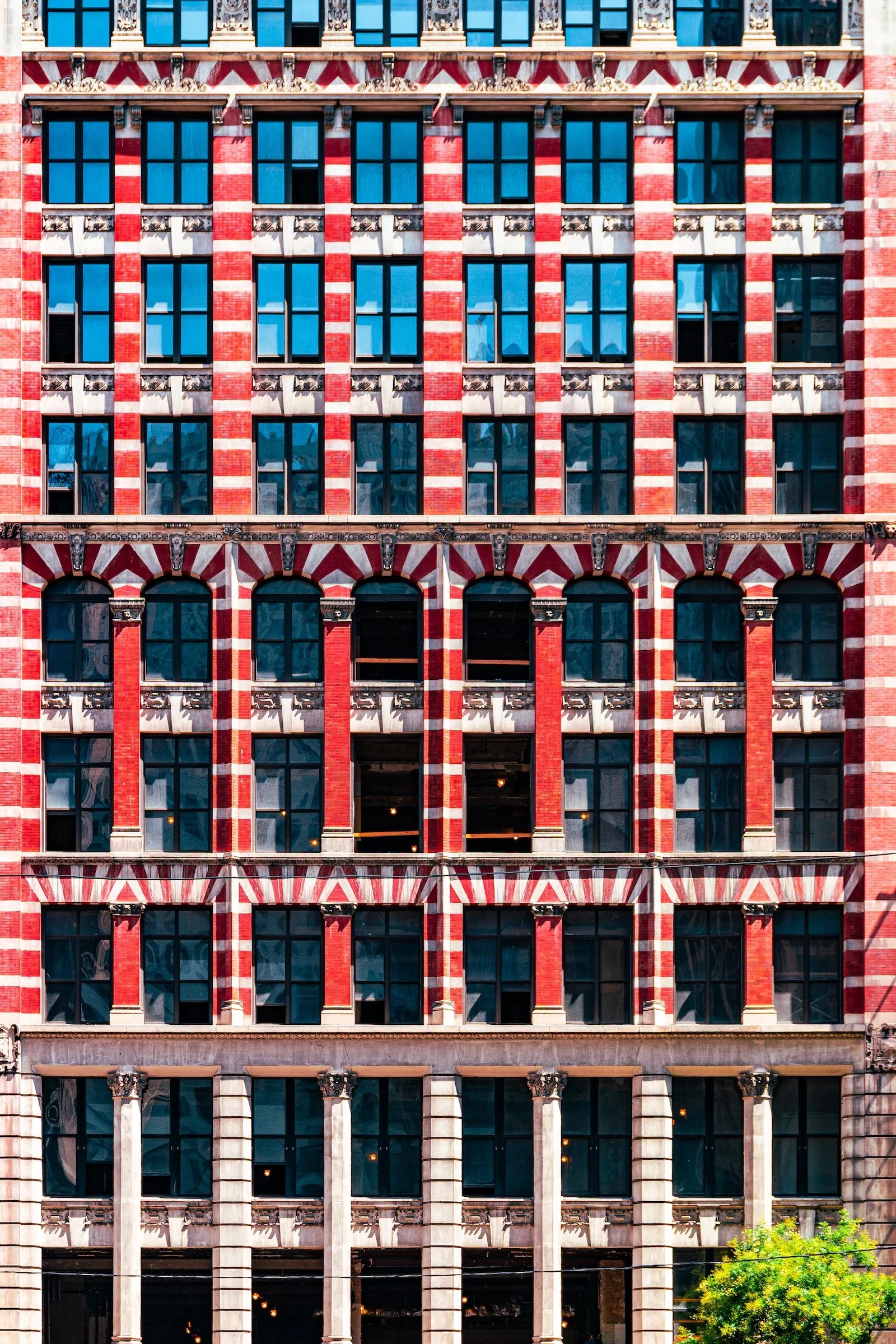
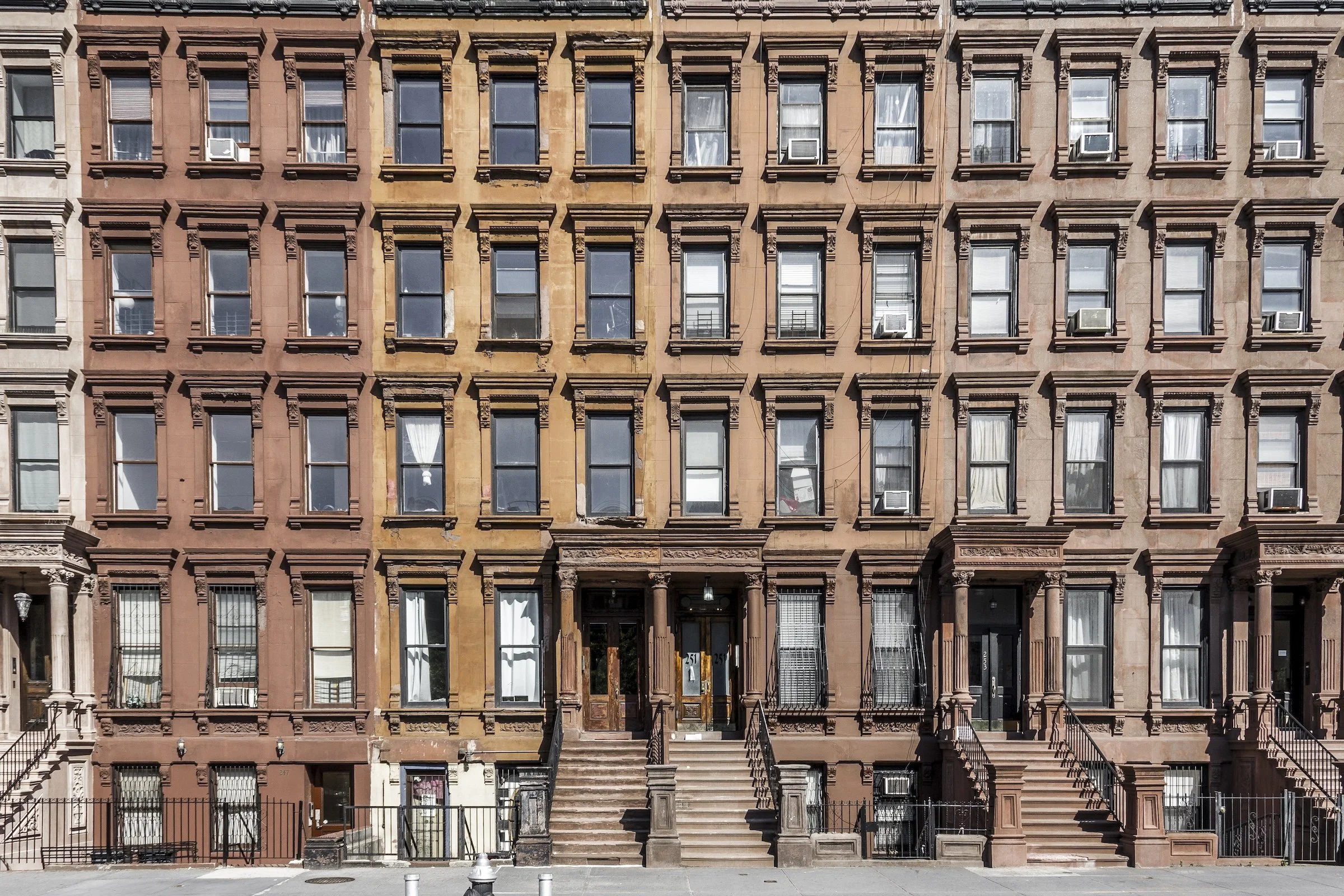
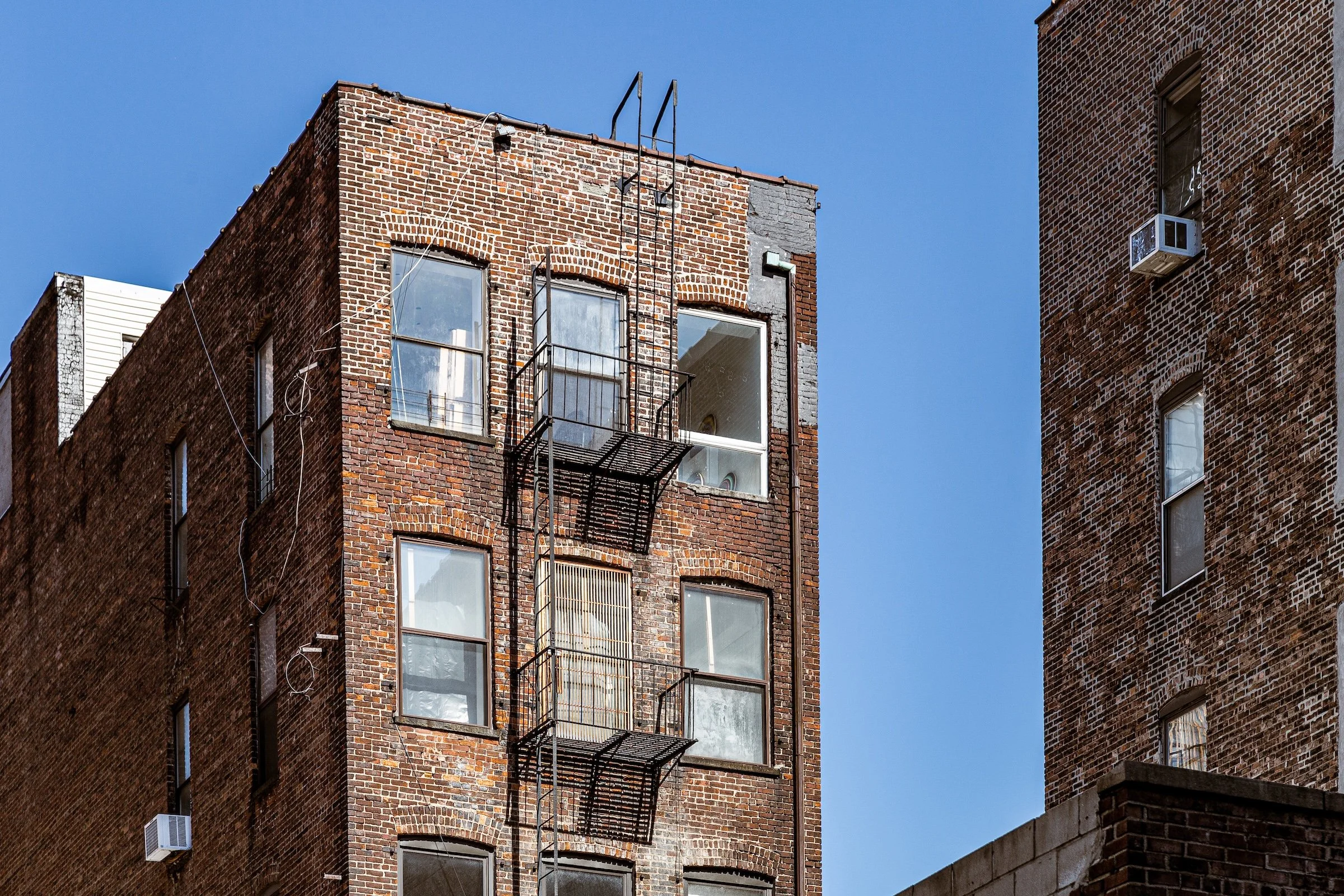
This is the hypnotic version of Glassy Eyes—window fields that turn architecture into fabric. Your job is to keep the pattern clean, and let small variations do the storytelling.
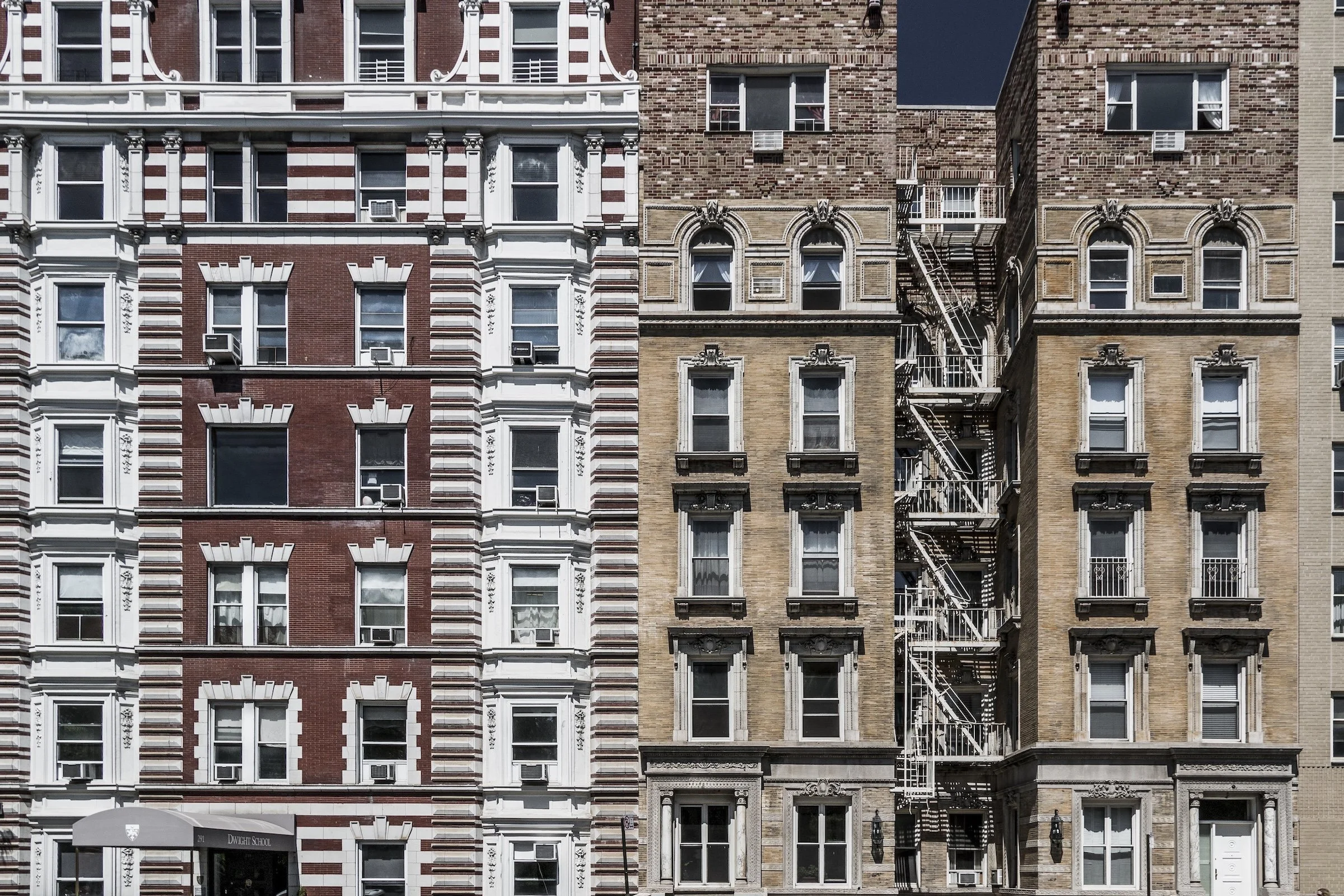
Upper West Side - Manhattan - Dwight School
This is the “institutional gaze” version—repetition that feels purposeful and slightly imposing. In frames like this, avoid perspective drift. If the grid starts leaning, it stops feeling like presence and starts feeling like accident.
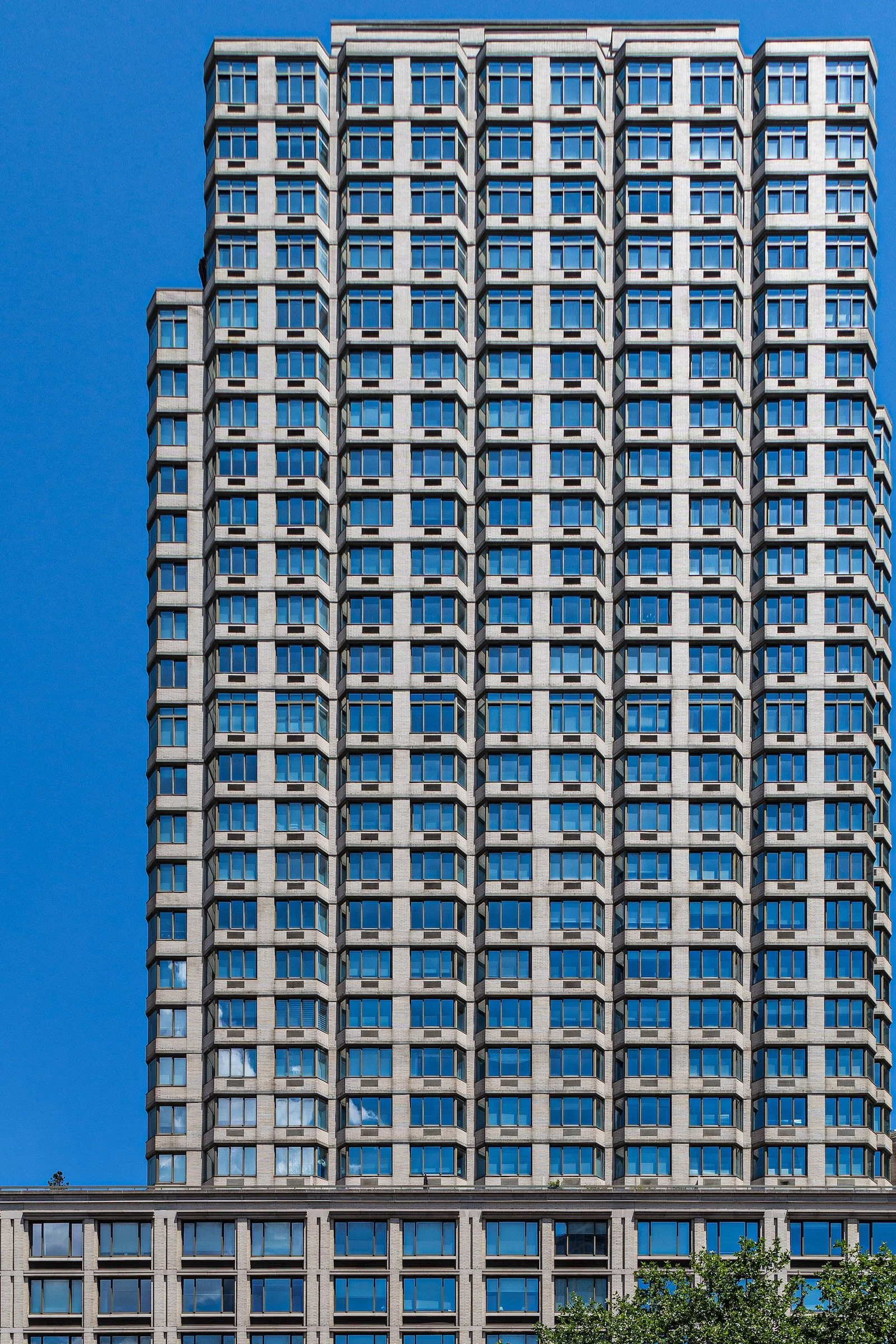
Lincoln Square - Manhattan - The Grand Tier
Windows become a stacked amphitheater here—rows that suggest seating, hierarchy, and spectacle. If Glassy Eyes is the city watching, this is the city watching in tiers. The composition works best when your crop emphasizes the repeating layers.
Ornamental frames and window rhetoric:
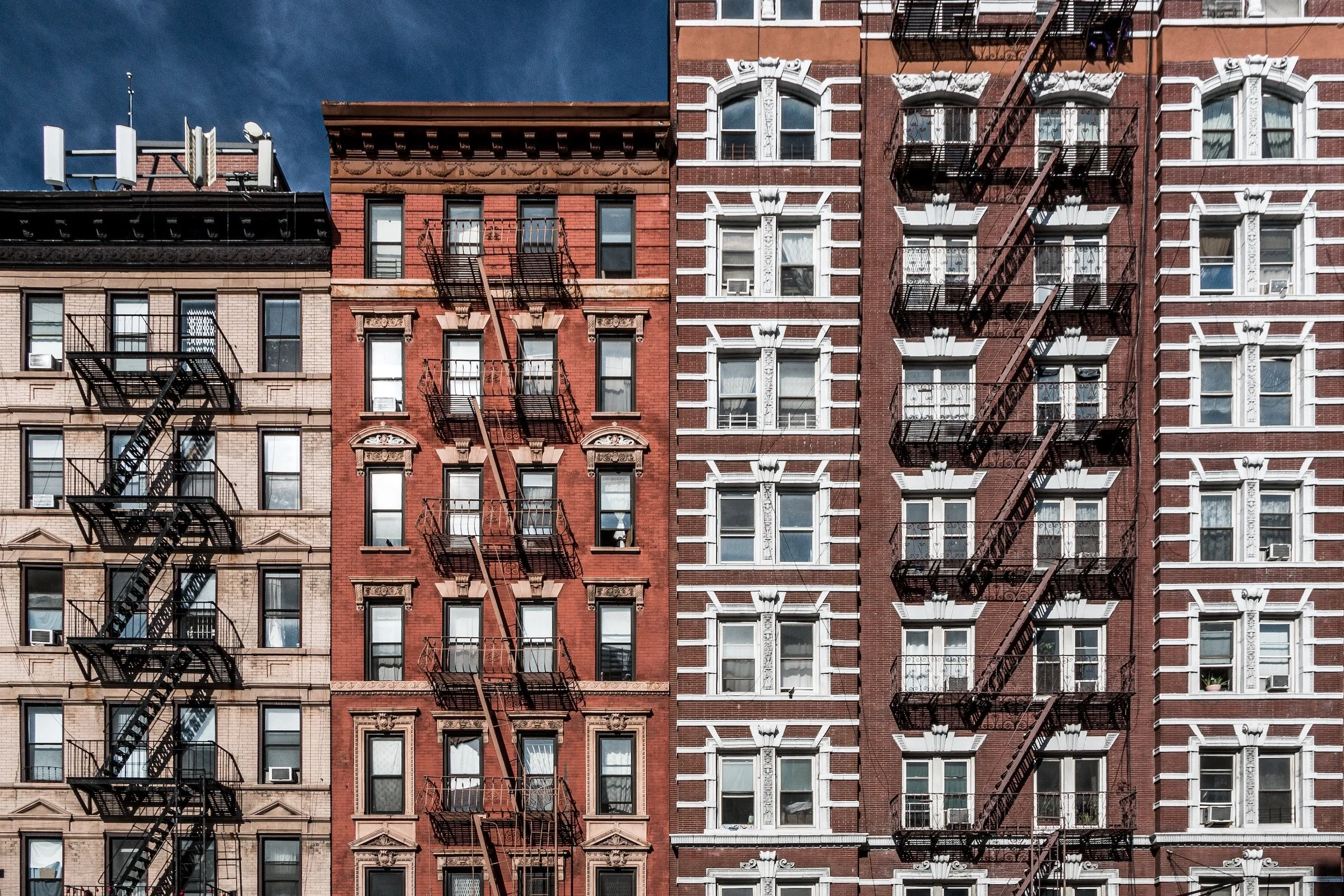
Sometimes the power isn’t the glass itself, but how the building talks around it—frames, trim, bays, flourishes. These are windows as punctuation.
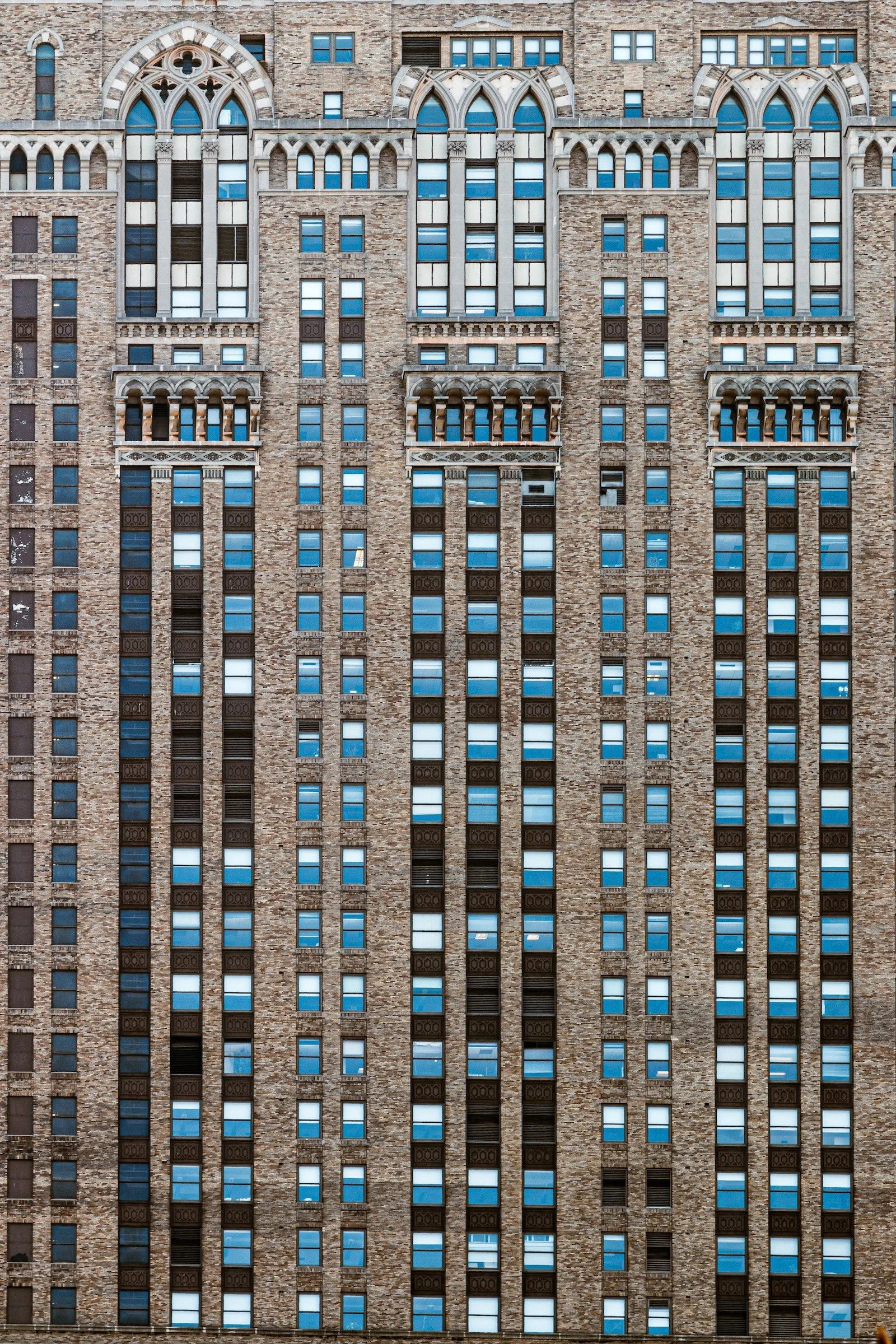
Midtown East - Manhattan - One Grand Central Place
This is Glassy Eyes with a formal suit on: repetition, yes, but also refinement—window framing that signals prestige. Watch how the structure “holds” the glass; the frame is part of the expression.
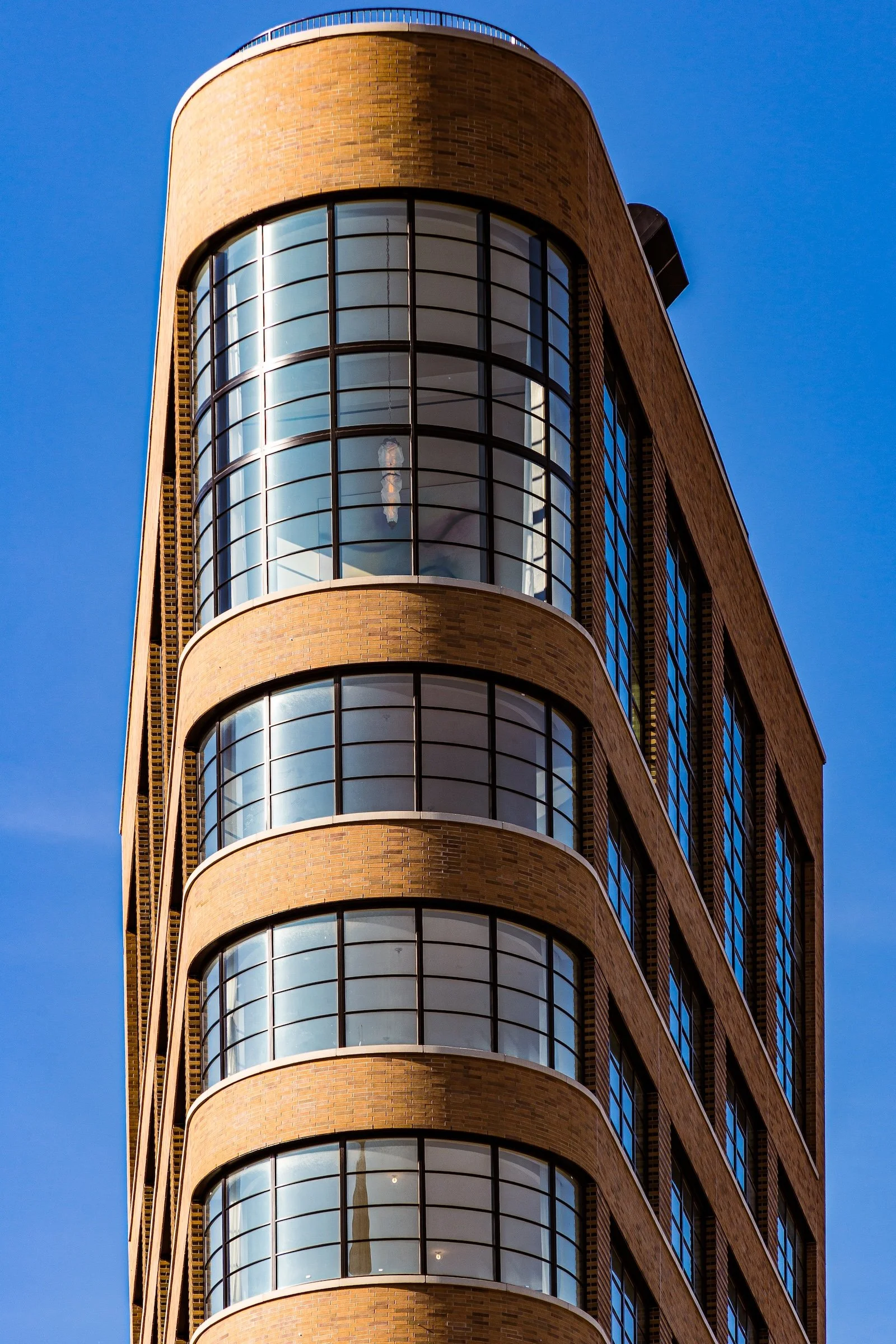
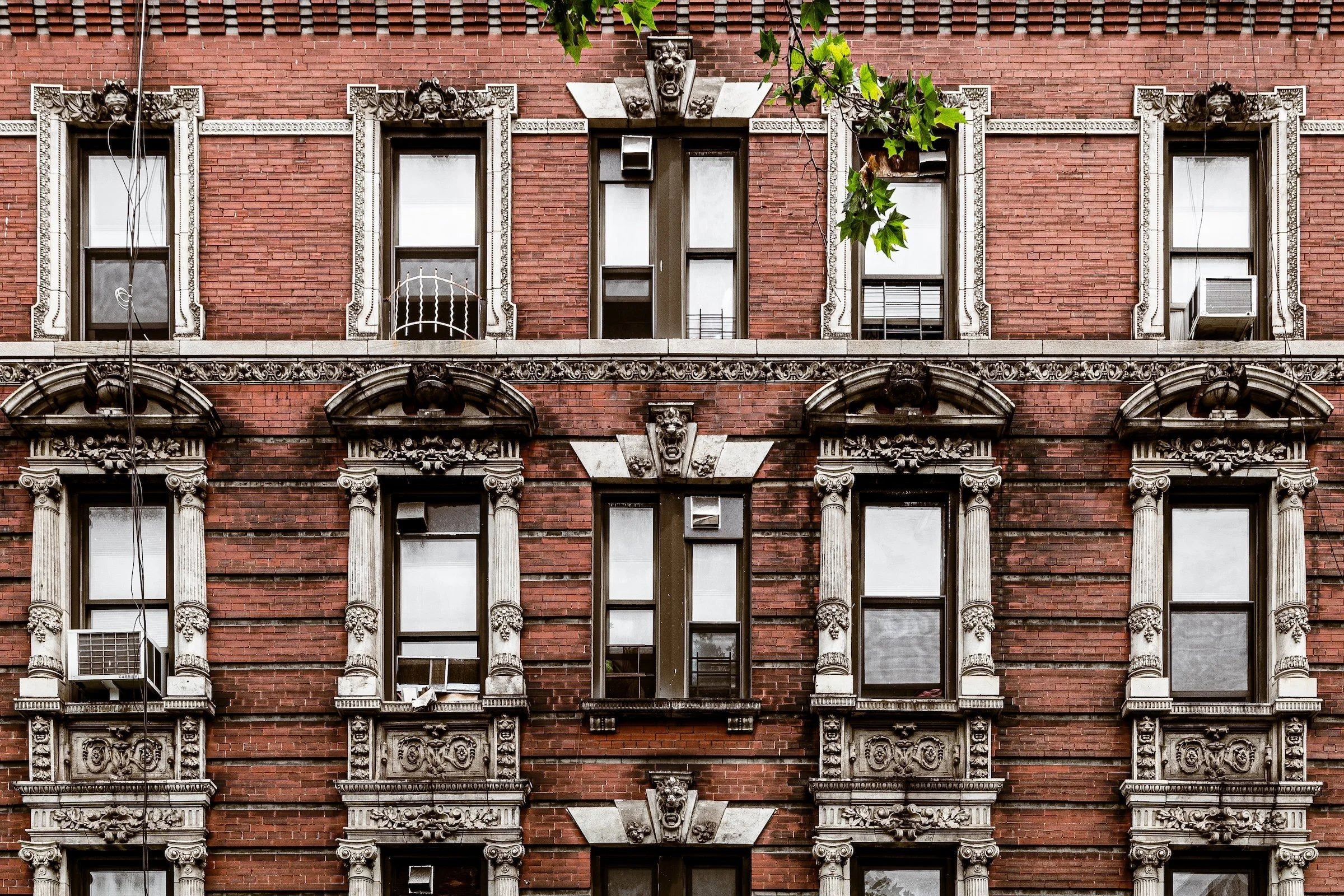
Two Bridges - Manhattan - Ornamental
This is where Glassy Eyes becomes jewelry. The windows don’t just look—they perform through ornament. The trick is to frame so the decorative elements support the panes, rather than competing with them.
Explore Further