
BROOKLYN NAVY YARD
Brooklyn
Geographic Setting
Bounded by Nassau Street and Flushing Avenue to the south, Kent Avenue to the west, Classon Avenue to the east, and the East River to the north, the Brooklyn Navy Yard occupies a vast industrial waterfront between DUMBO, Fort Greene, and Williamsburg. Enclosed by walls and piers that span over 300 acres, it is both a landmark of American naval history and one of New York City’s most ambitious models of adaptive reuse. Once the beating heart of U.S. naval shipbuilding, the Yard has evolved into a 21st-century innovation district—a fusion of preserved maritime heritage and cutting-edge industry.
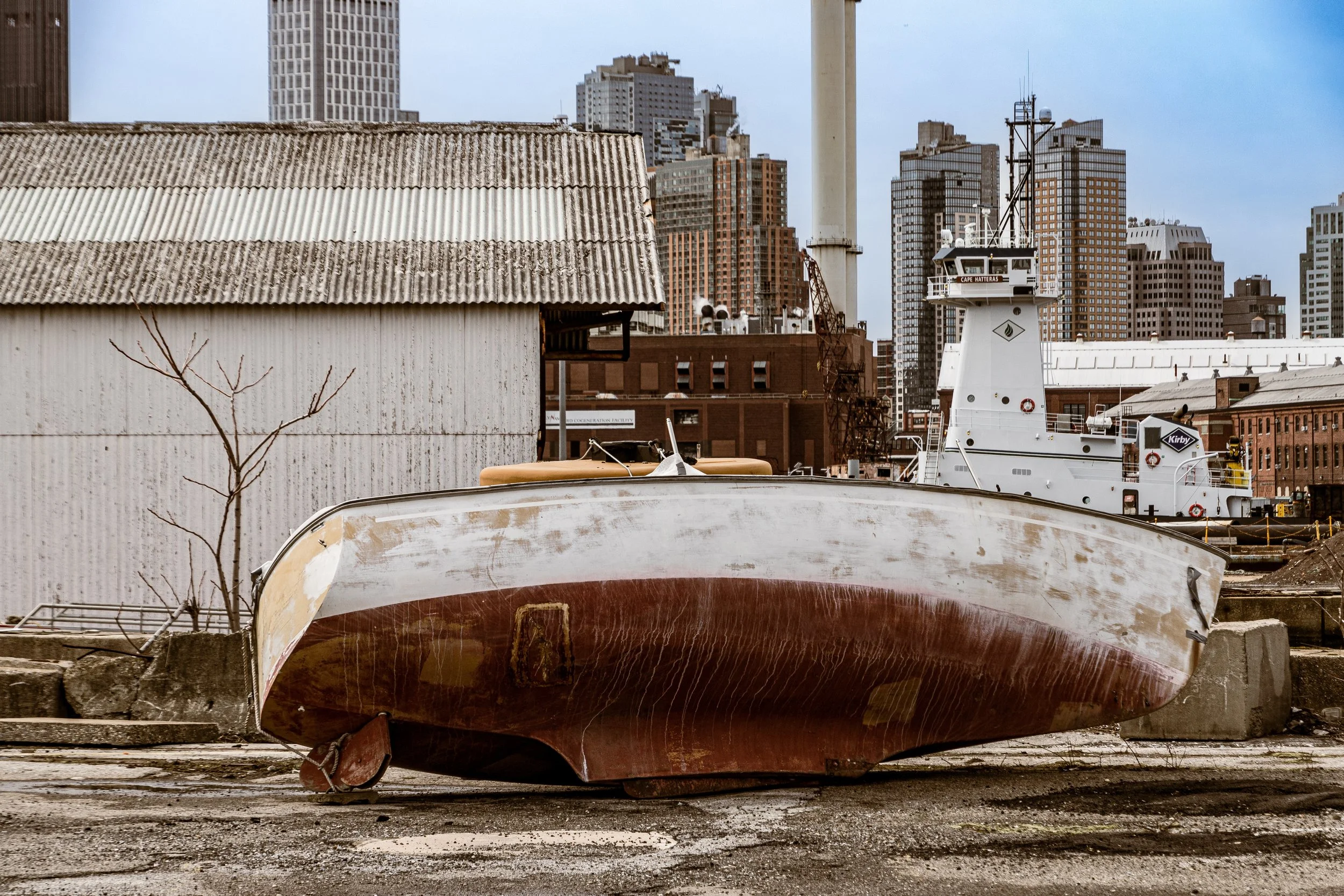
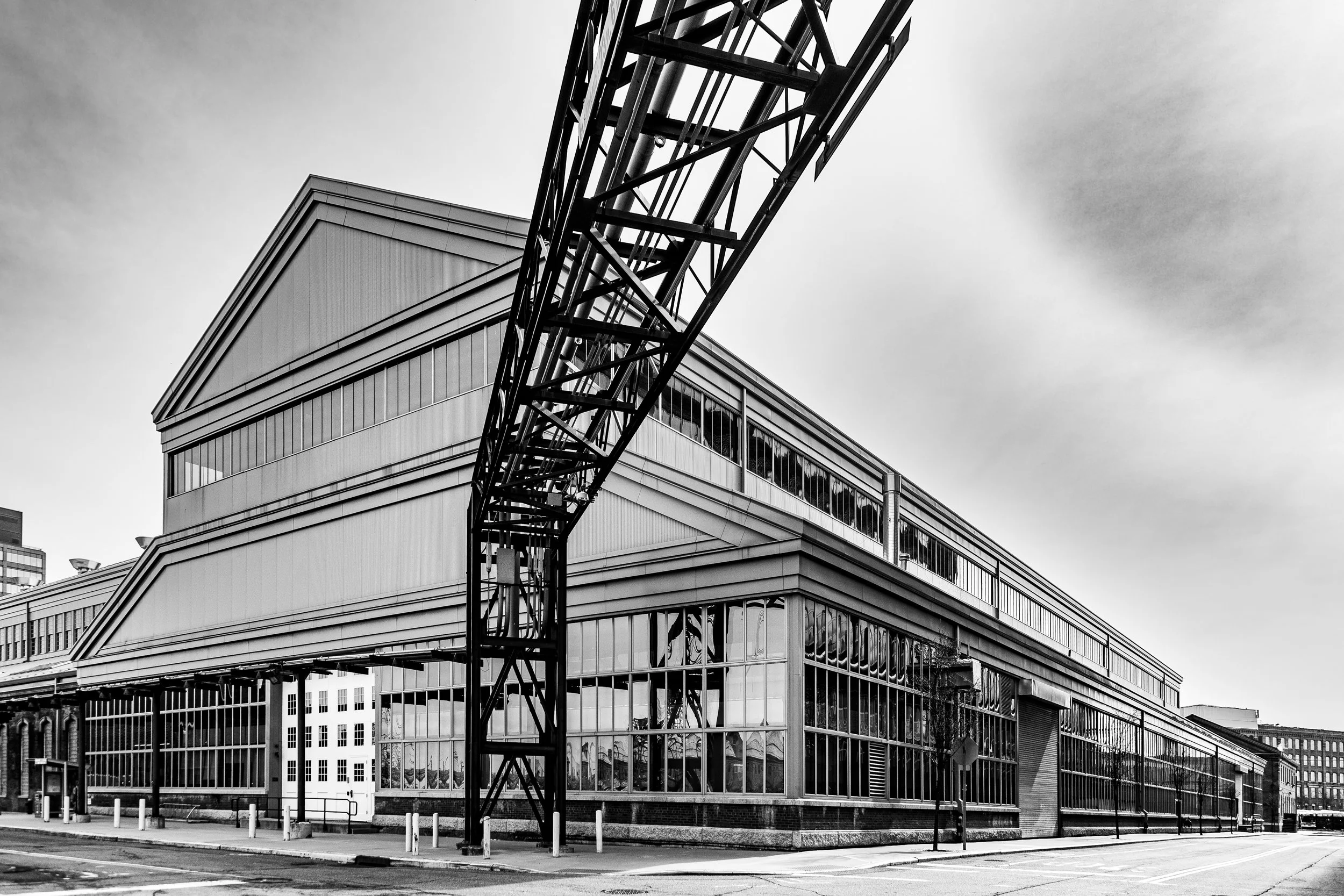
Today, cranes rise over refurbished dry docks and steel gantries, while creative and manufacturing firms occupy converted brick warehouses and foundries. Within its gates, old street grids like Adams, Morris, and Navy Streets persist beneath the hum of electric bikes and freight trucks. Along the water, the Brooklyn Navy Yard Ferry Terminal and Dock 72—a shimmering modernist glass structure—stand as emblems of renewal, while the preserved 19th-century Admiral’s Row houses and Building 77 link the present to the Yard’s monumental past.
Etymology and Origins
The Brooklyn Navy Yard traces its origins to 1801, when the U.S. federal government purchased forty acres of marsh and meadow along Wallabout Bay from the Remsen, Ryerson, and Vanderbilt families. The natural inlet, sheltered from the East River’s currents, made it ideal for naval shipbuilding. Known initially as the New York Naval Shipyard, it was among the first five federal shipyards established by the young republic, and it quickly became one of its most important.
The Yard’s location—midway between Manhattan’s commercial docks and the farmland of central Brooklyn—gave it both strategic and civic significance. Its presence would spur the growth of nearby neighborhoods such as Vinegar Hill, Fort Greene, and Clinton Hill, whose streets still bear the imprints of sailors, dockworkers, and shipwrights who lived within walking distance of the Yard’s gates.
The Neighborhood
19th Century: Shipbuilding and Sovereignty
Throughout the 19th century, the Brooklyn Navy Yard stood at the forefront of America’s naval expansion. Its dry docks, ropewalks, and forges formed a miniature city within a city—by 1860, employing more than 5,000 men. The Yard’s first dry dock (completed 1851), an engineering marvel of granite and iron, allowed for the repair and construction of ships on an unprecedented scale.
Among its early triumphs was the USS Fulton, one of the nation’s first steam warships, launched in 1837. During the Civil War (1861–1865), the Yard produced and outfitted dozens of Union vessels, including the ironclad USS Monitor, whose construction marked a turning point in naval technology. The surrounding neighborhoods pulsed with activity—carpenters, sailmakers, and riggers filled nearby boardinghouses, and taverns on Flushing Avenue and Navy Street thrived on the steady rhythm of military life.
In peacetime, the Yard remained a symbol of industrial might. The Brooklyn Naval Hospital (1838), an elegant Greek Revival complex on the eastern grounds, reflected both humanitarian and architectural ambition. By the late 1800s, the Yard had expanded to more than 200 acres, with three dry docks, its own police and fire departments, and a fully operational foundry.
Early–Mid 20th Century: The Arsenal of Democracy
The 20th century brought the Yard to its industrial zenith. During World War I, it employed more than 25,000 workers, many of them newly arrived immigrants and African American laborers migrating from the South. The Yard launched battleships such as the USS Arizona (1915) and the USS Tennessee (1919), both symbols of American naval power.
Between the wars, modernization continued under the leadership of visionary commandants like Rear Admiral Yates Stirling, who oversaw the construction of new machine shops, warehouses, and the massive Building 77—a ten-story industrial complex completed in 1942.
During World War II, the Brooklyn Navy Yard became a critical engine of the Allied war effort, employing more than 70,000 people—nearly one in every ten Brooklyn workers. It was here that the USS Missouri, the last American battleship ever built, was launched in 1944; it would later host the signing of Japan’s surrender in Tokyo Bay, marking the war’s end. Women entered the Yard’s workforce in large numbers as welders, mechanics, and draughtswomen—symbolizing a transformation of both industry and gender roles.
The Yard’s operations generated an entire economy: cafeterias, tailor shops, and labor halls along Flushing Avenue served round-the-clock shifts. For many Brooklyn families, the Yard was not merely a workplace but a legacy passed down through generations.
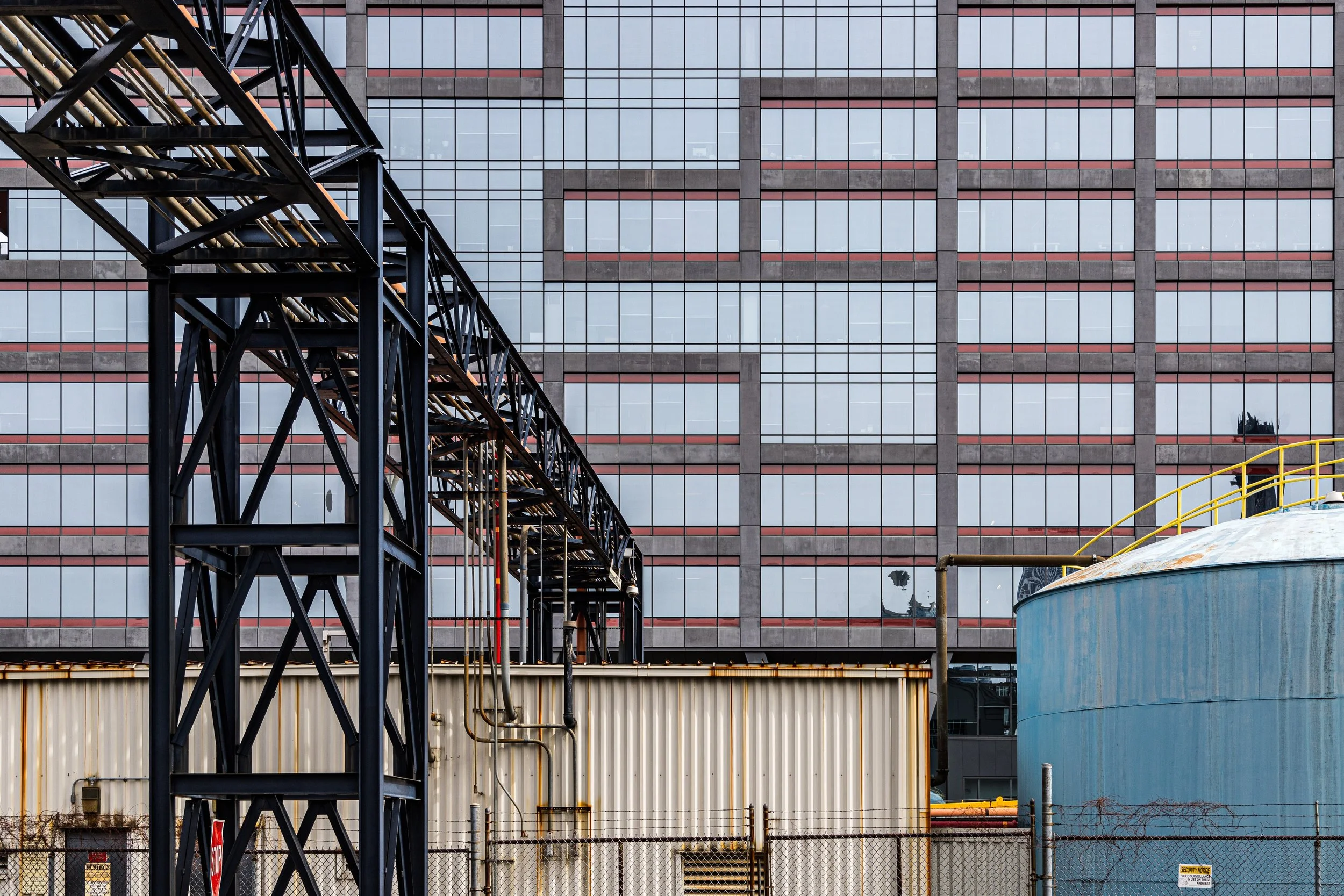
Brooklyn Navy Yard Photographic Video
Postwar Decline: The Silent Docks
After 1945, as the U.S. Navy shifted production to larger, more modern facilities, the Brooklyn Navy Yard began to wane. The closure of the Brooklyn Naval Hospital (1948) foreshadowed the decline. Automation, the rise of aircraft carriers, and budget cuts gradually eroded the Yard’s viability. In 1966, after 165 years of service, the federal government officially decommissioned the Brooklyn Navy Yard—an event that struck Brooklyn like a collective loss of identity.
At its closing ceremony, the final ship to sail down its slipways was the destroyer USS Duluth, symbolizing both an end and a beginning. The departure of the Navy left behind 300 acres of empty docks, warehouses, and dreams. For a time, it appeared the Yard might share the fate of other abandoned industrial zones—decay, vandalism, and vacancy. Yet Brooklyn’s civic leaders saw potential where others saw ruin.
Late 20th Century: Reclamation and Reuse
In 1969, the City of New York purchased the Navy Yard from the federal government for one dollar, transforming it into the Brooklyn Navy Yard Industrial Park under the management of the Brooklyn Navy Yard Development Corporation (BNYDC). This marked the beginning of one of the city’s most successful experiments in industrial renewal.
During the 1970s–1980s, the Yard housed small manufacturers, artists, and repair shops, its cavernous buildings repurposed for civilian enterprise. Steiner Studios, opened in 2004, turned part of the Yard into one of the largest film and television production centers outside Hollywood—later home to productions such as The Marvelous Mrs. Maisel and Boardwalk Empire. The Green Manufacturing Center, New Lab, and Building 77 became hubs for sustainable industry, robotics, and design, linking Brooklyn’s industrial legacy to its tech-driven future.
Historic preservation also gained momentum. The Admiral’s Row, once the residence of naval officers, was partially restored and integrated into a new Wegmans supermarket complex (opened 2019), blending memory and modern use. The Yard’s surviving dry docks remain active for ship repair, making it one of the few working maritime facilities left in New York City.
21st Century: Industry, Innovation, and Memory
Today, the Brooklyn Navy Yard is both museum and laboratory—a living ecosystem of innovation employing more than 13,000 workers across manufacturing, media, and technology sectors. The Brooklyn Navy Yard Center at BLDG 92, opened in 2011, serves as an interpretive museum chronicling the site’s naval history and rebirth. Sustainability defines the Yard’s 21st-century ethos: rooftop farms, solar installations, and green roofs crown buildings that once produced steel hulls and turbines.
Its urban design represents a new model for post-industrial cities—a blend of preservation, production, and public access. The NYC Ferry’s East River route links it directly to Manhattan and Queens, while pedestrian paths and bike lanes along Flushing Avenue reconnect it to surrounding neighborhoods long separated by its walls. The hum of industry remains, but its sound is different: 3D printers, film crews, micro-manufacturers, and start-ups working alongside maritime trades that have endured for two centuries.
Brooklyn Navy Yard Photo Gallery
Spirit and Legacy
The Brooklyn Navy Yard’s legacy is that of American industrial might reborn as civic imagination. It has built ships, waged wars, weathered abandonment, and now engineers the technologies of the future—all within the same brick walls and granite docks. Few places embody Brooklyn’s narrative arc so completely: craft and labor, decline and renewal, heritage and hope.
New York City
Use this custom Google map to explore where every neighborhood in all five boroughs of New York City is located.
The Five Boroughs
One of New York City’s unique qualities is its organization in to 5 boroughs: Manhattan, Brooklyn, Queens, The Bronx, and Staten Island. These boroughs are part pragmatic administrative districts, and part vestiges of the region’s past. Each borough is an entire county in New York State - in fact, Brooklyn is, officially, Kings County, while Staten Island is, officially Richmond County. But that’s not the whole story …
Initially, New York City was located on the southern tip of Manhattan (now the Financial District) that was once the Dutch colony of New Amsterdam. Across the East River, another city was rising: Brooklyn. In time, the city planners realized that unification between the rapidly rising cities would create commercial and industrial opportunities - through streamlined administration of the region.
So powerful was the pull of unification between New York and Brooklyn that three more counties were pulled into the unification: The Bronx, Queens, and Staten Island. And on January 1, 1898, the City of New York unified two cities and three counties into one Greater City of New York - containing the five boroughs we know today.
But because each borough developed differently and distinctly until unification, their neighborhoods likewise uniquely developed. Today, there are nearly 390 neighborhoods, each with their own histories, cultures, cuisines, and personalities - and each with residents who are fiercely proud of their corner of The Big Apple.