
COBBLE HILL
Brooklyn
Geographic Setting
Bounded by the Brooklyn–Queens Expressway (BQE) to the west, Court Street to the east, Degraw Street to the south, and Atlantic Avenue to the north, Cobble Hill is one of Brooklyn’s most refined and perfectly scaled historic neighborhoods—a compact, twenty-two-block enclave of 19th-century brownstones, shaded sidewalks, and quiet civility nestled between the bustle of Downtown Brooklyn and the harborfront. Despite its small size, it holds an outsize place in the borough’s identity: a neighborhood that has balanced heritage, intimacy, and urban sophistication for more than a century and a half.
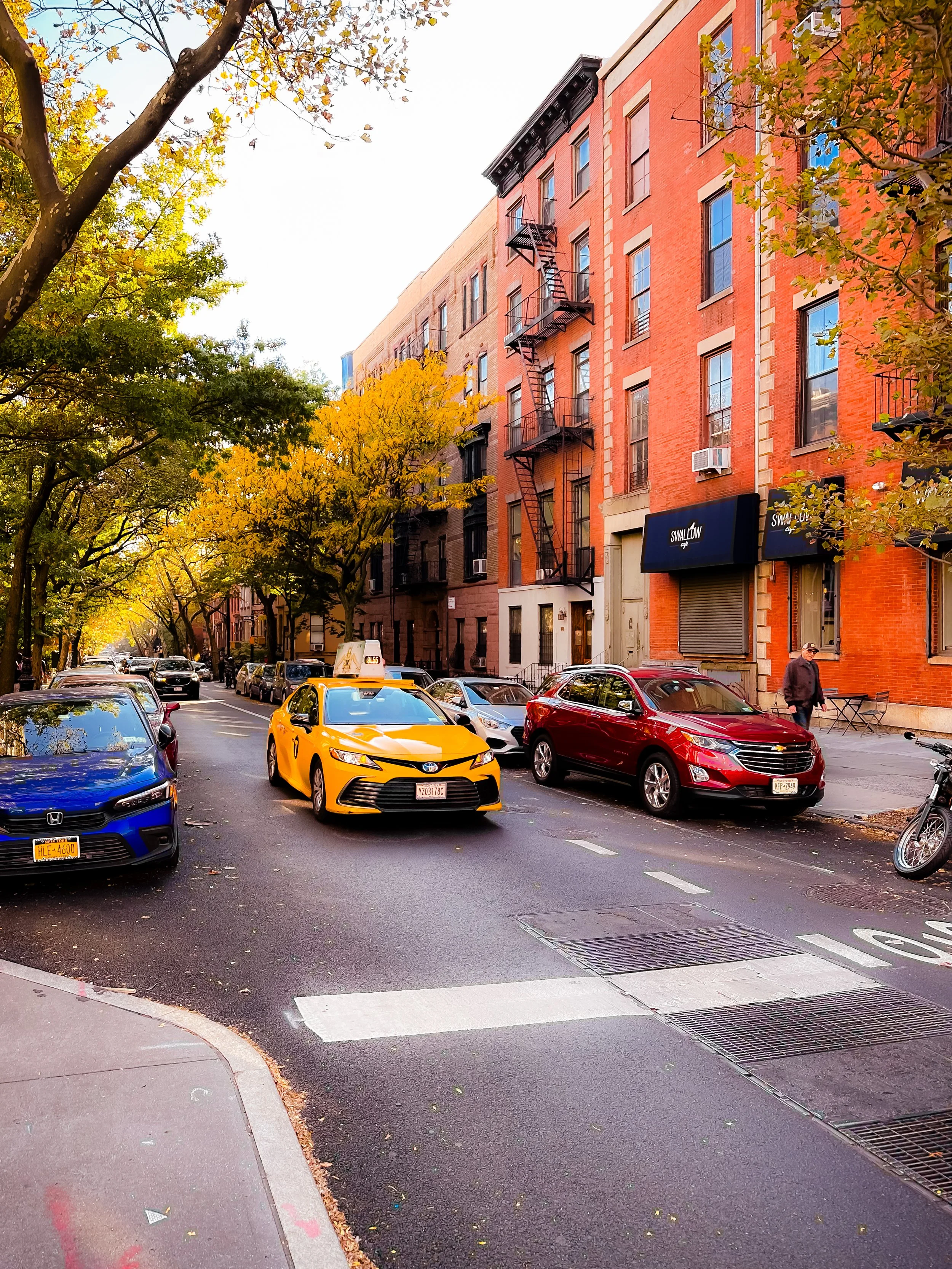
Cobble Hill’s streets—Amity, Verandah Place, Henry, and Clinton Streets—unfold in a pattern of narrow, tree-lined blocks punctuated by pocket parks and venerable institutions. Its architectural palette is a symphony of brownstone, brick, and limestone, harmonizing Greek Revival stoops with Italianate cornices and Gothic church spires. The neighborhood’s centerpiece, Cobble Hill Park, occupies a sun-dappled block between Verandah Place and Clinton Street, serving as both commons and refuge. Just beyond its boundaries, Atlantic Avenue provides a cosmopolitan edge with its mix of Middle Eastern grocers, cafés, and design boutiques, while the BQE trench along Hicks Street offers a reminder of the 20th-century infrastructural transformations that once threatened this serene enclave—and ultimately helped define its boundaries.
Etymology and Origins
The name Cobble Hill dates back to the colonial era, when a small fortification called Cobleshill (from the Dutch “Kobus Hill,” possibly honoring landowner Jacob Leisler or a corruption of “cobblestone hill”) rose on a gentle elevation overlooking the harbor. During the Revolutionary War, this height served as an artillery position for Continental forces during the Battle of Long Island (1776). Though the original hill was leveled in the early 19th century to fill surrounding marshlands, its name endured, symbolizing both geography and resilience.
In the early 1800s, the area formed part of the greater South Brooklyn settlement, a rural expanse of farms and pastures. The opening of Atlantic Avenue (1836) and the extension of the Brooklyn–Jamaica Railroad connected the waterfront to downtown Brooklyn and Manhattan ferries, spurring residential development. The neighborhood’s elevated ground and proximity to the harbor attracted merchants, ship captains, and professionals who sought a suburban retreat within sight of their workplaces.
The Neighborhood
19th Century: A Merchant’s Suburb of Distinction
Between the 1840s and 1860s, Cobble Hill blossomed into one of Brooklyn’s most desirable residential districts. Developers such as William Beard and Alonzo Alvord laid out graceful rows of brownstone and brick houses, many with high stoops, iron fences, and shaded front gardens. The architectural idioms of the day—Greek Revival, Italianate, and Gothic Revival—dominated the streetscape, producing a uniform elegance that endures.
The neighborhood’s social and spiritual life centered around its churches and institutions. Christ Church (1842) on Clinton Street and St. Francis Cabrini Roman Catholic Church (later St. Paul’s, 1868) served its growing population. The nearby Long Island College Hospital (LICH), founded in 1858 on Henry Street, brought medical innovation and stability, its physicians’ rowhouses blending seamlessly into the residential fabric. Atlantic Avenue, then lined with carriage shops, grocers, and boardinghouses, became the main commercial artery linking Cobble Hill to the waterfront.
During this period, Cobble Hill’s population reflected the cosmopolitanism of 19th-century Brooklyn—English, Irish, German, and Scandinavian immigrants lived beside American-born merchants, creating a middle-class community marked by diversity and dignity. The neighborhood’s close-knit blocks fostered a civility that earned it the nickname “the polite quarter” of South Brooklyn.
Early–Mid 20th Century: Decline, Encroachment, and Survival
The dawn of the 20th century brought dramatic change. As wealthier families moved outward to Park Slope and the new suburbs, Cobble Hill’s once-single-family brownstones were subdivided into apartments and boardinghouses. The expansion of the Brooklyn–Queens Expressway (1940s–1950s) under Robert Moses cut through the neighborhood’s western edge, demolishing rows of homes along Hicks Street and severing it from the harbor. Meanwhile, the construction of large apartment complexes and nearby public housing in the 1940s altered the socioeconomic landscape.
Despite these pressures, Cobble Hill retained its architectural integrity. Local activism—led by figures such as Ethel Shettleworth and Mildred Egbert—paved the way for preservation. The Cobble Hill Association, founded in 1958, became one of New York’s earliest and most effective neighborhood advocacy groups, fighting urban renewal plans that would have replaced brownstones with high-rises. Their efforts culminated in the designation of the Cobble Hill Historic District in 1969, encompassing 22 blocks and over 850 buildings. This recognition not only safeguarded the neighborhood’s fabric but helped launch Brooklyn’s broader preservation movement.
By the 1970s, Cobble Hill had begun its renaissance. Artists, writers, and young professionals, drawn by the charm of its housing stock and proximity to Manhattan, began restoring brownstones one by one. The neighborhood’s quiet, human scale—its narrow streets, modest stoops, and shade trees—proved irresistible amid the turbulence of New York’s fiscal crisis years.
Neighborhood Video Coming Soon

Late 20th Century: Revival and Refinement
Through the 1980s–1990s, Cobble Hill evolved into one of Brooklyn’s most stable and admired neighborhoods. The restoration of Cobble Hill Park in 1989, guided by the Cobble Hill Association and the Parks Department, became a symbol of its revival—a communal green framed by perfectly preserved rowhouses. The reopening of Court Street’s cinemas, bakeries, and antique shops transformed it into a lively yet understated commercial corridor.
The neighborhood’s Italian-American heritage, shared with nearby Carroll Gardens, remained strong: bakeries like Monteleone’s, butcher shops, and old social clubs continued to operate beside newer boutiques and cafés. At the same time, the influx of young families, writers, and professionals brought new energy. Cobble Hill’s brownstones, many dating to the 1850s, were restored to their original splendor, and property values rose accordingly.
By the end of the century, Cobble Hill was widely regarded as a model of successful urban preservation—a place where history and modern life coexisted in balance. It was neither museum nor relic, but a living neighborhood that retained its character through stewardship and community pride.
21st Century: Heritage and Harmony
In the 21st century, Cobble Hill continues to exemplify the ideal of historic urban living. Its proximity to downtown Brooklyn, the Brooklyn Bridge Park waterfront, and the F train has made it one of the city’s most sought-after addresses. Yet, despite rising affluence, the neighborhood’s tone remains measured and residential—defined by schoolyards, stoops, and the soft rustle of trees along Kane, Amity, and Congress Streets.
Court Street’s storefronts balance old and new: century-old Italian grocers beside artisanal cafés, bookshops, and wine bars. The repurposing of the Long Island College Hospital site in the 2010s stirred debate about development and community preservation, reaffirming the vigilance of local advocacy. The Cobble Hill Historic District remains one of the most intact 19th-century environments in the United States, and the area’s sense of neighborly quiet endures despite its proximity to the heart of Brooklyn’s modern skyline.
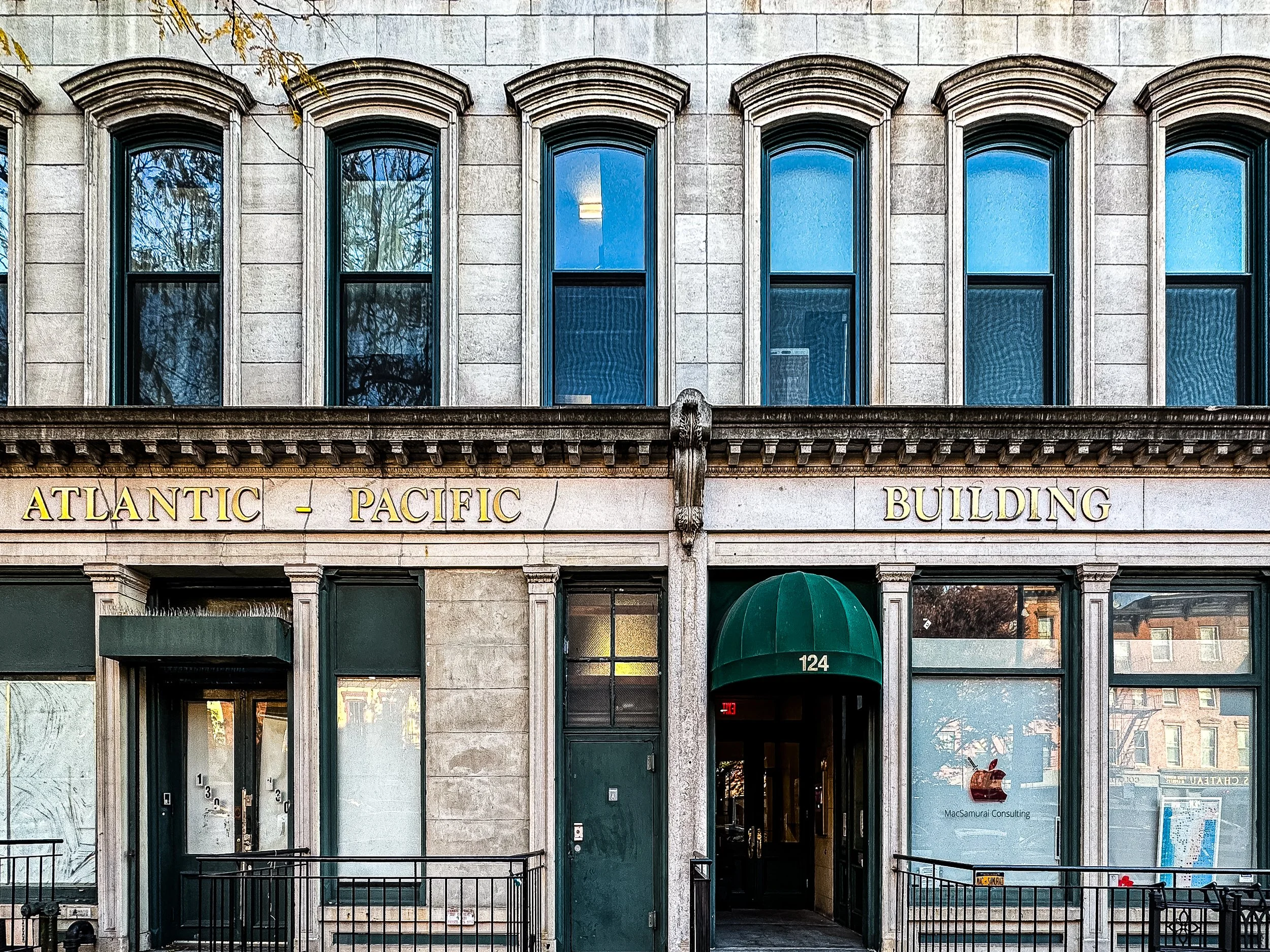
The neighborhood’s architecture—Greek Revival, Italianate, and Second Empire—remains its defining feature, but its true strength lies in continuity: the rhythm of stoop conversations, the presence of families who have lived here for generations, and the civic pride that sustains both its beauty and its balance.
Cobble Hill Photo Gallery
Spirit and Legacy
Cobble Hill’s legacy is one of grace through guardianship. From a Revolutionary War outpost to a Victorian merchant’s suburb to a modern preservation triumph, it has survived every era’s upheaval by remaining anchored in scale, community, and care. Its narrow streets and deep gardens embody an urban ideal—human, harmonious, and enduring.
New York City
Use this custom Google map to explore where every neighborhood in all five boroughs of New York City is located.
The Five Boroughs
One of New York City’s unique qualities is its organization in to 5 boroughs: Manhattan, Brooklyn, Queens, The Bronx, and Staten Island. These boroughs are part pragmatic administrative districts, and part vestiges of the region’s past. Each borough is an entire county in New York State - in fact, Brooklyn is, officially, Kings County, while Staten Island is, officially Richmond County. But that’s not the whole story …
Initially, New York City was located on the southern tip of Manhattan (now the Financial District) that was once the Dutch colony of New Amsterdam. Across the East River, another city was rising: Brooklyn. In time, the city planners realized that unification between the rapidly rising cities would create commercial and industrial opportunities - through streamlined administration of the region.
So powerful was the pull of unification between New York and Brooklyn that three more counties were pulled into the unification: The Bronx, Queens, and Staten Island. And on January 1, 1898, the City of New York unified two cities and three counties into one Greater City of New York - containing the five boroughs we know today.
But because each borough developed differently and distinctly until unification, their neighborhoods likewise uniquely developed. Today, there are nearly 390 neighborhoods, each with their own histories, cultures, cuisines, and personalities - and each with residents who are fiercely proud of their corner of The Big Apple.