
The Power of Lines
Definition:
The Power of Lines is the practice of using lines—literal or implied—to organize a photograph. Lines pull the viewer’s eye, define depth, create rhythm, and turn everyday streetscapes into compositions with intention.
Usage:
Use The Power of Lines when you want a frame to feel designed rather than merely observed. Lines can:
guide attention toward a subject (or become the subject),
carve order out of visual noise,
create speed, calm, tension, or balance,
reveal geometry hiding in plain sight (rooflines, curbs, wires, rails, shadows, facades).
Lines are everywhere, but the trick is making them dominant: simplify the frame, commit to the direction, and let the lines do what lines do best—lead.
In Depth:
Cities are essentially giant line-machines. Streets, sidewalks, seams in brick, fire escapes, railings, cables, cornices, fences—everything is edge, boundary, and vector. The moment you start photographing lines intentionally, the city stops being “a bunch of stuff” and starts being a set of forces.
What I love about this concept is how quickly it changes your field instincts. Instead of asking “what’s the subject?” you start asking:
Where is the strongest direction in the scene?
What’s the dominant angle—vertical, horizontal, diagonal?
Do the lines converge (depth), repeat (rhythm), or clash (tension)?
What happens if I shift left or right to clean the overlaps?
Can I make a line feel inevitable—as if the photo couldn’t be framed any other way?
Some lines are obvious (power cables slicing the sky). Others are quieter (a row of lawns, a curb, a roofline). The power comes from commitment: once you pick the line-language of the frame, everything else either supports it or gets cut.
The ten examples below show different “line engines”—overhead wires as drawing, rooflines as rhythm, lawns and sidewalks as leading structure, and suspended cables that turn transit infrastructure into pure perspective.
Lines in the Sky (Overhead Wires as Drawing)
These frames treat cables as intentional mark-making—like charcoal lines pulled across a blue page. The subject is often ordinary; the direction is the drama.
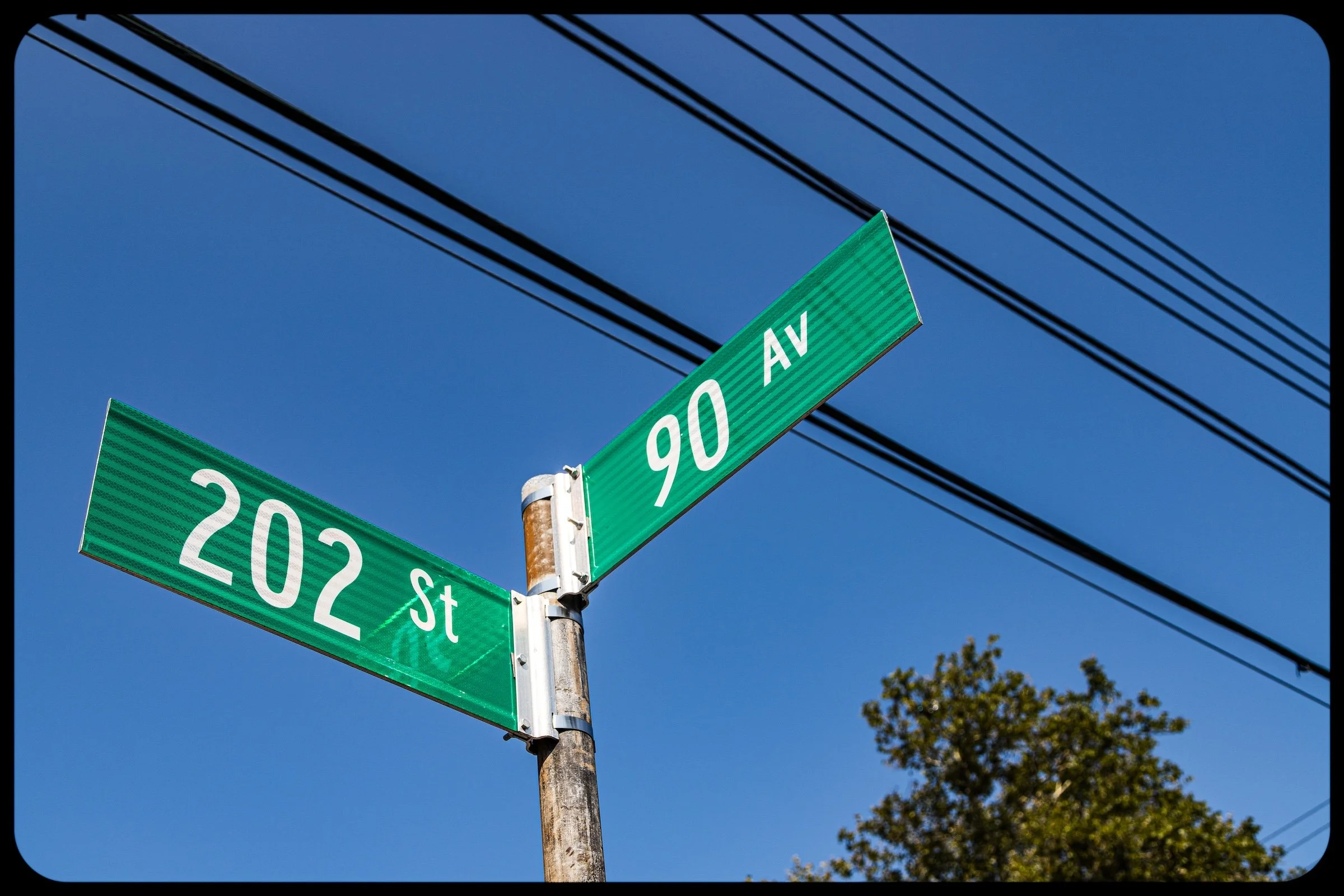
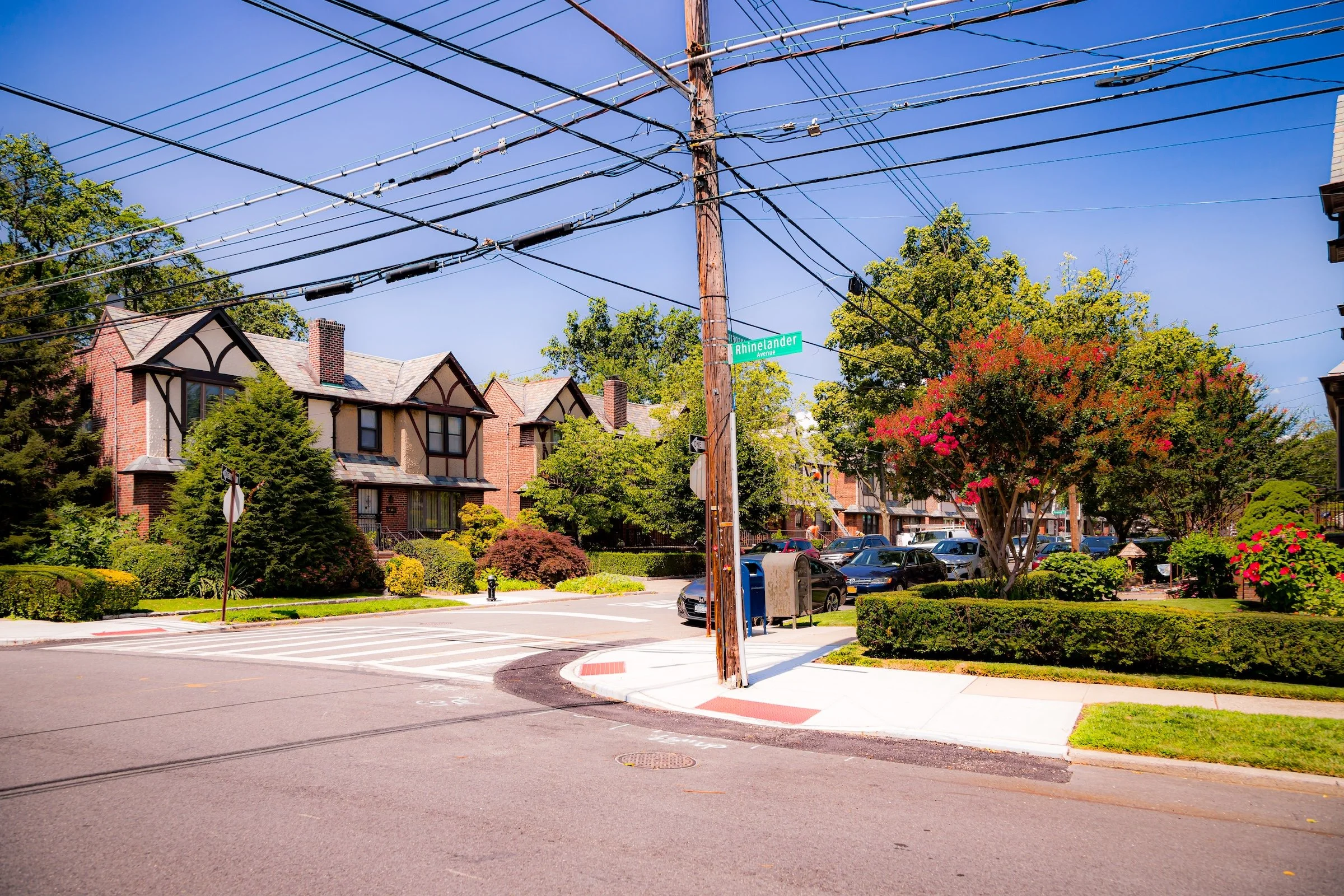
Indian Village - The Bronx - Rhinelander At Narragansett
This is the full orchestral version of line power: a pole as the vertical spine, wires radiating outward like a web. The neighborhood scene becomes secondary; the composition becomes a map of forces.
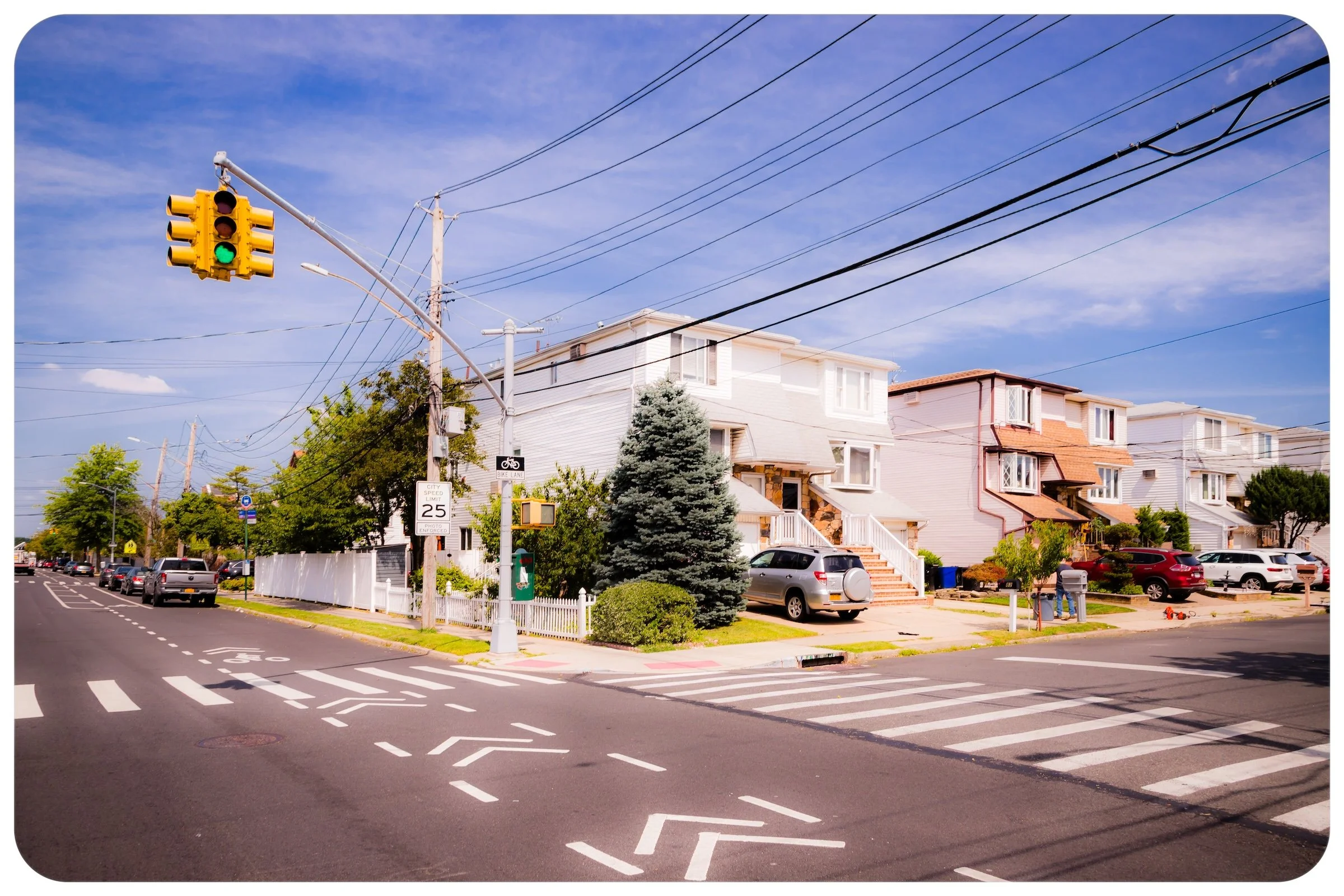
Heartland Village - Staten Island - Crossing Nehring At Travis
A street crossing turns into a choreography of vectors—lane markings and curb edges on the ground, wires and signal elements above. The lines stack into layers, giving the frame clarity even with lots of information.
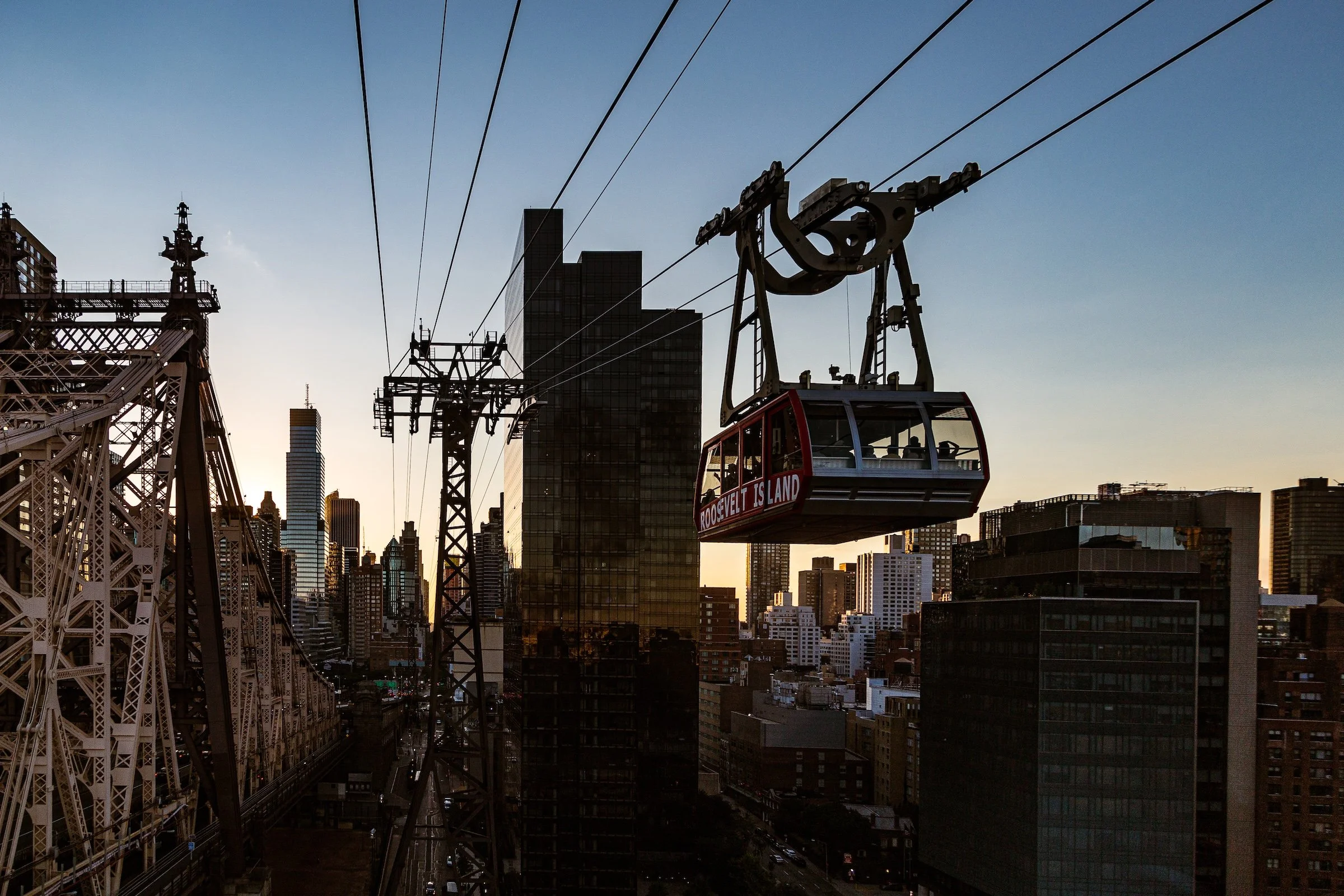
Upper East Side - Manhattan - Roosevelt Island Tram
A perfect demonstration of converging lines: the tram cables slice the sky and pull straight into the city’s distance, turning infrastructure into perspective geometry. The cabin becomes both subject and proof—an object literally traveling along the lines you’re following with your eyes.
Rooflines & Repetition (Architecture as Rhythm)
These images show how repeating structural lines—gables, eaves, window edges—can create musical pacing. Even a simple block becomes a pattern.
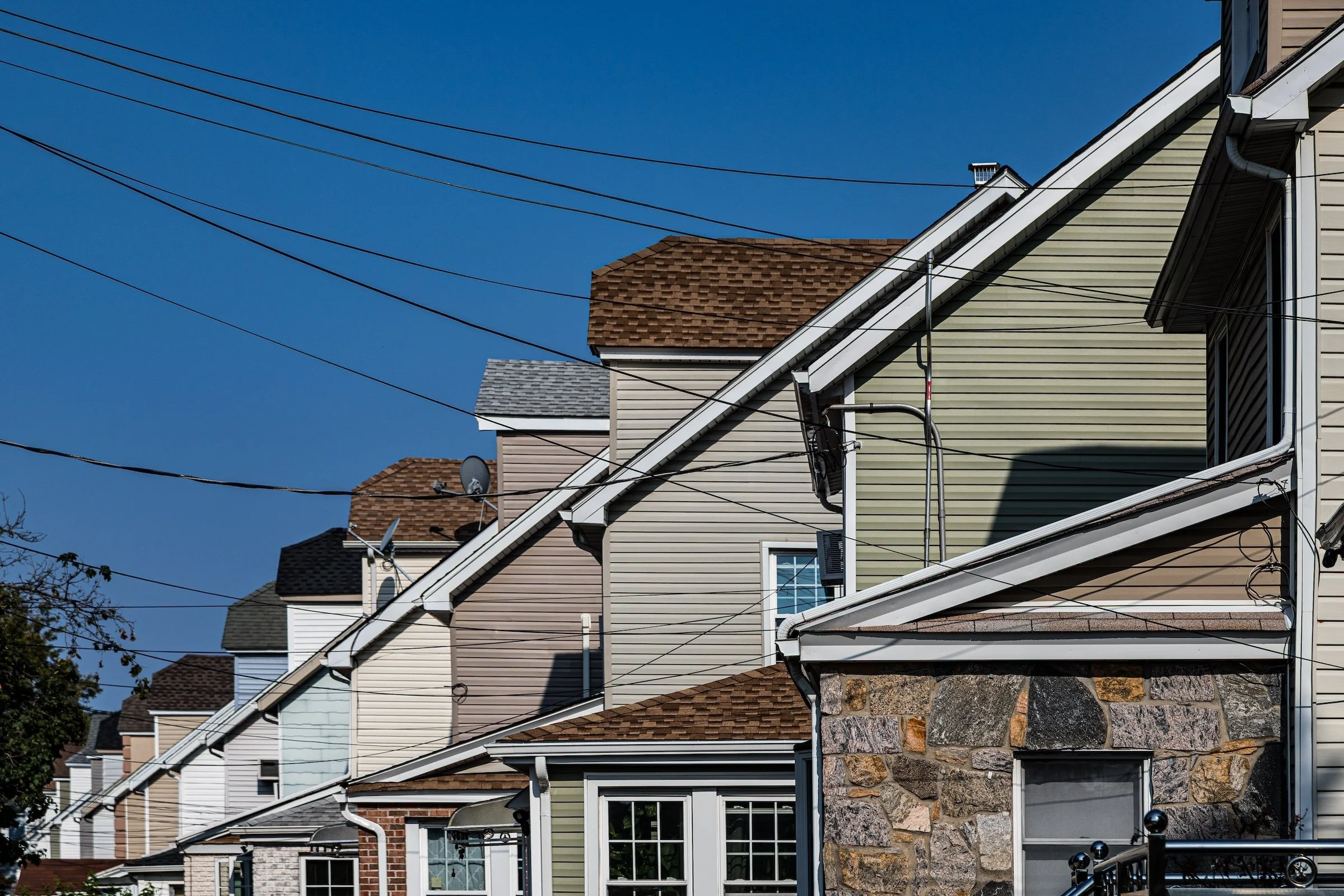
Bellerose Manor - Queens - Alignment
A lesson in parallel lines: roof edges and siding lines repeat in a tight cadence, while the wires echo the same directional logic overhead. The frame feels engineered—everything agrees on where the eye should travel.
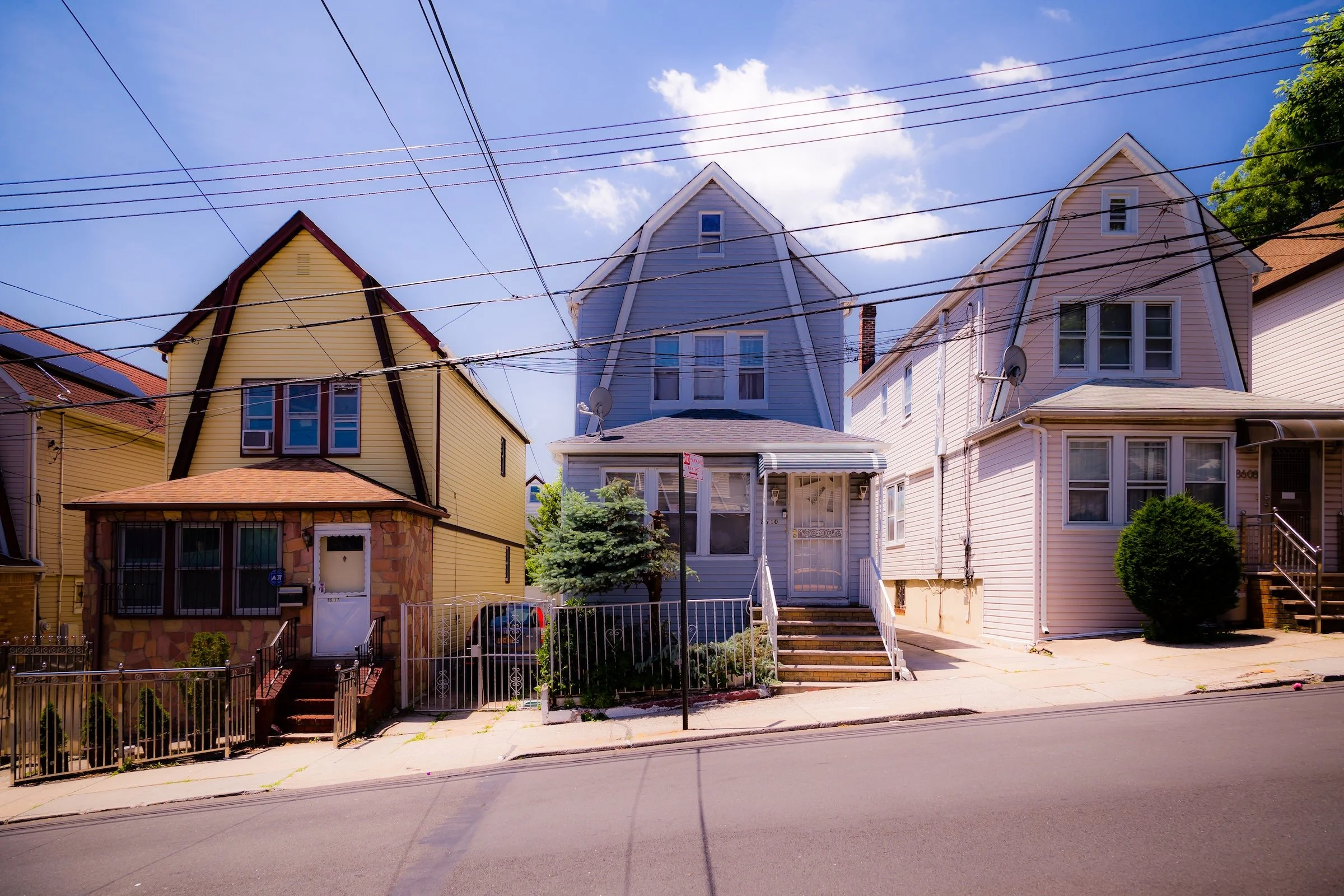
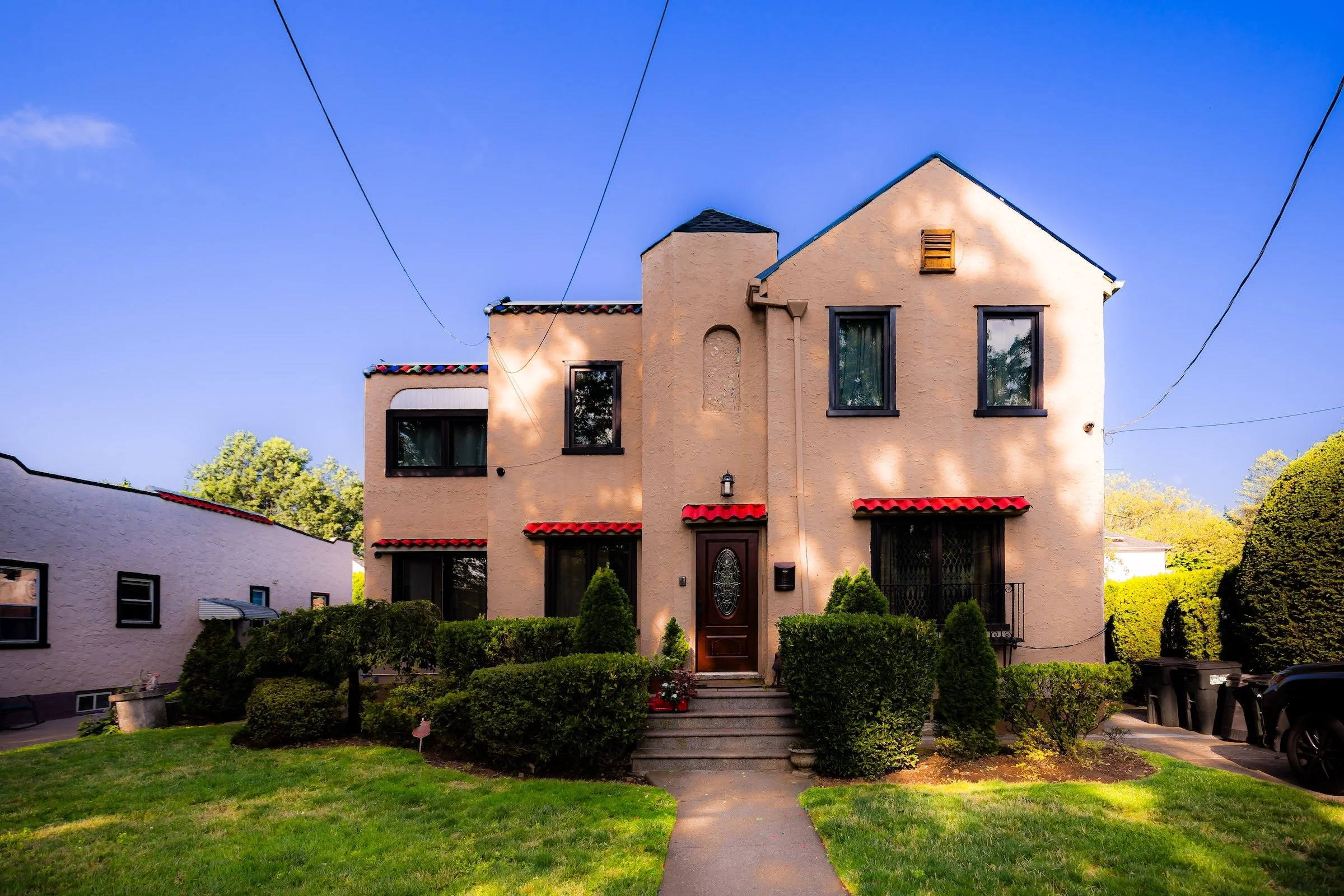
Bellerose Manor - Queens - Spanish Colonial Revival
Here the power is symmetry and edge control: the house’s strong central axis and clean roofline geometry establish order, while the overhead line(s) add a subtle diagonal counterweight. It’s “poise” with a little spark.
Ground Lines (Lawns, Sidewalks, and the Quiet Lead)
Not all lines need to scream. These examples use understated ground geometry—edges, seams, borders—to guide the eye with softness and inevitability.
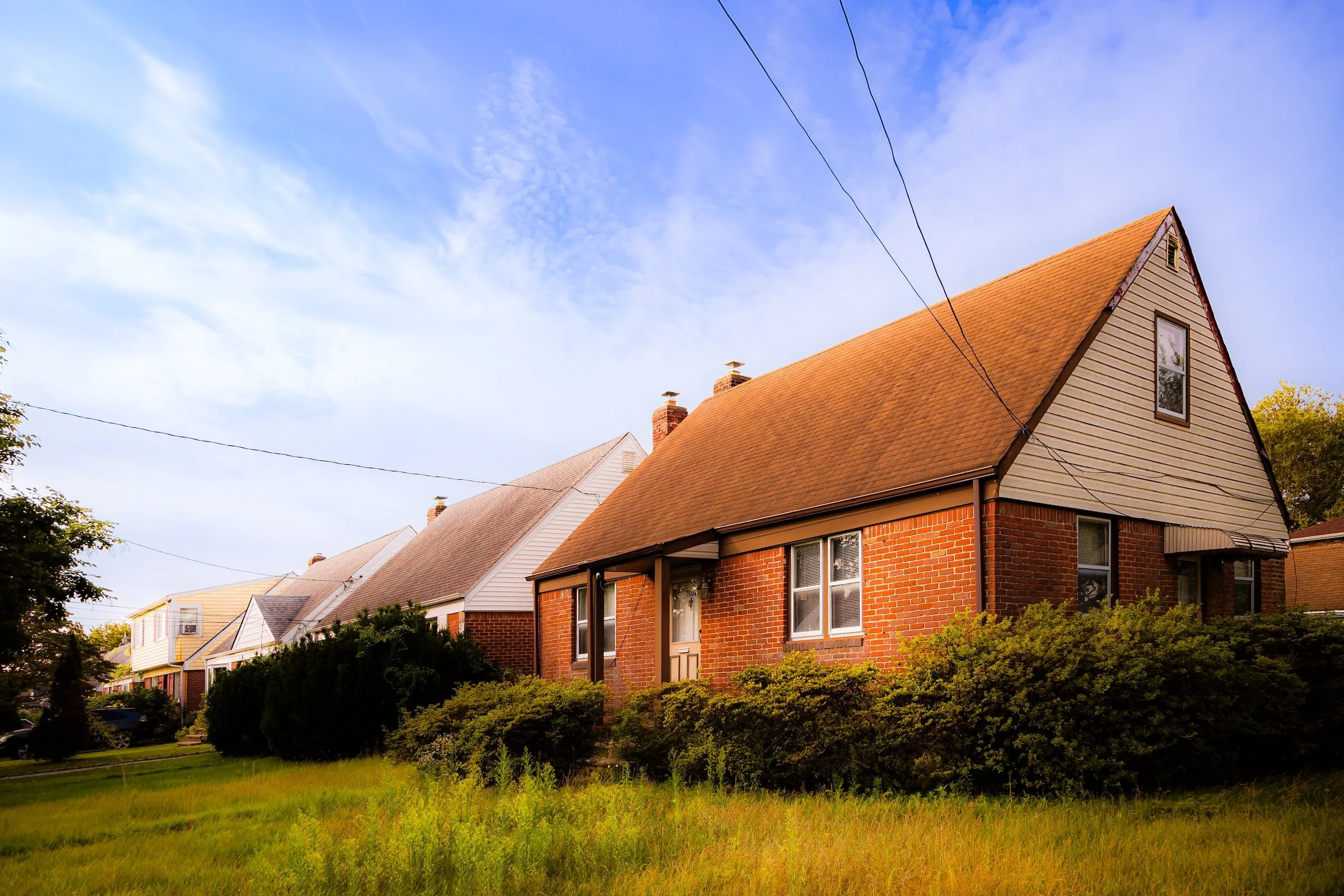
New Hyde Park - Queens - Lawns
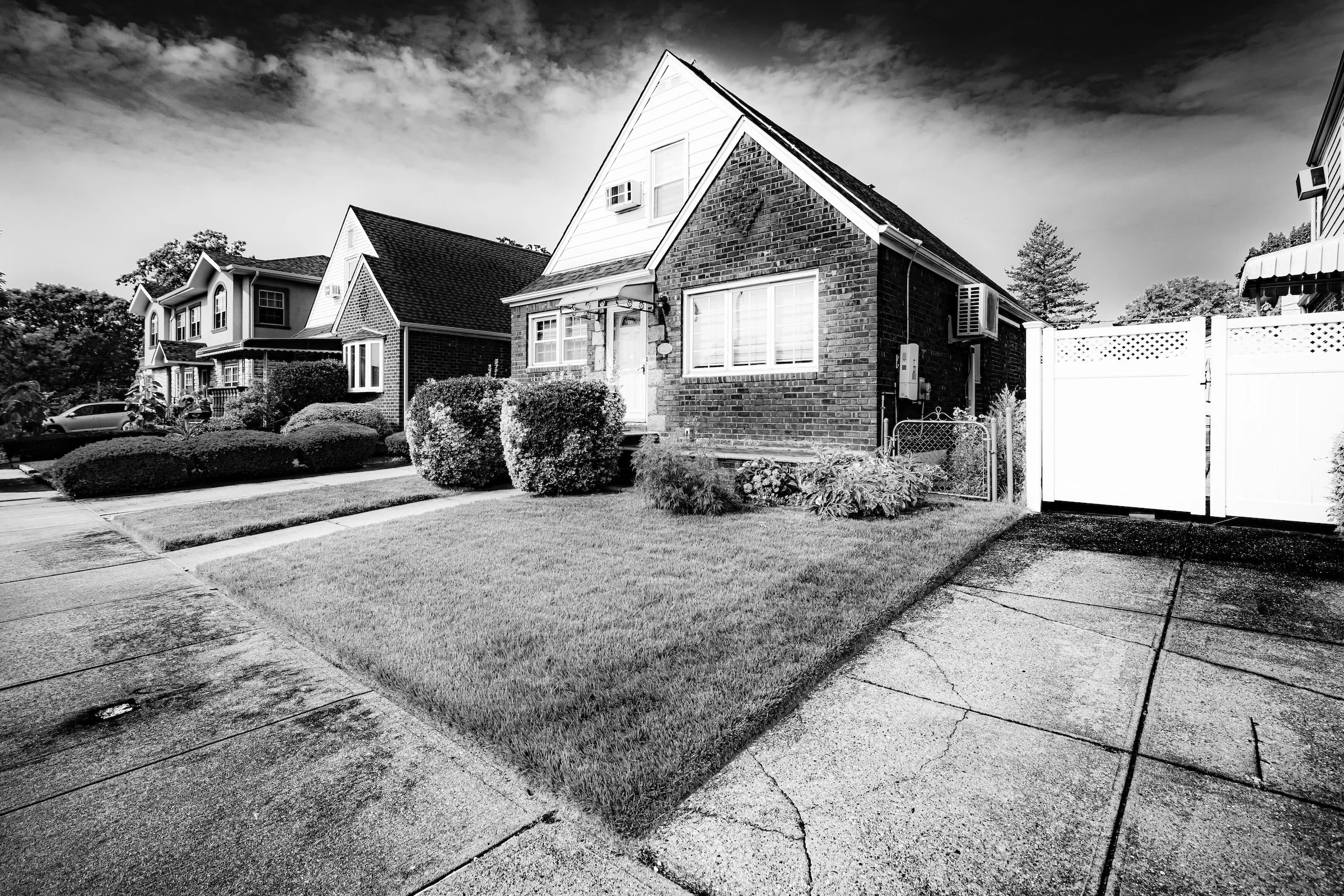
The sloping lawn becomes a broad directional plane—an angled field that carries the viewer toward the house. It’s a great example of how “line” can be a boundary between textures (grass vs. street vs. facade), not just a literal stripe.
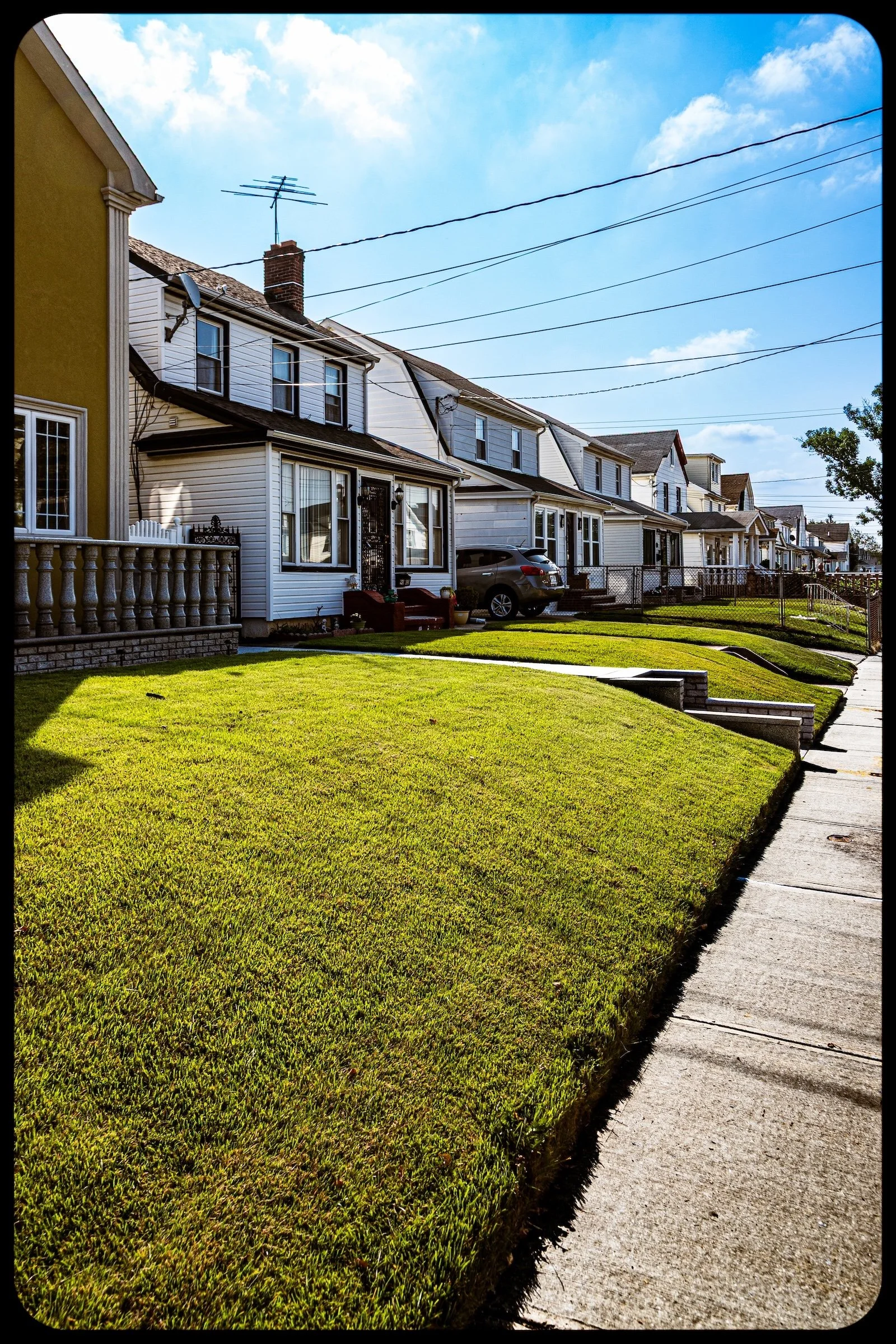
Queens Village - Queens - Vanderveer Lawn Portrait
This is line minimalism: sidewalk as a leading path, lawn edges as repeating bands, and the row of homes as a steady horizon. The power comes from consistency—everything is aligned to create calm forward motion.
Explore Further