
FLUSHING MEADOWS-CORONA PARK
Queens
Geographic Setting
Spanning more than 900 acres in the heart of Queens, Flushing Meadows–Corona Park is the borough’s grand central green—the second-largest park in New York City and one of its most symbolically charged landscapes. The park lies within a natural basin bounded by Flushing Bay to the north, Grand Central Parkway to the west, Long Island Expressway to the south, and College Point Boulevard to the east. It is encircled by the neighborhoods of Corona, Flushing, Forest Hills, and Kew Gardens Hills, with Citi Field, USTA Billie Jean King National Tennis Center, and Queens Museum forming its most recognizable landmarks. Traversed by the Long Island Expressway, the Van Wyck Expressway, and the 7 train, the park functions as the literal and figurative crossroads of Queens—an open, democratic commons amid the city’s densest mosaic of cultures.
Etymology and Origins
The name reflects the union of two neighboring communities—Flushing, to the east, and Corona, to the west—whose histories converge upon this reclaimed land. “Flushing Meadows” referred originally to the tidal marshes that lined Flushing Creek, while “Corona Park” derives from the adjoining neighborhood’s turn-of-the-century suburban development. The combined title, formalized in the 1930s, signals both continuity and transformation: the conversion of wasteland into civic paradise.
The Neighborhood
19th–Early 20th Century: From Ash Dump to Ambition
Before its reinvention, the site was infamous. For centuries, Flushing Creek meandered through salt marshes that served as natural drainage for northern Queens. By the late 19th century, industrial dumping and uncontrolled fill had turned the area into a foul wasteland known as the Corona Ash Dumps, immortalized by F. Scott Fitzgerald in The Great Gatsby as “a valley of ashes.” The landscape was dominated by mounds of cinders from city furnaces and garbage incinerators, towering up to 90 feet high.
The transformation began under Parks Commissioner Robert Moses, who saw potential where others saw ruin. In the 1930s, Moses proposed filling, grading, and draining the ash heaps to create a massive public park that would also serve as the site for the 1939–1940 New York World’s Fair—a global exposition meant to symbolize progress and optimism amid the Great Depression. The ambitious project reshaped the geography of Queens: new lakes (Meadow Lake and Willow Lake) were dredged, parkways were rerouted, and bridges constructed, converting the valley into a monumental modernist landscape.
1939–1940: The First World’s Fair
The 1939 New York World’s Fair, themed “The World of Tomorrow,” inaugurated Flushing Meadows as the stage for America’s imagination. Its sweeping pavilions, fountains, and futuristic architecture introduced millions to the wonders of television, modern design, and international exchange. The fair’s central symbols—the Trylon and Perisphere—rose where the Unisphere stands today, representing mankind’s ascent toward progress.
After the fair, much of the site fell into neglect, used temporarily as a storage yard and later as the location of the city’s first United Nations General Assembly sessions (1946–1950), held in the repurposed New York City Building, now the Queens Museum.
1964–1965: The Second World’s Fair and the Birth of the Modern Park
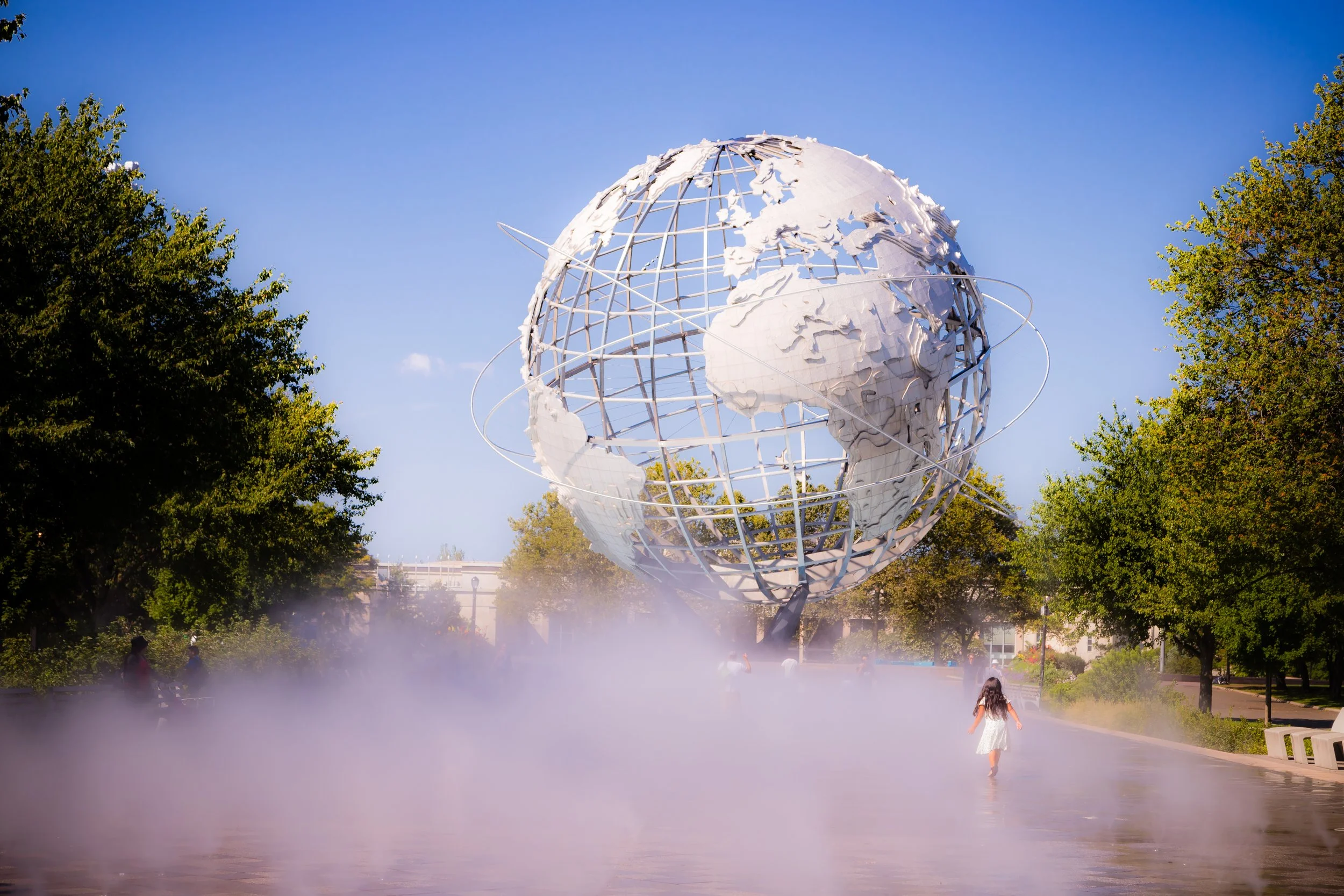
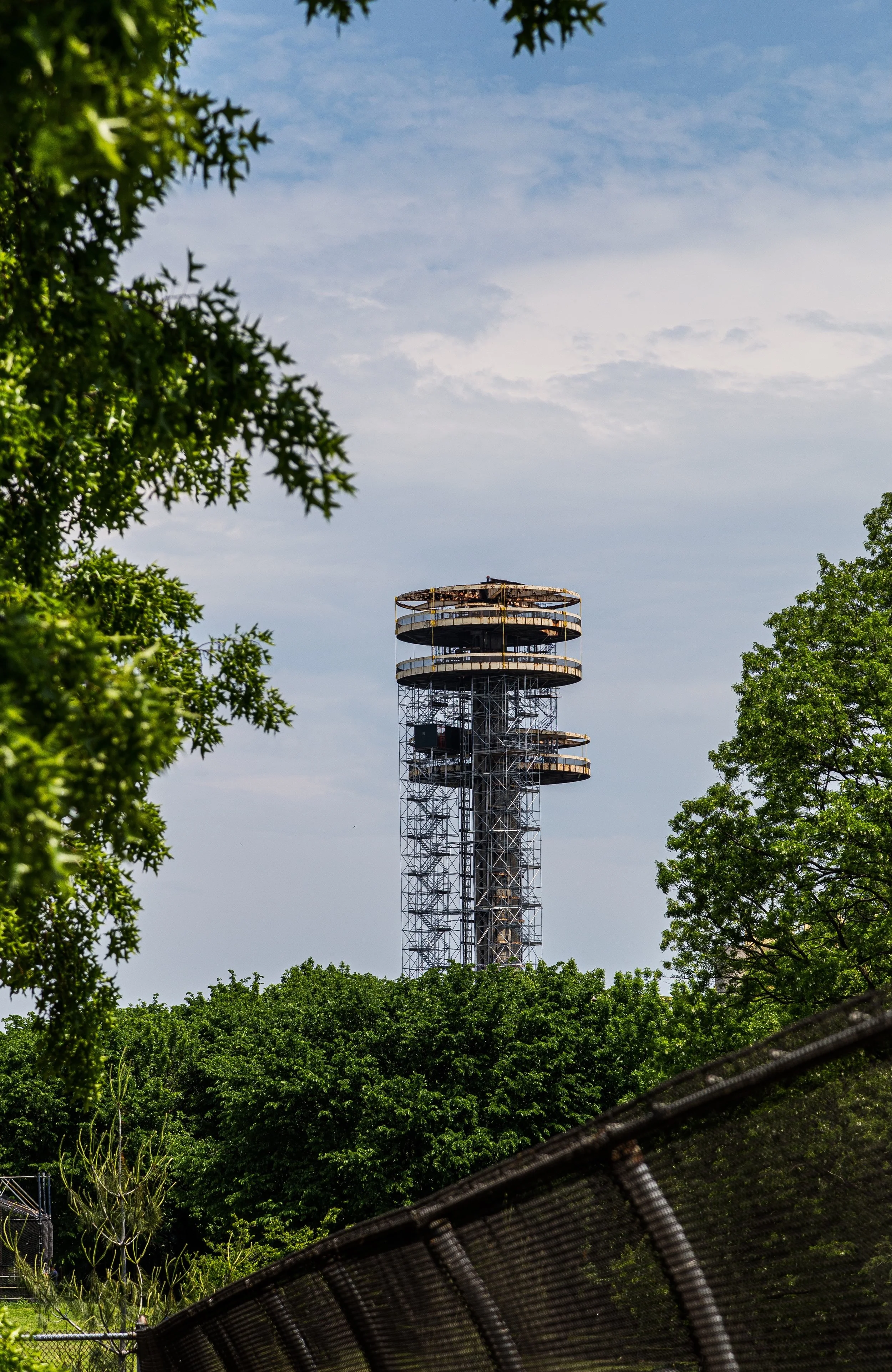
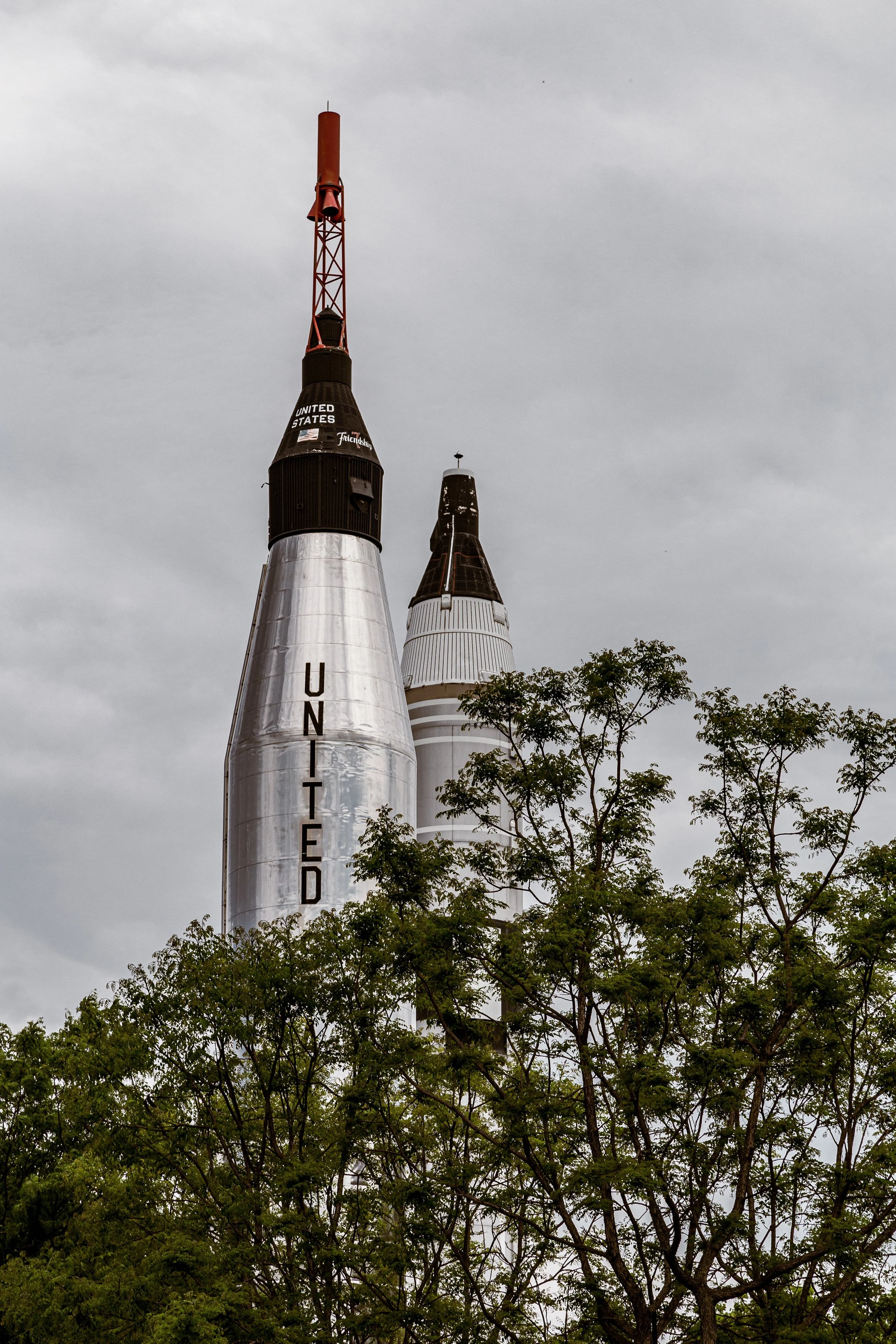
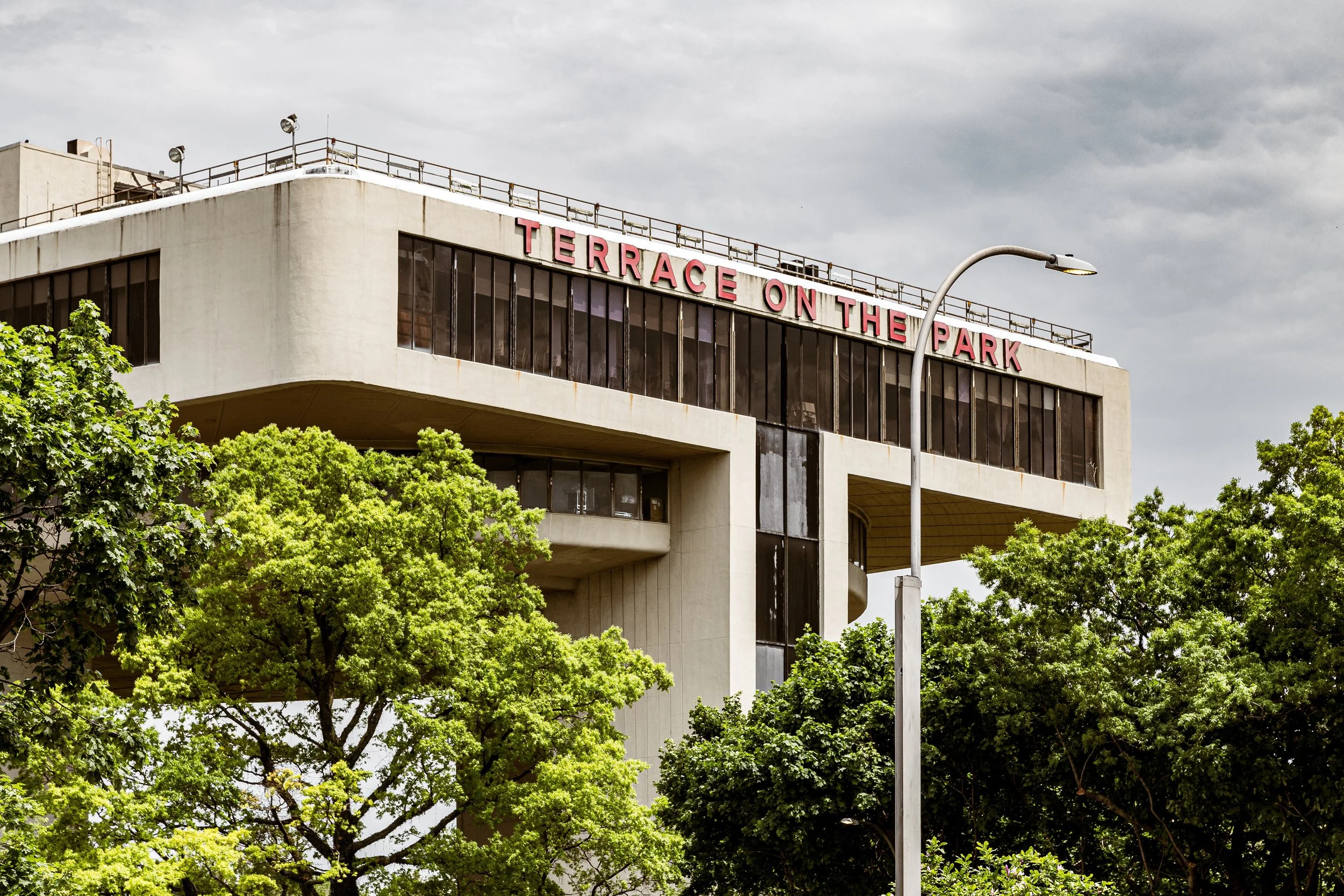
Two decades later, Robert Moses returned to the site to host a second New York World’s Fair, celebrating the technological optimism of the Space Age. The fair’s centerpiece—the Unisphere, a 140-foot stainless steel globe designed by Gilmore Clarke—remains the park’s most iconic feature. Around it, futuristic pavilions like the New York State Pavilion (with its “Tent of Tomorrow” and observation towers), the Ford Rotunda, and the Hall of Science drew millions of visitors.
When the fair closed in 1965, many structures were demolished, but the Unisphere, Queens Botanical Garden, and New York Hall of Science endured, forming the backbone of the modern park. The area was officially rededicated as Flushing Meadows–Corona Park, a name uniting its diverse neighboring communities under a single civic vision.
Flushing Meadows-Corona Park Video Coming Soon
Late 20th Century: Renewal and Civic Identity
Through the 1970s and 1980s, the park weathered the city’s fiscal crises and urban decline but remained central to Queens’ public life. Its vast lawns hosted concerts, cultural festivals, and local soccer matches, while its lakes provided a refuge for birdlife and city dwellers alike. In 1978, the USTA National Tennis Center was established, transforming Flushing Meadows into the global home of the US Open—an event that now attracts more than 700,000 visitors annually and broadcasts the borough’s image worldwide.
Civic activism played a crucial role in preserving and revitalizing the park. The Flushing Meadows–Corona Park Conservancy, founded in the 1990s, championed restoration of the Unisphere fountains, rebuilding of playgrounds, and replanting of its woodlands. The park’s diverse users—from Corona’s Latin American soccer leagues to Flushing’s East Asian tai chi groups—turned it into a living embodiment of Queens’ pluralism.
21st Century: A Global Commons
Today, Flushing Meadows–Corona Park is both backyard and world stage. It hosts the Queens Night Market, attracting food vendors from over 90 countries; annual cultural events celebrating Chinese Lunar New Year, Dominican Heritage, and Ecuadorian Independence; and everyday recreation for thousands of residents. Its trails connect to Kissena Corridor Park, Willow Lake Preserve, and the Flushing Bay Promenade, forming the green spine of central Queens.
Recent initiatives, including ecological restoration of Willow Lake and sustainable redesign of Meadow Lake pathways, reaffirm the park’s role as both environmental refuge and civic heart. The skyline of Citi Field, Arthur Ashe Stadium, and the shimmering Unisphere now defines Queens’ public identity—a symbol of its openness to the world.
Flushing Meadows-Corona Park Photo Gallery
Spirit and Legacy
Flushing Meadows–Corona Park is more than open space—it is a chronicle of transformation. From ashes to exposition, from neglect to renewal, it mirrors the trajectory of Queens itself: diverse, resilient, and forever forward-looking. Standing before the Unisphere at sunset, as families from every continent picnic on its lawns and children splash in its fountains, one senses the continuity of hope that has always animated this ground.
The park endures as the true “world’s fair” of daily life—where New Yorkers gather not as tourists of progress, but as participants in its living promise. It is the crown of Queens, a monument not to monuments, but to people.
New York City
Use this custom Google map to explore where every neighborhood in all five boroughs of New York City is located.
The Five Boroughs
One of New York City’s unique qualities is its organization in to 5 boroughs: Manhattan, Brooklyn, Queens, The Bronx, and Staten Island. These boroughs are part pragmatic administrative districts, and part vestiges of the region’s past. Each borough is an entire county in New York State - in fact, Brooklyn is, officially, Kings County, while Staten Island is, officially Richmond County. But that’s not the whole story …
Initially, New York City was located on the southern tip of Manhattan (now the Financial District) that was once the Dutch colony of New Amsterdam. Across the East River, another city was rising: Brooklyn. In time, the city planners realized that unification between the rapidly rising cities would create commercial and industrial opportunities - through streamlined administration of the region.
So powerful was the pull of unification between New York and Brooklyn that three more counties were pulled into the unification: The Bronx, Queens, and Staten Island. And on January 1, 1898, the City of New York unified two cities and three counties into one Greater City of New York - containing the five boroughs we know today.
But because each borough developed differently and distinctly until unification, their neighborhoods likewise uniquely developed. Today, there are nearly 390 neighborhoods, each with their own histories, cultures, cuisines, and personalities - and each with residents who are fiercely proud of their corner of The Big Apple.