
SPANISH HARLEM (EL BARRIO)
Manhattan
Geographic Setting
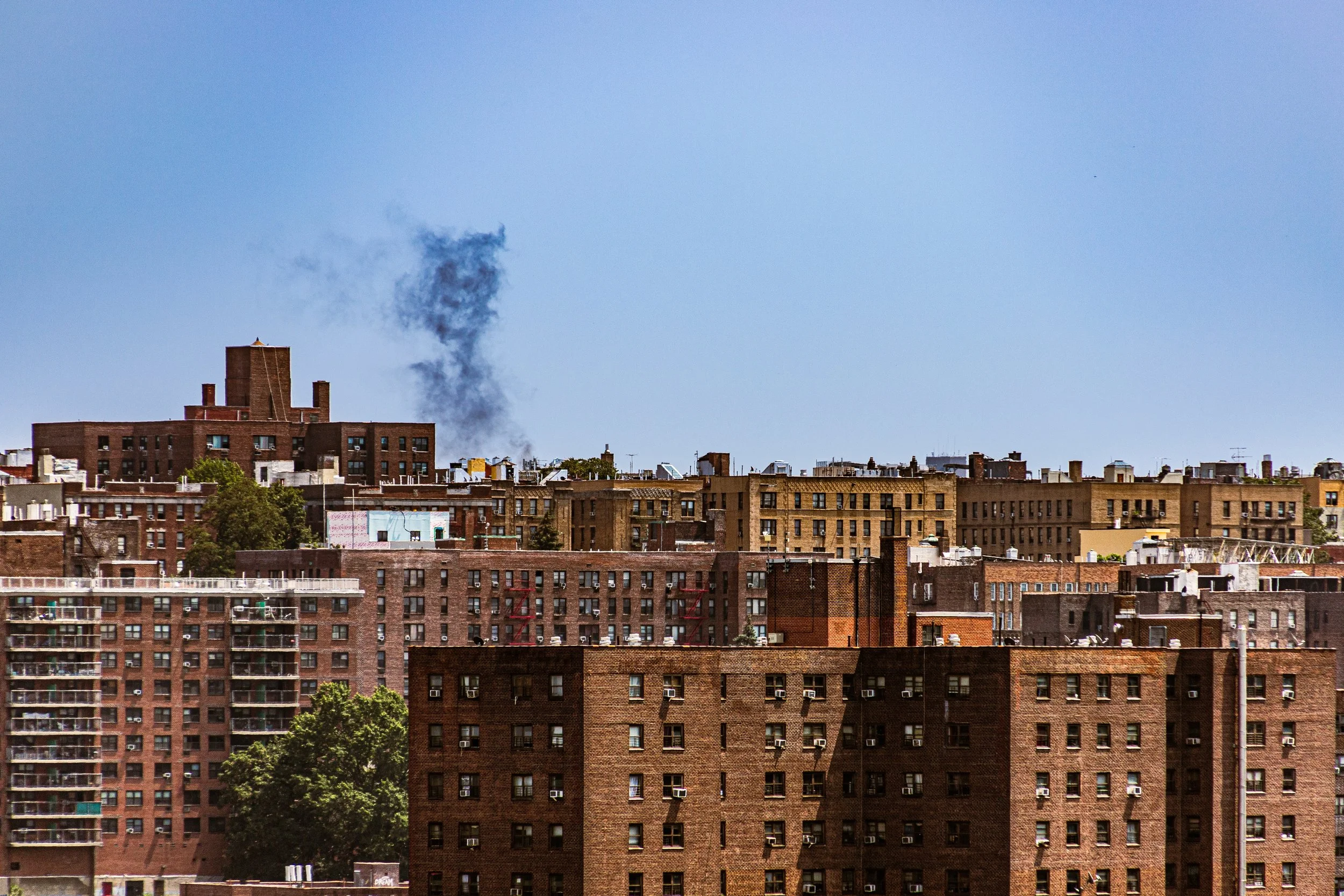
Bounded by East 96th Street to the south and East 116th Street to the north, and stretching from Fifth Avenue eastward to the Harlem River, Spanish Harlem — known locally as El Barrio — occupies one of New York’s most storied and culturally expressive landscapes. The neighborhood forms the eastern half of greater Harlem, lying between the green edge of Central Park’s North Meadow and the bridges that carry traffic over the Harlem River toward the Bronx. Its terrain rises gently from Fifth Avenue’s museum corridor through blocks of prewar tenements and community gardens to the elevated viaducts of the Metro-North Railroad near Park and Madison Avenues.
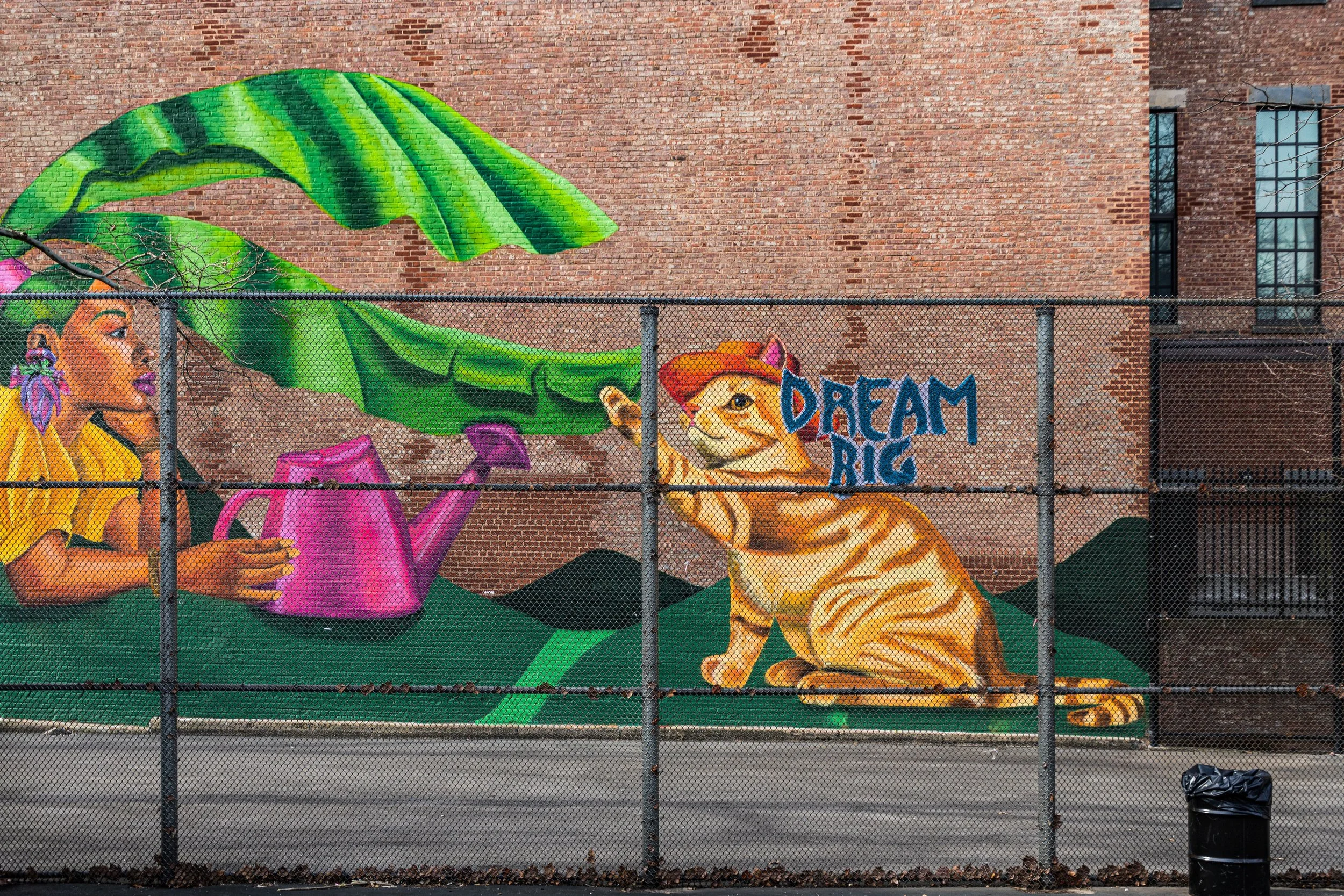
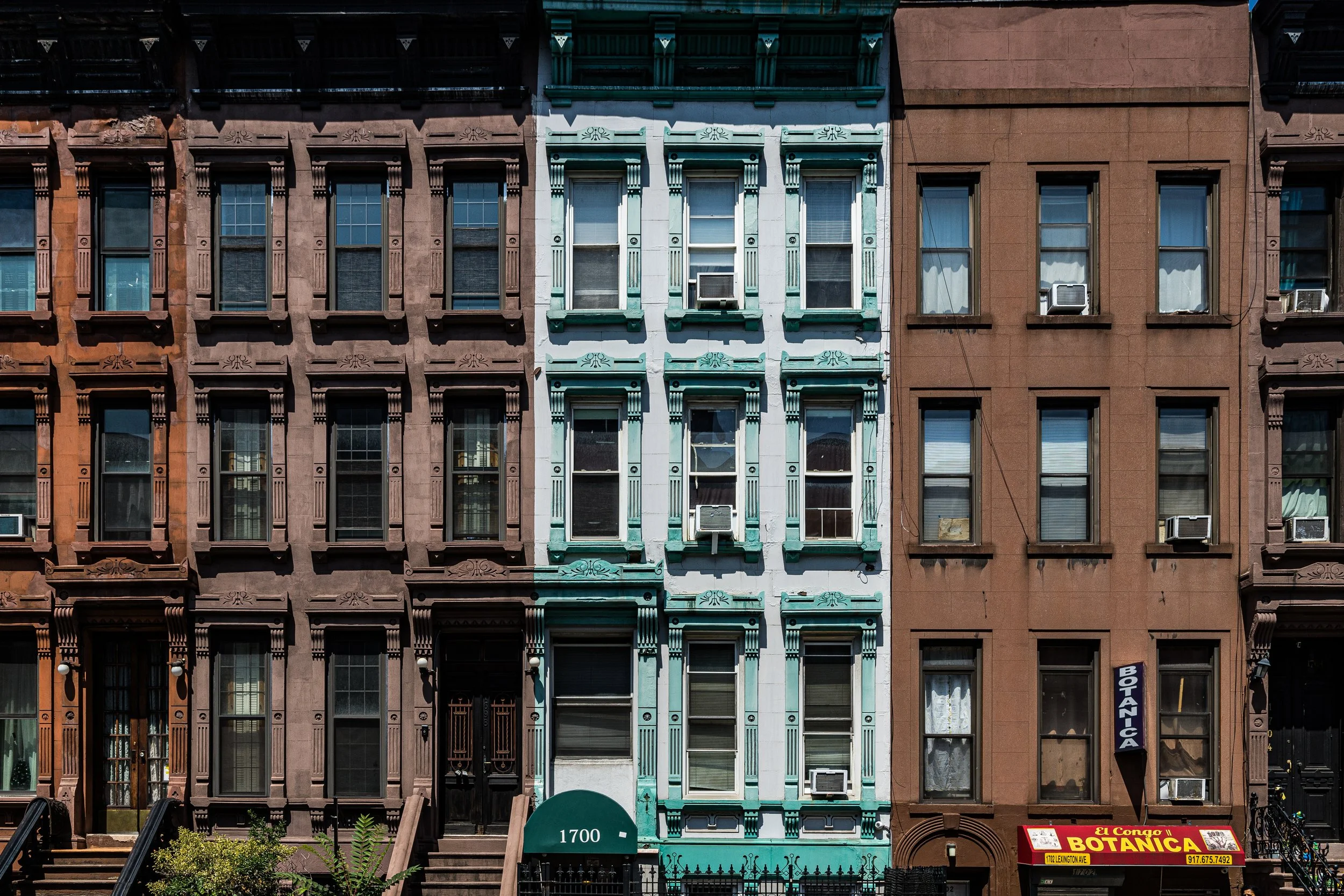
Within these bounds, El Barrio’s streets — Madison, Lexington, and Third Avenues, threaded by 104th through 110th Streets — hum with life and heritage. Murals blaze across brick walls; bodegas and botanicas share blocks with new coffeehouses and cultural centers. The scent of roast pork and café con leche mingles with the sounds of salsa, hip-hop, and church choirs. Physically and spiritually, Spanish Harlem bridges worlds: a district where Puerto Rican, Dominican, Mexican, and Afro-Caribbean histories fuse with the enduring Harlem legacy of art, activism, and resilience.
Etymology and Origins
The term “Spanish Harlem” emerged in the early 20th century to distinguish the eastern section of Harlem, whose growing Spanish-speaking population gave the area a distinct cultural identity. Locally, the community long preferred “El Barrio” — simply the neighborhood — a phrase that conveys belonging rather than boundary.
Before this identity took hold, the area was part of the Mount Morris and East Harlem districts developed after the Commissioners’ Plan of 1811. The land had once been rural farmland and estates, dotted with Dutch and English homesteads along the Boston Post Road. With the arrival of elevated rail lines along Third Avenue (1878) and Second Avenue (1880), East Harlem urbanized rapidly. Italian immigrants, Jews, and Irish families filled its tenements in the late 19th century; their synagogues, bakeries, and social clubs formed the district’s early character.
By the 1920s and 1930s, as Puerto Rican migration to New York accelerated, new arrivals settled east of Fifth Avenue, drawn by affordable rents and proximity to Harlem’s labor markets. The neighborhood’s identity shifted decisively: Spanish became the language of the streets, and East Harlem became El Barrio.
The Neighborhood
19th–20th Centuries: From Tenements to El Barrio
Urbanization began in earnest after the elevated railroad reached Third Avenue in the 1870s. Tenements rose swiftly, housing workers drawn to nearby industries and transit lines. As successive immigrant communities passed through, each left traces in the built environment—religious institutions, corner stores, and community halls. But it was the postwar influx of Puerto Rican families that transformed East Harlem into the cultural heart of Latino New York.
The heart of Spanish Harlem was forged during the Great Migration of Puerto Ricans between the 1920s and 1950s. Steamships of the Porto Rico Line brought thousands seeking industrial jobs in factories and service work. Most found housing in aging tenements along 102nd–110th Streets east of Park Avenue. Despite overcrowding and discrimination, the new community transformed the neighborhood’s rhythms and soul. By the 1950s, El Barrio pulsed with life. Salsa and bomba rhythms spilled from record shops and dance halls along 116th Street, while botanicas, barbershops, and community centers wove a vibrant social fabric. The neighborhood also faced challenges: overcrowding, economic disinvestment, and the impact of urban renewal projects that razed blocks for public housing. Yet even amid hardship, creativity thrived. Artists and activists such as Piri Thomas, Tito Puente, and the Young Lords emerged from these streets, asserting cultural and political self-determination.
Storefronts filled with bodegas, record shops, and community organizations; Spanish-language newspapers and mutual-aid societies flourished. The Church of Our Lady of Mount Carmel (East 115th Street, founded 1884 by Italian parishioners) became a shared shrine for Italian and later Puerto Rican Catholics, symbolizing continuity amid change. Cultural life blossomed in local social clubs, where the sounds of bomba, plena, and later salsa echoed through the streets.
By mid-century, El Barrio had become the cultural heart of Puerto Rican New York. Figures such as poet Julia de Burgos, musician Tito Puente, and activist Antonia Pantoja embodied the neighborhood’s creative and political energy. The Young Lords Organization, founded in 1969 from a street-gang roots movement, mobilized the community around self-determination, health access, and urban dignity — transforming El Barrio into a national symbol of Latino activism.
Urban Challenges and Resilience
The 1950s–1970s brought both hardship and heroism. Urban renewal projects, including construction of the East River Houses, Thomas Jefferson Houses, and George Washington Carver Houses, replaced old tenements with high-rise public housing. While these developments improved sanitation and infrastructure, they also concentrated poverty and erased entire blocks of small businesses and social networks.
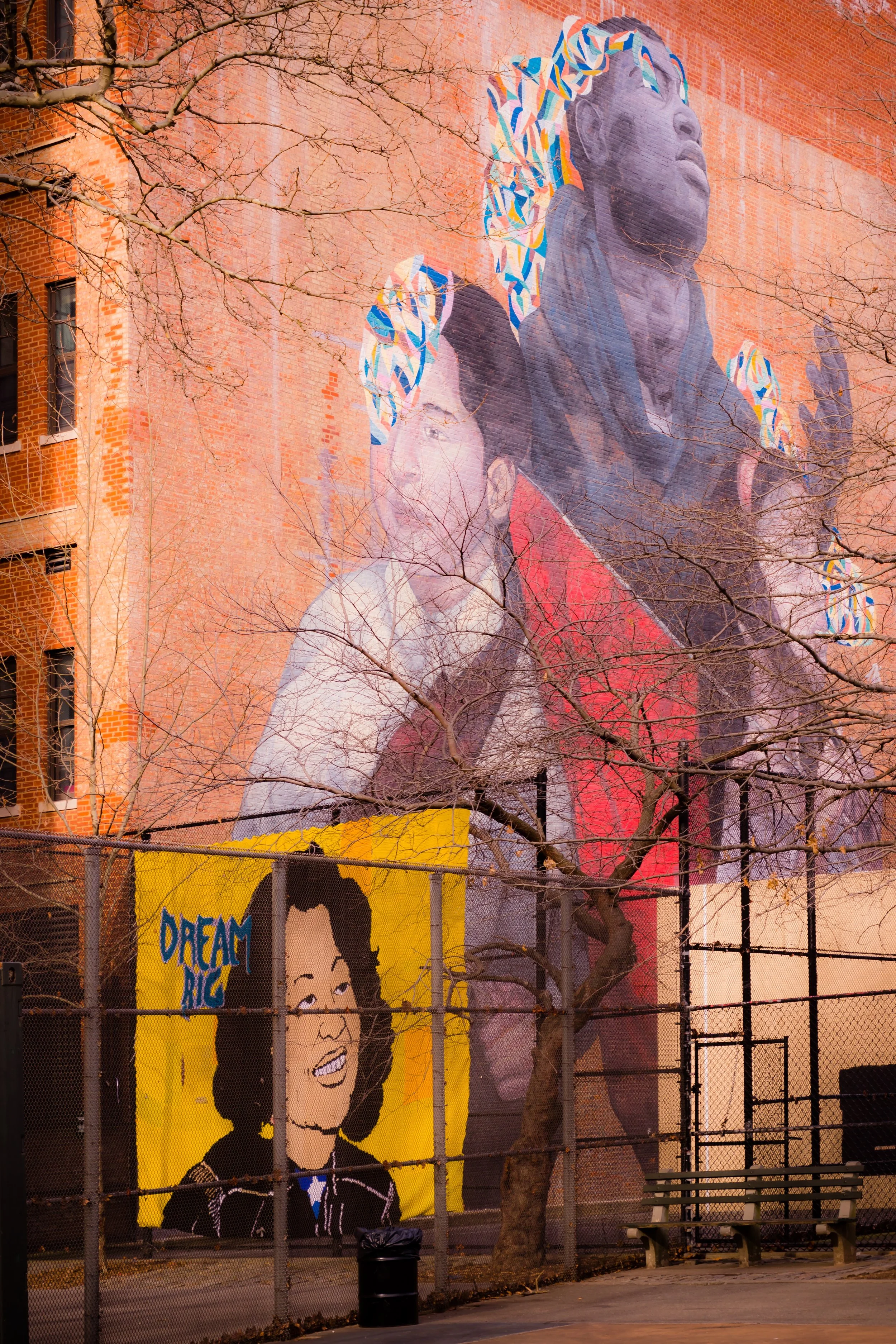
Redlining, disinvestment, and arson scarred the community through the 1970s, mirroring crises elsewhere in New York. Yet even in decline, El Barrio’s civic spirit never dimmed. Grassroots organizations turned vacant lots into casitas — small wooden houses modeled after Puerto Rican rural homes — surrounded by gardens and gathering spaces. Murals by artists such as Hiram Maristany, James De La Vega, and the Taller Boricua collective transformed blank walls into chronicles of pride, ancestry, and protest.
The Julia de Burgos Cultural Center (founded 1996 in the landmark 1923 school building on 106th Street) institutionalized this legacy, while community radio, theater troupes, and street festivals kept the neighborhood’s identity vivid through difficult years.
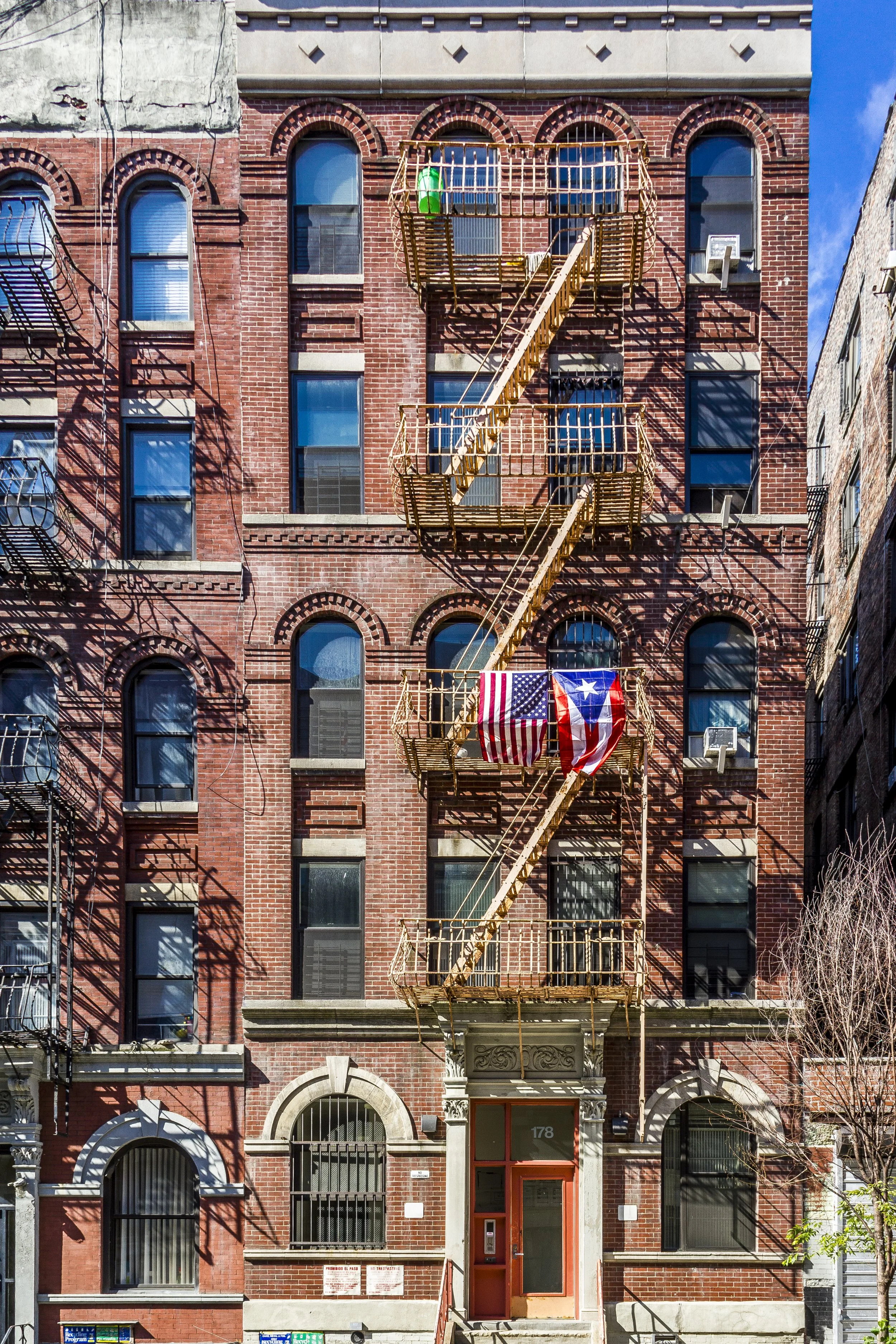
Spanish Harlem (El Barrio) Photographic Tour
Late 20th Century: Art, Identity, and Community Strength
During the 1970s and 1980s, as the South Bronx and much of Upper Manhattan suffered from neglect and fires, Spanish Harlem became a bastion of resilience. Community organizations, churches, and tenants’ associations fought to preserve housing and restore dignity. Murals transformed blank walls into open-air galleries of pride and protest—portraying icons from Julia de Burgos to Che Guevara, saints and poets alike. Institutions such as El Museo del Barrio, founded in 1969 on Fifth Avenue, gave artistic legitimacy to the Latinx experience in New York, bridging neighborhood expression with museum recognition.
Music remained the heartbeat of El Barrio. From the Tito Puente Way street dedication on 110th Street to the summer block parties and the rhythms of the annual Three Kings Day Parade, sound and celebration remained acts of resistance and remembrance. Even as demographic shifts introduced new populations in the 1990s and 2000s, the neighborhood’s cultural DNA endured—anchored in the language, food, and art of its streets.
21st Century: Continuity and Change
Today, Spanish Harlem faces the complex tides of gentrification and renewal. New developments rise along Park and Third Avenues, and long-vacant buildings have been restored for mixed-income residents. Yet community gardens, murals, and cultural institutions continue to assert the neighborhood’s identity. The scent of roasted corn and café con leche mingles with new cafés and restaurants, symbolizing both continuity and evolution. Thomas Jefferson Park and the East River Esplanade offer open spaces where old and new residents meet beneath the skyline.
Spanish Harlem (El Barrio) Photo Gallery
Spirit and Legacy
Spanish Harlem’s essence lies in its capacity to create beauty and meaning from adversity. It is the birthplace of Nuyorican poetry, salsa music, and urban art movements that have shaped New York’s cultural narrative. Though its boundaries may shift and its demographics evolve, El Barrio remains a living testament to the power of community—a place where heritage is not merely remembered but lived daily.
New York City
Use this custom Google map to explore where every neighborhood in all five boroughs of New York City is located.
The Five Boroughs
One of New York City’s unique qualities is its organization in to 5 boroughs: Manhattan, Brooklyn, Queens, The Bronx, and Staten Island. These boroughs are part pragmatic administrative districts, and part vestiges of the region’s past. Each borough is an entire county in New York State - in fact, Brooklyn is, officially, Kings County, while Staten Island is, officially Richmond County. But that’s not the whole story …
Initially, New York City was located on the southern tip of Manhattan (now the Financial District) that was once the Dutch colony of New Amsterdam. Across the East River, another city was rising: Brooklyn. In time, the city planners realized that unification between the rapidly rising cities would create commercial and industrial opportunities - through streamlined administration of the region.
So powerful was the pull of unification between New York and Brooklyn that three more counties were pulled into the unification: The Bronx, Queens, and Staten Island. And on January 1, 1898, the City of New York unified two cities and three counties into one Greater City of New York - containing the five boroughs we know today.
But because each borough developed differently and distinctly until unification, their neighborhoods likewise uniquely developed. Today, there are nearly 390 neighborhoods, each with their own histories, cultures, cuisines, and personalities - and each with residents who are fiercely proud of their corner of The Big Apple.