
OCEAN HILL
Brooklyn
Geographic Setting
Bounded roughly by Fulton Street to the north, Ralph Avenue to the west, and Eastern Parkway wrapping along its southern and eastern edges, Ocean Hill forms a compact, historically resonant enclave within Bedford-Stuyvesant in central Brooklyn. Though modest in scale—less than one square mile—it has long carried an outsized role in the story of modern Brooklyn: a neighborhood of elegant brownstones, deep community roots, mid-century turbulence, and enduring renewal.
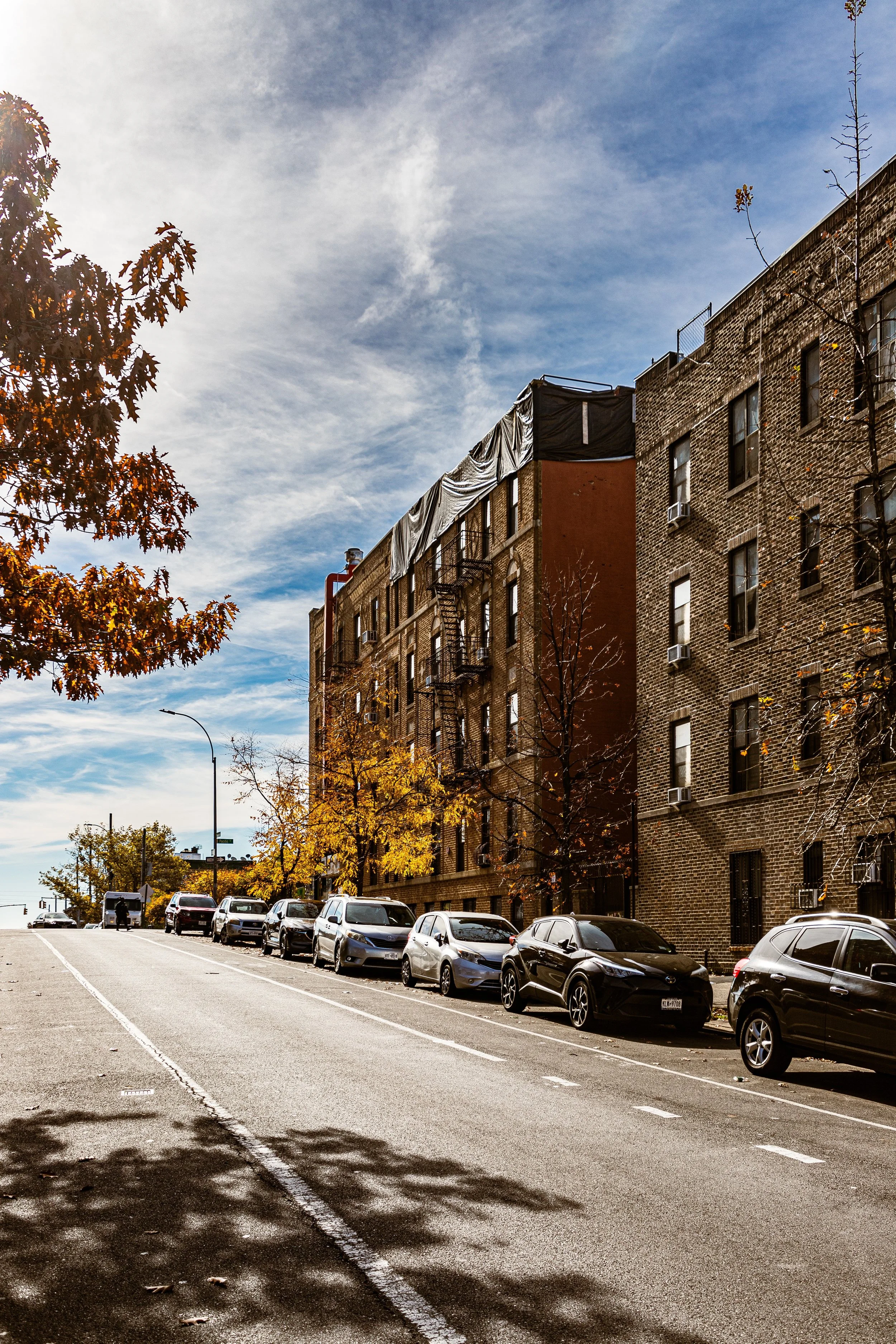
Ocean Hill sits on a gentle rise of land that once commanded views toward Jamaica Bay and the distant Atlantic—hence its name, coined in the 19th century when developers sought to evoke the breezy promise of suburban living. Today, the neighborhood’s topography still imparts a sense of openness amid the urban grid. Broadway, Rockaway Avenue, and Atlantic Avenue mark its periphery, while interior streets such as MacDougal Street, St. Marks Avenue, and Saratoga Avenue preserve a quieter, residential character. The A/C, J/Z, and L subway lines intersect nearby, linking Ocean Hill to Downtown Brooklyn and Lower Manhattan, though its heart beats to a rhythm distinct from either—one defined by local history, artistry, and self-determination.
Etymology and Origins
The name “Ocean Hill” emerged in the late 19th century, a product of real estate optimism rather than geography. As the city’s street grid extended eastward beyond Bedford and Stuyvesant Heights, developers subdivided farmland and chose evocative names to attract buyers: “Ocean Hill” promised fresh air and open views toward the ocean, though the sea itself was miles away.
Before that transformation, the land belonged to the old Town of New Lots, part of Flatbush Township during the colonial period. Dutch settlers farmed the area beginning in the 1600s, cultivating vegetables, grains, and hay on its fertile plain. A few scattered roads—ancestors of Ralph Avenue and Broadway Junction—connected these fields to Flatbush and Jamaica. Through the early 19th century, Ocean Hill remained a rural backwater dotted with frame houses and woodlots, far removed from Brooklyn’s waterfront bustle.
The Neighborhood
19th Century: From Farmland to Urban Frontier
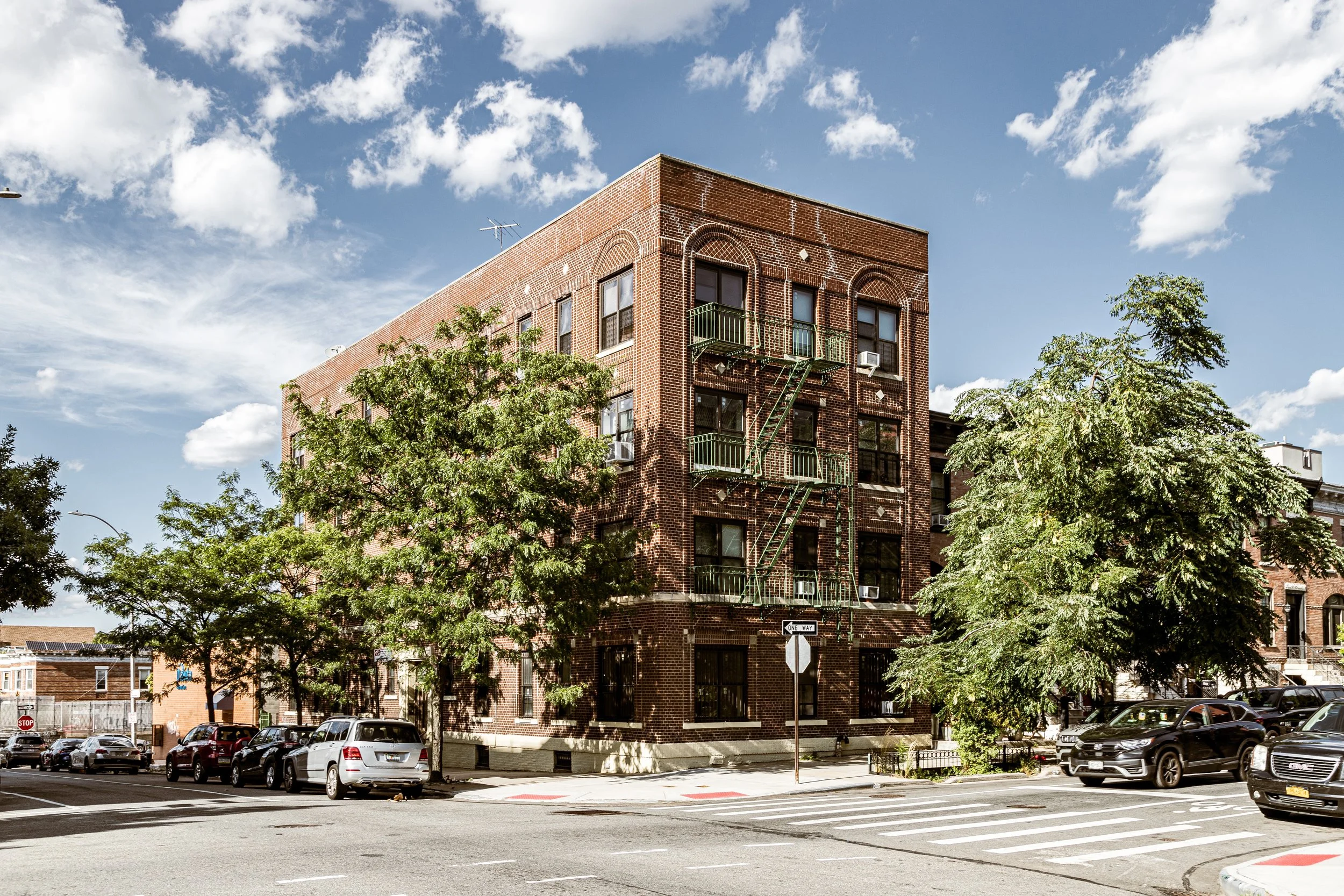
Brooklyn’s consolidation and explosive growth after the Civil War brought dramatic change. The expansion of the Long Island Rail Road’s Atlantic Branch (now the LIRR and Atlantic Avenue corridor) and the construction of new horsecar and elevated lines made this once-remote district accessible to downtown commuters. Developers quickly moved in, subdividing farmland into narrow lots and erecting Italianate and Neo-Grec rowhouses of brownstone and brick between the 1870s and 1890s.
Ocean Hill developed as the easternmost edge of the larger Bedford-Stuyvesant community, sharing its architectural vocabulary and social evolution. The early residents were largely German, Irish, and Jewish immigrants, employed in nearby factories, breweries, and the bustling shipping yards along the East River. Small synagogues, bakeries, and groceries lined Fulton Street, while the grid south of Atlantic Avenue filled with three-story brownstones whose carved lintels and stoops still grace the blocks today.
By the turn of the 20th century, Ocean Hill had acquired both name and neighborhood identity—a working-class enclave at the city’s edge, its brownstones glowing in the evening sun above the elevated tracks.
Early–Mid 20th Century: Migration and Transformation
The first decades of the 20th century brought new layers of change. As earlier residents moved outward to newer suburbs in Flatbush and Queens, African American families, many arriving from the South during the Great Migration, began settling in Bedford-Stuyvesant and gradually expanded into Ocean Hill. By the 1930s–1940s, the area had become a vibrant center of Black urban life—marked by jazz clubs, churches, and social organizations.
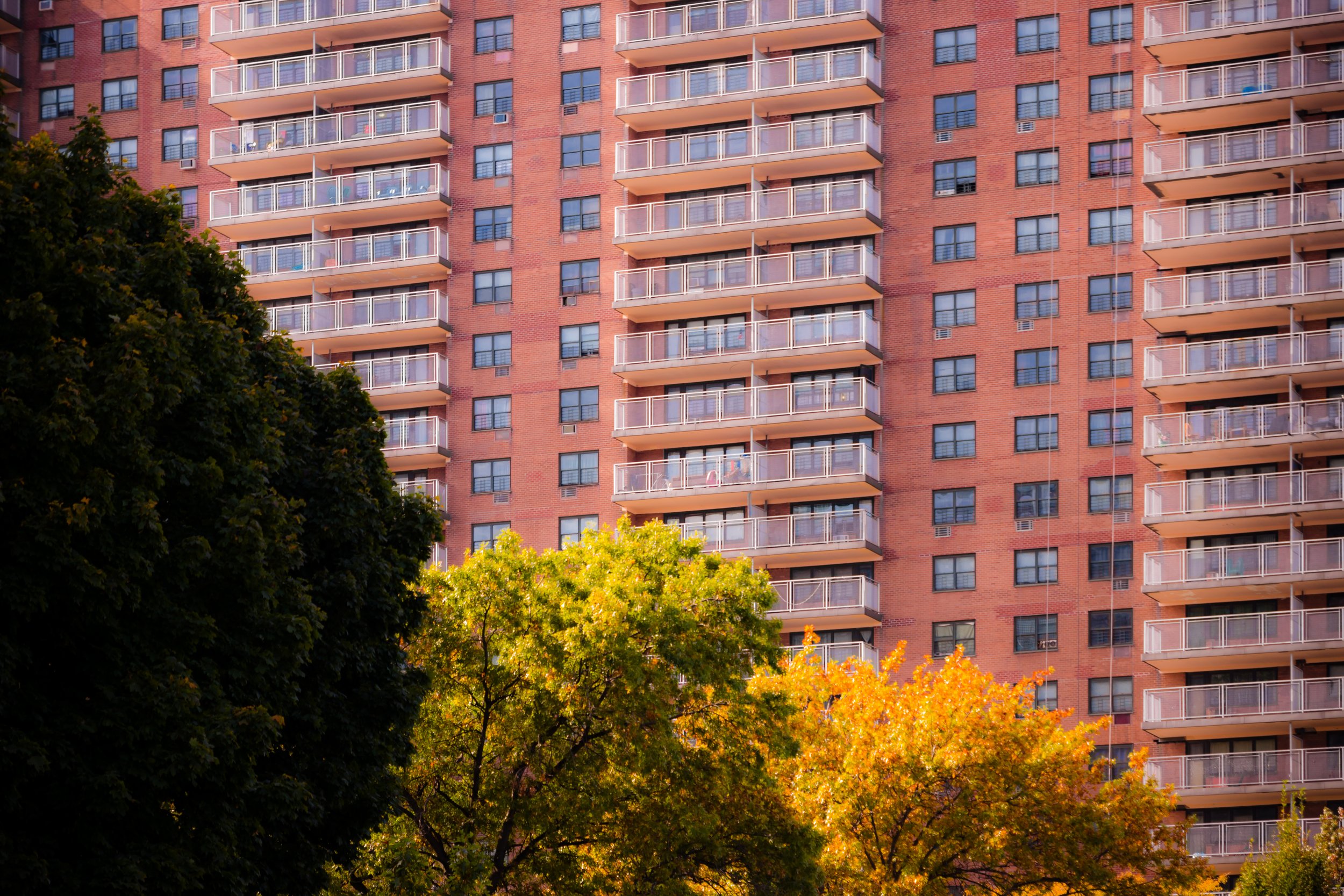
At the same time, Ocean Hill’s infrastructure aged faster than the city around it. The construction of Eastern Parkway Extension and nearby public housing developments (such as the Howard Houses, completed in 1955) altered the neighborhood’s physical landscape. While providing needed housing, these large projects disrupted older street patterns and accelerated demographic shifts.
Through the 1950s–1960s, Ocean Hill was predominantly African American and Afro-Caribbean, home to strong church communities and a growing spirit of cultural activism. Yet the twin pressures of disinvestment and redlining left much of the housing stock to deteriorate. By mid-century, absentee landlords and municipal neglect mirrored patterns seen across central Brooklyn.
Ocean Hill Photographic Video
Late 20th Century: Struggle, Activism, and Identity
Ocean Hill entered national consciousness during the Ocean Hill–Brownsville Teachers’ Strike of 1968, a pivotal event in New York’s history of race, education, and labor. As part of a city experiment in community control of schools, local activists sought authority over neighborhood education, challenging the centralized power of the teachers’ union. The conflict—marked by walkouts, protests, and heated debate—became emblematic of the era’s struggles over race, democracy, and urban reform.
Though contentious, the movement left a profound legacy of empowerment. It galvanized local organizations and birthed a generation of civic leaders who reshaped Brooklyn politics in the decades that followed. Amid economic decline, Ocean Hill’s residents built coalitions around housing rehabilitation, youth programs, and cultural pride.
During the 1970s–1980s, urban blight took its toll—vacant lots multiplied, arson scarred blocks, and population loss accelerated—but the community persevered. Churches such as St. Paul Community Baptist Church and groups like the Ocean Hill–Brownsville Coalition of Block Associations became engines of grassroots renewal. By the 1990s, small-scale homeownership programs, coupled with city-backed rehabilitation efforts, began restoring the neighborhood’s historic housing.
21st Century: Renewal, Heritage, and Complexity
In the 21st century, Ocean Hill has reemerged as one of central Brooklyn’s most dynamic—and complex—neighborhoods. The brownstones that once symbolized decline now draw new residents, artists, and professionals seeking affordable space within reach of Crown Heights and Bushwick. Community gardens and new construction dot formerly vacant lots, while restored blocks along Eastern Parkway and Saratoga Avenue showcase the neighborhood’s revival.
Yet this renewal carries tension. Longtime residents, many of whom weathered the decades of hardship, face rising rents and property taxes. The neighborhood’s identity—once forged in the crucible of struggle—now wrestles with questions of belonging and preservation. Cultural institutions such as the Brownsville Heritage House, the Ocean Hill Arts Center, and local schools play a crucial role in maintaining continuity between generations.
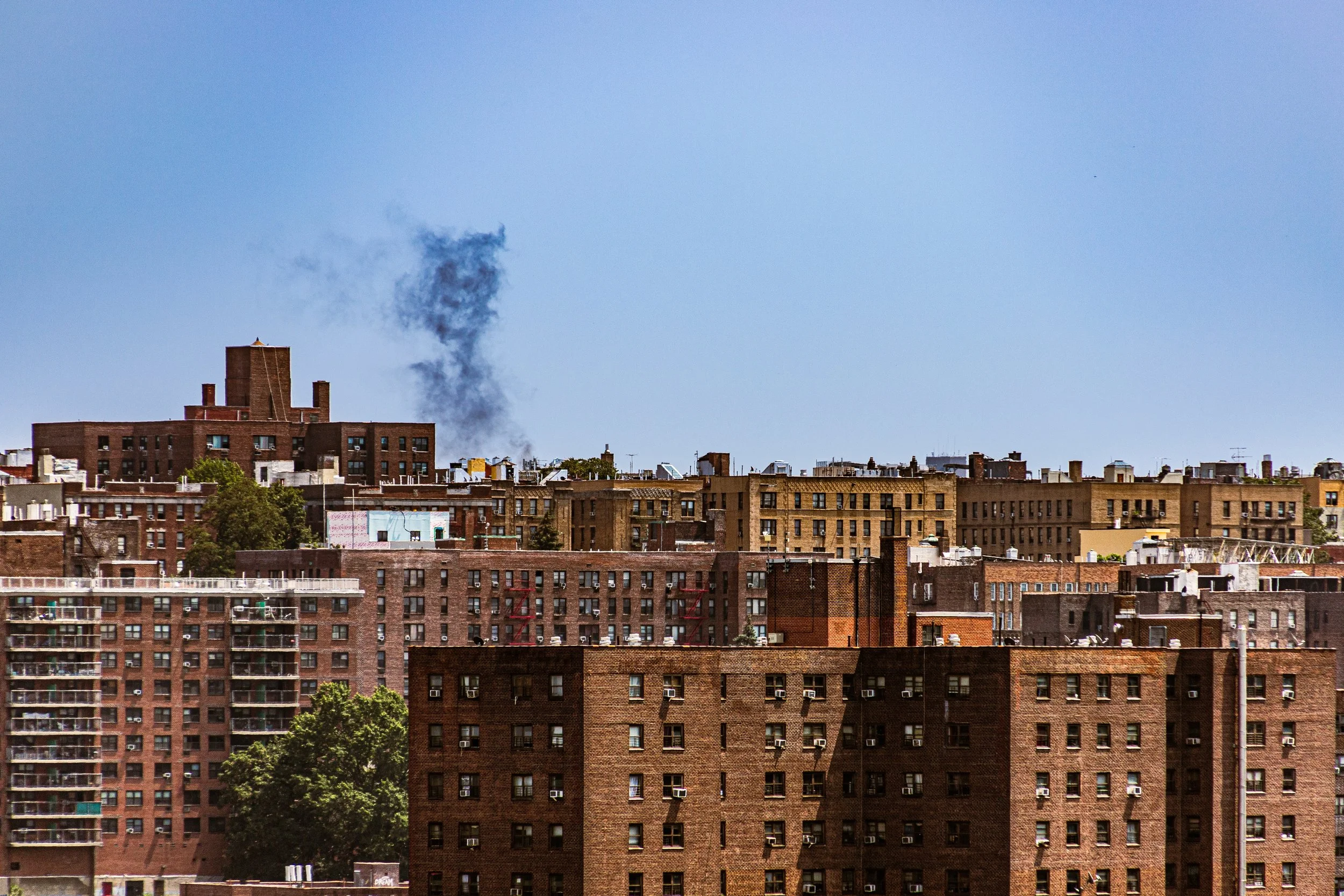
The physical fabric of Ocean Hill remains a blend of eras: 19th-century brownstones, mid-century public housing, postwar storefronts, and new condominiums coexist within a few blocks. The hum of Fulton Street commerce, the call of the elevated J and Z trains, and the steady beat of church drums on Sunday mornings together define the modern soundscape of a neighborhood forever rebuilding itself.
Ocean Hill Photo Gallery
Spirit and Legacy
The spirit of Ocean Hill is one of resilience and renewal—a community that has endured cycles of promise, neglect, and rebirth while never losing its voice. Its very name, once a speculative flourish, has come to signify something deeper: the rise and persistence of Brooklyn’s working-class heart, carried by generations who made this hill their home.
New York City
Use this custom Google map to explore where every neighborhood in all five boroughs of New York City is located.
The Five Boroughs
One of New York City’s unique qualities is its organization in to 5 boroughs: Manhattan, Brooklyn, Queens, The Bronx, and Staten Island. These boroughs are part pragmatic administrative districts, and part vestiges of the region’s past. Each borough is an entire county in New York State - in fact, Brooklyn is, officially, Kings County, while Staten Island is, officially Richmond County. But that’s not the whole story …
Initially, New York City was located on the southern tip of Manhattan (now the Financial District) that was once the Dutch colony of New Amsterdam. Across the East River, another city was rising: Brooklyn. In time, the city planners realized that unification between the rapidly rising cities would create commercial and industrial opportunities - through streamlined administration of the region.
So powerful was the pull of unification between New York and Brooklyn that three more counties were pulled into the unification: The Bronx, Queens, and Staten Island. And on January 1, 1898, the City of New York unified two cities and three counties into one Greater City of New York - containing the five boroughs we know today.
But because each borough developed differently and distinctly until unification, their neighborhoods likewise uniquely developed. Today, there are nearly 390 neighborhoods, each with their own histories, cultures, cuisines, and personalities - and each with residents who are fiercely proud of their corner of The Big Apple.