
Crosswalk Cadence
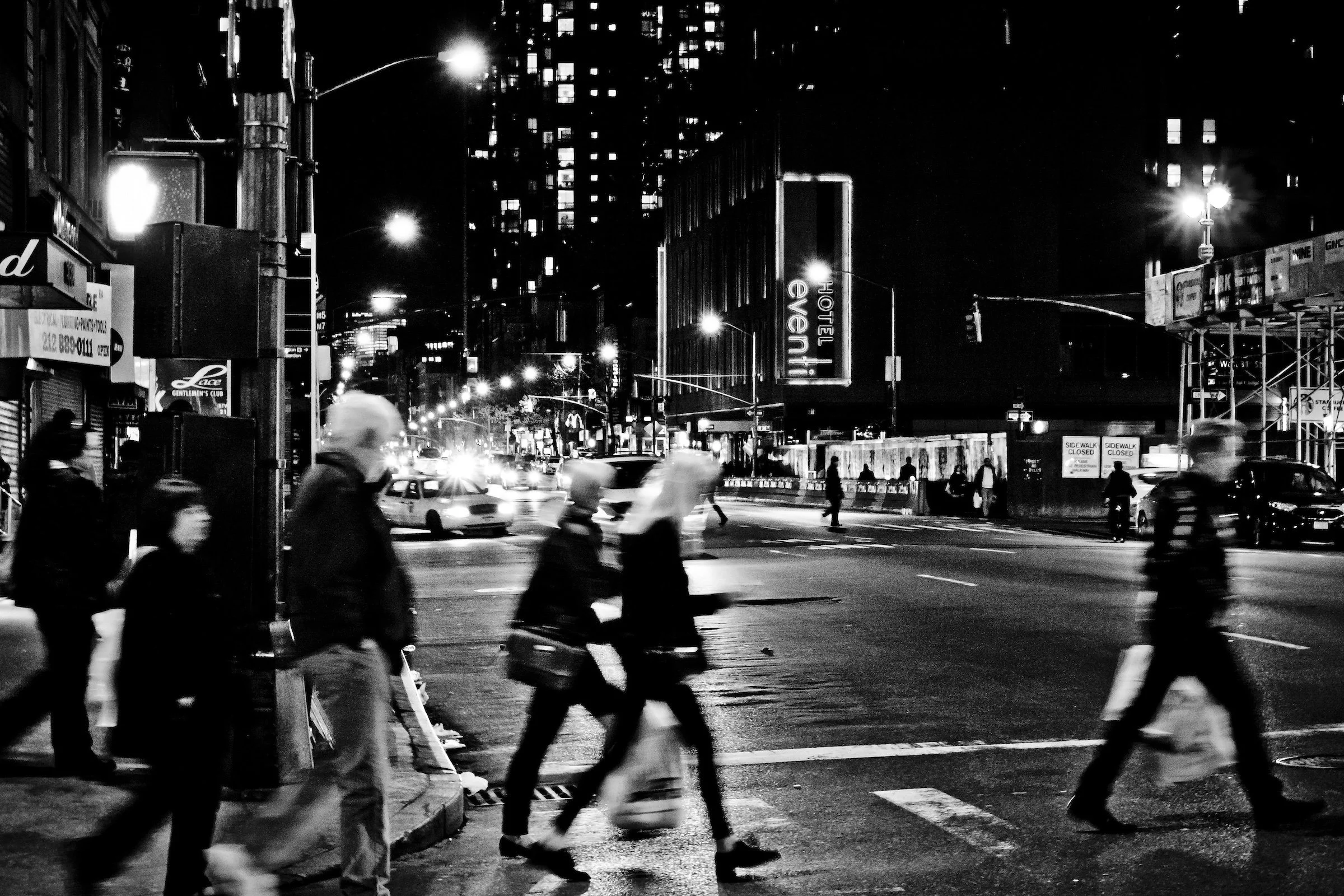
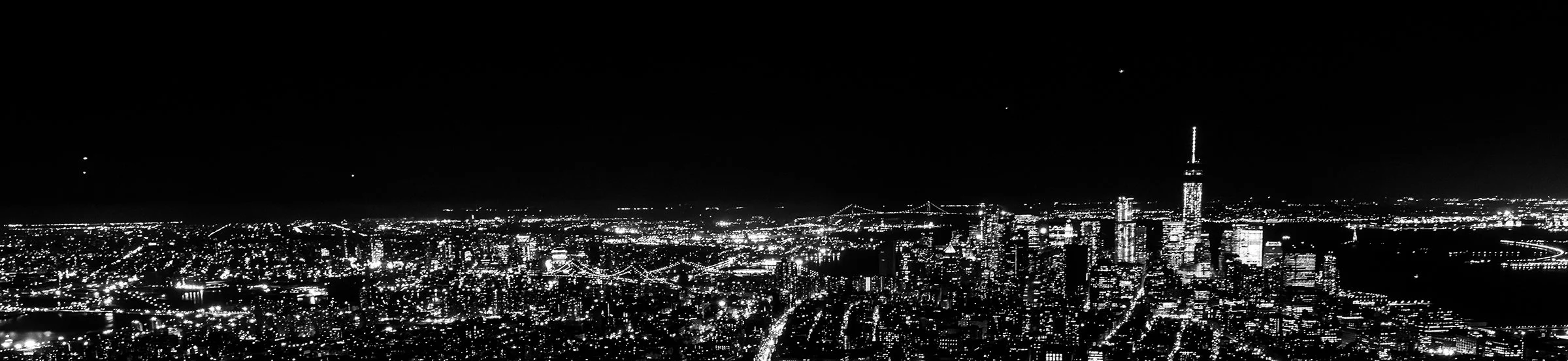
Penn District - Manhattan - Epic Sidewalk
Definition:
Crosswalk Cadence is the use of crosswalks, lane markings, and street striping as rhythmic structure—visual beats that organize motion, guide the eye, and turn intersections into choreography. The subject may be a cyclist, a crowd, a building, or pure pattern, but the cadence comes from the street’s graphic language.
Usage:
Use Crosswalk Cadence to give fast, messy city scenes a readable skeleton. Stripe patterns can lead the eye deep into space, create diagonals that inject energy, and provide instant context for movement—especially when paired with pedestrians, bikes, headlights, or rain.
Crosswalks are one of the city’s most reliable compositional “instruments.” They’re always there, they’re boldly designed, and they naturally point toward the human story: crossing, waiting, rushing, hesitating—urban life reduced to lines and timing.
In Depth:
I treat crosswalks like sheet music. Each stripe is a beat, and the people (or vehicles) are the notes. The strongest frames either:
let the crosswalk dominate as graphic structure, or
use it as a stage where a subject hits the perfect spot at the perfect time.
How to find strong Crosswalk Cadence:
Shoot at angles, not straight-on—diagonals create momentum.
Watch for timing moments: one figure entering the stripes, a cyclist mid-turn, a crowd at the edge.
In rain or at night, look for reflections that extend the pattern.
Simplify your frame: decide whether the subject is the person or the pattern, then commit.
Below are ten launch examples showing Crosswalk Cadence at night, in crowds, under signage, and inside architectural corridors—each with a brief note on what the striping is doing and how it shapes the frame.
Kinetic crossings:
These images use crosswalks as a stage for motion—bikes and pedestrians turning stripes into energy.
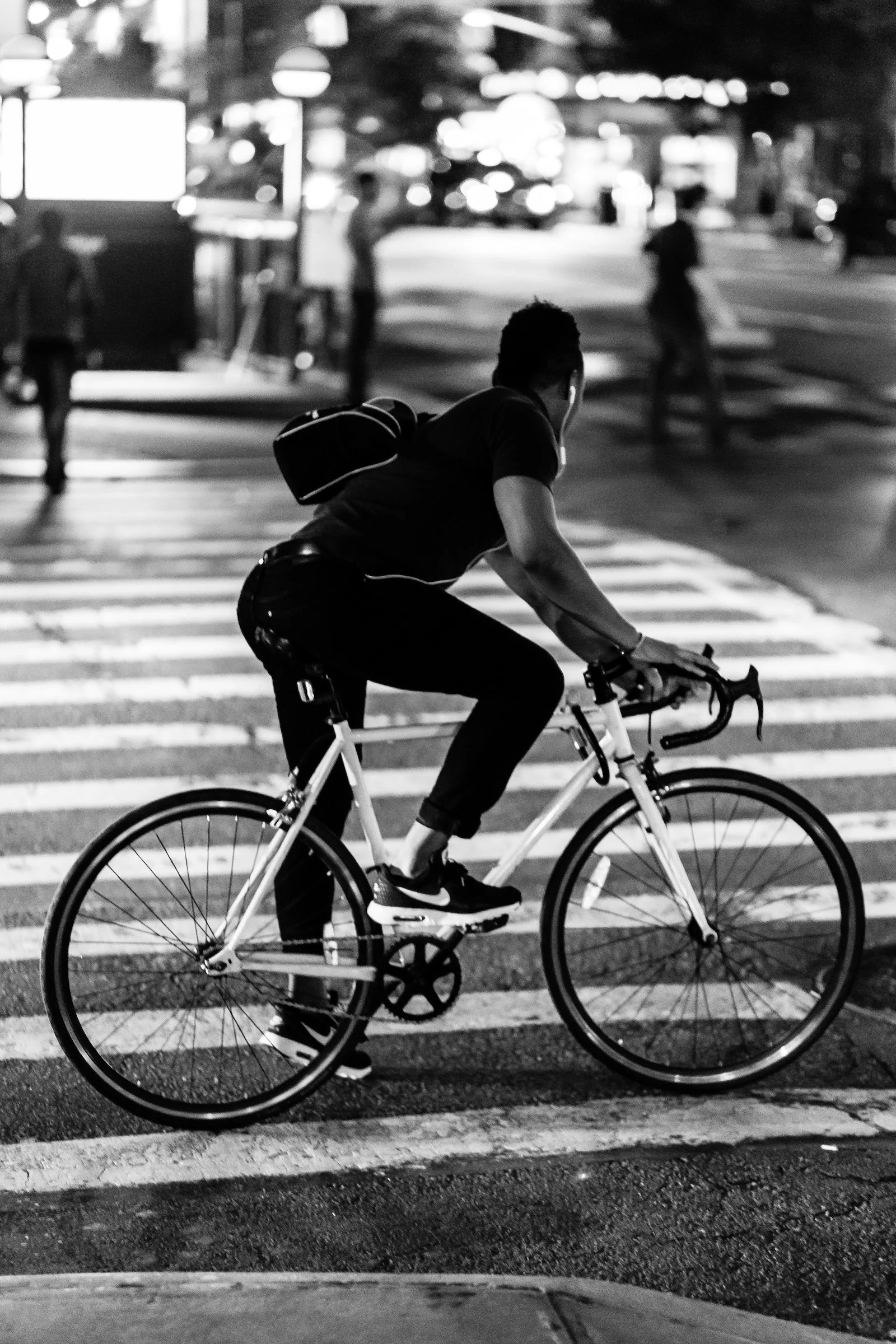
East Village - Manhattan - Cyclist At Night
The crosswalk becomes a spotlighted runway while the background dissolves into bokeh. The cadence works because the cyclist is placed cleanly against the stripes—motion anchored by pattern.
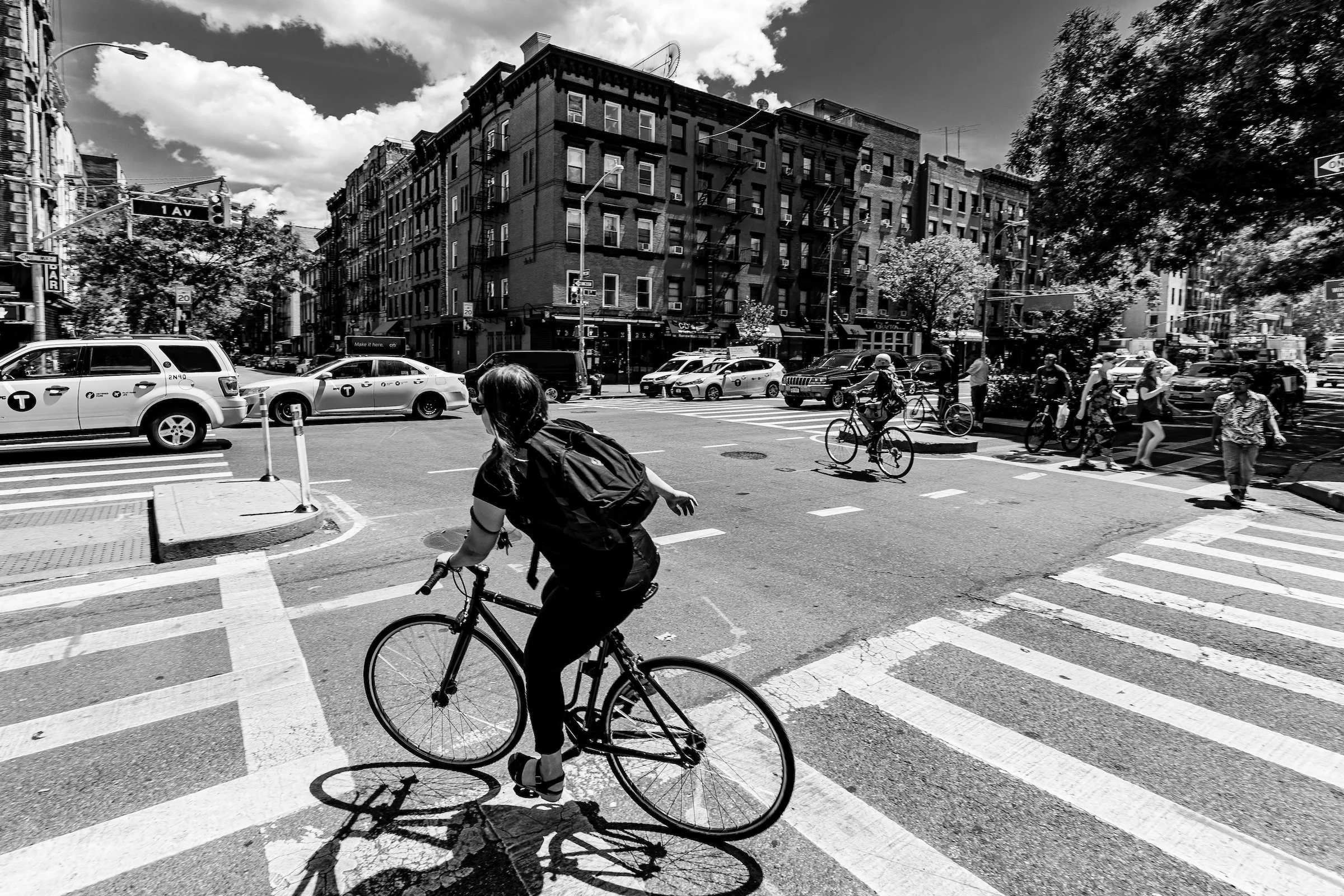
East Village - Manhattan - Free Wheelin' On St. Mark's
Here the intersection is the subject: multiple vectors, multiple crossings, one moment of balance. The stripes act like a coordinate grid that makes the chaos readable.
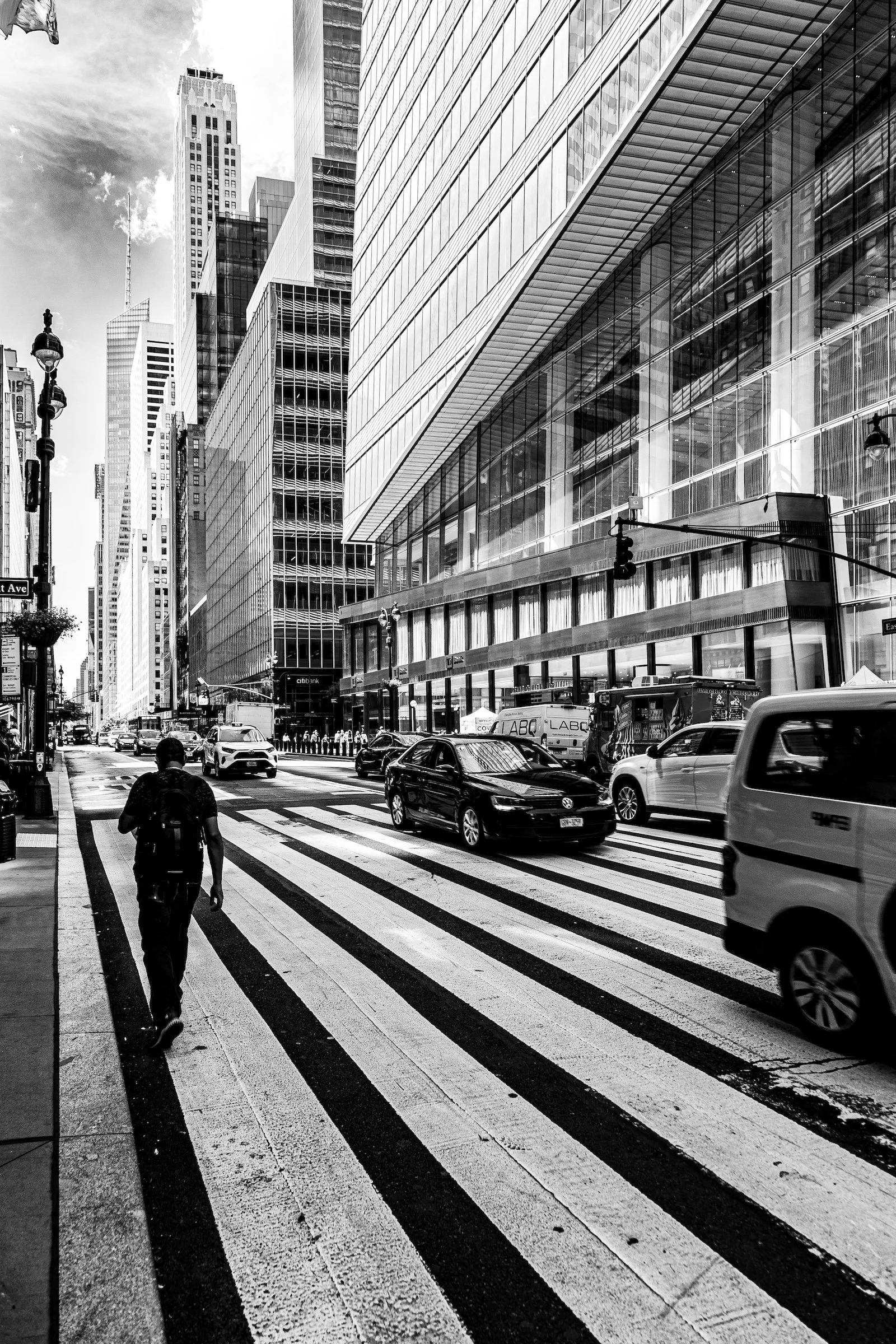
Midtown East - Manhattan - Pedestrian
Whatever it is, the way you tell your story online can make all the difference.
Neon, commerce, and street theater:
These frames use crosswalks to stabilize scenes full of signage, storefronts, and city spectacle.
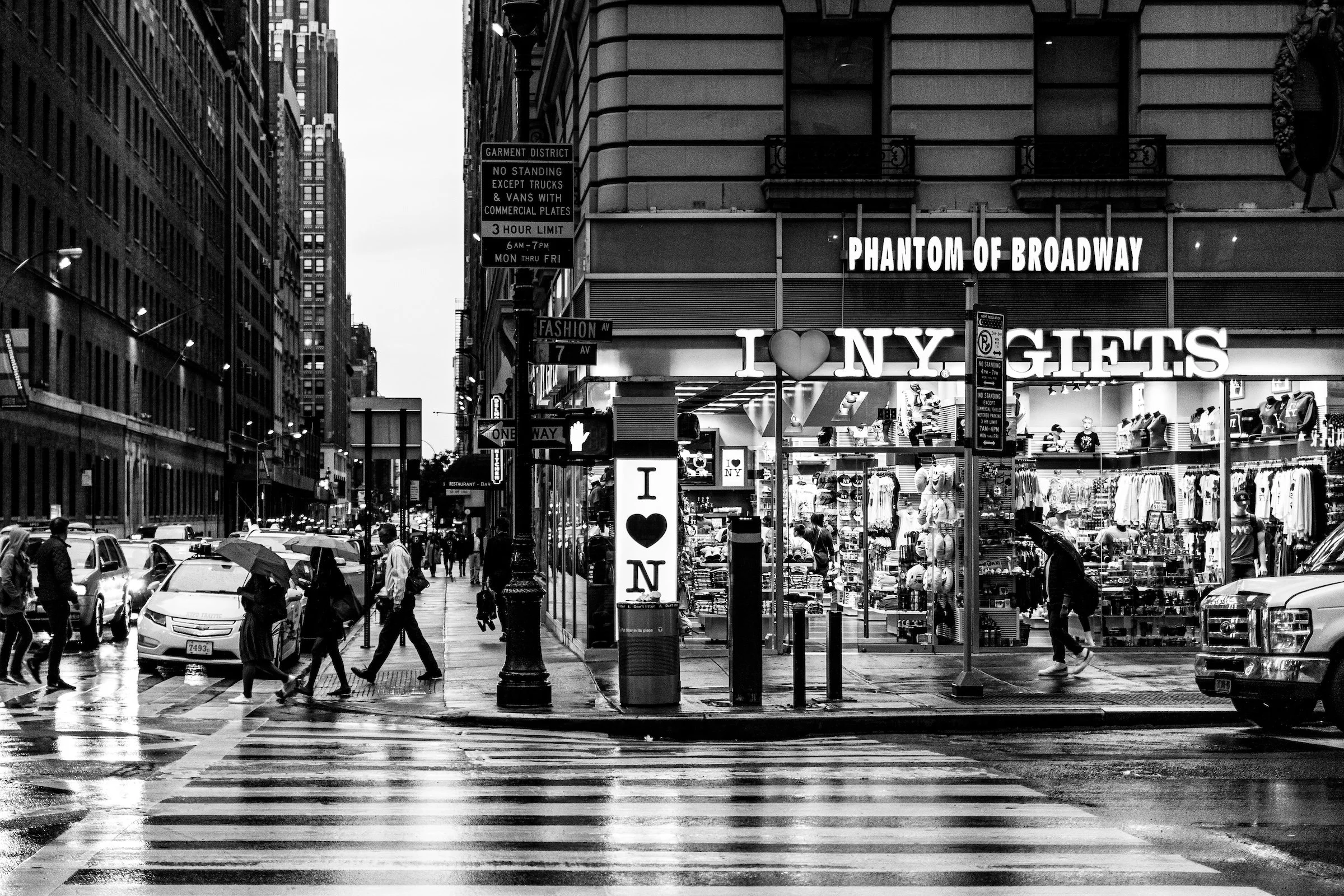
Garment - Fashion District - Manhattan - Phantom of Broadway
The crosswalk anchors a collage of text and storefront light. The trick is balancing the visual volume: let the stripes hold the bottom half so the signage can be loud without collapsing the composition.
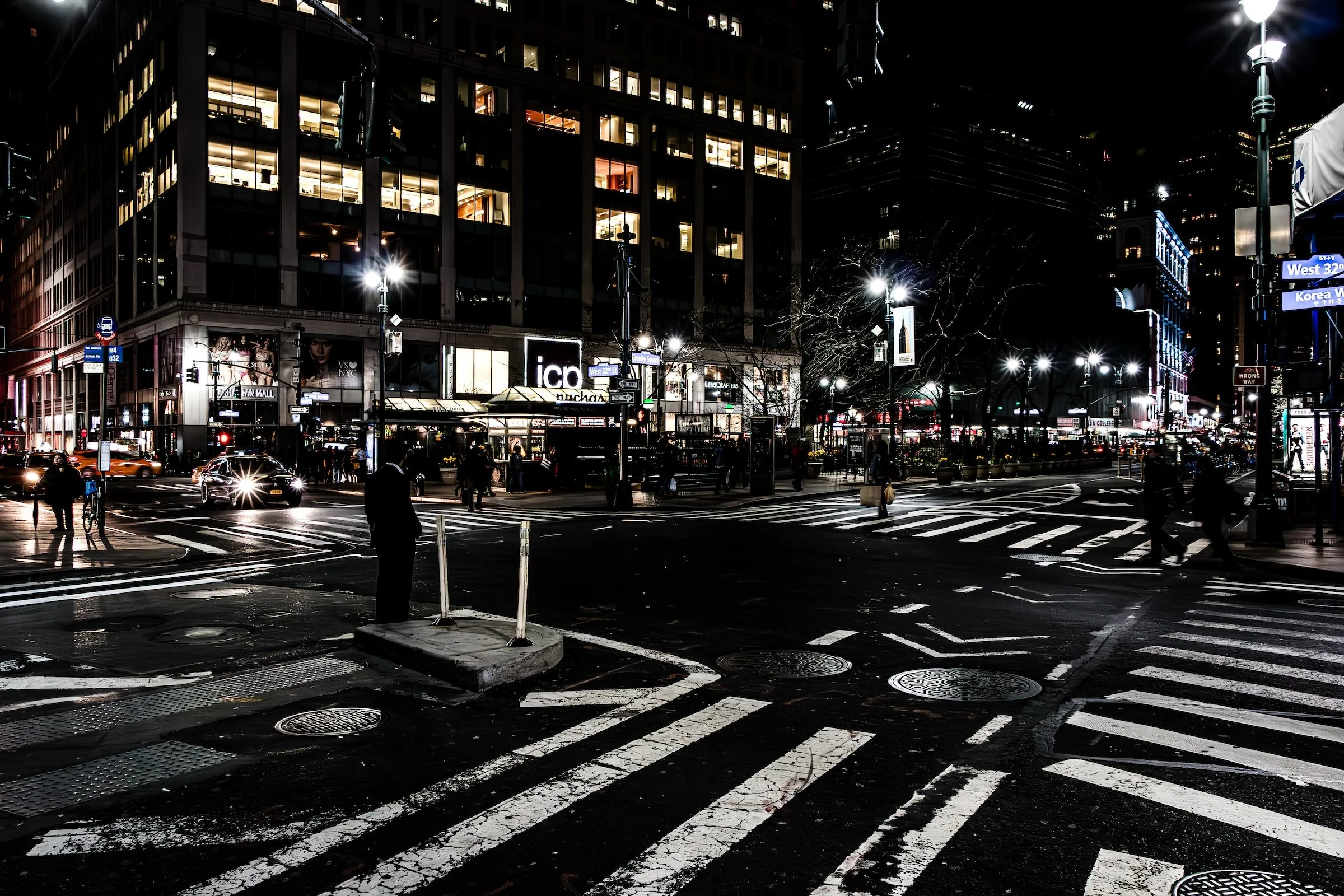
Empire District (Tenderloin) - Manhattan - Herald Square
Bright nodes (signs, headlights) can overwhelm a frame—crosswalk geometry prevents it. The cadence here functions as “order,” letting the viewer travel through the scene without getting lost.
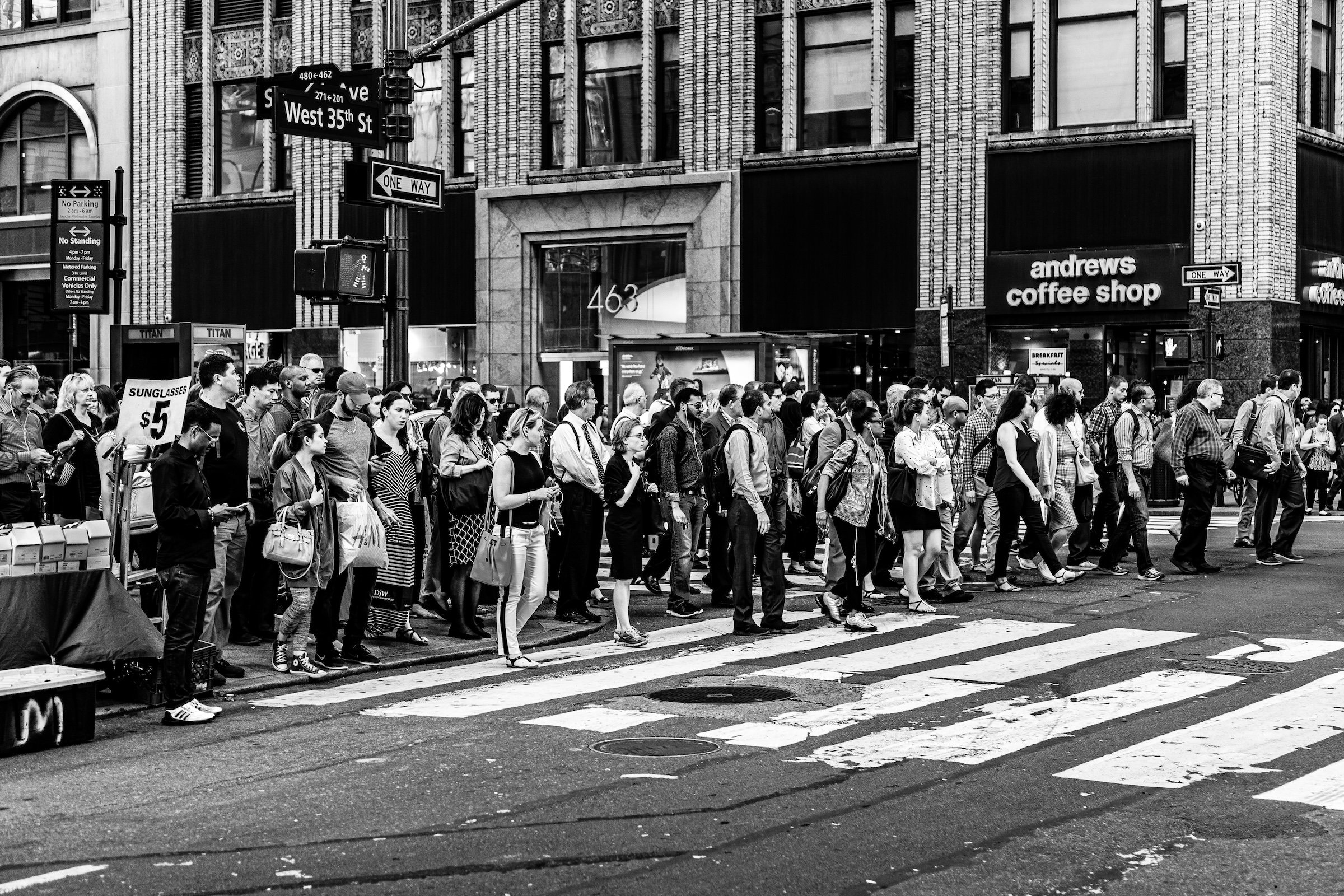
Garment - Fashion District - Manhattan - Ready, Set
A moment of anticipation: the crosswalk reads like starting blocks. The cadence feels strongest when you compose to keep the stripes crisp and let the scene’s energy gather at the edge.
Patterned thresholds and corridor lines:
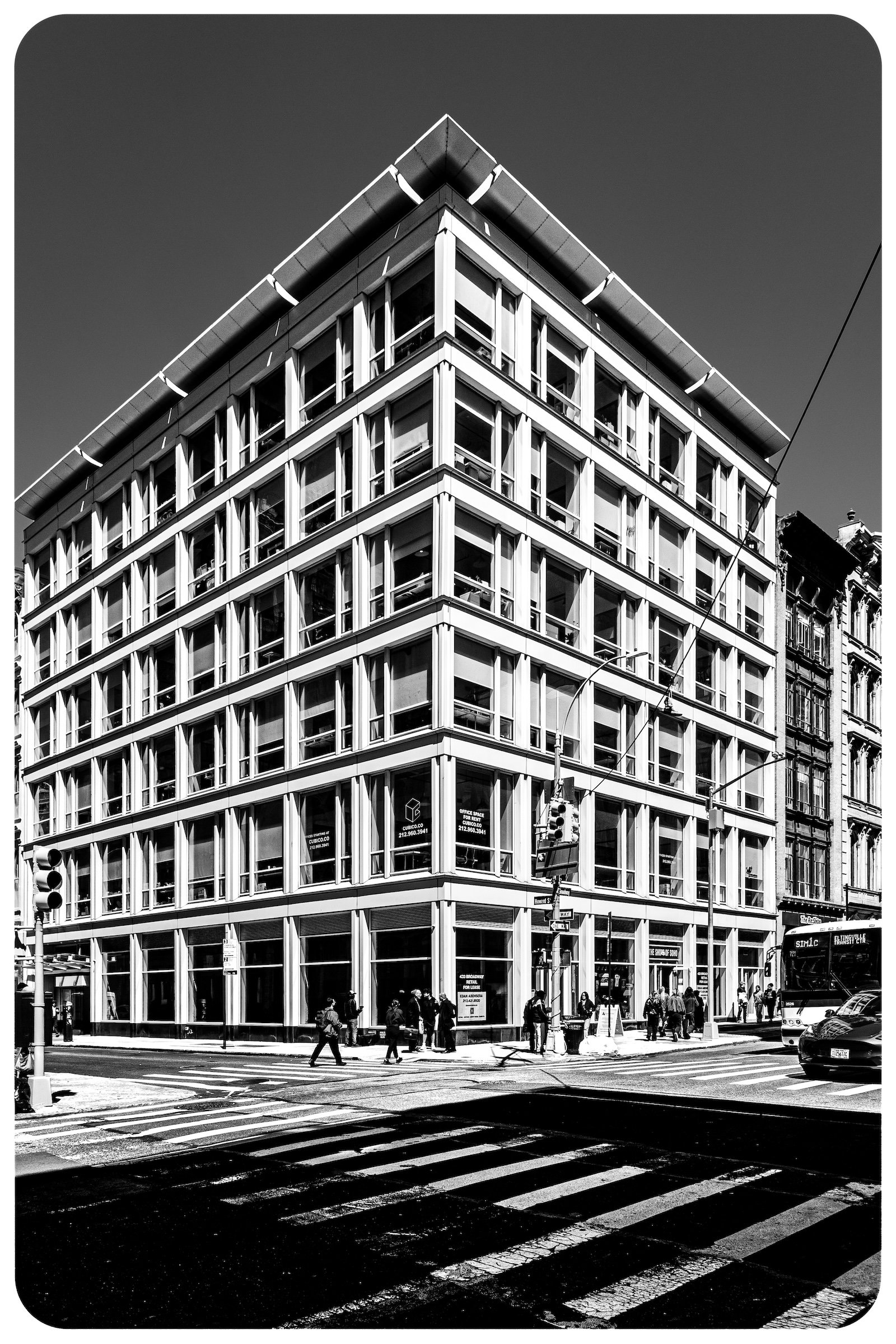
These examples treat crosswalks and street markings as graphic pattern—sometimes the stripes are the main subject, sometimes they’re the doorway into architecture.
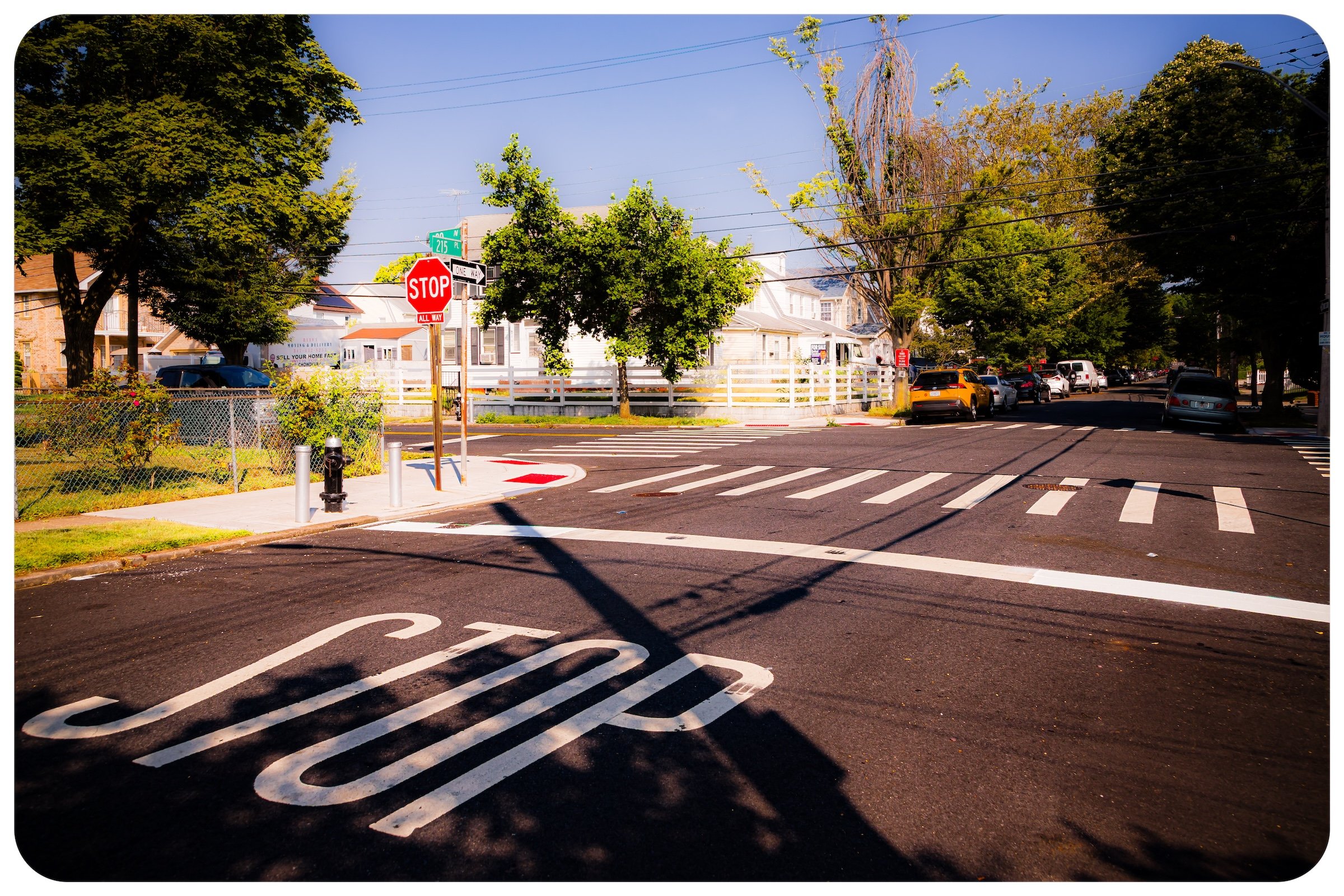
Queens Village - Queens - Stop At 215th & 90th
Suburban street geometry still carries rhythm—painted words and stripes create a calm, readable beat. The cadence works because the environment is quiet: the markings become the “design” of the scene.
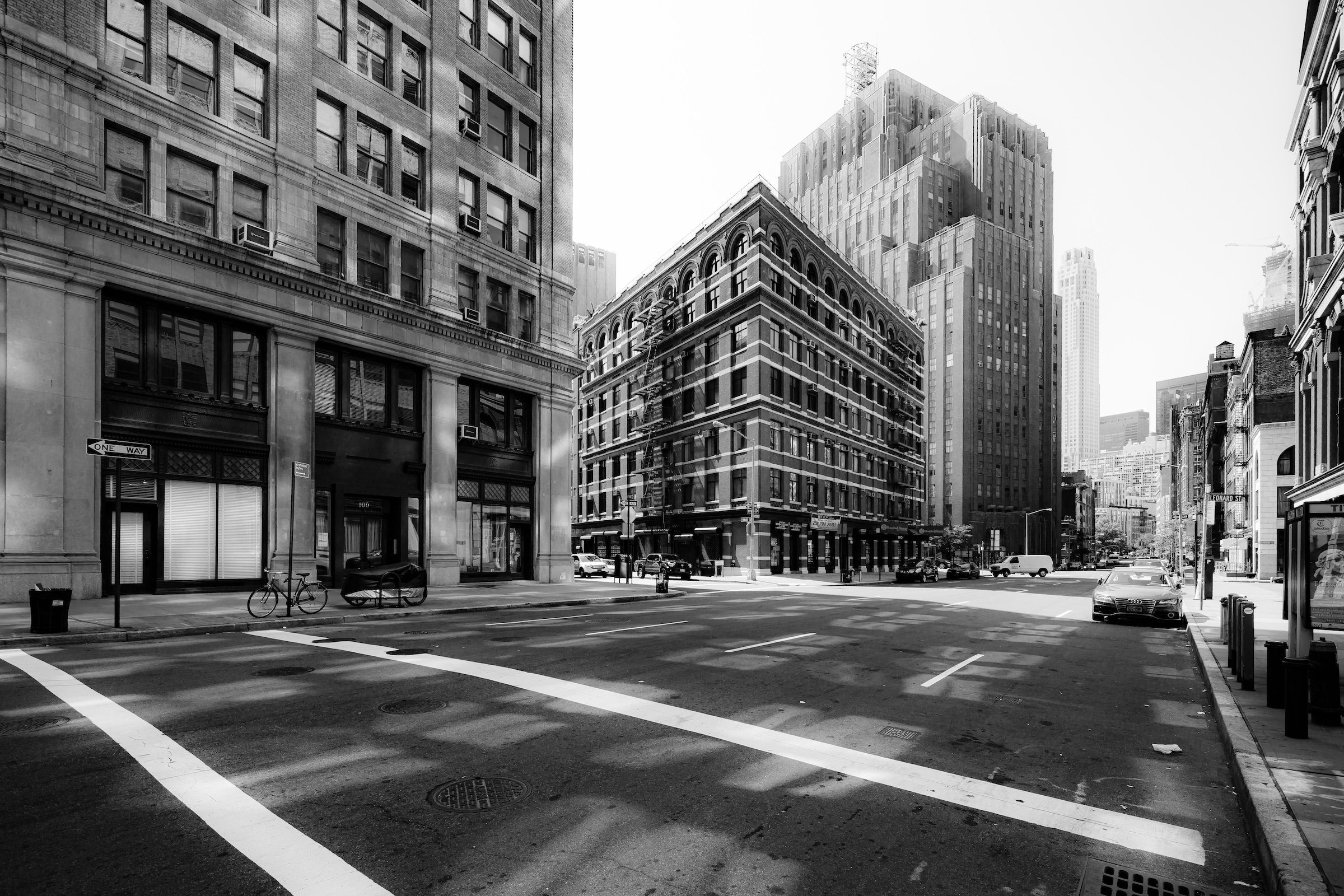
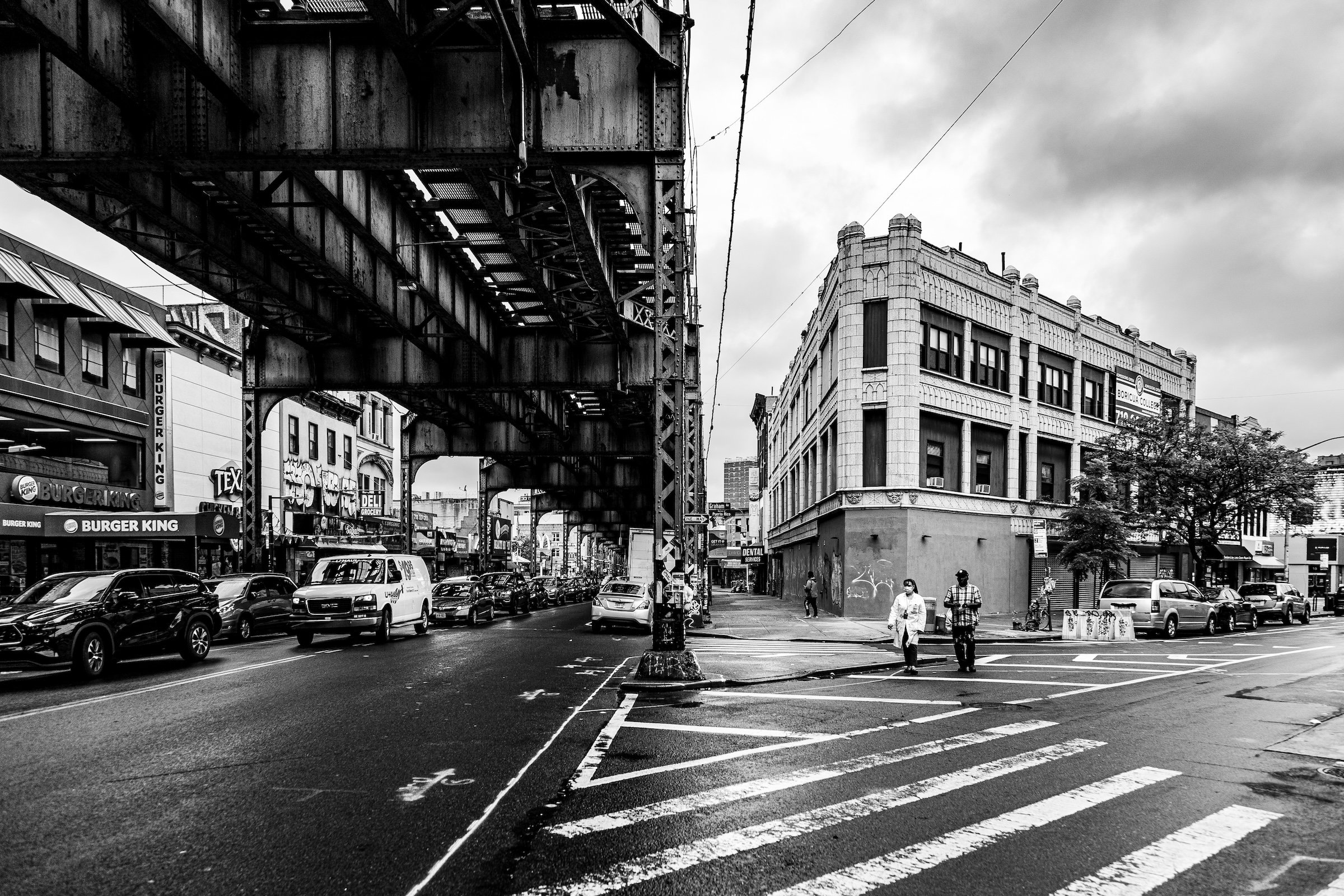
Williamsburg - Brooklyn - Avenue of Puerto Rico
Under the elevated structure, the cadence multiplies: stripes, beams, shadows, and lanes stacking into layered rhythm. The crosswalk becomes one instrument in a larger street symphony.
Explore Further