
FOREST HILLS GARDENS
Queens
Geographic Setting
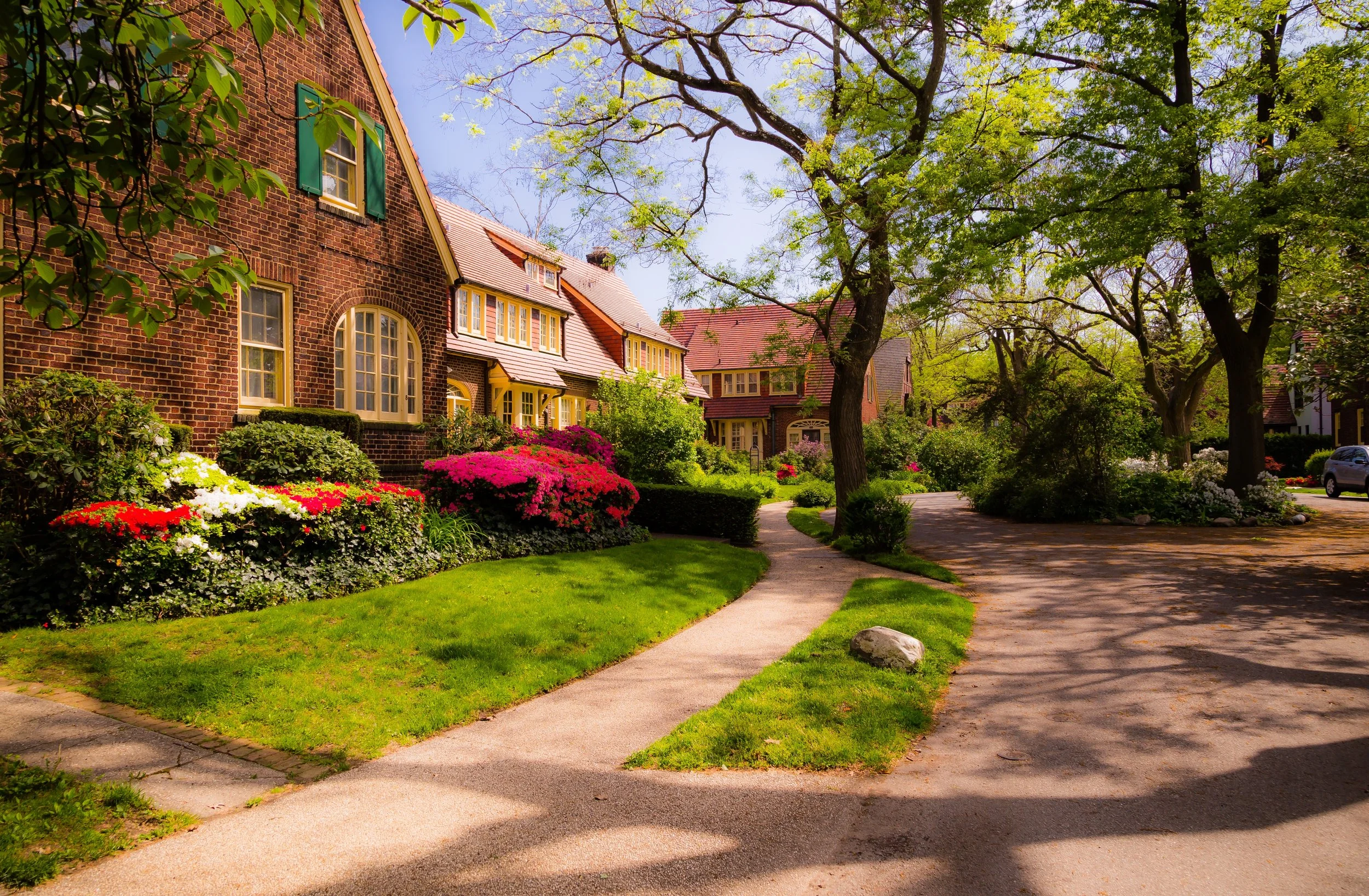
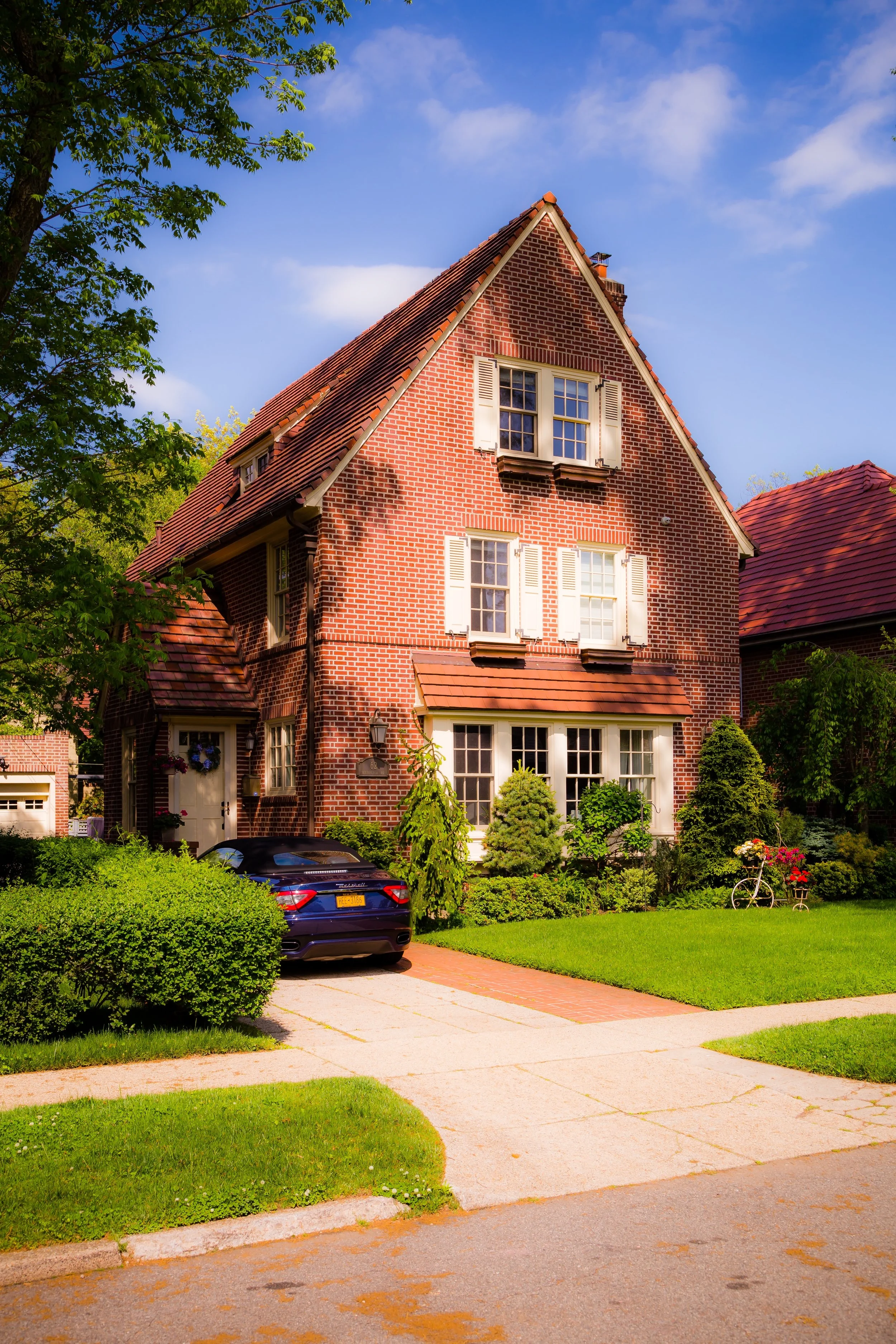
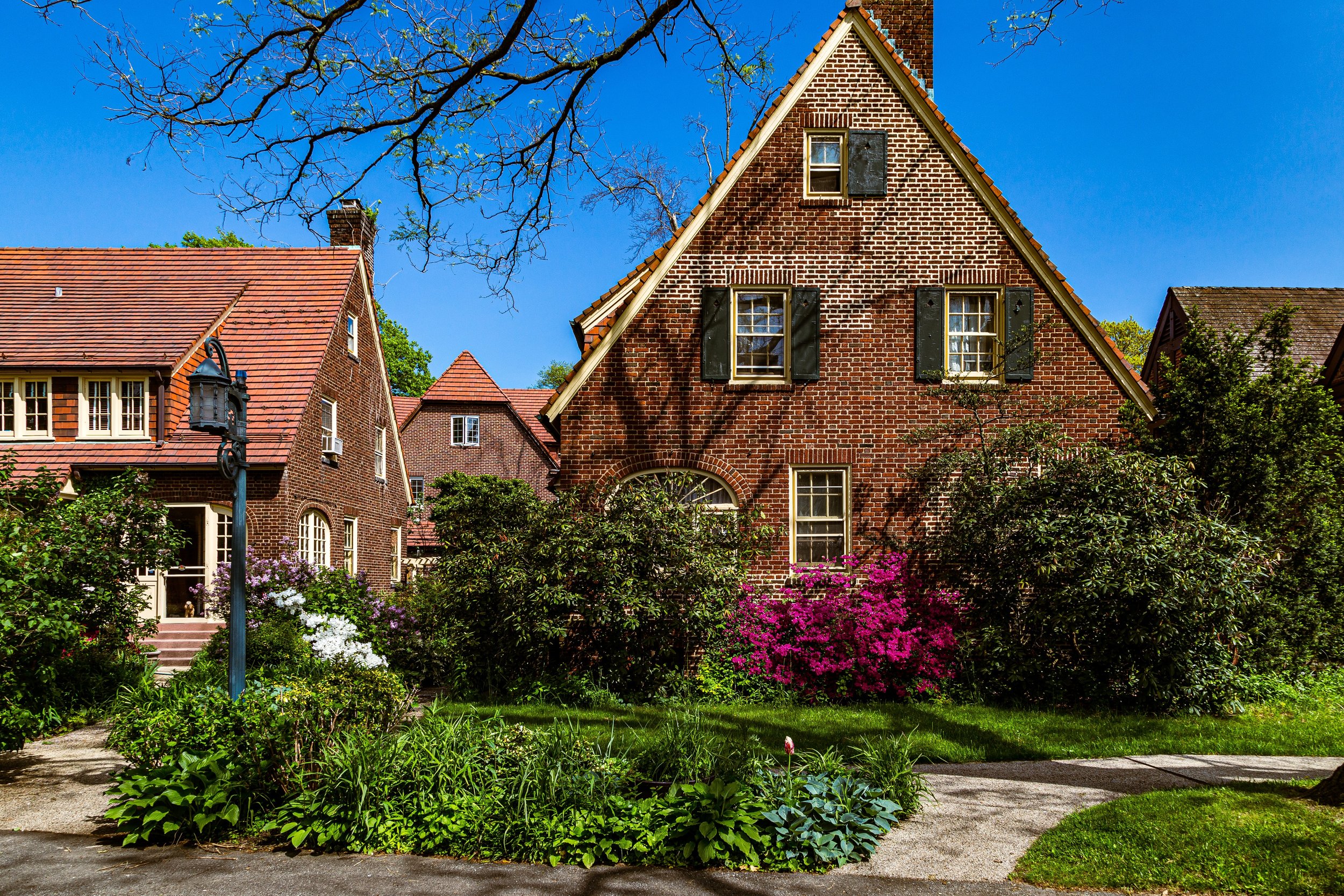
At the western edge of Forest Hills, framed by Union Turnpike, Queens Boulevard, and the Long Island Rail Road tracks, lies Forest Hills Gardens—a self-contained residential enclave of extraordinary architectural harmony and historical significance. Conceived as an ideal suburban community just fifteen minutes by train from Manhattan, the Gardens covers roughly 142 acres of curving streets, landscaped greens, and English-inspired houses. Station Square, its symbolic and geographic center, serves as both entryway and civic heart, where the Forest Hills LIRR Station nestles amid brick arcades and peaked gables. Beyond it, tree-shaded lanes—Greenway Terrace, Ascan Avenue, Burns Street, and Tennis Place—wind past ivy-covered façades and private gardens, creating a tranquil atmosphere unmatched elsewhere in New York City.
Surrounded by denser parts of Forest Hills and Rego Park, the Gardens remains almost village-like: bordered yet open, with the world’s largest urban park, Flushing Meadows–Corona Park, a short walk away and Midtown’s skyline faintly visible from its higher ridges.
Etymology and Origins
Forest Hills Gardens owes its existence to the Russell Sage Foundation, established by Margaret Olivia Sage in 1907 to promote social reform through better living environments. The Foundation chose this tract—then farmland acquired from the Cord Meyer Development Company—as a site to demonstrate the ideals of the Garden City Movement, inspired by Ebenezer Howard’s vision of balanced urban and rural life. The name “Forest Hills” had already been adopted by Meyer in 1906; the “Gardens” addition emphasized planned beauty, greenery, and moral uplift through design.
The Neighborhood
1909–1919: The Birth of a Model Garden Suburb
The Foundation commissioned architect Grosvenor Atterbury and landscape planner Frederick Law Olmsted Jr. to design a community that married architectural discipline with natural landscape. Their plan rejected the city grid in favor of curving streets that followed the land’s contours and terminated in small parks or “places.” Building materials—brick, stone, and half-timbering—were standardized for quality but varied in detail, producing visual harmony without monotony. Utility wires were buried, service alleys concealed, and every house aligned to preserve sightlines and light.
Construction began in 1909, and within a decade over 800 houses and apartment buildings were completed. The Forest Hills Inn, opened in 1912 on Station Square, served as both hotel and community center, its Tudor and Gothic façades echoing the surrounding homes. The entire complex—station, inn, and square—formed an architectural ensemble that greeted visitors arriving by rail with a vision of ordered beauty. Early advertisements promised “country living within city limits,” and the Gardens quickly attracted professionals, writers, and educators seeking refuge from Manhattan’s congestion.
1920s–1940s: Refinement and Community Life
By the 1920s, Forest Hills Gardens was fully realized as one of America’s premier planned communities. Its covenant-based Forest Hills Gardens Corporation managed maintenance, landscaping, and design approvals—a pioneering form of homeowner association governance that ensured enduring visual unity. Residents enjoyed amenities rare for the time: private parks such as Greenway Terrace, a community tennis club, and a neighborhood newspaper.
The West Side Tennis Club, which relocated from Manhattan in 1913, built its red-brick stadium in 1923 at the edge of the Gardens. The club soon hosted the U.S. National Championships (later the U.S. Open), transforming the neighborhood into a world stage each summer. The lawns around the stadium echoed with applause for champions from Bill Tilden to Arthur Ashe, while the Gardens’ quiet lanes remained a sanctuary for reflection and art.
During this period, Forest Hills Gardens also became known for its cultural and philanthropic endeavors—choral societies, art exhibitions, and civic lectures flourished under the archways of Station Square and the inn’s assembly rooms. The community’s layout fostered neighborly intimacy while maintaining privacy—its scale perfectly tuned to human life.
Forest Hills Gardens Photographic Video
Mid–Late 20th Century: Preservation amid Urban Change
The postwar years brought modernization pressures, but the Gardens’ covenants and resident-led governance preserved its architectural fabric. As Queens urbanized around it—apartment towers along Queens Boulevard, shopping malls in Rego Park—the Gardens remained an oasis of low-rise brick and slate. In the 1960s and 1970s, preservationists recognized its significance as one of the earliest and most successful Garden City experiments in the United States.
When the U.S. Open moved to Flushing Meadows in 1978, the tennis stadium briefly fell silent, but later gained new life as a concert venue. Meanwhile, the Forest Hills Gardens Corporation continued to manage the enclave as private property with public streets—a legal hybrid unique in New York. In 1986, the city formally designated the Forest Hills Gardens Historic District, protecting its 900 buildings, greens, and street layout from unsympathetic alteration.
21st Century: Living Heritage
Today, Forest Hills Gardens remains one of New York’s most extraordinary residential environments. Its cobblestone lanes, brick walkways, and wrought-iron gates appear almost unchanged from a century ago. The Forest Hills Inn, now converted to co-operative residences, still anchors Station Square, which hosts farmers’ markets, concerts, and gatherings that preserve its civic soul. Modern residents—drawn from across the world—uphold the same values that guided the founders: aesthetic harmony, community engagement, and stewardship of the land.
Nearby Austin Street and the revived Forest Hills Stadium connect the enclave to the vibrancy of contemporary Queens, ensuring that the Gardens is not a relic but a living organism—a rare place where architectural ideals continue to shape everyday life.
Forest Hills Gardens Photo Gallery
Spirit and Legacy
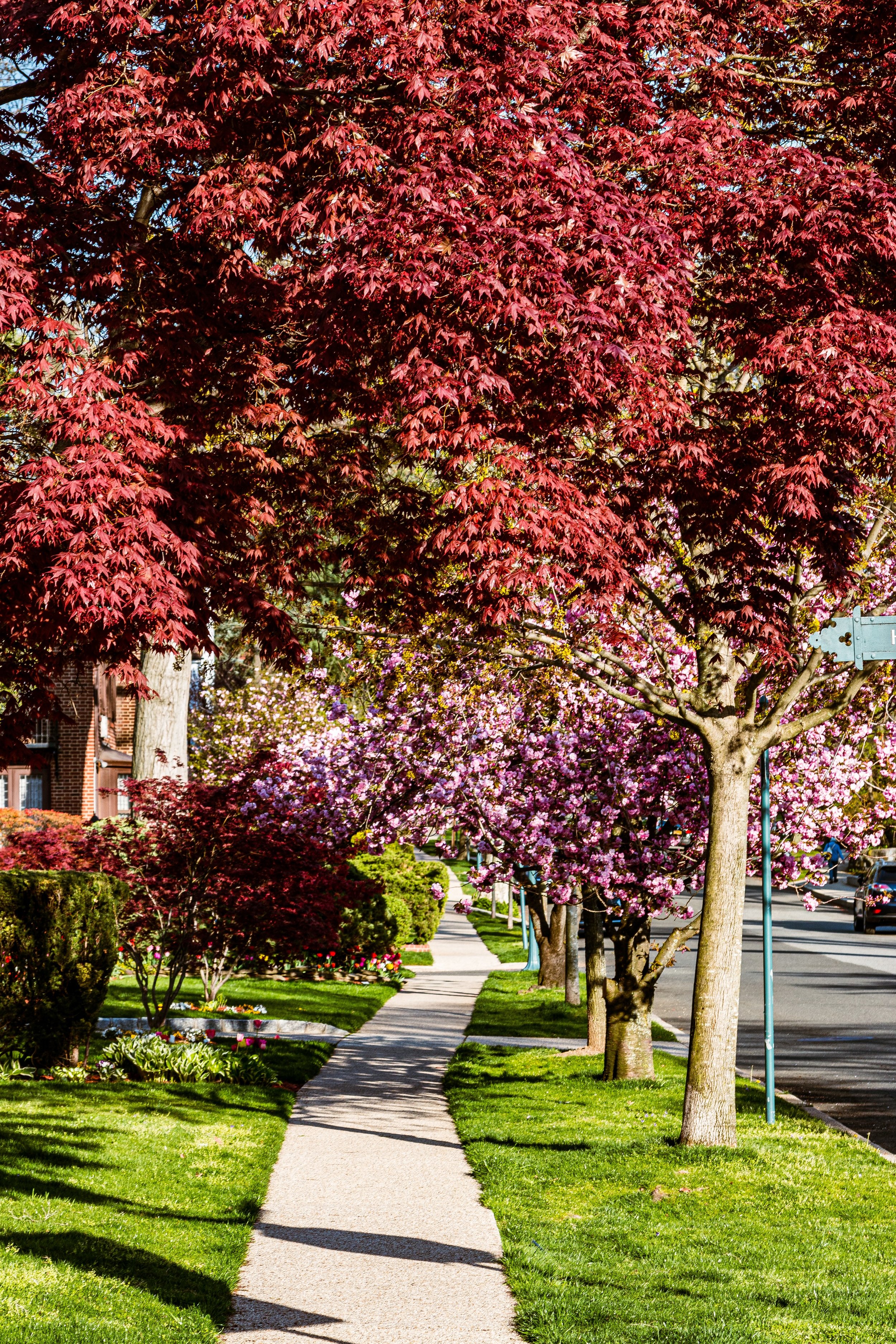
Forest Hills Gardens stands as a masterpiece of human-scaled urbanism—a community built not for speculation but for beauty, balance, and belonging. Its winding roads and ivy-draped façades tell a story of vision realized and sustained across generations. The sound of church bells from Our Lady Queen of Martyrs, the glow of lanterns along Greenway Terrace, and the steady rhythm of footsteps beneath leafy canopies evoke a timeless ideal: that a city can be both grand and gentle, structured and serene.
New York City
Use this custom Google map to explore where every neighborhood in all five boroughs of New York City is located.
The Five Boroughs
One of New York City’s unique qualities is its organization in to 5 boroughs: Manhattan, Brooklyn, Queens, The Bronx, and Staten Island. These boroughs are part pragmatic administrative districts, and part vestiges of the region’s past. Each borough is an entire county in New York State - in fact, Brooklyn is, officially, Kings County, while Staten Island is, officially Richmond County. But that’s not the whole story …
Initially, New York City was located on the southern tip of Manhattan (now the Financial District) that was once the Dutch colony of New Amsterdam. Across the East River, another city was rising: Brooklyn. In time, the city planners realized that unification between the rapidly rising cities would create commercial and industrial opportunities - through streamlined administration of the region.
So powerful was the pull of unification between New York and Brooklyn that three more counties were pulled into the unification: The Bronx, Queens, and Staten Island. And on January 1, 1898, the City of New York unified two cities and three counties into one Greater City of New York - containing the five boroughs we know today.
But because each borough developed differently and distinctly until unification, their neighborhoods likewise uniquely developed. Today, there are nearly 390 neighborhoods, each with their own histories, cultures, cuisines, and personalities - and each with residents who are fiercely proud of their corner of The Big Apple.