

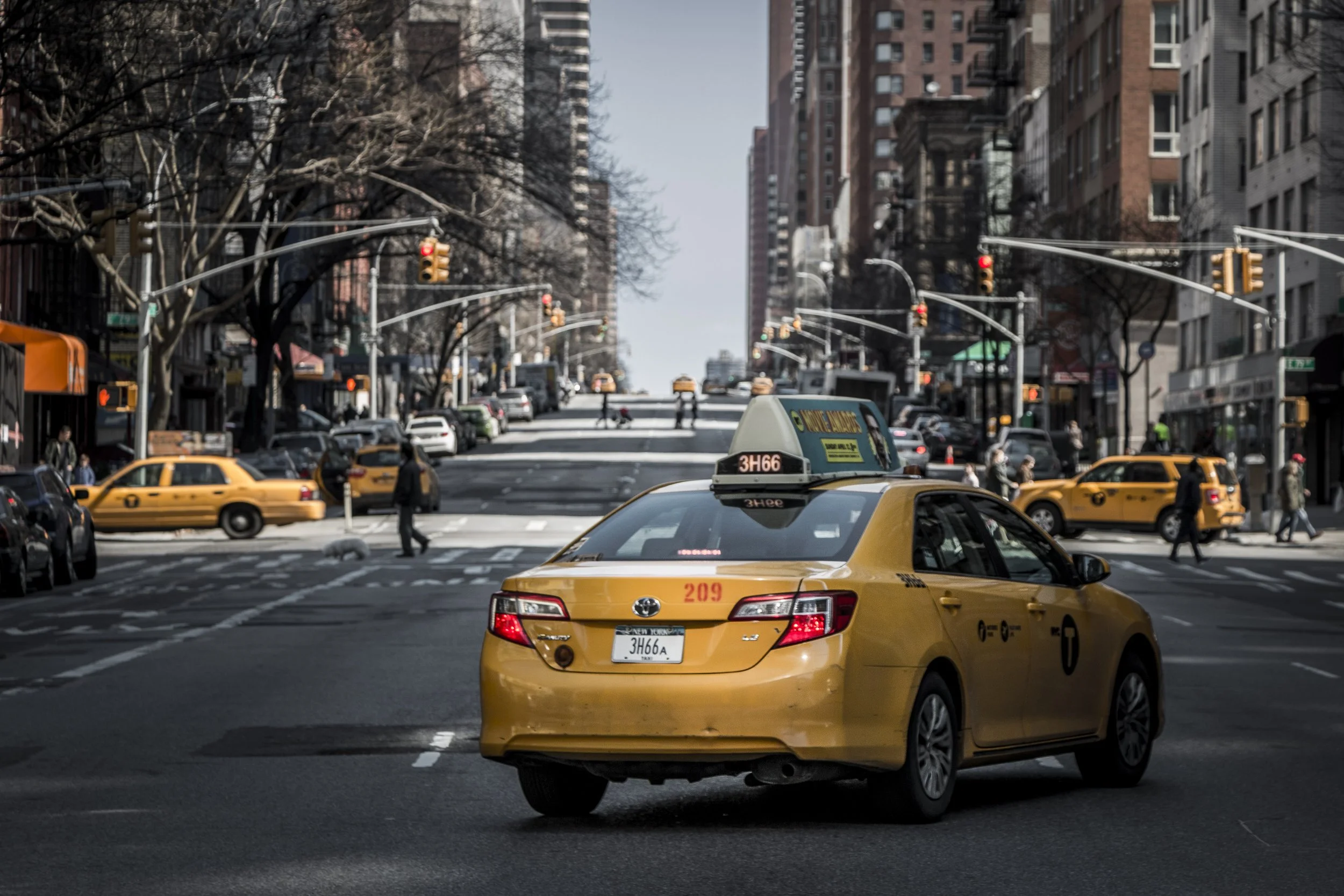
Streetscapes
Streetscapes are photographs in which the street itself becomes the subject: not simply a road or corridor, but a composed urban environment shaped by pavement, parked cars, curbs, lane markings, trees, buildings, traffic, light, and depth. A strong streetscape image captures the feel of moving through a place — the way a street holds space, organizes sightlines, and reveals the rhythm of neighborhood life block by block.
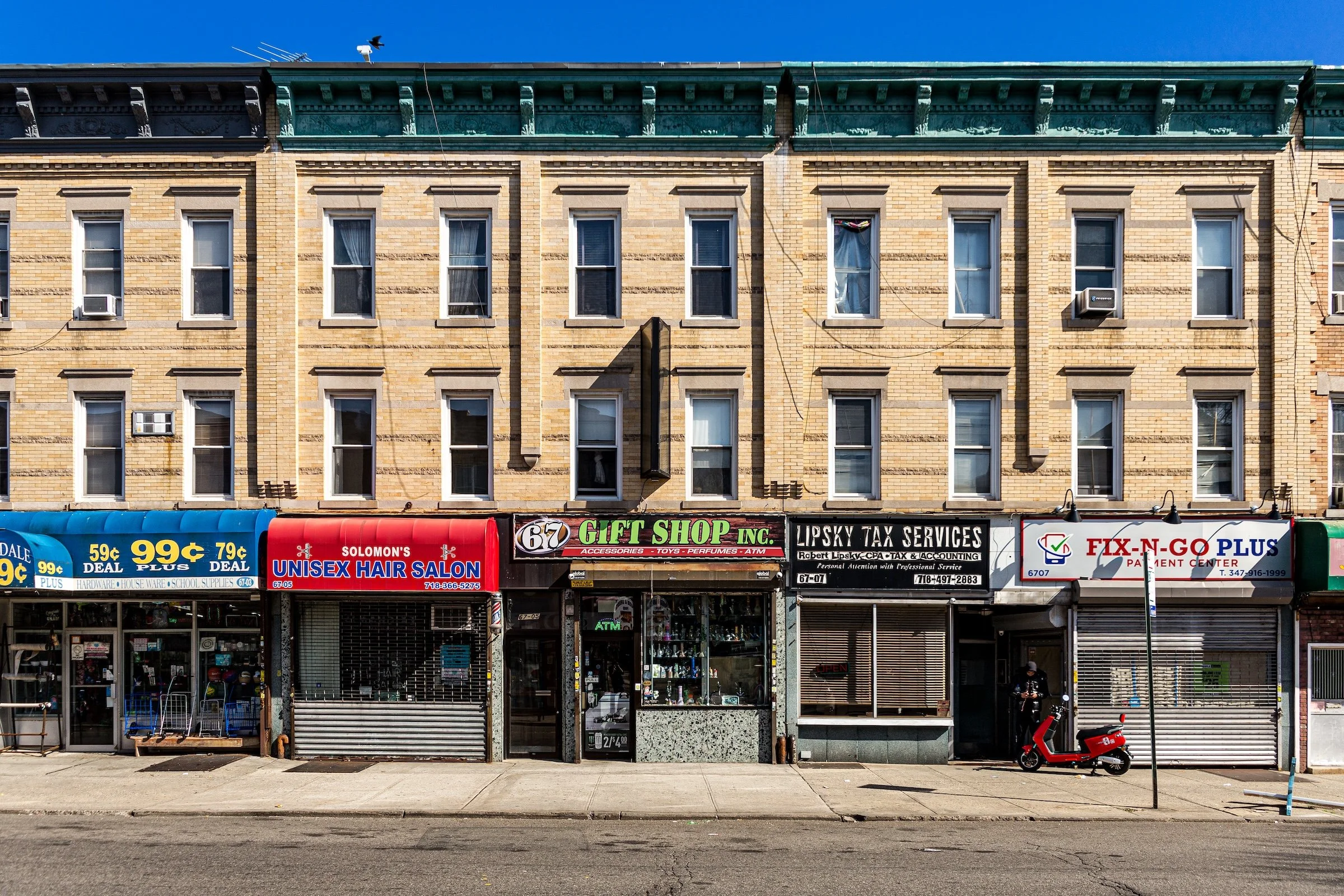
Main Street Portraits
Front-facing or near-front-facing photographs of neighborhood commercial strips in which storefronts, signage, cornices, awnings, display windows, and stitched-together façades are presented as composed portraits of local main street life. Main Street Portraits are less about any single shop than about the small-scale commercial architecture of a neighborhood center—its personality, continuity, and the way ordinary businesses give a place its public face.
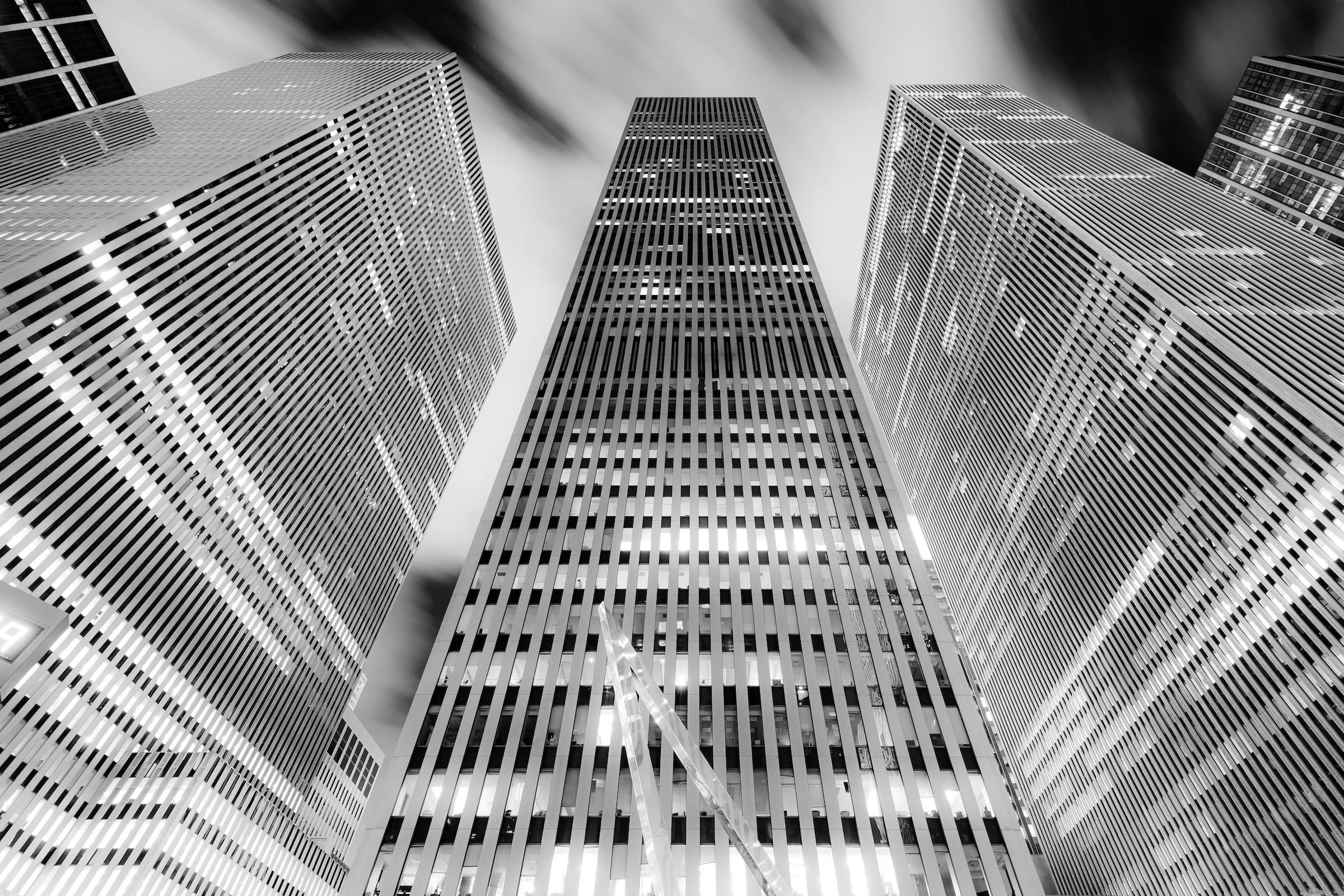
Urban Monoliths
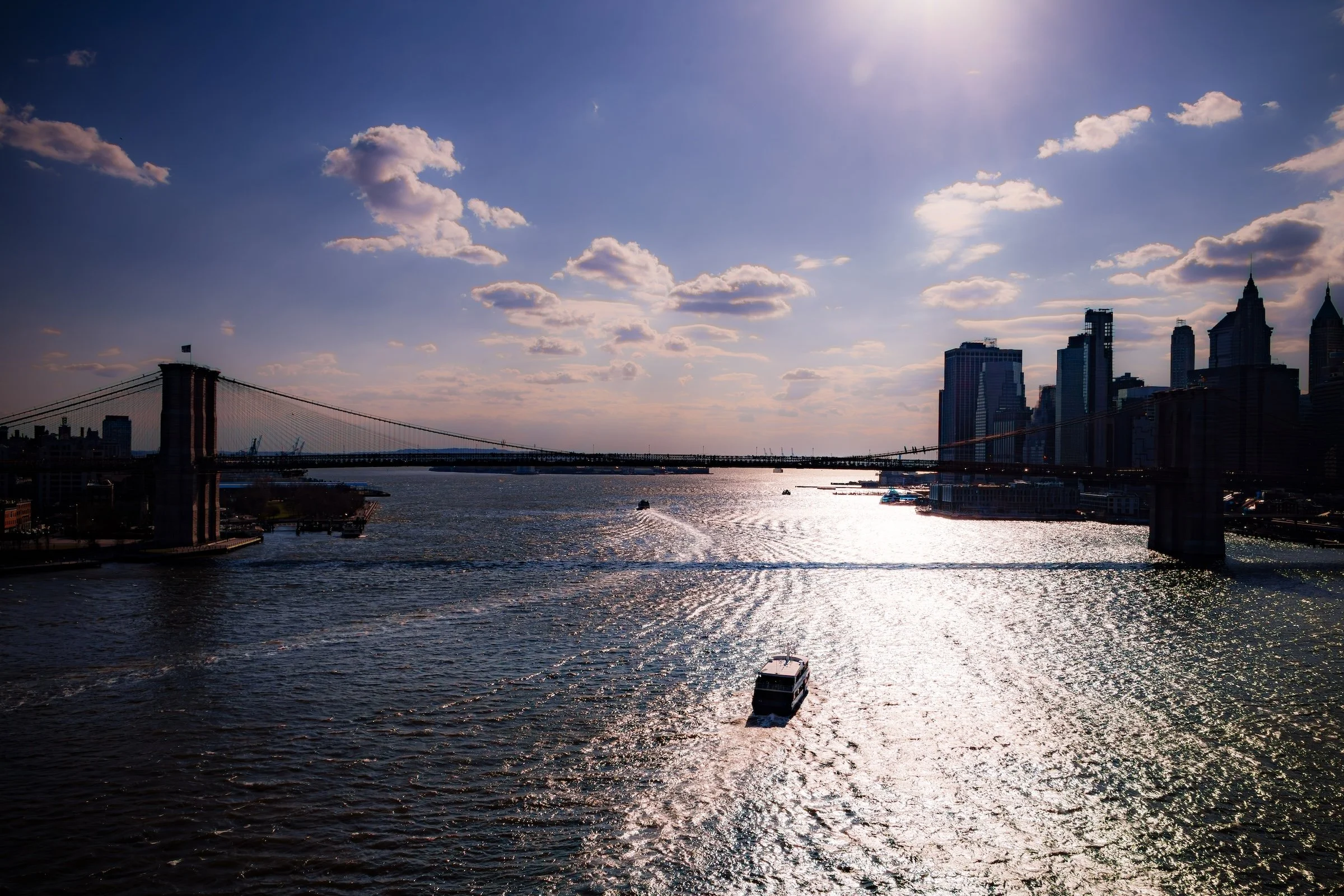
Urban Monoliths is the practice of photographing the city as single, dominant forms—structures so massive they read less like “buildings” and more like objects: towers, bridges, slabs, and silhouettes that hold the frame through sheer presence.
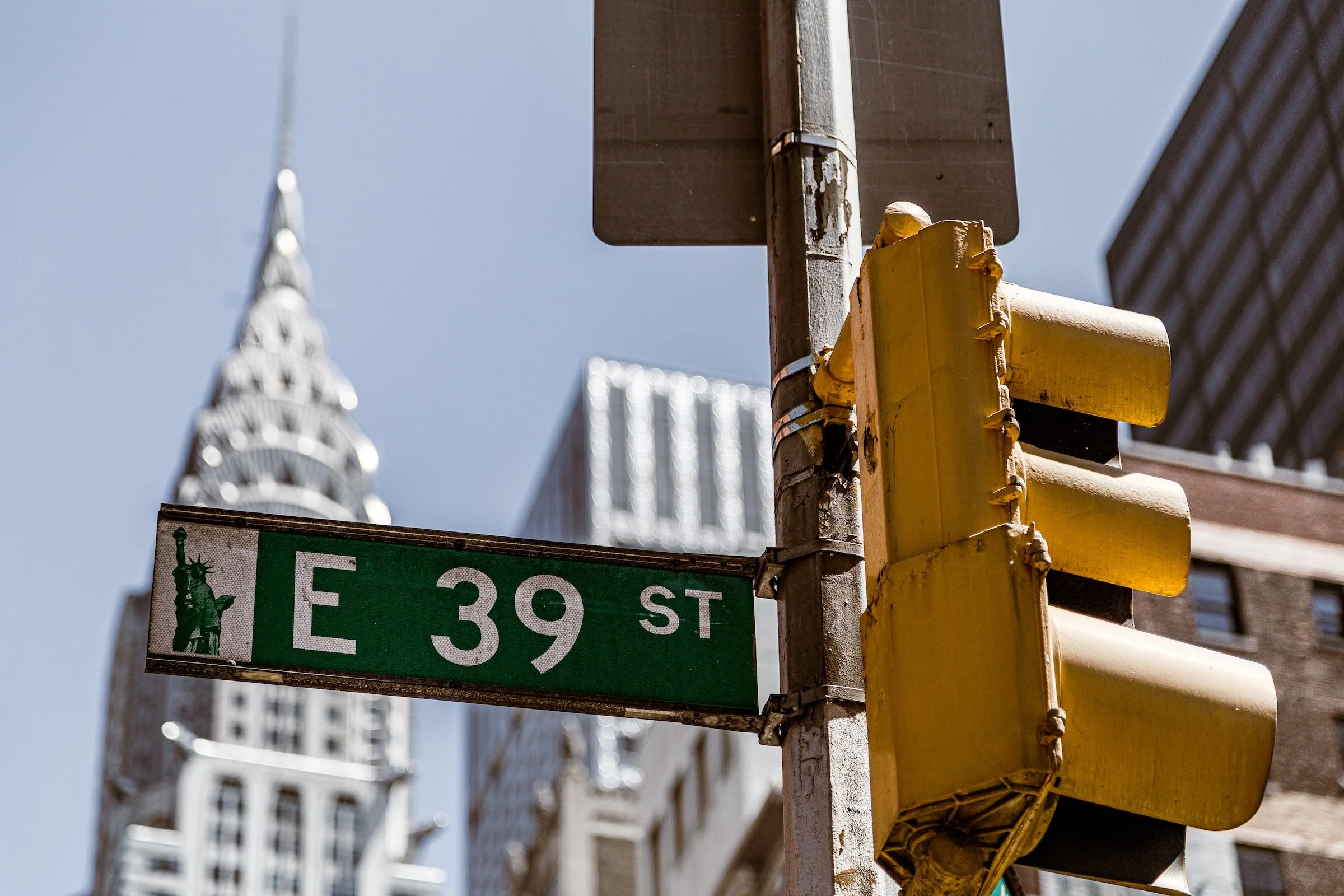
Follow The Signs
Photographs built around signage—street names, storefronts, municipal lettering, warnings, neon, hand-painted declarations—where the text isn’t just “in” the scene, but drives the scene. In Follow The Signs, words become structure: an anchor for composition, a shorthand for place, and a narrative cue that tells the viewer how to read what comes next.
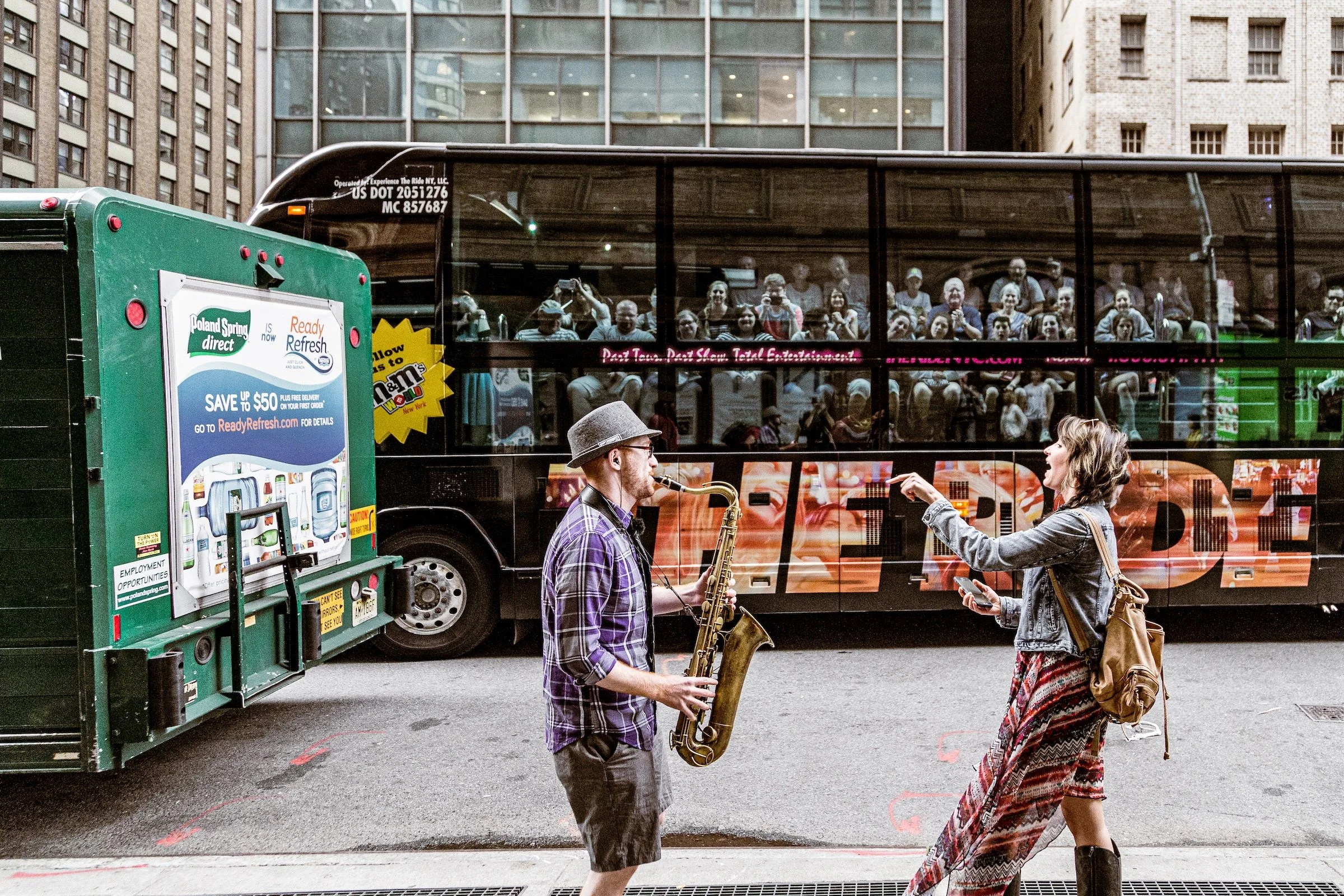
City As Stage
The city is never “just” a backdrop. It’s lighting, props, entrances, exits, audience, and—if you’re paying attention—an ever-refreshing script. City As Stage is a way of photographing urban life as performance: not “street photography” as a genre label, but stagecraft as a method—finding (or building) a viewing position, recognizing the set, and framing the moment when the city steps into character.
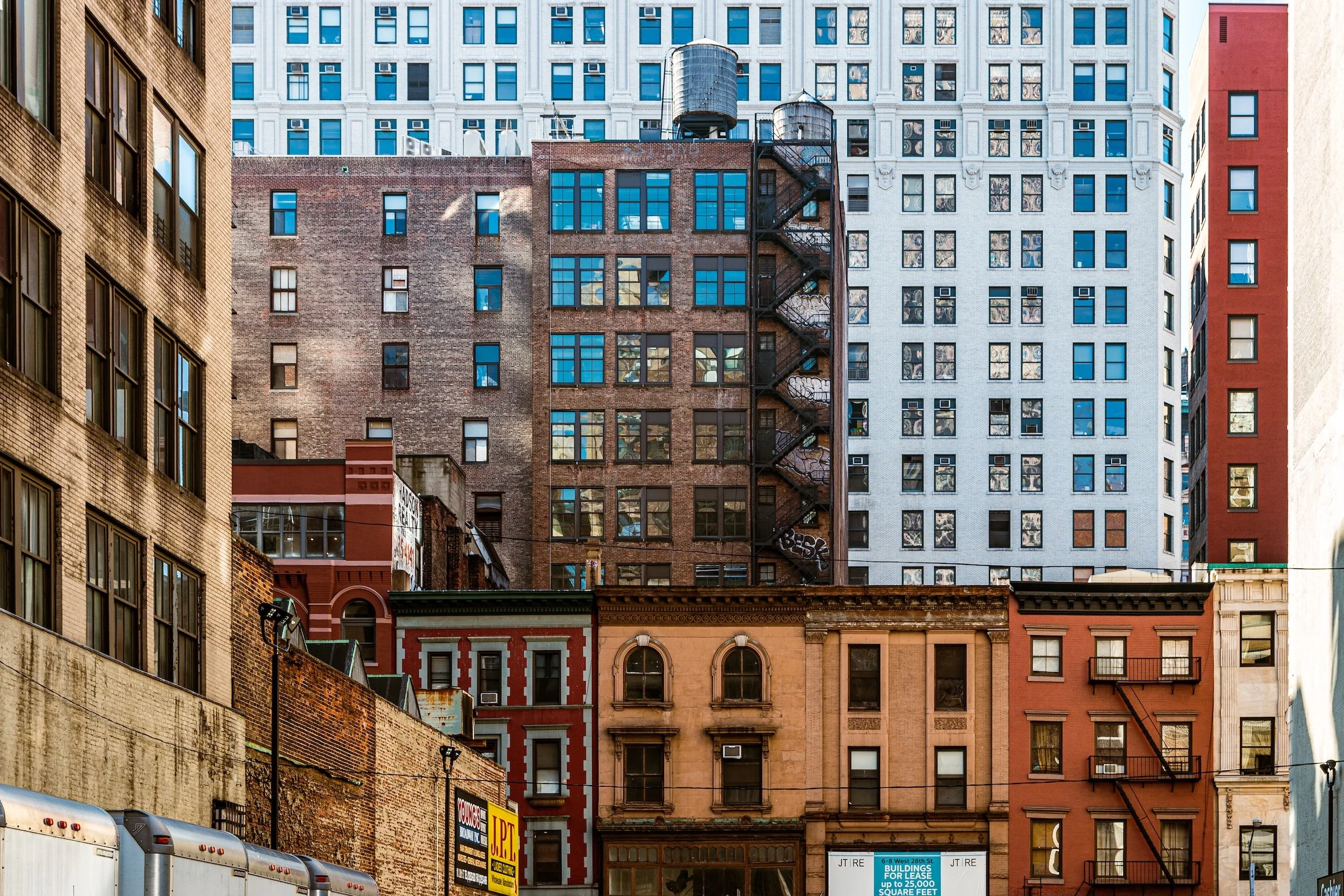
Receding Planes
A depth-building strategy where the frame is constructed from overlapping layers—walls, buildings, fences, lots, signs, trees—so that space steps backward in clear stages. Receding Planes emphasizes how the city is built: surfaces in front of surfaces, corridors inside corridors.
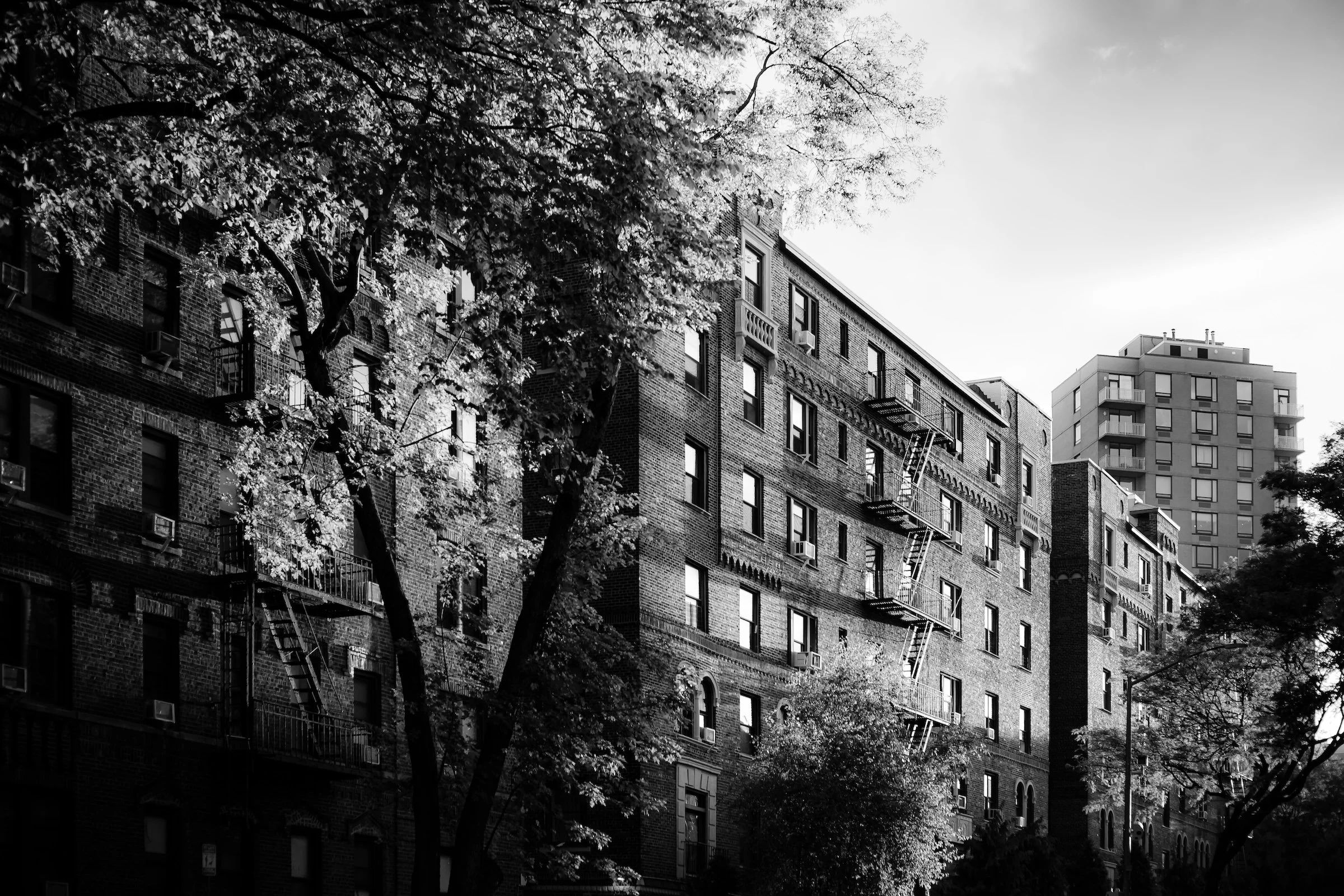
Chiaroscuro (B&W Drama)
Chiaroscuro is the deliberate shaping of a photograph through bold contrast between light and dark—not just “a shadow,” but a structure made from illumination. In this lexicon, Chiaroscuro (B&W Drama) refers to black-and-white images processed for dramatic tonal separation (often with restrained sharpening or a touch of softness) so that the scene reads like a carved relief: light becomes form, shadow becomes architecture.
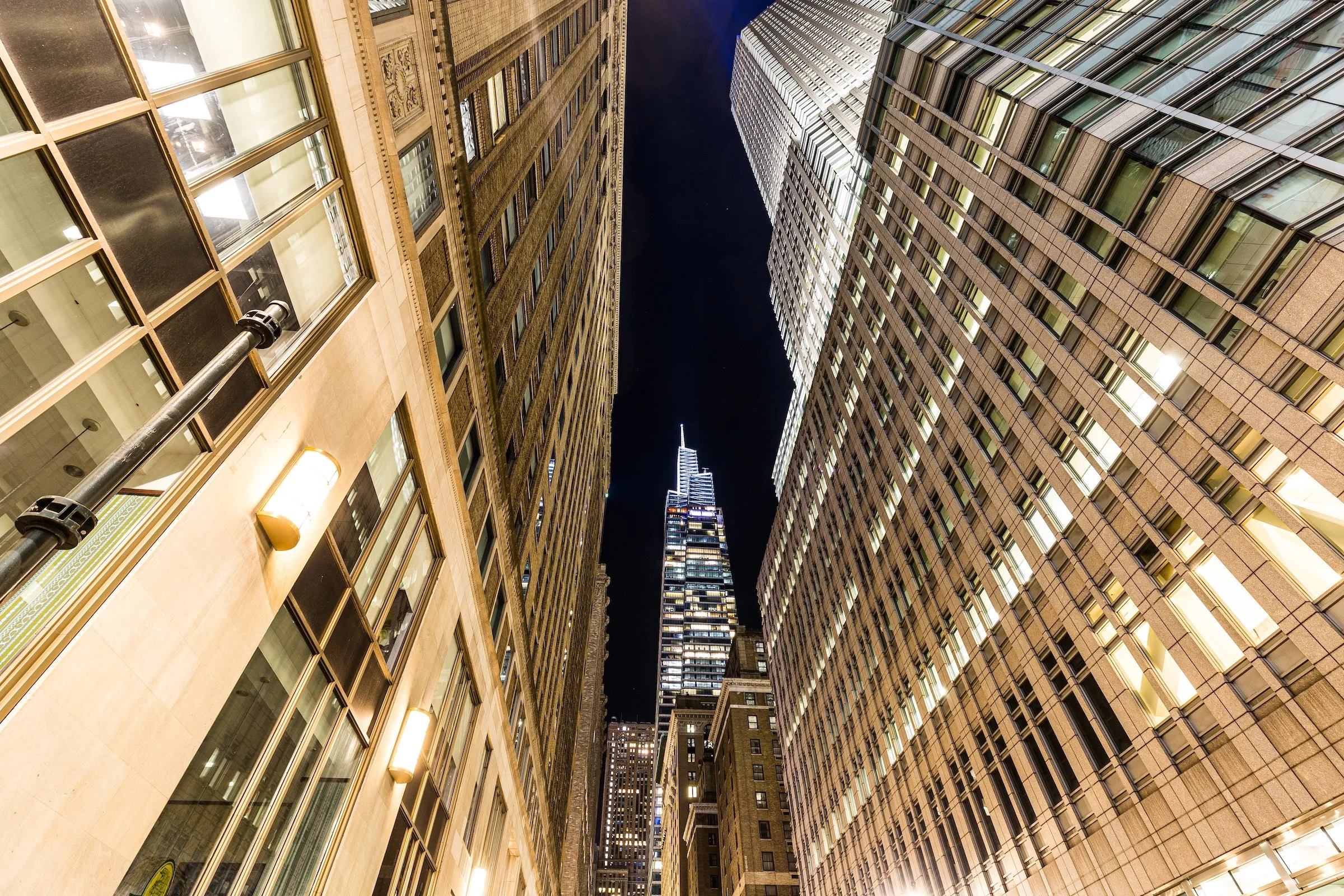
Urban Canyons
Urban Canyons is the practice of photographing city streets and corridors as “vertical landscapes”—spaces where tall buildings compress the sky, exaggerate depth, and make scale itself the subject. It’s the feeling of moving through a carved channel of stone, glass, and light.
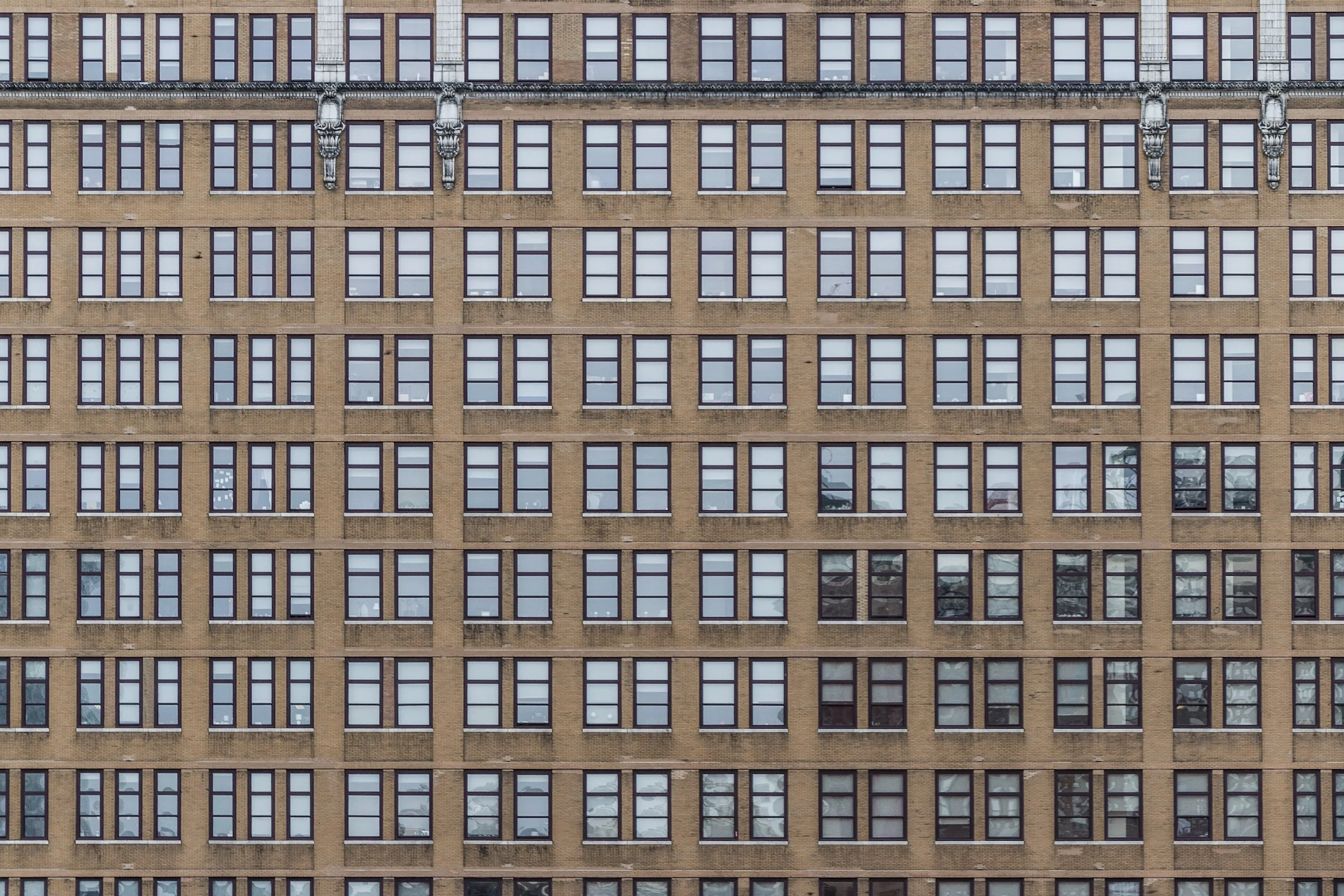
Glassy Eyes
Glassy Eyes is the practice of treating windows as the city’s gaze: repeating panes that read like pupils, grids that feel like a thousand watching eyes, and reflective glass that turns a building into a living surface. The subject isn’t “a building” so much as the expression created by its windows—orderly, anxious, playful, severe, curious.
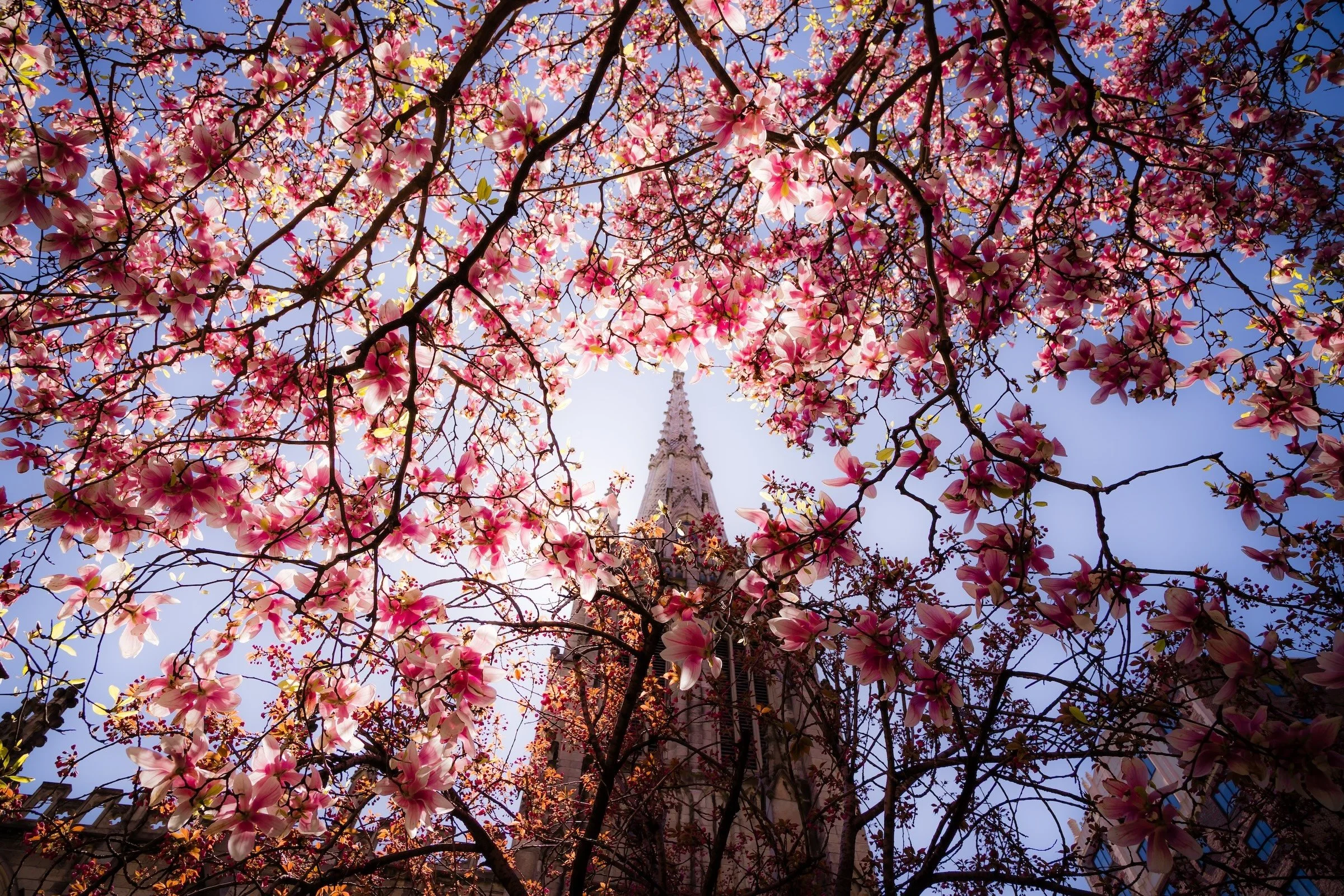
Custom Framing
Custom Framing is the deliberate use of a built or found “frame-within-the-frame” to shape what the viewer sees—branches, windows, arches, railings, doorways, architectural cutouts, even the negative space between buildings. The goal isn’t just to “surround” the subject, but to design a threshold: a controlled opening that directs attention, establishes depth, and turns the edge of the photograph into an active compositional tool.
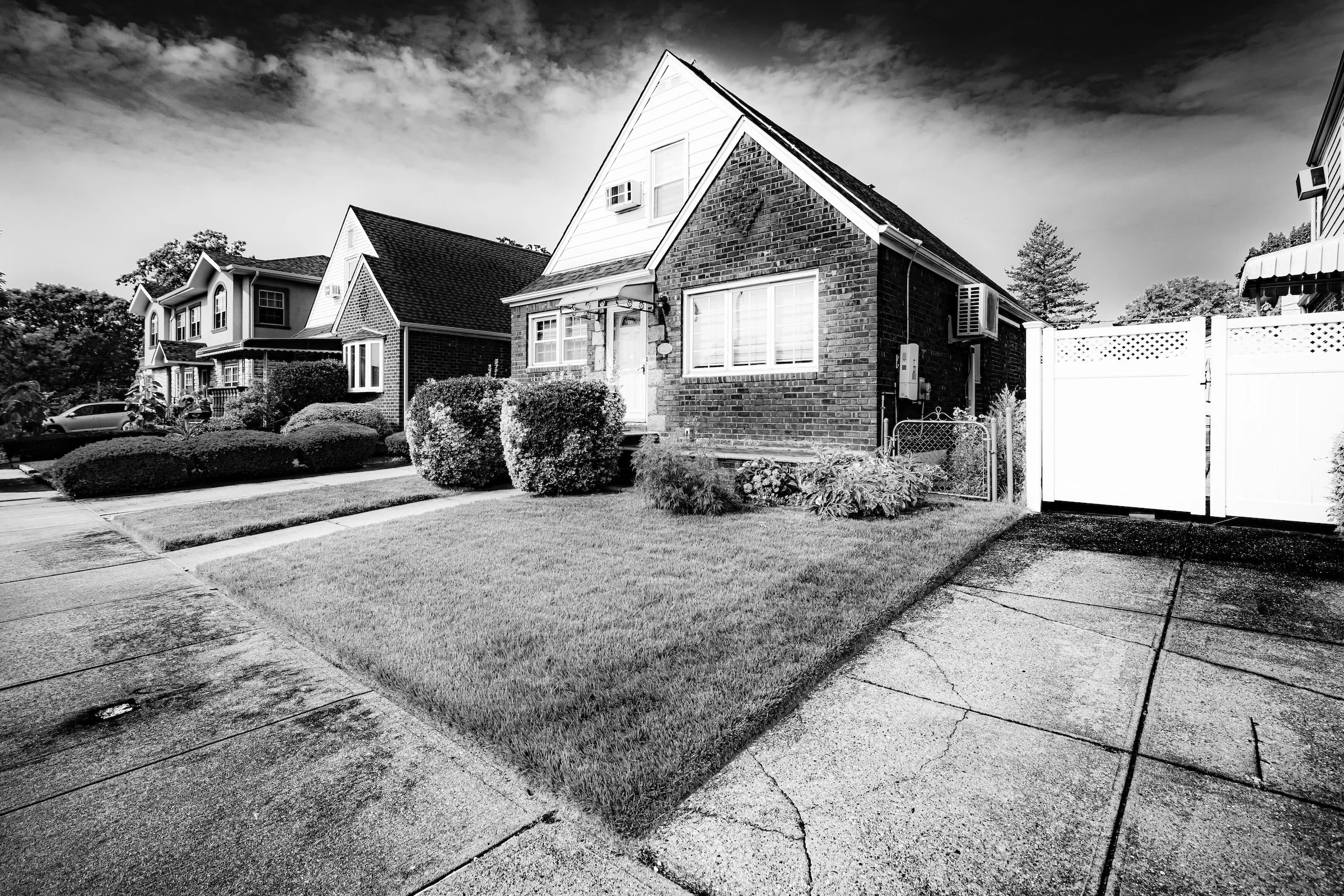
Wedge Geometry
Wedge Geometry is the practice of composing photographs around wedge-shaped spatial tension—where sidewalks, curbs, lawns, walls, corners, rooflines, or converging architectural edges create a strong directional shape that organizes the frame. The image may still contain triangles, but the deeper logic is broader than that: it is about how a wedge of space, surface, or structure can steer the eye and give the composition both force and clarity.

The Wraparound
The Wraparound is the wide-angle technique of placing the viewer at a bend, corner, or seam so the scene appears to curve around them. It’s the feeling of being inside the geometry—where streets, walls, rails, or facades sweep outward to the left and right, and depth becomes a physical sensation.
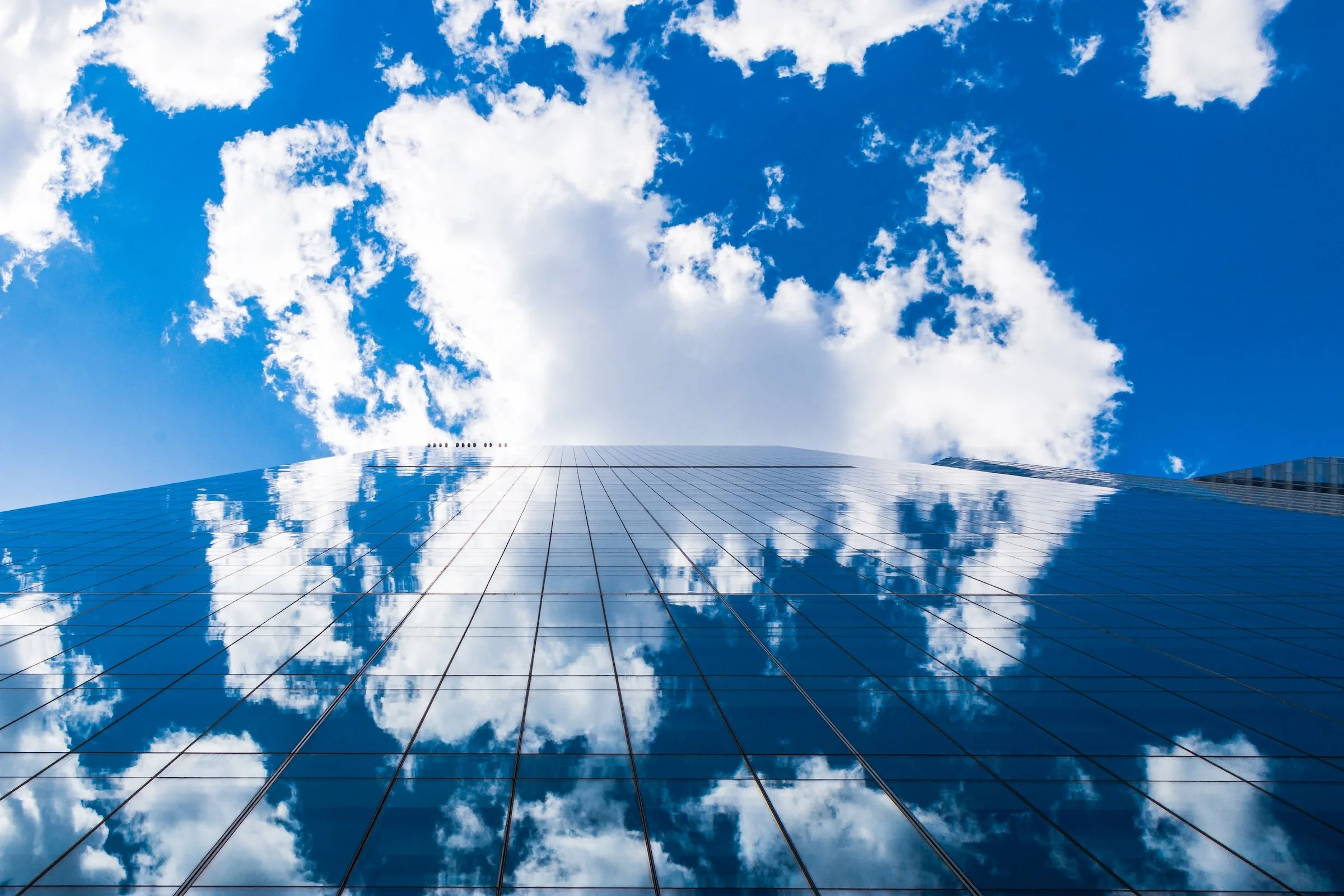
Sky Dramatic
Sky Dramatic is the deliberate use of the sky as an active subject—storm weight, sculpted cloud texture, sunbursts, clean blue voids, and rare events (like rainbows)—so the atmosphere doesn’t just “sit behind” the city, but drives the mood, contrast, and structure of the photograph.

The Power of Lines
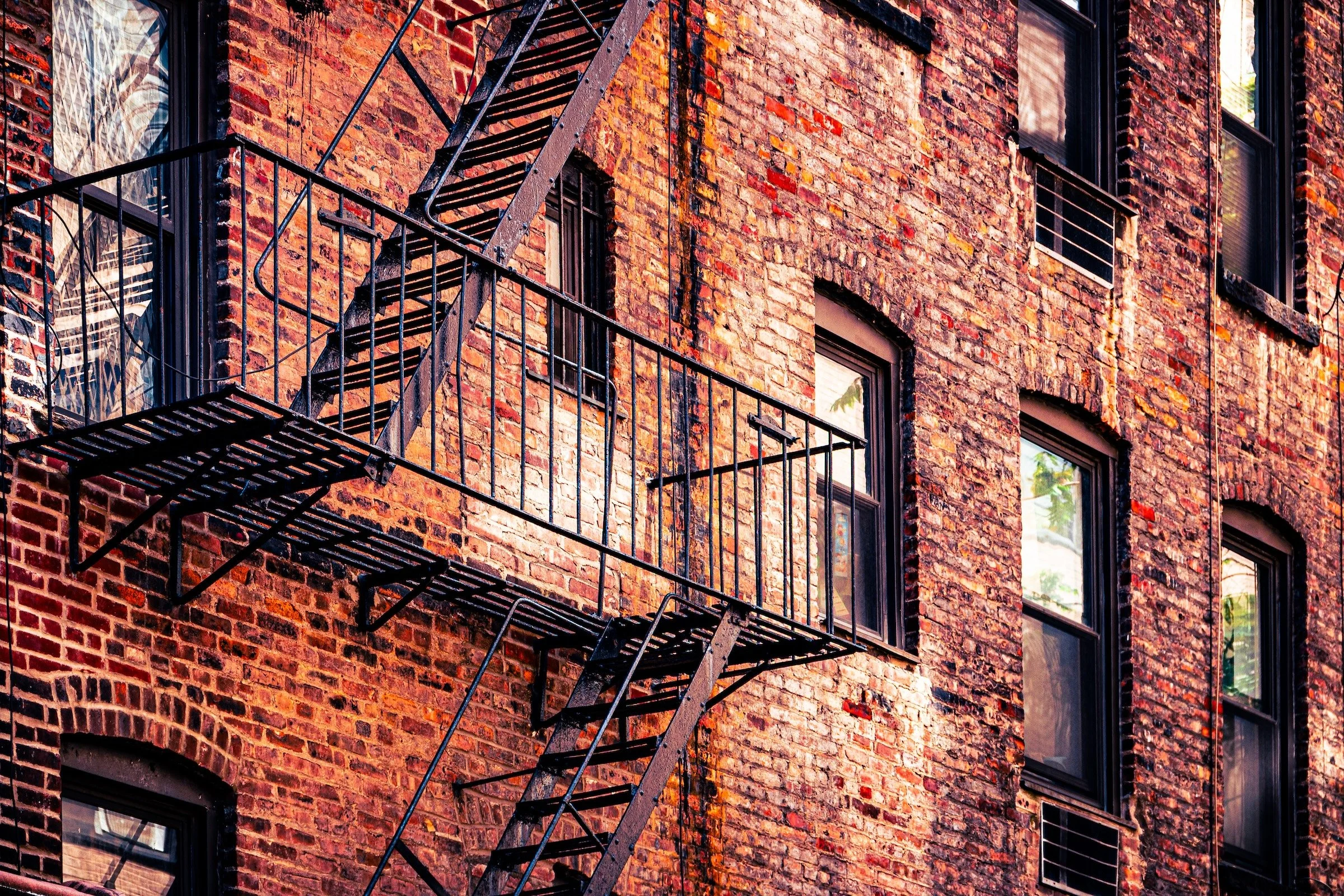
The Power of Lines is the practice of using lines—literal or implied—to organize a photograph. Lines pull the viewer’s eye, define depth, create rhythm, and turn everyday streetscapes into compositions with intention.
Sun Dapples
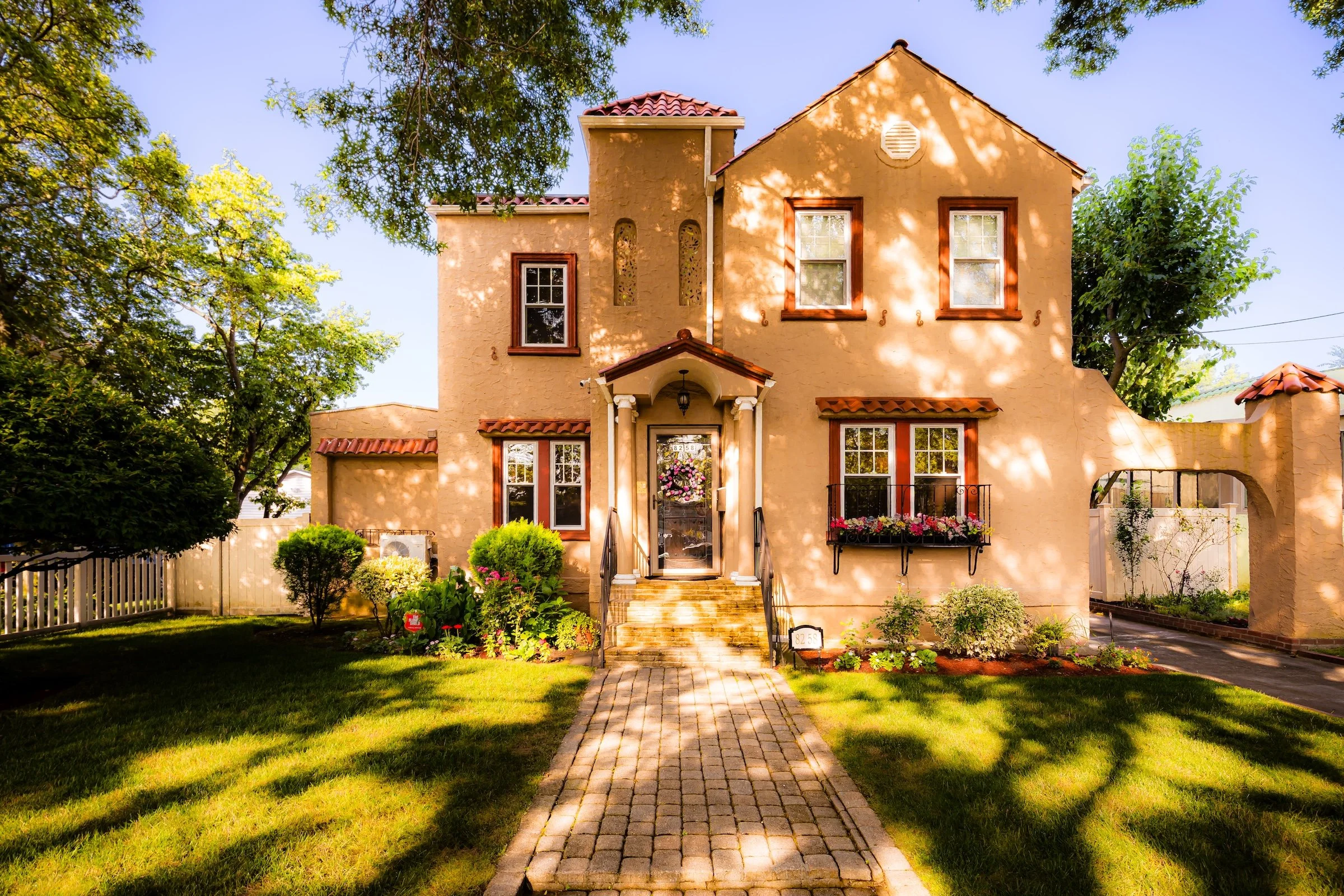
Sun Dapples uses patterned, broken sunlight—often filtered through leaves—to add texture, depth, and rhythm across surfaces.
Altered Perspectives
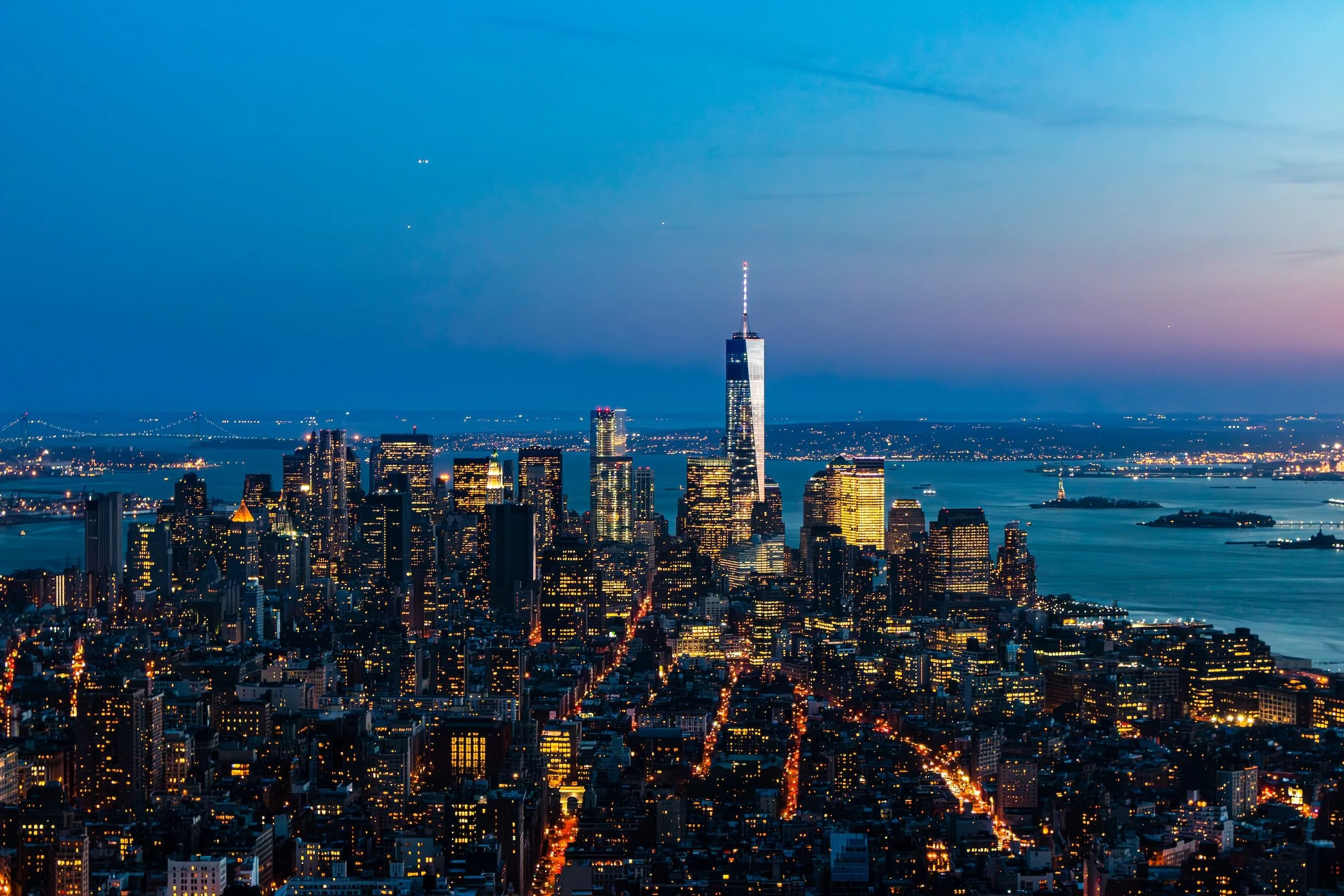
A deliberate shift in vantage—low, high, tilted, compressed, or wide—that changes how the city “behaves” inside the frame. Altered Perspectives isn’t about the subject (a tower, a street, a skyline) so much as the position you choose to describe it: street-level immersion, upward vertigo, balcony-scale overview, or foreground-anchored compression.
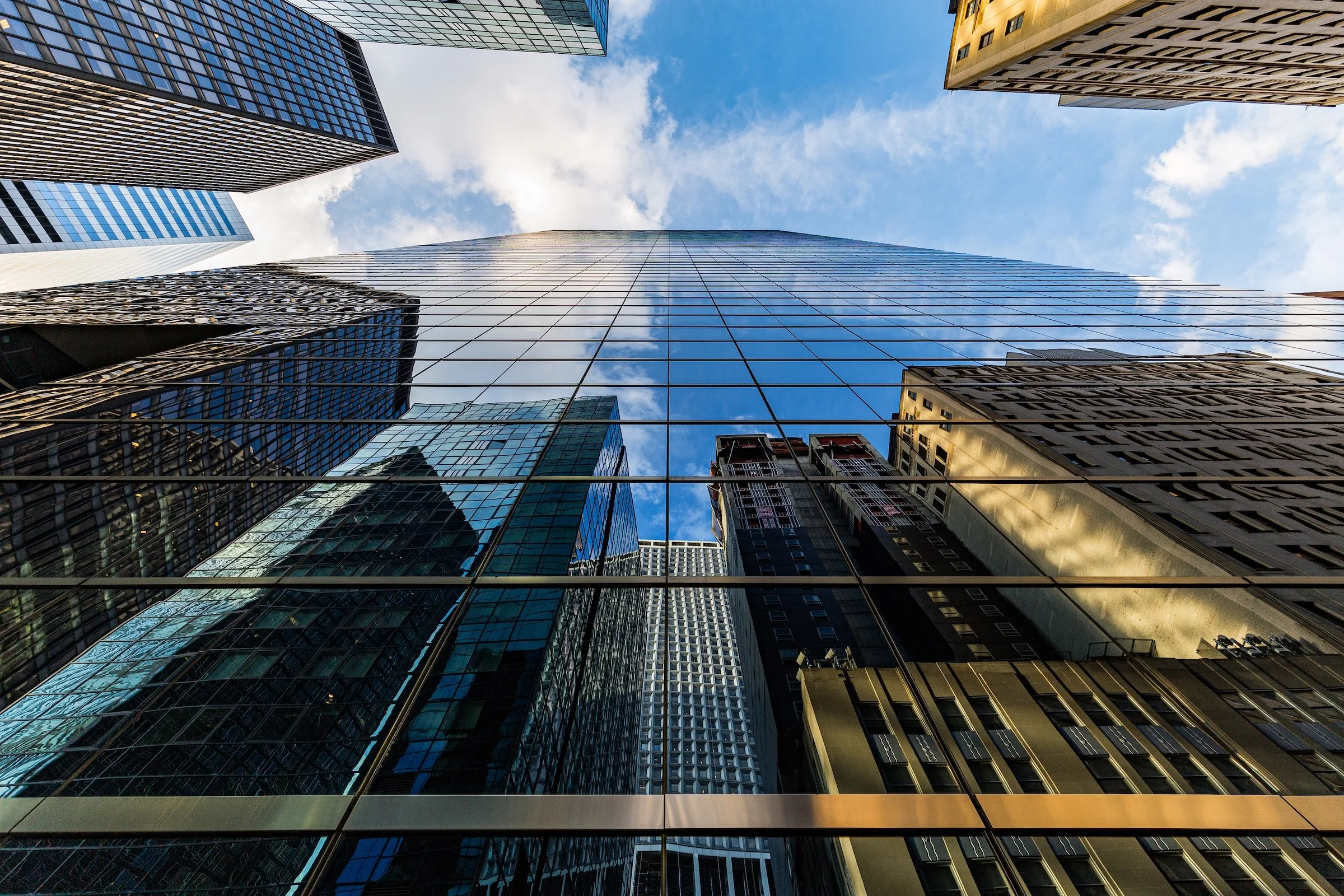
Reflected City
Reflected City is the practice of using large surfaces—glass, polished stone, metal, water, glossy paint—to capture a second scene inside the first. The world becomes a double exposure you didn’t manufacture: skyline inside a window grid, trees rippling across a façade, a street folded into chrome.
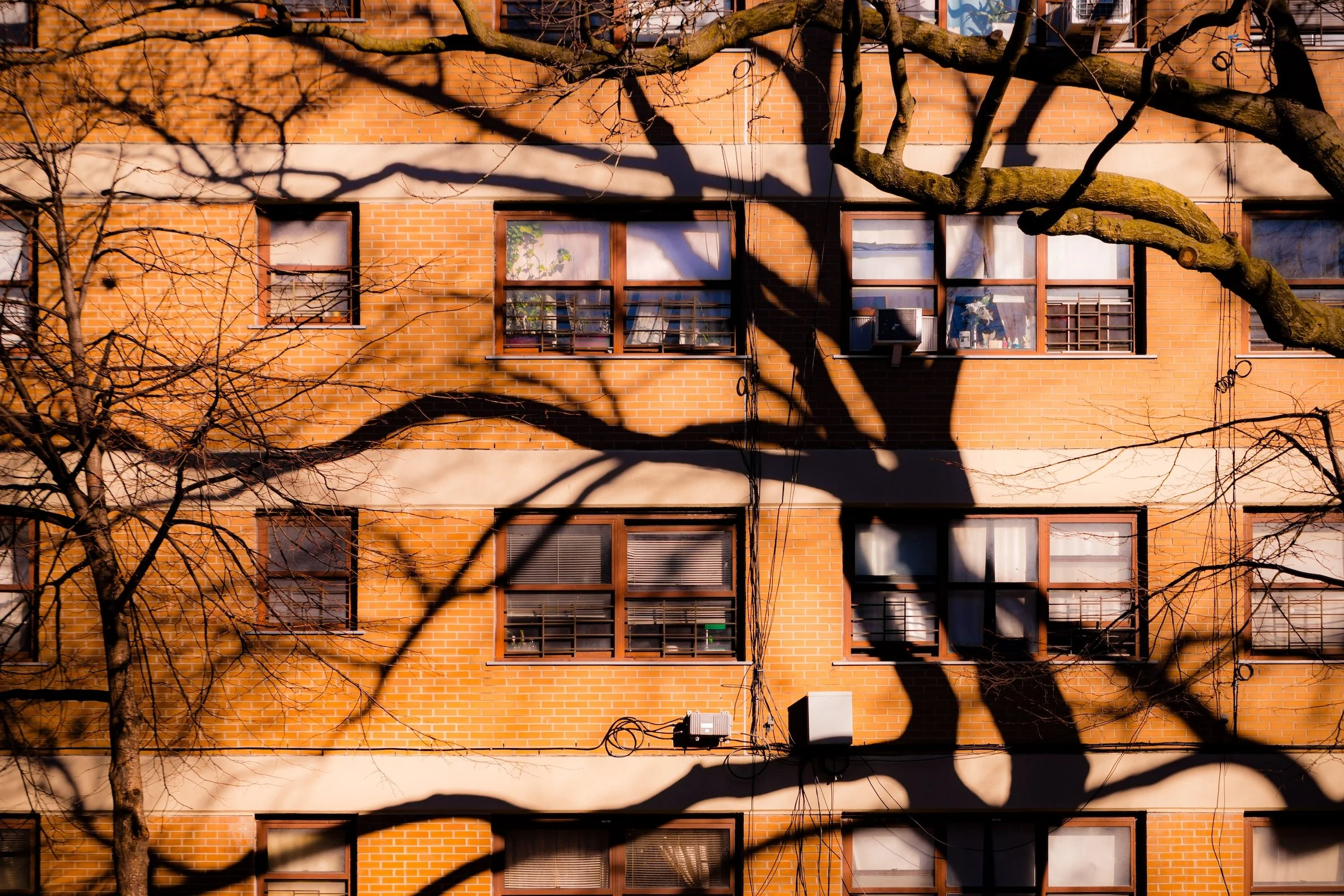
Shadowroots
Shadowroots are organic, branching shadows—most often from leafless trees—where the shadow reads like a second body: roots, veins, nervous system. The strongest examples fuse the tree and its shadow into one connected composition.