

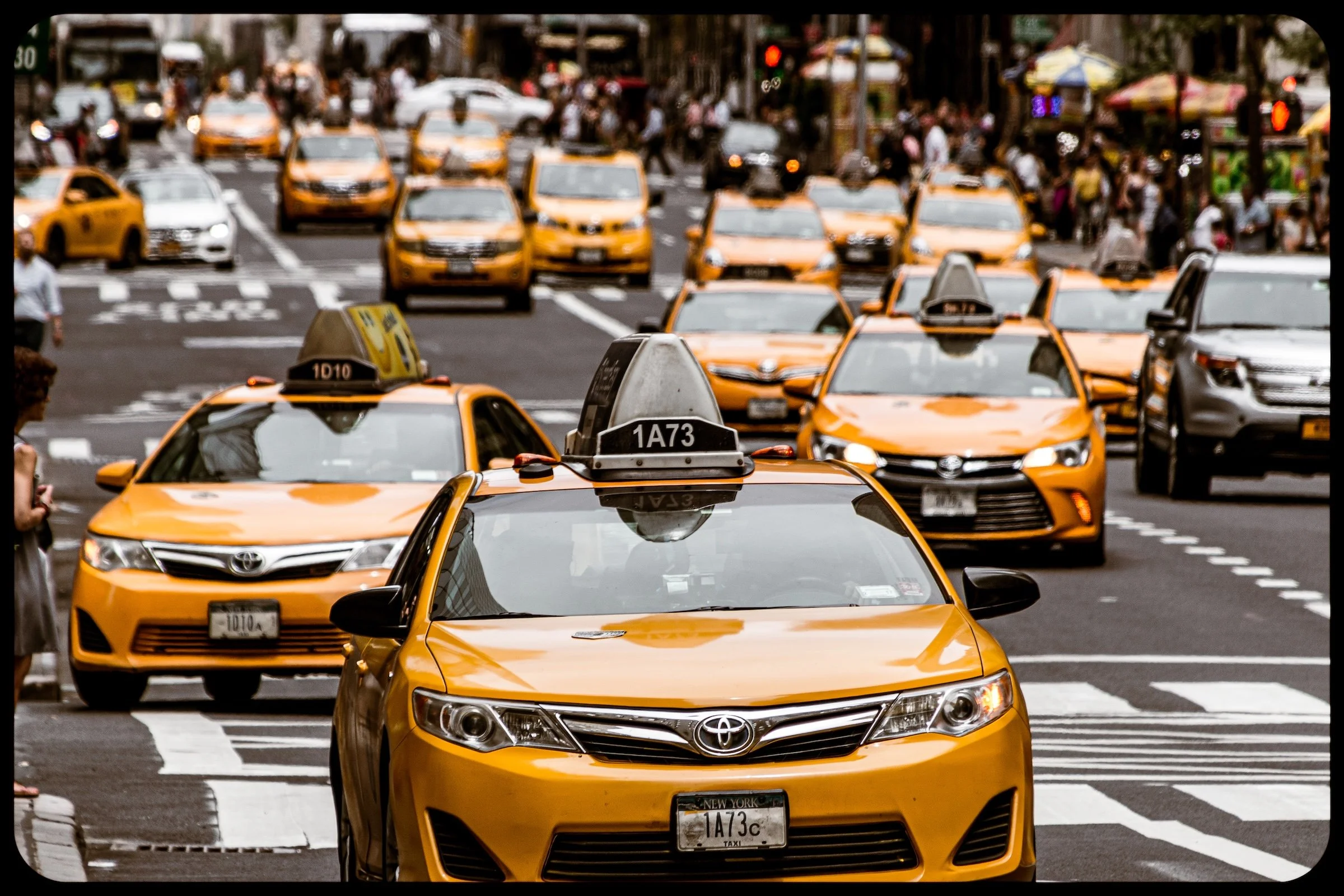
Repetitions & Patterns
A compositional strategy that uses repeated forms—shapes, colors, lines, textures, architectural modules, or moving elements—to create rhythm in the frame. In Repetitions & Patterns, the subject is often the structure itself: grids of windows, recurring arches, repeated stoops, aligned rooftops, or a chorus of taxis. Variation matters here: the best patterns include small breaks (a different color, a missing element, a single interruption) that make the repetition feel alive instead of mechanical.

Nature As Stage
A storytelling approach where nature (trees, water, sky, dunes, branches, wildlife) becomes the theatrical set—and the subject appears as a performer within it. The frame reads like a stage: foreground “curtains,” mid-ground “floor,” background “backdrop.”
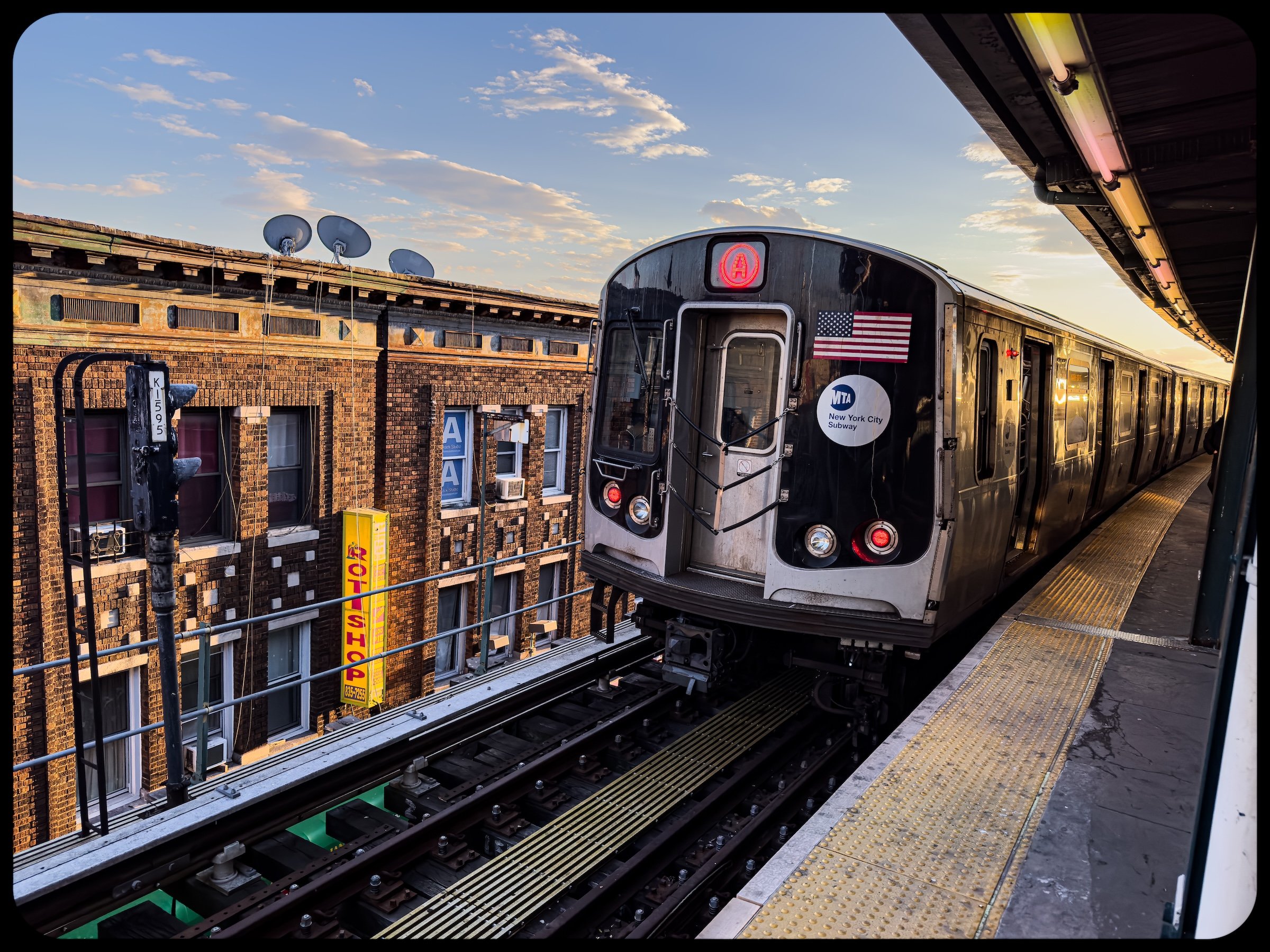
Vanishing Points
Vanishing Points is the practice of composing a photograph around a point of convergence—where parallel lines (tracks, curbs, facades, canals, fences, shadows) appear to meet in the distance. It’s the visual spell that turns a street or corridor into a story with a destination.
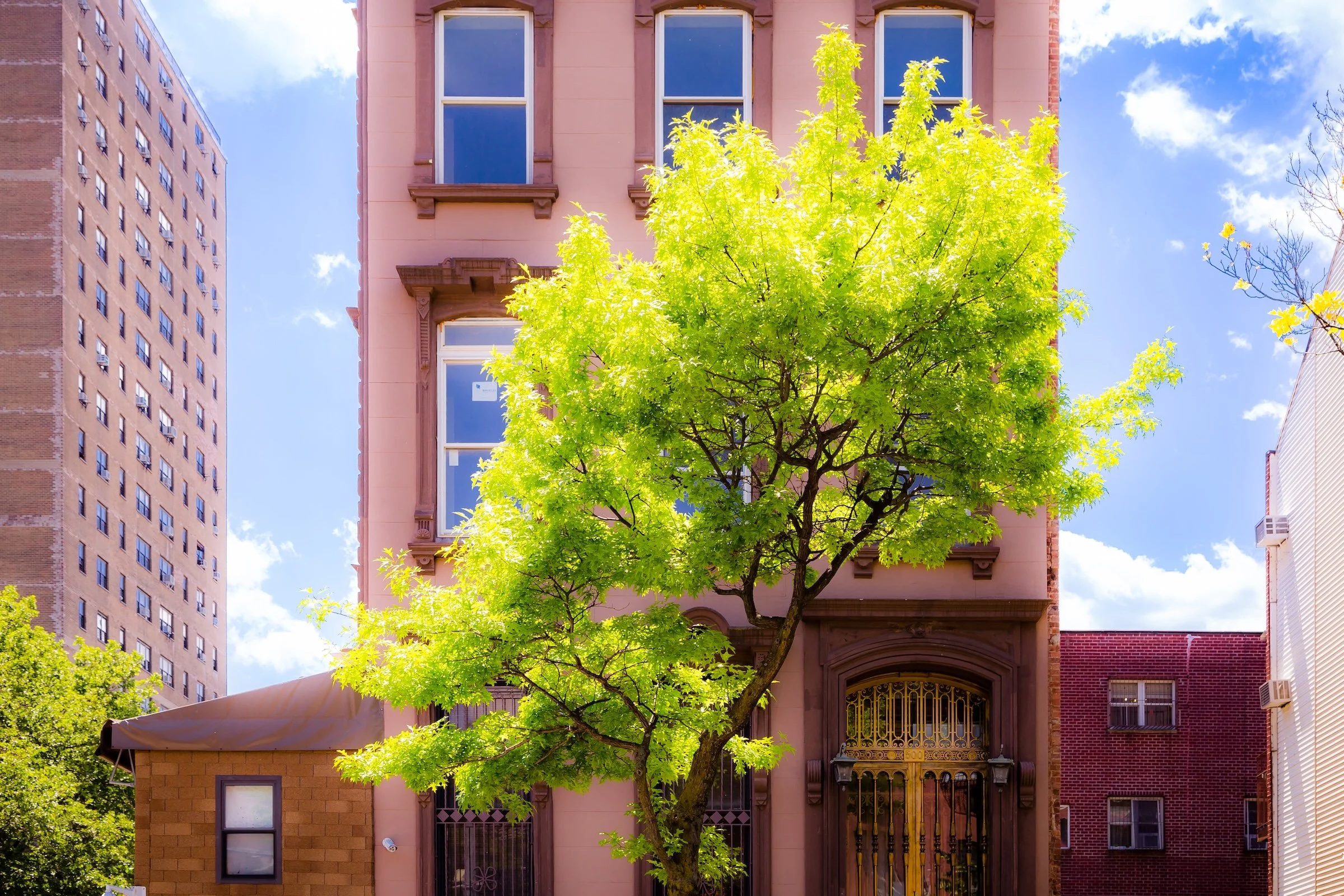
Painting With Light
Sometimes a photograph doesn’t just record a scene — it looks like it’s been brushed onto the world. Painted With Light is about moments when sunlight behaves like pigment: glazing walls, pooling across lawns, gilding leaves, and turning ordinary streets into something that feels half-real, half-illustrated.
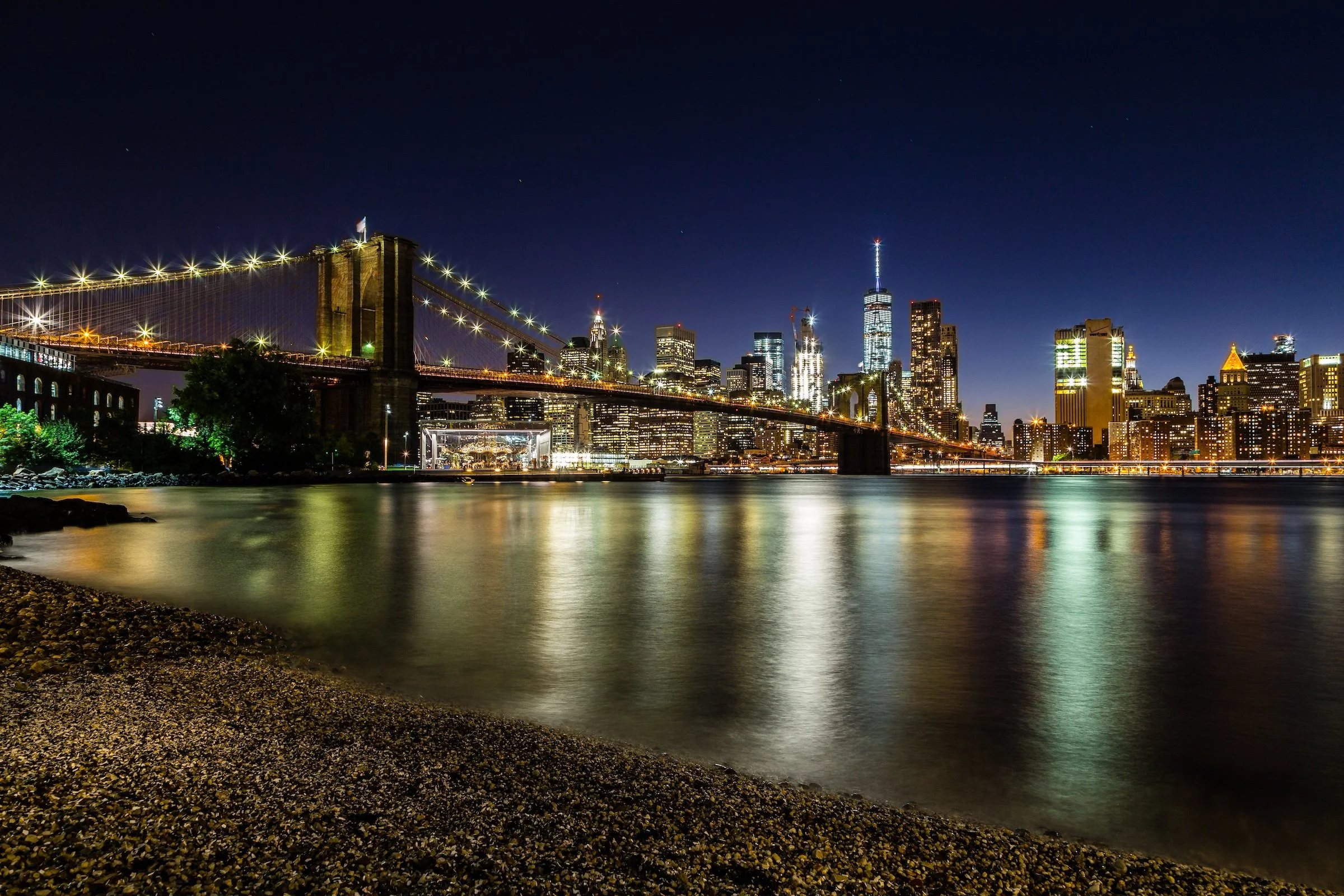
Long Exposure
A technique where slower shutter speeds (from fractions of a second to many seconds) transform movement into blur, streaks, and flow—turning crowds into mist, traffic into light trails, and water into glass.
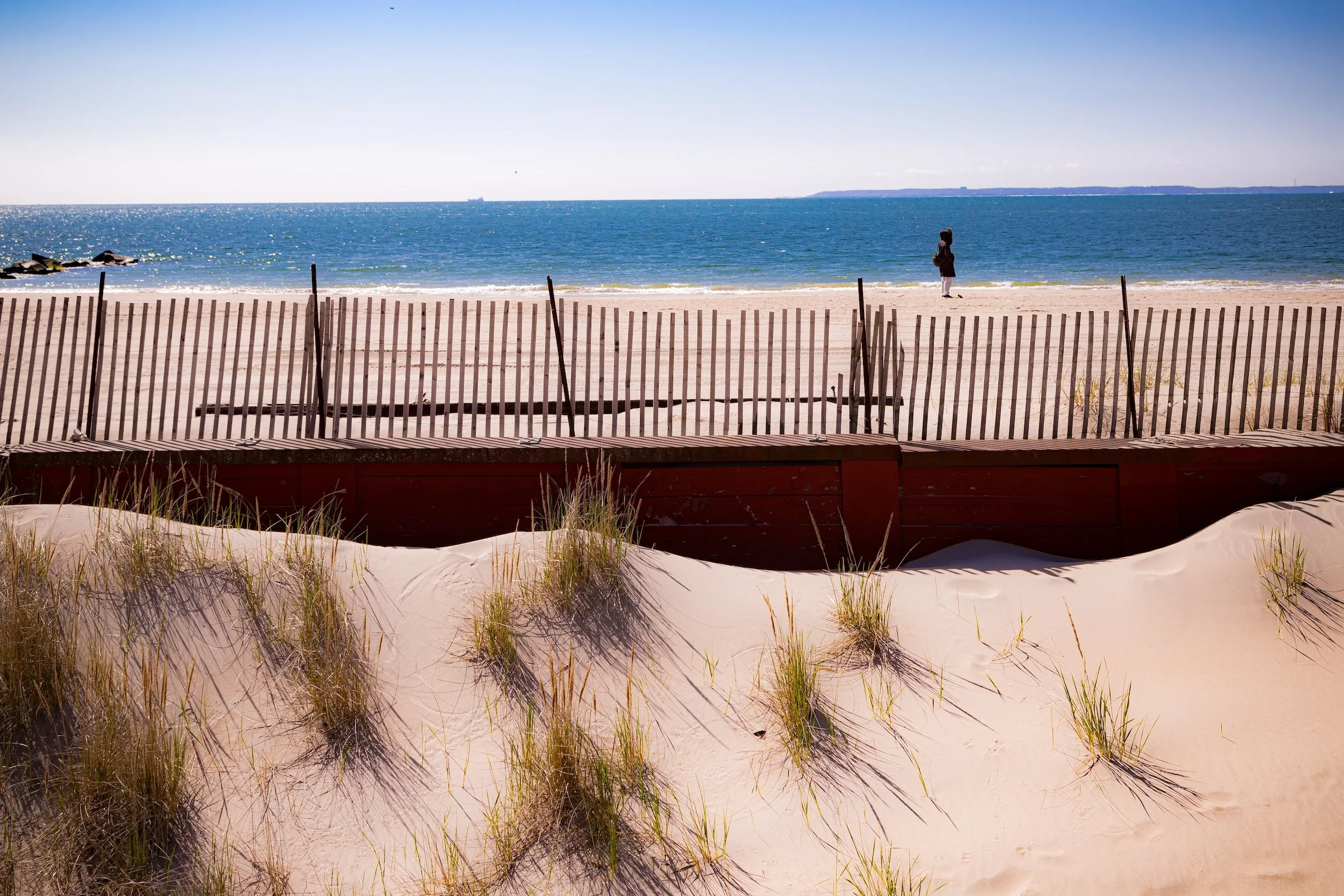
Horizon Harmonics
Most photographs rely on a single horizon to anchor the viewer. Horizon Harmonics is the practice of finding a "sequence" of horizons within a single frame—edges where color, material, or light shift abruptly. By aligning these secondary horizons so they run parallel, you create a visual "resonance" that gives the image a sense of immense, orderly scale.
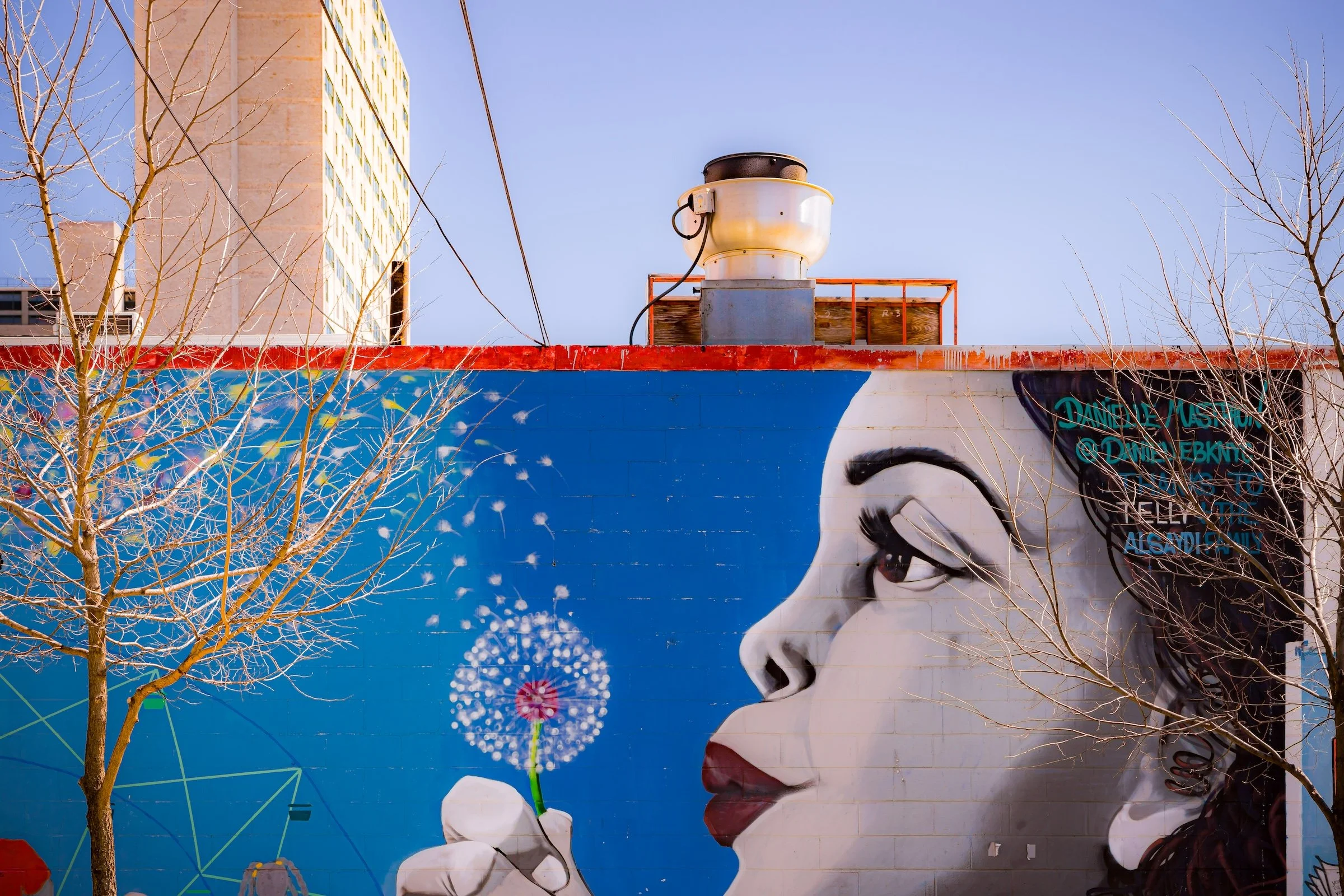
Graffiti Context
Graffiti Context is the practice of using graffiti not as the main subject, but as environmental language—a layer that explains where you are, what the street feels like, and what mood the scene should carry.

Geometric City
Geometric City is the practice of photographing the built environment as shape-first design—where buildings become grids, diagonals, tessellations, curves, and repeating modules. The city stops being “a place” and starts behaving like a living diagram: planes of glass, stacked windows, rigid columns, spirals of steel, and improbable angles that turn perspective into pattern.
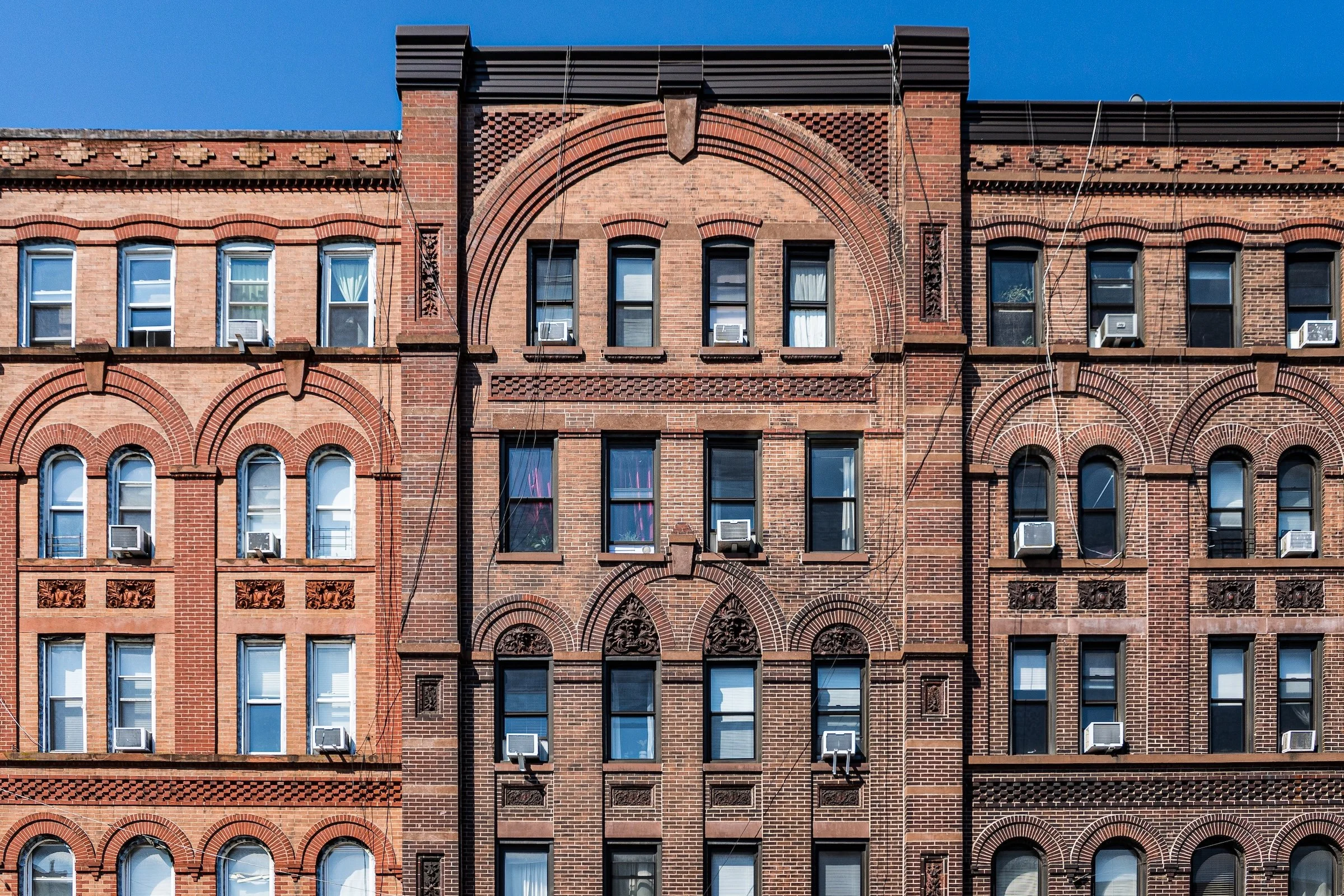
Upright Alignment
Upright Alignment is the practice of photographing architecture so it stands straight—verticals stay vertical, horizons stay level, and the building reads like a composed portrait rather than a collapsing snapshot. It’s the “square-up” instinct: the frame becomes an act of respect for structure.

For The Love of Old Things
A photographic devotion to age, wear, and survival: weathered facades, peeling paint, rusted hardware, old infrastructure, ghost signage, and objects that look slightly out of time. For The Love Of Old Things isn’t nostalgia for its own sake—it’s attention to the city’s material memory.
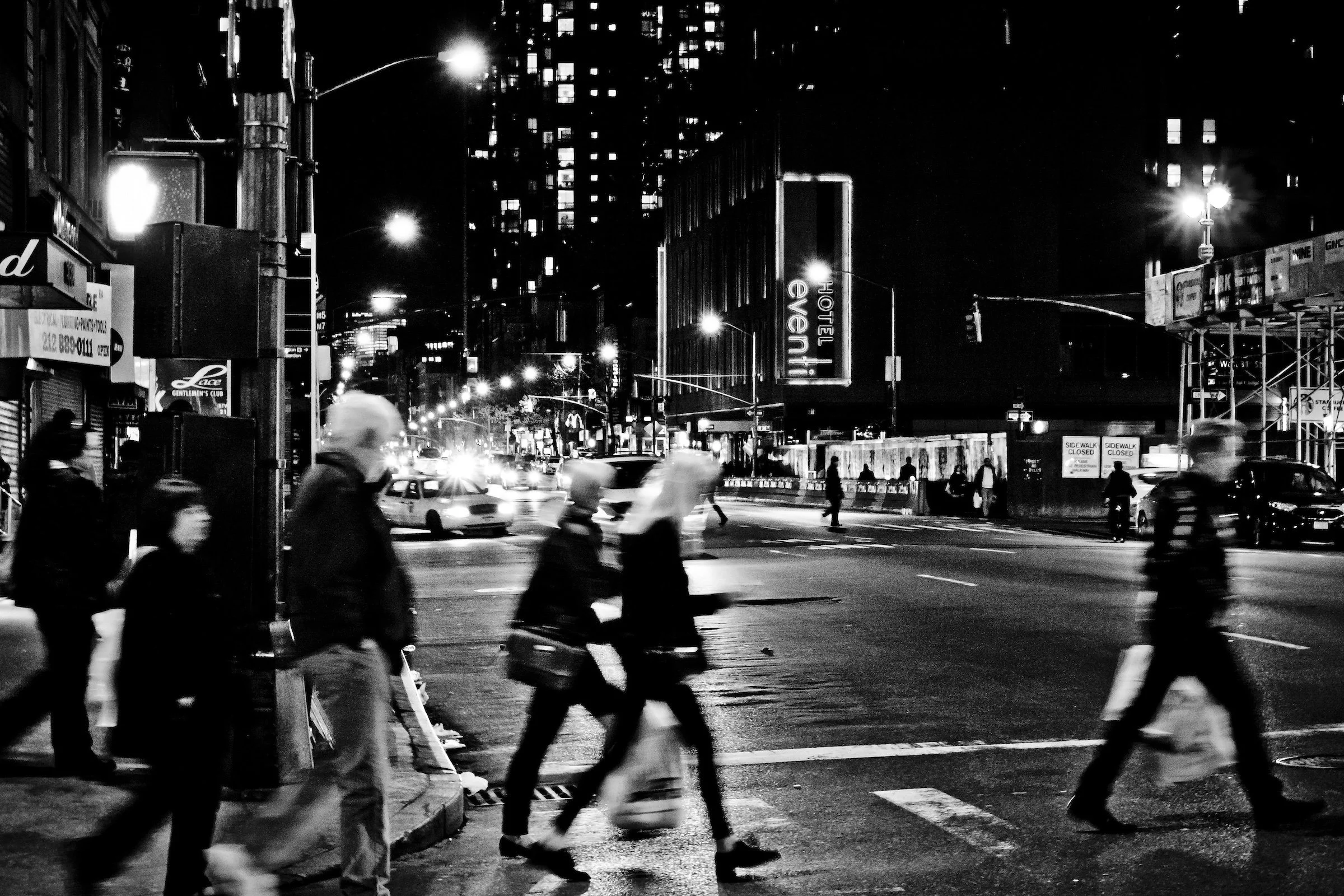
Crosswalk Cadence
Crosswalk Cadence is the use of crosswalks, lane markings, and street striping as rhythmic structure—visual beats that organize motion, guide the eye, and turn intersections into choreography. The subject may be a cyclist, a crowd, a building, or pure pattern, but the cadence comes from the street’s graphic language.
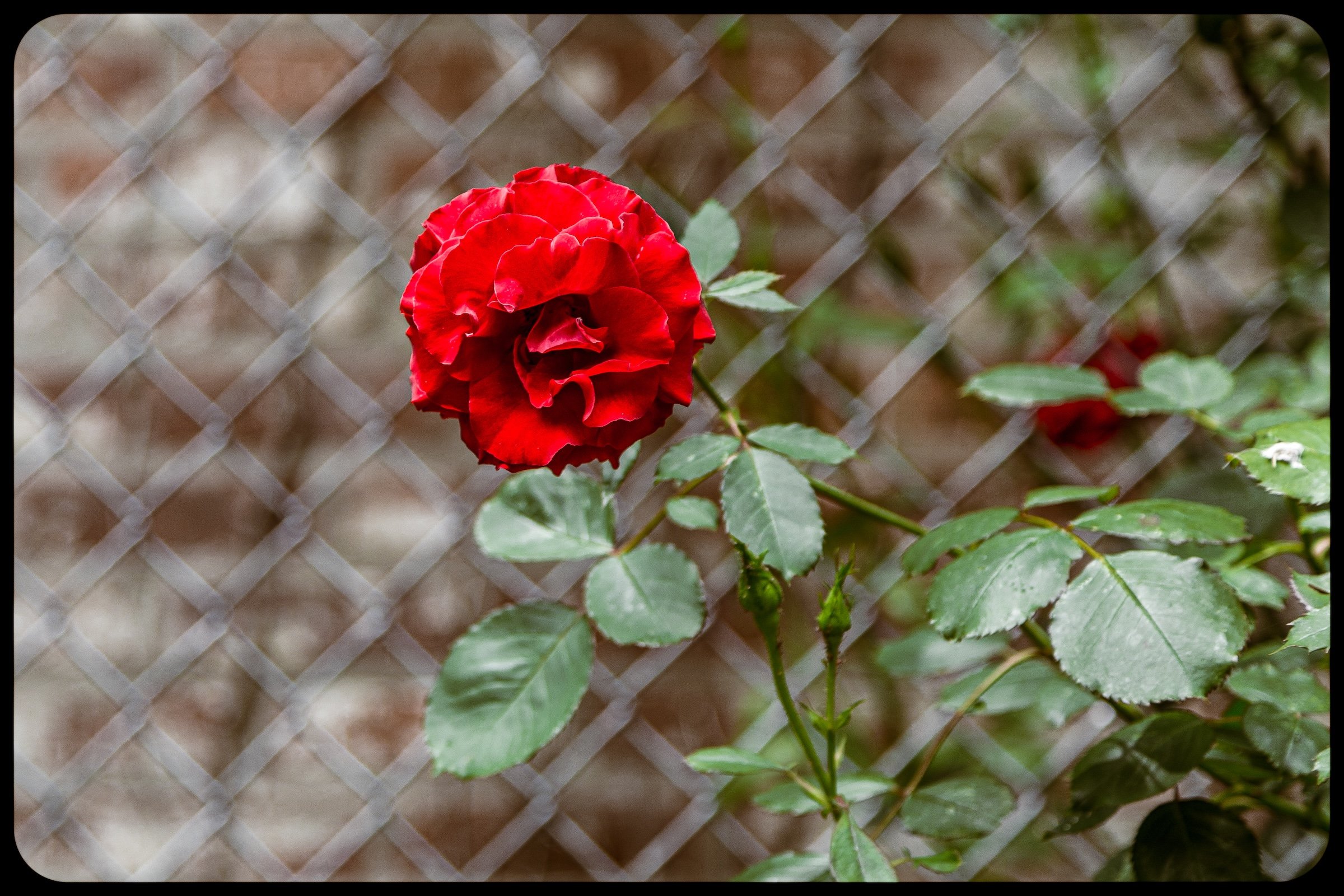
Companions & Juxtapositions
Companions & Juxtapositions frames two or more elements whose proximity creates meaning—echo, contrast, irony, harmony, or tension.
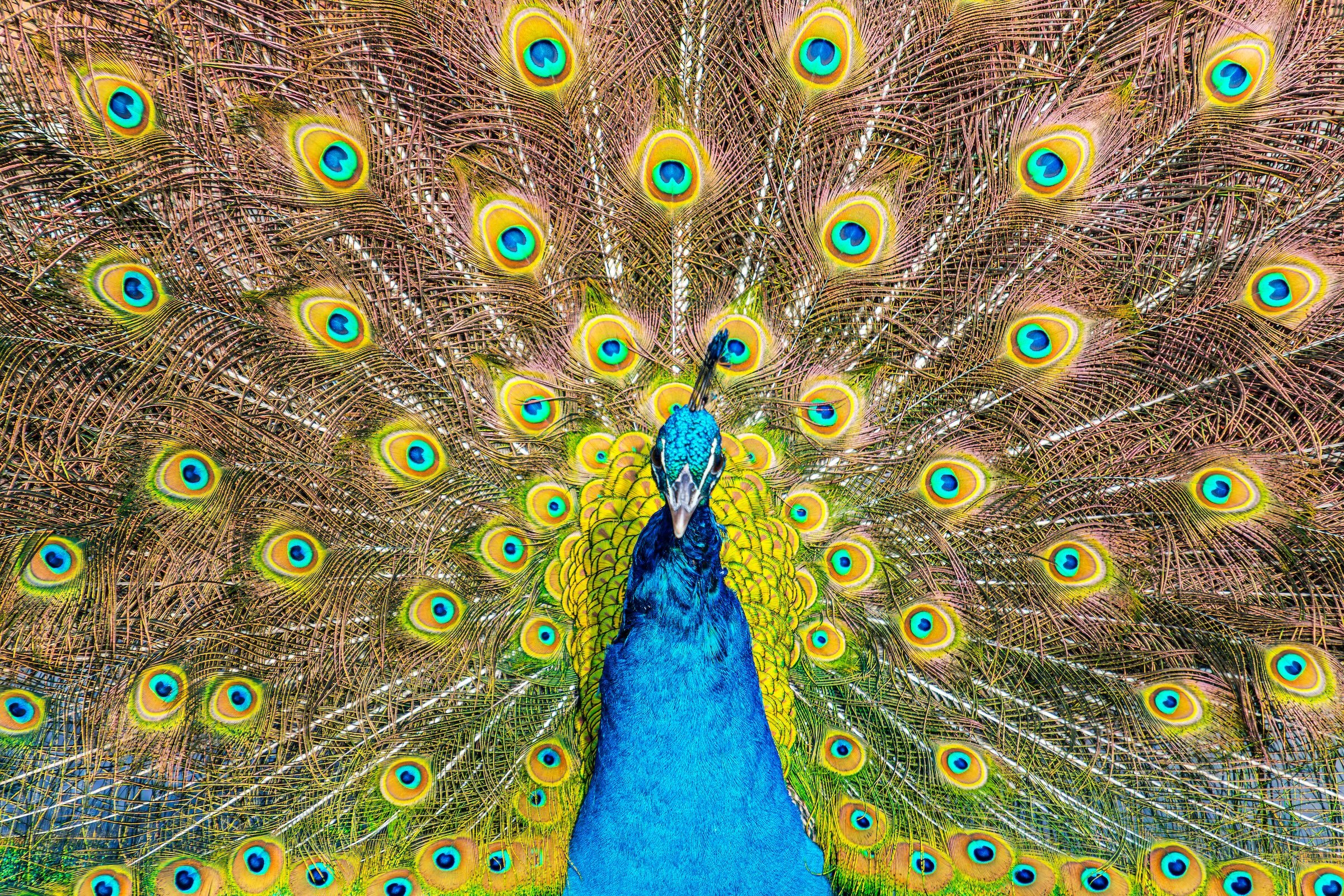
Chromatic City
Chromatic City is the practice of treating color itself as a structural element—not decoration. It’s the moment when pigment (natural or manmade) becomes the thing that organizes a frame: saturated feathers, a neon sign, a painted façade, a taxi door in the rain, a sky that behaves like a backdrop. The subject can be anything. The engine is color.
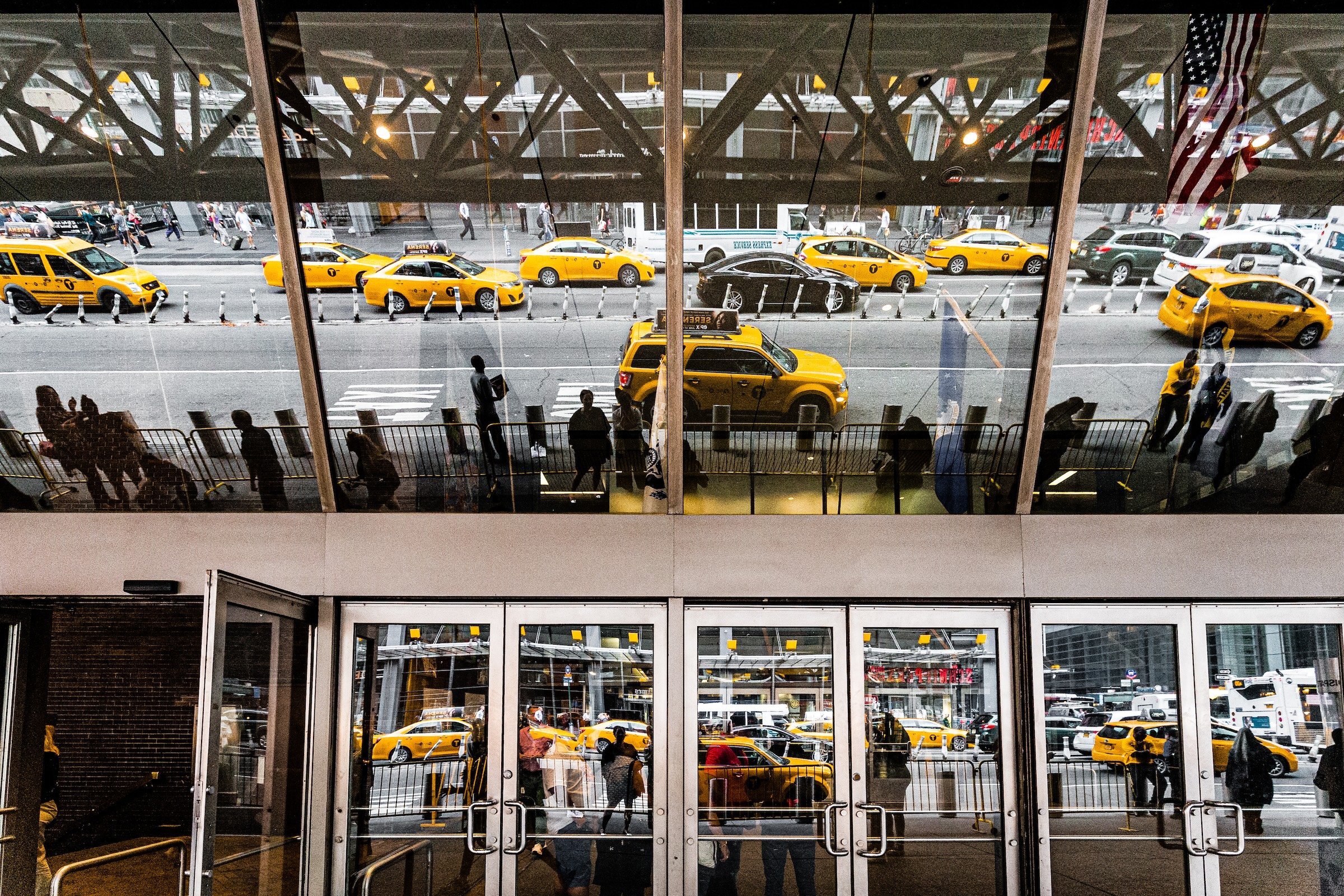
Urban Mosaic
Urban Mosaic is the practice of building a photograph from fragments—layers, reflections, frames, signage, repeated windows, and partial scenes—so the image reads like a collage of city moments rather than a single-subject view.

Capturing Scale
A compositional approach for showing how big something feels—not just how big it is—by placing a subject in relationship to recognizable reference points: people, streets, windows, trees, bridges, skylines, and negative space. Capturing Scale is about designing a frame where the viewer can measure the world intuitively.
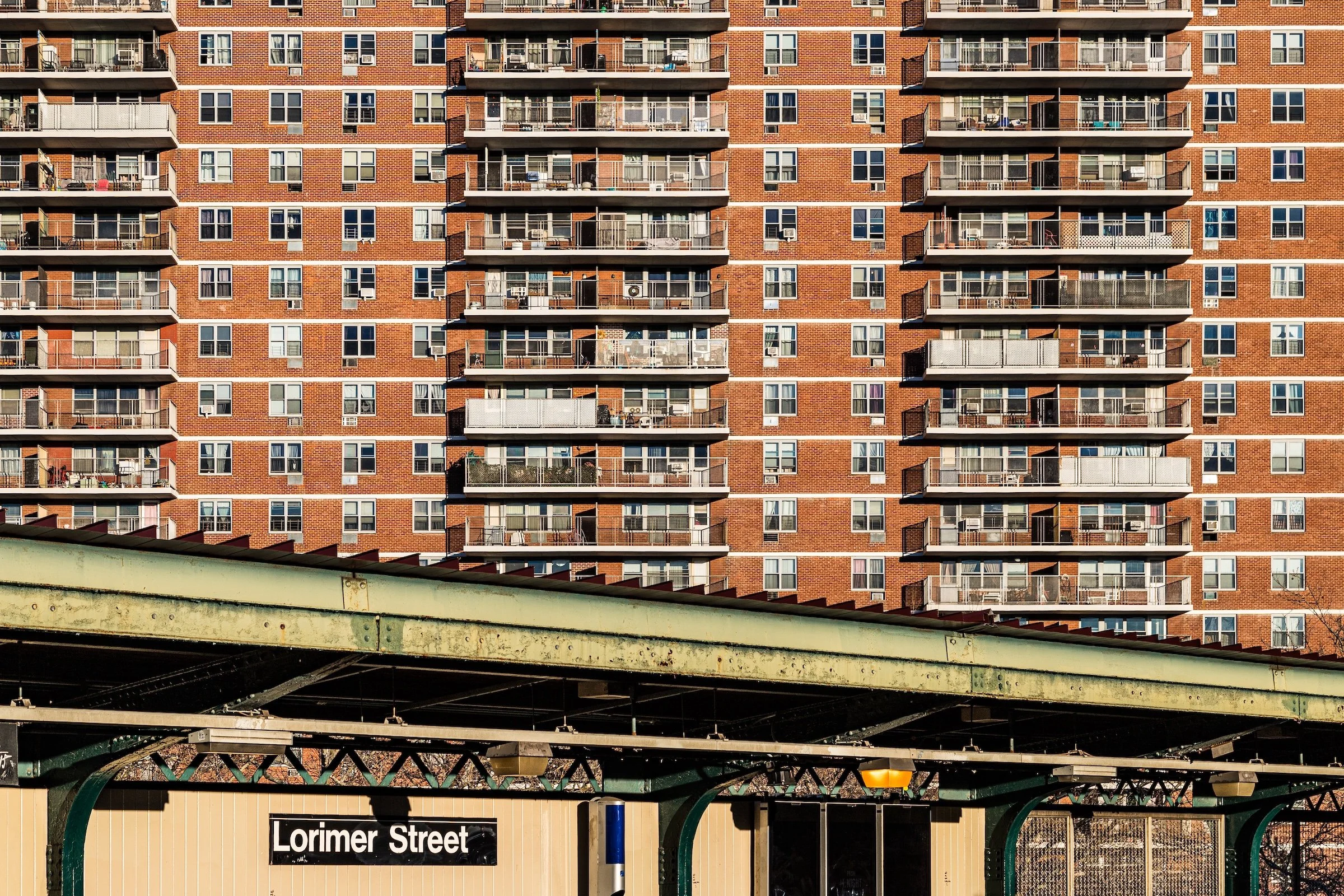
Bigger Than The Frame
Bigger Than The Frame is a composition strategy where the subject’s scale is communicated by refusing to contain it. The building (or structure) extends beyond the edges of the photograph—top, sides, or both—so the viewer feels the continuation. The frame becomes a window onto something larger, not a box that neatly holds it.
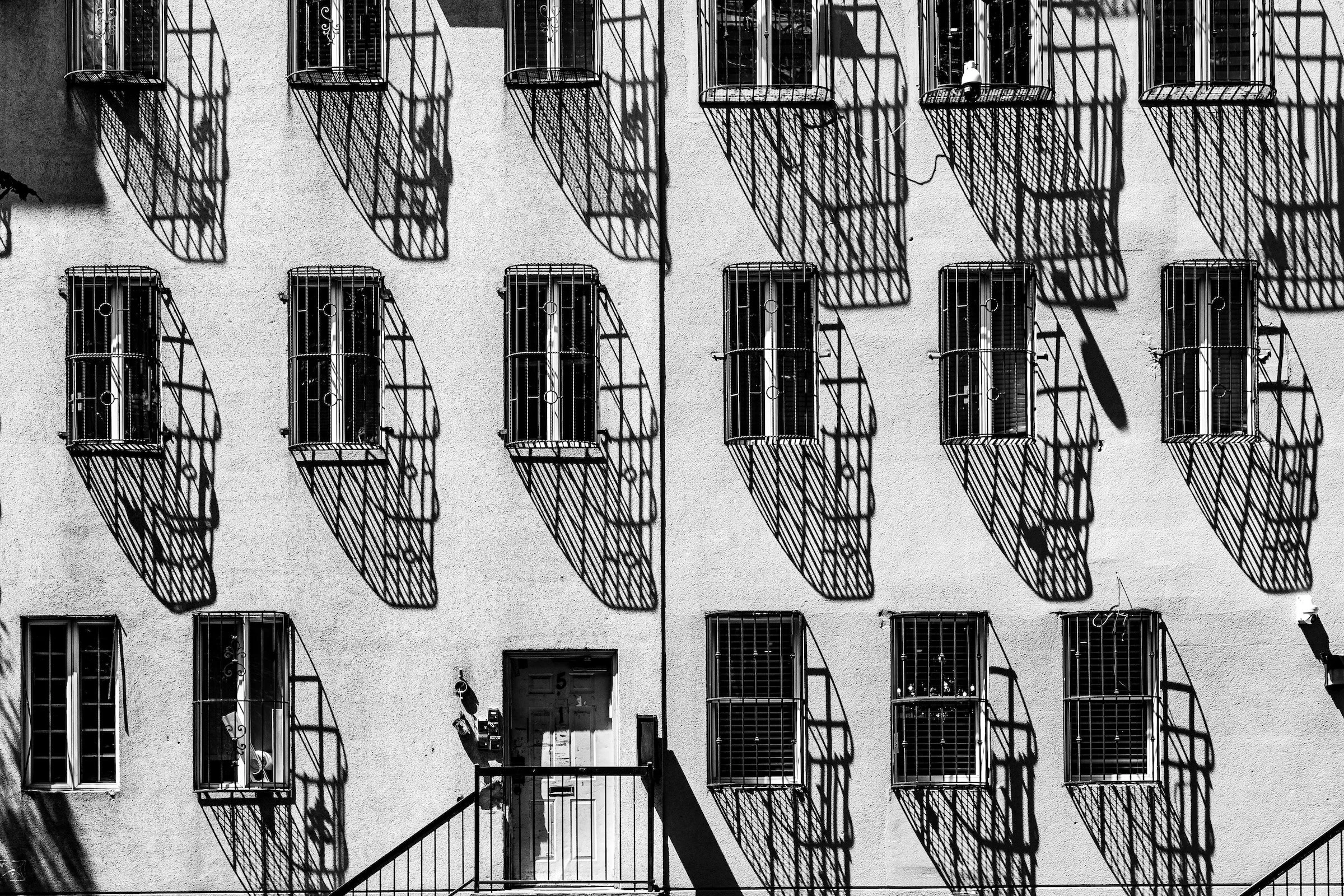
Shadow Projections
Shadow Projections are crisp, geometric shadow-shapes cast by manmade structures—fences, railings, fire escapes, awnings, lamps—thrown onto walls and pavement as grids, stripes, ladders, and hard-edged diagonals.

Abstractions
Abstractions turn the city into pure visual language—shape, color, texture, rhythm—so the image can stand on its own even if the viewer never identifies the literal subject.
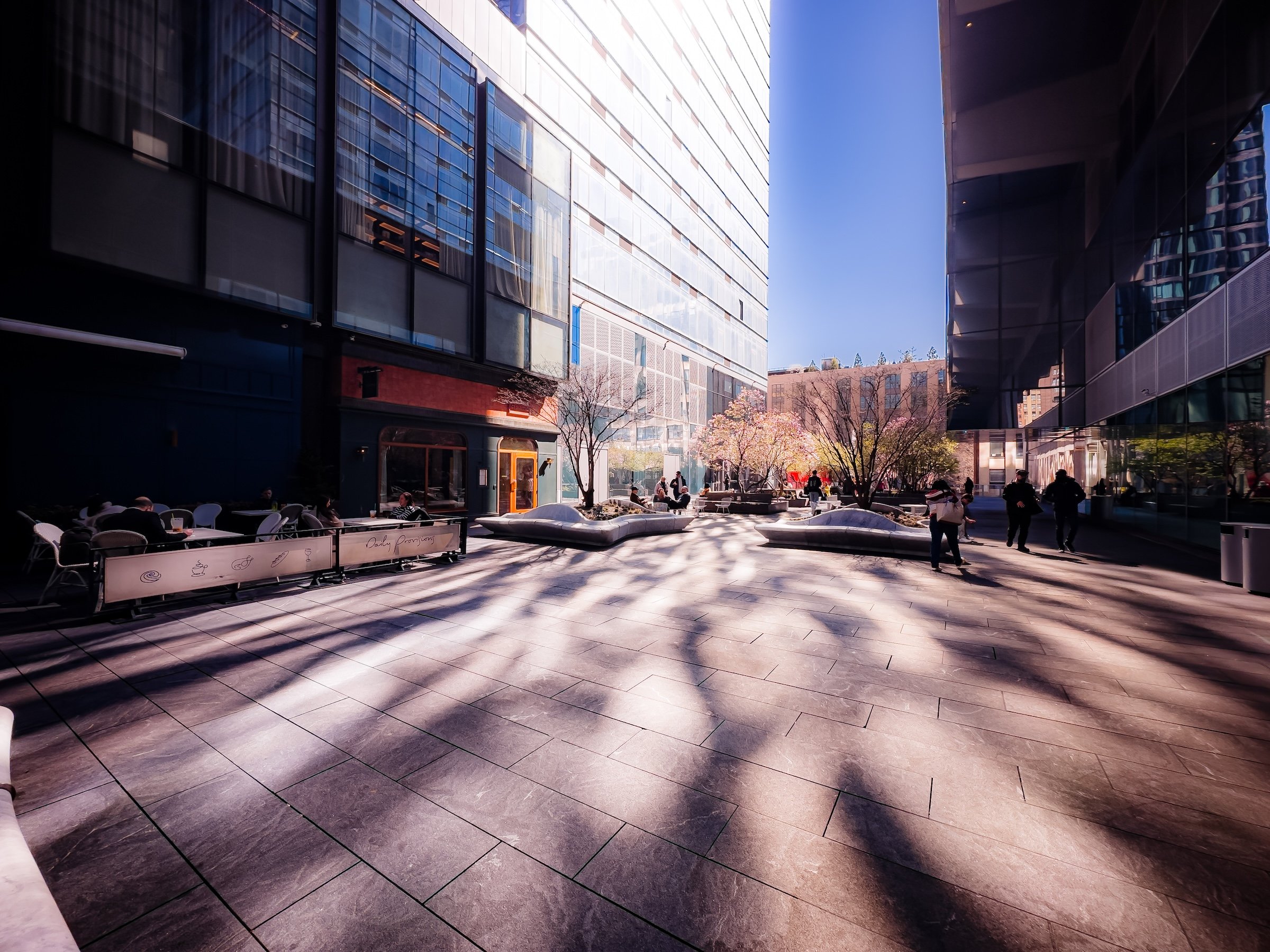
Sunflections
Reflected sunlight that lands on pavement, sidewalks, façades, or other surfaces as luminous shapes—bands, ripples, patches, or drifting “spotlights.” Unlike lens flare (which happens inside the camera), Sunflections are light that the city redirects back into the scene: bounced from glass, metal, water, polished stone, or wet ground.