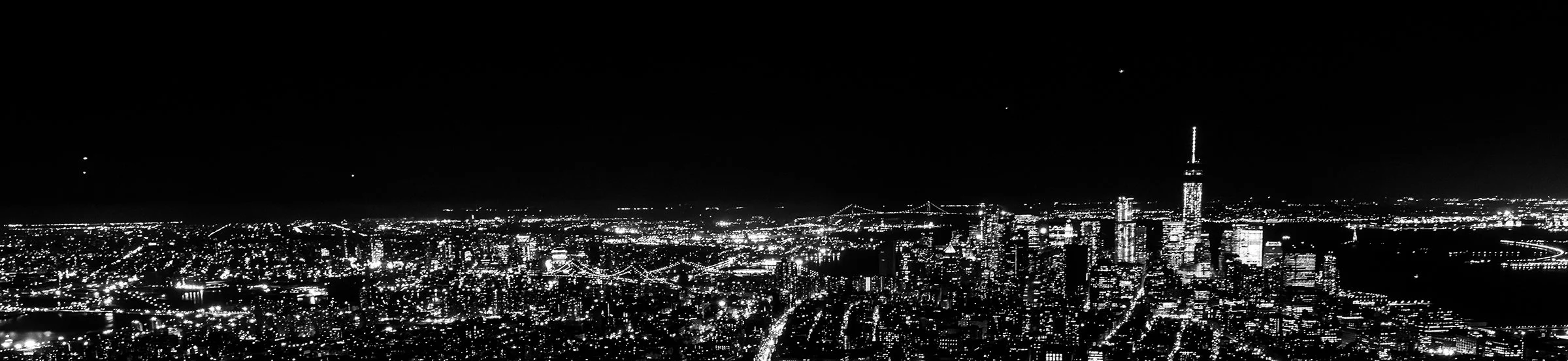

Streetscapes
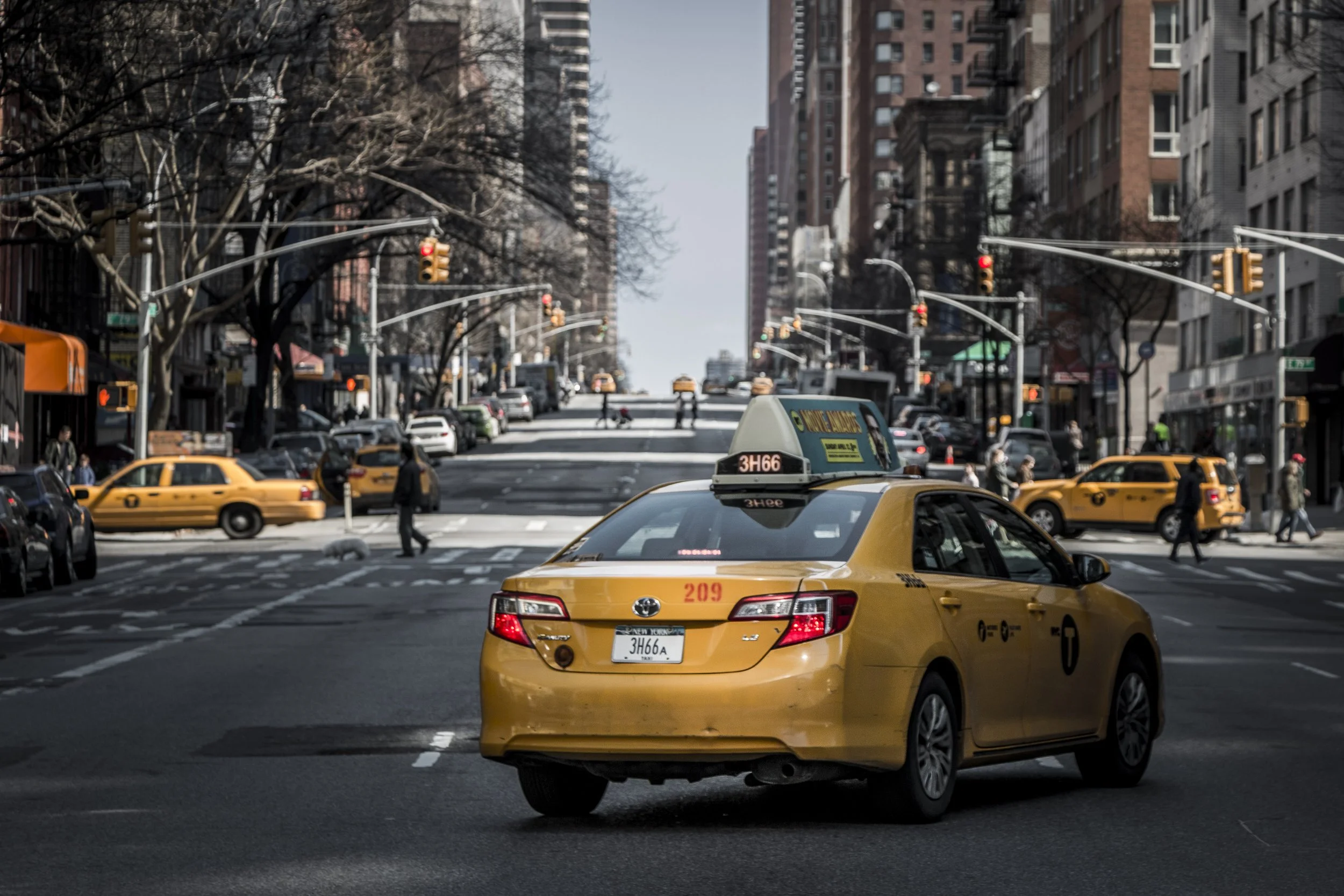
Upper East Side - Manhattan - Uptown on 3rd Avenue
Definition:
Streetscapes are photographs in which the street itself becomes the subject: not simply a road or corridor, but a composed urban environment shaped by pavement, parked cars, curbs, lane markings, trees, buildings, traffic, light, and depth. A strong streetscape image captures the feel of moving through a place — the way a street holds space, organizes sightlines, and reveals the rhythm of neighborhood life block by block.
Usage:
Use Streetscapes when the image is less about one particular building, sign, or person and more about the street as a lived visual system. These photographs work especially well when the roadway, the bordering architecture, and the atmosphere of movement or stillness all combine into something legible and specific.
Streetscapes are especially powerful for:
long neighborhood corridors where depth and repetition build atmosphere,
wide avenues where traffic lanes and medians create strong visual structure,
residential streets where tree canopy, parked cars, and sidewalks shape the mood,
urban boulevards where the architecture rises around the street and gives it scale,
streets that feel transitional, cinematic, or distinctly tied to one neighborhood’s tempo.
This entry is not about the street as pure geometry — that belongs more to Vanishing Points, The Power of Lines, or Wedge Geometry. Nor is it simply about scale, monumentality, or canyons of space. Streetscapes are about the whole corridor as experience: the roadway as setting, the buildings as boundary, and the atmosphere of passage as the thing being photographed.
In Depth:
I use Streetscapes for the kinds of photographs that sit between architecture, movement, and environment. The subject is not one facade, one storefront, or one perfect compositional trick. It is the entire street as a visual field — the way it channels motion, opens depth, frames neighborhood character, and creates a specific kind of urban or suburban feeling.
What makes a strong streetscape is balance. The street has to feel like a place rather than an empty corridor, but it also has to retain enough openness for the eye to travel through it. That often means paying close attention to lane markings, tree lines, medians, parked cars, traffic signals, side streets, and the edges created by buildings on either side. Some streetscapes feel calm and residential; others feel dense, cinematic, or almost infrastructural. The category is broad enough to include both, because what matters is not the street type alone, but the way the image lets the street speak as its own environment.
Streetscapes are often deceptively simple. A good one may not seem “spectacular” at first glance, but over time it reveals the shape of a neighborhood more honestly than many more dramatic photographs do. Streets are where architecture meets movement, where public life unfolds, where trees and traffic compete, where depth becomes daily experience. Photographing a street well means photographing a place in motion even when everything in the frame is still.
A few instincts that help Streetscapes work:
Let the street be the subject, not just the foreground.
Pay attention to how lane markings, parked cars, medians, and sidewalks guide the eye.
Use depth deliberately — streetscapes thrive on the feeling of movement into the frame.
Watch the edges. Buildings, trees, and parked cars should help contain the corridor, not muddle it.
Embrace atmosphere. A streetscape can be hushed, busy, bright, shadowed, residential, or monumental — the tone matters as much as the layout.
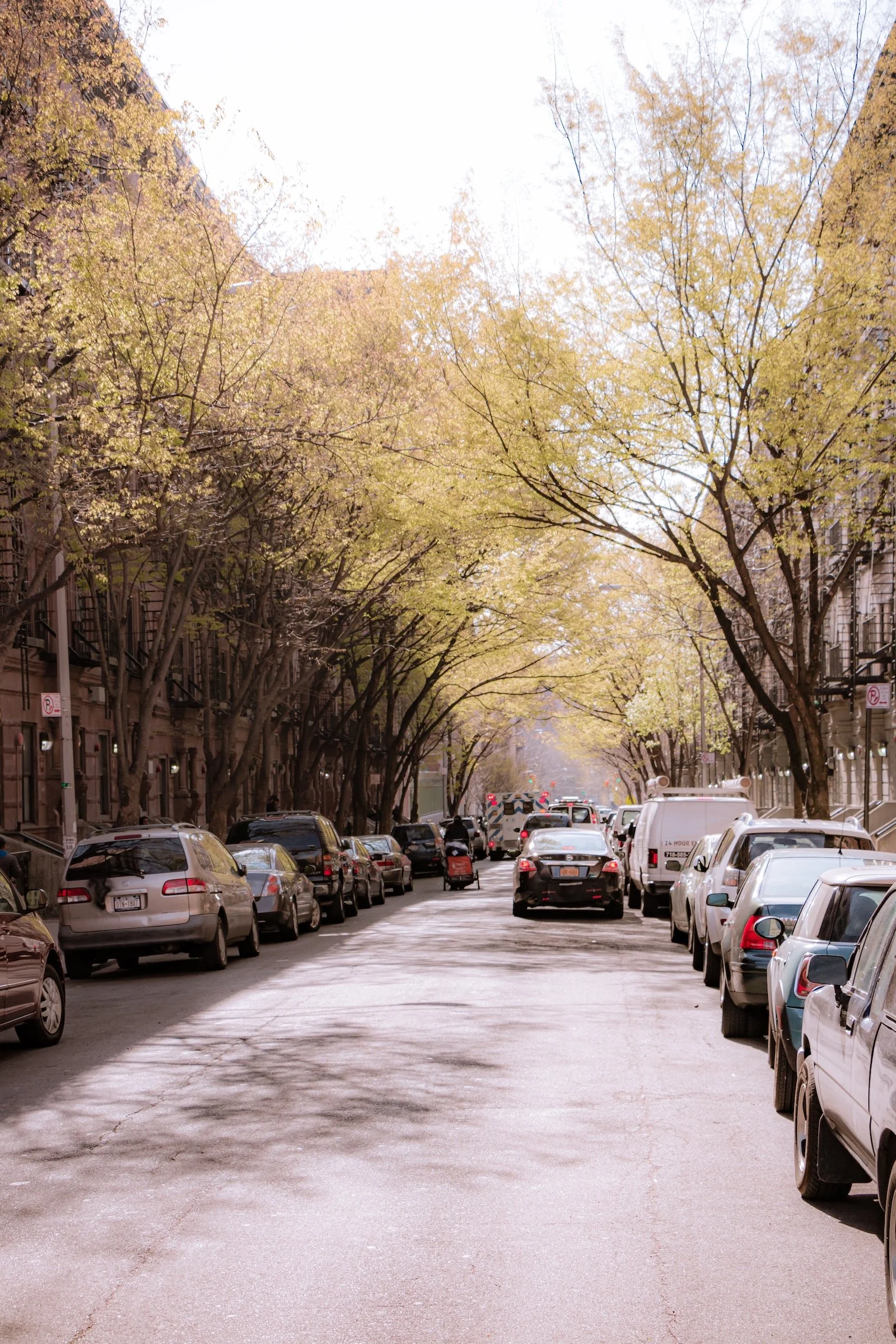
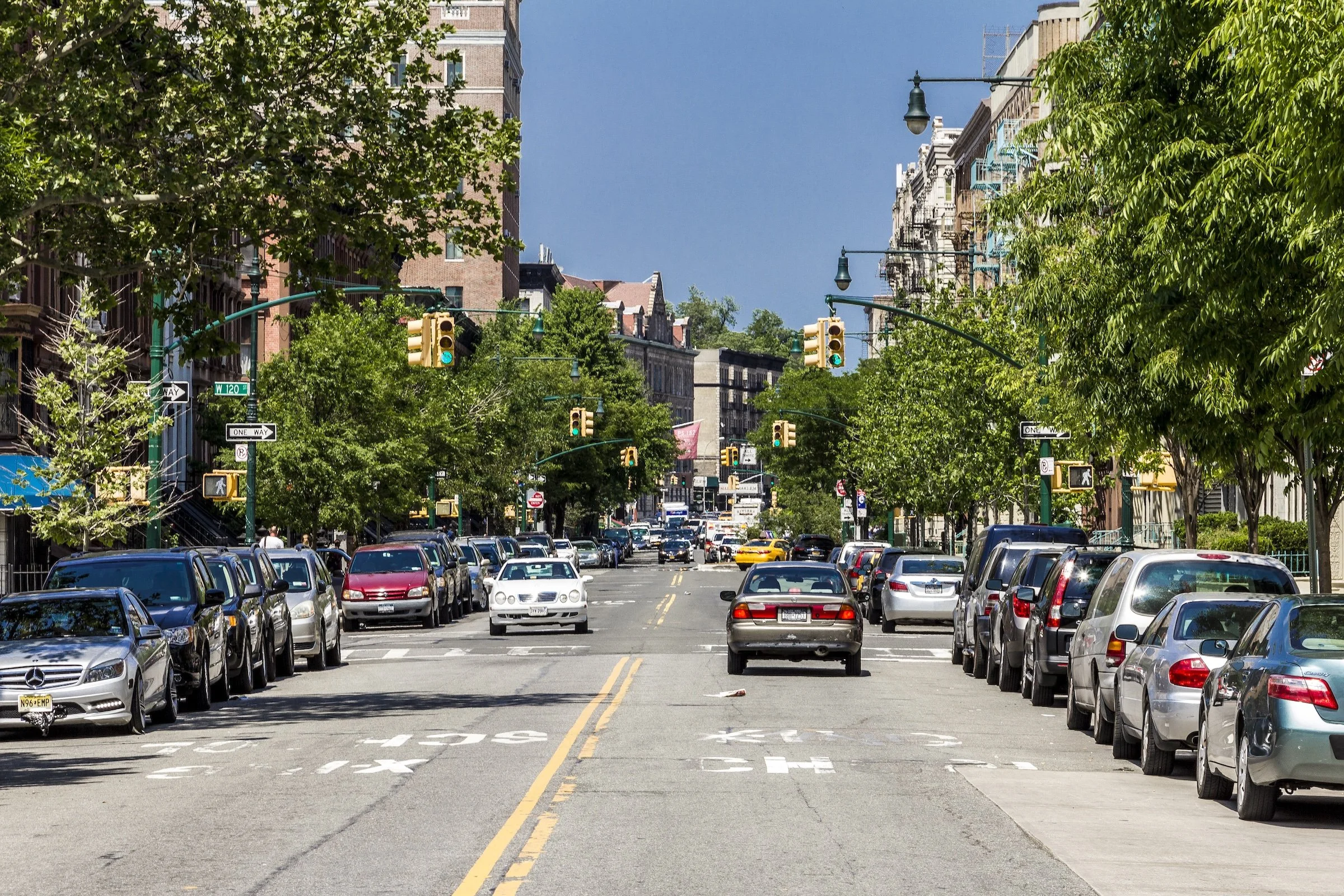
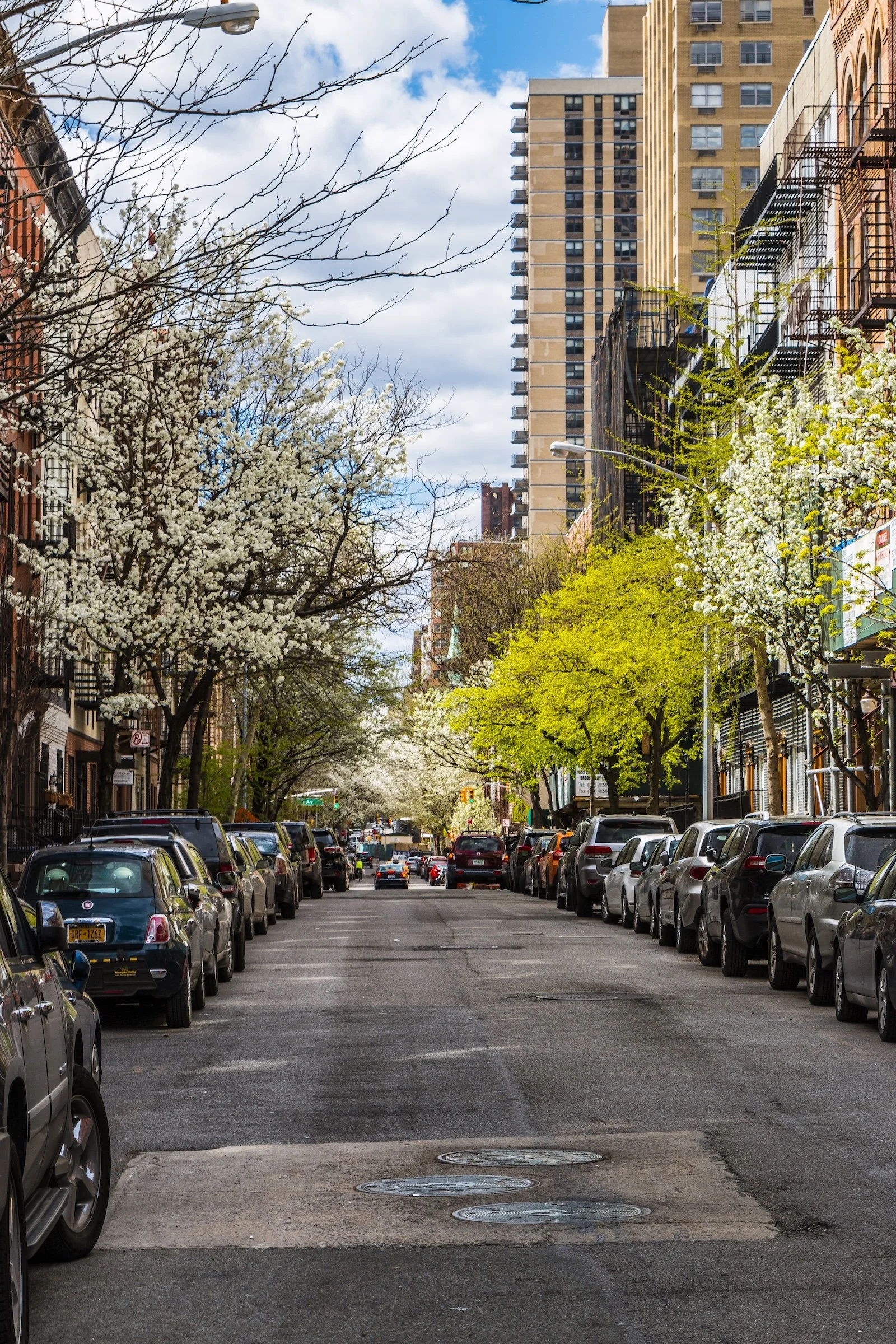
The examples below show Streetscapes across Manhattan and Queens: broad avenues, neighborhood corridors, residential arteries, and tree-lined streets where the road itself becomes the carrier of place.
Tree-Lined Corridors:
These examples show streets as lived passageways — corridors softened by trees, parked cars, and neighborhood rhythm.
Broad Avenues and Neighborhood Arteries:
These images emphasize the street as major infrastructure — wider, more exposed, and more forceful in how they organize the frame.
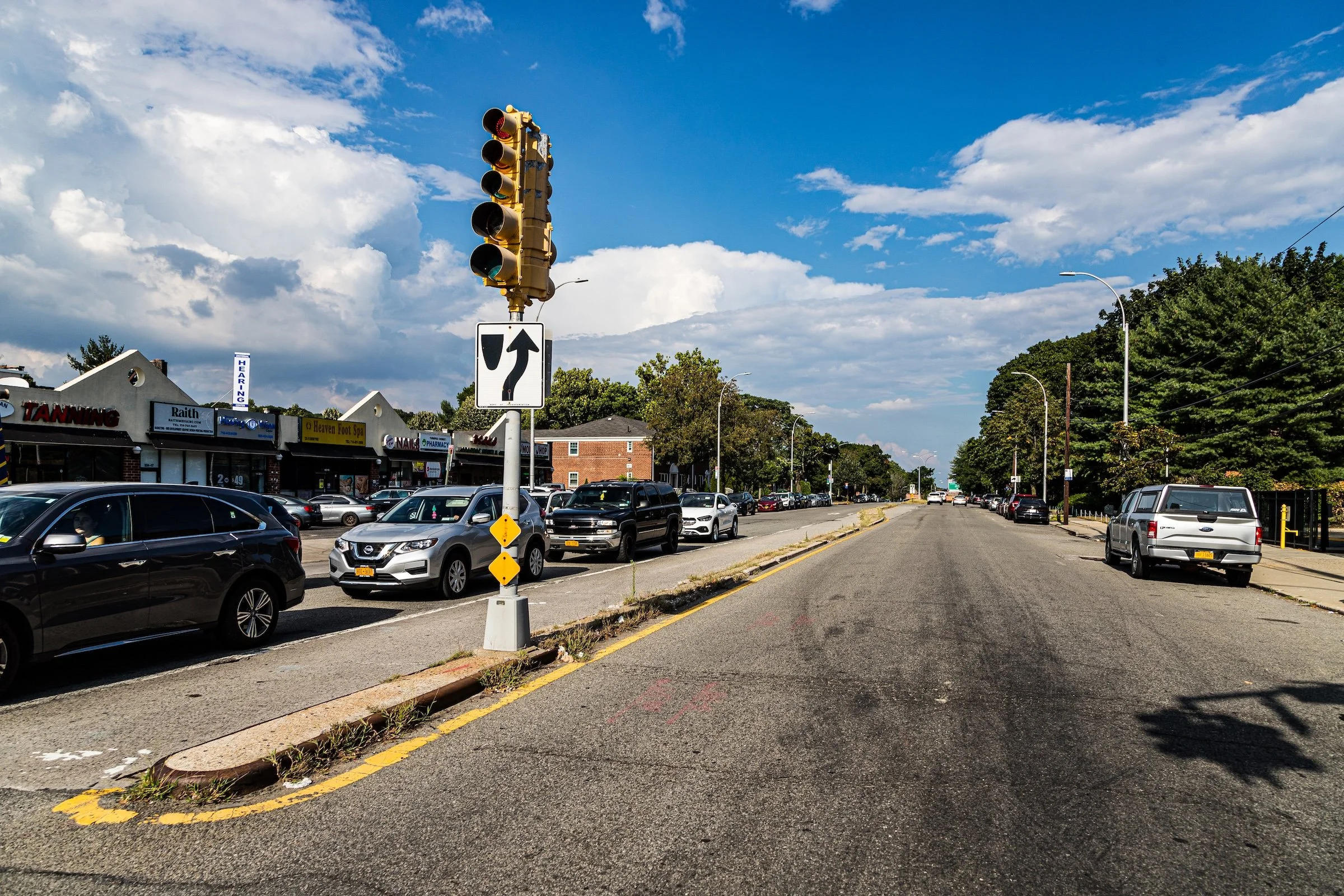
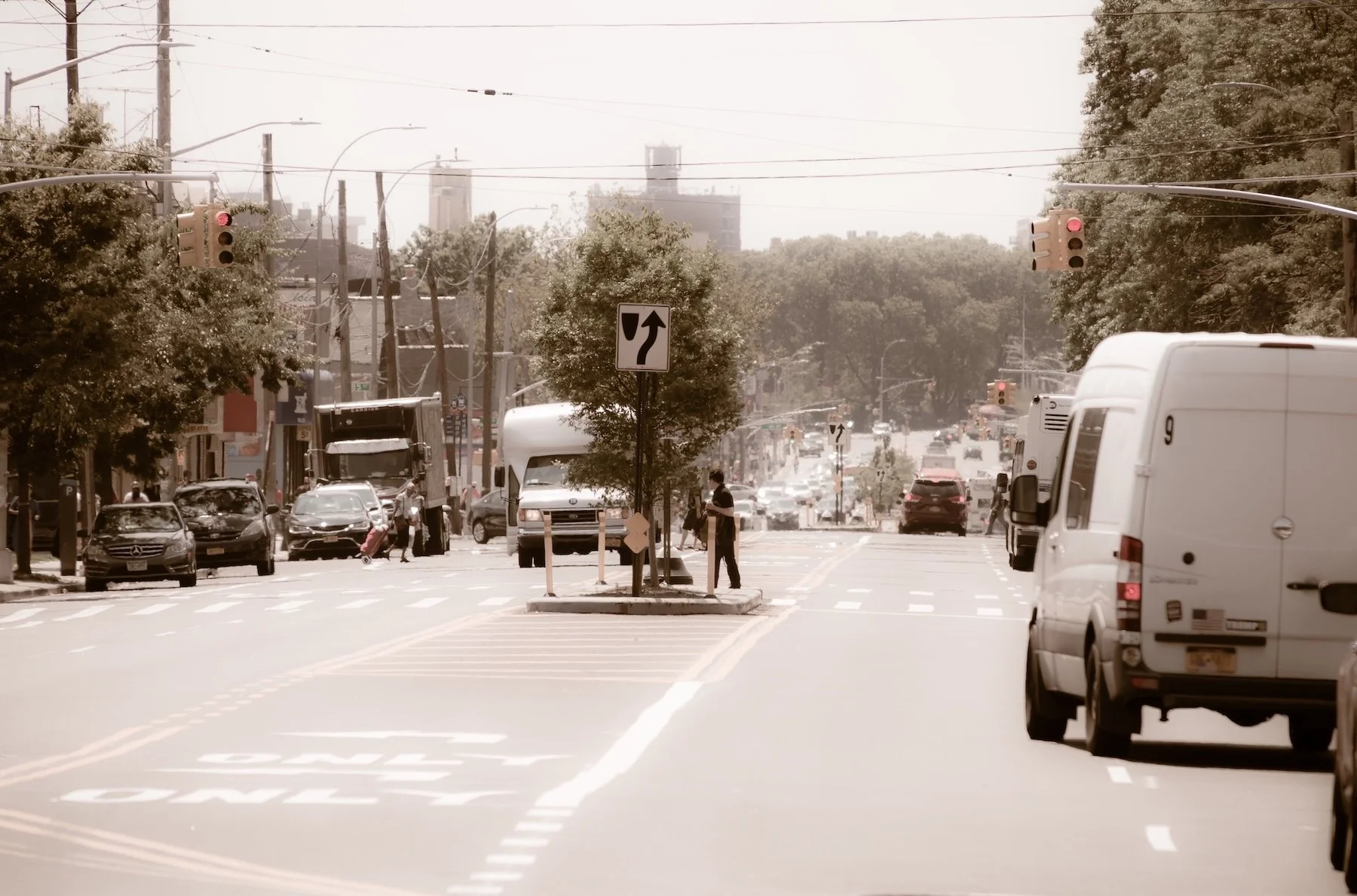
Hollis Hills - Queens - Union At Springfield
This image works because the avenue feels expansive without becoming anonymous. The road, traffic signal, and median geometry create a strong sense of arterial flow while still preserving a neighborhood scale.
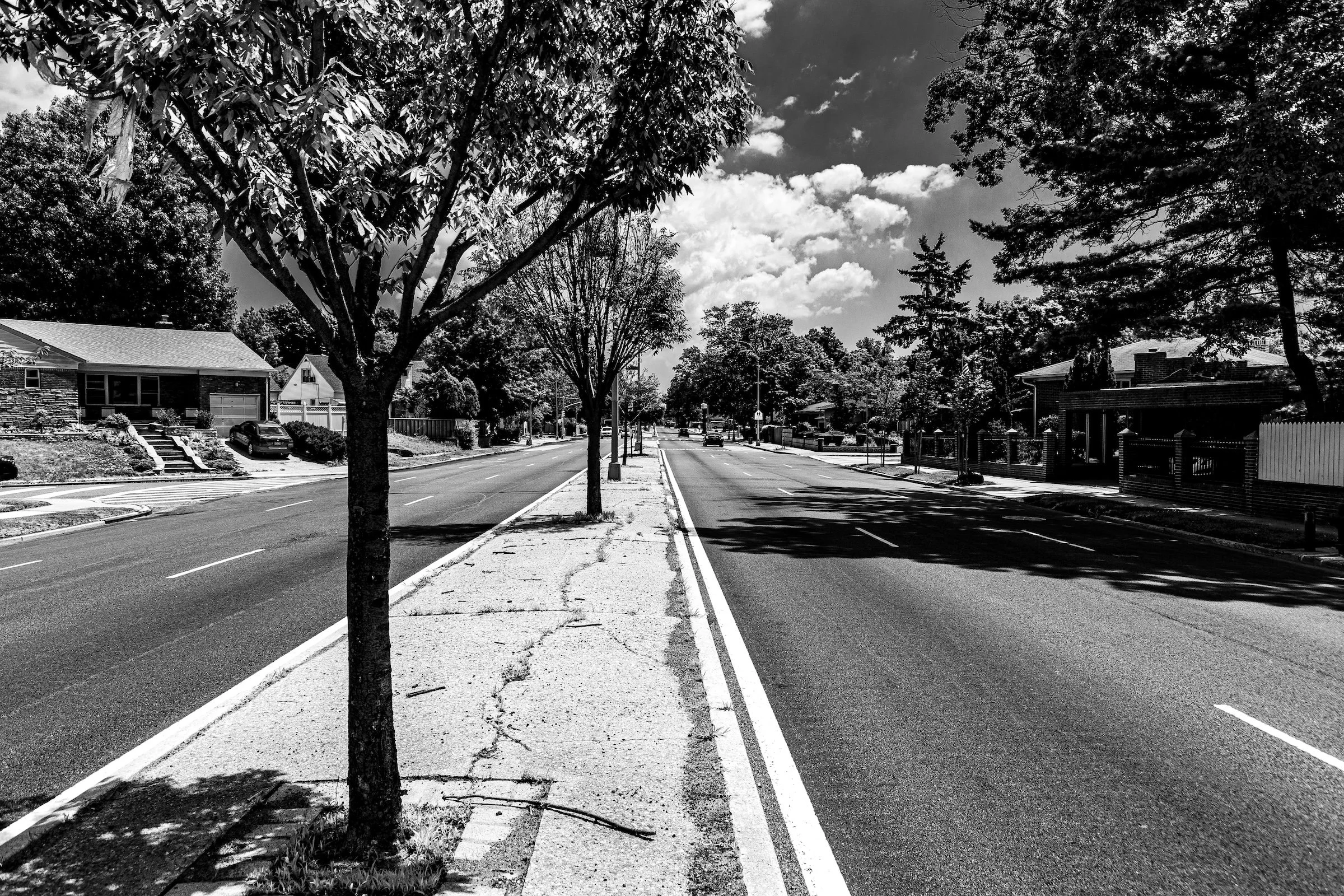
Hollis Hills - Queens - Union Turnpike In B&W
The depth of the road is the primary drama here. It’s a streetscape where width, roadway markings, and flanking greenery combine into a portrait of suburban-urban transition.
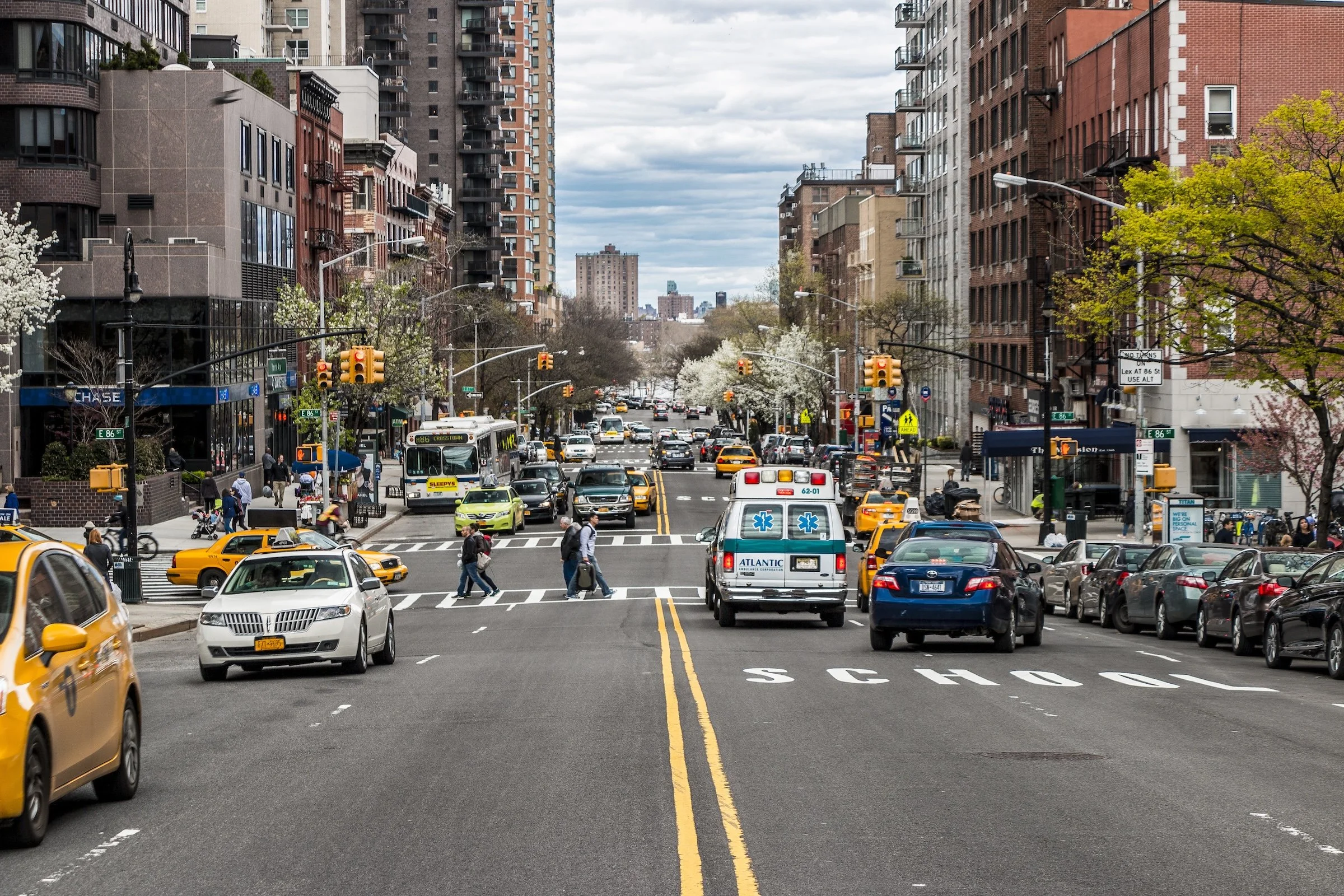
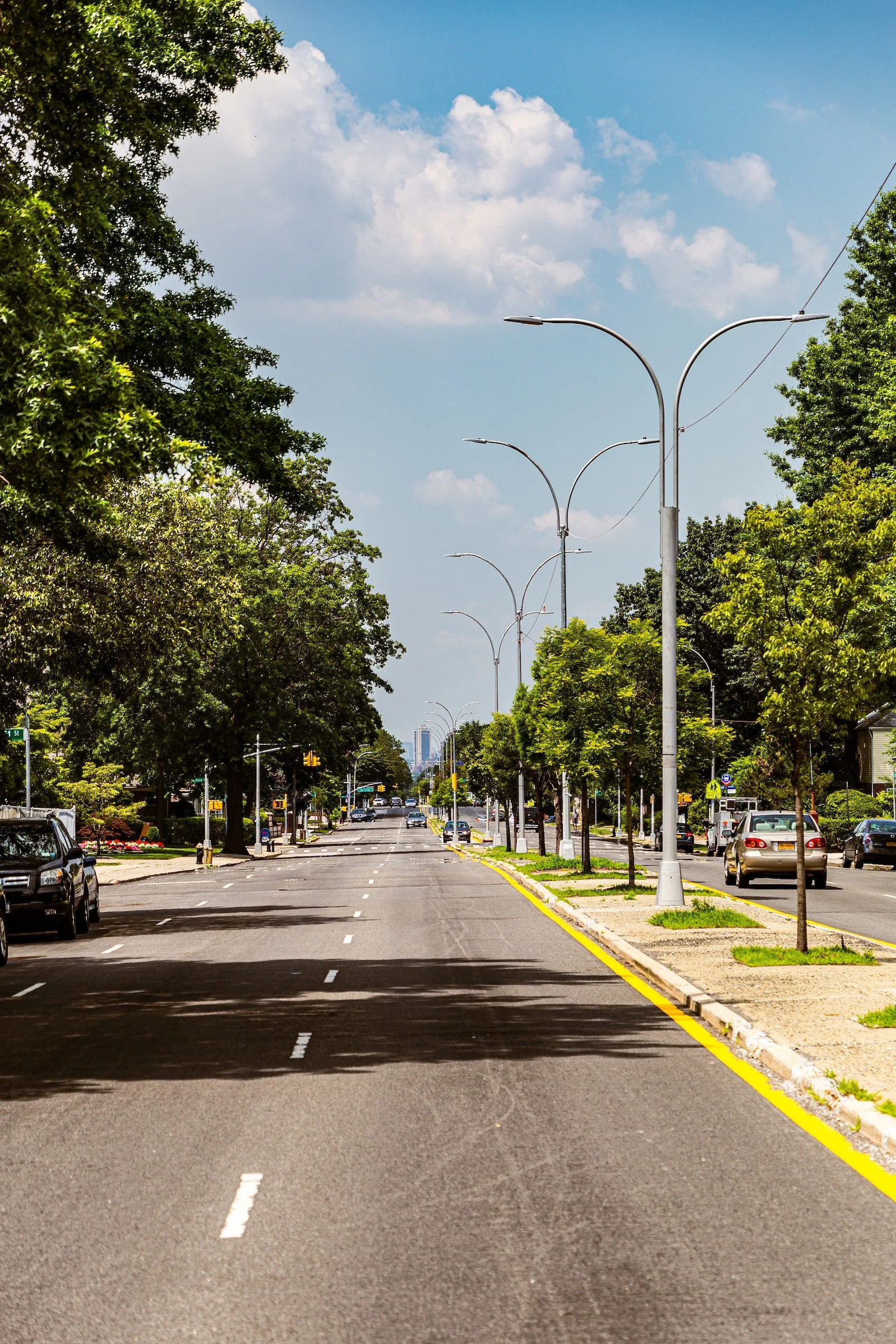
Hollis Hills - Queens - Union Turnpike In Hollis Hills
The depth of the road is the primary drama here. It’s a streetscape where width, roadway markings, and flanking greenery combine into a portrait of suburban-urban transition.
Intersections, Approaches, and Urban Flow:
These examples show how streetscapes can intensify when intersections, crossing conditions, or strong directional approaches shape the corridor.
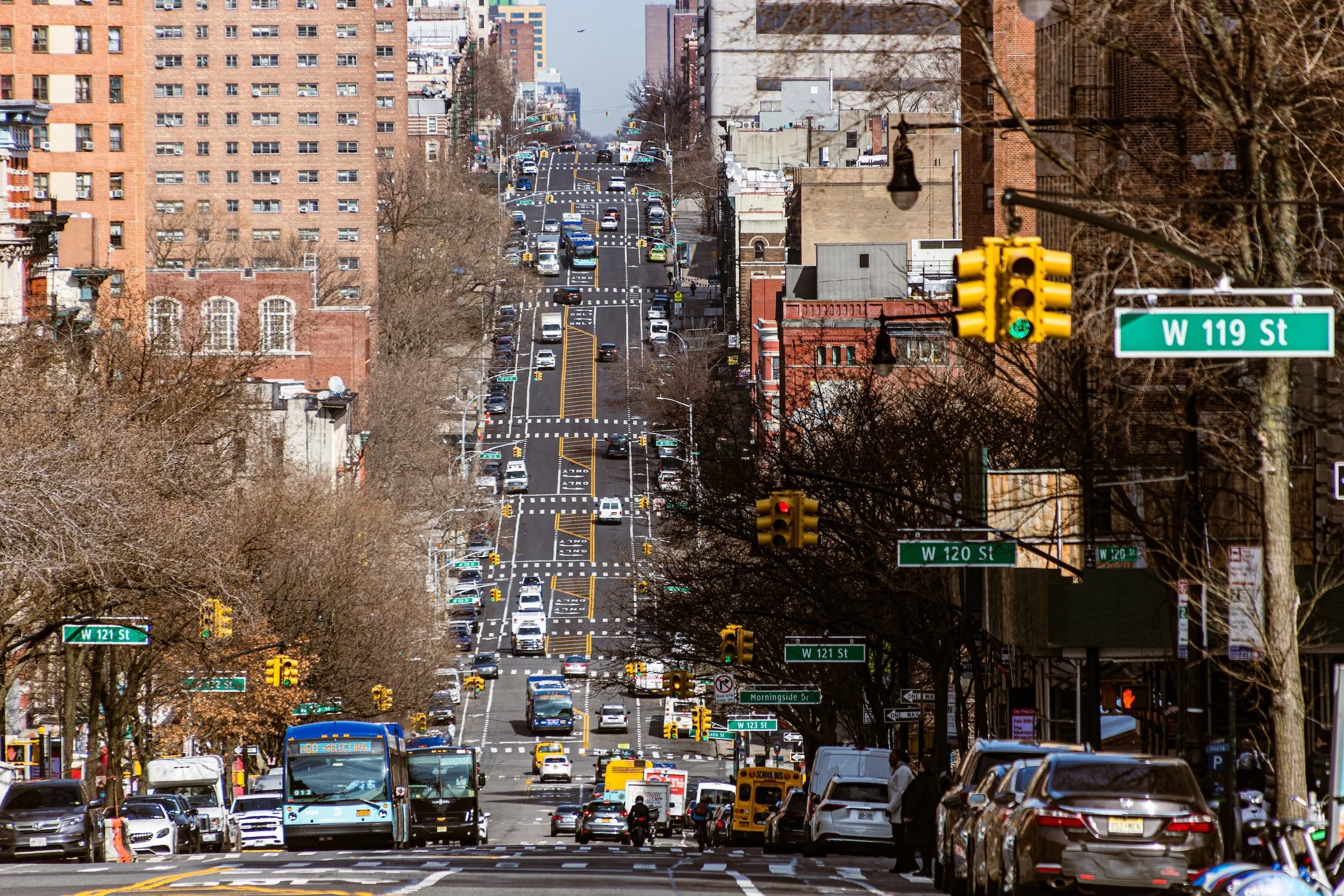
Morningside Heights - Manhattan - Inception
Here the street feels layered and cinematic, almost folding into itself through distance and urban density. It is a streetscape less about calm passage than about the city’s ability to stack movement, traffic, and built form into one visual field.
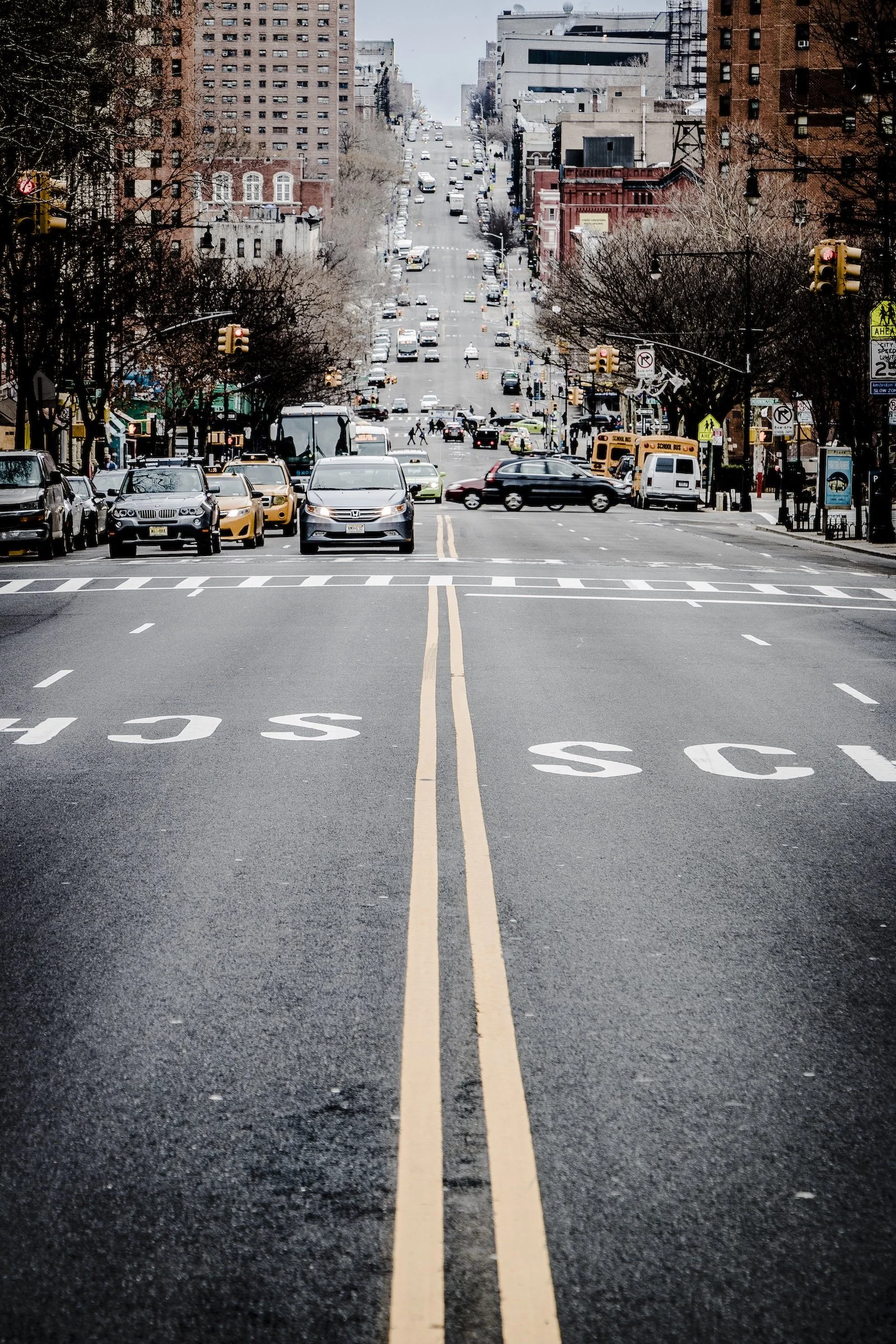
Morningside Heights - Manhattan - Uptown on Amsterdam Avenue
This image uses the avenue’s rise and receding depth to create a streetscape full of momentum. The road draws the eye forward, but the architecture and urban density keep that movement anchored in place.
Explore Further