
Urban Monoliths
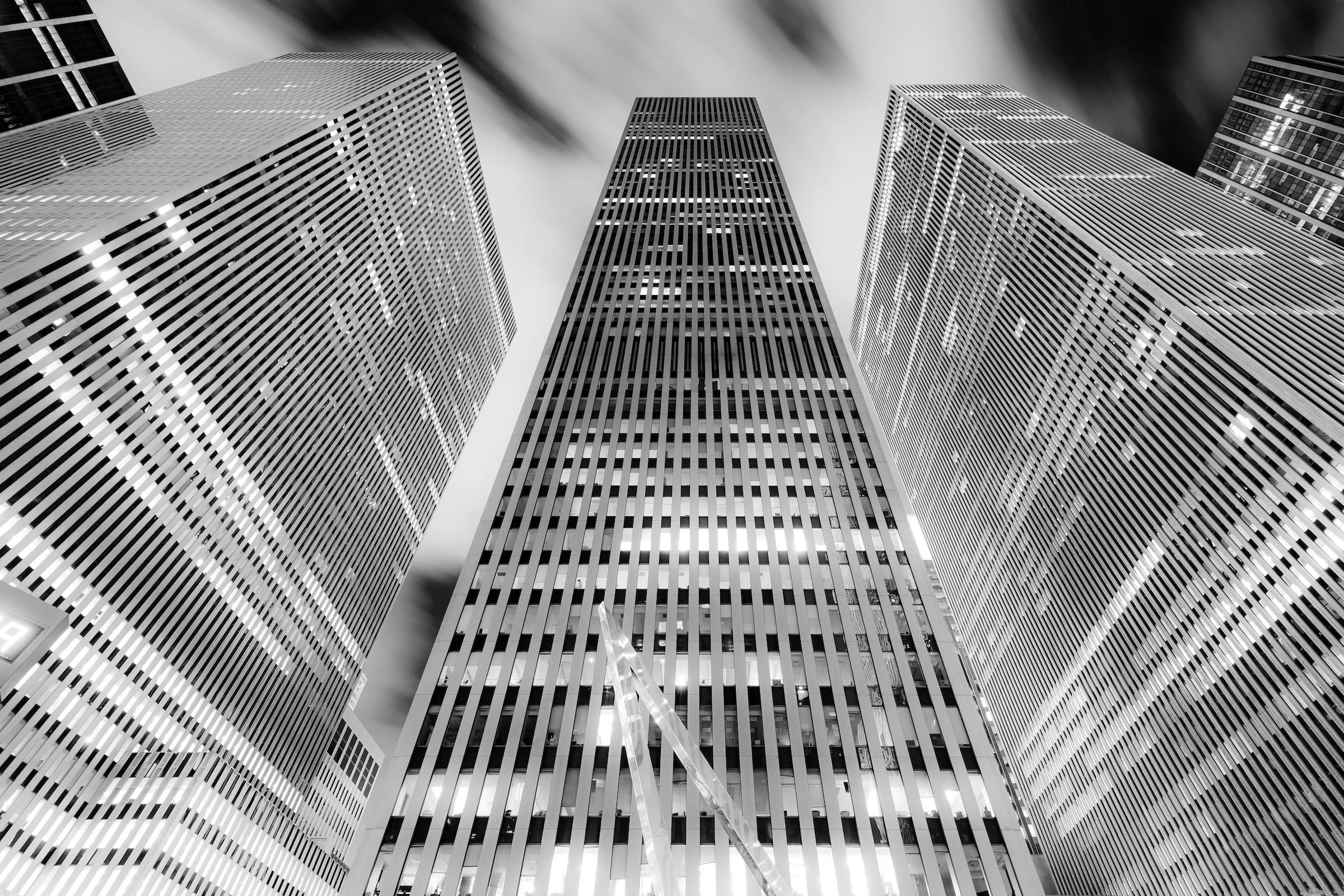
Urban Monoliths is the practice of photographing the city as single, dominant forms—structures so massive they read less like “buildings” and more like objects: towers, bridges, slabs, and silhouettes that hold the frame through sheer presence.
Urban Canyons
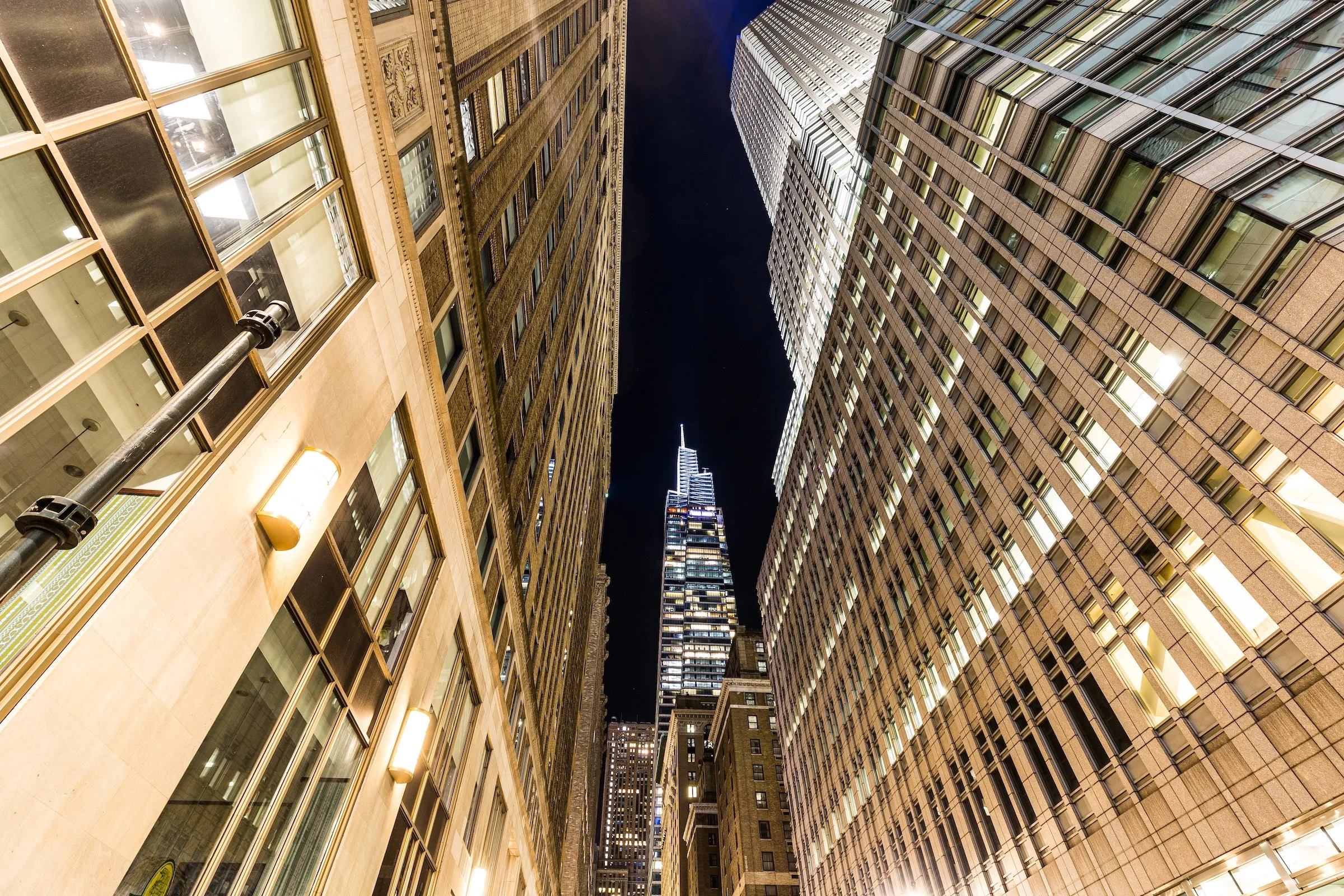
Urban Canyons is the practice of photographing city streets and corridors as “vertical landscapes”—spaces where tall buildings compress the sky, exaggerate depth, and make scale itself the subject. It’s the feeling of moving through a carved channel of stone, glass, and light.

The Wraparound
The Wraparound is the wide-angle technique of placing the viewer at a bend, corner, or seam so the scene appears to curve around them. It’s the feeling of being inside the geometry—where streets, walls, rails, or facades sweep outward to the left and right, and depth becomes a physical sensation.
Altered Perspectives
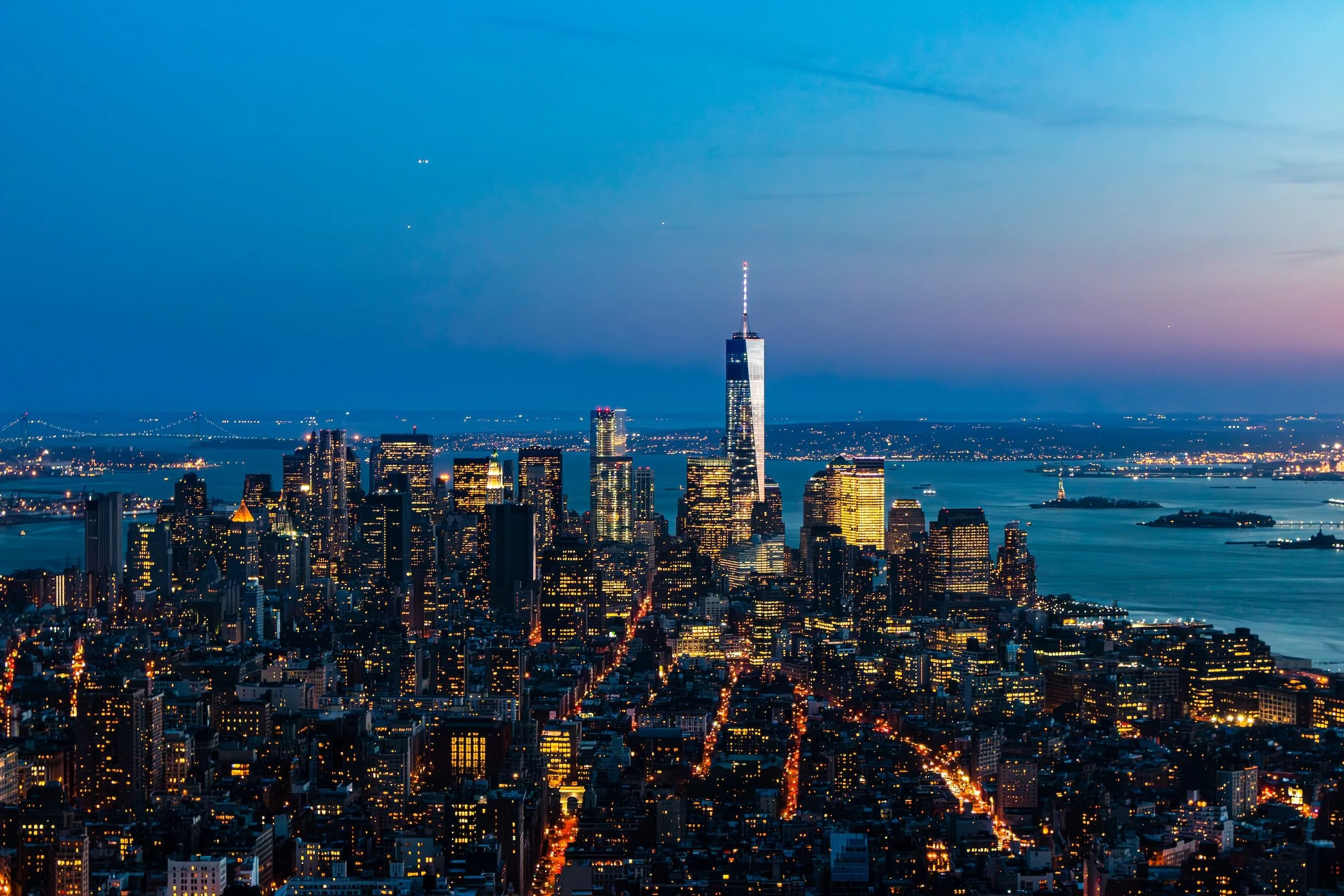
A deliberate shift in vantage—low, high, tilted, compressed, or wide—that changes how the city “behaves” inside the frame. Altered Perspectives isn’t about the subject (a tower, a street, a skyline) so much as the position you choose to describe it: street-level immersion, upward vertigo, balcony-scale overview, or foreground-anchored compression.

Capturing Scale
A compositional approach for showing how big something feels—not just how big it is—by placing a subject in relationship to recognizable reference points: people, streets, windows, trees, bridges, skylines, and negative space. Capturing Scale is about designing a frame where the viewer can measure the world intuitively.
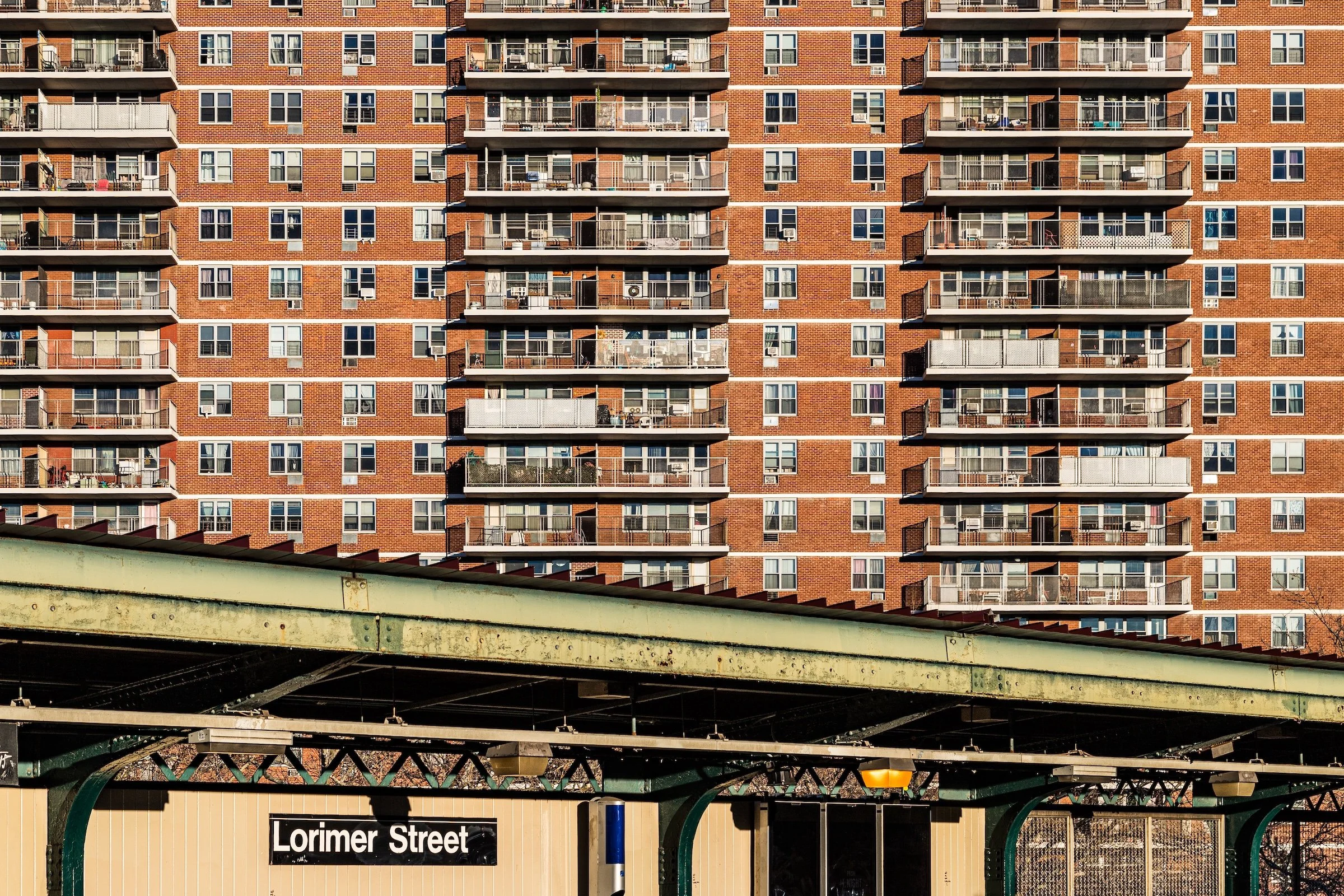
Bigger Than The Frame
Bigger Than The Frame is a composition strategy where the subject’s scale is communicated by refusing to contain it. The building (or structure) extends beyond the edges of the photograph—top, sides, or both—so the viewer feels the continuation. The frame becomes a window onto something larger, not a box that neatly holds it.