
HUDSON YARDS
Manhattan
Geographic Setting
Occupying the far west side of Midtown between 30th and 41st Streets, and Tenth Avenue to the Hudson River, Hudson Yards represents one of the most ambitious urban redevelopment projects in modern history. Rising atop a working rail yard, it fuses architecture, technology, and urban planning on a scale unseen in New York since Rockefeller Center. Glass towers, public plazas, cultural institutions, and the High Line’s northern terminus converge here at the edge of the island — a newly forged district that reimagines what Manhattan can be in the 21st century.
Etymology and Origins
The name Hudson Yards refers directly to the West Side Yard, a vast 28-acre rail complex built in the 1980s by the Long Island Rail Road. For decades, the yard served as a staging area for commuter trains arriving at Penn Station, its sunken expanse forming one of the last undeveloped tracts in Midtown. Long before the rails, however, this shoreline was home to piers, warehouses, and factories — a world of longshoremen and industry that defined Manhattan’s western edge for more than a century.
The district’s modern identity began to coalesce in the early 2000s, when city planners, developers, and architects conceived a master plan to cap the rail yard and create a new mixed-use neighborhood above it — effectively constructing a city atop a city.
The Neighborhood
19th–20th Centuries: Industrial Shoreline
In the 1800s, this stretch of the Hudson River was lined with docks and freight terminals belonging to the New York Central Railroad and Pennsylvania Railroad. Factories and warehouses filled the blocks between Tenth and Eleventh Avenues, producing everything from ironworks to textiles.
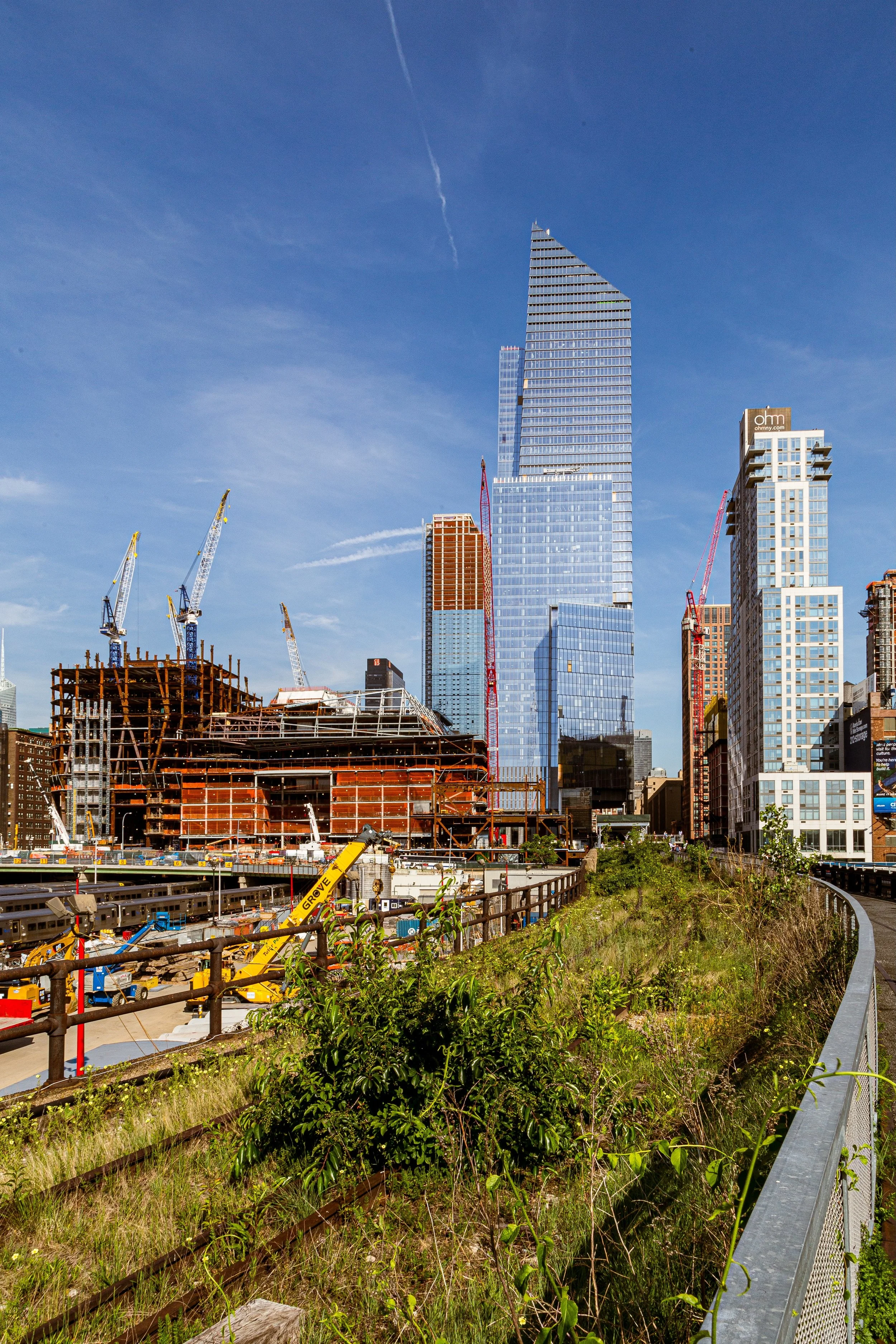
The waterfront’s energy was relentless. Steam locomotives rumbled south along what was then Eleventh Avenue, earning it the nickname “Death Avenue” for its collisions with horse-drawn carts. In response, the city built an elevated freight line — the High Line — completed in 1934. Running directly through factory buildings, it revolutionized shipping by separating trains from street traffic and symbolized the industrial might of New York’s west side.
By the mid-20th century, however, containerization and suburban expansion had begun to empty the piers. Factories shuttered, and the area fell into decline. The once-bustling rail yards became a windswept expanse of steel tracks and storage lots — a blank slate awaiting the city’s next epoch.
Late 20th Century: The Last Frontier of Midtown
Throughout the 1970s and 1980s, successive administrations debated the fate of the West Side Yard. Proposals ranged from stadiums to housing complexes, but none materialized. In 1987, the Long Island Rail Road completed the West Side Storage Yard, preserving the site for transit use while leaving open the possibility of development above it.
The transformation began in earnest in the early 2000s, as New York prepared its bid to host the 2012 Olympics. The idea of a “Hudson Yards” district emerged — an extension of Midtown’s commercial core that would reconnect the city to its riverfront. Although the Olympic stadium plan was ultimately abandoned, the rezoning and infrastructure groundwork it inspired laid the foundation for the neighborhood we know today.
21st Century: Building a City in the Sky
The official Hudson Yards redevelopment plan was approved in 2005 under the Bloomberg administration. The project, led by Related Companies and Oxford Properties, envisioned a two-phase development spanning 28 acres — half built over active train tracks supported by a monumental steel platform.
Construction began in 2012, culminating in the district’s opening in 2019. The result was nothing less than an urban engineering marvel. Designed by an international roster of architects — including Kohn Pedersen Fox, Diller Scofidio + Renfro, Foster + Partners, and Skidmore, Owings & Merrill — Hudson Yards combines offices, residences, retail, public space, and transit infrastructure into a cohesive modern landscape.
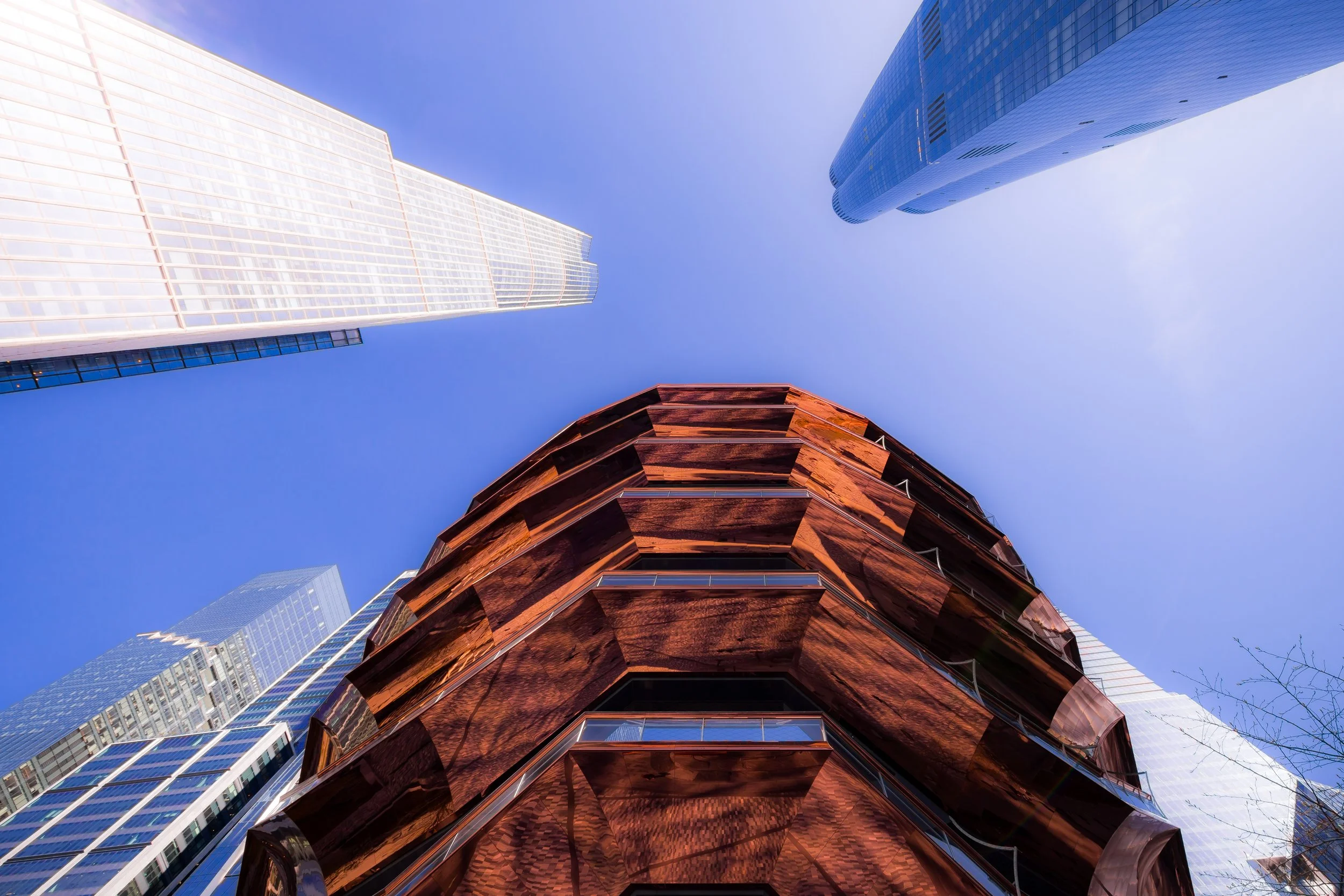
The centerpiece, Vessel, designed by Thomas Heatherwick, stands as an interactive sculpture of interlocking stairways — a honeycomb-like vertical promenade that offers shifting perspectives of the city and river. Adjacent lies The Shed, a cultural center with a telescoping shell that can physically expand to host concerts, installations, and performances — a literal embodiment of the district’s ethos of flexibility and innovation.
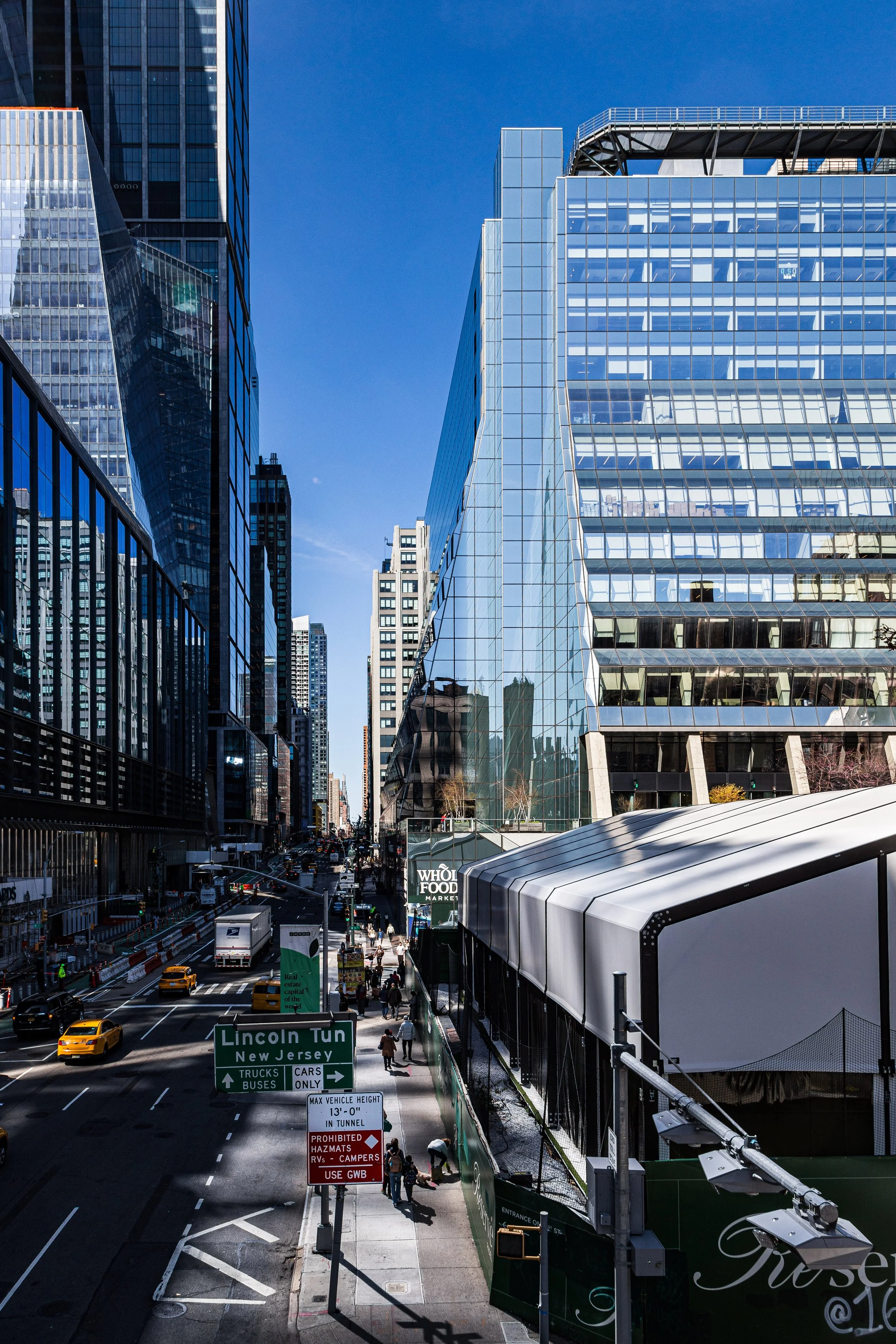
Towers such as 30 Hudson Yards and 10 Hudson Yards rise more than a thousand feet, their faceted glass façades reflecting both sky and river. The observation deck at 30 Hudson Yards, Edge, opened in 2020 as the highest outdoor sky deck in the Western Hemisphere, its triangular platform extending boldly into the air above Eleventh Avenue.
Hudson Yards Photographic Tour
Urban Design and Connectivity
The district’s design prioritizes connectivity. The extension of the 7 subway line to 34th Street–Hudson Yards, completed in 2015, integrated the area into the city’s transit grid for the first time. Elevated walkways link the neighborhood to the High Line, whose transformation from freight railway to public park catalyzed the west side’s revival. At street level, plazas and gardens soften the glass-and-steel grandeur with greenery and public art.
Unlike earlier urban megaprojects that imposed isolation, Hudson Yards aims to create permeability — inviting pedestrians from Midtown, Chelsea, and Hell’s Kitchen into its open spaces. Bella Abzug Park, running through the district’s spine, weaves together architecture and landscape, offering a green counterpart to the surrounding verticality.
Cultural and Economic Significance
Hudson Yards represents both the ambition and contradictions of 21st-century New York. On one hand, it is a triumph of urban reinvention — a derelict industrial zone reborn as a global center of commerce, technology, and design. On the other, it embodies the city’s ongoing tension between private development and public access. Critics have questioned its exclusivity and corporate sheen, while admirers celebrate its daring engineering and urban coherence.
Regardless of perspective, its impact is undeniable. Hudson Yards has extended the city’s midtown skyline westward and redefined how architecture interacts with infrastructure. Its towers now house major firms in finance, media, and technology, as well as thousands of residents who have made the new neighborhood their home.
Hudson Yards Photo Gallery
Architecture and Atmosphere
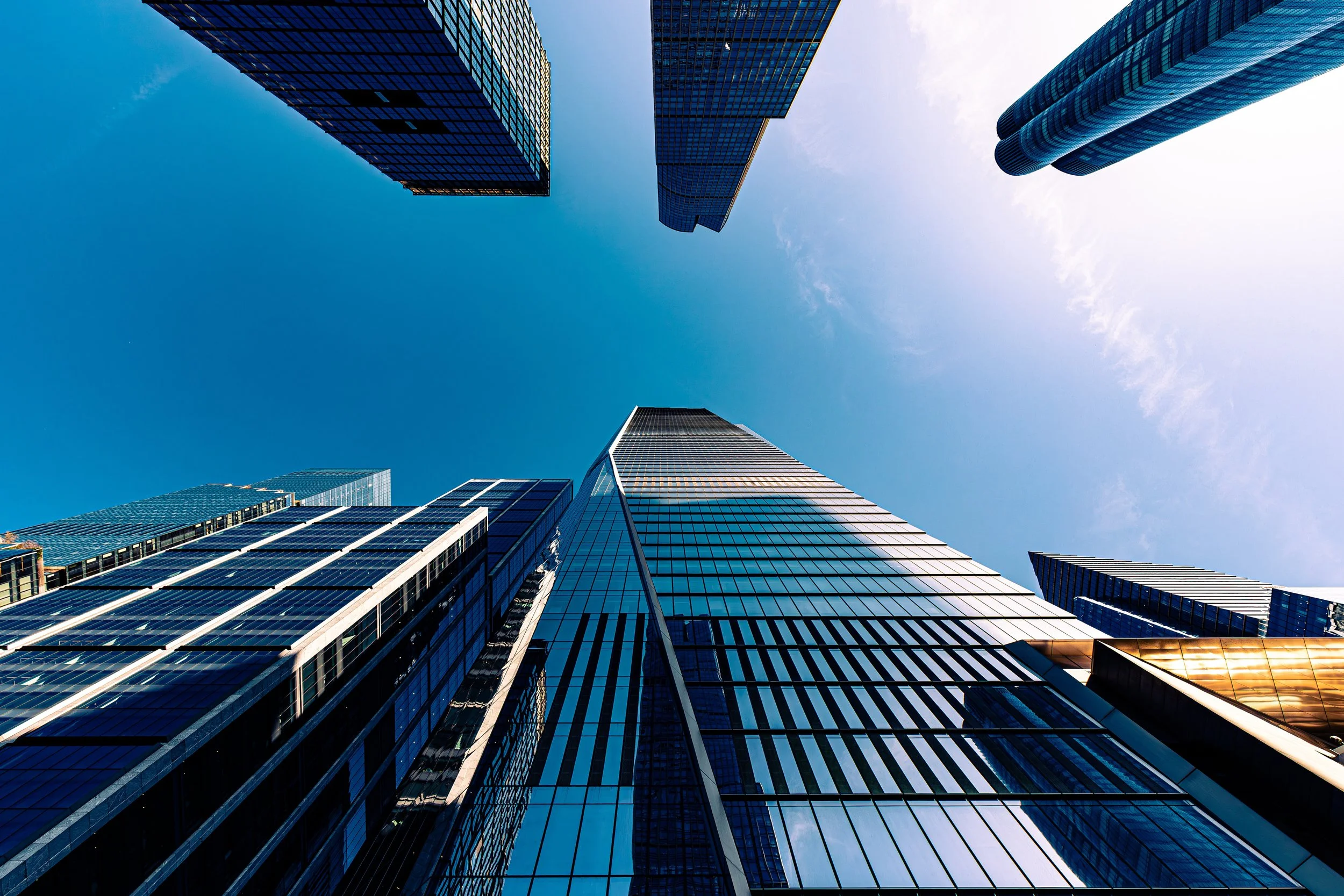
Architecturally, Hudson Yards is a gallery of contemporary ambition. The glass towers catch and refract the shifting light of the Hudson, while their plazas mirror the curvature of the river beyond. The interplay of steel, glass, and sky creates a futuristic palette that contrasts sharply with the masonry of neighboring Chelsea and Hell’s Kitchen.
The atmosphere is both monumental and meticulously choreographed. Mornings bring commuters streaming from the 7 train into sunlit courtyards; afternoons echo with the hum of visitors circling Vessel; evenings shimmer as the towers reflect the sunset’s copper glow across the river. From the Edge observation deck, the entire city unfurls — the Hudson to one side, the Empire State Building to the other, the boroughs radiating outward like the spokes of an urban star.
Spirit and Legacy
Hudson Yards’ legacy is the assertion that the city’s story is never finished — that even in its most built-out quarters, New York can still reinvent itself from the ground (or in this case, the rail bed) up. It stands as both a monument to the power of vision and a reminder of the complexities of progress: grandeur tempered by debate, beauty shadowed by cost.
New York City
Use this custom Google map to explore where every neighborhood in all five boroughs of New York City is located.
The Five Boroughs
One of New York City’s unique qualities is its organization in to 5 boroughs: Manhattan, Brooklyn, Queens, The Bronx, and Staten Island. These boroughs are part pragmatic administrative districts, and part vestiges of the region’s past. Each borough is an entire county in New York State - in fact, Brooklyn is, officially, Kings County, while Staten Island is, officially Richmond County. But that’s not the whole story …
Initially, New York City was located on the southern tip of Manhattan (now the Financial District) that was once the Dutch colony of New Amsterdam. Across the East River, another city was rising: Brooklyn. In time, the city planners realized that unification between the rapidly rising cities would create commercial and industrial opportunities - through streamlined administration of the region.
So powerful was the pull of unification between New York and Brooklyn that three more counties were pulled into the unification: The Bronx, Queens, and Staten Island. And on January 1, 1898, the City of New York unified two cities and three counties into one Greater City of New York - containing the five boroughs we know today.
But because each borough developed differently and distinctly until unification, their neighborhoods likewise uniquely developed. Today, there are nearly 390 neighborhoods, each with their own histories, cultures, cuisines, and personalities - and each with residents who are fiercely proud of their corner of The Big Apple.