
Windows To Souls
Windows To Souls uses window reflections to capture layered realities—on the glass, beyond the glass, and behind the photographer—so the image holds multiple worlds at once.
Sun Dapples
Sun Dapples uses patterned, broken sunlight—often filtered through leaves—to add texture, depth, and rhythm across surfaces.
Shaping B&W
Shaping B&W uses black-and-white to emphasize form, contrast, and structure—tonal design over color information.
Shadowroots
Shadowroots are organic, branching shadows—most often from leafless trees—where the shadow reads like a second body: roots, veins, nervous system. The strongest examples fuse the tree and its shadow into one connected composition.
Repetitions
Repetitions uses recurring shapes, colors, and lines to create rhythm—pattern as the subject, with sameness (and small variations) doing the storytelling.
Painting With Light
Painting With Light is a painterly rendering strategy—using light behavior and selective processing to create luminous mood, warmth, and soft-edged atmosphere.
Layer Cake
Layer Cake builds images from multiple planes—foreground, midground, background—so depth becomes structure and story.
Graffiti Context
Graffiti Context photographs street art with its environment included so the place and the art explain each other—art as embedded, not isolated.
Urban Geometry
Urban Geometry is the strategy of foregrounding form—triangles, grids, arcs, rectangles, diagonals—so shape becomes the primary language of the photograph.
For The Love of Old Things
For The Love of Old Things centers weathering, patina, and visible age—time made material—as the emotional subject of the photograph.
Urban Mosaic
Urban Mosaic builds a photograph from fragments—partial elements arranged so the frame reads as a mosaic rather than a single-subject scene.
Abstractions
Abstractions turn the city into pure visual language—shape, color, texture, rhythm—so the image can stand on its own even if the viewer never identifies the literal subject.
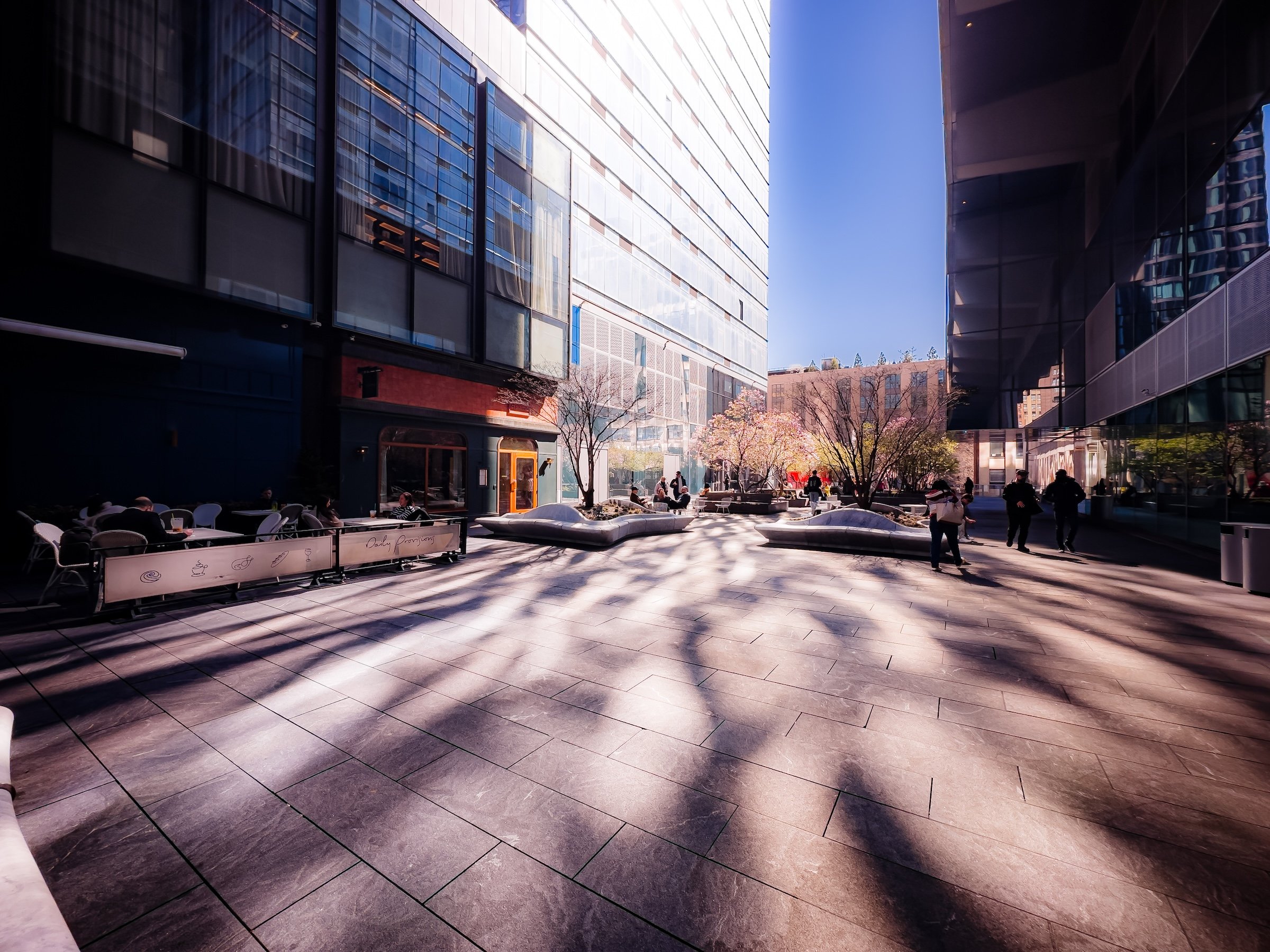
Sunflections
Reflected sunlight that lands on pavement, sidewalks, façades, or other surfaces as luminous shapes—bands, ripples, patches, or drifting “spotlights.” Unlike lens flare (which happens inside the camera), Sunflections are light that the city redirects back into the scene: bounced from glass, metal, water, polished stone, or wet ground.